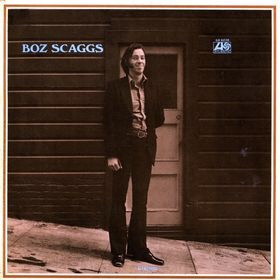
This LP is famous for the session guitarist who graces it with his Dobro and slide: Duane “Skydog” Allman. In addition, there is the almost thirteen minute “Loan Me A Dime.” That song was a staple on early 70s progress rock FM radio. DJs liked to cue it up and take a smoke break. It is a great song, not just a long song.
The album was originally released in 1969 on Atlantic and went out of print in the mid-70s. In 1976 Boz Scaggs had a huge hit album with Silk Degrees. I assume Atlantic wanted to ride the wave of Silk Degrees and dusted off this album with a remix by the same engineer who recorded Silk Degrees (Tom Perry). The original was mixed by Stax Records’ engineer Terry Manning (uncredited).
I recently purchased an LP of the remix not realizing it. I had an LP of the original in poor shape and I assumed this was an upgrade. When I dropped the needle and sat down and examined the jacket I realized this was a remix. I pulled my old copy and sure enough it was an original Manning mix. Most of my experience with this album is via the CD, which is the Perry mix. I was unaware there were two versions of this album. This is not going to be a straight album review, but a comparison of the two versions with the goal of crowning a champion. I know I come to the table with a familiarity bias towards the Perry mix.
The Spotify version is the Perry mix:
I just picked up a cleaner copy of the Manning mix to make it a fair fight.
“I’m Easy” The Perry mix is vastly superior. The Manning mix is muddy and distorted. The Perry mix is crisper and has more separation. This will become a recurring theme.
“I’ll Be Gone” Is a quieter song than the first cut. Similar to “I’m Easy” the crispness and separation Perry mix wins out.
“Another Day (Another Letter)” is a ballad, that with a different arrangement, that would not have sounded out-of-place on Silk Degrees. Clearly Perry is giving it the Silk Degrees treatment. However, I like the more organic Manning take.
“Now You’re Gone” sounds better with the cleaner Perry mix. All the unique instrumentation gets a bit lost in the Manning mud.
“Finding Her” benefits from the softer Manning mix – especially the songs ending: a gorgeous Duane Allman guitar solo. The Perry mix is a bit to sharp.
“Look What I Got” Although the background vocals are cleaner and more upfront on the Perry mix, I prefer the filthy dose of Allman’s Dobro on the Manning mix.
“Waiting For A Train” is a beautiful Jimmie Rogers country blues. The Manning mix is perfectly old timey. The Perry mix stays pretty close to Manning, but it is a bit too clean and so it sounds more like an impersonation, than the organic Manning original.
“Loan Me A Dime” is the song that made this album. The Perry mix is pristine and highlights all the instruments. Duane Allman is at his bluesy best. Boz’s voice is soulful. But this is a down and out song and it sounds better a little dirty (the Manning mix). As much as I like the pristine nature of the Perry mix, it is worth the mud of the Manning mix to fully appreciate the perfection of Duane Allman’s solo.
“Sweet Release” – the song remains the same: Perry is bright and clean and Manning is down and dirty.
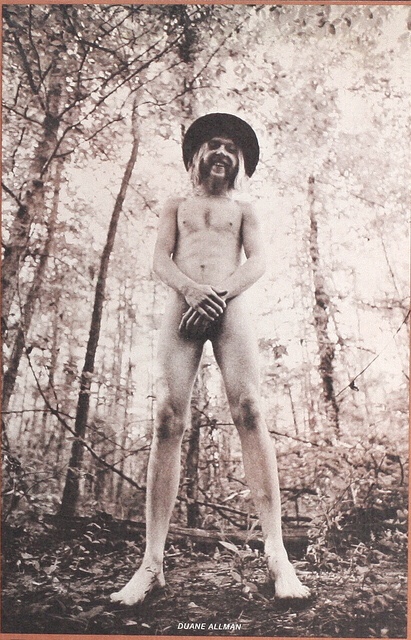
Overall it is a bit of a draw, but in general I prefer the cleaner, tighter and more spacious sound of the Perry mix. Perry is pretty faithful to the original. He brightens it without distorting it. I would love to spin a mint copy of the Manning – perhaps my version is too worn. My guess is if I found a mint Manning it would win. As much as I prefer the Perry mix, the Manning mix serves Duane Allman better. And let’s face it this album’s specialness is Duane Allman. Sorry, to be so indecisive, buy both. If you are crate digging you should be able to get respectable copies of both in the five dollar range. But no matter what this is a great album. Realistically you are likely to find better quality versions of the Perry mix. If you can’t remember the catalog numbers they are pretty easy to tell a part – the Perry mix is clearly noted on the back cover. Don’t settle for a Perry mix that is not gatefold or matte – the picture of Duane Allman on the inside cover is classic and you don’t want miss it or see it shiny.

I discovered Celebration Rock with Steven Hyden late last year when Hyden interviewed Wilco as they promoted the reissue of their first two albums. Hyden is rock critic, but without the usual snobby attitude. He is first and foremost an enthusiastic fan. The podcast is currently focused on an eight episode examination of Bruce Springsteen’s 20th century catalog. Hyden geeks out about the Boss with various punk musicians who were inspired by Bruce. If you review the archives there are plenty of great interviews with musicians.
I have been reading the Lefsetz Letter for several years. Bob Lefsetz is primarily a music industry critic, but he also branches out as a general cultural critic. Lefsetz is wonderfully opinionated – quick to point out the emperor is not wearing clothes. On his podcast he primarily interviews music industry insiders. They tell their personal histories and opinions on current industry issues. Even though I have rarely heard of Lefsetz guests, I have always been fascinated by their conversations.

I “discovered” Ryan Adams on a Target store end cap in 1997. There are only a handful of music acts that I discovered on my own and Ryan is one of the few. I distinctly remember buying Whiskeytown’s Strangers Almanac. I had not heard of the band. I liked the band’s name, cover art and it was on sale – so I bought it. I had no idea what I was getting into. I have been a Ryan Adams fanboy for over twenty years, yet he never excited me more than this first shot. He has continued to hone his craft, but the template for his career was minted on Strangers Almanac.
When I was a kid they called Adams’ music southern rock or country rock. By the time Adams hit the scene in the mid-90s it was called alt-country (which has morphed into a vague and meaningless categorization: Americana). My definition of alt-country is an artist who grew up on punk or metal and then fell, without irony, for country music. They must exist outside the shackles of Nashville – preferably they are openly hostile toward the Nashville machine. They are not constrained by a sound – they are free to go anywhere. That pretty much defines Ryan Adams.
The first time I played Strangers Almanac back in 1997 it had me hooked. It was the sound of the long and lonesome highway. It was slick and sloppy at the same time. The singer songwriter (Adams), who appeared to be the driving force of the band, reminded me of Gram Parsons, Springsteen, the Allman Brothers, Buckingham/Nicks era Fleetwood Mac, Neil Young, Jackson Browne, Mellencamp, The Replacements, etc. Whiskeytown was inspired – not derivative of those acts. Somehow this young band hatched fully formed out of thin air. Most importantly – they rocked.
I have been listening to this album regularly over the last twenty years and I am on my third version:
- The original CD (what is available in streaming services)
- The deluxe CD reissue
- The deluxe LP reissue
I guess that is a sign of obsession.
The album opens with “Inn Town. It is a song that evokes aching feelings of regret and dead ends.
“Excuse Me While I Break My Own Heart” is pure country: the arrangement, instrumentation and lyrics. It has a great guest vocal from Alejandro Escovedo (a brilliant cow-punk from Austin Texas music scene).
“Yesterday’s News” is a rocker with a Replacements/Paul Westerberg vibe.
“16 Days” might be the finest song in the Whiskeytown catalog. It would not sound out-of-place on a mid-70s Jackson Browne album. The specifics of what the song is about is unclear, but the emotion is clear: regret.
Ryan Adams uses a sweeter voice for “Everything I Do.” The arrangement is big – even horns.
“Houses On The Hill” evokes Gram Parsons both musically and lyrically.
“Turn Around” has some great guitar work. Adams is a bit underrated for his guitar work. He brilliantly mixes acoustic and big electric riffs.
“Dancing With The Women At The Bar” is classic country longing.
Man I love the feel when I go out
Dancing with the women at the bar
Man I love the feel when I go out
I always know my woman’s close somewhere
Close somewhere…
“Waiting To Derail” could have been a great punk song, but Ryan Adams and band are too good for that.
“Avenues” is an acoustic ballad that would fit nicely on a Paul Westerberg solo album.
“Losering” has a Neil Young and Crazy Horse feel.
“Somebody Remembers The Rose” again reminds me of Gram Parsons.
“Not Home Anymore” ends the album on a lonely note. It has an ambitious arrangement that has a cool spooky vibe.
Strangers Almanac is a timeless classic. There is not a bad song on the album. I never tire of it. It is the reference of greatness for every subsequent Ryan Adams album. Fortunately he continues to live up to this initial promise.
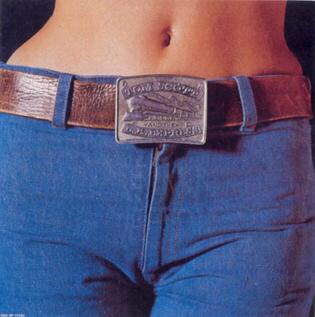
I recently dug up a pristine LP of this 1974 classic for a buck – damn I love crate digging. Snuck out before a snowstorm to Wayzata Brew Works for a record show with my bride. Dug for an hour and spent as little as a dollar and as much as fourteen dollars (but that is still cheaper than new). We shared a stout, sat at a lakeside table, inspected and tabulated. Total damage was seventy-one dollars for seventeen LPs. The snow was starting to fall so we headed home. It was a good afternoon to spin some wax at home and watch the snow flakes fall.
Whenever I have a new stack of wax I like to start with the cheapest album that looks in the best shape. Tom Scott And The L.A. Express was the first draw.
I was a big fan of the band’s Tom Cat. I first met the band through Joni’s 1974 Miles Of Aisles. I don’t know why I have never owned this album. I have seen it in the crates for forty years. Its provocative cover, for the time, is chaste by today’s standards, often caught my eye – but I never pulled the trigger. I am in a Joni state of mind these days after having just read a quality biography about her: Reckless Daughter: A Portrait of Joni Mitchell by David Yaffe.
The band is led by reed man Tom Scott. Per Wikipedia, Scott’s best-known works are the theme songs for 70s TV shows like Starsky and Hutch and The Streets of San Francisco. His soprano sax solo and fills are on the 1975 No. 1 hit single “Listen to What the Man Said” for Wings. Not bad for a session cat.
In the 70s, a first call session musician could get a respectable record deal. Tom Scott And The L.A. Express were as first call as you could get. Their Joni gig was big time: Court and Spark was multi-platinum and was a Grammy nominated album of the year in a time when that mattered (1975). She lost to Stevie Wonder’s Fulfillingness’ First Finale. No disgrace in that loss.
Out of this heady time for a jazz band, came this LP. What a line up (thanks again Wikipedia): Max Bennett – bass (member of the Wrecking Crew), John Guerin – drums and percussion, Larry Carlton – guitarist and Joe Sample – keyboards (the latter two were also members of the group The Crusaders).
This is funky pop jazz with greazy grooves.The kind of stuff that could be the theme song to a TV show (as noted above, Scott was capable of that). These were the slickest studio cats in L.A. in the mid to late 70s.
Side One is funky and bluesy. It is like instrumental Steeley Dan, but looser. Side two opens with a romantic ballad – Tom Scott invented the stuff Kenny G ultimately ruined. After the ballad, side two continues in the funky and bluesy vibe of side one. Throughout there are great solos and jams. This is a group of guys who are very comfortable with each other. In the wrong hands this pop jazz could turn into schmaltz, but in the hands of the L.A. Express, it turns into R&B jazz fusion soul magic.

I am a big fan of The War On Drugs’ 2014 album Lost in the Dream. That album was a big success critically and brought the band to a wider audience. When its follow-up, A Deeper Understanding came out late in the summer 2017, it sounded like Lost in the Dream – The Sequel. I dismissed it. At year-end, A Deeper Understanding kept appearing on “best of lists” so I gave it another listen. Still nothing, I figured they were just replaying the formula on their major label debut.
I was surfing the web recently, when I came across an article about the making of A Deeper Understanding. A big part of the article talked about the eleven minute song “Thinking Of A Place” from A Deeper Understanding. That caught my attention and I listened to the song and I was hooked. Sometimes a whole album is too much to digest. When I wrote my post on Tidal, I used “Thinking Of A Place” as my reference music – I never tired of it through multiple A/B listens. It has to be a good song to survive twenty plays in a row.
I hear so many influences in this band: Dylan, Springsteen, Dire Straits, Neil Young, Grateful Dead, Daniel Lanois, My Morning Jacket, R.E.M and Tom Petty all come to mind. This is a contemporary take on classic rock.
This is an album that should appeal to audiophiles because it is gorgeously arranged and engineered – lots of stereo separation and texture.
Ultimately, A Deeper Understanding is mellow 70s singer songwriter soft rock: Lindsay Buckingham’s version of Fleetwood Mac, post Blue era Joni, Jackson Browne, Dan Fogelberg, Paul McCartney, Mark Knopfler and Dylan at his rare pop moments. When soft rock is done well it can’t be beat. The War On Drugs is performing soft rock well.
What I like about The War On Drugs is that their music sounds great both quiet and loud. In classic Grammy fashion, A Deeper Understanding won Best Rock Album. Ironic for a somnolent album in the rock genre. This ain’t AC/DC. Another thing I like, is that these guys know how to play big guitar AND keyboards/synthesizers. I like that they mix 70s singer songwriter with 80s New Wave, current day jam bands and alternative rock, but in the end the 70s songwriter vibe always wins. What I really like about The War On Drugs is that they are dreamy, yet epic. The kind of thing that Dire Straits, Springsteen, U2 and R.E.M. mastered in their prime.
This album is very similar to Lost in the Dream. However, it is noticeably better. The band’s success has allowed this recording focused band to invest in the business. Everything is more lavish. Fortunately the band has great taste. Lavish for these guys is elegance and not gaudiness.
I love when a band figures it out and adds a contribution to the popular music conversation. Most important when a band finds an audience. For example, bands like Wilco are able to have prosperous careers – all because they have an audience. If The War On Drugs remains dedicated to their craft, they will have long and prosperous career. Prosperous means that they can provide for their family and fully embrace their muse. In a hip hop pop dominated highway, The War On Drugs has found a sleepy byway to excel.
I am not going to go into a track-by-track commentary, instead I am hoping you will be infected by my enthusiasm for this LP. If anything I have said so far resonates with you, give this album a listen. If you are not willing to invest an hour, try the 11 minute masterpiece “Thinking Of A Place.” Either way, you must listen on the best sound system you have access to – via the LP, CD or via a high resolution digital file/stream. A good sound system matters. If you don’t have one, find a friend who does. If you can’t find a friend, visit your town’s locally owned HiFi store and ask them to play it on a system you could actually afford. You are going to like The War On Drugs.

It has been over three years since I gave Tidal a look/listen. I almost caught the bug last spring when I went to an Audio Society of Minnesota meeting. The focus of the meeting was Tidal, MQA and the equipment you need to get the full benefit of MQA. But it all looked expensive (a new DAC with MQA capability would need to be purchased), so I moved on.
I have had some extra time on my hands lately, so I have been listening to a lot of music. I was surfing some audiophile blogs and I saw an ad for the new Oppo Blu-ray (Oppo UDP-205) that has MQA integration. I wondered if my Oppo (BPD-105D) could handle it.
The quick answer is no. However, you can achieve a digital stream at “double CD” quality (96kHz/24-bit) assuming you have a DAC. Tidal’s 96kHz/24-bit quality is “close enough” to what MQA will deliver (I assume) for this listener. This post will not deal with true MQA. If you have a MQA compatible DAC, I would be interested in your thoughts – give me a comment to this post. My main question: is full MQA better than 96kHz/24-bit?
At the end of this post I will explain how to hook up your DAC, without MQA capability, and what your options are with older Oppo Blu-ray players.
So how does it sound?
I don’t know if I can ever justify buying another CD. That is a big statement for me to make. My wife is my blog editor and when she sees that statement she will hold me to it. So, for now, the only music I am going to buy is vinyl. I might have to make an exception if the album is not on Tidal or available on wax. 96kHz/24-bit might be double CD quality technically, but it does not sound twice as good, but it does sound subtly better than a CD and significantly better that Spotify’s best resolution. When I say “subtly better than a CD” that assumes you are listening via some decent audiophile equipment.
So that is an endorsement – it sounds great. Tidal “Masters” (even dialed back to 96kHz/24-bit) is a significant improvement from the last time I test drove Tidal. Tidal Masters allegedly have the seal of approval of the original production team and is streamed at the highest resolution available (e.g. how the album was recorded if digital or digitally mastered if analog). I also did a test drive on my iPhone (an A/B with Spotify and Tidal HiFi – which is CD quality for all material – Masters or not). Even with cheap earbuds, Tidal is noticeably better on the iPhone than Spotify. As best I know, better than CD quality is not an option on a smart phone. Tidal has a three month free trial – so try it yourself. Let me know in the comments section what you think.
Despite my positivity about the sound of Tidal, I don’t have high hopes for Tidal. It sure looks like they are going to lose the streaming arms race. But I think there is enough of an audience for some HiFi streaming service to survive in the marketplace. I assume one of the streaming winners (e.g. Spotify) will eventually provide that HiFi service. Between audiophiles, and what I will call the “Sonos crowd,” there should be enough customers .
So the future for discerning listeners is: HiFi streaming and vinyl. For those of you who feel you have to own digital files – wake up. If you want to own something (and I get that), go vinyl.
Aside from the better sound, Tidal does not have much going for it. Its user interface is ok, but not as good a Spotify (the number one streaming service by far). It is overpriced (roughly double Spotify’s $10 a month – or 8 times more than Spotify’s family account if you calculate by user). Most significantly, it is not a smooth running service – it stalls occasionally (even with a 150 meg download speed) both at home and mobile.
There are about 5000 albums designated as Masters on Tidal – a fraction of their catalog. In theory other releases are MQA at higher than CD resolution, but they are not documented as high resolution and don’t have the production team’s seal of approval. The Masters do sound better than their non-Master versions. On the Tidal desktop application Masters are designated by an “M.”
In conclusion, I will likely stick with Tidal after the trial period and I recommend anyone with a decent stereo and a DAC to try it.
How to use Tidal with a DAC that is Not MQA enabled:
The key here is setting up the Tidal application on your computer. I am using a Mac and I don’t know if the application for a PC is the same, but from my casual comparison it appears to be.
From Audiogon:
After you’ve connected to the DAC and confirmed the connection on your PC/Mac, go to Settings in the Tidal app and select Streaming. Select HIFI Master. Then scroll down to Sound Output and hover or click the 105 (or whatever your DAC is called) and click the little gear icon that appears. Select Use Exclusive Mode and Force Volume. Don’t click Passthrough MQA unless you have an MQA capable DAC.
Oppo Application
My Oppo (BPD1-105D) has an Tidal application on it. The application needs to be operated by the Oppo’s smartphone Media Control Application. Once you navigate to the Tidal Application within Media Control app, Tidal is pretty intuitive. One issue is that there is no clear designation of Masters vs. non-Masters like there is on the desktop app.
I have tried to compare the sound of the Oppo Tidal app vs the desktop app (run through that same Oppo’s DAC) and the Master from the desktop sounds noticeably better. So I assume the Oppo Tidal application is merely playing at CD quality (I googled this and it was not definitive, but it appears this is the case).
I am willing to compromise fidelity for convenience – sometimes. It is so nice to sit on the couch and remote play Tidal from my iPhone vs. getting up to play Tidal via my Mac. If I am seriously listening to a whole album and it is available as a Master, I make the effort to use the desktop app.
Summary
I am impressed by high resolution streaming. I am not ready to make an additional investment in new equipment to take advantage of MQA. I don’t have “golden ears,” but I can tell the difference between high resolution streaming and CDs and Spotify. However, it is not blow away better. I am willing to wait it out a few years to see where the dust settles (and the blog editor won’t let me). Will MQA become a standard, will something better come along or will the whole high resolution audio concept collapse because there really is not a market?
Happy digital listening. As you can see, taking advantage of high resolution streaming is just enough of a hassle that you have to really want it. But if you are an audiophile, you are used to (and probably enjoy) hassles.
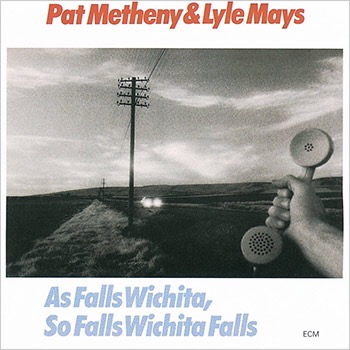 Cincinnati Babyhead reminded me of this outstanding album. I was so into Pat Metheny in 1981 when As Falls Wichita, So Falls Wichita Falls came out, that if Pat had farted on an LP I would have bought it and liked it.
This album was a winner. A departure from the lite jazz albums he had been making with the Pat Metheny Group (PMG) and the straight ahead jazz of 80/81. Metheny had hinted at this new direction on the acoustic, solo/overdub masterpiece New Chautauqua (an album that is not appropriately appreciated in the Metheny catalog – but that is another blog post). As Falls Wichita, So Falls Wichita Falls is a much more composition/orchestration focused album than anything Metheny and Mays had ever done before. It foreshadows the beautifully complex composer/arranger/orchestrator Metheny would become in the Geffen/Warner Brother/Nonesuch years with compositional peaks like The Way Up.
I loved the mellow vibe of the first Group album (it is firmly in my top 100 albums). Ignore my lite-jazz classification above – lite-jazz does not necessarily mean bad jazz – there are some notable exceptions. I also love its follow-up, American Garage. After those two albums, I was ready for something a little more “out there” and As Falls Wichita, So Falls Wichita Falls delivered.
As Falls Wichita, So Falls Wichita Falls trimmed the Group down to Metheny (guitars) and Lyle Mays (keys). They added some spice with Nana Vasconcelos on percussion. And you can’t beat ECM producer Manfred Eicher (although I bet he let the boys have pretty free rain in the studio for this one).
I saw the full Pat Metheny Group that toured in support of this album on Halloween night 1981. They played most of this album, which very much lent itself to a spooky Halloween presentation (I remember the light show was particularly spectacular). It was one of the best concerts I have ever witnessed. So rediscovering this album is kind of sentimental. I will admit this album was not “lost on my shelves,” but it has been a good five years since I gave it a “front and center” listen (it is a great background music album in that it plays well at low volume).
Side one is the twenty-minute titular track. It almost has an ambient feel, but it is not repetitive. It is a long atmospheric suite. Metheny and Mays explore sounds: keyboard washes, ambient noise, rumbling bass, keyboard and guitar riffs, percussion, crescendos, etc. This is all presented in a dramatic fashion. It has a spacey Pink Floyd feel. This is the song that lent itself to a spooky presentation that Halloween night in 1981.
Side two is made up of four shorter songs. “Ozark” open the side. It is a jangly acoustic number that would not have been out-of-place on New Chautauqua except for Mays’ grand piano.
“September Fifteenth” (a special day in my life, but this song is in honor of the death of pianist Bill Evans who passed on 9/15/80 during the recording of this album) is a quiet contemplative number with Metheny gently playing his guitar over Mays’ keyboards. It then becomes a complex duet between guitar and piano, yet it remains contemplative.
“It’s For You” is the pure early PMG sound. It would not have been out-of-place on this first two PMG albums. It does introduce ambient vocals that would later become a big part of the PMG sound.
The final cut on the album is “Estupenda Graça.” It is a short meditation that quietly ends the album. It includes a wordless vocal that has a yearning feel.
In hindsight the album is not nearly as “out there” as it felt in 1981. But a lot of that has to do with how Metheny has extended the concepts of this album for the last 35 years. This album was a prototype for the rest of Metheny’s career. At the time when this album was released, it seemed like a complex beast, now seems like a simple beauty.
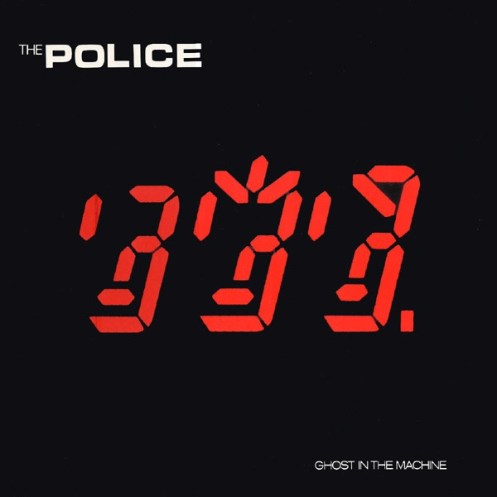
I sometimes forget how huge a pop band The Police were at the end of the 70s and beginning of the 80s. It could be argued that they were the first new-wave band to have mainstream success.
The Police have not been in my rotation for ages, but recently I heard “De Do Do Do, De Da Da Da” on the radio and that prompted me to listen to my favorite Police album: Ghost In The Machine. It is as good as I remember. The things I liked about it are:
- Synths – rarely does adding synths to a rock band make them better – The Police defied the odds and made it work for them
- Horns – I love a rock song enhanced with horns – Sting even plays sax on the album
- Musicianship – The Police were not punks or garage musicians, they were highly skilled musicians – on this album they were fearless about showing off their chops
- Pop – despite their musical sophistication, The Police knew how to write a killer single – there are three hits on this album
- Saw it live – I saw the tour that supported this album and the band was tight
The Police managed to go on to even greater artistic and commercial heights with their next album Synchronicity, but Ghost In The Machine remains my favorite. It is more deliberately pop, whereas Synchronicity seemed at points to be trying too hard to be deliberately artsy. I prefer Ghost In The Machine’s pop.
Ghost In The Machine was the first Police album I bought. Their previous 3 albums had some great singles that got plenty of airplay, but none of them prompted me to buy the LPs. In the old days you needed to be a pretty serious fan to make the financial commitment to buy an LP.
Side One leads off with the big singles one right after another:
- “Spirits in the Material World”
- “Every Little Thing She Does Is Magic”
- “Invisible Sun”
The side then moves into the non-hits. Next up is “Hungry for You” a song sung mostly in French. It has fairly lecherous lyrics that are disguised by being sung in French (everything sounds more beautiful in French).
The side ends with “Demolition Man.” Sting originally wrote the song for Grace Jones for her 1981 album Nightclubbing (a pretty great album too). The Police version is much more rocking than Grace’s version.
Side Two does not have any hits, but is still great. The Police almost become a prog band on this side. They ride a razor’s edge between pure pop and experimentation. The Police manage to live on that edge, with the pop side generally winning.
The opening cut “Too Much Information” has a wonderful horn riff.
“Re-Humanize Yourself” is like a 50s rock and roll song that has been mutated into something very modern with its amphetamine pace and cacophony arrangement.
“One World (Not Three) is a pretty straight reggae tune.
“Omegaman” is a guitar driven song that would not sound out-of-place on a Rush album (another trio of amazing musicians).
“Secret Journey” opens with some nice synth washes and slowly winds up into a quintessential Police song: rhythm, riffs and hooks.
“Darkness” ends the album on a mellow note. This could be a great Sade song.
Overall, the album does not sound dated. In hindsight you can see how influential The Police were on 80s music. And you can see their influence in similarly art-pop bands like Arcade Fire.
What defines The Police, for me, is great songwriting and great musicianship – Ghost In The Machine has a generous portion of both. The Police would only have one more studio album in them – Sting was too big a diva to be bound by a band and Andy Summers and Stuart Copeland had too big of egos to play second banana to a pop star. But they had one hell of a run and Ghost In The Machine shows them at their peak.
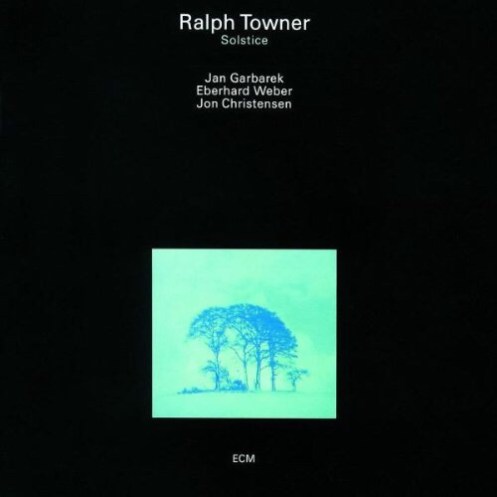
I first discovered Ralph Towner as the acoustic guitarist in the band Oregon in 1978. Oregon’s 1978 album Out Of The Woods, on Elektra, was a small sensation in the jazz world at the time. Their genre was impossible to pin down: jazz, folk, classical, chamber music, world music, etc. It was New Age music before that was really a genre (or an insult). Listening to it today, it sounds timeless.
Over the years I picked up a few Ralph Towner albums (solo and side projects). I knew that Solstice (1975) was his solo crowning achievement, but never managed to pick it up until a CD was reissued in 2008. I enjoyed that reissue for a short bit, but it never managed to speak to my soul. I recently was cleaning out an LP shelf, that houses used records that I have acquired at record shows, that are waiting for a serious listen before filing. I discovered I had picked up a pristine vinyl copy of Solstice. It has been in my rotation the last several weeks and is has officially earned my appreciation.
The album is quintessentially ECM circa mid-70s. That is not to say it sounds dated or clichéd, but that it represents everything that makes ECM a great label: it is quiet yet adventurous and impeccably recorded. Lots of jazz labels have a distinctive style and ECM may be the most distinctive. Depending on your taste you will find it beautiful or boring. I am in the beautiful end of that spectrum. I am a huge ECM fan.
Towner is the principal composer on Solstice (7 of 8 of the tracks). He is also a soloist and accompanist playing 12 string guitar, classical guitar and piano. Towner defers plenty to Jan Garbarek (tenor and soprano sax and flute). Garbarek’s playing is fantastic. The great bassist Eberhard Webber gets plenty of action too (he also contributes some cello). The group is rounded out by drummer Jon Christensen, who provides a light but wonderfully hyperactive touch to the kit.
Towner’s soloing on Solstice is subtle and supportive of the ensemble. But if you listen carefully, you will be blown away by what he is doing with his ax.
The music is atmospheric, but by no means musical wallpaper. It demands your attention and has plenty of challenges despite its gentleness. It is the kind of album that you might be able to get away with as background music at a dinner party if you played it at low volume. But if you played it loud, its cinematic beauty would quickly overshadow dinner conversation.
Towner was clearly a big influence on one of my jazz heroes, Pat Metheny, both in his acoustic guitar playing and in his style as a composer. Metheny said this about Towner in a Downbeat Blindfold test:
“That’s unmistakably Ralph Towner, somebody I hold in high esteem for what I was talking about earlier, the ability to find your own voice on the instrument…I have been knocked out with Ralph ever since I Sing The Body Electric, which was his guitar debut on a Weather Report album years ago. The first time I heard that I was stunned. I’d never heard anybody play anything even remotely similar, let alone improvise with such freedom on a 12-string guitar, which is one of the most cumbersome instruments, very difficult to play. I’m always amazed at Ralph’s flexibility and the power he can get. He’s got incredible touch.”
Solstice is a grand rediscovery in my collection.
Based on Metheny’s tip, I pulled Weather Report’s I Sing The Body Electric off the shelf to give it a reminder listen. That is not an album that has previously resonated with me, but given context and being in a receptive mood, I now appreciate its beauty (and I am reminded that in the early 70s, Wayne Shorter was very much an active participant in the band). Towner’s playing on the second cut, “The Moors” is brilliant. Guitars have been rarely present on Weather Report albums and Towner is given rare guitar prominence on this cut. I see a connection with the ECM sound and Weather Report, that I have never noticed before.
Ever since I started this blog in the fall of 2011 I have been doing a “best of” music list (albums) annually. This is a highly personal list – it is albums released in 2017 that caught my attention and in most cases motivated me enough to write a review/blog post. I have stated before that I don’t write bad record reviews – I don’t feel any need to trash an album. If I am going to make the effort to write a review, it is going to be for an album I like and that I want to recommend. If I wrote a post on an album, I liked the album and given I don’t post that much, it is pretty likely to end up on year-end “best of” list. Except for my album of the year, this list is not in any order of preference. There are a few random notes at the end too. In general the links are to the original post.
Mavis Staples- If All I Was Was Black – This was a Jeff Tweedy/Wilco year for me. Jeff Tweedy released a solo album, I saw Wilco live, in what may have been their best show I have ever seen (I have seen them close to 10 times over the years), they did a magnificent re-release of their first two albums and this Mavis Staples album that Jeff Tweedy produced. This is their third album collaboration and it works the best. As I stated in my original post:
Tweedy and Staples get so deep into this collaboration, that on their duet “Ain’t No Doubt About It,” you can barely tell their voices apart. They are not impersonating each other, it is synchronicity.
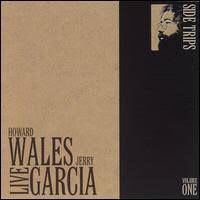
Howard Wales and Jerry Garcia – Side Trips: Volume One (Live) is yet another Garcia live date I have added to my collection – I must have about 25 Garcia solo albums – and most are live albums. This is Garcia playing jazz rock fusion and he pulls it off amazingly well. This is an older recording that was first released on CD in 1998 and was re-released as a Black Friday Record Store Day release on vinyl in 2017.
Per jerrygarcia.com:
From 1970 to 1972, Jerry Garcia and keyboardist Howard Wales played together around the bay area and on the east coast. It was usually instrumental—a jazz session with a lot of other influences thrown in. Sometimes they played as a trio, including Bill Vitt on drums, and other times a bassist, such as Richard Favis or John Kahn, would sit in on the session. This collaboration would mark the beginning of Jerry’s twenty-five-year partnership with Kahn. For Jerry, the appeal of this outfit was the ability to play in a more relaxed context than the Dead. Wales was a serious musician, and Jerry had to work hard to keep up with him, which he would say did more for his ear than anyone else he played with.
 Bob Dylan – Trouble No More – The Bootleg Series Vol. 13 / 1979-1981 is another ambitious collection in the Bob Dylan Bootleg series. This time the focus is on Dylan’s born again period in the late 70s/early 80s. It was bizarre that Dylan even had a born again stage, but somehow it inspired him musically and he was at the top of his game – especially performing live – which is the bulk of this collection. I loved this period in Dylan’s career and it was something I experienced in real-time at a formative stage of my becoming a serious music head.
This collection is blessed with one of the all time greatest liner note essays. Proud atheist and Dylan fanatic, Penn Jillette (of Penn and Teller fame), comes to terms with how great Dylan’s Christian period was (Jillette admits he was a hater of the Christian trilogy when it was released back in the day). Jillette is candid, confessional, insightful and most of all entertaining in his essay. Here is a taste:
I am the fool who still says in his heart there is no God, but Dylan’s gospel is stronger than my lack of faith.
The full collection is not available on Spotify, but this sampler is:
 Margo Price – All American Made was a worthy follow up to last year’s Midwest Farmer’s Daughter. Sophomore albums often are let downs, but this one is not. From the original post:
This is no sophomore slump. Midwest Farmer’s Daughter was not the work of a rookie – Price was a mature talent in her early thirties with plenty of life and musical experience when she recorded it. So, it is not surprising she has released a solid follow-up.
This was a serious contender for my album of the year.
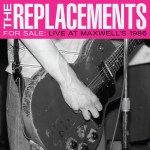
The Replacements – For Sale: Live at Maxwell’s 1986 is yet another collection of old unreleased live music on my list. The Replacements are one of my favorite bands and the fact they are from my home town makes them even better. They were legendary in their live shows for sucking or being transcendent (mostly sucking) and this set is one of their rare moments of transcendence – and as a bonus it is professionally recorded.
This is a quality live recording and remarkably the boys are on good behavior and not subverting the Sire investment in a legitimate live recording. It is a nice snapshot of their catalog at that point in their career. The guitar interplay between Westerberg and Stinson is delightful. It could be argued that this was the end of The Replacements because subsequent albums became more and more Westerberg solo albums. So if you never got a chance to see them live, or if you did and you want a great souvenir, this album is highly recommend.

The Waterboys – Out Of All This Blue – Every once in a while you forget how much you once liked a band. Often bands you once loved have disappeared off the face of the earth. This year I got a double reminder that The Waterboys are great, alive and well. This was a serious contender for my album of the year.
I have not given The Waterboys a thought or a listen in a long time. I recently went to see U2 at US Bank Stadium in Minneapolis. Sadly one of the highlights of that show was the last song played before the lads came on: The Waterboys’ “The Whole Of The Moon.” I made a note to myself to pull out This Is The Sea and give it a spin.
A couple of days later I was at Mill City Sound record store when I saw the double (and deluxe triple) LP Out Of All This Blue by The Waterboys as a new release. I did not even think The Waterboys/Mike Scott was still an active band.
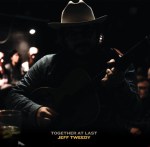
Jeff Tweedy Together At Last is a simple concept, Wilco frontman Jeff Tweedy does stark acoustic renditions of Wilco songs (and some other bands Tweedy is associated with).
As carefully crafted a sonic experience as Wilco is, the revelation of Together At Last is how much Wilco is ultimately Tweedy’s voice. These songs lose nothing stripped down. They are not better or worse, just different; amazingly not that different. Wilco’s arrangements and players are complex and artsy (in a good way), but the privilege here is that the songs are so pure and clean.
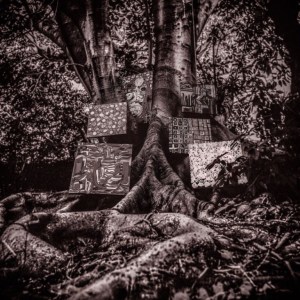
Kamasi Washington – Harmony of Difference – Kamasi Washington returned with new music in 2017, but instead of a huge multi-course meal, he served hors d’oeuvres. This little taste was far from a disappointment, in fact a snack this time around was a better choice than the big meal – I was still full since the last meal Kamasi served. Yet another contender for my album of the year.
This EP is composed, arranged, conducted and produced by Washington. Washington is the featured soloist. Washington has great tone and his engaging phrases that can both caress and bite. He may not end up on the jazz saxophonist’s Mount Rushmore, but he has something special: the ability to musically communicate to old jazz fans like me and to millennial hip hop fans. That is pretty magical.
 Arcade Fire – Everything Now – Arcade Fire is an art band that is not afraid of writing a pop song – similar to their forefathers the Talking Heads and David Bowie . Commercially this album and tour were flops, but don’t let sales define quality – this album and its accompanying tour are top-notch.

HAIM – Something To Tell You – I have few pure pop albums on this year’s list and it does not get much sweeter than this savory glob of bubble gum.
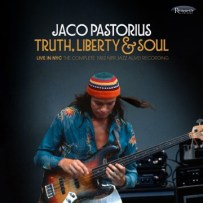
Jaco Pastorius – Truth, Liberty & Soul – is a full concert – something that was missing in Jaco’s catalog. It is professionally recorded and captures Jaco at his best as a player, composer and band leader.
Truth, Liberty & Soul is a full concert from the Word Of Mouth tour. A New York show from 1982 recorded for a NPR program radio program called Jazz Alive. It was recently issued as a limited Record Store Day (April 2017) three LP set. It came out digitally May 26, 2017 (as best I know it is only available on CD or to download via Apple, it is not on streaming services).
 Ryan Adams – Prisoner – Adams continues to release quality material twenty years into his career. I keep forgetting about the B-Sides album that was released as a companion to this album – I need to give that a good listen.
Each song on Prisoner reflects on love lost. The guitars speak as much as the lyrics. As always, Adams crafts beautiful sonic soundscapes and is a fascinating pop artist.
The Brothers Robinson – I am a longtime fan of the Black Crowes and post Crowes’ work of brothers Rich and Chris Robinson. This year there were three releases associated with the brothers:
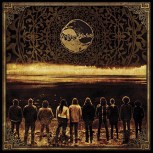 Magpie Salute – The eponymous named debut from Rich Robinson’s new band has lots of great covers and a nice 70s feel. It is mostly live, but unobtrusively so.
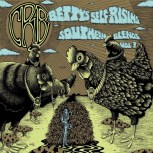 Chris Robinson Brotherhood – Betty’s Self Rising Southern Blends Vol. 3 is a nice long live set. This is the third in a series of soundboard mixes by renowned Grateful Dead engineer Betty Cantor-Jackson.
It is bluesier than their studio albums. It is sloppier in a good way – their studio albums can be a bit too buttoned down. It includes originals and covers. There is more diversity to the set – the recent studio albums have been a bit too cohesive.
 Chris Robinson Brotherhood – Barefoot In My Head – I have a half written post on this album. That is more about my laziness than lack of enthusiasm for this fine album. In fact, it might be their best release. From the unpublished post:
Although the CRB has yet to lay a studio turd, this sounds like their primus inter pares. With Barefoot In My Head they have crafted their most diverse, adventurous and polished album of their career. Over a hundred shows a year for seven years will either bring a band together or tear it apart. It clearly has brought this band together.
 Harry Styles – Styles is the most blatantly pop artist on this list. Despite his pedigree, Styles has crafted an album that would not have sounded out-of-place on late 70s FM radio. This came dangerously close to being my album of the year.
On release day (May 12, 2017), I got up for a bike ride planning to listen to the new Todd Rundgren album on the ride. I noticed that Harry Styles’ solo debut was out so I decided to try it. Styles’ appearance on SNL earlier this spring impressed me.
As I pedaled and listened to the album, I was amazed. I don’t know what I was expecting, but it was not this. This is sophisticated serious pop. As I listened, I thought of three Bs: Jeff Buckley, Beck and dare I say David Bowie. The more I listen, the more influences I hear (as the Bard says: “Steal a little and they throw you in jail/Steal a lot and they make you king”).
Styles does not have one of these tour de force pop voices. He has a good voice, not a great voice. However, he has what all the great pop voices have: authentic emotional expression. When his voice hitches on the high notes of “Sign of the Times,” it is more powerful than perfection.
 Laura Marling – Semper Femina – Marling continues to put out high quality contemporary folk. I had the good fortune of seeing the tour supporting this album. The deluxe edition of the album includes a live version of the album as a bonus.
This album is not a radical departure from her past couple of albums. It is still subtle and folky, but it does have a little more adventurous and rich arrangements. Her voice has grown and is slightly different on each cut.
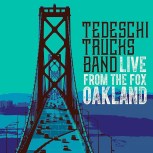 Tedeschi Trucks Band – Live from the Fox Oakland – Tedeschi Trucks Band is best consumed live and this album does a nice job documenting a recent tour. In addition to great audio, there is a solid DVD of a live show too.
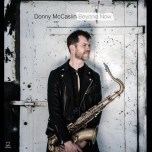 Donny McCaslin – Beyond Now – I discovered McClaslin on Bowie’s Blackstar. McClaslin’s band provided the jazz feel on that album. This is a late 2016 release, but I listened to it in early 2017.
McCaslin’s band reminds me a lot of Weather Report. It is not derivative or imitative of Weather Report, but it is:
- A sax and keys based combo
- Jazz/rock fusion
- Orchestral (with only a handful of instruments)
- Not confined by boundaries.
At times, it sounds like LCD Sound System (“A Small Plot Of Land” – which is actually a Bowie cover), punk (e.g. FACEPLANT) and ECM fusion (most of the rest).
 Flo Morrissey and Matthew E. White – Gentlewoman, Ruby Man – I had forgotten this release until I reviewed all my 2017 posts. I re-listened and was reminded of how good it is.
I have been a Matthew E. White fan since his 2012 release Big Inner. White has amazing pop sensibility – he is Lee Hazelwood updated for today’s ears. I was not familiar with Flo Morrissey. This album is all covers – some pretty famous songs and some not so famous.
This album has a great back story. White saw a review of Flo Morrissey’s album in the U.K. newspaper The Guardian (it was next to a review of White’s own album). He was intrigued and reached out to her – and the rest is history.
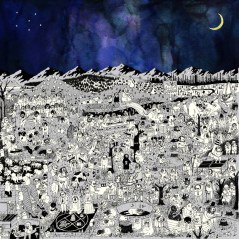 Father John Misty – Pure Comedy – And the winner is… This is my number one album from 2017. Pure Comedy was a slow burn for me. It was not that I didn’t like it, it is just that I did not like it as much as the previous two FJM releases. But over repeated listens it grew on me. Then seeing FJM live this summer – where generous portions of the album were played – put me over the top. In the end it is my number one album because I have consistently listened to it throughout the year and it is still prominently on my playlist.
This album is one of the finest pop criticisms of contemporary culture I have heard in a long time – especially pertinent given it is not coming from a jaded baby boomer millionaire bard (depending on your definition FJM is at the tail end of Gen X or an early Millennial).
FJM has even gotten more cynical since his last album – an impressive feat. However, these are cynical times. Musically it is a mellower album, but not dour. FJM continues to conjure elaborate pop arrangements.
And finally…I have a few final thoughts.
Missed the list – There were a couple of albums that caught my attention at the end of the year:
- Vijay Iyer Sextet’s Far From Over is sophisticated yet easy to listen to jazz. Not easy-listening – easy to listen to.
- Neil Young & Promise of the Real – The Visitor – Neil continues to pour out more material (between reissues, his archive project and new stuff) than the average fan can consume. This is one of Neil’s most diverse albums and one of the best back up bands he has ever played with (that is saying a lot). Neil also introduced his online archive. For now, it is free. Neil is streaming from his catalog at the highest quality your internet connection allows (192 kHZ/24 bit of feasible).
ECM is now streaming – One of my favorite record labels finally joined streaming (and Spotify specifically) in 2017.
Stephen Hyden – I discovered Hyden’s podcast late in the year when he posted an extraordinary interview with Wilco. He is a great interviewer and music head.
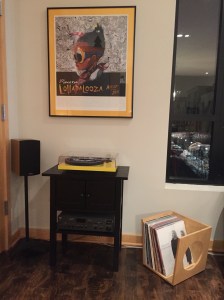
Record Rack – My wife and I like to go to craft shows and at one of them this fall we found the perfect “in rotation” record rack from craftsman Sgot B. See photo below for this amazing and perfectly designed rack. Sgot B put some serious design thought into this beauty – it is at the perfect angle for flipping, without the LPs falling.
Live Shows – I saw a bunch of great live shows this year. The highlights were:
- Lady Gaga (at the X)
- Wilco (Palace)
- Arcade Fire (Lollapalooza)
- Laura Marling (First Ave)
- Kamasi Washington (First Ave)
- Margo Price (First Ave)
- Bon Iver (Rock the Garden)
- Father John Misty (Surly)
- Sturgill Simpson (Portland’s Arlene Schnitzer Concert Hall)
Well that is a rap for 2017.

 Axl's Catch Groove