
My virtual buddy Jim tipped me off to Deodato 2. I have been a long time fan of Deodato’s debut on CTI (Prelude), but had never listened to Deodato 2 . After Jim’s kick in my pants I dialed up Deodato 2 on Spotify and instantly liked it more than Prelude. Since then I have been searching for a vinyl copy and picked one up last week in Chicago while visiting Pwelbs at Reckless Records in Wicker Park (in very good condition for a mere $3 – damn I love vinyl bargains!). To add to the intrigue Pwelbs had slipped Deodato’s Prelude into his soul jazz playlist (AKA DJ Funky Socks) without any influence from me.
Eumir Deodato is a Brazilian keyboardist, composer and producer. He has his hand in works from Sinatra to Lupe Fiasco. Prelude is a soul/funk jazz classic and Deodato 2 is just as good, but somehow did not catch the same acclaim as Prelude. John Tropea guitar work is absolutely burning throughout the album. My favorite cut on the album is Super Strut, but is hard to beat Deodato’s funky take on Rhapsody In Blue.
This album is very dated 70s soul jazz – but hey that is a feature not a defect. This is the classic CTI sound of the early 70s with amazing sidemen: Billy Cobham, Jon Faddis (Madlib’s uncle), Herbert Laws and Stanley Clarke to name the more prominent names. Deodato himself is a very funky keyboard player.
This is an absolutely epic slab of soul jazz perfection. Dig it up!

After years of Arcade Fire being hipster darlings, it seems like all the hipsters are now haters. I assume they resent that Arcade Fire is now mainstream and the U2 of their generation. I love the way Arcade Fire has hyped the album – they have attracted attention without naked self-licking.
I think this is an epic album, For me it is their Achtung Baby – an appropriate nod to Euro-disco pop without loosing their soul. Their sound, but not; exactly what makes a career in pop music: constantly shape shifting. Yesterday I played through the full Arcade Fire catalog on a long bike ride. With each album you could hear the careful trajectory from quirky indies to full pop stars (with Grammy’s under their arms – popular and critically acclaimed). With Reflector they have arrived at their destination – perfect intelligent pop in the tradition of The Beatles, The Stones, Bowie, U2 and Radiohead. Every Arcade Fire album has been different, yet not schizophrenic – it has been very natural organic/natural growth.
Quick thoughts on each of the cuts:
- The opening cut and current single “Reflektor” is a fun and danceable; hip disco – competitive with anything on the recent Daft Punk smash – it even has a Bowie (Arcade Fire mentor) cameo.
- “We Exist” has an infectious bass line that could almost be derivative of Bon Jovi’s “Livin’ On A Prayer” (I love Bon Jovi’s Slippery When Wet – it a pop masterpiece – this is not a snarky or ironic complement).
- “Flashbulb Eyes” A bit of a a reggae lilt without being obvious, yet a rock song.
- “Here Comes The Nighttime” – A traditional Arcade Fire – a song that would not have been out-of-place on previous albums. Richly textured with great instrumentation.
- “Normal Person” is a contemporary T-Rex romp.
- “You Already Know” is bouncy pop – think of an arena version of Bell and Sebastian.
- “Joan of Arc” has a Blondie “Heart of Glass” feel, but thicker and meatier.
- “Here Comes The Nighttime II” is a sub-three minute mini-suite in the spirit of The Beatles.
- “Awful Sound” – Very cool big drum sound – a bit of a Flaming Lips vibe.
- “It’s Never Over” – This is great example of the mash-up of the established Arcade Fire and the Euro-disco styling of this album.
- “Porno” is the best Cure song I have heard in years!
- “Afterlife” – great atmospheric anthem – this should have been the last song (and they could have saved money on the second CD).
- “Supersymetry” – this seems like the only throw-away on the album. It starts out as a slow atmospheric piece with a nice hook, but the song ends as s a long senseless tail of Coldplay swirl that degenerates into mildly annoying ambient wallpaper – we are talking over five minutes here!.
Arcade Fire has always had a big and expansive sound and this album continues that tradition. This band is arena ready. It is fun to play “what’s that influence” as you listen, but it is never imitative, but rather an impressive reinventing of influences within the context of the well established Arcade Fire sound.
I really like this album and I have been playing it to death. Although I own the whole Arcade Fire catalog and have loved various songs along the way, this is the first of their albums that really resonates with me. Clearly on my top 10 for 2013 and good enough to have purchased the vinyl edition! Thanks for living up to the hype Arcade Fire!
P.S – Listening to the first Arcade Fire album Funeral, I was struck by how they really positioned pop ears for the current wave of folk rock of Mumford and Sons, Lumineers, Avett Brothers, et al. I can’t describe it – it just seems those bands’ popularity makes more sense post Arcade Fire’s debut.
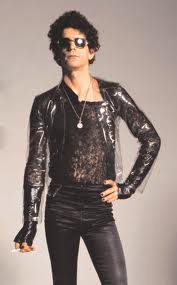
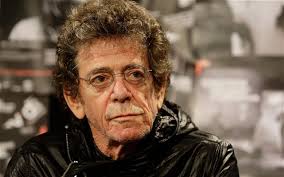
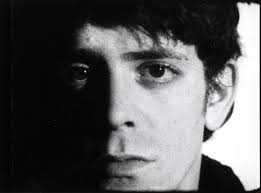
A few years before I “discovered” Lou Reed, I “discovered” his fellow Velvet Underground cohort John Cale via Cale’s Sabotage/Live (recorded in 1979 at the CBGB – doesn’t get more rock and roll than that). I played that album gray. I didn’t have a clue who John Cale was – I just read a review that sparked my interest. I have never owned another John Cale LP or Velvet album for another 30 years.
I knew who Lou Reed was, “Walk On The Wild Side” was one of the most arresting singles I have ever heard on the radio. But I did not become a fan until I fell in love with his brilliant mid-80s classic LP New Sensations. I saw Lou live in Minneapolis when he was touring that album. I was struck by New Sensation’s simplicity, humor, New Wave feel, but most of all Lou’s irresistible cool.
I started to explore his catalog with a wonderful compilation, the double LP: Rock And Roll Diary 1967-1980. That album had Velvet songs and Lou solo. One of the coolest part of that album was the quote on the back: “Record One of this two album set was assembled from various sources and the sound quality is less than state of art. The music more than compensates for any loss in fidelity.” Amen to that!
It took me a few years to “get” The Blue Mask, but what an amazing album that is once you are ready to hear it.
Lou did me a major favor when he covered Dylan’s “Foot of Pride” from a Dylan album I never understood – Street Legal. Lou managed to find a gem in one of Dylan’s most under-appreciated albums. The cover was the standout track from a 29 track all-star Bob Dylan tribute album/concert: The 30th Anniversary Concert Celebration. Ironically Street Legal was the first Dylan album I ever bought and I hated it. Lou elevated Street Legal to one of my top-5 favorite Dylan albums.
I am one of the handful of people who actually liked Lulu – Lou Reed and Metallica together at last.
And how cool was it that Lou was married to Laurie Anderson – whose “O Superman” was one of the most offbeat hits of the 80’s (if not all time). What a cool couple they must have been.
So Lou I will miss you – a true rock and roll icon. I will use your death as reason to truly study your catalog. Just today I “re-discovered” two absolute gems: “Pale Blue Eyes” and “Street Hassle.” R.I.P. Lou Reed.

Last week David Byrne wrote an article for the British national daily The Guardian about the evils of music streaming. Duh, the internet has been disruptive to the music business – retailers, labels and the artists have been trying to figure this thing out since Napster exploded on the scene in 1999 (yeah 15 years and the music industry still has not figured this internet thing out).
I have been using Spotify for several months now and I love it. I still manage to spend $100 to $200 a month on music (mostly CDs and vinyl – I rarely buy a download). I realize I am an oddity in my volume of purchase (although I wonder how odd am I when I am 200th in line outside my independent record store on Record Store Day a full hour before they open).
Byrne argues the boom in digital streaming may generate profits for record labels and free content for consumers, but it spells disaster for today’s artists across the creative industries. I can see what he saying, but musicians have been paddling against the current forever. Making music is a labor of love and very few are able to convert their avocation into a vocation.
I am almost 55 and I really don’t pine for the old days of reading a review in Rolling Stone that sparks my interest only to buy the LP, listen and be disappointed. Now every Tuesday I add the new releases I am interested in to my Spotify playlist and sample them. When I read a review or a profile that catches my fancy I immediately add it to my Spotify playlist. Nearly every week I stop by my independent record store and buy the vinyl or CD (if vinyl is not an option or is insanely overpriced) for the albums that resonate with me.
I find the access to music on the internet absolutely awesome and it has introduced me to a ton of music I would never have been able to afford to listen to. I love the convenience of Spotify – just this morning I was reading an article (on my Kindle) in the Wall Street Journal about pianist Michele Rosewoman and percussionist Pedrito Martinez (on the stationary bike at the gym) and I was interested enough to want to listen. I searched for the reviewed albums on Spotify. Michele Rosewoman was not there (too bad I will probably never listen to you Michele) and Pedrito Martinez was – I proceed to enjoy Mr. Martinez group (it is too early to tell if I will be motivated to purchase a physical). In the old days I would have likely passed on the Martinez LP due to my limited budget (or have forgotten my intrigue within moments of setting down the paper). Martinez would have never hit my ears.
I have started to sample Spotify’s suggestions based on my listening habits and that has been a delightful bonus to the service. I chuckle at some of their suggestions, but for the most part they as clever as a good conversation with competent record store clerk.
So Mr Byrne the cat is out of the bag and she is never going back in. Musicians are going to have to find a different way to monetize their art than selling LPs. And lets face it, back in the day for every Talking Heads there were several thousand bands that never made a penny (and those where the years of bountiful harvests in the recording industry).
There is no turning back – the only way a musician can make money is going to be though live performances, licensing, patrons and souvenirs (sorry but CDs and vinyl LPs are right there with T-shirts now). They need to cultivate fans that have a sense of responsibility to the artist. Things like crowd sourcing give me hope. Fans are going to have to invest (e.g. crowd source), buy direct (e.g. bandcamp), show up (go to live shows) and buy physical (vinyl and CDs) if they love an artist. But I need to be real here, despite my music buying habit, my motivation is not to be the artist’s patron. I buy music in the form of CDs and vinyl LPs to meet my need for better quality sound than a stream and to feed my desire to have a physical asset.
I am not worried about the musicians – they will find a way to eek out a living just like they always have. I believe they will find ways to leverage the internet. It is so easy for Thom Yorke and David Byrne to spurn the internet – they made it a long time ago under a different paradigm. I have to put my faith in a band like the one my son manages (whysowhite) hustling any gig they can get and spreading the word on bandcamp, Spotify, YouTube, SoundCloud, etc. I bet they are making as much money as they would have in the old days without going in debt to a record company via an advance. So surprise – technology changes the game.

Sheryl Crow’s new country album probably seems like the least hip album for Catchgroove to review, but hey I got some history with Sheryl. I have been a fan since her brilliant debut, 1993’s Tuesday Night Music Club. She followed that up with the pop masterpiece Sheryl Crow which was produced by the very hip Mitchell Froom and Tchad Blake. I was officially hooked. At this point she was commercially and critically successful enough for Bob Dylan to personally gift her a song (Mississippi) for the equally good The Globe Sessions.
Then Sheryl had a monster hit – the kind of monster hit that can ruin your career by turning you into a celebrity – a real star – (2002 “Soak Up the Sun”). My daughter was a tweener and we were both huge fans – we loved that song: it was a cruising, roll down the windows sing-along anthem. Crow crowned her celebrity with a tabloid romance with (then) America’s hero Lance Armstrong (the pre–douche bag years for Lance). She was no longer hip – she was practically Cher – she even survived a celebrity disease – breast cancer.
There is a fine line between being a star and being a self-parody and cliche. Sheryl was teetering. She stumbled. Since the mid-2000s Crow’s music career has been floundering – highlighted by three not bad (worse – they were unremarkable – isn’t it better to out right suck?) releases.
So it was with some suspicion that I came to Sheryl’s COUNTRY album. Genre jumping to country is often a calculated career-stretching move (Darius “Hootie” Rucker), mockery (Rolling Stones), or irony (Elvis Costello). In most cases it is not that much of a stretch even if it seems like hanging on for dear life (Bon Jovi).
I think Crow comes to country music honestly – all I ask from a musician is some basic authenticity. She has always had a touch of country, roots rock and folk in her pop stew. And let’s face it, today’s county is more inspired by The Eagles than Hank. And for years she has lived on a farm outside Nashville for goodness sake. What is a 51-year-old pop diva to do? Make a fool out of yourself trying to compete with Katy Perry, Lady Gaga and Miley Cyrus? Or make a dignified mature county-pop album? The choice seems obvious.
So how does she do? Well pretty damn good. There are some conventional country songs about drinking, cheating, disappointment. There is Midwestern/Southern sentimentality regarding family and home. She plays it with a sob, but also with a wink and grin – which are country staples. She also sprinkles in songs that would not have been out-of-place on her mid-90s masterpieces.
So she did exactly what I would hope: she made a credible Sheryl Crow album, that just happens to be more country than rock. It positions her to take back her career and gives her a mature platform to play out the next 20 years. This is not a daring album and it is not a classic album, but it gives me reason to stay interested in Sheryl for another few albums and concert tour or two. All I ask for, as a career long fan of an aging pop star, is to keep me interested and don’t turn into an oldies act (all I ask for from my baseball team is give me hope through the end of August – see I don’t ask for much). Thanks Sheryl, I am still with you!
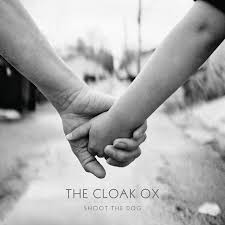
I was reading a recent article by StarTribune’s Chris Riemenschneider about a Minneapolis band The Cloak Ox and it perked my interest. I searched them on Spotify and gave them a listen.
SIDE BAR – Spotify is too good to be true. For 10 bucks a month I can load my iPhone up with new music every release Tuesday or every time I stumble across and article like Riemenschneider’s profile of The Cloak Ox and sample new albums. I know Spotify does not give the artist shit, but I try to make it up to the artist by buying the CD (or if feasible their vinyl LP) for the ones I like. Don’t worry no artist is losing sales – I would never have bought your album anyway (as Eeyore says “thanks for noticing me”). So the fraction of a cent you get from my one listen is better than nothing. There is the chance I might fall in love with your album like I have just done with The Cloak Ox’s Shoot the Dog.
Holly crap – is this good. How does a local band that I have never heard of (not much of stretch as I have my head pretty deeply buried up my middle-aged suburban ass) have such a fully realized sound and totally coherent ALBUM? This is why I keep checking out new music – the same reason prospectors keep panning – for that amazing heavy gold nugget. The Cloak Ox just made a big old brick of an ingot out of that nugget. I have listened to this at least once a day for a week and it just gets richer with every listen.
I hear Pink Floyd, Television, Queen and Wilco, yet it is totally original. Ever read one of those top 100 lists and you see something you have never heard of? You check it out and wonder how you missed this your whole life – that is what The Cloak Ox’s Shoot the Dog sounds like to me. I feel like I found a lost classic, yet it just came out a few weeks ago and it a debut album on a local indie label!
The music is great, but as bonus the album is beautifully recorded with rich arrangements.
I am truly stunned by this album’s greatness – can’t wait to get the LP.
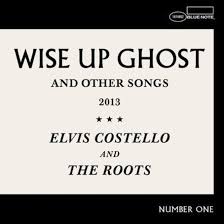
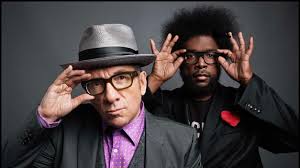
When this release was announced early this year it made perfect sense to me. I have been an Elvis Costello fan since my buddy Jon (as roomies he played Get Happy daily for 6 months) introduced me to My Aim Is True in the late 70s. Elvis has been a true musical visionary since day one. He has been eclectic, adventurous and a true collaborator.
?uestlove and The Roots are one of the few hip hop groups I actually paid attention to. Phrenology was one of the few hip hop albums that was in my regular rotation in the early 2000’s. The Roots are one of the few hip hop BANDS and during their tenure on the Jimmy Fallon show they have proved to be the ultimate collaborators supporting every genre imaginable.
For some this may seem an odd paring, but for me this makes total sense – both Elvis and The Roots are adventurous collaborators. But how does it sound? Fantastic! On first play I knew this album would make my 2013 top-10.
This album is funky as hell, yet Elvis is Elvis – no matter what genre EC plays with he is always his own unique voice. There is nothing contrived here – there is no pandering. I don’t know how to describe this other that it is Elvis Costello and The Roots are playing exactly how you would expect them too – no better than you could ever imagine them to. When you listen to “Refuse To Be Saved” you understand how Prince unified funk and New Wave to make Prince music – Elvis and The Roots nod knowingly. I can’t begin to describe how perfect this music works.
I can only hope that the reference to “Number One” means there is a sequel in the can. All I can say is ?uestlove and Elvis Costello is – together at last!

I had the privilege of auditioning a prototype of a high-end phono preamp by Audio by Van Alstine. I met Frank Van Alstine last year when he demoed some of his products at the Audio Society of Minnesota.
At the Society’s most recent meeting Frank announced he would like to audition his prototype phono preamp in some members’ home systems. I so loved what I had heard last year I jumped at the opportunity for Frank to sprinkle some of his pixie dust on my system – even if it was only going to a fleeting one evening upgrade.
I am not technical – I don’t understand audio and I don’t care that much to learn – I love music and I love how good equipment can enhance the listening experience. Every time I get a new piece of equipment I discover something new about my old music. Frank sent Dean Barnell over with the prototype. Dean did his best to try to explain the piece (officially Fet Valve phone section): multi-stage, 4 tubes (2 AX7s and 2 AT7s), regulated power supply, blah, blah, blah. It was lost on me. I know Van Alstine makes great equipment and I just wanted to settle in and listen. I have a pretty humble tube-based phono preamp (Bellari VP130). I was curious if the Van Alstine would make much of a difference on a low-end system like mine – I assumed it would be different, but would it be desirably different?
Dean was a delightful listening partner and we sampled 7 albums. First up was side one of Tedeschi Trucks Band’s Revelator. I picked this because I knew it had a challenging mix – an 11-piece ensemble with a top-notch female blues vocalist. The first thing I noticed was that the record sound much sharper and in focus without being harsh. I had been listening to the album before Dean came over and it was muddy by comparison to what I was now hearing. This album has a very thick mix and if not played through a good system the 11 pieces can get lost or overshadowed, but through the Van Alstine all the musicians were clearly there without being jumbled mess. Wow – Van Alstine had accomplished something here.
Next up was Laura Marling’s “Take The Night Off” from her excellent album Once I Was An Eagle. This is much subtler, quite and acoustic cut than the Tedeschi Trucks we had just listened to and this exhibited another feature of the phono preamp: it was incredibly quite allowing the gentle nuances of Marling’s music to be fully revealed.
We moved on to some straight-ahead jazz from Woody Shaw’s live album Stepping Stones. This is blowing session with lots of horn solos. The Van Alstine provided a nice wide live sound stage.
We moved to a funkier side of jazz with George Benson’s Giblet Gravy. I picked this piece because I knew it had some pretty elaborate arrangements and heavy bottom end – namely some nasty baritone sax from Pepper Adams. Baritone sax is a great test of an audio system and Van Alstine component brought it front and center. Sadly I am re-listening right now on the Bellari VP130 and it sounds pretty muddy and most of all wimpy. I will need to erase this Van Alstine from my mind.
Next up was the contemporary analog masterpiece Daft Punk’s Random Access Memories. This is bass heavy disco album and I started to see a theme here: Van Alstine really knows how to present the low-end in a way that I like – thick, yet punchy.
Tom Harrell’s Sudan from the soul jazz masterpiece Idris Muhammad’s House Of The Rising Sun spun next. This is a drum and percussion track that really featured the Van Alstine’s strengths: a strong low-end without upstaging the rest of the music.
We finished off with Ryan Adams Ashes & Fire (side 1) from 2011. This is very dynamic album leaping from quite (and sometime silence) to loud within a single song. The Van Alstine played the whisper as elegantly as the scream.
In summary this is a great piece of equipment that made an immediate positive impact to my humble system. It chief positive characteristics for me were:
- Its very positive handling of the bottom-end with out upstaging the rest of the music
- Its delicate handling of the quite passages – it is so QUIET
- Its crisp yet tube-icious texture
I am not the target market for this component – I have a collection of sub-$500 components and this is component, if it comes to market, will be much more than that. But given the quality Audio by Van Alstine, the components are Rolexes at Seiko prices – expensive, yet a good value. If you have a high-end system and are in need of a quality phono preamp you had better hope Van Alstine brings this prototype to market.
PS Audio by Van Alstine’s Dean Barnell was a great listening partner – he has mastered the fine art of conversing when appropriate and actively listening (silently) the rest of the time. A true gentleman to spin some wax with – nice to meet you Dean!
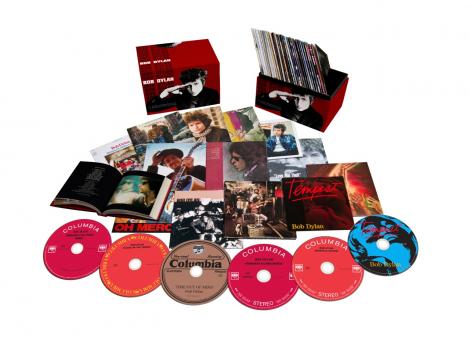
November 5, 2013 Columbia Records releases Bob Dylan: The Complete Album Collection Vol. 1. 35 CD for $256 bucks. I don’t know what to think about this – how many ways can Bob extort me? I have most of these albums on vinyl, low quality CDs, remastered CDs, mono-box CDs, and SACDs. Do I need this set? Do I even want this set? What will Volume 2 be?

Or do I want to pay $100 more for a novelty USB presentation of high quality FLAC format (24bit 44.1kbps) and MP3 format (320kbps)?
I am tempted by:
• All 41 official albums, including 14 newly remastered titles (hopefully the other titles were previously remastered vs. Sony just pulled what ever was easiest of the shelf)
• Also includes a 2CD compilation of songs not included on the original albums
• All the original artwork reproduced
• Hardcover booklet with extensive liner notes and rare photos
Tempted – but is it worth it? Should I wait for a vinyl version? Should I wait for the boutique vinyl reissues? Should I wait for the Neil Young Pono version? Or should I be a grown up and ignore this whole thing and spend my money on something I really NEED? Well I have 5 weeks to worry about this – I am stressed!

The Audio Society of Minnesota continues to amaze me with thought-provoking meetings. This year’s kick-off meeting featured the Tape Project. The idea here is to get master tapes and covert them to audiophile quality consumer reel to reel tape. This is a very expensive proposition. First getting a vintage reel to reel machine in good shape is a about a $1200 investment (and likely in need some reconditioning so you need money and friends with skills). Then each album is about $500 (how dare I complain about 180 gram vinyl at $30). Back in my youth, reel to reel was the ultimate audiophile format.
The meeting started with a Skype interview with Paul Subblebline, one of the chief partners of the project, explaining the process. Half the battle is finding quality source material, as few labels take their archives seriously. The next battle is finding quality blank tape stock. It sounds like The Tape project is both diligent in finding quality masters and conscientious in their tape stock. Technically these guys know what they are doing – they are not amateurs, but true pros. It is pretty apparent this is a labor of love – nobody is getting rich off this (except the greedy labels and their licensing fees).
Then we headed into a listening session. A good reel to reel is the best analog sound you could ever experience – the idea of carefully and competently dubbing the analog master tapes to the consumer equivalent is pretty mind-blowing.
So how did it sound? The first sample was a classical piece – I was too ignorant to evaluate. Next up was Credence Clearwater Revival’s “Willie And the Poor Boys.” it sounded like what I imagine the original mastering studio wizards heard. It was about as alive in studio as you can get. Every instrument was so distinct and when I closed my eyes I could imagine John Fogerty cutting the vocals behind the glass. I was starting to get it. Another classical piece sounded good, but that is not my thing.
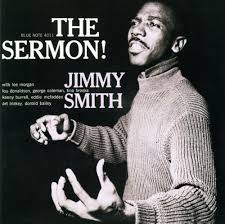
The the coup de grâce: Jimmy Smith’s The Sermon! (a Rudy Van Gelder Blue Note). Oh my – this was like nothing I have ever heard before (and I have heard this album dozen’s of times). I would pay $500 to have this edition (if I had a system to play it on). Van Gelder is the greatest jazz engineer/producer of all time and this is like reading his doctoral thesis. I went home and listened to my 2000 RVG remaster on CD. It did not sound like shit, but it was not what I just heard either. The CD did not have the warmth or the nuance. The most arresting sonic feature I witnessed on the reel to reel version was a subtle echoing of the horn featured in the left channel in the right channel – the CD is nothing like this. I honestly will not forget the beauty of that reel to reel recording and I know I will never hear The Sermon! like that ever again. A fragile moment.

 Axl's Catch Groove