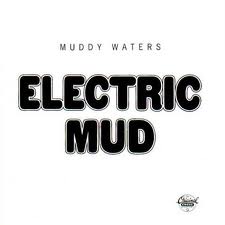
 I can’t remember how I stumbled across this record this past year. At the time I read something about it that caught my attention. So I did a little research and leaned this was a reviled album – borderline blues blasphemy. Well I was not going to spend my money on that. Then this past week I was paging through Rolling Stone and saw that The Black Keys’ Patrick Carney had a song off the album on his Killer Grooves playlist. That was it – this deserved new consideration. So I downloaded a copy off of emusic.
Well now we know where the Black Keys got their sound. This is dirty filthy psychedelic blooze. The Patrick Carney recommended track is “She’s Alright” a Bo Diddley song. The Muddy version is wonderfully nasty and it degenerates into an instrumental of “My Girl.” Upon further research I learned the Black Keys’ She Long Gone samples Muddy’s version.
I am a big fan of the Black Keys and always knew they were derivative and was intrigued to know their source material. This is clearly an important piece of their DNA. If you like the Keys you will like this.
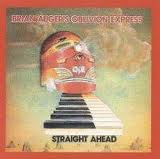 The stand out track for me is a cover of Wes Montgomery’s Bumpin’ on Sunset (thankfully no vocals to mess it up). A very mellow track that is crying for a deep laconic bass rap over it. This is late night after several cocktails slip off your socks music.
I am no expert on Brian Auger’s Oblivion Express, but the few albums I have picked up are amazing. They mix funk, rock and jazz rock fusion. Allegedly this is one of their weaker sets. By my ears this is pretty cool stuff. The only hitch is they tend to have some pretty sappy vocals. But the instrumentals and the music behind the vocals is pretty amazing. Fortunately even on the vocal songs – the vocals tend to be short – with the instrumentation taking front and center
Auger plays a variety of keyboards. The drums and congas will knock your socks off. Guitar and bass are very funky. If I was hip hop producer there would be some pretty tasty samples here. This recording is from 1974, but it has a timeless quality to it (except for those damn vocals that make it dated as hell). I swear Steely Dan must have been inspired by some of these tracks.
Here is live version of Bumpin’ on Sunset from the same era that will give you the feel. Unfortunately it included sappy vocals (get over them – it is worth it).
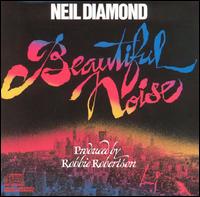 Sometimes I am embarrassed to admit the crate I am digging through is my own collection. In my last post I talked about a presentation I heard by John Calder. As an ice breaker John told a great story about his experience working on this album in the mid 70’s. As John told his story I realized I had this album in my collection and I think I might have listened to it once. I couldn’t have told you a thing about the album.
Tonight I pulled it out and gave it a listen. I fortunately have a near mint vinyl edition.
First check out the cover. I am trying to think of another album by a major star who has another major star noted on the cover as the producer (The Band’s Robbie Robertson). I always wondered why Neil had such a prominent place in The Last Waltz. Well I guess it is because Robbie Robertson had spent last couple of years producing this record for Neil.
I have couple of album guides so I looked up this album: Rolling Stone Album Guide: one star; Music Hound Rock Essential Album Guide: 3 bones (stars) and Allmusic.com: 4 stars. I love when an album can be both reviled and loved.
This was designed as a concept album glorifying Neil’s Brill Building start in the music business. I am not a huge Neil fan, but I think he was primarily a singles artist up to this point and this is a fully realized 70’s ALBUM. Robbie Robertson’s name on the cover is clearly a “take me seriously” statement.
So how does the music sound? Pretty good. There is one certifiable hit in “If You Know What I Mean.” The music does not have an obvious Band/Robertson feel. Nor does it have the schmaltz that would come on future albums. The best way to describe this is that this is Neil’s “Born to Run.” Arrangements are complex, but subtle. So overall I would put this in the 3 star category, but the experience of listening to this album tonight is greatly enhanced by hearing John Calder’s reminisce about the making of this album the other night at the Audio Society of Minnesota.
The third Thursday of each month the Audio Society of Minnesota (ASM) meets at the Pavek Museum of Broadcasting in St. Louis Park. This week I attended my first meeting and I thoroughly enjoyed it. Being with about 30 people who are even more geeked-out about stereo equipment than I am is pretty cool (think of the cast of “The Big Bang Theory” at middle age – minus the chicks). However, the highlight of this meeting was a presentation by John Calder of Acoustic Geometry.
The message I took away from John’s talk was that audiophiles focus too much on what their music is played through (tonearms, speakers, etc.) and not enough about where it is played in (the listening room). The room, and it inevitable audio flaws, affects the music as much – if not more – than your speakers. So before you spend more money on upgrading components, consider fixing the acoustics of your listening room. Now granted John has products he would like to sell you to do just that – but it does sound like pretty sound advice. John explained the journey that developed the line of products at Acoustic Geometry that can be used to correct any room – whether recording studio or audiophile’s listening room. He was candid about his biases and was both entertaining and educational.
If this meeting represents a typical ASM meeting I will be back.
As a side note the Pavek Museum looks like a pretty cool place – I will have to check that place out in detail another time.
 I can’t find any background information about this album. Gato Barbieri has a unique jazz style. He was very popular in the late 70’s and early 80’s yet he was neither jazz rock fusion or smooth jazz. He made his name in the free jazz movement of the 60’s and 70’s. It has a distinctive Latin feel. Gato generally blows his tenor hard – almost like a R&B guy like King Curtis, yet jazzy like Sonny Rollins.
This album is a live and it sounds like a real party. Gato’s studio output from this time period was a touch slick, so it is fun to hear him just cut loose. There are some great players on this – notable to me Eddie Martinez on piano and Bernard Purdie on drums. I am not familiar with the bass player (Lincoln Goins), but he is fantastic. There are some mildly annoying vocals (in Spanish) that take away from the performance for me, but muscle through them and savor the hard blowing by Gato.
A side note this album was on Jazz Doctor a label founded by record producer Bob Thiele who also was responsible for Flying Dutchman. I find the logo for the label very cool. If anyone can find a quality .jpg of the send it my way – can’t you see this on a t-shirt!

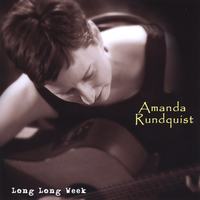 I first encountered Amanda Rundquist this past summer at the end of an Alex Andrews gig at Coffee By the Bay (Bay City Wi). Amanda was sitting at the gig crocheting or knitting (I can’t tell the difference) when she asked to borrow a guitar and proceeded to play a kick-ass folk rendition of Lady Gaga’s Bad Romance. I was so disarmed by a song like this being presented in such simple and authentic way it helped me appreciate Gaga as a great songwriter and Amanda as someone who has exquisite music taste. I wanted to hear more from this woman.
I was pleased to learn Amanda recently released her first CD “Long Long Week.” The album has a great singer songwriter feel (by that I mean from the heart and soul, yet universal). I have always been a sucker for female singer songwriters since I fell for Joni Mitchell in college – so I am sympathetic to this kind of stuff. If I were to compare Amanda to another contemporary artist – she reminds me a bit of Neko Case in that she has a great genre-bending voice and is not hooked to any one style of music. I always struggle with labeling an artist as labels can really mislead, but they are useful in helping sift though the noise. So I will go with a gumbo: a little folk, a little country, a little rock and a little pop (pop is not a bad word in my vocabulary – remember it was the Gaga cover that first grabbed me).
Lyrically the songs are personal and real but not so self-confessional that you feel like you are awkwardly walking in on someone. Frustrated with love, but not giving up. The arrangements are surprisingly elaborate – this is not just a singer and guitar or piano. Some of the songs arrangements have big ambitions, but are tasteful and subtle.
For more info see Amanda’s site.
 I first admired this little item at my favorite record store – the Electric Fetus in Minneapolis. The Fetus uses this as a headphone amp at their vinyl listening station. I bet I noticed it 5 years ago and lusted after it ever since – just based on how cool it looked. But it was not a priority (until now).
In the old day’s most integrated amps and receivers had a built in phono preamp, but today it is rare. A phono preamplifier amplifies the tiny electrical signals generated by the phono cartridge in response to movements of the stylus when dragged through the grooves of a vinyl record. Typically, the phono preamplifier has a reverse EQ curve as dictated in modern vinyl recordings by the RIAA (see they don’t just sue single moms who pirate MP3s) and referred to as the RIAA equalization curve. Long and short – if you have a record player you are likely going to need a phono preamp to get it to play through your system.
For the last several years I have used a very functional and cost effective Audio-Technica AT-PEQ3. But the beauty of analog vs. digital is that the more effort (and money) you put into your vinyl listening the more you will be rewarded. I felt it was time to upgrade this important component.
In addition to this little gadgets looks, what appealed to me was its all tube circuity and it reputation as a phono preamp that had a lot of personality. I sampled the Project Phono Box II and the NAD PP3 – both were outstanding upgrades to what I was using. But the Bellari just had more flavor. It has an amazing bottom end and everything from drums, to bass, to sax, to electric guitar just sounds fat – that succulent tube sound that just can’t be beat. I am just on day one with this thing, but it has made my vinyl sing at a whole new level. It is wonderful to hear your old albums for the first time again.
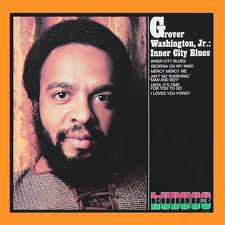 Well this album said “pick me” when I found it at Know Name Records (Minneapolis): Grover Washington, KUDU Records (CTI), a Marvin Gaye cover as the titular track, Van Gelder Studios, an amazing photo of a very funky Grover (with knee high boots) on the back and best of all a $1.00 price tag.
This 1971 release is half funk jazz and half what would eventually be called smooth jazz. The smooth jazz is fine background music, but the funk jazz is amazing. The entire side one is brilliant jazz funk and the cover of Gaye’s Inner City Blues really can’t be beat – it is nasty funk and Grover shreds his solos. Inner City Blues is highly recommended if you want to exercise the bottom end of you sound system. This is seven minutes of ecstasy. Side 2 is above average smooth jazz, but frankly something I can live without. But side 1 is clearly worth the price of admission (for 10 times my buck price tag).
This was Grover debut. I believe the back story is that this was supposed to be a Hank Crawford date and Hank had a last minute conflict so Creed Taylor pushed session guy Grover forward to save the date. This happy accident put Grover on the map and he became a huge star over the next ten years.
 Unfortunately the stereo store has become a rarity. Blame it on big box stores and home theater. When I was younger they were sprinkled all over town.
Today I walked into the greatest stereo store I have ever been to in my life. Audio Perfection was like like walking into an audio magazine come alive. I guess this is what it might feel like for a lifetime subscriber of Playboy to walk into the Mansion. I have never seen so many amazing audiophile brands in one place. The place was thick with amazing equipment. Great listening rooms too boot!
And the staff was nice – not snotty like you might expect from a place with such high end stuff (we are talking about a Ferrari dealer here). They did not make a audiophile wannabe like me feel like a fool in the least. My purpose was to learn about record cleaning machines and about phono preamps. My salesman (Eric?) respected that I was not a buyer today and gave me all the information I needed. He was as attentive as if I were about to spend 10 grand, Unfortunately I was short on time, but I got a chance to spin one of my own sides on some of their amazing equipment (Clearaudio, Audio Research and Magnepan and god know what else was part of the system) – wow what a thrill. The salesman even took the time to swap in phono preamp in my price range into their topnotch system.
I hope to be back real soon to play with their toys some more and hopefully take one home. How I have lived here 52 years and never been into this place is beyond me. And don’t just believe me – this is multiple year City Pages “Best of” award winner.
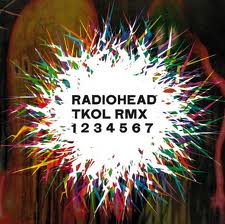 When King of Lambs came out earlier this year my judgment was that it was not the greatest Radiohead album ever, but I liked it. In fact my only criticism at the time was that I thought it was kind of short at little over 30 minutes. There were a couple of tunes I would put on my own Radiohead best of mix (about all you can expect from any album from a band you love – most bands are only allowed two full album masterpieces in their catalog – Radiohead has arguable three – but as you see I only count two).
I appreciated that Radiohead threw us all a bone with the free singles Supercollider/The Butcher this summer to make up for the short album. I am not enough of a fan to have paid for and kept track of the endless remixes of The King of Lambs songs that have come out over the last several months. But I am enough of a fan to have picked up the two CD collection of these remixes for $12 bucks at my local Best Buy this week.
I have listened to the collection a few times now and some of the remixes I really like. Others I just don’t get. Now let me take the opportunity to say I don’t get most techno, electronica, dubstep or whatever you want to call it (and I assume that what these remixes are). But keep in mind I am middle aged and not particularly adventurous in my listening (more than most my age, but more often than not I would prefer to listen to a classic Steely Dan side on vinyl).
I have no idea if the right audience for this music would think this stuff is cool or not. Pitchfork gave it a 6.0 – which by their standards is pretty good. They gave James Blake a 9.0 – which I find unlistenable. So I guess means this means this Radiohead remix is at the Katy Perry level (that is, Radiohead bubblegum remixes). Anyway I would say I like about half of the songs here. I prefer CD 1 as I can still hear Radiohead in most of the remixes. CD 2 deconstructs some of the songs to the point that you would not even know the source artist – maybe that is cool, but I did buy a Radiohead album.
Let me give you some background on my own experience with Radiohead. I picked up The Bends when if first came out – I must have read a review or something. I was completely blown away by it. This was the most excited I had been about a new band since U2 first came on the scene. I found it completely original pop music (that you could actually listen too – most “original” pop music is over my head – at least at first). Everyone I played it for thought it was cool too. I learned reading magazines that cool music heads (AKA music snobs) thought it was cool too. Wow – I was riding on the edge of hip pop music.
I could not wait for the follow up OK Computer and was not disappointed – it was even better. Then came Kid A. I distinctly remember my first contact with it. I bought it the day it came out, I brought my daughter to gymnastics and had uninterrupted hour to kill (now this was a time in my life with small kids when an hour uninterrupted to listen to my favorite band was about as good as it gets). I listened with an enthusiastic ear and I was devastated – I did not like it, in fact I hated it. What at the coolest band in the world done? Had they completely lost their mojo?
Then I learned the devastating news – all the music taste-makers said this was a breakthrough album – a work of genius (for example see Pitchfork’s rare 10.0 review). Oh no. I was no longer hip. I continued to try and listened to Kid A over and over to see if I could learn to like it. Maybe it would be one of those albums that I could learn to like and love (in my cannon that would be Miles Davis Bitches Brew and The Rolling Stones Exile of Main Street – albums I genuinely did not get at first but learned to love). But it never stuck. 10 plus years later I can kind of get it, but not really.
Needless to say I have purchased about everything Radiohead has commercially released on the hopes of getting that Bends/OK Computer high. In Rainbows and King Of Lambs are getting close – reasonable reminders of the band I once loved. With that I can endorse TKOL RMX as a something a Radiohead fan will get a kick out of, but not something for the casual fan. I would be curious what someone more hip than me would think.


