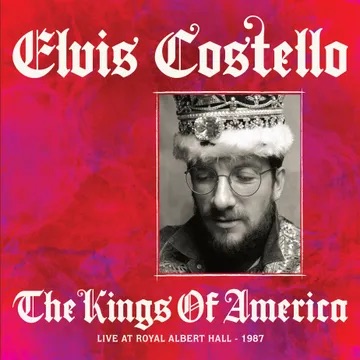
This live show was initially included in the CD/digital 2024 release King Of America & Other Realms Super Deluxe. This Record Store Day 2025 release is the vinyl debut of these live tracks.
The Kings Of America Live is a seventeen-song concert recorded on January 27, 1987, at The Royal Albert Hall in London. Costello performs with some of “the Confederates” – musicians who played on the studio version of the 1986 King Of America album. The live band is:
- ELVIS COSTELLO: Guitar & Vocals
- JAMES BURTON: Lead Guitar – Burton was a member of Elvis Presley’s TCB Band.
- JIM KELTNER: Drums – Keltner is one of the leading session drummers in America.
- JERRY SCHEFF: Bass – Scheff was also a member of Elvis Presley’s TCB Band.
- BENMONT TENCH: Keyboards – Tench was a member of Tom Petty’s band.
- T-BONE WOLK: Guitar, Accordion, Mandolin & Vocals – Wolk was a studio musician, but also was in the Hall & Oates band and the Saturday Night Live band.
Per the Record Store Day website, the album is from:
“Newly mixed from multitrack tapes – and featuring live renditions of several King Of America titles – Costello is also heard performing songs by Waylon Jennings, Arthur Alexander, Allen Toussaint, Sonny Boy Williamson, Mose Allison, Ray Charles, Jesse Winchester, Dave Bartholomew and Buddy Holly. A truly great American songbook.”
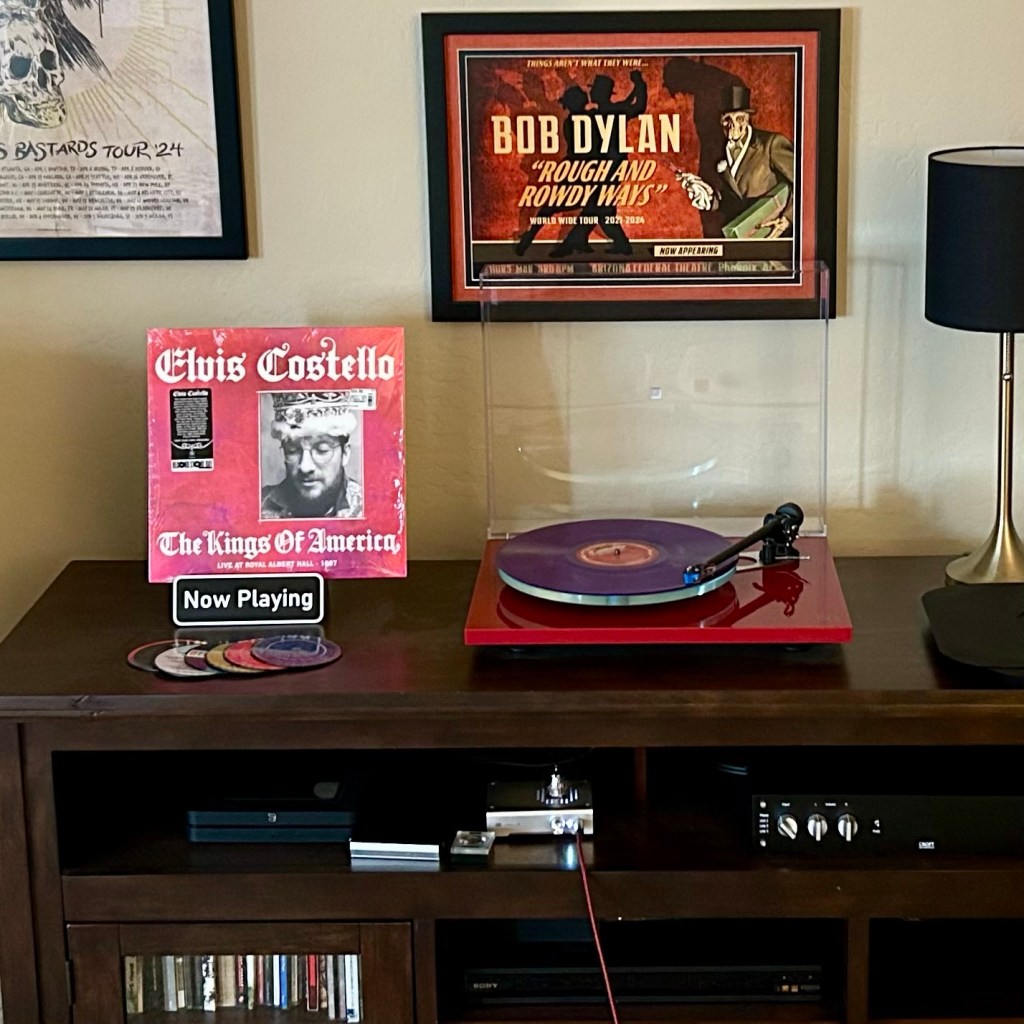
This is an excellent live recording, both sonically and in the performance. I am a fan of the King Of America album, and so it is great to have those songs live, but the real treat here is the covers – see the setlist below (bold italic songs are from King Of America):
- The Big Light
- Only Daddy That’ll Walk The Line – Waylon Jennings
- Our Little Angel
- It Tears Me Up – Percy Sledge
- I’ll Wear It Proudly
- Lovable
- Riverboat -Allen Toussaint
- Sally Sue Brown/36-22-36 – Arthur Alexander/Bobby Bland
- American Without Tears
- Brilliant Mistake
- What Would I Do Without You – Ray Charles
- Your Mind Is On Vacation /Your Funeral, My Trial – Mose Allison/Sonny Boy Williamson
- Pouring Water On A Drowning Man – James Carr
- Payday – Jesse Winchester
- That’s How You Got Killed Before – Dave Bartholomew
- Sleep Of The Just
- True Love Ways – Buddy Holly
The recording of this live show exudes fun, excellent musicianship, entertainment, and a rock ‘n roll urgency. Elvis’ voice has never sounded better. Elvis’ King Of America is his rootsier side, which fits him well. Most of the covers were unfamiliar but fit seamlessly with his songs. This is going to be one of my favorite Elvis albums.
The vinyl is of high quality. However, the packaging is bargain basement. I will take quality vinyl over packaging any day.
You can stream the equivalent of this album, which is buried in the streaming release of King Of America & Other Realms Super Deluxe (scroll to “The Big Light – Live”):
Faces was the original Slacker band. Their music is deliberately sloppy, yet they are fantastic rock musicians—sloppiness was an aesthetic choice. They were the British contribution to proto-punk. As rock was getting serious, Faces were defiantly goofy. Their vibe is the apex of intoxication: a well-crafted buzz just before one too many.
Jeff Tweedy (Wilco) states in the liner notes:
The Faces’ importance as punk prototypes cannot be questioned; they never appeared to take anything too seriously. Cutting all potential pathos with a wink and a healthy shot of rubbing alcohol— pinky raised, no less. Like the ne’er-do-well that can’t even keep a straight face while his clothes are being tossed out on the lawn. Always falling apart and having a great time at it. I love ’em and doubt seriously if we could have had a Sex Pistols much less a Replacements without them.
Face’s photographer Tom Wright rejects the drunk and sloppy characterization. In the liner notes to this box, he says:
The Faces drank, no doubt about it, but to the point of sloppiness? Show me the moment. I have seen a hundred shows, sound checks, and late-night jams, and sloppy is a word that doesn’t fit… anywhere. That would be like calling the kid who could ride a bicycle with”no hands” while shooting you the finger and yelling something funny a sloppy rider. The Faces were so good they made it look easy.
The band was:
Rod Stewart on vocals. Stewart was fresh out of the Jeff Beck Group and had a solo deal, but his solo career had yet to take off. With the Faces, he was just a bloke. If you are turned off by the pop star he became, this is Rod as the best bar band singer of all time. By the time the band ended in 1975, Stewart’s success had eclipsed the Faces, but he was never finer than in the early 70s with Faces and on his solo albums (that were basically Faces albums).
Ronnie Wood is on guitar. Woody is one of my favorite rock musicians. He was in the Jeff Beck Group with Stewart. He was a major player on the early Stewart solo albums. A decent percentage of his solo albums are awesome. More recently, he has been the other guitarist in the Rolling Stones (since 1975).
Kenney Jones on drums. Kenney was with the Small Faces and replaced Keith Moon in The Who—an excellent rock drummer – slow but in time – an elegant stumble.
Ian McLagan on keyboards. In addition to Small Faces and Faces, he has been a sideman for the Stones.
Ronnie Lane is on bass, playing various other instruments and occasionally being the lead vocalist. Lane was the heart and soul of the band. Lane played in Small Faces and Faces but quit Faces in 1973. He was replaced in Faces by Tetsu Yamauchi. After Faces, he collaborated with other musicians, leading his bands and pursuing a solo career. In 1977, he was diagnosed with multiple sclerosis. Charity projects and financial contributions from friends, former bandmates, and fans supported him. After living with the disease for 21 years, he died in June 1997, aged 51.
In summary, it was one hell of a lineup.
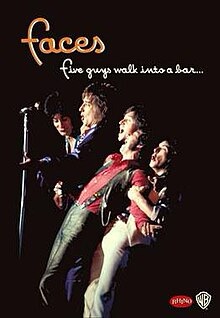
Five Guys Walk into a Bar… is an excellent compilation of the band—a five-hour (sixty-seven-track) history lesson on the band via selections from their four studio albums, outtakes, side projects, assorted rare single A and B-sides, BBC sessions, and rehearsal tapes. It was released as a four-CD box set in 2004.
I bought this when it came out and gave it a serious listen on a road trip with my teenage son. Fortunately, he dug it, and I knew I had succeeded as a parent. I was vaguely familiar with Faces’ catalog but very familiar with the band members’ careers after Faces. I was a receptive student.
Ian McLagan lovingly produced the box set. He brilliantly curated the Faces’ vault of recordings from rehearsals, the studio and live. Ian’s guiding principle in selection: his gut. Most compilations are chronological, but Ian prefers to play DJ. Many compilations of this magnitude are tedious listens. Five Guys Walk into a Bar… works perfectly – it is not a boring listen. I effortlessly slammed through the four discs over two evenings – zero boredom – just amazement.
I highly recommend compilation. Unfortunately, it is not available on streaming services. However, I see it on Discogs and eBay for as low as $40.
The live material is on streaming:
A subset of the live material is on the Record Store Day release:

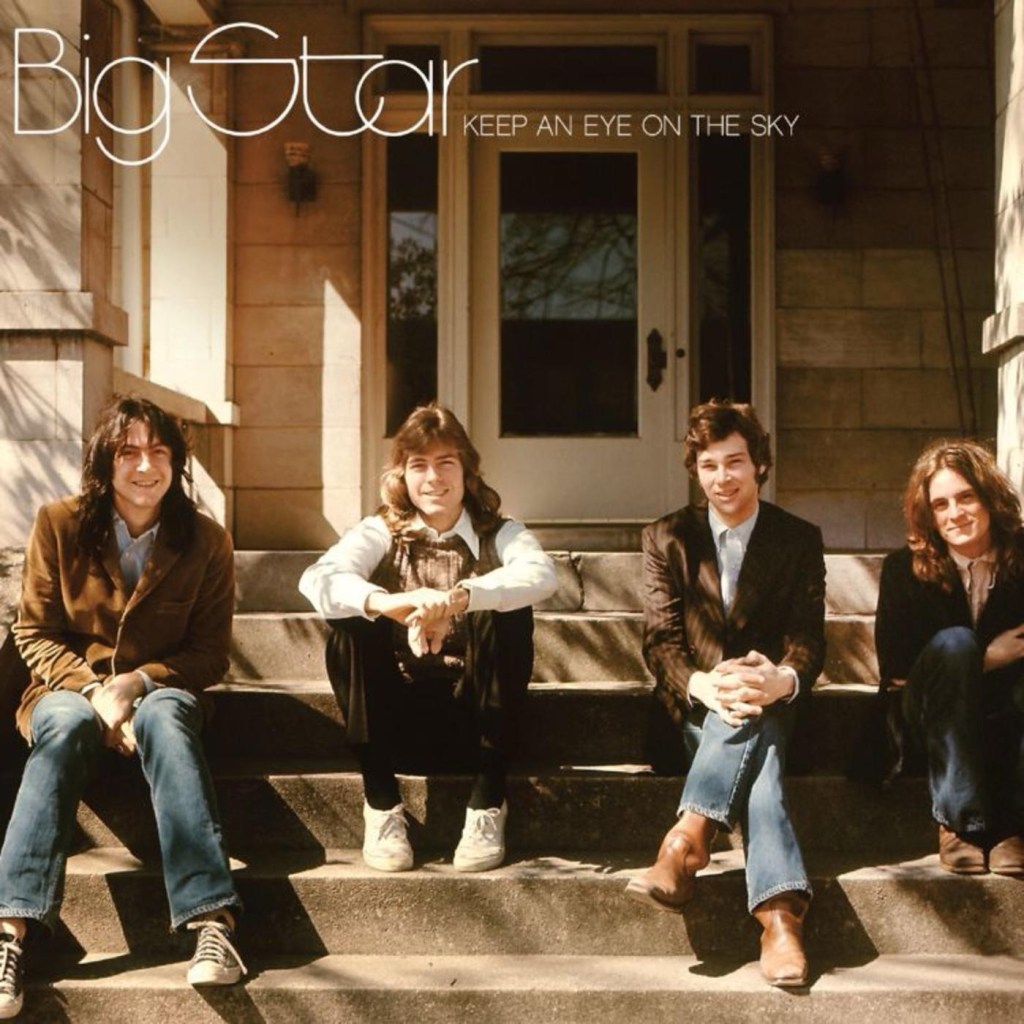

Keep an Eye on the Sky
2009
Rhino
Big Star is a cult band – perhaps the original cult band. The bands they influenced include R.E.M., The Replacements, Mitch Easter, The dBs, and countless others. They have gained in stature over time. They are the original indie-rock band.
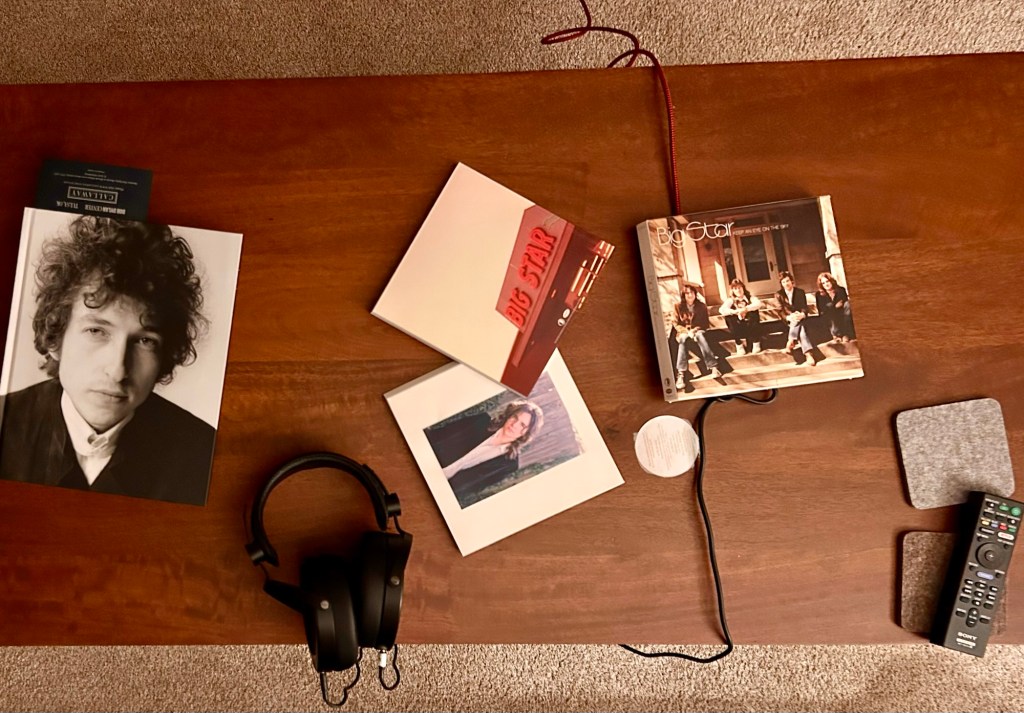
Big Star’s Keep an Eye on the Sky is a four-CD, 98-song career retrospective box set featuring unreleased tracks, demos, alternate takes, and live performances. It also includes material from founder member Chris Bell’s pre-Big Star bands, Rock City and Icewater. It includes all titles (in many cases as alternate mixes or demos) from Big Star’s three studio albums.
@ the Desert 🌵 Sessions
(under his eye)
In addition to the music, there is an excellent mini coffee table book with three essays and photos.

My “introduction” to Big Star was the 1986 The Replacements song “Alex Chilton” from Pleased To Meet Me. I had no idea who he was until I started reading the Pleased To Meet Me reviews and PR. Based on Paul Westerberg’s infatuation with Chilton, I picked up Chilton’s 1987 solo album, High Priest. Unfortunately, High Priest sucks. At about the same time, I got a copy of Big Star’s Third/Sister Lovers, which baffled me (I eventually learned to appreciate it). I assumed Paul Westerberg was hearing something I was not.
It wasn’t until 1992, when a two-for-one CD of the first two Big Star albums (#1 Record and Radio City) was released, that I got Big Star’s music – I immediately understood the hype. It was Beatlesque but with an American twist. All the songs were good to great. This would be my recommended introduction to Big Star.

By 2009, when Keep an Eye on the Sky came out, I was hip to Big Star. For some reason, I did not listen to it extensively. Now that CDs are part of the Desert 🌵 Sessions and I am retired, I am seriously exploring the box set. It was pretty random that I grabbed Keep an Eye on the Sky to bring to the Desert 🌵 Sessions. I am glad I did!
The first three CDs are chronological and follow the arc of their three studio albums, and the fourth CD is a live show. Disc One includes pre-Big Star material and the songs from their debut. Disc Two includes songs from their second album and some Chris Bell solo material. Disc Three includes songs from their third album and covers.
Disc Four is a live set at Lafayette’s Music Room in Memphis, TN (January 1973), shortly after the release of Radio City. It is a solid performance by the band (now a three-piece as Chris Bell had departed the band). Sonically, it sounds great—especially given that it was miked in the audience rather than a board recording. It’s a mix of Big Star originals and covers. It is a remarkable artifact that made its first appearance on this box set.
Keep an Eye on the Sky is a grad school course in one of the most influential bands in rock history. Highly recommended.
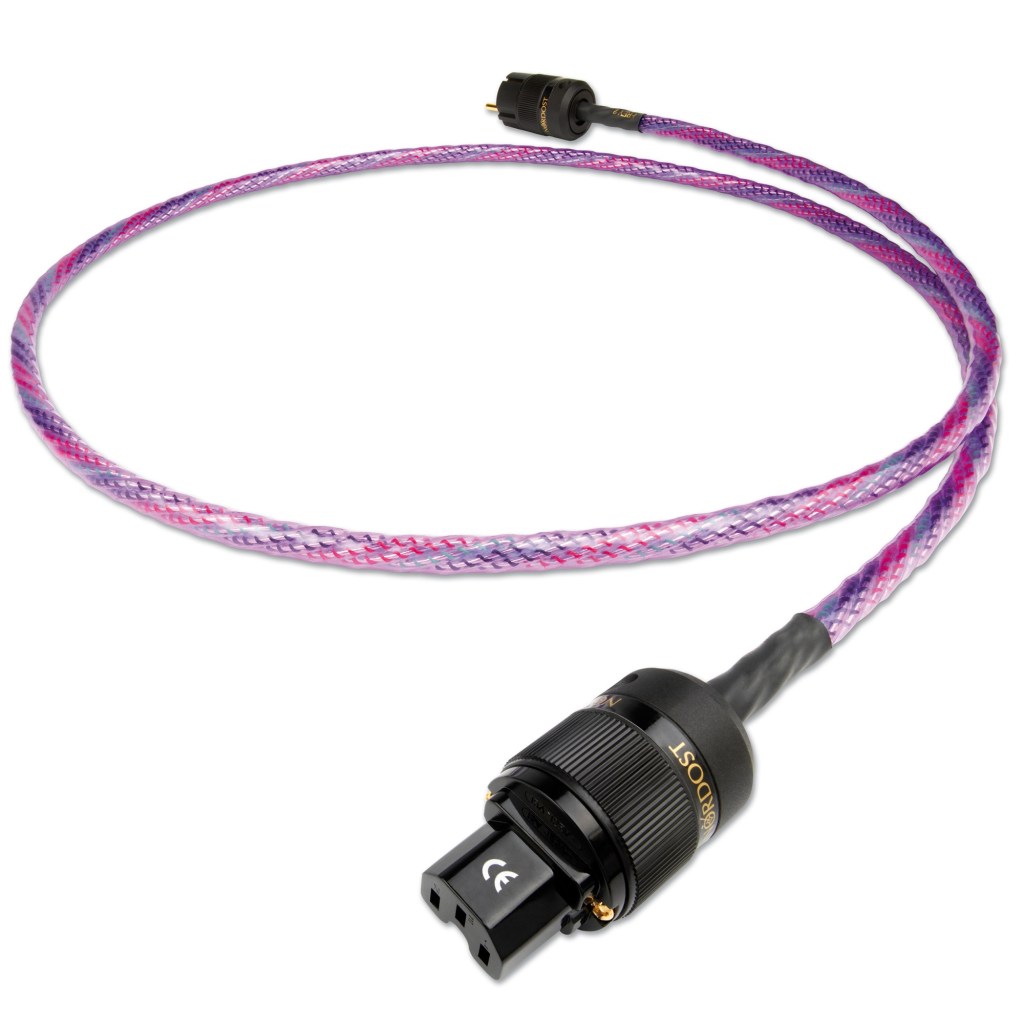
with US wall plug and 15 amp IEC
$2200 for one-meter length
I am a power chord/interconnect/speaker wire agnostic. I have participated in speaker wire blind comparisons and selected the higher-priced wire, but not necessarily the most expensive. In general I have noticed a difference in cables, but not a preference.
An audiophile friend asked me to break in his new Nordost Frey 2 power chord while he was out of town. I was more than happy to do that and compare it to the stock power cord my amp’s manufacturer provided. At first, I assumed that I was using Nordost’s entry-level power cord (the Purple Flare at $260), but I learned that it was the Frey 2, which is up thier product chart (at about $2200) but not at the top (Nordost has a $56K power cord!). Please note my audiophile friend did not pay list price for his Frey 2.
Per the Nordost website: “Norse 2 Series power cords deliver a level of performance not previously possible at their price points. Nordost’s proprietary Micro Mono-Filament construction creates a virtual air dielectric complete with an elegantly engineered suspension system. When combined with silver-plated OFC solid core conductors and FEP insulation throughout, the result is the ideal electrically and mechanically controlled construction for ultra-fast, low-impedance current and voltage transfer. The complex topology of Micro Mono-Filament conductors is especially effective in dissipating mechanical energy present on the AC line, which otherwise enters your delicate electronics rendering dynamic responses sluggish and blurry.”
Well, what ever that means.
This review will be purely subjective – no objective measurements were done. I am not a technical-oriented audiophile – I am more of a musichead with a nice stereo, mid-fi vs. hi-fi.

I tested the power cord on my Croft Acoustics Phono Integrated amplifier, which is part of the Desert Sessions. The Croft is a hybrid tube preamp and solid-state amp. The stock power cord is heavy-duty but nothing special. Speaker wire is generic 16 gauge copper. Interconnects are Amazon Basics RCA cables.
My reference source material was The Pat Metheny Group’s eponymous LP from 1978. I chose this recording because I am intimately familiar with it. It has a lot of dynamics and was beautifully recorded, mixed and mastered. I used both a vinyl version and a streaming version.

(eponymous)
ECM
1978
Tidal (24-bit/96 kHz FLAC) and vinyl
Vinyl—The Nordost cord sounded slightly different than the stock cord. I sensed it was an improvement, but not a two-grand improvement. In summary, I was underwhelmed.
Streaming—Here, the Nordost cord showed a significant improvement. Everything sounded better: highs were brighter, and lows were punchier—in a good way. The overall sound stage was more expansive and richer. It was a $260 improvement when I thought it was a Purple Flare – an upgrade I would seriously consider, given that most of my listening is streaming these days. But once I realized that this was the Frey 2, it was not a two-grand improvement. I am not sure it is appropriate to test such a high-end item on a budget stereo (the Frey 2 costs more than the Croft amp). But it certainly was a fun experiment. After this experiment, I am less skeptical about high-end cords, but I also have a self-imposed limit: if there isn’t an appropriate return on investment, I will not make this kind of upgrade. I also wonder if there would be a difference if the cord were plugged into a power conditioner vs. straight into the wall.
I am not surprised that there was a big difference between the vinyl and streaming test drives, as the Croft amp’s specialty is its focus on its phono pre-amp (a tube-driven stage) – this initially drew me to the amp, given my extensive vinyl collection.
I am grateful to my friend for lending me the Frey 2. This is a component I would never get to experience otherwise. Messing around (speaker placement, A/Bing cords, tube rolling, etc.) makes the audiophile hobby fun, and when you can experiment for free, it’s even better!
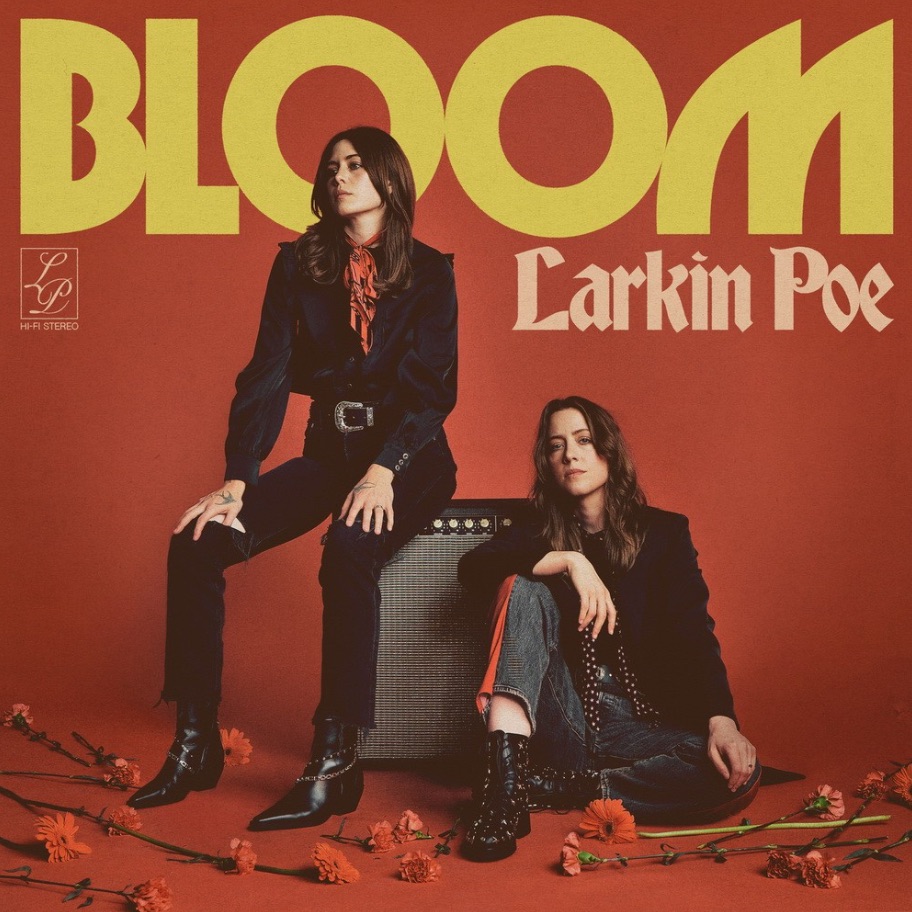
Larkin Poe sounds like a female version of The Black Crowes: soulful blues rock crunch and arena rock swagger. Larkin Poe are even an Atlanta singer-songwriter siblings like the Brothers Robinson.
According to their website, “Rebecca & Megan Lovell of Larkin Poe are Grammy-winning singer/songwriter, multi-instrumentalist sisters creating their own brand of Roots Rock ‘n’ Roll: gritty, soulful, and flavored by their southern heritage.” In 2023, they released Blood Harmony, which won the 2024 Grammy Award for Best Contemporary Blues Album. Rebecca (34) and Megan (35) had been playing professionally, first as the Lovell Sisters, since they were teenagers in 2004.
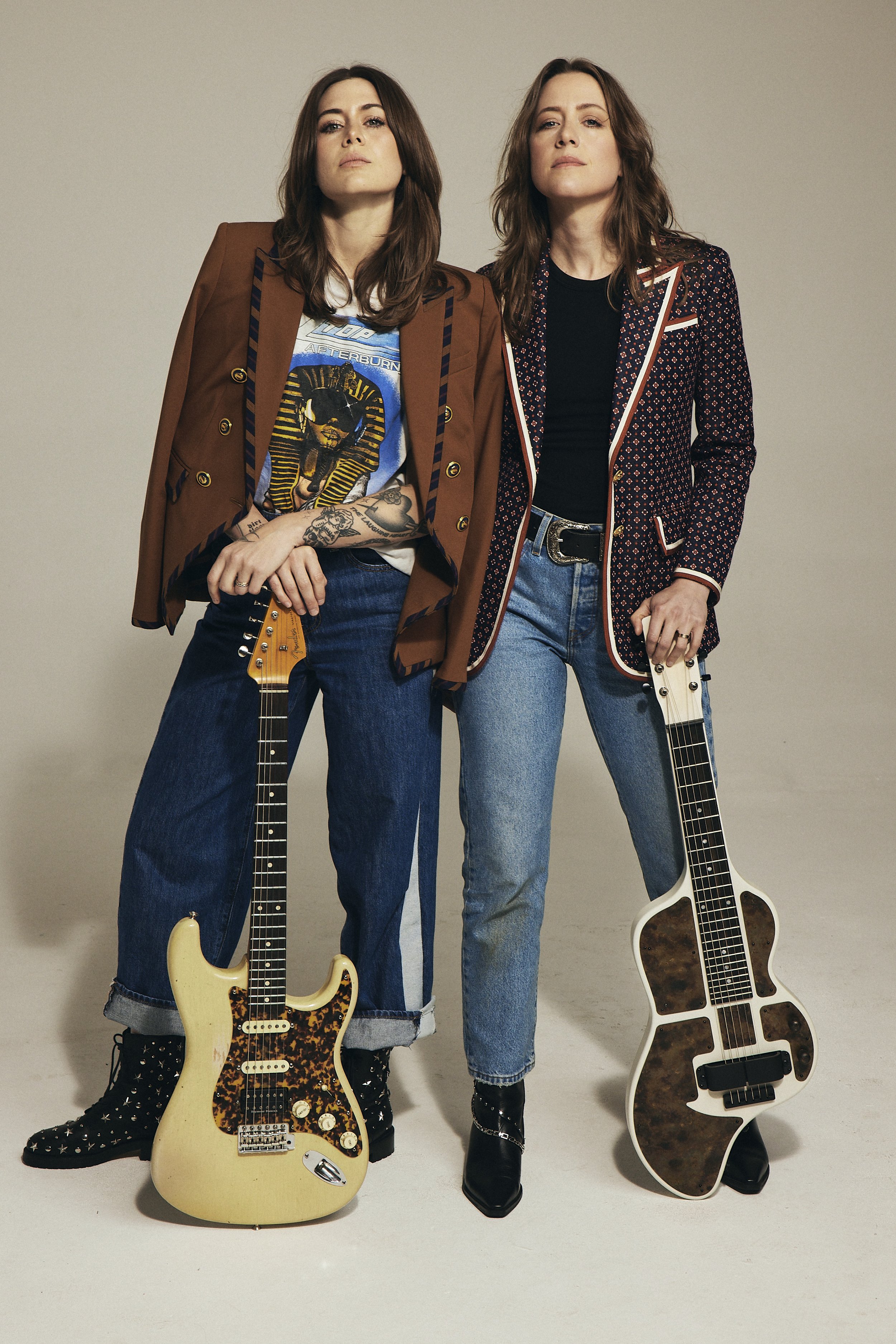
In a different era, Larkin Poe would be huge – like Heart Huge. What is crazy about contemporary music is that there is so much great music that you have never heard of. It is easier than ever for an artist/band to get their music out into the world, given home recording and the internet. More significantly, some bands are successful that you have never heard of. Back in the day, a band would have come across the average rock fan’s radar if they had a twenty-year career with eight studio albums, eight EPs, and one live album (which is the case for Larkin Poe). Today, there are artists/bands a musichead has never heard of playing in arenas and, in some cases, stadiums. Larkin Poe is not Billy Strings big, but they are playing 1000 to 2000-person capacity rooms.
Their back catalog is pretty rootsy. Bloom sounds like a grab of the brass ring toward mainstream success with its arena rock ambitions. There is nothing wrong with ambition, especially if you can pull it off, and Larkin Poe pulls it off.
The most apparent thing you hear on Bloom is blues rock with big guitar riffs/hooks. But what makes this special are the vocals. They are a touch country in that way that Bonnie Rait and Susan Tedeschi’s blues are country. And then there are the blood harmonies – they are pretty dreamy.
The album has no bad tracks, but “Bluephoria” sticks out with its giant guitar riffs and outstanding vocals.
Another standout is “Easy Love Part 1,” which has a Bonnie Raitt vibe: the vocals, the slide guitar, and the attitude. Its companion, “Easy Love Part 2,” slows things down to a quiet storm. Like “Part 1,” it has a Bonnie vibe with an excellent vocal performance and slide guitar solo.
Overall, this delightful album will appeal to classic rock fans.
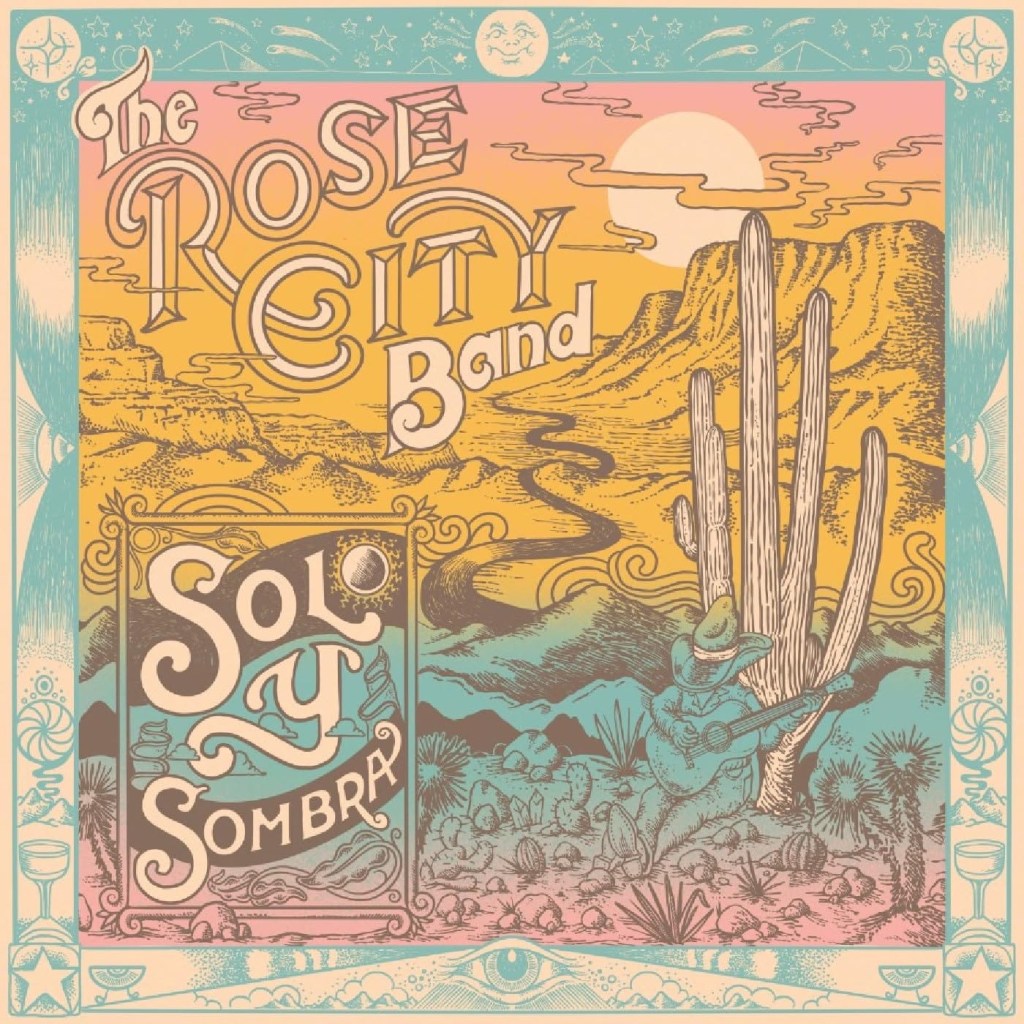
Sol Y Sombra
(2025)
Thrill Jockey
I have been a fan of the Rose City band since their eponymous debut (2019). I dig their mellow and psychedelic take on country rock. Per the band’s Bandcamp page: “Rose City Band’s music is sun-kissed timeless country rock whose seemingly effortless momentum carries the joy of its creation without ignoring the darkness pervading our consciousness.”
Sol Y Sombra is the band’s fifth album, and it is similar to their prior albums, although the band is better at its craft. The music reminds me of the mellow and spacey side of the Grateful Dead; The War On Drugs is another good reference point. It is pleasant enough to be background music and engaging enough for active listening.
Per Wikipedia, “Sol y Sombra is an after dinner or breakfast alcoholic drink (or digestif), consisting of equal parts brandy and anise dulce (sweet anise or anisette) served in a brandy snifter, that is well known in Madrid and Spain generally. The drink’s name comes from the Spanish words for sun and shade and refers to different types of seats one can buy at bullfights. The cheap seats are Sol, and are in the full sun, whereas the most expensive seats are Sombra and are fully shaded. A Sol (Sun) y Sombra (Shadow) ticket has some shade and some sun throughout the day. The drink’s name reflects this, as the drink is a combination of the dark brandy (sombra) and the clear anise (sol).”
Despite the mellow vibe (sol), there is also some darkness (sombra). Per the band’s leader, Ripley Johnson: “With Rose City Band, I’m generally trying to make uplifting music, good time music. This time, I couldn’t avoid the shadow being more of a presence. There’s no getting away from it. The shadow is always there. So, I left it in.”

In addition to guitarist and vocalist Ripley Johnson (Wooden Shjips and Moon Duo), the Portland (aka Rose City) band includes pedal steel guitarist Barry Walker Jr. (Mouth Painter and North Americans), keyboardist Paul Hasenberg, and drummer John Jeffrey (Moon Duo).

I revisited their debut, the album that turned me on to the band, and the recipe is the same five albums into their career – except they are somehow better and deeper.

Live Rust
1979
This is the album that hooked me into being a Neil Young fan. It is a live double album drawn from several shows in October 1978 (the album wa released in November 1979). About half the album is solo acoustic, and the other half is electric with Crazy Horse. The album is back in my consciousness due to picking up a nice vintage German pressing at a recent Phoenix record show.
When I went to college (fall of 1977), I was barely aware of Neil Young. I may not have known him at all; I can’t remember. I quickly got to know his music in college. After the Gold Rush, Harvest was in heavy rotation in the dorm. Comes a Time (1978) was a new record (with a Harvest vibe) with some songs on FM AOR radio. Rust Never Sleeps arrived in the summer of 1979, and on that album, the hippie superstar tipped his cap to punk, earning him some refreshed hipness.
Live Rust was the first Neil Young album I bought. I was attracted to it because it was a kind of greatest hits album. The live show supporting Rust was reportedly epic (this album documents that tour), and Neil and the Horse were on fire. Live Rust was an economical on-ramp to Neil Young.
Side one opens with a solo acoustic guitar version of “Sugar Mountain, ” a song first released on the 1977 compilation Decade. This live version was from a performance at the Cow Palace near San Francisco. Most of the songs on Live Rust come from that Cow Palace show (I will indicate when it is from another show. “Sugar Mountain” is a melancholy lament to lost youth from a young man’s perspective. This track immediately hooked me when I heard it back in 1979, as I was a melancholy young man. I have never tried it.

Neil continues the solo acoustic guitar with harmonics with “I Am A Child” from the 1968 Buffalo Springfield album Last Time Around. Although the song has an innocent vibe, lyrically, it is dark, asking the bleak question: “What is the color, when black is burned?”
“Comes A Time” was a newer song at the time of this live recording; it is from the 1978 studio album by the same name. This is another solo acoustic guitar and harmonica track. “Comes A Time” is one of my favorite Neil songs.
“After The Gold Rush” is the titular track from the 1970 studio album. Neil performs on solo acoustic piano from a Boston Garden show. At the time, this was a very familiar song—as I mentioned earlier, the After The Gold Rush album was in heavy rotation in my college dorm. Its lyrics are engaging yet mysterious—I have no idea what the song is about. Dolly Parton, who covered the song, once posited, “I think it’s about the Second Coming or the invasion of aliens, or both.” Neil has been vague about the song’s meaning. Still, we know it was inspired by a movie screenplay of the same name (that was never produced), which apocalyptically described the last days of California in a catastrophic flood. The screenplay and song’s title referred to what happened in California, which took shape due to the California Gold Rush.
Neil plugs in for a solo version of “My My, Hey Hey (Out Of The Blue)“ from his latest album at the time: Rust Never Sleeps. Side four has its rock counterpart, “Hey Hey, My My (Into the Black).” Both songs were inspired by the electropunk group Devo, the rise of punk, and Young’s perception that he was becoming irrelevant. Ironically, the song significantly revitalized Young’s career and positioned him as the godfather of grunge a decade later.
Side two opens with Neil and Crazy Horse going at full throttle with “When You Dance I Can Really Love” from After the Gold Rush. This live version is more raucous than the original studio recording.
“The Loner” is a Crazy Horse jam from a Chicago Stadium show. The song comes from his 1968 eponymous debut – his first solo single. The original song has fuzz guitar, which became the template for the Neil and Crazy Horse sound. The song is rumored to be about his Buffalo Springfield bandmate Stephen Stills.
“The Needle And The Damage Done” is from the 1975 album Tonight’s the Night. The song is a song about friends that Neil had lost to heroin addiction. This version is from a show at the St. Paul (Minnesota) Civic Center – a venue where I have seen a lot of shows but unfortunately not this one (a month after this Neil show, I saw my first Springsteen show at the Civic Center). This version opens with a recording from Woodstock of the “No Rain” rap. In the background, Neil’s voice can be heard yelling, “My guitar?” I’m not sure of the significance of including this. One theory I read online was Young was juxtapositioning the innocence of Woodstock with the horror of drug addiction. The song is performed solo.
“Lotta Love” is another new song from Comes A Time and another track from the St. Paul show. The song is performed with the band but in a folk-rock style similar to the studio recording rather than the typical Crazy Horse howl.
“Sedan Delivery” is Neil’s version of a punk rock song. He introduced the song by saying: “Let’s play some rock ‘n roll!” It was a new song from Rust Never Sleeps. Neil and the Horse are fierce. Neil can rock for a guy who has gotten rich with his soft rock songs!

Side three is my favorite side of the album—pure rock with Neil and the Horse: “Powderfinger” (from Rust), “Cortez the Killer” (from 1975’s Zuma performed in St. Paul), and “Cinnamon Girl” (from 1969’s Everybody Knows This Is Nowhere performed at McNichols Sports Arena in Denver). This side would be on my curriculum for a budding Neil Young fan—lots of power cords and beautiful distorted electric guitars.
Side four opens with “Like a Hurricane” from 1977’s American Stars ‘n Bars at the Chicago Stadium. This is one of my favorite songs in Neil Young’s catalog, and this is where I heard it first. The song is a signature song for the Neil/Crazy Horse sound. It is about a tempestuous romance. Young described it as “She had so much love he couldn’t handle it. She was always a step away, but he loved her forever. He just couldn’t reach her. But he did, and she never forgot that.”
“Hey Hey, My My (Into The Black)” is the rock companion to the song on side one. This is the proto-grunge.
“Tonight’s the Night” is the titular track from the 1975 album. This is a depressing song to end the album. The song was inspired by the fatal heroin overdoses of Young’s roadie Bruce Berry. This version sounds more defiant than the studio version. This is the definitive version for me. Full on rock and roll – a perfect remembrance of Berry. Rolling Stone magazine said this version became an “unlikely stadium-shaking rock anthem…where you can hear the fans whoop, cheer and whistle along with a funeral dirge.” The final chant of “Tonight’s the Night” is followed by an epic guitar riff that is genuinely epic.
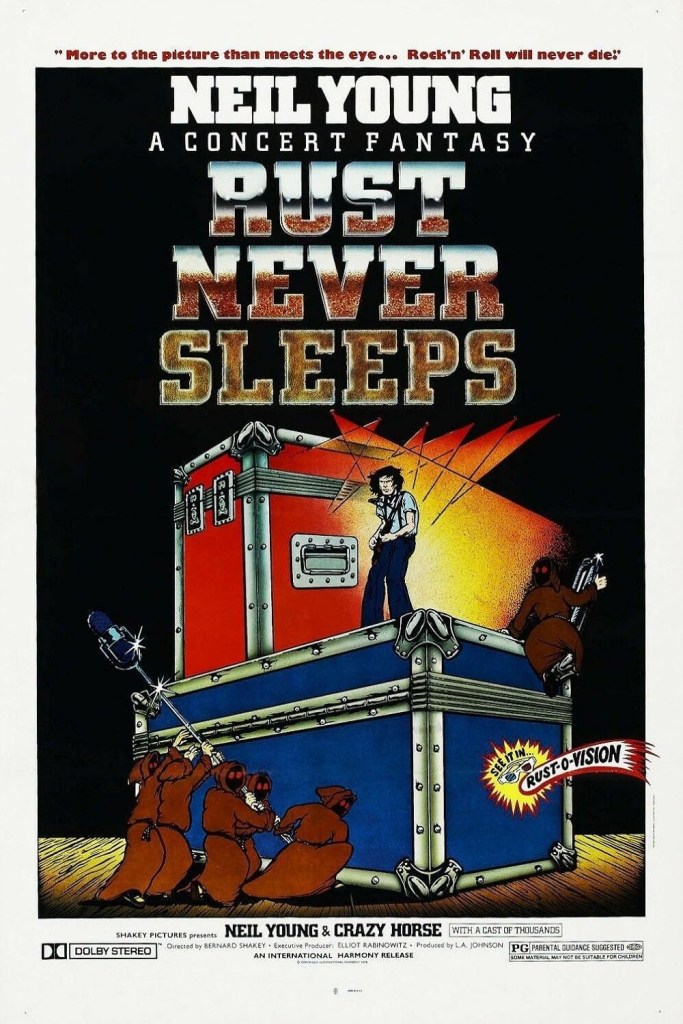
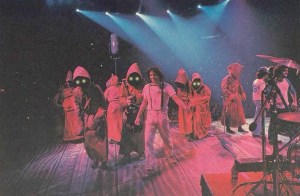
There is a film version of the Rust Never Sleeps tour featuring the October 22, 1978, concert performance at the Cow Palace. It has a few more songs not on the Live Rust LP. The Rust tour had some fantastic visuals: oversized props of amps and mics. Neil’s roadies (called “Road Eyes”) are decked out like the Tusken Raiders from Star Wars.

This is part one of two posts.

One of my retirement activities is being involved with the Arizona Audio Visual Club (AAVC). I have met some great people who share my audiophile and musichead interests. One of those great people is Greg, a retired plumber, who has built a fantastic man cave in a shed in his backyard in Sun City, AZ. The AAVC fondly calls it Greg’s Audio Shrine. The Audio Shrine is set up for Dolby Atmos (surround) and two-channel audio.
Greg recently invited me over for a listening session and generously invited me to crate dig through the crates he had of LPs (or, as the kids say, vinyls) that he no longer wanted. I was happy to dig and take about two dozen albums off his hands.
Before crate digging, we listened to Pink Floyd’s Dark Side of the Moon in Dolby Atmos. It was phenomenal. Then we moved on to two-channel audio, and I DJed the records I had brought. Both the Atmos and the two-channel setups sounded excellent. Greg’s Audio Shrine is one of the best audiophile setups I have experienced.
This blog will summarize the PVC (polyvinyl chloride) gems I found at Greg’s Audio Shrine. Several of the titles are albums I have in my Minneapolis collection—it is great to have a copy of them as part of the Desert 🌵 Sessions . Once I started listening to the LPs, I was grateful for their excellent condition.

This is one of my favorite albums from the early 1980s. It was produced by Elvis Costello and has one of my top 100 singles, “Tempted,” sung by new band member Paul Carrack.
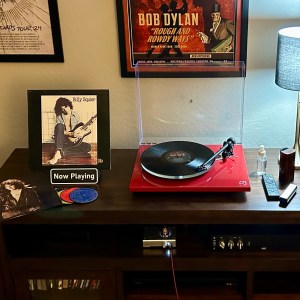
I was so into this album that I went to a concert back in the day just because Squire was the warm-up act. I stayed for the headliner too (some British band named Queen-they were good).
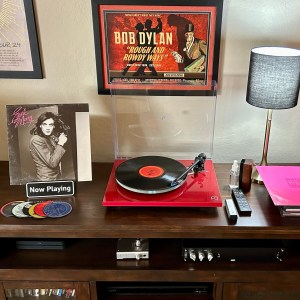
This album and a couple of its singles, “Two Tickets to Paradise” and “Baby Hold On,” were massive when I was in high school. It is a sentimental favorite of mine. I never owned it, as the singles were omnipresent on the radio back in the day—I saved my music buying dollars for things that were not on the radio.
I was a big fan of R.E.M.‘s debut (Murmer from 1983) but then lost track of them until their fifth, Document (1987). It turns out I was more familiar with Reckoning than I realized, as I recognized the two singles: “So. Central Rain (I’m Sorry)” and “(Don’t Go Back To) Rockville.” Has any other band had so many parenthetical song titles?
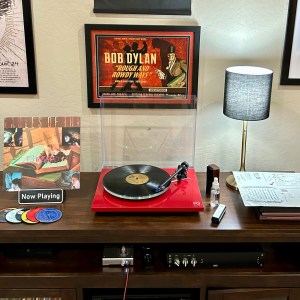
I am even more unfamiliar with this album than Reckoning. Although as jangly as its two predecessors, it has a slightly different sound: darker and murkier. It also has new instrumentation: sax and banjo. I will be digging deeper into the album.
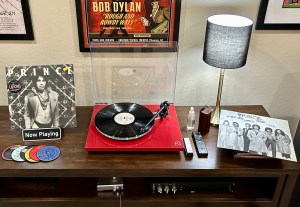
Although this is Prince’s third album, it is the first album he became PRINCE! His first two albums were good but were conventional R&B for the time. Dirty Mind rewrote the rules to create Prince music: horn parts from a synth, the look, the X-rated lyrics, etc.
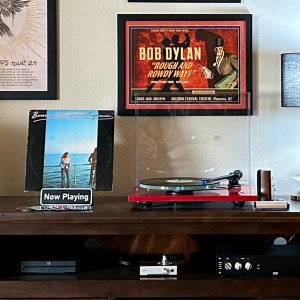
This album wasn’t a commercial flop but was a long way from the top (If You Wanna Rock ‘n’ Roll). It was critically panned. I have always liked the album. I don’t get why it would be twelve more years before Bonnie would grab the brass ring with Nick of Time. Her albums before Nick of Time, like this one, were good.
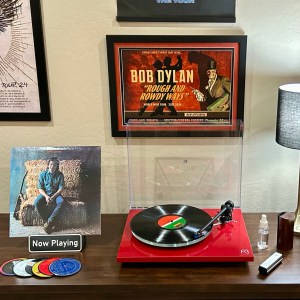
This is one of the greatest debut albums. Kris Kristofferson wrote in the liner notes: “Twenty-four years old and writes like he’s two-hundred and twenty.” There are so many classic songs: “Illegal Smile,” “Hello In There,” “Sam Stone,” and “Angel From Montgomery.” Produced with a delicate touch by Arif Mardin.

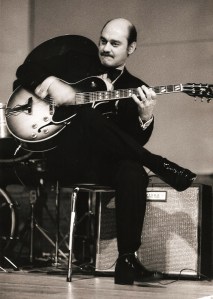
I have no history with this album or with Joe Pass. I know Joe Pass as one of the great jazz guitarists, but I have minimal experience with him. I have several jazz albums on the Pablo label—they are all excellent. And so it was without reservation that I pulled this album from the crate. This album is solo guitar (a hollow body Gibson ES-175), with Joe mostly playing standards. According to Wikipedia, Viruoso is considered Joe’s best album and one of the best jazz guitar albums. It certainly sounds great to me.

Pablo Records was a jazz record company and label founded by Norman Granz (founder of Verve, Clef, and Jazz at the Philharmonic) in 1973. Granz was acknowledged as the most successful impresario in jazz history. Pablo initially featured recordings by acts that Granz managed: Ella Fitzgerald, Oscar Peterson, and Joe Pass. Pablo’s albums are well-recorded and nicely packaged. I have never been burned by a Pablo recording.
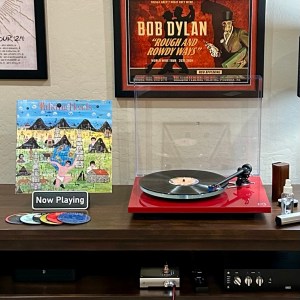
I am a pretty minor Talking Heads fan, but it was impossible to be a musichead in the late 70s and 80s without appreciating the Talking Heads. The Talking Heads were an adventurous band that dabbled in punk, New Wave, funk, Afrobeat, etc. Little Creatures is almost Americana – before that term was even used. It was critically acclaimed and is the band’s best-selling studio album (more than two million copies sold in the U.S.). The songs “And She Was” and “Road to Nowhere” were hits for the band. As wonderfully odd as they were, it is incredible they had mainstream success.
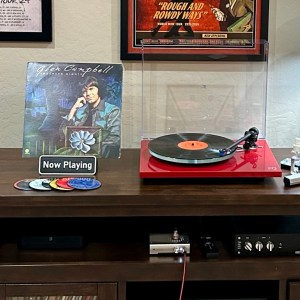
When I was a kid, Glen Campbell was huge. He started his music career as a member of The Wrecking Crew and leveraged his guitar chops to become a pop star. He had hit singles (selling over 45 million records), was an actor, and had a TV variety show. He had a solid two-decade run.
The Southern Nights LP peaked at number one on the Billboard Top Country Albums chart, and the single “Southern Nights” (an Allen Toussaint song) reached number one on both the Billboard Hot 100 (a pop chart) and Hot Country Songs charts. The album has brilliant and kitschy moments – but that was Glen Campbell.
This concludes part one – I still have a dozen more LPs to audition – stay tuned.
There is no one way to practice vinyl hygiene; find what works for you. This is what works for me.
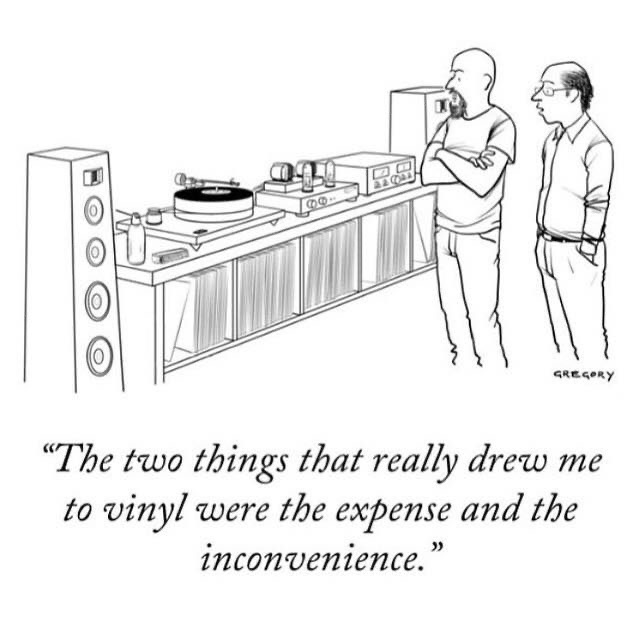
The classic audiophile joke is that we love vinyl for the expense and inconvenience. I would add that we also “love” the surface noise (crackles, pops, and skips).
If you are going to spin vinyl, you need to clean it. If your vinyl is really dirty (or a “new” used record), you will need a record-cleaning machine. This post is focused on what I call “maintenance cleaning,” cleaning a record that is already clean but needs the inevitable dust and static removed before you drop the needle.
I am 66 years old, and the go-to solution for all of my vinyl-spinning life has been a discwasher brush:

You can still buy a discwasher brush under the RCA brand, but I can’t speak to the quality – it looks slightly different than the original. I have a vintage discwasher that I have had since the late 1970s. It still works but is a bit threadbare, so I augment it with a Hunt E.D.A Mark 6 carbon fiber record brush.
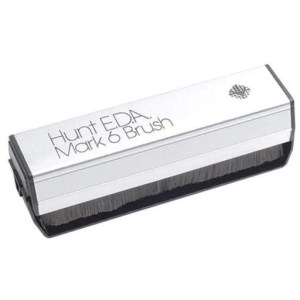
It appears that this brush is no longer available, but Music Hall has reissued what looks like a reasonable facsimile they call the Music Hall Carbon Fiber Brush.

According to Music Hall, the brush contains over 1,000,000 antistatic carbon fibers. The fibers are in two rows, with a static grounding pad centered between them.

The grounding pad supports the carbon fibers and keeps them erect so they can dig deep into the groove and extract trapped dust.

A record contains microscopic undulations inside the groove wall that are smaller than human hair and that the naked eye cannot see. This is how music is stored on an LP. A pad like the discwasher can’t get down into the groove. It mostly brushes over the top and removes the surface dust. The real culprit is the dust that’s trapped deep in the record groove. The Music Hall carbon fiber bush allegedly can get there.
I brush a record every time I play it. My technique is to manually spin the record on the turntable, hold the Music Hall brush stationary on the record surface for a few rotations, and then sweep it away. If a record is a little dirtier or static, I will moisten the discwasher with an atomizer containing distilled water. I will then use the discwasher similar to the Music Hall brush (manually spin the record on the turntable, hold the brush stationary on the record surface for a few rotations, and then sweep it away). I will then follow up the discwasher brushing with the Music Hall brush. With both brushes, be consistent in the direction you brush with each cleaning.
Some people online suggest that the carbon fibers of the Music Hall brush will scratch a vinyl record. I have never experienced that, so I am dismissive of that criticism.
In addition, I occasionally (every three to five LPs) clean the turntable’s stylus. I use an Onzow Zerodust stylus cleaner, which is constructed of ultra-soft gelatinous plastic and designed to gently remove dust and debris from the stylus tip.


Always handle your albums by the edges or label. Do not let your fingers touch the groove surface—oils on your fingers will leave a residue on the LP.
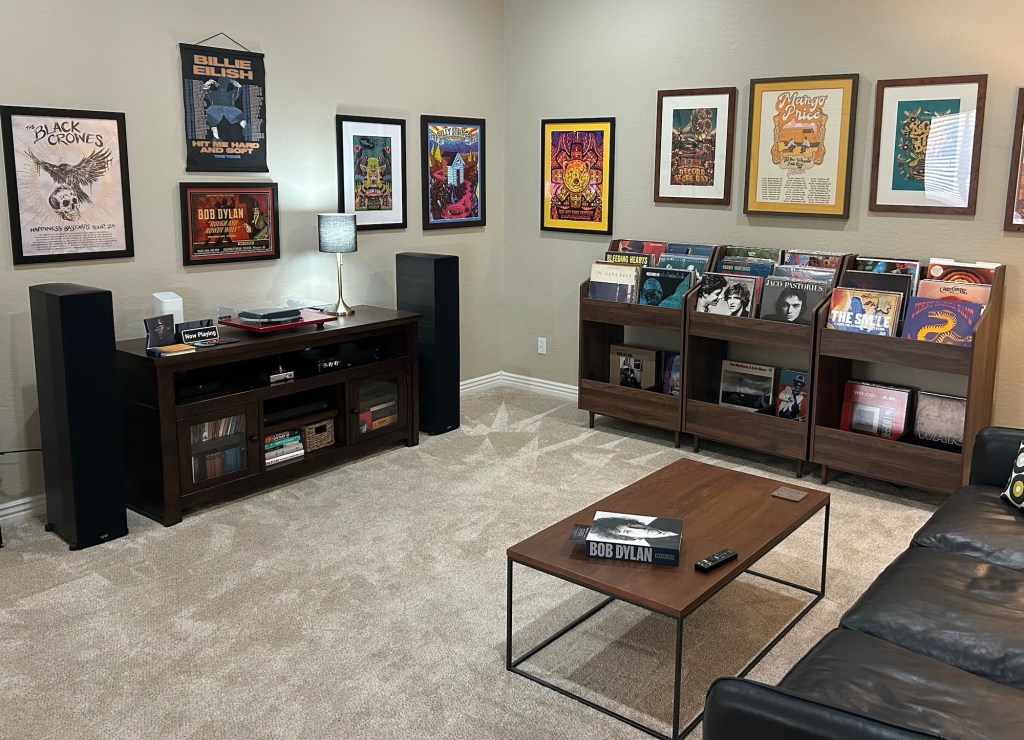
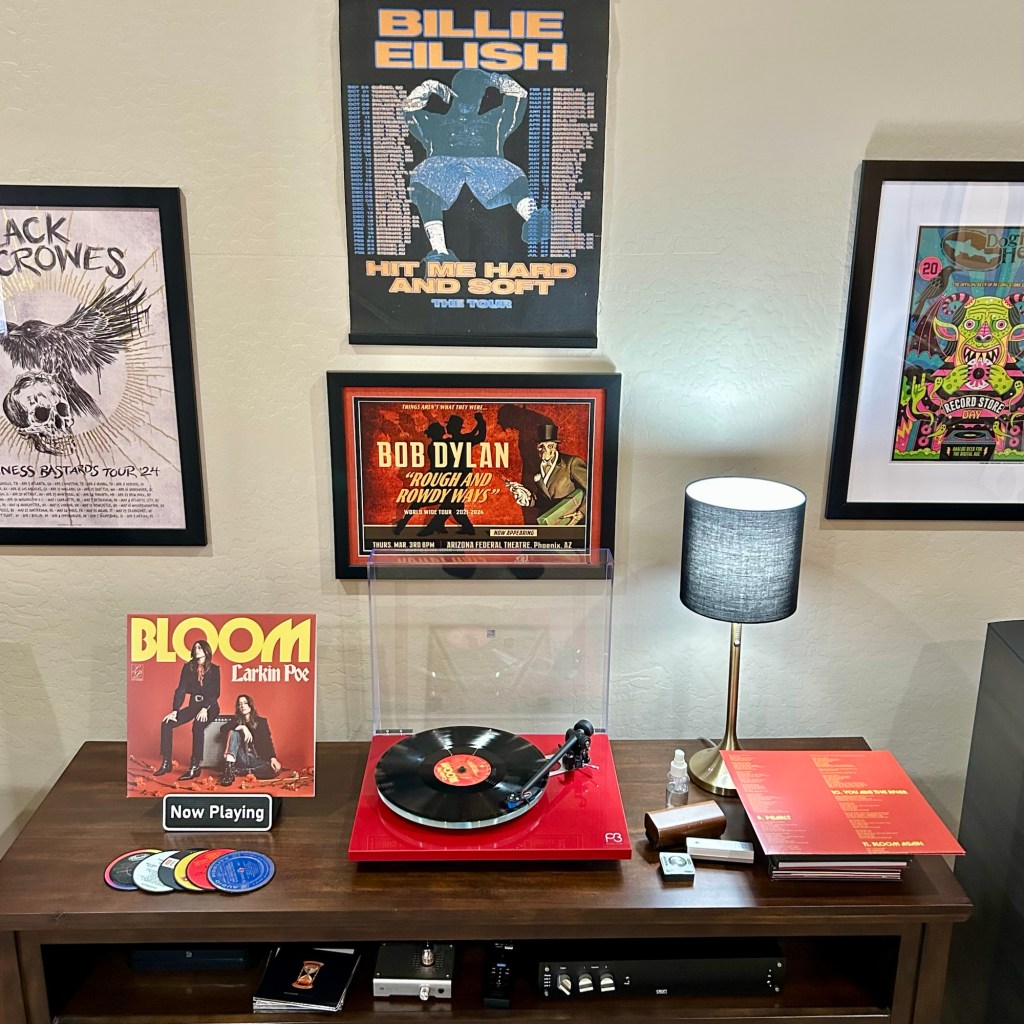
Paradigm Premium 800F speakers, Bluesound Node streamer (Tidal), Croft Acoustic Phono Integrated amplifier, Rega P3 turntable (stock cartridge), Schitt Vali 2 headphone amplifier, Sony UBP-X800M2 Blu-ray (for CDs – note there is not a TV in this room), Joey G DAC, and DROP.com + HiFiMan HE5XX Planar Magnetic Headphones
This is an update on a post about our Desert 🌵 Sessions’ stereo. The Desert 🌵 Sessions is my catchall term for all things musical (listening to music, blogging/posting about music, concerts, etc.) when my wife and I are snowbirding in Phoenix (we summer in our hometown of Minneapolis).
I think of myself as a “humble audiophile.” What I mean by that is that I have a quality stereo, but it is modest. I belong to the Arizona Audio Visual Club (AAVC), which exposes me to some over-the-top systems here in the Valley (the term the locals use for the Phoenix metro area). I am proud of my system, modest as it is. I think of myself more as a musichead than an audiophile – a nice stereo is a necessary tool to enjoy music – gear is not the goal. I recognize that most musicheads are more than happy to enjoy music via a pair of earbuds or a Bluetooth speaker.
This is our fourth winter in Phoenix. Here is a quick summary of how the Desert 🌵 Session rig has evolved (a longer description of 1.0 and 2.0 can be found in this post).
- Version 1.0 January through May 2022—We first moved into our Phoenix home in January 2022. The first rig comprised an extra Croft amp I had, a Schitt headphone amp I borrowed from the Minneapolis rig, a turntable I borrowed from our daughter, a Dragonfly DAC (that I hooked to my iPhone for high-resolution streaming), and some old headphones (AKG K240 and Grado SR80). At first, I set this rig up on the floor, then upgraded to a folding table, and finally upgraded to a used media cabinet. I also purchased a Bluesound Node to stream music. Because I did not have any speakers, I listened on headphones. Near the end of Desert Session 1.0, I picked up a pair of inexpensive Klipsch bookshelf speakers.
- Version 2.0 November 2022 through June 2023 – I retired on 12/31/22, allowing more time to enjoy the Desert 🌵 Sessions. Some health issues kept me home, but the silver lining was more time to listen to music. Enhancements included a new Rega turntable, a couch, and a coffee table (before this, we used a combination of lawn furniture and cardboard boxes for furniture), and we brought down some Paradigm speakers that were underutilized in Minneapolis (the Klipsch bookshelf speakers went back to Minneapolis at the end of the season). I also brought down about a hundred duplicate LPs I had in Minneapolis – why do I have a hundred duplicates? See this link for the answer). Back in Minneapolis, I bought another Schitt headphone amp, and the Schitt Vali 2 found a permanent home as part of the Desert 🌵 Sessions.
- Version 3.0 November 2023 through May 2024 – Enhancements for this season included new HiFiMan headphones and Crosley record racks.
- Version 4.0 November 2024 through May 2025 – The significant enhancement for this season was a CD player and external DAC connected to the CD player and Bluesound Node. We also got another record rack.
I have learned that the room is one of the most significant audio components. The best equipment can sound terrible if the room does not support the equipment. In Minneapolis, we live in an open-concept apartment-style condo. It is not conducive to playing music out loud, so I mostly listen via headphones. For the Desert 🌵 Sessions, we have a dedicated music room. The room is nearly square (13′ x 14′), carpeted, with no windows but a large opening on the left side to the rest of the home. I was concerned that the open side would allow too much noise from the rest of the house and that my music would bleed into the rest. It turned out that it was just tucked away enough to not cause noise problems either way. Because the Croft amp has separate left and right volume controls, I can do some primitive “room correction” to solve for the opening (a slightly higher volume on the right channel does the trick).
One of my rules for the Desert 🌵 Sessions is that physical media, what I call albums (vinyl records and CDs), can only travel one way. If I bring an album from Minneapolis to Phoenix, the album stays in Phoenix, and vice versa. More albums are flowing from Minneapolis to Phoenix than vice versa. I discovered some great record stores in The Valley and enjoyed my first Phoenix Record Store Day at Stinkweeds in the spring of 2022.
Another key component of a listening room is furniture—you can’t have a listening room without a proper listening chair in the room’s sweet spot. We chose a sofa rather than a recliner because we felt it would be more welcoming when we had guests. The sofa is also great for napping (this is when I typically use headphones as I am out of the room’s sweet spot when prone and sideways).
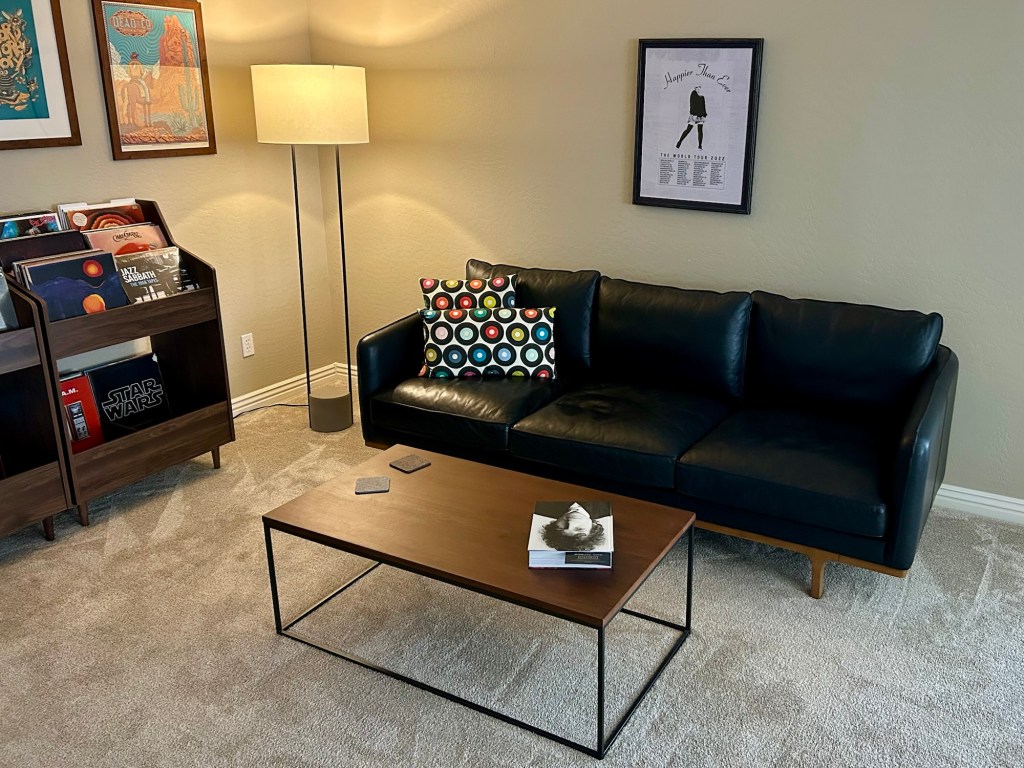
I love the Crosley record racks my wife procured for the Desert 🌵 Sessions. They give the room a record-store vibe. There is nothing better than crate digging in your own home. CDs are stored in the media cabinet.

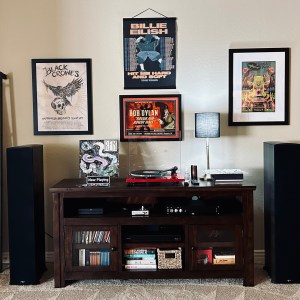
The room is decorated with concert posters from shows in The Valley.
The Desert 🌵 Sessions 4.0 sounds fantastic! A lot of equipment does not sound good unless cranked, but I listen to music at low to medium volume, and the Desert 🌵 Sessions rig is sympathetic to this. The room has a great visual and sonic vibe; I look forward to many hours of listening in the desert 🏜️.


