One of the writers I follow on Substack, Michael Rand, recently answered the question, “What kind of music do you listen to?” by creating a ten-song annotated playlist. I define myself as a musichead. I have a vast vinyl and CD collection and have been writing this music-focused blog since the fall of 2011. Yet I am paralyzed by the question: “What kind of music do you listen to?” My snarky comeback is “I listen to good music.” But that is just an evasive move. I have thought about making a list of my 100 favorite albums and/or my favorite 100 songs, but that has been daunting. I often think about what four musicians would be on my musical Mount Rushmore – but four is not enough. This post is inspired by Michael Rand’s post – here are a dozen songs that define my taste.
“The Moontrane” by Dexter Gordon from the album Sophisticated Giant (1979)
I didn’t listen to much pop music when I was a kid. Instead, I listened to big band and classical music. When I arrived at college, my musical horizon expanded, and I discovered classic rock (which was simply rock in the late 1970s and early 1980s when I was in college), as well as jazz, folk, and country. One of my discoveries was with Dexter Gordon’s big band album Sophisticated Giant. I fell in love with Dexter’s gorgeous tenor sax tone and the sense of melody in his improvisations. This album had the sophisticated swing of big band music, with a bit of the edge of bebop. This song has a great melody, cool arrangements, and epic solos.
“Testify” by Ronnie Wood from the album Slide On This (1992).
By the time this album came out, I was a huge Rolling Stones fan, and Ronnie Wood was my favorite Stone because he seemed like both a journeyman and at the same time his own guy with his own musical vision. This song is a cover of a George Clinton/Parliament song, which is the perfect blend of rock and funk.
“San Lorenzo” by Pat Metheny from the album Pat Metheny Group (1977)
In addition to big band and classical music, Muzak (AKA elevator music) was a guilty pleasure as a kid. As my musical horizon expanded in college in the late 1970s, jazz-rock fusion and light jazz were popular, and I was drawn to these new genres. The Pat Metheny Group album, part of that jazz-rock/light-jazz genre, was the best elevator music I had ever heard. In the nearly fifty years since I first heard “San Lorenzo,” I have never tired of it.
“Visions of Johanna” by Bob Dylan from the album Blonde On Blonde (1966)
Bob Dylan is on my musical Mount Rushmore. I struggled to decide which Dylan era to highlight, let alone which song to include here. I settled on this one from the end of his “Dylan’s gone electric” era. Dylan reminisces about a former lover/muse (maybe that is what he is singing about) in a weary psychedelia haze backed by Nashville’s finest studio musicians. It is just another tossed masterpiece from his catalog.
“So What” by Miles Davis from the album Kind Of Blue (1959)
Whenever someone asks for an introduction to jazz, I suggest Kind Of Blue. I suggest it because it is both accessible and challenging. It is smooth, yet has sharp edges. Most of all, it radiates a cool vibe.
“Twist and Shout” by David Lindley from the album El Rayo-X (1981)
Lindley was Jackson Browne’s guitar player in the late 70s. Lindley teased that there was more to him than wicked slide guitar riffs when he sang a falsetto verse on Browne’s Running On Empty’s “Stay.” This goofball cover of the Isley Brothers’ hit (although most readers are more familiar with the Beatles version) is almost a novelty song, but I love it.
“Goodbye Pork Pie Hat” by Joni Mitchell from the album Mingus (1979)
Joni is another head on my musical Mount Rushmore that I struggled to decide which song to include here. I chose this one because it was from a time when I was experiencing Joni’s music firsthand, in the late 1970s. The jazz great Charles Mingus, who was dying, reached out to Joni to write lyrics to his songs. Joni was incinerating her pop career and was game for the assignment. “Goodbye Pork Pie Hat” is the diamond from the album inspired by the collaboration of Joni and Mingus. Somehow, she managed to get Herbie Hancock and half of Weather Report to help her.
“Box Full of Letters” by Wilco from the album A.M. (1995)
When Uncle Tupelo’s leader walked out of the band at its peak, second banana Jeff Tweedy decided to make another Uncle Tupelo album (A.M.) under the Wilco banner. Wilco would soon become Wilco, but this last gasp of Uncle Tupelo’s alt-country genius is a cool footnote to the Wilco catalog. It also has one of my favorite lyrics:
“I just can’t find the time
To write my mind
The way I want it to read”
“Sign O’ The Times” by Prince from the album Sign O’ The Times (1987)
I generally categorize rock stars as artists (for example, Dylan and Joni) and entertainers (for example, Elton John). Prince is both an artist and an entertainer. He is the greatest performer I have ever witnessed.
This song was a shift in his sound to a sparse electronic arrangement seasoned by a funky lead guitar part. Lyrically, it is almost a protest song as Prince addresses HIV/AIDS, gang violence, natural disasters, poverty, the crack epidemic, the Space Shuttle Challenger disaster, the Strategic Defense Initiative, and the threat of nuclear war – pretty cool for a dance song.
“More Than This” by the Charlie Hunter Quartet from Songs From the Analog Playground (2001)
I was initially going ot include the Roxy Music original. However, I picked this cover as an excuse to include one of my favorite singers and still acknowledge my love of Roxy Music. Charlie Hunter plays custom-made seven and eight-string guitars on which he simultaneously plays bass lines, chords, and melodies. His guitar sounds more like an organ than a guitar. He primarily plays instrumental jazz, but on this album, he had a then-unknown female vocalist cover this Roxy Music classic. That unknown female vocalist was Norah Jones, about eighteen months before she exploded onto the pop scene.
“The Rooster” by Atmosphere from the EP Sad Clown Bad Fall 10 (2007)
As a 66-year-old white guy, I was aged out of the pop scene when hip-hop got big. But I still managed to sample it occasionally. Given that Atmosphere was a Minneapolis band (more specifically, Southsiders like me), I took a shine to them. This is a song I play for people my age who say they hate rap. It has never failed to get geriatric rap haters to second-guess themselves. “The Rooster” describes a couple’s rough night at a bar.
“Skyway” by The Replacements from Pleased To Meet Me (1987)
This gorgeous piece of jangle folk rock showed songwriter Paul Westerberg’s true colors: he is not a punk but the ultimate sensitive singer-songwriter. Only a Minneapolitan (yet another Southsider) could use the city’s raised, building-connecting walkways as a metaphor for unrequited love.
There were so many artists and songs that I wanted to include here*. My method was to not think about it much and just go with my gut. I assume if I did this again in a month, the list would be different, so this is of the moment. I also resisted trying to be cool, that is, making choices that would impress. I did my best to stay true to my heart.
*Goose, Ryan Adams, more Miles, more Dylan, more Joni, Parliament/Funkadelic, Neil Young, Jerry Garcia, Tedichi Trucks Band, Margo Price, Jackson Browne, Bruce Springsteen, Sturgill Simpson, Lucinda Williams, Rolling Stones, Jonathan Wilson, Father John Misty, Elvis Costello, The Jayhawks, John Coltrane, just to name a few.
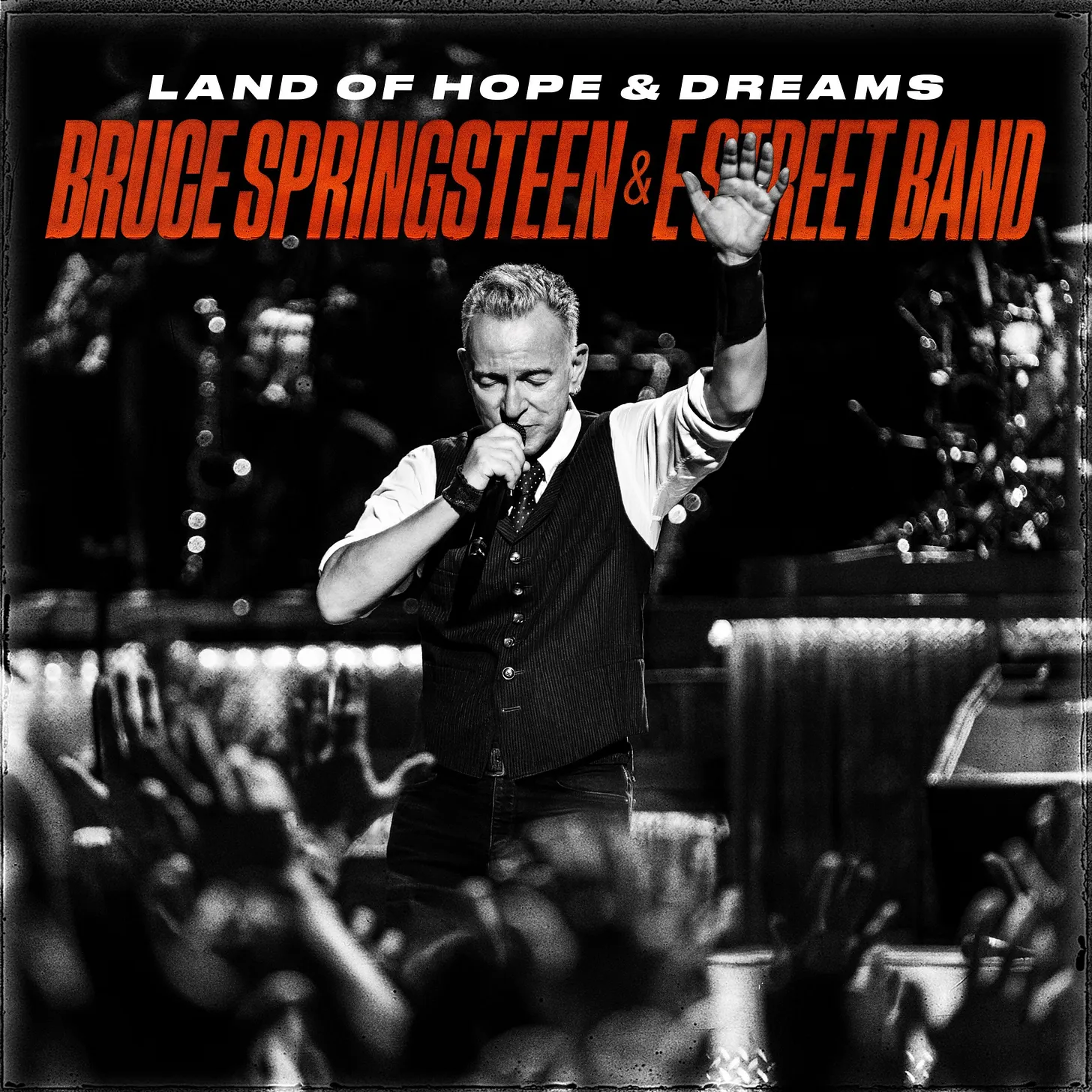
This post combines my two interests: politics (which I write about over on Substack) and music (which I write about here). The new Springsteen Land of Hope & Dreams EP has motivated me to combine those interests with a review of the EP. This is a rare cross-post – this post first appeared on my Substack.
On May 14, 2025, Bruce Springsteen and The E Street Band opened their Land of Hope & Dreams Tour in Manchester, England. Highlights from that first night are now available on streaming services as the Land of Hope & Dreams EP. The EP is a couple of political anti-Trump rants and four, what we used to call, protest songs. Springsteen is using his platform to inform Europe that Trump does not represent all of America, and for us Americans, a pick-me-up.
The EP opens with a political rant that includes these remarks:
“…the America I love, the America I’ve written about that has been a beacon of hope and liberty for 250 years is currently in the hands of a corrupt, incompetent, and treasonous administration. Tonight we ask all who believe in democracy and the best of our American experiment to rise with us, raise your voices against authoritarianism and let freedom ring.”
His fellow septuagenarian and sometime New Jersey resident (at Trump National Golf Club Bedminster), Donald Trump, was unhappy with Springsteen’s rant and demanded that he be “investigated.” Trump went on to say on Truth Social in response to Springsteen’s rant:
“Never liked him, never liked his music or his Radical Left Politics and, importantly, he’s not a talented guy — just a pushy, obnoxious JERK. This dried out prune of a rocker (his skin is all atrophied) ought to KEEP HIS MOUTH SHUT until he gets back in the Country.”
Springsteen then performs his 1999 song “Land of Hope and Dreams.” The song was performed live for years before the studio version appeared on The Boss’ 2012 album Wrecking Ball. It is a song that offers hope near the end of Wrecking Ball, an album largely about the despair of the American people in the aftermath of the Great Recession in 2008. On this EP, the song ends with a snippet of The Impressions’ “People Get Ready”, written by Curtis Mayfield. The performance on the EP is inspired. “Land of Hope and Dreams” is a fitting song for our times.
Next is “Long Walk Home,” which Bruce introduces as: “This is a prayer for my country.” The song first appeared on the 2007 Springsteen album Magic. When the song first came out, Springsteen told The New York Times that it was a song about how he felt during the George W. Bush administration:
“In that particular song a guy comes back to his town and recognizes nothing and is recognized by nothing. The singer in ‘Long Walk Home,’ that’s his experience. His world has changed. The things that he thought he knew, the people who he thought he knew, whose ideals he had something in common with, are like strangers. The world that he knew feels totally alien.
Another song that is on the nose for our times.
Springsteen goes on another rant as an intro to “My City of Ruins” from his 2002 album The Rising. The song was initially written as an elegy for Asbury Park, New Jersey, but the song took on new meaning as a message of hope following the September 11 attacks. The whole Manchester rant is worth including here:
Now, there’s some very weird, strange and dangerous shit going on out there right now.
In America, they are persecuting people for using their right to free speech and voicing their dissent. This is happening now.
In America, the richest men are taking satisfaction in abandoning the world’s poorest children to sickness and death. This is happening now.
In my country, they’re taking sadistic pleasure in the pain that they inflict on loyal American workers, they’re rolling back historic Civil Rights legislation that led to a more just and plural society, they’re abandoning our great allies and siding with dictators against those struggling for their freedom.
They’re defunding American universities that won’t bow down to their ideological demands. They’re removing residents off American streets and, without due process of law, are deporting them to foreign detention centers and prisons. This is all happening now.
A majority of our elected representatives have failed to protect the American people from the abuses of an unfit president and a rogue government.
They have no concern or idea of what it means to be deeply American. The America that I’ve sung to you about for 50 years is real, and regardless of its faults, is a great country with a great people.
So we’ll survive this moment.
Now, I have hope because I believe in the truth of what the great American writer James Baldwin said. He said, in this world, there isn’t as much humanity as one would like. But there’s enough.
Let’s pray.”
This version of the song is wonderfully uplifting, and again, this is an excellent song for the moment.
Springsteen ends the EP (and based on the intro, the last song of the concert) with a Dylan cover: “Chimes of Freedom.” The song depicts the thoughts and feelings of the narrator and his companion as they shelter from a lightning storm under a doorway after sunset. The singer expresses his solidarity with the downtrodden and oppressed, believing that the thunder is tolling in sympathy for them. Springsteen and the E Street Band make the 1964 Dylan classic into a horn-fueled anthem for our time.
Land of Hope & Dreams EP is not the kind of album you will play on repeat, but it is worth a half hour of your time as a pick-me-up from the nation’s current state.
Keep up the good work, Bruce! Thanks for reminding us, “Don’t let the bastards grind you down.”

Before listening to this album, I had not heard of or listened to Mark Pritchard’s music. Thom Yorke, of Radiohead fame, drew me to this album. It turns out that Pritchard and Yorke have some musical history, and during COVID, they began collaborating virtually. Tall Tales is the result of the collaboration.
According to Wikipedia, Mark Pritchard is an English electronic musician who “has produced a large discography with a constant change of styles and genres, in both solo work under various aliases and collaborations.”
Per Pritchard’s label, Warp, Tall Tales is: “Landscapes of synth-pop, prog, dub, 70s synth, Joe Meek, Ivor Cutler, Library, kraut and classic Warp™️ – Tall Tales sounds like both musicians meeting in the Hinterland.”
To me, Tall Tales sounds like a true collaboration, and the results are the most accessible of Yorke’s solo work. Some of the songs would not sound out of place on Radiohead’s electronica-influenced material.
Pritchard’s beats are musical, not just sound effects (which is what a lot of electronica sounds like to me). Despite the electronica genre, the songs have an organic and warm feel. Perhaps it is the vintage synths, or perhaps I should give credit to the musical genius of Pritchard and Yorke. The music would not sound out of place in a disco in the late 1970s or a Billie Eilish lick—retro and contemporary at the same time.
Yorke’s vocals are his typical ethereal sound, but there is diversity from track to track, so it never gets boring. On “Back in the Game” (the first single), Yorke is as accessible as he is today. It is one of his most conventionally soulful vocals on record, even though Pritchard digitally warped and distorted them using an H910 Harmonizer (a vintage pitch controller). The vocal modifications are fantastic. On “Gangsters,” Yorke’s voice box vocals sound female.
Lyrically, the songs are bleak and ominous. For example, on “Ice Shelf:”
“Your sense of duty
Is misplaced
It calls you love
But it lie”
Another example is “Back in the Game,” where the lyrics juxtapose the infectious groovy beats with a story of a relapse after a period of sobriety.
I came to this album curious but skeptical. The initial listen hooked me, and each subsequent listen drew me in even further. I enjoy this album as much as Yorke’s current band, The Smile. If you are a fan of Radiohead, especially Kid A and beyond, you will likely enjoy this album.
This album sounds amazing sonically. The 24-bit/96 kHz FLAC version on streaming services is perfection. Tall Tales is meant to be enjoyed digitally.
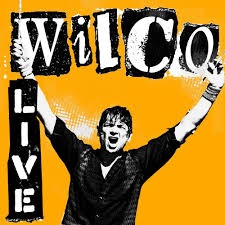
I was pleasantly surprised on 5/14/25 to see a new live Wilco album in my streaming service’s new release suggestions. There has only been one official live Wilco album, 2005’s Kicking Television, which is excellent. There are “official bootlegs” you can buy from the band, and most of the band’s box set reissues have at least an album’s worth of live tracks. On the band’s social media, they announced:
“Join the band on a trip through the past decade of Wilco’s live shows with 24 handpicked tracks from the road. Available now wherever you stream music. We’re already working on playlist #2.”
The 24-track compilation is only on streaming services. It features live soundboard recordings from 2012 to 2024, which were performed across the United States and at international events in Mexico, Australia, and Iceland. The tracklist (see the tracklist below) consists of songs from throughout Wilco’s catalog, including 2019 recordings of “Casino Queen” and “Box Full Of Letters,” from the band’s 1995 debut album, A.M., as well as “Meant To Be” and the title track from their most recent studio effort, 2023’s Cousin. Through this era, the band is frontman/guitarist Jeff Tweedy, bassist John Stirratt, drummer Glenn Kotche, multi-instrumentalist/keyboardist Mikael Jorgensen, and guitarist Nels Cline.
The quality of the performances is excellent, but the recording quality is merely good. That being said, having this live Wilco document is great. It is a great setlist and a bonus is that I have been at three of the shows represented in this compilation. It is a lovely gift from the band to thier fans.
Tracklist:
- A Shot in the Arm (Live at Theatre at Ace Hotel, Los Angeles, CA, Oct. 4, 2023)
- I’m Trying To Break Your Heart (Live at Beacon Theater, New York, NY, June 21, 2024)
- Art of Almost (Live at Midway Stadium, St. Paul, MN, July 10, 2013) – I was at this show!
- Pot Kettle Black (Live at Hard Rock Hotel, Riviera Maya, Mexico, Jan. 19, 2020)
- Bird Without a Tail / Base of My Skull (Live at Beacon Theater, New York, NY, June 21, 2024)
- Hummingbird (Live at Princess Theatre, Brisbane, Queensland, Australia, March 13, 2024)
- Cousin (Live at Theatre at Ace Hotel, Los Angeles, CA, Oct. 4, 2023)
- I’m Always In Love (Live at Brooklyn Steel, Brooklyn, NY, Oct. 13, 2019)
- I’m the Man Who Loves You (Live at Hard Rock Hotel, Riviera Maya, Mexico, Jan. 20, 2022)
- Dawned On Me (Live at Palace Theatre, St Paul, MN, Nov. 23, 2019) – I was at this show!
- Random Name Generator (Live at Eldborg Hall, Reykjavik, Iceland, April 7, 2023)
- Laminated Cat (Live at Paramount Theatre, Seattle, WA, Oct. 13, 2012)
- Theologians (Live at Leader Bank Pavilion, Boston, MA, Aug. 24, 2021)
- Impossible Germany (Live at Moody Theater, Austin, TX, Dec. 7, 2024)
- Falling Apart (Right Now) [Live at Princess Theatre, Brisbane, Queensland, Australia, March 13, 2024]
- Meant To Be (Live at Moody Theater, Austin, TX, Dec. 7, 2024)
- Box Full of Letters (Live at Brooklyn Steel, Brooklyn, NY, Oct. 13, 2019)
- Pickled Ginger (Live at Palace Theatre, St Paul, MN, Nov. 17, 2017) – I was at this show!
- The Late Greats (Live at Princess Theatre, Brisbane, Queensland, Australia, March 13, 2024)
- Red-Eyed and Blue / I Got You (Live at Brooklyn Steel, Brooklyn, NY, Oct. 13, 2019)
- Monday / Outtasite (Outta Mind) [Live at Chicago Theatre, Chicago, IL, Dec. 19, 2019]
- Casino Queen (Live at Fabulous Fox Theatre, St. Louis, MO, Nov. 14, 2019)
- I’m a Wheel (Live at Princess Theatre, Brisbane, Queensland, Australia, March 13, 2024)
- Spiders (Kidsmoke) [Live at Chicago Theatre, Chicago, IL, Dec. 19, 2019]
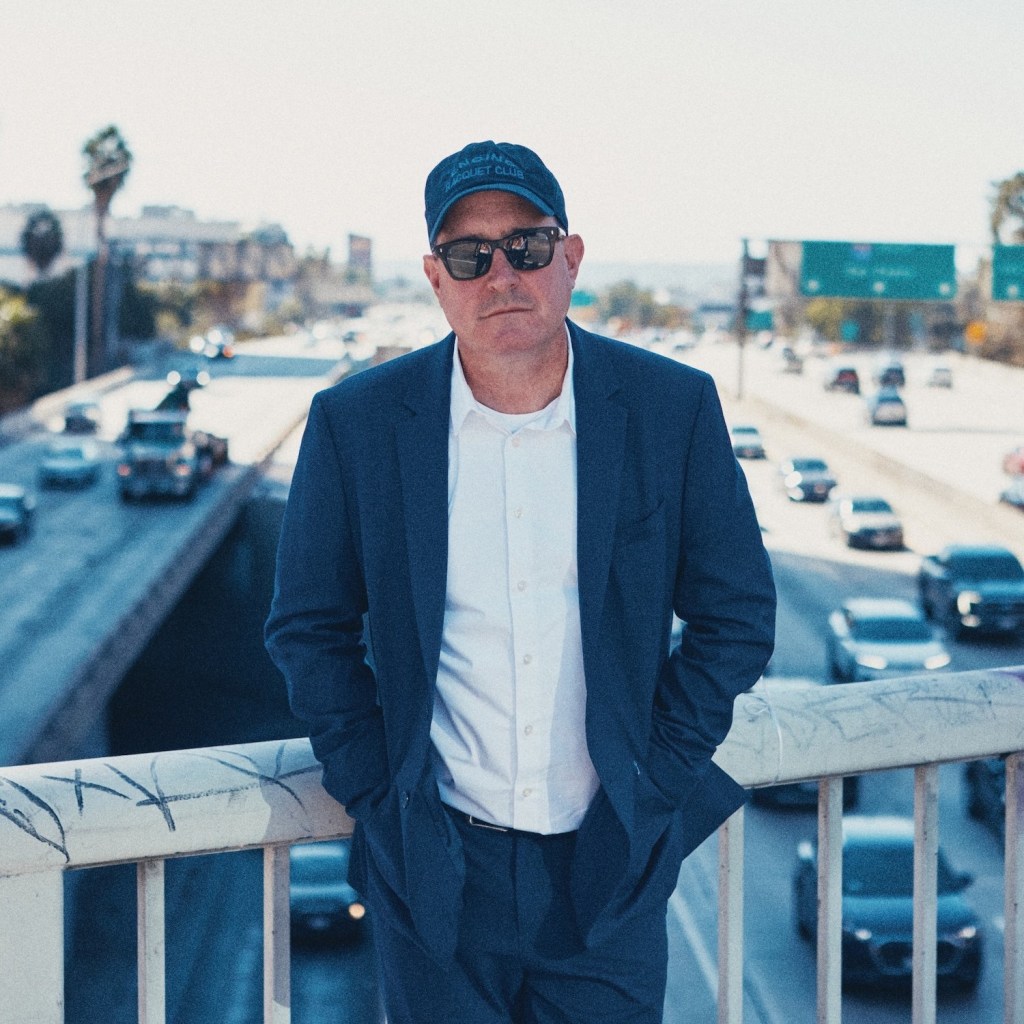
What a fantastic pairing of indie rock royalty: The Hold Steady’s frontman and singer-songwriter Craig Finn, produced by The War On Drugs’ frontman Adam Granduciel. Together, they have created Finn’s sixth solo album. Finn has such a distinct vocal and lyrical style that it is hard to distinguish between The Hold Steady and his solo work. The first time I heard this album, I was struck by the slickness, in a good way. Finn’s limited talky vocals sounded the best he ever has, per Finn in an Under Radar magazine interview: “I’m singing pretty well, for me.” Granduciel’s 80s AOR sheen is the perfect accompaniment for Finn, resulting in a different-sounding Finn from his usual solo work and work in The Hold Steady.
Finn’s gift is that he can tell a short story in the course of a song. His storytelling has never been better than on Always Been. Some songs are about the same character – a middle-aged man in emotional crisis. Finn’s stories have a realness that on paper should be downers, but somehow he makes them uplifting. I have liked every The Hold Steady and Craig Finn solo album, but this one resonates with me and is one of my favorite albums of 2025.
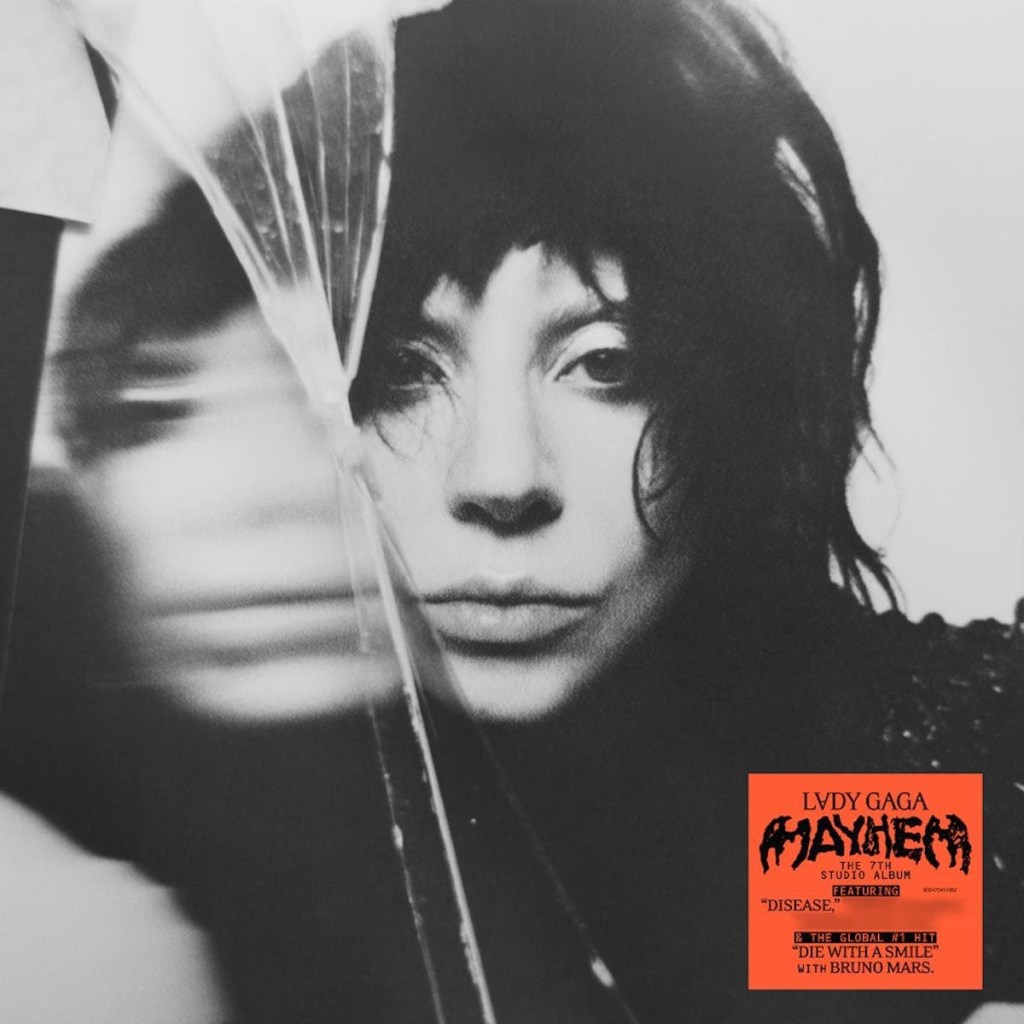
When Lady Gaga appeared on the pop music scene in the late ’00s, I was dismissive—I judged her as a Madonna wannabe. Then I saw her live when she headlined Lollapalooza in August 2010 with her The Monster Ball Tour—I was blown away—she was a rock star! I witnessed a musician, artist, and performer in Grant Park that night. Most pop stars are one of three, the best are two of three, and the greatest are three of three. Gaga was all three.
Lady Gaga’s new album, Mayhem, is being hailed as a return to the dance-pop form of her early career; a less charitable take is that she is reheating yesterday’s leftovers. I have been re-listening to her catalog, and except for her alter-ego as an American songbook big band singer (e.g., her Tony Bennett albums), she has been playing dance pop all along. Born This Way had a sprinkle of arena rock, and Joanne had a dash of singer-songwriter vibe, but both were predominantly dance-pop. Mayhem is a good Lady Gaga pop album (vs. an American Songbook album). I don’t need her to reinvent herself; I just need to make an album of songs I don’t want to skip – there are no skippers on Mayhem. The only quibble I have with the album is the collaboration with Bruno Mars (“Die with a Smile”), which is a great single but doesn’t fit the vibe of the rest of the album.
Mayhem is an update of her Fame Monster self with a few nods to her pop star contemporaries. For example, “How Bad Do U Want Me” is Gaga’s version of a Taylor Swift impression, and “Don’t Call Tonight” sounds like Daft Punk. I don’t need Gaga to reinvent herself; just do what she does best, and on Mayhem, Gaga is at her best.

Brandi Carlile and Elton John are together at last! Brandi has long admired Elton. She was bold enough to reach out to him early in her career, and they became friends.
The genius of this album is that it is precisely what you would hope: a re-creation of Elton’s 70s magic. Besides Elton and Brandi, Bernie Taupin, Elton’s writing partner, contributes. Andrew Watt produces – Watt has sprinkled his pixie dust on recent albums by Lady Gaga, Iggy Pop, Ozzy Osbourne, Pearl Jam, and the Rolling Stones – that pixie dust works great here too.
As much as I like this album, it is not a high-water mark for Brandi or Elton. It is just friends having fun and as a fan of both it is easy to be sucked into the hijinx. So enjoy it for what it is.
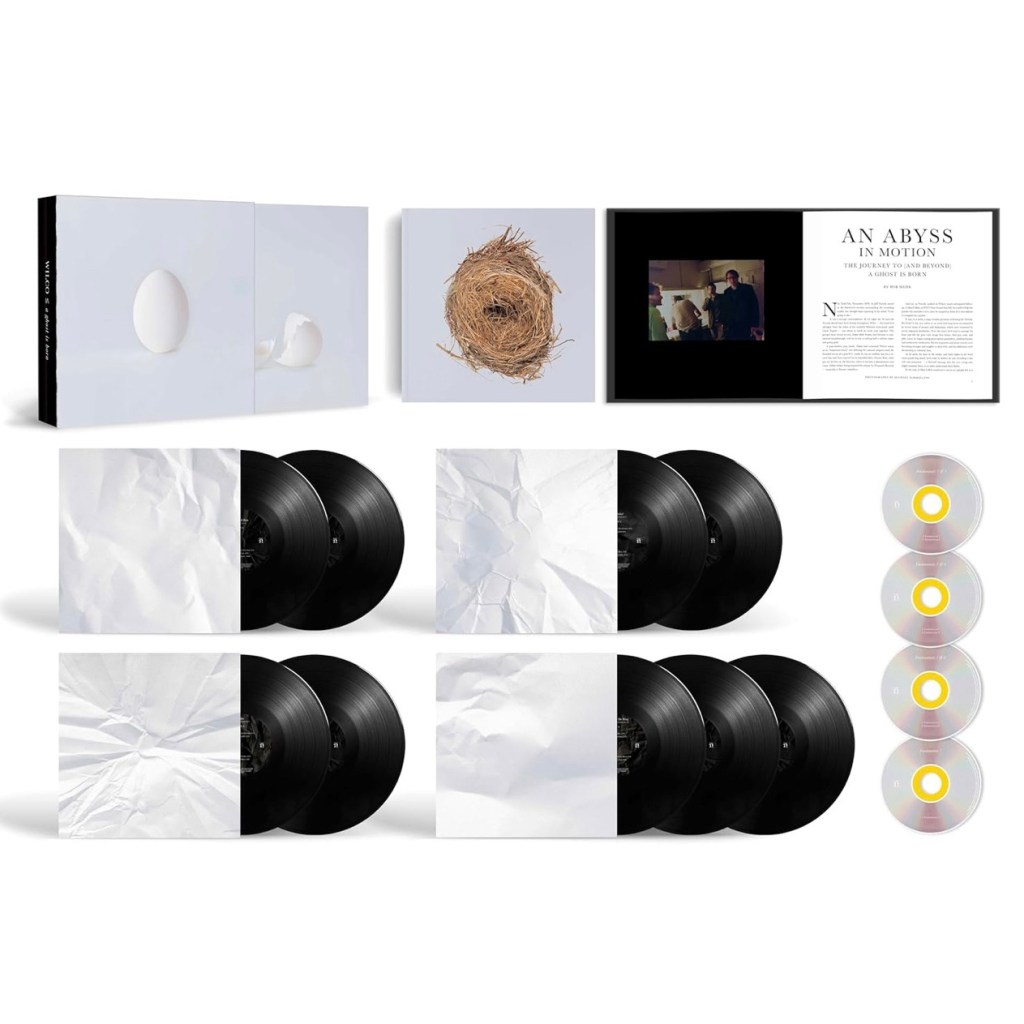
WARNING: This is a long post, but what do you expect from a 9-LP/4-CD box set?
I am a long-time Wilco fan. I bought each new album on CD, as that was the only choice in those days. Wilco reissues a deluxe edition of albums from their catalog roughly around the twentieth anniversary of an album. These reissues include the original album with lots of bonus material and are released on vinyl and CD (the complete edition is typically not on streaming services). The A Ghost Is Born box was recently released (the original album was released in the summer of 2004) and contains nine LPs and four CDs (the LPs and CDs have different content; the CD version has nine CDs). Per the band’s website:
“A Ghost Is Born (Deluxe Edition) is a 9-LP + 4 CD (9 CD for CD version) set that features Wilco’s 2004 Grammy-winning album alongside alternates, outtakes, and demos, charting the making of the album, plus the complete 2004 concert recording from Boston’s Wang Center and the band’s “fundamentals” workshop sessions. The deluxe box includes 65 previously unreleased music tracks as well as a 48-page hardcover book with previously unpublished photos and a new liner notes by Grammy-winning writer Bob Mehr. A Ghost Is Born (Deluxe Edition) is mastered by Bob Ludwig and pressed in Germany by Optimal Media.”
I strongly remember buying A Ghost Is Born (I will shorthand it for the rest of this post as Ghost) on CD. We were on a family vacation, and I picked up the new release at a record store in Madison, Wisconsin. Yankee Hotel Foxtrot (YHF for short) had been a huge commercial and critical success for Wilco, and this was the follow-up album. I liked YHF, but not as much as the band’s previous releases. With Ghost, I realized that YHF was the innovation, but Ghost was the perfection of the YHF idea. I like Ghost more than YHF.
In anticipation of ordering the box set, I listened to Ghost on streaming and was reminded how much I loved the album’s weirdness- Wilco was the American Radiohead.
A Ghost Is Born (original album)
Once the box was opened, I started listening to the original album (a double vinyl album). Hearing a vinyl version of Ghost is delightful, which I have only owned as a CD version, as mentioned earlier. The vinyl pressing sounds excellent. My only issue is that Nonesuch used paper vs. audiophile inner leaves. On a $250 box, you can’t spend the extra couple of dollars to do it right, Nonesuch?
The Hook At The Wang (10/1/04 Wang Center-Boston, MA)
I next moved on to the live set: The Hook At The Wang (10/1/04 Wang Center-Boston, MA). This is a triple vinyl album. What an outstanding live album! It is well-recorded, mixed, and mastered for vinyl. It sounds amazing. It is an excellent set list (see below)! This is an outstanding document of the band live at their critical and commercial peak. I have always loved the Wilco live album Kicking Television (2005), a similar document, but this is even better. This is the iteration of the band you still hear live and in the studio today – the lineup started on the fall 2004 tour that supported Ghost:
Jeff Tweedy: Lead singer and guitarist
John Stirratt: Bass
Nels Cline: Guitarist
Pat Sansone: Multi-instrumentalist
Mikael Jorgensen: Keyboardist
Glenn Kotche: Drummer
Regarding the new lineup, Tweedy says, “I’d finally found what I’d been looking for.”
A nitpick I have with the box is that the credits for the live show are not listed—they are buried in the liner notes.
The Hook At The Wang (10/1/04 Wang Center-Boston, MA) setlist:
- Muzzle Of Bees (Live at Wang Center-Boston, MA 10/1/04)
- Company In My Back (Live at Wang Center-Boston, MA 10/1/04)
- I Am Trying To Break Your Heart (Live at Wang Center-Boston, MA 10/1/04)
- A Shot In The Arm (Live at Wang Center-Boston, MA 10/1/04)
- Hell Is Chrome (Live at Wang Center-Boston, MA 10/1/04)
- Handshake Drugs (Live at Wang Center-Boston, MA 10/1/04)
- Jesus, Etc. (Live at Wang Center-Boston, MA 10/1/04)
- Hummingbird (Live at Wang Center-Boston, MA 10/1/04
- I’m Always In Love (Live at Wang Center-Boston, MA 10/1/04)
- At Least That’s What You Said (Live at Wang Center-Boston, MA 10/1/04)
- Ashes Of American Flags (Live at Wang Center-Boston, MA 10/1/04
- Theologians (Live at Wang Center-Boston, MA 10/1/04)
- I’m The Man Who Loves You (Live at Wang Center-Boston, MA 10/1/04)
- Poor Places (Live at Wang Center-Boston, MA 10/1/04)
- Spiders (Kidsmoke) (Live at Wang Center-Boston, MA 10/1/04)
- She’s A Jar (Live at Wang Center-Boston, MA 10/1/04)
- A Magazine Called Sunset (Live at Wang Center-Boston, MA 10/1/04)
- Kingpin (Live at Wang Center-Boston, MA 10/1/04)
- The Late Greats (Live at Wang Center-Boston, MA 10/1/04)
- I’m A Wheel (Live at Wang Center-Boston, MA 10/1/04)
- Via Chicago (Live at Wang Center-Boston, MA 10/1/04)
- California Stars (Live at Wang Center-Boston, MA 10/1/04)
- Christ For President (Live at Wang Center-Boston, MA 10/1/04)
Fundamentals
Next, I moved on to the first of four Fundamentals CDs. I had no idea what Fundamentals was/is. Listening to disc one and reading the liner notes, I learned it was a combination of a jam session and a rough sketch of song ideas. Per the liner notes:
“One of the primary setups would find Tweedy on the studio floor, armed with a notebook and an acoustic guitar, his voice drenched in plate reverb. ‘And then John, Glenn, LeRoy, and I were in the control room,’ says Jorgensen, ‘each with some instrument or sound making device. Jeff would play, and we could hear what he was doing and we would respond to it. But he couldn’t hear what we were doing. And then afterward he would come in and would sort of mix what we’d done on the fly. Some of it was weird and probably unlistenable, but when the stars aligned, it was pretty magical.’”
The first CD includes “Fundamental 1” and “Fundamental 2” which are each about thirty minutes a piece. This is not for the casual fan, but it is not unlistenable. Some of it foreshadows specific songs, but generally it is just a vibe. As a Wilco obsessive it is really cool to listen to the early Ghost work in progress. It is kind of like listening to Jeff Tweedy’s dreams.
I moved on to the second CD (”Fundamental 3 and 4”), which is more of the same but with more song-like structures and singing. I like it more, but that could be because the first CD put me in the right state of mind to receive the music. Bassist John Stirratt can’t recall if he gained anything musically substantive from the Fundamentals experience, “But I remember getting baked and sort of enjoying listening to it all,” he says, laughing. I get it, John.
The third CD (”Fundamental 5 and 6”) is even more song-like.
Fourth CD (”Fundamental 7”)—I assume the four CDs are chronological. Each CD is tighter and further along in the songwriting process. The fourth is an excellent setup for listening to the original album. There is a significant missing link, but that is filled by the Outtakes/Alternates LPs.
Fundamentals summary:
- Jeff Tweedy is a technically good but artistically brilliant guitarist
- Tweedy’s voice oozes weariness, honesty, intelligence, and soul
- I rarely know what Tweedy is singing about, but man, can he put words together that sound cool
- Despite Tweedy’s prominence on vocals and guitar, this is a band recording—their contribution moves Tweedy’s folk noodling to something artsy
- The mix is actively stereo – this is a fantastic headphone experience.
Outtakes/Alternates
This box set section comprises two double vinyl LPs (four LPs) of Ghost, you guessed it, outtakes and alternate takes. The background on Ghost is that after the commercial and critical success of YHF, the band was in a tough place. Multi-instrumentalist Jay Bennett, a major contributor to the band as a player and composer, had left the band after seven years. Band leader Jeff Tweedy was suffering from mental illness, physical illness, and drug addiction. Despite these obstacles, the band, and Tweedy specifically, muscled through the adversity and made another masterpiece.
The band started with the Fundamentals sessions described above. They then entered the Chicago studio SOMA to finish the songs and record the album. After recording YHF at their studio, The Loft, they needed to use a commercial studio as Jay Bennett had taken most of the recording equipment with him (with the band’s blessing, as it was mostly his stuff, anyway). Most songs on the Outtakes/Alternates LPs were recorded at SOMA. The band was unsatisfied with the results at SOMA, so they decided to work with Jim O’Rourke, who had saved YHF with his mix, at Sear Sound in New York City. The Sear Sound recordings ultimately appeared on Ghost.
These are more than demos; they are fully realized recordings that could have been released as A Ghost Is Born. Although these versions of the songs are cool, they are not as good as the Sear Sound songs on the released album. But as a Wilco obsessive, these outtakes and alternatives are essential. The band chose to dismiss the SOMA sessions and head to NYC. These versions generally lack the brilliant weirdness of the Sear Sound versions that appear on the final album. I would have loved a SOMA Ghost; it would not have been a masterpiece.
The SOMA versions are significantly different from the Sear Sound versions, which is often not the case in these box sets. Too often, the outtakes and alternatives are just imperfect versions of the official release versions. The SOMA tracks are different versions of the band; the Sears Sund versions are a band with a fully realized vision. Again, this is an excellent example of Tweedy’s brilliance as a guitarist. Tweedy’s vocals are particularly vulnerable on the SOMA recordings.
Outtakes/Alternates Track List
- At Least That’s What You Said (8/13/02 SOMA-Chicago)
- Hell Is Chrome (10/5/03 SOMA-Chicago)
- Spiders (Kidsmoke) (9/28/03 SOMA-Chicago)
- Muzzle Of Bees (7/15/03 SOMA-Chicago)
- Hummingbird (2/8/02 SOMA-Chicago)
- Handshake Drugs (11/13/03 Sear Sound-NYC)
- Wishful Thinking (11/1/03 Sear Sound-NYC)
- Company In My Back (2/8/03 Hothouse-St. Kilda, Melbourne
- I’m A Wheel (August 2002 SOMA-Chicago)
- Theologians (3/19/03 SOMA-Chicago)
- Less Than You Think (11/11/03 Sear Sound-NYC)
- The Late Greats (7/19/03 SOMA-Chicago)
- Kicking Television (3/18/03 SOMA-Chicago)
- The High Heat (2/5/02 SOMA-Chicago)
- Panthers (March, 2003 SOMA-Chicago)
- Diamond Claw (3/21/03 SOMA-Chicago)
- Bob Dylan’s 49th Beard (June 2002 SOMA-Chicago)
- More Like The Moon (2/8/02 SOMA-Chicago)
- Improbable Germany (10/7/03 SOMA-Chicago)
- Handshake Drugs (First Version – 6/26/02 SOMA-Chicago)
- Hummingbird (February, 2002 SOMA-Chicago)
- The High Heat (2/4/02 SOMA-Chicago) (3:04)
- Spiders (Kidsmoke) (February 2002 SOMA-Chicago)
- Diamond Claw (March 2003 SOMA-Chicago)
- Muzzle Of Bees (October 2003 Sear-NYC)
- Like A Stone (11/10/03 Sear Sound-NYC)
- Leave Me (Like You Found Me) (6/26/02 SOMA-Chicago)
- Losing Interest (11/11/03 Sear Sound-NYC)
- Old Maid (6/26/02 SOMA-Chicago)
- Spiders (Kidsmoke) (August, 2002 SOMA-Chicago)
- Panthers (October 2003 Sear-NYC)
- Muzzle Of Bees (7/16/03 SOMA-Chicago)
- Diamond Claw (10/9/03 SOMA-Chicago)
- Losing Interest (7/20/03 SOMA-Chicago)
- Spiders (Kidsmoke) (October 2003 SOMA-Chicago)
- The Thanks I Get (6/26/02 SOMA-Chicago)
- Two Hat Blues (March 2003 SOMA-Chicago)
- Improbable Germany (January 2002 Pre-Production Loft session)
Book and liner notes: The Ghost Box includes a lovely coffee table book with photos and an excellent liner notes essay by Bob Mehr. Mehr is a two-time GRAMMY winner for Best Album Notes. He does a nice job explaining how the album evolved and the challenges that the band faced, mainly the stress of following up on a career-high watermark and Tweedy’s physical and mental deterioration.
Nitpicking: I mentioned earlier that I believe an expensive LP box set should use audiophile-quality inner sleeves for the LPs. Although the liner notes are great, there could be better documentation of the sessions and lineup for each track. When you order the box, you also get the album digitally in MP3 format (192 kbps—a medium to low-quality format). You should get a high-resolution version when you pay this much for an album. As much as I like to spin the vinyl, I need a portable album version. Asking the consumer to download a file, import it into something like iTunes, and then synchronize it with your phone is a significant pain. There should be some way to stream the album in high resolution (the original album is available on streaming as a 24-bit/192 kHz FLAC) while still enforcing a paywall (in my case, the vinyl purchase). Playing CDs (the Fundamentals section) will also be challenging for many consumers.
Acquisition: It was quite a process to acquire this box. I forgot to pre-order it, so I ordered it from Wilco’s website on release day (2/7/25). It took almost a month for it to arrive (3/4/25) due to processing delays and the crazy route it took to get to me:
- Wilco mailed it via USPS on 2/21/25 (two weeks later – come on guys, this is the era of Amazon same-day delivery) from Raleigh, NC (Wilco’s fulfillment partner Kung Fu Nation is based there)
- It arrived in Avondale, AZ (I live in Phoenix)
- It then went back across the country to Trenton, NJ
- Only to return to Avondale, AZ
- Finally, to my local post office, which delivered it to my home in northern Phoenix on 3/4/25
Unsurprisingly, the box looked like it had been to hell and back.
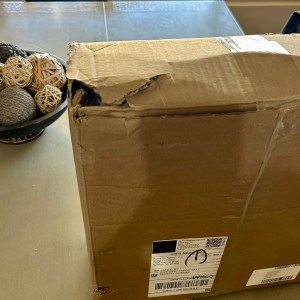
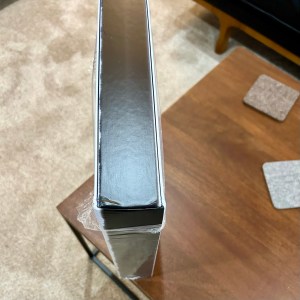
Shockingly, the actual box set only had minor damage. I contacted Kung Fu Nation, and they quickly responded that they would replace the damaged components (the slipcover, the book, and one of the album covers) at no cost, and I could keep the damaged goods. The replacement components were in the mail within a day and arrived at my home a few days later. Excellent recovery by Wilco/Kung Fu Nation!
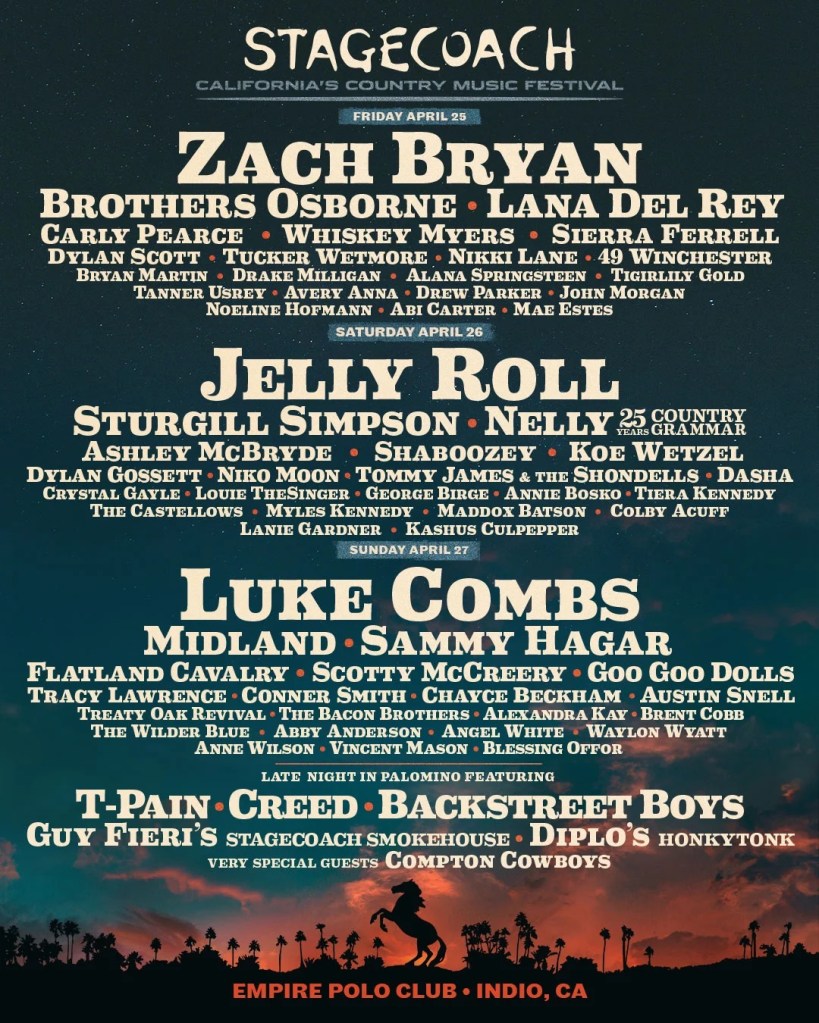
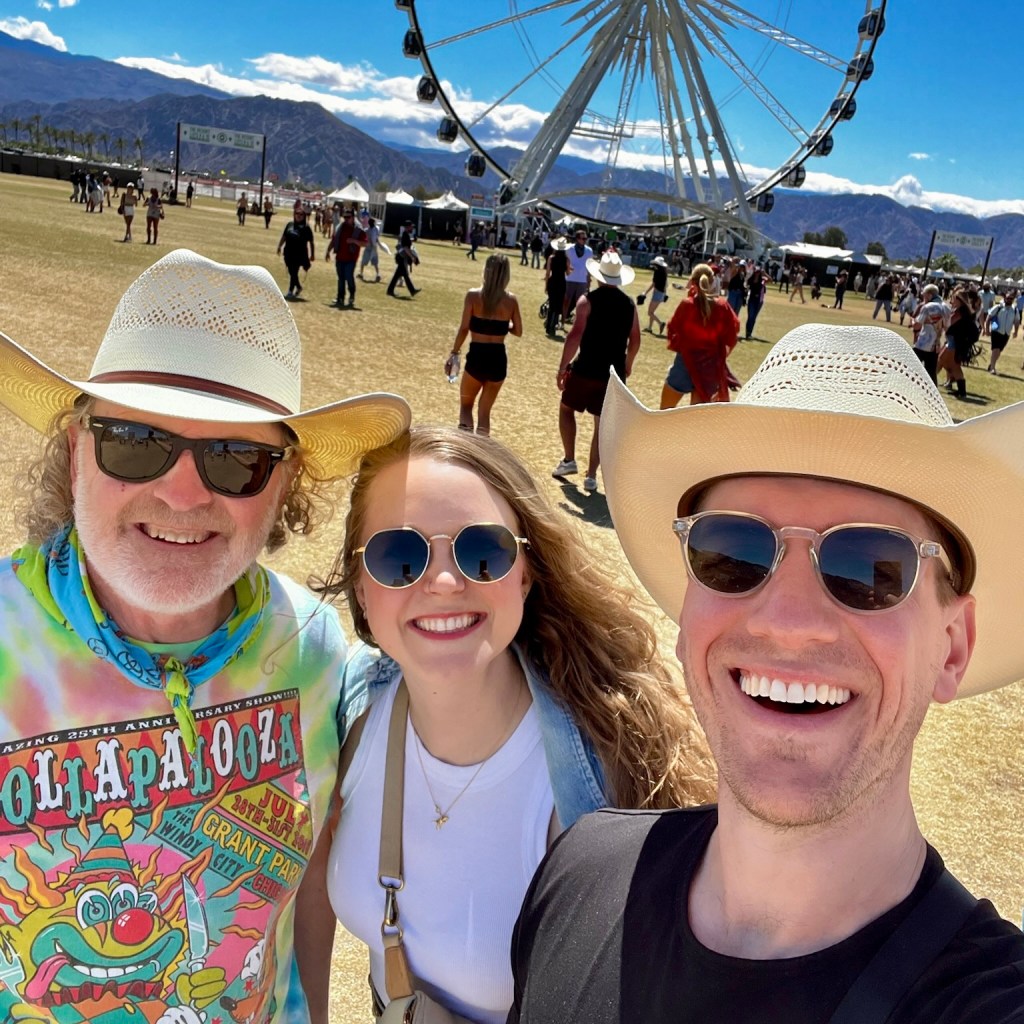
I recently attended the Stagecoach music festival. Stagecoach is the country music sibling to Coachella (pop music) and is held on the weekend after Coachella at the same location as Coachella (Empire Polo Club in Indio, California). It is the world’s largest country music festival (about 75,000 people per day). I used to go to Lollapalooza in Chicago, but I aged out – I was no longer interested in their lineup. Last year, our kids visited us in Phoenix, went to Stagecoach (only four hours away), and raved about it. I decided to tag along this year, and I am glad I did. I am mainly a rock fan, and contemporary country music is modern rock music. I was familiar with about half the artists on the lineup poster – better than I can say for most pop festivals.
Here are my key takeaways from the weekend:
- It is a well-run festival, except for the COVID years (2020 and 2021), Stagecoach has been around since 2007. The only complaint was merch—the main merch tent had a 90-minute wait most of the weekend, and the satellite tents had shorter waits but minimal inventory. There is plenty of food and drink. We stayed in an Airbnb that was a 15-minute walk to one of the shuttle pick-up spots—the shuttles ran frequently, so we experienced virtually no wait to get to or leave the festival. The festival is the right size, not crowded, and has room to grow, as Coachella can handle two-thirds more people (Stagecoach is not using all the space Coachella uses).
- The crowd is mellow – people are having a good time, but I didn’t see anyone out of control. I guess most of the crowd is between 25 and 35 – I am 66 and hardly saw any other seniors.
- The roster is a nice mix of country music superstars, up-and-comers, old stars, and some oddball rock and pop choices.
- It is impossible to see all the acts each day – a reasonable day is 8 – but that requires hustle and determination.
- The T-Mobile Mane Stage (deliberate spelling there emphasizing Stagecoach’s horse iconography) is too big, and the secondary stage, Polomino, is too small – this seems like an opportunity for improvement. The other stages are just about right. I particularly liked the Bud Light Backyard—it had a nightclub vibe and was the perfect size for up-and-coming acts.
- An outdoor festival is a weather-dependent event. Indio, California, has reliable weather in late April/early May, but I imagine a hot or windy/dust-storm day would be miserable. We had perfect weather.
- The acts try to make their sets memorable with cool cover songs and guest artists; for example, Luke Combs had Garth Brooks join him for “Friends in Low Places,” Combs covered Zevon’s “Lawyers, Guns and Money,” Shaboozey did Dylan’s “Knockin’ On Heaven’s Door” and Jelly Roll had a ton of guests.
Here are the acts that made a positive impression on me:
- 49 Winchester – their frontman is a rock star
- Alana Springsteen has a nice singer-songwriter vibe
- Lana Del Rey – I am a fan, but I could not imagine how she could pull off a festival set given her lugubrious style – she pulled it off by just being herself
- Zach Bryan – I am not a fan as I find a sameness to his music – he solved that by having a fantastic big band
- Crystal Gayle – she is in her mid-70s and still sounds great
- George Birge – an up-and-comer who will graduate from the Bud Light Backyard to a bigger stage at future festivals
- Ashley McBryde – I was already a fan – she had a great afternoon set
- Sturgill Simpson – I am a huge fan, and he did not disappoint – he modified his typical 3-hour set to a one-hour workshop on guitar histrionics
- Jelly Roll – it is hard not to love Jelly Roll – he spiced up his set with guests: Machine Gun Kelly, Lana Del Rey, Wiz Khalifa, Shaboozy, BigXthaPlug, Alex Warren, and Brandon Lake
- Midland – a cross between George Strait and Yacht Rock
- Brent Cobb – is a sweet, soulful singer-songwriter who is more Americana than country
- Luke Combs – was my favorite headliner of the weekend – a great country rocker
Overall, Stagecoach was a great weekend. Best of all, I spent it with my daughter and son-in-law. Thank you to my wife, (aka Lady Catch/mamawelby), for encouraging and supporting this adventure!
I have always been suspicious that a few drops (a dash) of something could impact the flavor profile of a cocktail. Despite that, I have followed cocktail recipes that include bitters to the point that we currently have four different bitters in our bar. We had some cocktail-loving friends in town, and so we decided to have a bitters taste challenge with:
- ANGOSTURA® Original Aromatic Bitters
- ANGOSTURA® Orange Bitters
- Fee Brothers Walnut Bitters
- Fee Brothers Molasses Bitters
The plan was to taste the bitters by themselves and then taste them in a bourbon old-fashioned (a brandy old-fashioned is a deviant Wisconsin variant that is not an old-fashioned in my book).
Bitters by themselves – we sprinkled a few drops on a spoon and tasted them.
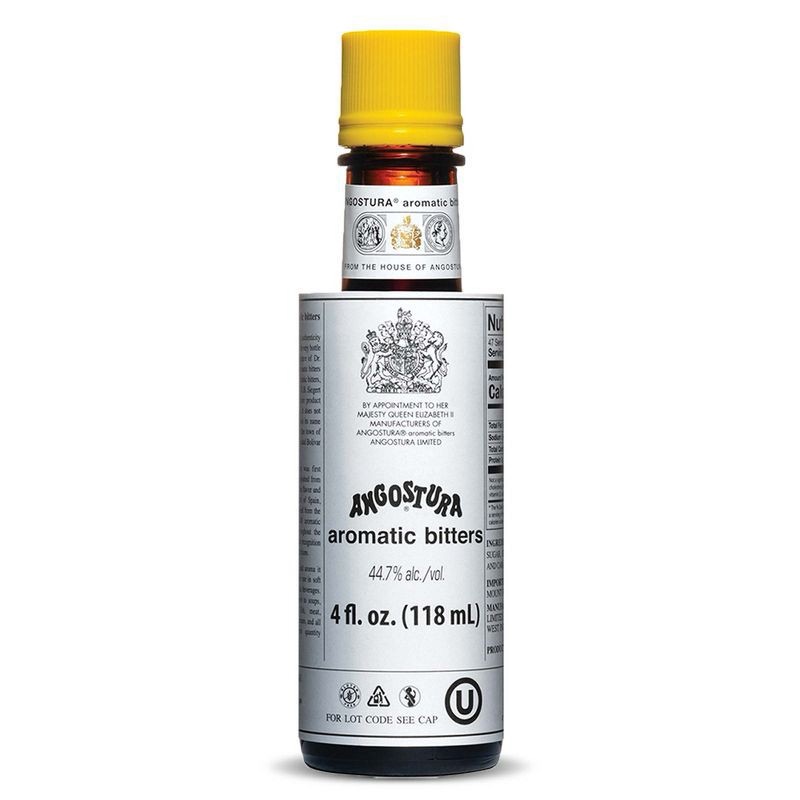
ANGOSTURA® Original Aromatic Bitters tasted pretty nasty. As you would expect, they were bitter, but not in a good way like an IPA or an espresso coffee. Instead, it was a bitter taste in a way that your brain told your mouth: do not consume any more of this!
I noticed that these bitters have an alcohol content of 44.7%, within the range of a typical spirit. However, the alcohol heat is lost to the bitterness. I couldn’t even taste the alcohol. After tasting these bitters “raw,” I wondered how this ingredient could improve a cocktail. But then, an old-fashioned is a sweet cocktail that can use a little edge.
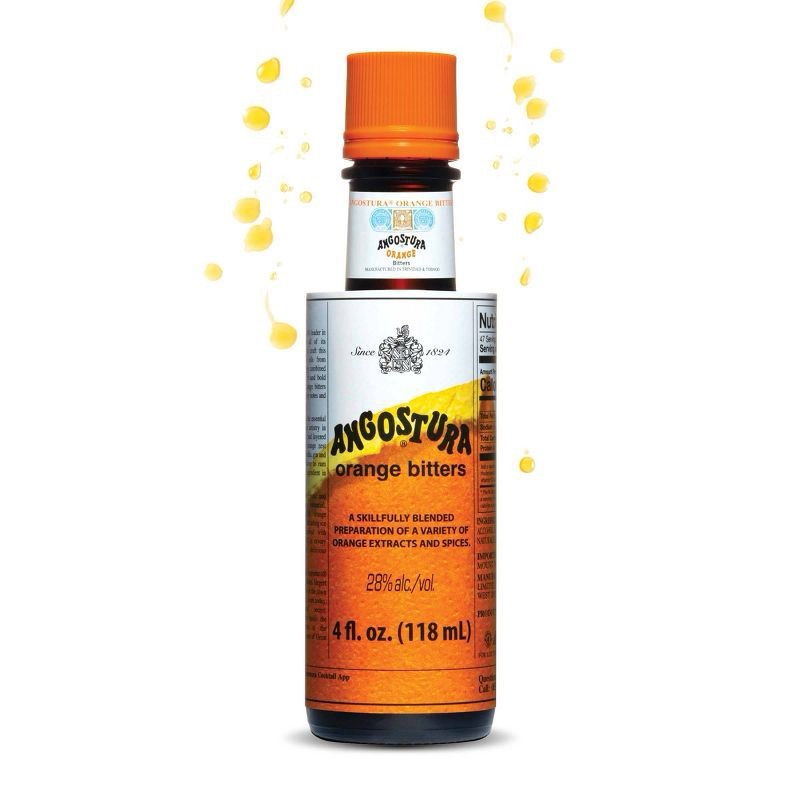
ANGOSTURA® Orange Bitters have an orange flavor, more akin to the rind than the meat of the orange – it is bitter, but not overwhelming – the orange flavor exceeds the bitterness, or that could be just that the palate is accustomed to the bitterness of an orange peel. The orange taste is a bit artificial – more like Tang (or, as one participant said, “baby aspirin”) than fresh-squeezed orange juice. However, unlike the Original, it is not repulsive, and you could imagine how it could improve a cocktail, especially if you did not have an orange peel garnish available. These bitters have a 28% ABV, but the alcohol is not detectable—the orange and bitter flavor prevails over the alcohol heat.

Fee Brothers Black Walnut Bitters: I first encountered these bitters in an old-fashioned recipe that used crushed walnuts and demerara sugar to rim the glass. Unlike ANGOSTURA®, Fee Brothers bitters do not contain alcohol. They have a sweet, nutty flavor that is pleasant to the palate. You could imagine these bitters enhancing a cocktail and even a dessert. These were hands down the best-tasting bitters of the four.

Fee Brothers Molasses Bitters: I learned about these bitters from a cocktail recipe (an Irish old-fashioned made with Jameson and Guinness). They have a very intense molasses flavor—almost a molasses concentrate. As one taste tester said, “It tastes like old pancakes.” The flavor is so strong that it made me want to be careful about using too much. In this case, a dash was likely to significantly impact the cocktail.
Bitters in an old–fashioned—In hindsight, I don’t like our approach to this test. I made an old-fashioned batch without bitters, poured four glasses for testers, and then added a different dash of bitters to each of the four portions, allowing for comparison. These were quarter pours. Given the portion of bitters in the cocktail, they were a more significant ingredient than they should be. At the same time, it was a good way to highlight the bitters’ role in the cocktail.
ANGOSTURA® Original Aromatic Bitters: Despite its strong flavor alone, it was not as noticeable as the other three bitters in the test. Part of the problem is that the old-fashioned tasted like an old-fashioned. In hindsight, we should have added a bitters-free old-fashioned to the taste test.
ANGOSTURA® Orange Bitters: These added a touch of orange to the cocktail, but a twist of orange peel would also work. You should have orange bitters in your bar when you don’t have fresh orange peel.
Fee Brothers Black Walnut Bitters: The flavor came through in the cocktail and was a pleasing addition. It made the old-fashioned unique without changing the fact that it was old-fashioned. This will become an essential ingredient to my old-fashioned cocktails in the future.
Fee Brothers Molasses Bitters: The molasses flavor is too strong and overwhelms the cocktail to the point that it doesn’t taste like an old-fashioned. However, it is an essential ingredient in the Irish old-fashioned I mentioned above, so it has a place in your bar.
Conclusion: This taste test dismissed my suspicion that bitters were not essential to an old-fashioned. My big takeaway from the tests:
- My new old-fashioned recipe will be to add a dash of original and black walnut bitters
- Orange bitters are only necessary when you don’t have fresh orange peel
- Mollassas is for specific cocktails and not a traditional bourbon old-fashioned, given its significant flavor profile


