 My favorite boys from Bama are coming to town tomorrow, so it’s the perfect time to review the Alabama Shakes. I know nothing about this band other than a band to watch preview/EP review in Rolling Stone a few issues back. It was enough to catch my attention that this was something I might like.
It is nice little debut. The band evokes a lot of other bands when I listen: early Kings of Leon, Janis Joplin, Credence Clearwater Revival, and Jack White channeling Robert Plant. But somehow they manage to make it all their own. Vocalist Brittany Howard is a real standout – a wonderfully soulful, bluesy rock and roll momma.
I like the recording ambiance in that is kind of primitive and lo-fi. Usually I hate that but hear it works.
It is great to hear a retro band that has found a way to synthesize its influences yet make it their own. Highly recommended.
 Thanks to Analog Audio of Minnesota* I now have the privilege of auditioning some amazing audiophile special editions of classic recordings via their monthly new music event.
This version of Heavy Weather is my first opportunity to really examine a 45 RPM audiophile presentation. I am new to audiophile reissues. I don’t have enough experience to know how much of the improved sound has to do with great mastering vs. the 45 RPM format. But I know from my youth that 12 inch 45s sounded amazing compared to there confined cousins on the LP (but keep in mind these where typically remixes too – so again was it the 45 format or the mix/master?). I assume the 45 format has a lot to do with great sound – I guess I am showing my hand here – this edition sounds fantastic!
Heavy Weather is a classic in the jazz-rock-fusion genre. Originally released in 1977 it had a certified hit in “Birdland” and next to Joni Mitchel’s Hijira it was key in introducing the innovative bassist Jaco Pastorius to the world. This is a classic Jaco performance. As far as I am concerned Jaco is the Jimi Hendrix of the electric bass. He completely reinvented the instrument. He was a great composer and stunning performer too.
But my focus will by on this special edition from ORG vs. a traditional record review. The assumption is that this is a classic album that belongs in any serious music fan’s collection.
This is a 180 gram vinyl 45 RPM edition. I has the opportunity to compare this new edition directly to my original near mint vinyl copy on two systems: The state of the art listening gallery at Analog Audio of Minnesota (see description below) and in my modest home set up.
I first listened to my original vinyl at Analog Audio and it sounded fantastic – a big upgrade from my home system. Then I switched to the ORG edition and it was immediately different, but was it better? My immediate reaction was that it was less harsh then the original and it was much more open – the instruments literally filled the room in a way that made the original sound almost claustrophobic. Zawinul’s synthesizer was thick and and organic. I realize synthesizer and organic are typically a contradiction, but here you get the feel of horns that Zawinul was mimicking vs. the manufactured electronic sound I have always heard. I have always treated this as a Jaco album and he sounds even better in this presentation. But every instrument is distinct – there is just more space and depth to everything. For kicks we threw on a Master Sound CD edition for comparison, unfortunately it sucked – it was not even a fair fight with my 30-year old vinyl edition, let alone the 45. This edition is not just different – it was better – it was great!
I borrowed the album to try on my home set up. I listened to side one of my original vinyl and it did not sound like anything like what I had heard the day before at Analog Audio. It did not sound bad, just compressed and tiny compared to my memory of just one day. I then flipped on the ORG with low expectations. But I was blown away. The difference between the two editions was even more profound on my modest system. It was like an immediate upgrade to my system. My small listen room expanded. Granted it did not match the great room at Analog Audio, but I could buy a lot of audiophile editions over the next several years as a low-cost and incremental upgrade to my system. Just like the day before, there was increased depth and overall spaciousness, but it was much more magnified and obvious. This is not a diminishing the galley at Analog Audio – it is just that on my familiar system the sonic upgrade was magnified magnified to my ears.
My conclusion after listening to this edition – was it worth almost $60? Yes, but only if this album is one of your favorites or if money is no option for the best format available. Keep in mind that if you have a decent stereo you can easily buy a near mint used vinyl edition of Heavy Weather for less than $5 and it will sound better than the CD by far. It was a popular album – it is easy to find used.
For me, I have a running top-100-albums-of-all-time list, if this edition is typical, I would not hesitate to upgrade my top-100 library with one of these editions. Another consideration is that not everything on your top-100 will be easy/inexpensive to acquire as Heavy Weather, so one of these reissues may be your only real option to get a quality release.
*Analog Audio of Minnesota listening galley:
- Audio Aero La Fontaine Music Center (Line Stage and Digital
- Brinkmann Bardo Turntable with Brinkmann 9.6 tonearm and Brinkmann EMT Ti Cartridge
DMSI Phono Stage - Luxman M600 Stereo Power Amplifier
- Vivid Audio B1 Speakers
- Synergistic Research Element Tungsten Interconnects
- Synergistic Research Hologram Power Cables
- Synergistic Research Powercell MK II SE Power Conditioner
 Woody Herman was one of the great big band leaders of the big band era. He survived into the 80’s – so he was one of the last. I am not very knowledgeable about him or his history. This is my first Woody Herman album. I picked it up the other night at the Electric Fetus. I was rolling through the used vinyl jazz section and stopped cold on this one. It had sticker with a hand written note on the plastic sleeve that read: Woody Herman Band. 1978! Had no idea Woody took it this far out. Deeper “chamber” jazz arrangements and Steely Dan covers!
Well that caught my attention. It brought a sentimental memory of late 70s when I used to crate dig. One place was Northern Lights in St. Paul – my buddy Jay (RIP) used to write notes like this on new releases. Jay was a real taste-maker. I pulled out the album and looked it over. Now this was cool – a special commissioned “Suite for a Hot Band” composed and arranged by Chick Corea on side one and Steely Dan covers on side two. Well it looked in good condition (it really was) and it was only $4.
Well I have listened to it several times and it is great. The Chick Corea suite is fantastic. Great songs, great arrangements and great musicianship. Imagine late 70’s Return to Forever played by an amazing big band. The Steely Dan covers play it pretty straight. The covers remind you of what great songwriters Fagen and Becker are and how jazzy their music really is.
If you see this in used record bin – grab it quick. When I was researching this record I noticed used copies are going from $15 to $30 on-line – so I feel like I got a real gem at 4 bucks!.
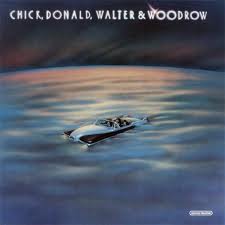
Another bonus is that it has great album art. A Chevy convertible drifting a top the clouds with 4 penguins (representing the 4 cool birds responsible for this record).
In this recent article from SPIN, the author postulates that Bruce Springsteen’s latest album is rap. The author is not trying to funny or ironic. What he is pointing out is that the album was clearly informed by hip hop and that Bruce is no more a dork for being a rich rock star pissed at capitalism than a college educated hip hop artist is a dork for playing ghetto. This is art and sometimes artist wear masks. That does not make them inauthentic (it can if you don’t play it brilliantly – Bruce happens to play it brilliantly).
When I attempted to review this album I was tempted to note the hip hop influences, but I was too much of a pussy. This is a brilliant review and it helped me see Wrecking Ball in a new light and enjoy the album even more. That is all you can ask from a review – to get you to listen.
 This was the follow-up to the hugely successful “Heavy Weather.” I remember when it came out and it was universally panned. I think it is highly underrated. Granted it is pop-jazz, but how is that a crime after Heavy Weather? I remember that this was considered a sell-out. But if you listen to it now it is so much more significant than any of the light jazz that was all the rage in the 80’s.
This is jazz as imagined by Steely Dan. I think it is fearless and I think it stands the test of time. Jaco Pastorius influence is all over this album. He had a completely different vision for his instrument and for his genre. Unfortunately he was insane – brilliantly insane.
I saw the tour that went with this album and it was amazing. Weather Report is not light jazz – it is brave fusion. Check it out and you will be satisfied.
 The reviews of this album have generally been positive. I have to admit I like it. Bruce has not managed to do anything late career as amazing as Dylan’s “Time Out of Mind,” but this is pretty damn good. I was worried that it was going to be too preachy and a too inauthentic (superstar rock star invokes the common man), but somehow Bruce pulls it off.
There is not a bad cut on the album, yet there is nothing new either. Bruce pulls styles from across his career since the mid 80s. But he plays it expertly, prior experiments reach fruition here. Past attempts at some of these styles seemed to miss the mark, but here they work.
Bruce has an audience and he challenges that audience vs. pandering to them. Bruce questions contemporary America without undermining it. This is a liberal broadside, but it is not anti-patriotic. It questions, but does not condemn. Musically it recognizes contemporary pop styles but it does not embarrass. Bruce has found a razors edge to ride and ride it well he does.
I have attempted to build an audiophile quality stereo without busting the bank. I have a small listening room which helps – I can get away with smaller components. Each year I spend about $500 for a new major piece and I slip in another $100 or so for some accessory. This has been a multi-year project.
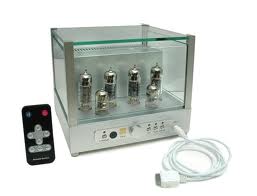 THE AMP: The centerpiece of my set up is my integrated tube amp – a Jolida FX10. A 7 by 8 inch cuboid of 10 watt goodness. I have had lots of stereo equipment over the years, but this is the most life changing piece I have every owned.
Tube amps are amazing. For years they were just for deep pocketed audiophiles, but over the last few years there have been several minis introduced in the sub $500 category. The FX10 is a contender in this category.
This mighty mouse has an absolutely wonderful sound. Warm, live and fat is the way I describe how it sounds. Don’t be deceived by the watts – in a small room with efficient speakers this thing rocks. The best thing about this amp is you can play it very loud without listening fatigue.
This unit is very simple: three inputs and volume. If you want to hear one, check out the Needle Doctor in Minnesota – they typically have one in their showroom.
This is a real conversation piece. Most people have never seen a tube amp and this tyke shows off by running naked in its glass house (what good are tubes if you can’t see them?). Turn off the lights and let it glow.
One final endorsement – my wife who politely and lovingly tolerates my audio fetish was blown away the first time I auditioned the FX10 to her. Her response was that the music sounded live. To get this kind of response from someone who has little passion for hi-fi equipment was one of the best endorsements I could ever think of.
 THE SPEAKERS: Every music head will tell you – don’t go cheap on speakers. Every wife will tell you don’t get big and ugly. I have a pair of V6 Paradigm Atoms. They meet the needs of my ears and my wife’s eyes. These are mini bookshelf speakers and as entry-level as you can get in the Paradigm line (but by no means cheap at about $450). You can spend a lot more for bookshelf speakers and not get anything close to the quality of the Atoms. Like the FX10 these are mighty mice. They deliver a very clean sound. They have plenty of color in all ranges and in all styles of music. Like any small speaker they are a bit weak on the bass and so I do augment them with a low-cost sub-woofer (see below). Paradigm has moved on to a V7 – I have not heard them so I have no idea if they are a much of an advance or not.
 THE TURNTABLE: I have increased my vinyl listening to about 70% of my man-cave hours, so last year I upgraded my 30+ years-old Sony. The great thing about vinyl is the more effort and investment you put into its play, the more you are rewarded with great sound. If you compare an investment in a turntable/cartridge vs. a similar investment in digital there is no comparison in the payback – vinyl pays extreme dividends, digital is merely incremental. Even a LP in poor condition will sing through pops and crackle on a good table.
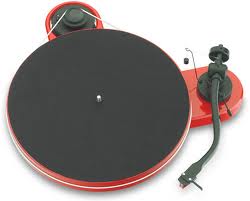
My Pro-Ject Audio RPM 1.3 Genie looks as cool as it sounds. I chose a bold fingernail polish red to really make it pop on my stereo shelf. It struts past my other components like a Victoria Secret model (although the FX10 holds its own on the looks front). Never under-estimate the importance of ascetics in equipment (thank you Steve Jobs). Does a cool looking table play better – no – but why not have some fun?
Pro-Ject chose quality over bells and whistles – this is a fully manual table – you have to get off your butt and lift the arm when it hits the catch groove. The only bell and whistle is that it does have a nicely damped arm lifter. A side note: another great thing about vinyl is it forces engagement with your music – you need to clean the record, you need to set the arm in the groove, you need to flip the record, and most of all you need to coddle the record.
This is a very quite table – both in the playback and in the mechanics (of course my reference is my old Sony that magnified surface noise and was mechanically loud). Pro-Ject put a lot of emphasis on low/no vibration. It has heavy platter and my favorite feature is that it has fully isolated motor – the motor does not touch the table in any way beyond the belt. My only complaint is that if you don’t have the motor on the right surface it does put off a hum – I silenced mine with a $1 placemat from IKEA (this also cured another “feature” – the three nylon cone feet designed to further reduce noise and vibration – those buggers slid like bowling shoes on a well oiled lane on my shelf – the placemat locked the table in place).
I operate the factory mounted Sumiko Pearl cartridge. The combo of this table and cartridge is such an upgrade from my old table – I can’t even imagine what a $500 cartridge would do to the overall sound. The Pearl seems like a decent cartridge.
The vinyl renaissance has created a plethora of great tables in the $500 range (about the minimum you can spend for audiophile quality). I am sure this table’s competitors are equally good, but I have been fully satisfied and would strongly recommend this table for the budding and budget conscious audiophile.
 THE PHONO PREAMP: Current day amps rarely have built-in phono preamps. Back in day this was a standard feature. But hey this gives you an opportunity to tune and spice up your system. My first recommendation on phono preamps is to find a reliable dealer who will let you audition a few at home in the context of your own system. I had a $250 budget and so I bought the Bellari VP130 and a Pro-Ject Phono Box USB from the Needle Doctor with plan that I would return one. I returned the Pro-Ject – there was nothing wrong with it – this is purely an ascetic choice.
The Bellari has a wonderfully rich and warm sound and great bass without sounding like you are in some lowrider booming down the street. See full review on another post. This is the cheapest way to turn your solid state system into a tube system (assuming you listen to vinyl).
 THE CD PLAYER: My least favorite component in my system is my Pioneer DV-563A DVD Player. I originally bought this because it was the lowest cost device to play SACDs and DVD-Audio discs. It is serviceable, but not audiophile quality. Enough said. Fortunately I mostly listen to vinyl and digital via my Mac.
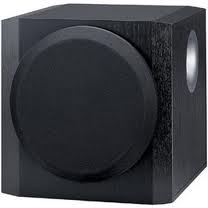 THE SUB-WOOFER– I guess I undermine my two-channel cred by having a sub-woofer, but with a pair of small bookshelf speakers I figure I have an excuse. I keep it at very low volume – just enough deep end to feel the groove. I have an inexpensive ($100) Yamaha YSTSW216 to do the job. A guilty pleasure until I get some righteous speakers, which is not a priority – I am very happy with the sound of the Paradigm Atoms augmented by a little deep end.
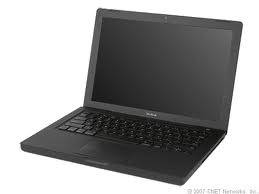 ITUNES: It is impossible to be a music fan today without a computer and access to the internet. For me it is my nearly 5-year old MacBook, several hard drives, an ISP and an iPod. I am sure there are better audiophile options than iTunes but I just want the convenience of effortlessly downloading or ripping music and synchronizing with my iPod for on-the-go listening.
When I first started with digital music I had 15 gig iPod and I used low resolution bit rate to get more music on it. When I upgraded to a 120 gig iPod I started ripping at 320 vs. 128. I recently turned to Apple Lossless. I subscribe to emusic, because I think it a good deal, but I am starting to get frustrated with their low resolution rips. The more I have improved my stereo the more I have been frustrated with low resolution rips.
 THE DAC: One accessory that has helped a lot with my digital music collection has been my low-cost DAC from Jolida: the FX DAC Mini ($120). This greatly improves the sound of my Mac. I am sure a high-priced DAC would even be better, but this does the trick. The DAC bypasses my Mac’s sound card and converts the digital to analog signal in a way that is more sympathetic to music than the typical computer (even a Mac). Audiophiles get pretty religious about DACs, but I spend most of my listening time with vinyl or my iPod so I just need a serviceable digital listening experience in my man-cave.
MISCELLANEOUS ACCESSORIES:
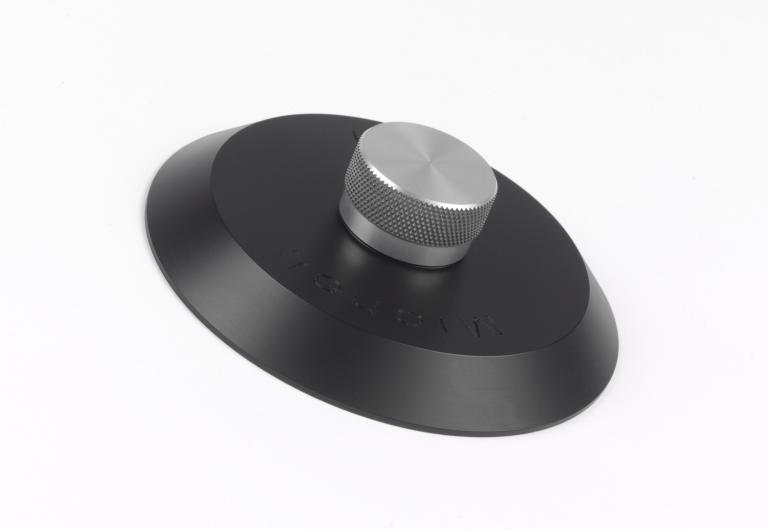 The clamp – I recently picked up a record clamp for my turntable (JA Michell Record Clamp). See another post for a short review.
 The dry brush – For day-to-day cleaning of the inevitable airborne dust that settles on LPs I use a simple carbon-fiber brush. I use a Pro-Ject “Brush It” because it was a low-cost carbon-fiber record brush from a reliable brand at the Needle Doctor ($15).
 The wet brush – I have been using a discwasher with distilled water for 35 years (they are still available). Distilled water has been highly effective and cheap. I have never bothered to use the official fluid – distilled water works great.
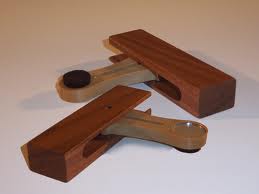 The stylus brush – Another item I have had for 35 years is my discwasher stylus brush. What I like about this model (they are still available) is that the brush is retractable (so it is not sitting there collecting dust), it has a nice wide brush head (1/2 inch) making it easy to work with and it has a magnifying mirror so you can examine the stylus.
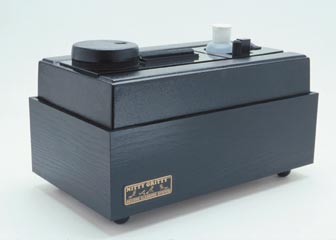 The record cleaning machine – 2012’s big purchase is a Nitty Gritty record cleaning machine. There are several varieties of vacuum based record machines out there. I bought this one because it was the least expensive model on the market and because I thought it had a particularly innovative design. I will have a full review in a future post. But my first impression is that this is a required accessory for the serious vinyl collector and how did I live without it? Easy, I did not even know such a thing existed a year ago. I buy a lot of cheap used records and although they are in decent shape they are nearly always filthy. This bad-boy makes them new.
The pixie dust – For special records that I plan to play a lot, I will apply Gruv Glide. The biggest thing it seems to do is get rid of static and lubricate the record (the de-static effect seems to last several plays). Now that I have a legitimate record cleaning machine I will probably use this product less. It was a great bridge until I got a record cleaning machine.
The wish list:
- An OPPO BDP-95 Blu-ray Player. Although a video player on the surface, this is primarily an audio device. A “CD-payer” for audiophiles. It is primary advantage (besides great sound) is that is very universal – as a one guy said, the OPPO will pay any shiny disc including quarters. Google this unit and you will read amazing reviews for a $1000 component – on par with units multiples of its price. Unfortunately this thing is double my annual audiophile budget – so I may have to skip a year or give up beer (unlikely).
- Upgrade my tubes – this will probably have to wait until current ones burn out. A low-cost starting point would be to upgrade the tube in my phono preamp. No particular brand – I will rely on the boys at the Needle Doctor for advice.
- Upgrade my cartridge – no model chosen – I have a couple years to research it.
- I would like to set up a better digital library. I need to set up some redundancy/disaster recovery and I would like to make my collection available on my own personal cloud.
- Beyond that I just want more recorded music – especially some of those high-priced audiophile vinyl reissues!
 Critically acclaimed as the best of the Mahavishnu Orchestra LPs and rightly so. This music is classic jazz rock fusion – this is one of the hall of fame LPs of the genre.
The album opens with “Birds of Fire” which is mixes Jerry Goodman’s violin and John McLaughlin’s guitar in an amphetamine rush of epic proportions. Next comes “Miles Beyond” a clear a nod to Bitches Brew Miles Davis era fusion – mixing funk and heavy metal in a way that works. “Celestial Terrestrial Commuters” returns to the burn of the opening cut with more room for Jan Hammer’s keyboards. “Sapphire Bullets of Pure Love” is merely an interlude. “Thousand Island Park” dials it down with an acoustic presentation of what we have been hearing electrified. Side one is rounded out by “Hope” which is an interlude/anthem in full electric form. An epic first side.
Side two opens with a Billy Cobham drum solo and then surges into metal jazz. All though all instrumentalists are involved in “One World,” this is a display of strength of the drummer and bass player. The back and forth conversation between keyboards, guitar and violin is brilliant. Then Cobham is back for a wonderful drum solo that is not too long – just enough to make you wanting more. Next is “Sanctuary” a meditative prayer with a beautiful sustained filled electric guitar solo by McLaughlin. “Open Country Joy” is the least typical cut on the album, but it is delightful. It starts out light and fun, not at all heavy like everything that precedes it, but it quickly morphs into a full-scale heavy electric freak out, only to return to the light and airy starting point. Side two closes with “Resolution” which is the only really dated piece recalling early Sid Barrett-era Pink Floyd. But hey this is a 1973 LP – one dated cut is pretty exceptional and it gives the LP a kind of context.
I had an old LP that was so beat up I could never enjoy this album. I recently picked up a decent copy at the Minnesota Record Show. I never had it on CD so I have never had a chance to really enjoy this album. It is a wonderful discovery for me. I am embarrassed that as an alleged jazz fusion fan and McLaughlin fan I have never sunk my teeth into this masterpiece. This LP was actually a hit, getting to #15 on the pop charts – which is amazing for such complex instrumental music. But in 1973 the music buying public’s altered state probably was more open-minded. An absolute masterpiece of the jazz-rock fusion genre. Highly recommended.
PS – how cool is the cover – so early 70’s!
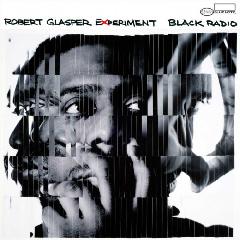 Fusion is risky music – there is a fine line between garbage and fine art. More often that not fusion is garbage. Robert Glasper pulls off his fusion as high art with a brilliant combo-platter of jazz, neo-soul and hip hop. I somehow have known about this album for months yet I did not even know who Robert Glasper was until I listened to this album today. I think I saw the album cover (which is an instant classic) a few months ago, saw it was on Blue Note (I have never heard a bad album on Blue Note), heard that it had some hip hop cred, and some cool guests. It was enough to keep it on my mental to-do list (not much makes it to that fragile list).
Well it is fantastic. Robert Glasper is a legitimate jazz piano player who just happens to have Kanye and Dilla credits on his resume. This album is more neo-soul and hip-hop than jazz and that is a good thing. It is narcotic mellow, yet it won’t put you to sleep.
This is a guest packed album (Erykah Badu, Lupe Fiasco, Mos Def to name a few), but it is an elegant collage and not just vocalist and MCs thrown up like stickers on a lamppost outside a nightclub. Songs segue from one cut to another like sips of fine wine between bites of a gourmet dinner.
Robert must have a great publicist as he has great profiles in the New York Times and NPR. Read them and Robert’s website and you will be likely be intrigued enough to give this album a spin. You won’t be disappointed.
Check out Robert’s back catalog with this amazing piece that juxtapositions Herbie Hancock and Radiohead:
What could be better than hanging out with some music heads who also happen to be audiophiles? I did that this afternoon at the February Edition of Analog Audio of Minnesota’s “New and Notable Music Event.
Every last Saturday of the month (with a hiatus for the summer months) from 2:00 PM to 4:00 PM, Paul at Analog Audio hosts a primarily vinyl listening event in his amazing studio/showroom (see this blog entry for more information about this amazing space). Paul presents 3 sides and a few surprise cuts from the latest and greatest audiophile pressings (180g, 45s, etc.).
This a fantastic opportunity to hear the best quality vinyl reissues through a great system. For me it was a great opportunity to be with my own kind. Sign up on Audio Analog’s event section to be alerted of each month’s line up and be prepared for surprises too.
Don’t forget to bring some cash too as Paul always has a nice collection of high quality used jazz records for sale. I walked away with a wonderful near mint mid-80s Woody Shaw release on Muse (Setting Standards).
The take away from today’s event (besides a wax woody) was how much the little things matter in a listening room. Paul had tweaked the room by placing his speakers (B1) on granite tiles to create a level and stable surface. We listened to our first side (Grateful Dead – Live Dead ) and a couple of guys familiar with the side thought it sounded “veiled.” Even though I was not familiar with the piece and an audiophile n00b I could tell it sounded a bit muddy. We listened to a classical piece – and more mud. Paul suspected the tiles and we removed them. We listened to a new side and things immediately opened up. We went back to the original Grateful Dead side and as one of the guys said “it is like a horse blanket has been removed from Jerry’s guitar.” Indeed it was like listening to new speakers. Lesson learned: The littlest things can screw up a great listening room – see an early blog entry on the importance of tuning a room.

 Axl's Catch Groove