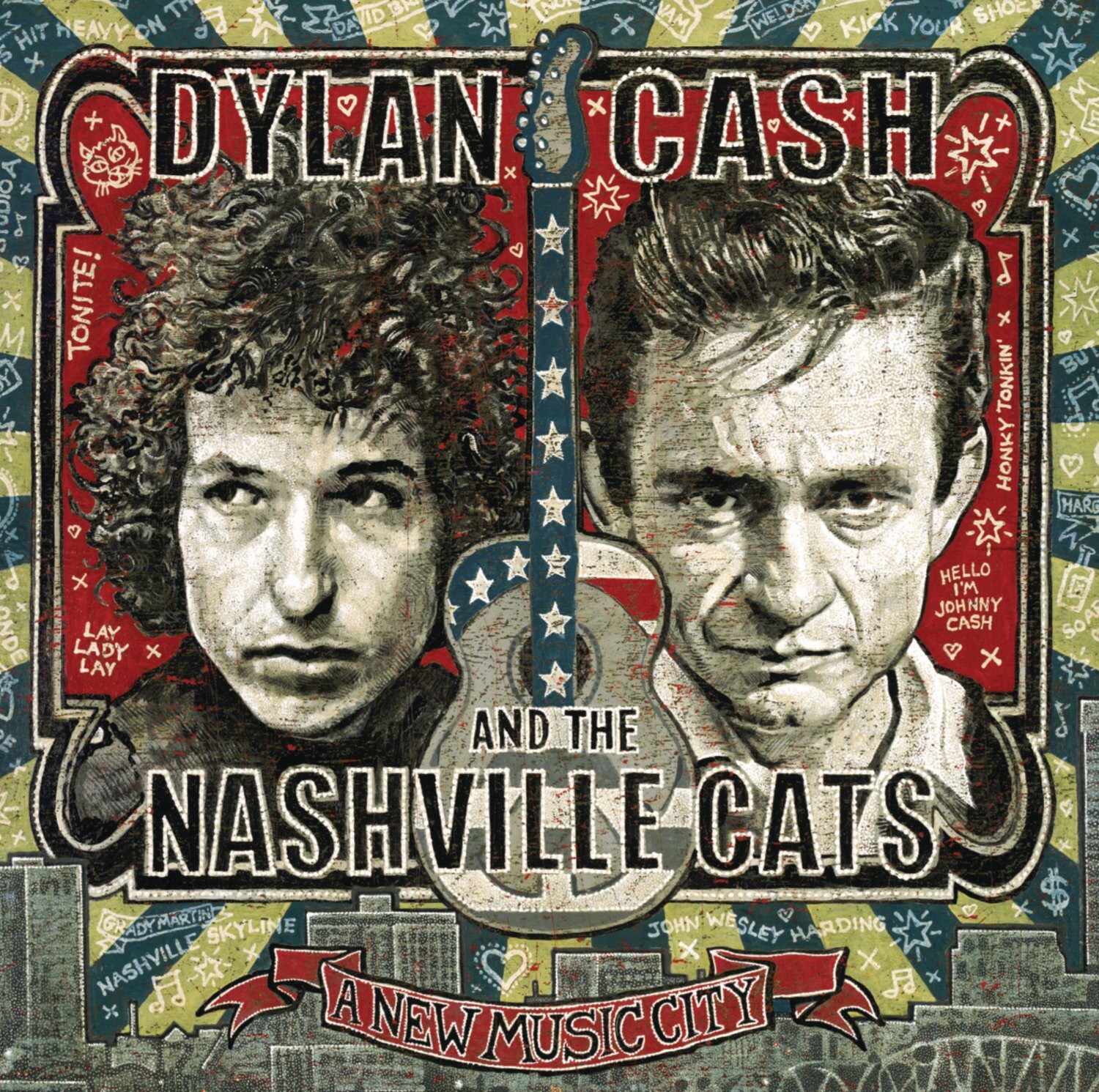
 Day 3 was a visit to the Country Music Hall of Fame. Although it has been many years since I have been to the Rock and Roll Hall, the Country Hall kicks its ass. A great building, nicely curated and well-organized. Rock and roll does not really have a hometown, where Country does – so the ambiance of the Country Hall being located in Nashville makes a difference. It was my good luck that the featured show was Dylan, Cash and the Nashville Cats. The story of Dylan’s impact on the Nashville music scene is well documented here.
One thing I should have mentioned in the Day 1 post was the ghost of the late Merle Haggard on Nashville this week. There is more joy than sadness as every performance we have seen has a shout out to the great Hag.
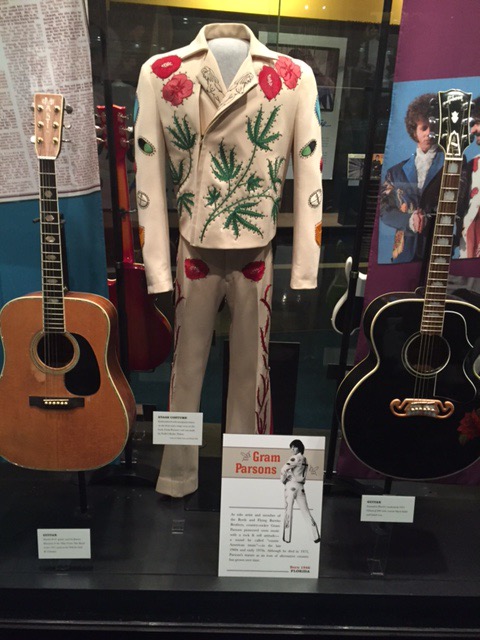
There is lots to call out at the Hall, but my two favorite things was seeing an oversized album cover of Dylan’s Nashville Skyline that had the following note scrawled on it: “To June and John, Love Bob Dylan.” And the other was Gram Parson’s famous Nudie suit.
We paid extra to visit RCA Studio B. Studio B had the distinction of being the favorite Nashville studio for Elvis and it is the source of over 1,000 hit records. The Hall has done a good job of keeping the studio intact, yet making it user-friendly for tourist groups. Just being in a room where there has been so much music history was pretty cool. For example, the Steinway piano that has been a studio fixture since the beginning, is where Elvis would warm up before a session.

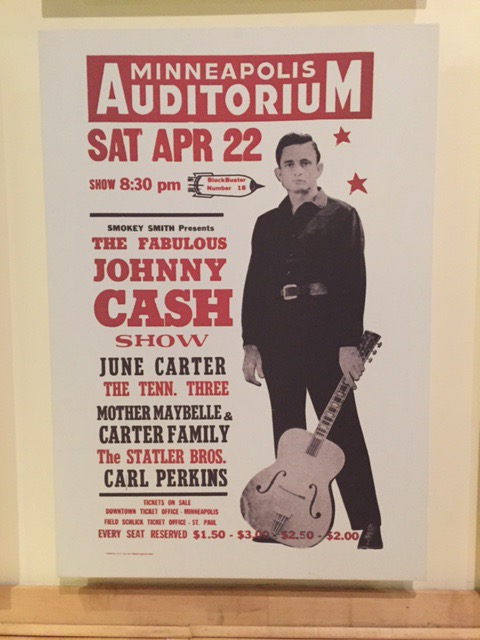
Back at the Hall we checked out the Hatch Show Print – a print shop which has specialized creating posters for country music shows. There were many great ones but this was had special resonance:
We headed back to the hotel for a little down time and then headed down to Broadway for some dinner and honky tonking. We had dinner at ACME Feed and Seed. The menu specialized in southern comfort food. I had fried catfish and it was perfect. While we were eating we enjoyed “Grateful Monday” – they have a cover band playing Grateful Dead songs. The Craig Jackson Band did a nice job of being inspired by the Dead without aping them.
Next we headed to Roberts Western World to listen to some real country music. What a great place – a hole in the wall jammed with people listing to a great band playing traditional country classics. John England and The Western Swingers played familiar songs (e.g. Bob Wills “Cherokee Maiden” and Hag’s “Tonight the Bottle Let Me Down”). Almost as much fun as the music, was trying to figure out how the 6 piece band managed to fit on the tiny stage. Thank goodness they don’t have a trombone player or someone would have gotten hurt. After their set we headed on to another joint.
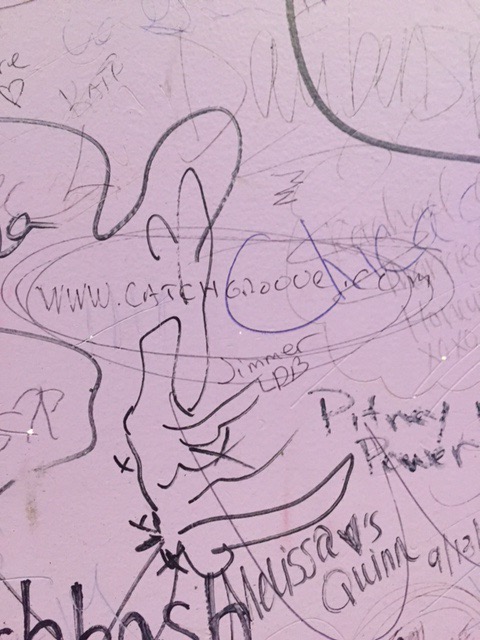
Tootsies Orchid Lounge had a more of a contemporary country feel (AKA rock). It had three floors and a different band on every floor. The place was packed and so we headed up to the top floor and found a little breathing space on the outdoor deck. Pretty cool vibe and ambiance best described as upscale shitty. I left my mark:
It started to drizzle and we were one drink short of regret so we decided to call it a night.
Below is a nice curated Spotify session on Dylan’s impact on Nashville.
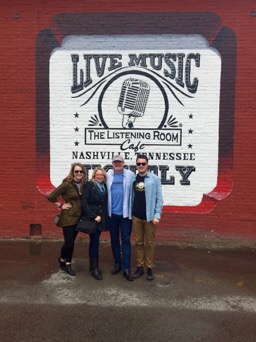
Nashville is a land of dreams. I wonder how many people move to Nashville each year in pursuit of their dreamof being a songwriter, singer, player, etc.? We went to Sunday morning brunch at the The Listening Room Cafe and we witnessed some of those dreamers. On stage was a “round” – 4 singer-songwriters each taking a turn performing their songs. We heard Josh Roberts, Meredith Oswald, Ryan Thurmon and Emma Barge. Unfortunately the PA was a bit too loud and the mix a bit too wet to hear the words well, so I did not get a great sense of their gifts.
At some point our waitress overheard our conversation and we realized she was a fan of whysowhite and the Haines Sisters – Chicago acts my son had a hand in. My son and Alaina Stacey traded names of people they used to run with and it turned out they used to occupy a piece of this small world together, yet had never met before. We learned that she is in the all-female trio Maybe April that is making a little noise in Music City.
Shortly after discovering our connection, Alaina was invited on stage to perform one of her songs. I am sure I was slightly biased by our new connection, but I thought she was the best of the bunch/brunch. What a way to start the day – this was the kind of Nashville experience I was hoping to have – discovering new talent – a waitress star to be!
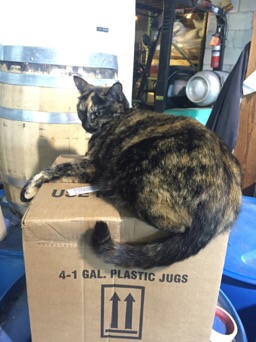
Next we headed on to Corsair Distillery for a tour and tasting. I have been on several brewery tours, but this was my first distillery tour. I was really impressed by the care that Corsair took to creating their liquor All their booze was impressive, but my favorite was Triple Smoke which was like an American Isly. I got a kick out of the little touches like the distillery cat Pizza Patches and her critical role in the operation: grain = rodents – cat = chemical free extermination.

In the same building as the distillery was Antique Archeology an antique store owned by the stars of American Picker TV show. It was more like museum than a store (and the price tags made the items pretty much untouchable). The store had a nice old timey twangy band performing and as I waited outside the door I met Doc Bennett who appeared to be an impresario for the little people. I promised I would email Doc and learn more about his mission – and will.
We then moved on to Nelson’s Green Brier Distillery. This was a much more corporate operation than Corsair and that kind of reduced the charm. The back story on the distillery is fantastic, but I was having a hard time fathoming that somewhere between the Nelson brothers discovering their heritage and today, that there weren’t venture capitalists involved. Plus the whiskey did not capture my imagination in the same way that Corsair did. Still a great experience and a truly cool space.

We headed down to Broadway to get a snack and peek at the honky tonks. We stopped at Broadway Brewhouse where we had two for one beers and wings. Pretty generic sports bar, but the Masters was finishing up so that was a good place to be.
We weren’t in honky tonk mood so we headed back to the hotel for a little downtime. We took a detour at the Goo Goo Shop for some sweets. The Goo Goo cluster is a similar concept to Minnesota’s Nut Goodie with better marketing and a less adventurous nugget.
Back at the room we lost some of our mojo but rallied to go to Bakersfield for a late dinner. Nice fresh tacos and other Mexican fare. With that we were done for the night.
My wife and I have adult children (Patrick 26 and Allison 25) and last year we decided to reprise the spring breaks of their teenage years with a twist. Instead of a cruise or an all-inclusive in the sun we decided to visit great American cities. Last year it was Seattle and this year it is Nashville.
Day 1 – Saturday April 9, 2016
We arrived a little before noon and the first thing that struck me at the airport was the advertising – airport advertising is always revealing of the underlying industry of the town (ignore the stuff aimed a tourists). We were in music city as indicated by an ad for BMI (a music royalty/copyright organization) and Gibson (the guitar maker).
We are staying downtown and our hotel room was not ready so we checked our bags and went for a stroll – the intention was to go to a micro brewery, but we took a wrong turn and ended up at the top of Broadway (Nashville’s Beale Street/ Bourbon Street). We were not ready for that, so we headed to the Nashville Visitor center to get our bearings.
My first impression of Nashville is that seems like a nice clean city. It looks like the economy is booming – there is construction going on all over downtown – a bit of an inconvenience, but I love seeing a town growing.
We then headed for the “Gulch” which appears to be an industrial area that is becoming gentrified with restaurant and retail. First stop was Yazoo Brewing. This is your typical brewery tap-room that could be found in pretty much any major city these days. We had a flight of their beers and all were tasty. My favorite brew was from their “Embrace the Funk” series – it was a sour called Indomintis Dolium. It had a nice fruity taste and was just sour enough to give a little bite. It is aged in cognac barrels – but I did not find it having the boozy flavor you can sometimes get with barrel aged beers.
We then headed to Party Fowl for lunch. Party Fowl is a self-described “chicken restaurant.” We all had variation of fried chicken. The fried chicken was perfect: not too greasy and crisp without drying out the meat.
We finished out our “Gultch” adventure at Third Man Records. The house that Jack White built is less a record store, than a shrine to White and his kitschy genius. There are some pretty cool souvenirs, but the music inventory is exclusively the Third Man catalog (not uncommon for a label store). We picked up a few souvenirs and I picked up the 2004 White produced Van Lear Rose by Loretta Lynn and a Margo Price single (for the unreleased B-side).
We then walked back to our hotel for a nap. The Hampton Inn Nashville is a nice enough place: good downtown location, nice lobby, better than average hot breakfast, but the rooms are in need of updating – they are just a bit frayed.
After out nap we Ubered to the Grand Ole Opry. This is pretty much a bucket list experience for a music fan. The whole experience very touristy, but overall it is great. It has a nice authentic down home feel without the hipster irony of a Prairie Home Companion. I was not that familiar with the artists on the bill, but it did not matter – they were all fun. I even got a kick out of the square dancers and the radio ads.
The headliner was Eric Church who was frankly breathtaking. Rather than play with a band, he played solo – just him and his guitar. Scheduled for 30 minute he thumbed his nose to that and played his hits for 6o-minutes. He was a humble yet engaging. Slyly charismatic. If you were a true fan this must have been an amazing experience to see him in this kind of intimate setting. I am merely a casual fan and I was blown away. My wife, who as never heard a note of Eric Church in her life, was sold. You can see why this guy is a star – it’s the songs. In the end that is all that really matters – great songs win – and Church has written some great songs.
We headed back downtown and crowned the night at Whiskey Kitchen. We had some bourbon, yam fries (fantastic) and fried pickles (nothing special) as our appetizers and some nice speciality pizzas for our main course. The ambience was a bit loud for my taste, bad 90s music videos blaring, but overall a pretty cool place.
I woke up this morning before the rest of the family to watch Margo Price’s performance on SNL – she was perfect – she had an elegant look, a polished performance and of course those amazing songs. After Chris Statplton’s great year I am bullish about real country’s comeback.
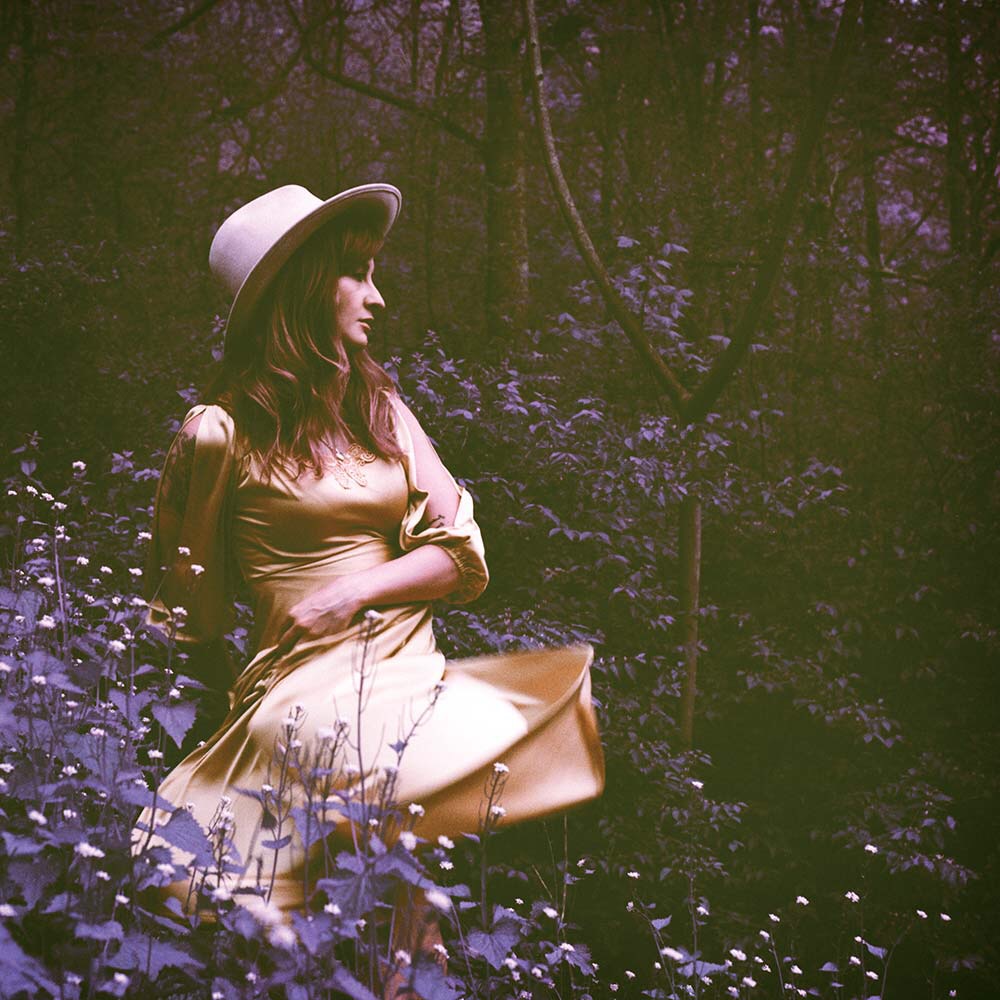
With a voice somewhere between Emmy Lou and Dolly and with the pen of Loretta Lynn, Margo Price storms out of a Memphis studio in a Nashville state of mind. This is one hell of a debut.
The LP opens with the autobiographical “Hands Of Time” which is an amazing story and assuming it is true, reveals that Margo is COUNTRY to the core. How she rose out of this mess to record this amazing record is a testimony to her genius and resilience.
“About To Find Out” is a sassy dress down of an arrogant asshole. Margo rewrites one of my favorite Dylan lyrics (“Stop all this weeping, swallow your pride/You will not die, it’s not poison”): “Tell me what does your pride taste like honey/Or haven’t you tried it out?”
Looking at the liner notes it does not look like White is involved beyond the label, but “Tennessee Song” is the most Jack White song on the album.
“Since You Put Me Down” is a classic Country tale of betrayal and the self loathing that comes with it: “I killed the angel on my shoulder with a handle of tequila/So I wouldn’t have to spend my nights alone, all alone.”
“Four Years Of Chances” has a bluesy groove and is a kiss off song that has extra bite given the protagonist has found some one better.
“This Town Gets Around” is a nice country swing that calls out the sleazy side of Nashville (or any world where you have to whore yourself to get ahead). Margo manages some gallows humor and some wisdom in the muck: “Maybe I’d be smarter if I played dumb.”
“How The Might Have Fallen” takes 2 Samuel 1:25 for a new ride. It is the only song on the album that Margo did not have a hand in writing. The song has a cool mix of anger and compassion.
“Weekender” is about serving a short sentence in jail. It is a pretty simple observations from someone who should have known better.
“Hurtin’ (On The Bottle)” is a classic Country song about drinking too much. It follows in the grand tradition of “Tonight The Bottle Let Me Down” (RIP Merle). If this song doesn’t make her a star then the Country charts are deaf.
“Worlds Greatest Loser” ends the album as a gentle lullaby and the gentle sentiment: “If I lost you I’d lose it all.”
I don’t know a whole lot about country music, but I know what I like and I like Margo Price. Listen and love it. Congratulations to Third Man Record for sponsoring this tremendous debut – this could be the defining moment for your label. Tomorrow I go to Nashville with the family- this is a pretty amazing prelude.

Although I listened to Hüsker Dü, it never really resonated with me. However Mould’s first post Hüsker Dü album Workbook completely blew my mind. Sugar’s File Under Easy Listening was in constant rotation for about year when it first came out. Mould’s autobiography See a Little Light revealed a fascinating man and made his music even more intriguing (and it was in that book that I first discovered the term catch groove).
I greatly enjoyed his last album Beauty & Rain, but Patch The Sky is in the Workbook/File Under Easy Listening stratosphere. This is one great album. Mould is a punk elder at the height of his powers. The guitar playing on this album is amazing: classic Mould buzz saw droning chords accented with classic rock leads. The sonics of this recording are gorgeous. The beauty of Mould’s “punk rock” is that it always had a tasty bubble gum soul – at his core Mould is a pop musician – which is not an insult in my book, but a badge of honor. Anyone can make harsh noise, but only a great artist can make beautiful noise – Patch The Sky is beautiful noise.
The album opens with “Voices in My Head.” The song intro is a cool chiming backward sounding effect that is interrupted by classic Bob Mould rock: his combo of pop hooks and punk heat. There is a very nice solo guitar break which is reprised at the end of the song. Lyrically this is a song I can really relate to: “voices in my head they multiply and amplify the fear.” Mould concludes it is time to stop listening to them – pretty good and simple advice.
“The End of Thing” leaps out of the speakers like Neil Young & Crazy Horse on amphetamines. Beyond the obvious big guitar on this song, I love the drum foundation.
“Hold On” starts out relatively quiet and then kicks in. The song has an elevating quality – with every chorus you feel higher than the last one.
“You Say You” is a great example of the influence Mould has had on his disciples – this song would not sound out-of-place on a Foo Fighter’s album. I love how Mould juxtapositions angry lyrics with upbeat music.
Mould takes a turn with a whole different sound on”Losing Sleep.” On this song Mould connects with his inner XTC. A nice little distraction in the middle of the album. Mould has always had a great voice to cut through the noise of his guitar, but on a less guitar centric song you get a chance to hear how beautiful his voice truly is.
With “Pray for Rain” the buzz saw drone returns coupled with percolating crashing drums. The noise just pours over you. The side ends with a short unnamed hidden instrumental.
“Lucifer and God” opens side two in epic fashion. This is a big arena style anthem both musically and lyrically.
“Daddy’s Favorite” has some great rock and roll licks. It is a an honest reflection of the loss of one’s parents.
“Hands Are Tied” is a fast-moving punk rush.
“Black Confetti” brings all Mould’s musical strengths together: big hooks, a huge wash of guitar, giant riffs, piercing vocals, cool sound effects – the music rolls over you.
“Losing Time” is more power punk. I can’t say enough about how fun it is to really immerse your ears in Mould’s noise. At first blush it is just buzz – but there is so much more if you really dig in.
“Monument” ends the album on a contemplative note. Mould slows it down – not a ballad per se, but slow burning rock. It is a bit quieter than the rest of the album and that lets you really sink your teeth into the beauty of Mould and the band’s playing.
Mould has always been a brainy punk and there has always been a depth and complexity to his noise. Mould is not introducing anything new here – just a perfect manifestation of his craft. There is not a clunker on the album. Often when I fall in love with an album at first sight, on further inspection it does not hold up. But Patch The Sky is a so richly layered that it just keeps getting better with each listen.

Addendum: This review as been sitting in draft status a few weeks. When I was finishing it up I remembered that I had not ever bothered to get tickets to Bob Mould’s two night stand at First Avenue (Minneapolis). It was now too late as I had other plans. Googling about Mould I learned there was a free invitation only afternoon mini-concert at the Turf Club. I signed up to be considered on The Current website and forgot about it. The day before the show I got an email mail that I was invited.

April 21, 2016 was the day of the show – it was also the day that Prince died. A pretty big deal for pop music fans world-wide – and a bigger deal here in Minneapolis Minnesota. I am not sure if there is another rock star that is so affiliated with “a place” as Prince is with Minneapolis. And of course Bob Mould is a pretty big deal in Minneapolis too – in fact his First Avenue star is right below Prince’s star on the First Avenue wall of fame. So a pretty weird vibe for a show.
Bob Mould bounded on stage, subtly acknowledged the sadness of the day and then unleashed a solo maelstrom. I was only about 10 feet away from Mould and I focused on his hands the whole time trying to understand how he makes his music. His right hand wildly flails – yet a coherent voice comes out of that chaos. Mould is working so hard that he glasses fog up. It was fascinating to watch. In what seemed liked seconds it was over (actually it was 45 minutes). I felt honored to see one of my rock heroes so up close and personal. Set list here.
Check out this Ryan Adams interview of Bob Mould (really a conversation).
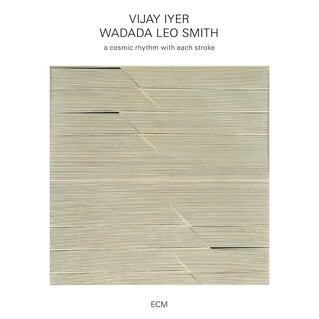
I don’t know how this album entered my consciousness, but I assume I read some review that raved about it. I had some familiarity with Vijay Iyer via some of his solo work and as a sideman with sax man Rudresh Mahanthappa. I always liked his complex, yet accessible style. Wadada Leo Smith is but a name to me. About all I knew was he plays trumpet and is associated with the jazz avant-garde.
A Cosmic Rhythm With Each Stroke is quintessentially ECM. ECM is the most reliable jazz label for my ears. Always tasteful, generally quite and complex without making your head explode. Impeccably recorded and starkly beautifully packaging. That pretty much defines this album.
The album opens with “Passage,” a Vijay Iyer song. Wadada Leo Smith’s trumpet whispers over Iyer contemplative piano. I would not have thought a duo of quite piano and trumpet could deliver such a powerful punch. As mellow as Smith sounds there is an edge – a gentle hint of atonal avant-garde jazz. The song is a pure duo.
Next is the titular suite in seven songs/parts/movements ranging between five and nine minutes. The suite was commissioned by The Metropolitan Museum of Art for its exhibition of the art of Nasreen Mohamedi (the album’s cover is a sample of her art). It was composed by Iyer and Smith.
“All becomes alive” opens the suite as a conversation between Smith and Iyer as each takes solos. Smith start the conversation over an electronic drone from Iyer. Iyer responds with a gorgeous contemplative piano solo. Smith answers back with an equally gorgeous solo. Soon piano and horn are in a gently duet. Two voices respectfully weaving together. Iyer (I assume) adds some percussive effects.
“The empty mind receives” opens with some gentle keyboarding answered by Smith’s muted trumpet. The song gets ever more adventurous. So like the song title, the song starts empty and then gains wisdom.
“Labyrinths” has a gently chaotic feel as Iyer and Smith run around trying to find each other. The song gets less hectic, but retains its complexity.
“A divine courage” starts out with a nearly silent electronic hum. Smith enters at about the minute mark with his rich tone and slowly solos for a couple of minutes with some occasional tasteful punctuation from Iyer. As the song progresses Iyer slowly asserts his voice without overshadowing Smith.
“Uncut emeralds” begins with Iyer twinkling the right hand ivories. Smith pipes in with almost a sax sounding trumpet – he makes exquisite use of the mute.
“A cold fire” starts with Smith sounding like twisted balloons. Iyer plays a busy and scattered piano. The song has a wonderfully chaotic feel.
The suite ends with “Notes on water” which is almost a hymn.
The final cut on the album was composed by Smith and is called “Marian Anderson” and is the most conventional jazz cut on the album. Smith plays in a gorgeous full tone and Iyer dances around the keyboard in an almost Keith Jarrett solo manner.
This is the proverbial match made in heaven. Iyer and Smith mix so well together – the ultimate cocktail as it reveals unique flavors with each sip. The sympathy between these two artist is profound. It is quiet yet aggressive at the same time – it is the sound of great resolve. This a quite piece of music best listened to in a quite room so you can pick up the subtleties. The music travels from a whisper to a scream with the whisper being the best part. This is not music for everyone. Some will find it harsh and “out there.” But if you are willing to open your ears and mind you will hear a beautiful conversation by two enlightened friends. Listen carefully to the undercurrent of electronics that Iyer has going – get below the piano (but don’t miss out on the piano either). Fully absorb the many amazing sounds of Smith’s horn.
Sorry no Spotify – ECM doesn’t do Spotify. Buy the CD – streaming at low qualiyt would really take the shine off this brilliant recording anyway.
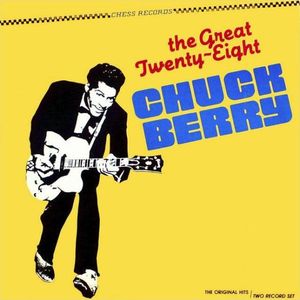
This is one of the most important LPs in my collection. Not because it is valuable (it is worth approximately twenty bucks), but because of all the founding fathers of rock and roll, Chuck Berry is my favorite. The only cool thing I can do on a guitar is the opening riff of “Johnny B. Goode.”
This double LP came out in 1982. It was a high quality compilation of Chuck’s greatest hits on Chess records from 1955 to 1965 – his best work.
I didn’t get into rock and roll music until I went to college in 1977. By the time I came across the compilation in 1982, I was a serious student of popular music and well into my obsession of collecting LPs. I was in the right mental state to truly appreciate the brilliance of Chuck Berry when I bought this compilation. I was obviously aware of Berry, but with this album I really dug into his music. I must have played this album a 100 times in the first year I got it. What was the appeal?
First of all it was so fundamental – so foundational. These riffs had been copied by the Beatles, the Stones, Dylan, the Beach Boys and on and on – they were already embedded in my consciousness. The opening riff of “Johnny B. Goode” is rock and roll.
Second where the lyrics – Chuck’s lyrics are deceptively simple – but they are a novel in two and half minutes. Again they have influenced everyone: Beatles, the Stones, Dylan, the Beach Boys, Springsteen and on and on.
Third is the visuals – if you have ever seen a clip of Chuck performing – it is spellbinding – he is handsome, charismatic and the duck walk may rival the James Brown split as the greatest stage move in pop music (fortunately I was able to see both these moves live before Brown and Berry where over the hill).
And finally it the sheer joy of the sound – it is pure fun. When Chuck went to Chess, he found the perfect place for his genius to blossom – the house session players were some pretty amazing artist in their own right, for example: Willie Dixon and Johnny Johnson.
Introducing yourself to classic artists like Check Berry can be daunting. There tend to be dozens of greatest hits package – some of which are not very reliable. This one is reliable and frankly perfect. Good enough to be ranked number 21 on Rolling Stone magazine’s list of the 500 greatest albums of all time.
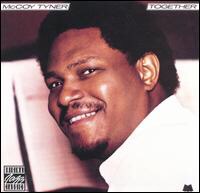

One of the first jazz LPs to blow my mind was McCoy Tyner’s “Fly With The Wind.” About the time I was getting into the album I had the privilege of seeing Tyner live with the Milestone Jazzstars. A few years later I got to see him solo at the old Dakota in Bandana Square. Needless to say each time – each different flavors – he was epic!
Tyner was on a roll in the 70s on the Milestone label. I don’t have every album, but everyone I have listened to is great.
Like all the other albums I have consumed by Tyner on Milestone, Together fits the formula: great songs, great arrangements, the best side men and energetic/hyperkinetic playing by McCoy Tyner.
Check out this line up:
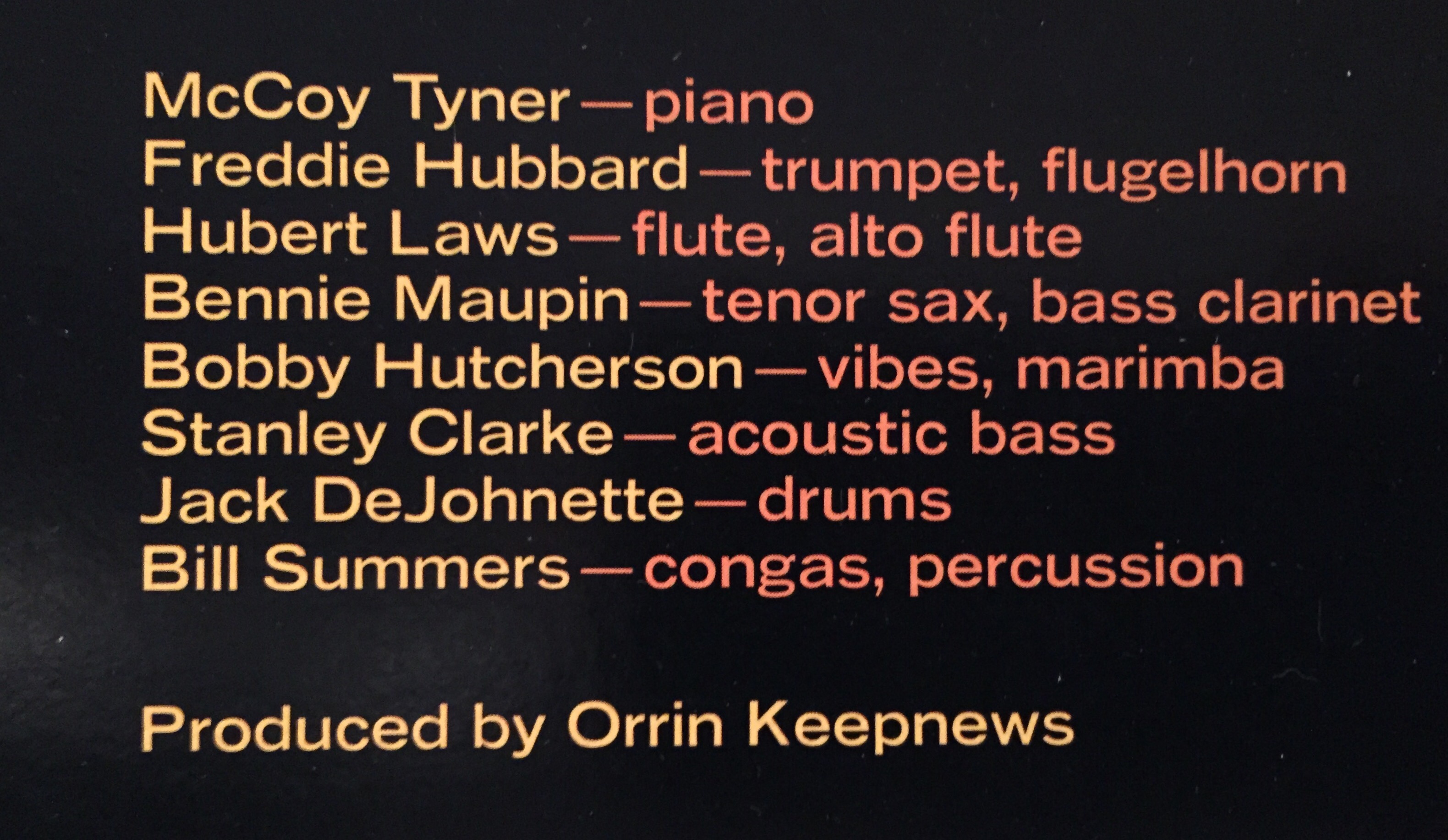
This is absolutely delightful music. It is aggressive and playful. It is virtuosity without pretension. It is like listening in on the conversation of brilliant and witty geniuses.
If you are crate digging and you see a McCoy Tyner album on the Milestone label in decent condition for less than a fin pick it up.

I first got turned on to Big Cats in 2012 with the release of his For My Mother. I was previously aware of Big Cats via my son who is a major hip hop head. I appreciated the ambient musicality of For My Mother.
What If Doesn’t Get Better, like For My Mother, has a wonderfully narcotic groove. Big Cats comes from a hip hop pedigree, but there are not any raps. The LP has instrumentals cuts and there are vocals on several cuts (some front and center and some are just part of the mix).
The album is a bit hard to label: it has a hip hop, electronica and even a bit of a jazz feel. It is mellow and melancholy. It can serve as background music, but it is interesting enough for attentive listening.
The LP opens with “What If It Doesn’t Get Better” featuring the vocals of Lydia Liza. The song is like a slo-mo dance floor jam.
“Crooked Face Dumb Fuck” is a dreamy instrumental. It has that great drifting off for a nap feel – just the edge of consciousness. Then it speeds up – like you are a glider in your dreams.
“Nah” is an instrumental with a playful and upbeat feel.
“The Creator Has A Master Plan, Just Kidding We’re Holograms” has a very epic feel. Close your eyes and you are flying over a gorgeous vista. Near the end the scene changes and then fades out.
Side two opens with “Nevada” featuring the vocals of Gen Divine. The songs swirls and has a nice electronica feel. This is the “turn it up” song on the album.
“Spaceship Moon” has a nice drifting through space feel. I can imagine dancing weightless to this slow jam. It has a nice simmer – just threatening to boil. The song ends with a swirl down the drain.
“I’ve Got Memories Never Earned” features the vocals Eric Mayson. This is the most conventionally pop song on the album.
The album ends with “The Sons Of God Are Everywhere. Sometimes It Can Be Difficult To Recognize Our Brothers.” The song opens with a bouncy vibe and then wanders off on an adventure. It abruptly stops and then fades. Arguably the coolest cut on the LP.
All of the music on the album has a cinematic feel – if you close your eyes and really listen you can see movies. The album relaxes the body, yet stimulates the mind. This is dreamy, but not sleepy music. It is an album that reveals more with each listen – it is richly layered. Drink it slowly and taste the many flavors – each sip is a bit different.

Every once in a while I forget how much I love a band or recording artist. When I saw The Replacements reunion show in 2014, I was overwhelmed at how much their songs meant to me – it was genuinely emotional experience. There was about a ten year span (roughly 85-95) that I lived on a pretty steady diet of the ‘Mats and Westerberg solo. Over the years I would return to them from time to time, but prior to that reunion show I had been out of touch for a while. That show at Midway Stadium in St. Paul was like running into a very dear old friend.
Recently Westerberg’s The I Don’t Cares album had me back in the ‘Mats mood – I was ripe for the biography of the band. But even with that set up I was not quite ready for the wave of nostalgia that rolled over me as I read each page. I am a South-Minneapolis guy and I am just short of a year older than Westerberg – we have a lot of shared history.
If you are a ‘Mats fan this is an absolute must read. Bob Mehr gets you deep inside the soul of the band. I don’t know the guys in the band, but it sure seems like “the true story” of the band. It is a warts and all tale. Reading the book makes me appreciate the band even more than I previously did (unlike Gregg Allman’s autobiography that emphasized what a douche he is and it kind of ruined his music for me). Westerberg is an asshole, but a brilliant and lovable asshole.
This is deeply researched biography of the band: the boys in the band and the key people around them. I never quite got, nor was I attracted to, the self-destructive personality of the band – it was the music and not the image that gripped me. Reading the gory details it is all the more amazing that such a beautiful catalog came out of the hot mess that was The Replacements. My guess is that The Replacements were no more chemically dependent than a lot of bands, but their fuck you attitude shined a light on their excesses.
Meh get you deep inside and it feels so real. You feel like you know these guys and isn’t that all you want from an autobiography or biography to get to know the subject? History is not enough – you need to feel like you are there in the room with them – the book is a very tactile read. Mehr tells the story in a very compelling and almost novel-like manner. It is linear, but with just enough crooked detours in order to effectively tell the story.
I guess the best part of the story is how unlikely it is that these guys found the success they did. In the end they sacrificed the payday for authenticity. They may not have gotten rich in money, but they got rich in rock and roll credibility. At its soul rock and roll flips you the bird and The Replacements flipped that bird better than anyone.
The ‘Mats are on my short list of musical greats. I have always loved their music and this book has made their music even more special to me.

 Axl's Catch Groove