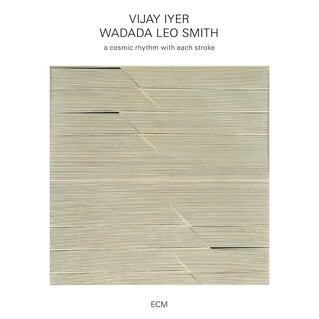
I don’t know how this album entered my consciousness, but I assume I read some review that raved about it. I had some familiarity with Vijay Iyer via some of his solo work and as a sideman with sax man Rudresh Mahanthappa. I always liked his complex, yet accessible style. Wadada Leo Smith is but a name to me. About all I knew was he plays trumpet and is associated with the jazz avant-garde.
A Cosmic Rhythm With Each Stroke is quintessentially ECM. ECM is the most reliable jazz label for my ears. Always tasteful, generally quite and complex without making your head explode. Impeccably recorded and starkly beautifully packaging. That pretty much defines this album.
The album opens with “Passage,” a Vijay Iyer song. Wadada Leo Smith’s trumpet whispers over Iyer contemplative piano. I would not have thought a duo of quite piano and trumpet could deliver such a powerful punch. As mellow as Smith sounds there is an edge – a gentle hint of atonal avant-garde jazz. The song is a pure duo.
Next is the titular suite in seven songs/parts/movements ranging between five and nine minutes. The suite was commissioned by The Metropolitan Museum of Art for its exhibition of the art of Nasreen Mohamedi (the album’s cover is a sample of her art). It was composed by Iyer and Smith.
“All becomes alive” opens the suite as a conversation between Smith and Iyer as each takes solos. Smith start the conversation over an electronic drone from Iyer. Iyer responds with a gorgeous contemplative piano solo. Smith answers back with an equally gorgeous solo. Soon piano and horn are in a gently duet. Two voices respectfully weaving together. Iyer (I assume) adds some percussive effects.
“The empty mind receives” opens with some gentle keyboarding answered by Smith’s muted trumpet. The song gets ever more adventurous. So like the song title, the song starts empty and then gains wisdom.
“Labyrinths” has a gently chaotic feel as Iyer and Smith run around trying to find each other. The song gets less hectic, but retains its complexity.
“A divine courage” starts out with a nearly silent electronic hum. Smith enters at about the minute mark with his rich tone and slowly solos for a couple of minutes with some occasional tasteful punctuation from Iyer. As the song progresses Iyer slowly asserts his voice without overshadowing Smith.
“Uncut emeralds” begins with Iyer twinkling the right hand ivories. Smith pipes in with almost a sax sounding trumpet – he makes exquisite use of the mute.
“A cold fire” starts with Smith sounding like twisted balloons. Iyer plays a busy and scattered piano. The song has a wonderfully chaotic feel.
The suite ends with “Notes on water” which is almost a hymn.
The final cut on the album was composed by Smith and is called “Marian Anderson” and is the most conventional jazz cut on the album. Smith plays in a gorgeous full tone and Iyer dances around the keyboard in an almost Keith Jarrett solo manner.
This is the proverbial match made in heaven. Iyer and Smith mix so well together – the ultimate cocktail as it reveals unique flavors with each sip. The sympathy between these two artist is profound. It is quiet yet aggressive at the same time – it is the sound of great resolve. This a quite piece of music best listened to in a quite room so you can pick up the subtleties. The music travels from a whisper to a scream with the whisper being the best part. This is not music for everyone. Some will find it harsh and “out there.” But if you are willing to open your ears and mind you will hear a beautiful conversation by two enlightened friends. Listen carefully to the undercurrent of electronics that Iyer has going – get below the piano (but don’t miss out on the piano either). Fully absorb the many amazing sounds of Smith’s horn.
Sorry no Spotify – ECM doesn’t do Spotify. Buy the CD – streaming at low qualiyt would really take the shine off this brilliant recording anyway.
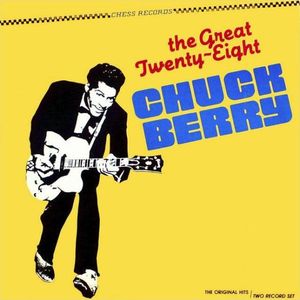
This is one of the most important LPs in my collection. Not because it is valuable (it is worth approximately twenty bucks), but because of all the founding fathers of rock and roll, Chuck Berry is my favorite. The only cool thing I can do on a guitar is the opening riff of “Johnny B. Goode.”
This double LP came out in 1982. It was a high quality compilation of Chuck’s greatest hits on Chess records from 1955 to 1965 – his best work.
I didn’t get into rock and roll music until I went to college in 1977. By the time I came across the compilation in 1982, I was a serious student of popular music and well into my obsession of collecting LPs. I was in the right mental state to truly appreciate the brilliance of Chuck Berry when I bought this compilation. I was obviously aware of Berry, but with this album I really dug into his music. I must have played this album a 100 times in the first year I got it. What was the appeal?
First of all it was so fundamental – so foundational. These riffs had been copied by the Beatles, the Stones, Dylan, the Beach Boys and on and on – they were already embedded in my consciousness. The opening riff of “Johnny B. Goode” is rock and roll.
Second where the lyrics – Chuck’s lyrics are deceptively simple – but they are a novel in two and half minutes. Again they have influenced everyone: Beatles, the Stones, Dylan, the Beach Boys, Springsteen and on and on.
Third is the visuals – if you have ever seen a clip of Chuck performing – it is spellbinding – he is handsome, charismatic and the duck walk may rival the James Brown split as the greatest stage move in pop music (fortunately I was able to see both these moves live before Brown and Berry where over the hill).
And finally it the sheer joy of the sound – it is pure fun. When Chuck went to Chess, he found the perfect place for his genius to blossom – the house session players were some pretty amazing artist in their own right, for example: Willie Dixon and Johnny Johnson.
Introducing yourself to classic artists like Check Berry can be daunting. There tend to be dozens of greatest hits package – some of which are not very reliable. This one is reliable and frankly perfect. Good enough to be ranked number 21 on Rolling Stone magazine’s list of the 500 greatest albums of all time.
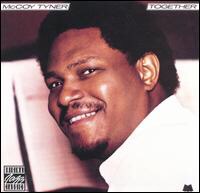

One of the first jazz LPs to blow my mind was McCoy Tyner’s “Fly With The Wind.” About the time I was getting into the album I had the privilege of seeing Tyner live with the Milestone Jazzstars. A few years later I got to see him solo at the old Dakota in Bandana Square. Needless to say each time – each different flavors – he was epic!
Tyner was on a roll in the 70s on the Milestone label. I don’t have every album, but everyone I have listened to is great.
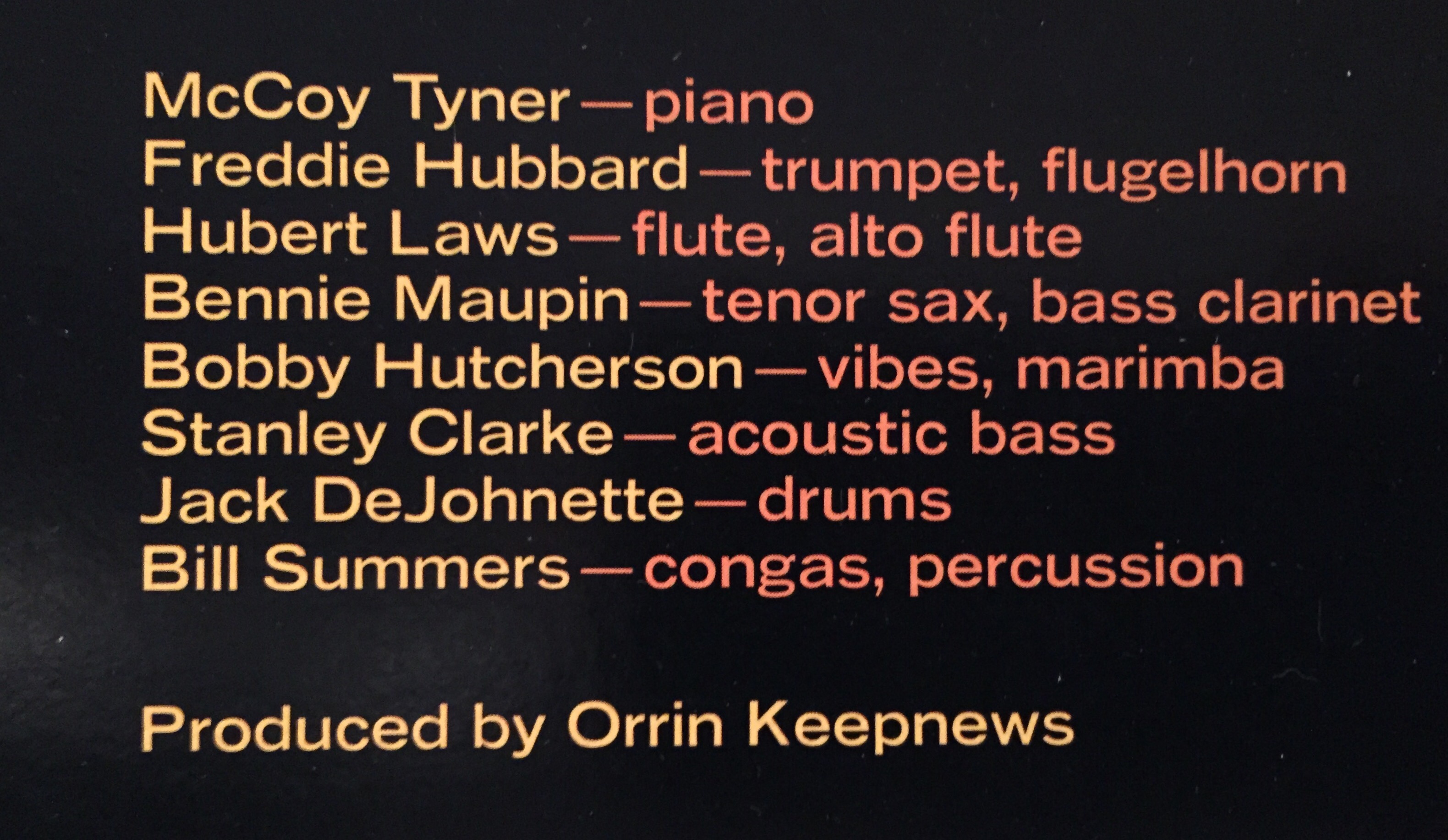
Like all the other albums I have consumed by Tyner on Milestone, Together fits the formula: great songs, great arrangements, the best side men and energetic/hyperkinetic playing by McCoy Tyner.
Check out this line up:
This is absolutely delightful music. It is aggressive and playful. It is virtuosity without pretension. It is like listening in on the conversation of brilliant and witty geniuses.
If you are crate digging and you see a McCoy Tyner album on the Milestone label in decent condition for less than a fin pick it up.

I first got turned on to Big Cats in 2012 with the release of his For My Mother. I was previously aware of Big Cats via my son who is a major hip hop head. I appreciated the ambient musicality of For My Mother.
What If Doesn’t Get Better, like For My Mother, has a wonderfully narcotic groove. Big Cats comes from a hip hop pedigree, but there are not any raps. The LP has instrumentals cuts and there are vocals on several cuts (some front and center and some are just part of the mix).
The album is a bit hard to label: it has a hip hop, electronica and even a bit of a jazz feel. It is mellow and melancholy. It can serve as background music, but it is interesting enough for attentive listening.
The LP opens with “What If It Doesn’t Get Better” featuring the vocals of Lydia Liza. The song is like a slo-mo dance floor jam.
“Crooked Face Dumb Fuck” is a dreamy instrumental. It has that great drifting off for a nap feel – just the edge of consciousness. Then it speeds up – like you are a glider in your dreams.
“Nah” is an instrumental with a playful and upbeat feel.
“The Creator Has A Master Plan, Just Kidding We’re Holograms” has a very epic feel. Close your eyes and you are flying over a gorgeous vista. Near the end the scene changes and then fades out.
Side two opens with “Nevada” featuring the vocals of Gen Divine. The songs swirls and has a nice electronica feel. This is the “turn it up” song on the album.
“Spaceship Moon” has a nice drifting through space feel. I can imagine dancing weightless to this slow jam. It has a nice simmer – just threatening to boil. The song ends with a swirl down the drain.
“I’ve Got Memories Never Earned” features the vocals Eric Mayson. This is the most conventionally pop song on the album.
The album ends with “The Sons Of God Are Everywhere. Sometimes It Can Be Difficult To Recognize Our Brothers.” The song opens with a bouncy vibe and then wanders off on an adventure. It abruptly stops and then fades. Arguably the coolest cut on the LP.
All of the music on the album has a cinematic feel – if you close your eyes and really listen you can see movies. The album relaxes the body, yet stimulates the mind. This is dreamy, but not sleepy music. It is an album that reveals more with each listen – it is richly layered. Drink it slowly and taste the many flavors – each sip is a bit different.

Every once in a while I forget how much I love a band or recording artist. When I saw The Replacements reunion show in 2014, I was overwhelmed at how much their songs meant to me – it was genuinely emotional experience. There was about a ten year span (roughly 85-95) that I lived on a pretty steady diet of the ‘Mats and Westerberg solo. Over the years I would return to them from time to time, but prior to that reunion show I had been out of touch for a while. That show at Midway Stadium in St. Paul was like running into a very dear old friend.
Recently Westerberg’s The I Don’t Cares album had me back in the ‘Mats mood – I was ripe for the biography of the band. But even with that set up I was not quite ready for the wave of nostalgia that rolled over me as I read each page. I am a South-Minneapolis guy and I am just short of a year older than Westerberg – we have a lot of shared history.
If you are a ‘Mats fan this is an absolute must read. Bob Mehr gets you deep inside the soul of the band. I don’t know the guys in the band, but it sure seems like “the true story” of the band. It is a warts and all tale. Reading the book makes me appreciate the band even more than I previously did (unlike Gregg Allman’s autobiography that emphasized what a douche he is and it kind of ruined his music for me). Westerberg is an asshole, but a brilliant and lovable asshole.
This is deeply researched biography of the band: the boys in the band and the key people around them. I never quite got, nor was I attracted to, the self-destructive personality of the band – it was the music and not the image that gripped me. Reading the gory details it is all the more amazing that such a beautiful catalog came out of the hot mess that was The Replacements. My guess is that The Replacements were no more chemically dependent than a lot of bands, but their fuck you attitude shined a light on their excesses.
Meh get you deep inside and it feels so real. You feel like you know these guys and isn’t that all you want from an autobiography or biography to get to know the subject? History is not enough – you need to feel like you are there in the room with them – the book is a very tactile read. Mehr tells the story in a very compelling and almost novel-like manner. It is linear, but with just enough crooked detours in order to effectively tell the story.
I guess the best part of the story is how unlikely it is that these guys found the success they did. In the end they sacrificed the payday for authenticity. They may not have gotten rich in money, but they got rich in rock and roll credibility. At its soul rock and roll flips you the bird and The Replacements flipped that bird better than anyone.
The ‘Mats are on my short list of musical greats. I have always loved their music and this book has made their music even more special to me.
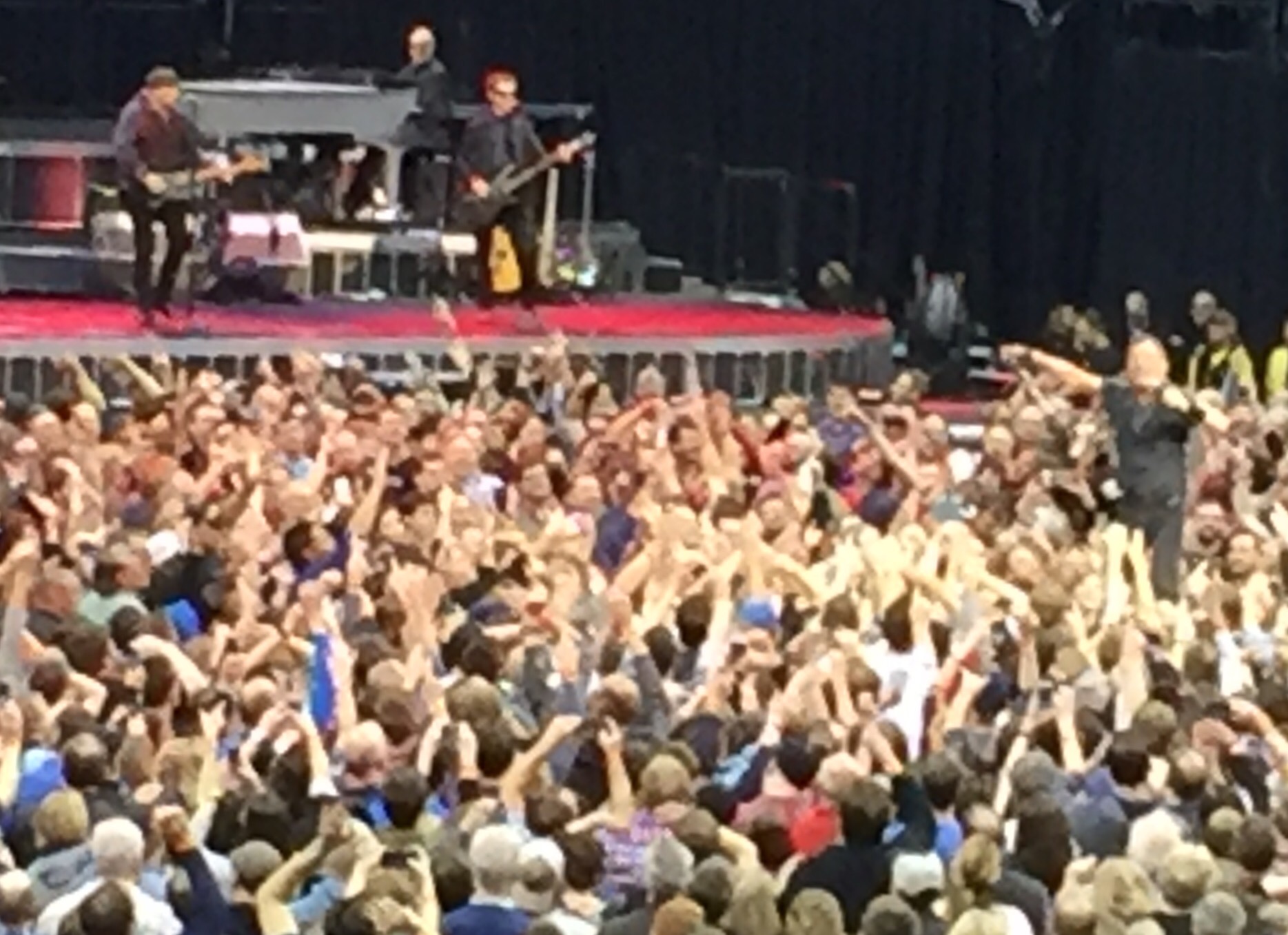
I judge a concert by if I get goosebumps and by how sore my throat is at the end. Last night I had goosebumps on nearly every song and my throat was wonderfully raw.
Bruce can’t run and slide on the stage any more, but he makes up with raw emotion and an earnest pursuit of good times and a healthy view that life is a bumpy road. For Bruce the bumps in the road don’t destroy you they define you. Bruce’s success is that he understands the redemptive power of rock and roll and knows how to dispense that sacrament. Less wildly than in his youth, it has been replaced with mature reverence.
The gimmick of this tour is that Springsteen would perform his 1980 masterpiece The River in its entirety (plus another 80 minutes of hits as a cherry on top). The River may not be Bruce’s most popular album, but it perfectly defines becoming an adult with a full complement of real emotions: the release of Friday night, the joy of Saturday night, the contemplation and regret of Sunday, the dread of Monday, etc.
I have had the double album from when it first came out and to be honest it never really resonated with me – I was still too into Darkness On The Edge Town and did not quite get The River (in hindsight I was still too young at 21 to get it). Over the years it has grown on me and when the box reissue came out recently I embraced it and it all made perfect sense.
Hearing Bruce’s 66-year-old take on his 30-year-old self last night was amazing. The rockers were pure joy and the ballads were heartfelt. Bruce provided just enough intro dialogue to whet your appetite – but never too much to ruin the meal. I was worried about how the slow material from The River would go over in a concert setting, but the ballads ended up being a highlight.
And then there were great concert memories: a millionaire rock star crowd surfing, Bruce dancing with an old lady from the audience, Bruce and Little Steven singing cheek to cheek, the audience singing as an intro and the pumping arms to the finale “Shout.
A great concert is also about the state of your mind coming into the show and mine was perfect: left work early (and the next day off – a Friday night vibe), had a little nap, pre game dinner at home with my family, concert partners of my bride (who was very revved up for the show) and my daughter (crossing off yet another legend off her bucket list) and her boyfriend (birthday boy) – in short family – the joys of my life – the prefect context to plunge into The River.
This morning my wife and I slept in and listened to my old LP of The River and it never has sounded better. We are not the young lovers we were in 1980 when The River came out, but our love has matured into what Bruce calls the ties that bind:
It’s a long dark highway and a thin white line
Connecting baby, your heart to mine
We’re runnin’ now but darlin’ we will stand in time
To face the ties that bind
The ties that bind
Now you can’t break the ties that bind
You can’t forsake the ties that bind
Set list:
Meet Me in the City (The Ties That Bind, 2015)
The Ties That Bind (The River, 1980)
Sherry Darling (The River, 1980)
Jackson Cage (The River, 1980)
Two Hearts (The River, 1980)
Independence Day (The River, 1980)
Hungry Heart (The River, 1980)
Out in the Street (The River, 1980)
Crush On You (The River, 1980)
You Can Look (You Better Not Touch) (The River, 1980)
This Little Girl (originally recorded by Gary U.S. Bonds)
I Wanna Marry You (The River, 1980)
The River (The River, 1980)
Point Blank (The River, 1980)
Cadillac Ranch (The River, 1980)
I’m a Rocker (The River, 1980)
Fade Away (The River, 1980)
Stolen Car (The River, 1980)
Ramrod (The River, 1980)
The Price You Pay (The River, 1980)
Drive All Night (The River, 1980)
Wreck on the Highway (The River, 1980)
Badlands (Darkness on the Edge of Town, 1978)
No Surrender (Born in the U.S.A., 1984)
Prove It All Night (Darkness on the Edge of Town, 1978)
Backstreets (Born to Run, 1975)
Because the Night (Patti Smith collaboration originally recorded by Smith)
The Rising (The Rising, 2002)
Thunder Road (Born to Run, 1975)
Born to Run (Born to Run, 1975)
Bobby Jean (Born in the U.S.A., 1984)
Dancing in the Dark (Born in the U.S.A., 1984)
Rosalita (Come Out Tonight) (The Wild, the Innocent and the E Street Shuffle, 1973)
Tenth Avenue Freeze-Out (Born to Run, 1975)
Shout (Isley Brothers cover)
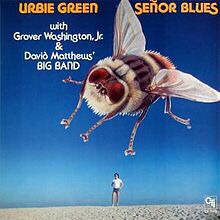
If I find a CTI release I don’t own in decent condition and at a reasonable price (in this case $4 for an unopened/still in the cellophane copy) I am going to buy it. Even if I am unfamiliar with the artist. In this case I was familiar with Urbie having previous picked up his other CTI release The Fox. Señor Blues had the added bonus of Grover Washington Jr. being prominently featured as a sideman along with David Matthews’ Big Band.
It is not often that a jazz album is led by a trombone player. Urbie is considered a master of the instrument. He has magnificent tone and makes the bone a legitimate lead instrument.
The album opens with Chic Corea’s “Captain Marvel” which I am familiar with from the Stan Getz album of the same name. It is a great jazz song and offers ample opportunity for both Urbie and Grover Washington Jr. to solo. It is a very high energy song. When I first heard the song on the Getz album I could hear the seed of what would blossom into Corea’s Return To Forever (I came to RTF long before I came to Getz). Arrangers Matthew’s is no doubt pretty familiar with RTF and takes a big band twist on the RTF vibe. Urbie’s bone sound is so sweet on this song. Washington dumps his light jazz persona and shreds on tenor. A perfect foil for Urbie. David Matthews’ big band arrangement is pure joy.
Next comes the Billy Preston ballad “You Are So Beautiful” made famous by Joe Cocker. It is a great opportunity to strip back the arrangement and to just let Urbie’s tone prevail. A bit sappy, but Urbie’s tone is so gorgeous you can’t help but forgive the dripping sentiment.
Mingus’ “Ysabel’s Table Dance” finishes of side one. This is a piece I was not familiar with so I had to Spotify it. It comes from an album called Tijuana Moods. The original song has a south of the border feel, but it also has a Mediterranean/North African groove. The Mingus original was more of a suite with some free jazz going on. Urbie’s cover is much easier, but by no means light weight.
Side two starts with the titular track – a Horace Silver song. Green’s version has a much more big band feel than the original. Grover Washington Jr. absolutely wails on this song. Green’s solo follows – almost duet with the bassist.
Next comes “I’m In You” a Peter Frampton song of all things. Urbie pulls out some pretty nifty melodies and funk from the unremarkable original.
The album ends on a funky note with a Stevie Wonder song. The basic groove is pretty loyal to the Wonder original, but Green’s bone replaces Wonder’s vocals. After a Green solo a young John Scofield takes his turn. Green steals back the solo to close out the song. Throughout there is a jamming horn section.
The album reminds me a lot of last year’s Kamasi Washington release with its mixture of jazz chops and pop sentiments. This is easy listening jazz without pandering or becoming lite. This is the reason I crate dig – to discover gems like this. Thanks to another great record sale from Jeffery!
Sorry no Spotify version – you are going to have to crate dig for this one. I have put together playlist of what I presume are the originals inspirations. I have pulled together the bulk of the tracks I could find on You Tube too.

I first got turned on to Bonnie Raitt through her 1972 LP Give It Up (although it was the late 70s before I discovered it). “Too Long At The Fair” is an amazing song and Bonnie’s interpretation is perfect. Bonnie has had a great career as a singer, songwriter and instrumentalist (slide guitar). She had a moderate following and no real hits the first 20 years of her career, but then she hit gold and hit a grand slam in 1989 with Nick Of Time. She has figured out how to make a gumbo of blues, soul, funk, country, Americana and Southern California singer-songwriter without sounding schizophrenic.
Since Nick Of Time Bonnie has consistently delivered quality albums and she has moved from an interpreter during the first half of her career to a solid singer-songwriter for about half of her material in the second half. At 66 and 17 albums she is still consistently delivering quality material.
The album opens with the self-penned “Unintended Consequences Of Love” which is built on a solid funk foundation (think Stevie Wonder) and Bonnie’s bluesy singing. If you play it quietly it sounds nice but if you play it loud you really feel the nasty groove – so you could play this at a dinner party or at a dance party. I love it when music is nastier than it first seems.
Bonnie takes an INXS song, “Need You Tonight,” steps the pop sheen, slows it down, yet retains the funk – making it all hers.
“I Knew” has a nice slow Stone’s groove (think solo Keith Richards). The song includes a nice Bonnie slide solo.
Bonnie slows it down with “All Alone With Something To Say.” This is a classic Bonnie ballad that would not have sound out-of-place on Nick Of Time. Lots of dripping slide to keep a sentimental song from sounding to sappy.
The party is back on with “What You’re Doin’ To Me” a nice honky-tonk rock and roll song.
“Shakin’ Shakin” Shakes” is a Los Lobos song with a Bo Diddly beat on amphetamines. Bonnie plays is pretty faithful to the original.
“Undone” is a sad ballad that lets Bonnie show off her gorgeous vocal pipes.
“If You Need Somebody” is a Bonnie original in classic Southern California singer songwriter style – this could easily be a Jackson Browne song.
“Gypsy In Me” is a nice guitar groove.
“The Comin’ Around Is Going Through” opens with a cleaned up Black Keys groove and rides on with almost a ZZ Top groove. This is another Bonnie original. Bonnie is in a scolding mood and is wagging her finger. If you want to ignore the politics, then just ride the ripping guitars.
One of my favorite singer songwriters is Joe Henry (he produced Bonnie’s last album). His “You’ve Changed My Mind” is a perfect Bonnie ballad. This song is augmented by the great guitar duo of Bill Frisell and Greg Leisz (see my Lucinda Williams review).
“The Ones We Couldn’t Be” ends the album on contemplative note – a gorgeous weeper filled with sweet regret.
Bonnie keeps putting out great albums 40 plus years into her career. She remains hip without pandering. Her last album, Slipstream, was a great album and I would have been satisfied if that was it, but Bonnie is not done working and duplicated it. If you are a fan you will not be disappointed. If you are not familiar with Bonnie this will be a great introduction.
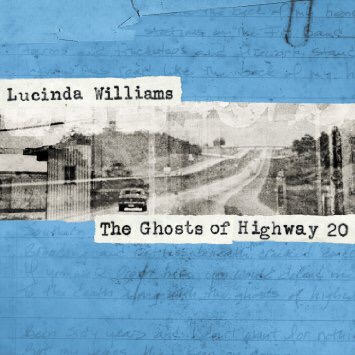
I have been drinking from the well that is Lucinda Williams since the 1988 album Lucinda Williams. I remember seeing her live at the time at the 7th Street Entry in Minneapolis. I was captured by her voice and songwriting. Nearly 30 years later and she is still putting out great material.
The special treat of this album is that most of the cuts are graced by the twin guitars of Greg Leisz (left channel) and Bill Frisell (right channel). Their interplay behind the lugubrious drawl of Williams is audio perfection.
The opening cut “Dust” sets the bar high with brilliant swordplay of Leisz and Frisell. The trade some great solos without overshadowing Williams, in fact they create an tall stage for her to stand on. They are brilliant accompanists. This sets the foundation for the rest of the album. Sometimes they boil and sometimes they simmer, but they are always hot.
The next song, “House of Earth” was witten by Woody Guthrie. It is a dark narrative in the voice of a prostitute.
“I Know All About It” has a nice late night feel. Leisz has an almost organ feel to his playing – vamping cords for Frisell to play over. The song simmers with anger: “I know about the pain and all that jazz.”
“Places In My Heart” takes a softer touch – a love song to the one who breaks your heart. Real life, real love.
“Death Came” has a nice Dylan feel both lyrically and musically. It is dark and brooding.
After that dirge comes the joyous “Doors of Heaven.” The songs has a great tangled guitar duet as the outro.
“Louisiana Story” feels like that moment when you drift off to sleep. A candid reminiscence:
Looking back on sweetness
Looking back on the rough
The titular track “The Ghosts of Highway” starts out disk two. It is a slow burning rocker. Highway 20 is a 200-mile interstate that cuts through the northern part of Louisiana, Williams’ home state. It is an analogy for a emotional highway of sorrow and pain, offset by nostalgia and fond recollection.
“Bitter Memory” is a playful rocker. Lucinda really busts out on this piece. Which makes her slow burn on the rest of the album all that more intentional – Lucinda can rock if she wants.
“Factory” is a Bruce Springsteen song (from Darkness on the Edge of Town). Lucinda makes it her own, but that is not much of a stretch. Both Lucinda and Bruce can slur their words with the best. And they are kindred spirits – especially when Bruce is in low gear.
“Can’t Close The Door On Love” is another real love song – an adult love song. Love may be beautiful, but it ain’t pretty.
Trust me you can’t close the door on our love
Just because you made somebody cry
“If My Love Could Kill” has a menacing feel to it. It reeks of the anger of a jilted lover. It reeks of revenge.
“If There’s A Heaven” is dedicate to Lucinda’s late father – the scholar and poet Miller Williams. Life is tough for those left behind and this song pleads “…if there’s a heaven out there.”
With “Faith & Grace” the album ends as it began with an outstanding jam. Twelve plus minutes of a quite storm as Lucinda moans while Leisz and Frisell cut it up.
This is an exquisite album. Lucinda is on top of her game with her songwriting. Her slurring drawl has been perfected to a unique and deceptively expressive instrument over the years.
As I said earlier, the hook here are guitars of Leisz and Frisell. I am less familiar with Leisz than Frisell. What I love about Frisell’s work on this album is that his guitar sings in a fresh voice – this is Frisell like I have never heard him before. And the two together is so simpatico. This is not a cutting session, but a beautiful conversation between two great friends.
Googling The Ghosts of Highway 20 I learned the album was recorded live, without overdubs or post-production sweetening. This makes it even a more amazing album. What a breath of fresh air in our highly processed pop world.
By the way I sure do dig the pricing of the CD: $10 for a double CD. But I am bummed out Lucinda and her label did not make the album available on Spotify (convince has become very important to me).
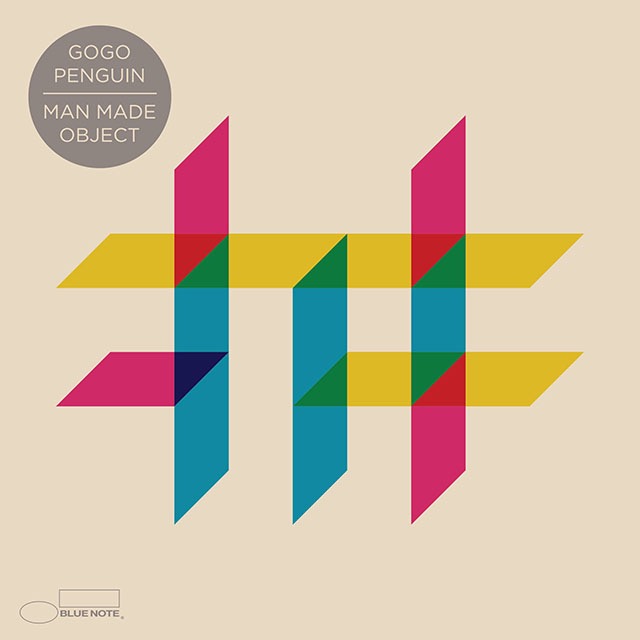
GoGo Penguin is a new band to me – I had never heard of them before this past week. Not sure where I read about them, but they were described as the British Bad Plus. I guess that suggests a serious jazz band with a pop aesthetic. The band is a traditional jazz trio: bass, drums and piano. But that is where the jazz tradition ends. Listening to Man Made Object suggests they are as much influenced by electronica, rock, classical and hip hop as they are by jazz. I think of them more as if Radiohead were a jazz trio.
The music is both easy to listen to and challenging. You could have it on low volume in the background our you can turn it up and emerse yourself in the complex rhythms and melodies.
Each instrument is prominent, yet the players are not stepping on each other’s toes. It is more like watching three jugglers exchanging props – although each player is allowed a unique trick and a chance in the spotlight, they must remain keenly aware and supportive of the rest of the trio.
On first listen this music seems gentle and easy listening. Not elevator music, but it does not demand much of you – like warm blanket or ocean beach sunset. But when you really dig in and listen you begin to appreciate the complex dance that is going on here. Each player has mathematical precision and a full whiteboard of equations. Beneath the contemplative sheen there is a wonderful hyperactivity.
Each release Friday in 2016 has delivered absolute wonders and 2/6/16 was no different. Put Man Made Object on repeat in your background for several listens and then pull it into focus for a serious listen. I hope you will be as delighted as I have been.

 Axl's Catch Groove