
Every few years I do some kind of upgrade to my stereo. I have never really thought of myself as an audiophile, since I prefer to spend most of my disposable income on software (music) vs. hardware (gear). However, I am at the point where I have spent enough on stereo gear that it is pretty hard to avoid the label of audiophile. All the same, I am on the budget side of the audiophile spectrum. I like high quality gear, but I am looking for value. I don’t think you have to pay the price of a car for a component.
This year’s upgrade was a new amplifier. It replaces a Jolida FX10 (a 10 watt tube amp which has served me well, but had some limitations). How I ended up with the Croft is a long story that I will save for another post. This post will focus on reviewing the Croft.
I was unfamiliar with the Croft brand and did no research – instead I completely relied on the fine crew at the Needle Doctor for their recommendation (a special shout out to @cellphono for his patience and insights). They did not lead me astray. It turns out this is a highly recommended component from Stereophile magazine and other experts. Croft is in that class of gear that is moderately priced (but still not cheap) and considered at the top of its class. This amp is $1,895.00 USD which makes it the most expensive stereo component I have ever owned. I got a small discount by purchasing a demo model (no risk and broken in by guys who know what they are doing). Finding the Croft was serendipitous, but again that story will have to wait for another post.
What I learned is that Glenn Croft, designs and builds hand crafted audio in the UK. This is like buying art from an artist, it is brilliantly designed and crafted. Croft has been at his craft for 30 plus years. I am very curious as to who this guy is. I have met these kinds of dudes before. For example, in my own town, there is Frank Van Alstine. He is serious about sound and oblivious to gimmicks and fads. I am still trying to learn more about the Croft brand and Glenn Croft the man. Don’t expect to learn anything on the Croft website. This is one low profile company. Croft is the definition of bespoke.
This is an austere unit: an input selector, right and left volume knobs, a mute switch and an on/off switch all in an unassuming black case without a remote. It does not have a headphone jack (which has turned out to be a weird kind of benefit – the opportunity to head down the headphone amp rabbit hole).

The backside is a set of gold-plated jacks for a phono, three other inputs and a line out. In addition, there are speaker connectors, a phono ground and power.

The Croft is a tube hybrid amplifier. It has a top-notch MM phono preamp – that is its most prominent feature. LPs sound outstanding through the Croft.
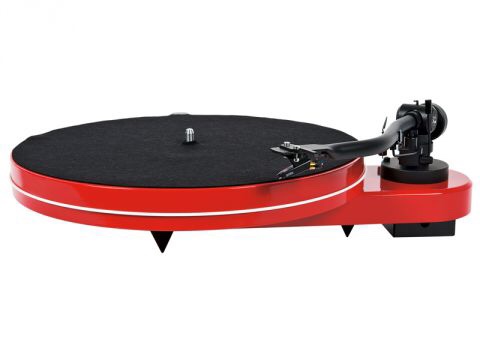
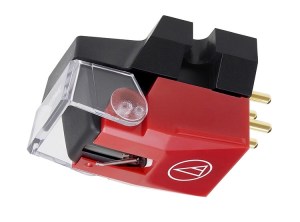
No piece of gear can be considered on its own, you need to understand the context of the listener. My inputs to the Croft are a Pro-Ject RPM 1 Genie 3 (turntable) with an Audio-Technica VM540ML cartridge (another new arrival due to tragedy – another teaser to an upcoming post) and an Oppo 105D (disc player and DAC). I predominately listen to vinyl through this rig.

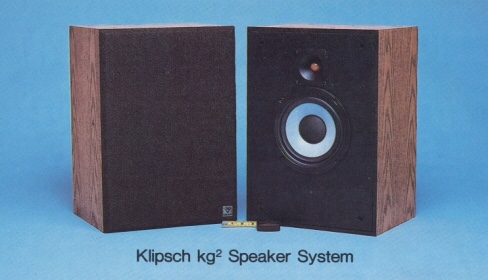
The outputs are Klipsch KG2s (speakers) and a Schiit Vali 2 (headphone amplifier – this is a new addition to my rig along with the Croft – remember no headphone jack) with some AKG K240 Studio (ancient) and Grado SR80e headphones – depending on my mood (the Grados are my preference for sound, but the AKG are physically more comfortable on my head and provide some isolation).
The Klipsch are my oldest component. I picked them up in 1985 when I got my first bonus from my first “real” job. They were the best speaker I could afford at the time. I have listened to them consistently since I got them. Other stereo components have come and gone, but the KG2s still prevail. I have listened to a lot of other speakers over the years, but in the end I am loyal to the Klipsch. They pair well with the Croft (this is not a given – I tried a Rouge Audio Pharaoh and it conflicted with the Klipsch). It was a requirement that the new amp complement the Klipsch. The Klipsch get along nicely with the Croft.


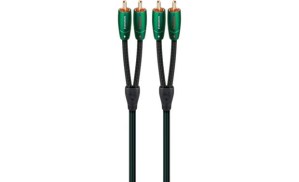
All the hardware is connected with AudioQuest Evergreen cables and the speakers are connected with Monster Cable XP HP 14 Gauge High Performance speaker wire.
I am not qualified to explain the electronics of the Croft, so I will defer to Stereophile:
Phono-stage gain is provided by a stereo pair of ECC83 (12AX7) dual-triode tubes, made by JJ Audio of Slovakia, while RIAA equalization is applied by passive parts. A third ECC83, using a pair of P9NK50 MOSFETs as a constant-current source, is the voltage amplifier for the output section, which is built around a complementary pair of J162 and K1058 MOSFETs. In the right-rear corner of the Croft amp—as far as one can get from those small-signal tubes—is a simple and very cleanly executed analog power supply, with separate rectifiers for tubes and transistors. Apart from a small circuit board containing the bipolar timer and relays for the amp’s warm-up circuitry, the Phono Integrated is hand-wired, point to point, with neatly made solder joins and Bakelite terminal strips.
I will provide a subjective review. The overall sound is clear, lifelike and “tube warm.” As mentioned earlier, the phono stage is outstanding, but it handles digital inputs just fine. My Oppo sounds great through the Croft (CDs, SACDs, DVD-Audio and Tidal Hi Fi). I listen to pretty much every genre, with exception of Classical and EDM. The Croft sounds great with everything I listen to. It has a nice stereo sound stage. Everything is even keeled – not too much bass and not too bright – it is just right. I seek a non-biased reproduction from a stereo and not an opinion. The Croft tells the story straight up (the audio equivalent of neat if you are a whiskey drinker).
Besides the overall sound, my favorite feature is the dual left/right volume knobs. My listening space is a loft, where my right side is a large open space. It is great to have independent channel volume controls to compensate for the room – much better than a balance knob.
I love the no-nonsense look of the face and case of the unit.
 I am very satisfied with the Croft. It is a good match with my other equipment. It plays into my listening habits, as it is a vinyl focused unit. With so many options on the market I feel lucky to have found the right amp for my needs and taste. It is a reminder of the importance of a quality retailer and informed salesperson (thanks again Needle Doctor and @cellphono). I am not suggesting the Croft for everyone, but it is the one for me.
PS – I now predominantly listen to this rig through Sennheiser HD 6XX headphones. See this post for more about that.


This album was originally released in the Japanese market in 1975 as a live double LP. It features Hancock’s Headhunters Band performing selections from the Headhunters, Thrust and Man-Child albums. Flood was recorded in Tokyo Japan at Shibuya Kohkaido and Nakano Sun Plaza (concert halls) in the summer of 1975.
The Headhunters band on this album is: Hancock on various keys, Bennie Maupin on various woodwinds, Phil Jackson on Fender bass, Mike Clark on drums, Bill Summers on congas and percussion and Blackbird McKnight on guitar.
Side one opens with “Maiden Voyage” (a Hancock standard) performed by Hancock on solo acoustic piano. As the song comes to a close the full band joins in without a trace of the funk the Headhunters were known for. The band then segues into “Actual Proof” (from Thrust). Although, this is not the post bop sound of the mid-60s, this is not funk fusion either, it is somewhere in between. For example, Phil Jackson is playing his Fender in a style that is closer to a traditional stand up bass than funk.
Side two is what I was expecting when I dropped the needle on side one: full on jazz funk fusion. “Spank-A-Lee” (from Thrust) opens side two and is a great showcase for the band to show off their chops. “Watermelon Man” (a Hancock jazz standard that was reimagined as funk on the Headhunters album) is faithful to the Headhunters’ studio version – just a touch freer.
Side 3 starts with “Butterfly” (from Thrust). It is a mellow tune that makes you feel like you are floating (I guess like a butterfly). It is a pretty gorgeous ballad. “Chameleon” (from Headhunters) is a full-out jam. Hancock has a great synth solo that makes you feel like you dropped in on a futuristic sci-fi gun fight.
Side 4 ends the album with the side length track “Hang Up Your Hang Ups” (from Man-Child). It is not a tune I was familiar with. It is a twenty-minute funk-jazz jam with plenty of room for the soloists to work their stuff, yet each of the musicians does their part to set a funky rhythmic foundation for their peers to strut on.
Overall, the album has a live, but clean sound. The performances are looser than the studio albums that they come from, but they are not sloppy – they are just more free. These are highly skilled jazz musicians who had been playing together for a while – the definition of tight.
Beyond Hancock’s Headhunters album, I am not that familiar with his mid 70s output. This album has perked my interest and I will be digging into this era of the Hancock catalog.
An eye opener on the album is Bennie Maupin’s playing. I had no idea what a great sax player he is. I have obviously heard him before on various Hancock and Miles releases, but he really stands out on this album.
This has turned out to be my favorite release from Record Store Day Black Friday 2018 and a reminder of what a truly great artist Herbie Hancock is.
https://open.spotify.com/album/7JDyMVSNq5If3rOGSvqFsI?si=EhH9S2t9R0CRwS4AJ3TpOA
It is a bit pretentious of me to create a “best of” list, but that has not stopped me from making a “best of” list for the last several years. I am not an expert who is listening to a couple hundred albums a year, this is merely a list of albums I liked that were released in 2018. I recently saw another blogger refer to his list as “recommended” – that is a more accurate description of this list – Catchgroove’s 2018 recommended albums.
Most albums I like result in a review on this blog, thus my “best of” list is a bit of a rehash for regular readers. Each of the selections has a link to the original album review. This year I have been busy and have a dozen half-written album reviews in my draft folder and so several selections on this list have fragments from those unfinished reviews.
I don’t have any unifying themes for this year’s favorites other than there are not a lot of newcomers here. Most of the artists on this year’s list are well represented in my collection – they are old friends (and several are several decades into their careers and still producing quality material).
I have started to look at the various year-end “best of” lists from music magazines, blogs and respected music heads. I am exploring these lists not because I am trying to benchmark, but to see if I have missed anything. What I have learned is I need to check out the Arctic Monkeys, the Pistol Annies and Parquet Courts. I also learned that I don’t need to be ashamed of my Kacey Musgraves obsession.
It is hard for me to have a single Album of the Year, so I will have a few Albums of the Year followed by several runners-up.
Albums of the Year
Kasey Musgraves – Golden Hour (post) – Musgraves’ debut album, Same Trailer Different Park, from 2013, never hooked me. I am not sure what lured me into listening to Golden Hour, but I was instantly hooked. In my original post I warned: “this is sweet country pop, but the sweetener is cane sugar not saccharin.” She went from being a pretty conventional Nashville act into something special with Golden Hour (Musgraves credits hallucinogenics). Without a doubt this is my favorite album of 2018.
Jeff Tweedy – Warm (post) – is a great example of an old friend on the list. This is the Wilco frontman’s first proper solo album and it is fantastic. I always knew Tweedy was a great songwriter, but I never realized what a great musician he is. If you like Wilco, you are going love Warm.
Bob Dylan – More Blood More Tracks (post) – Bob is the oldest of friends. This is an obsessive set of outtakes from Dylan’s greatest album. Blood On The Tracks is a legend not only for its greatness, but the rumor was that the outtakes were better than what was ultimately released as Blood On The Tracks. My take is that Dylan picked the right songs to release, yet these variations are a fascinating peek behind the curtain of how these songs were constructed. We learn writing a song is hard work.
Miles Davis and John Coltrane – The Final Tour Bootleg Volume 6 (post) – If you are a fan of Kind Of Blue you will love this live set from that era. The most fascinating aspect of the collection is that Trane had gotten too big for Miles and fortunately Miles was man enough to let it happen. My primary experience is with single LP (vinyl) of the Copenhagen show – which is about as well recorded as a live album can get. The stream and CD are for several European shows including Copenhagen.
Johnathan Wilson – Rare Birds (post) is the best Pink Floyd album I have heard in years. This album was in the most serious contention with Kacey Musgraves for my favorite of 2018.
Chris Robinson Brotherhood – Betty’s Midwestern Magick Blends. CRB often gets shorted on this blog. I am a fan of all their albums, but I have only reviewed a few of them. I have several half-written posts of CRB releases in my drafts folder including this year’s live release: Betty’s Midwestern Magick Blends. The album is culled from three shows in Milwaukee, Madison and Chicago from October 2016. It was released as a vinyl exclusive (3-LP with only 3500 copies). However, it is also available on streaming services. They mix songs from their studio albums with covers. A great introduction to the band if you are not familiar with them.
Rosanne Cash – She Remembers Everything – Roseanne Cash is one of my favorite singers. She has successfully navigated through the Nashville star making machine and survived/thrived as an artist. She has played the pop and folk sides of country music. But mostly, like other “country” greats, for example Emmylou, she has created her own unique thing: Rosanne Cash music. That is: alt-country/singer songwriter/Americana with a touch of Laurel Canyon. Somewhere along the way she decided to quit the Nashville grind and do what she wants and not what she was told.
Which bring us to She Remembers Everything. Like fine booze, Rosanne Cash is getting better with age. Her voice sounds like wisdom. This album is as good as anything in her catalog – not bad forty years into her career.
Kamasi Washington – Heaven And Earth (post) – Kamasi released an even more epic release than The Epic. He is no fluke – he is the real deal. A triple album was not enough, Kamasi had to slip in a hidden album (hidden tracks are for wimps).
Albums of the Year Runners Up – in no particular order
Greta Van Fleet – Anthem Of The Peaceful Army (post). If you don’t like this you don’t like rock and you are a pretentious a-hole. Last I heard, Led Zeppelin stopped issuing new material forty years ago. I am happy to spin these wannabes.
Thomas Abban – A Sheik’s Legacy (post). Officially released last year, but reissued on a major label in 2018. In my original post I said:
Abban has an original approach to classic rock. Some reference points: Nick Drake, Jack White/White Stripes, Nirvana, Bowie and “Going To California” Led Zeppelin. He reminds me a lot of Harry Styles, but he is more impressive, in that he does not have the industry behind him. This album was created independent of the star making machine.
https://open.spotify.com/album/7F4ADjnCEjGYSnGFjXCR6e?si=pGstio61Rh6BCszwjtl9KQ
St. Paul & The Broken Bones – Young Sick Camellia (post) – is a nice progression for the retro soul man.
Paul McCartney – Egypt Station (post) – Sir Paul is still relevant and still able to craft perfect pop masterpieces.
Low – Double Negative (post) is on the more adventurous and artsy side of their repertoire. Difficult music for difficult times.
The Internet – Hive Mind (post) – The Internet is a new band for me. My knowledge and experience with hip hop is pretty limited. But every once in a while I will trip over a hip hop artist/group and I am blown away. The Internet and this album is one of those blow away moments.
Circles Around the Sun – Let It Wander (post). Occasionally a lark turns into a real thing. Chris Robinson Brotherhood guitarist Neal Casal was tapped to develop some intermission music for 2015’s Grateful Dead Fare Thee Well mega concerts. It was so successful it was released as an album, there have been several short tours and now this new album.
John Coltrane – Both Directions at Once: The Lost Album (post) – I am always game for some quality unreleased Trane. Not essential and not an appropriate introduction to the great man, but a treat for long time fans.
Father John Misty – God’s Favorite Customer (post) – a worthy follow-up to my number one album from 2017 (Pure Comedy).
Caitlyn Smith – Starfire (part of this post) – Smith is a fine songwriter from my neck of the woods.
Jack White – Boarding House Reach (post) – I have never been much of a White Stripes fan, but I get the idea. I have enjoyed Jack White’s solo work and various projects. Boarding House Reach may be his weirdest outing yet. In my original post I said:
“The album is weird, but not unlistenable weird. Jack White is a certified weirdo; weird is his modus operandi. He is fun and interesting weird.”
https://open.spotify.com/album/6btUx9G2BPajQ7P6mpTxId?si=AUTL_gsrQJuEZ28g_6-2ww
Robert Plant- Carry Fire (post) – Plant continues to innovate and entertain nearly four decades removed from Led Zeppelin.
Atmosphere – Mi Vida Local – It is rare in pop music to explore adult themes, let alone “middle-aged” themes. It is a unicorn in hip hop. Atmosphere has been doing it for several years now and proudly wears the moniker of “dad rap.” I am decades into this life and I am especially fond of the 70s slow jams of my youth. Ant (DJ/producer born Anthony Davis) builds gorgeous soundscapes inspired by those 70s slow jams without being retro or derivative. Slug (Sean Daily) has great lyrics (more of a storyteller than a poet, which I prefer) and a musical – almost singing – flow.
Elvis Costello – Look Now – I have lost track of EC over the last several years. I had tickets to his show in Minneapolis and so I figure I should see what he is up to these days. I picked up the new LP at the Fetus and gave it a spin. Fortunately, he is as great as ever. He is still making extremely sophisticated pop music. Interestingly his voice has gotten sweeter without loosing any of his patented phrasing. Look Now is a return to the over the top arrangements of Imperial Bedroom with a healthy dose of EC’s love of Bacharach.
“I knew if we could make an album with the scope of Imperial Bedroom and some of the beauty and emotion of Painted From Memory, we would really have something”, said Costello.
Honestly, I had not read this quote before making my prior statement (Painted From Memory is EC’s 1998 album collaboration with Burt Bacharach). At 64 and after a recent cancer scare, Costello continues to be on top of his game. Imperial Bedroom is my favorite EC LP and so I really appreciate a return to that palate.
LUMP – LUMP – I didn’t know this album was coming. I was scrolling the Friday new releases on Tidal earlier this year and I scrolled back to the prior week and I discovered this new release. I am a big Laura Marling fan. I never heard of Mike Lindsay, her collaborator on this album. I read his bio and I was hooked – this would be an interesting piece of art. I have listened to it several times now, it is good, real good.
This is what Joni would do: take something you have perfected and dump your reputation to do something new with jazz musicians. But it is 2018, so if you are Marling, instead of jazz musicians, you hook up with a folkie beat maker: Mike Lindsey. I have got to check out his band Tunng based on what I am hearing here. This is an amazing artistic twist for Marling. This is some Bon Iver/Radiohead inspired music. Marling’s performance is perfect. She was never a standard folkie, she has always been playing the edges. Lindsay’s sonic presentation on this album is brilliant folk-techno. This is a true collaboration.
I have always felt like Marling was a new Joni Mitchell, but this really puts her there.
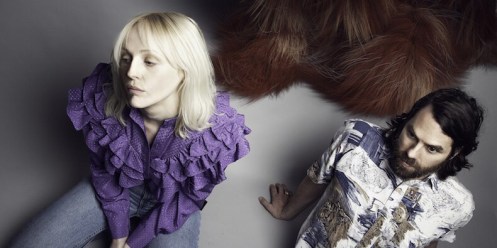
Here is some nice pre-release hype:
LUMP is a heady blend of wonked-out guitars, Moog synths and pattering drums, set against droning, coiling clouds of flutes and voices. The lyrics are inspired by early-20th-century Surrealism and the absurdist poetry of Edward Lear and Ivor Cutler – a bizarre but compelling narrative about the commodification of curated public personas, the mundane absurdity of individualism, and the lengths we go to escape our own meaninglessness.
https://open.spotify.com/album/1JeRvTLK1MjFk7VSO0LSyQ?si=_GTQFJdhSeiHKKns2xDIQA
Big Red Machine – Big Red Machine – I have been a minor fan of Bon Iver/Justin Vernon since their/his debut in 2007. But when I saw Bon Iver at Rock The Garden in the summer of 2017, I was blown away. Here was an artist to be reckoned with. I am clueless about Aaron Dessner and The National (I have tried The National, but I just can’t get hooked). I know Vernon and Dessner have been collaborators for a while now, but I don’t know the details of what they do together beyond the Eaux Claires Music & Arts Festival. This sounds like a Bon Iver album, but less weird, it is more pop and I like it a lot. Some of this could easily be remixed for the dance floor.
Neko Case – Hell – On – Hell-On is Case’s the seventh studio album. She recorded most of it in Stockholm, co-producing it with Björn Yttling of Peter Bjorn and John. On her website she states:
“I’m writing fairy tales, and I hear my life story in them, but they’re not about me,” Case says. “I still can’t figure out how to describe it. But I think that’s why we make music or write things. You’ve got to invent a new language.”
The back story is she wanted to mix things up since she traditionally works with the same people, thus Björn Yttling and working in Stockholm. As the album was being finished she got a phone call in Stockholm that her house had been burned to the ground. Although the album was almost in the can, that tragedy impacted the final product (in a good way).
Charles Lloyd & The Marvels + Lucinda Williams – Vanished Gardens (post) – Whoever’s idea it was to match up legendary jazz saxophonist Charles Lloyd with a couple of unique toned guitarists and the queen of Americana is crazy – a crazy genius that is.
Mark Knopfler – Down the Road Wherever – Mark Knopfler has been making gorgeous music since Dire Straits eponymous album in 1978. He is not about to stop now. There are not a lot of surprises here, just a master craftsman at work. This is a nice sampling of the various styles Knopfler has perfected over his career: Dire Straits rockers, Celtic fusion, folk, jazzy ballads, blues, and country. All performed with Knopfler’s usual casual excellence. One nice addition to his sound is the extensive use of horns – it is a nice pairing with Knopfler’s thick guitar tone.
And that is a wrap. Looking forward to 2019.

I have been in a Jeff Tweedy state of mind lately:
- I saw his solo show back in September
- I have been listening to a lot of Wilco over the last year after seeing them live a year ago
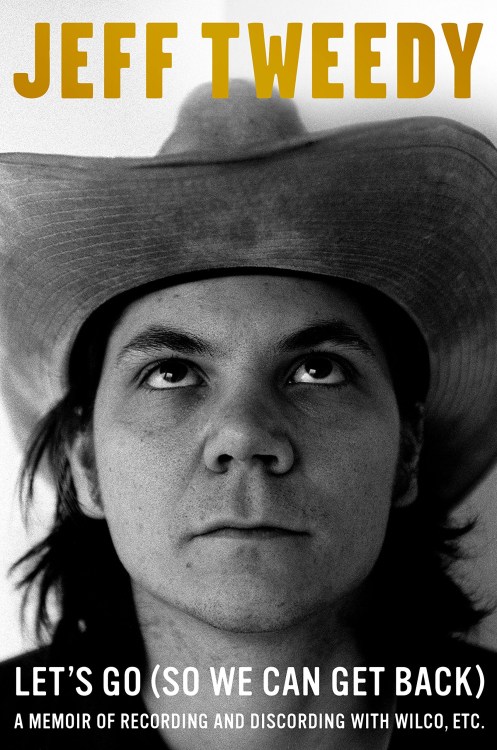
- I read his memoir Let’s Go (So We Can Get Back): A Memoir of Recording and Discording with Wilco, Etc.
- I am now enjoying his new solo release Warm.
Unlike last year’s Together at Last, which was a sparse live acoustic reimagining of his catalog, this is a full arranged set of new songs. Tweedy plays all the instruments with the exception of drums (although he even plays those on one cut). Tweedy is in full studio rat mode here with lots of cool sounds that ultimately serve the songs and are not gimmicks. This album fits in the top tier of Tweedy’s catalog (solo, Wilco, Uncle Tupelo and various side projects).
One of the things I learned about Jeff Tweedy in his book is that he loves The Monkeys as much a The Clash, space rock like Hawkwind and train engine sound effect records. That explains a lot. Yankee Hotel Foxtrot was born of that aesthetic and Warm adds to that legacy.
I wondered why a guy like Tweedy, who is the clear leader of HIS band Wilco, feels compelled to have a solo album. Especially a solo album that does not stray far from the Wilco formula. His memoir gave some insight when he talked about “the band” Tweedy’s Sukierae:
I loved making music with the rest of Wilco, but I wanted to see if I could do it alone. I’m on a need to know basis with any instrument besides the bass and guitar. But it makes me think about songwriting in a different way when I can’t just say, “Hey, Pat, do you have a piano part to put here?” Or, “Okay, Nels, this is the part of the song where your tear a hole in the space-time continuum.” My limitations as a musician make my songs feel different than when I’m relying on other people to go ahead and be great all over them.
That makes sense to me. Tweedy proves that he can be great on his own. It also makes sense why he has attracted some amazing musicians to serve his cause in Wilco.
I heard most of the songs on Warm when I saw Tweedy’s solo show in September and they engaged me right then and there. Now that the LP is released and I have been able to marinate in them I like them even more. If you like Wilco you are going to like this album.
A great example of Tweedy’s genius is “Let’s Go Rain” which I take to mean that society is due for a biblical cleansing. Tweedy juxtapositions a children’s song with a Beatlesque bridge and the end result is sublime. He did a great live version on Colbert:
The memoir is revealing, honest and entertaining. I especially appreciate that Tweedy spends plenty of time telling us who he is (warts and all) and he explains how he creates his art. I am came away from reading this with the belief that I could sit and have an enjoyable conversation with Tweedy over a cup of coffee on a Saturday morning. He seems like a regular guy who just happens to be one of the greatest singer/songwriters of his generation.
If you are a Wilco fan, find a easy chair, drop the needle on Warm and absorb yourself in the memoir. You will be satisfied.
https://open.spotify.com/album/2XTPulCL6EUx1thyJPnlmj?si=E-gscx1gQK6FXofjOq0sjg


If someone were to ask me what my favorite Dylan album is, it would depend on the day. Some days it would be Highway 61 Revisited, another day it might be Time Out Of Mind, yet another day Slow Train Coming, but on most days it would be Blood On The Tracks.
I figured the bootleg series would eventually get to the Blood On The Tracks sessions. The back story was that Dylan had the album ready to go and he got cold feet. He felt some of the songs performances were not right. The album had been recorded in NYC. The rumor was that Dylan felt some of NYC versions were too honest and that Dylan felt exposed.
His younger brother arranged a session at the premiere Minneapolis studio (Sound 80). A group of local musicians were recruited and they recut about half of the album. Satisfied with the Minneapolis versions, he scrapped about half the NYC originals and released a masterpiece that was a combination of the Minneapolis and NYC sessions.
It has been said that if Dylan had stuck to the original version of the album, it would have been even better. That has always been hard to believe, but I have always wondered. Now we have all the evidence spread across six CDs.
Blood On The Tracks has always been my favorite because Dylan’s voice is the most polished and soulful of his career (he would find this soulfulness again in his Jesus period). Lyrically, Dylan is deceivingly accessible (yet a more careful listen suggests he is in full allegorical mode). The arrangements are acoustic folk with Dylan’s guitar front and center. The album is beautifully recorded and engineered.
So what have we learned from seven hours of outtakes?
- There are not a lot of extra songs – most of the material is various takes of the songs that ended up on the album. Steven Hyden, one of my favorite music critics, has a great obsession on one of the Blood On The Tracks outtakes that didn’t make the album: “Up To Me.”
- This could have been a solo acoustic album. Dylan is a pretty solid guitar player.
- Dylan’s various takes are not radically different from what ended up on the album. But he clearly was experimenting: some of the takes are naked emotion and others are more guarded.
- The lyrics were not locked down – he was editing in the studio.
- Hearing Dylan’ several runs at the Blood On The Tracks songs is an exhibit of what a great vocalist Dylan can be. Anyone who thinks Dylan is a great songwriter, but a terrible singer needs to hear the original album and these outtakes (there is a sampler available on Spotify – see below).
- These songs are so great you enjoy hearing ten variations of them.
- In the end, Dylan made the right choices of the songs and versions to include on the released album. That is not to say he left off inferior songs or performances – he just picked the right ones for the album version of Blood On The Tracks. The legend of the lost NYC album is greatly exaggerated.
In the end, this collection is for obsessives. Several of the other bootleg releases are more essential and meaningful for the casual fan. But for me, like most Dylan freaks, Blood On The Tracks is so significant it warrants a detailed study like this.
The packaging is excellent with a book of liner notes and a second book of artifacts including Dylan’s notebooks of handwritten song lyrics.
Final point: I don’t agree with Columbia/Legacy’s decision to not release the whole six CDs of material on streaming services. The true obsessive fans are going to buy the physical collection. Make the collection available for the casual fan and for fans who can’t afford to layout $120. Plus it annoys me I have to rip and sync to listen to this album on a mobile device. If the Beatles can release their super deluxe version of The White Album on streaming services, why can’t Dylan do the same with More Blood, More Tracks? It is misguided greed and ignorance.
Sample of More Blood, More Tracks:
https://open.spotify.com/album/5faKzawYFUfk3IRRe6ERXl?si=eAGoLRhfSqOs_jrRtUBRGQ
Original album:
https://open.spotify.com/album/4WD4pslu83FF6oMa1e19mF?si=3iizNTlDSsyinOc9nU1YlQ

In general I am a music snob, but I can’t help but like Greta Van Feet (GVF). A win is a win and GVF is a win for rock. Yes, this is derivative Led Zeppelin music, but who cares now that the gods are dead? How is this worse than the derivative work of the early Dylan, Beatles, Stones and Led Zeppelin themselves? Of course, a young rock band is influenced by Zeppelin. GVF is writing and performing legit new Led Zeppelin music: imitate until you can innovate.
I have been listening to this album regularly since it came out via streaming services. I had it on my list, to get on wax. I bought my first vinyl LP from a Target store since the mid-80s. Seems appropriate it is GVF.
Pitchfork gave this a predictable low rating (1.6 on a 10 point scale), that is absurd. No, this is not the future of rock and roll, it is not some new thing; it is just fun as hell. I am ready for the GVF for AC/DC too while we are at it.
The wax version sounds great (appreciate that the Target edition is on red vinyl). It feels even more like finding a lost artifact. If you like Zeppelin, listen to this album. Don’t judge, just enjoy the guilty pleasure and play it loud.
https://open.spotify.com/album/7zeCZY6rQRufc8IHGKyXGX?si=UKHwo01PRgeJcxMAQt1xcA

Sometimes, it is easy to miss what is going on in your own backyard. My Chicago-based son turned me on to this wunderkind living under my nose. If I read the local press here in Minneapolis I would have been aware of this guy. Voted most likely to succeed by the local entertainment weekly and cover boy of a local monthly glossy.

The album was originally released a little over a year ago on a local (Minnesota) label Deck Night and more recently re-released on RCA.
Abban has an original approach to classic rock. Some reference points: Nick Drake, Jack White/White Stripes, Nirvana, Bowie and “Going To California” Led Zeppelin. He reminds me a lot of Harry Styles, but he is more impressive, in that he does not have the industry behind him. This album was created independent of the star making machine.
The album is all over the map stylistically, yet cohesive. It has hard rock moments and jangling folk moments – sometimes in the same song. If you find Greta Van Fleet a guilty pleasure, Abban has the same Zeppelin vibe but with more originality.
Here is an awesome quote from Abban that pretty much defines my own musical taste:
“I’m not so into movements or genres; it’s more the people,” he says. “It’s hard to say I’m a fan of a genre when it includes people I do and don’t react to.”
I am always blown away by debut albums where the artist comes out of the gates fully realized, Thomas Abban has a vision. Abban wrote the lyrics, the music and played most of the instruments. It is arranged and produced by Abban and Dark Pony/Deck Night. Deck Night is a fully functioning production company and record label in the Twin Cities. It was founded by producer and songwriter, Jon Herchert (AKA Dark Pony). Per the Deck Night website: Herchert “helps artist tell their stories and share those stories with the world.” Well, mission accomplished.
This is an outstanding and impressive debut album. The most striking aspect of the album is Abban’s ethereal voice. Mostly, he sings in an angelic falsetto, but he also has a gritty rock voice when he needs it. I really like the elaborate arrangements, they almost have a prog rock feel to them.
I looking forward to seeing what he is going to do next and to see what he will do live.

I saw St. Paul & The Broken Bones live when they were blossoming a few years ago. I was smitten. But I was worried about their longevity:
- Were they just a retro-soul novelty act?
- Would vocalist Paul Janeway blowout his pipes?
- As a wise man once said to my son when he was managing a band: “that’s a lot of mouths to feed boy”
But the band has endured. They have passed the five-year mark.
I was into the first album, but it was the live show I saw that hooked me. That live show was better than the LP. You could see the spark in that first LP. I never really listened to their second album. Bought it, just did not give it an attentive listen. We have tickets to see them live next March, so I figured I needed to get hip to LP number three.
Young Sick Camellia is a doozy. Full on 70s soul, before disco broke soul’s soul. Thank god for hip hop restarting the soul progression, but I digress. This has got it all: Al Green/Memphis, Boz Scaggs, Philly Soul, Curtis Mayfield, a little EWF (damn I love soul horns), even a little bit of Robert Plant, but it still has a modernist twist, I dig it.
- Paul Janeway has learned nuance, no he has mastered it. I appreciate that Janeway has toned down the vocal histrionics. He has an absolutely amazing voice. He has a once in a generation kind of voices. I love how his voice has improved and has become more varied since the debut. This guy should be bigger.
- The band’s ambition has grown. This is a well planned and executed album. It is an album and not just a bunch of songs. The album explores what it means to be an artsy kid in a redneck world. This is an album that rewards with each successive listen. It is completely approachable on the first spin, but there is enough depth that each listen reveals new surprises. You can focus on Janeway’s voice, the band, the arrangements or the recording – all are rich and rewarding. This is like a complex barrel aged beer – each sip reveals a slightly different flavor.
- Per their website:
Assigning himself the image of a camellia, the Alabama state flower, Janeway uses his lyrics as a conduit for interpersonal conversation and excision, in addition to pieces of an actual conversation with his grandfather he recorded months before his unexpected death. “I wanted to explore the dynamics and their views on life,” Janeway says. “It’s an extremely personal record—not that I haven’t written personal records before, but this is more in-depth and with a vulnerability that I was maybe scared to try. But you have to have that exposure. I think we’re in a much better place than we’ve ever been as a band. We weren’t totally confident with the ‘retro soul’ label that was thrust on us and we knew we had to explore more ground. Young Sick Camellia is the first record we’ve done that just felt right all the way through, like we’re doing us. Nothing was rushed and everything has intent.”
St. Paul & The Broken Bones have transcended the novelty act of their first album and they are the real deal – a band with a vision and the chops to pull it off. I look forward to witnessing these songs live.
https://open.spotify.com/album/4EN9bVE0g7gUvQlNdPrUhL?si=MkpyJ-hmQK2me3tH749asA
I recently read Steven Hyden’s latest book, Twilight Of The God’s: A Journey To The End Of Classic Rock. This book is a meditation on classic rock in light of the fact that the original practitioners are dying off. One of my insights after reading Hyden’s book is that classic rock will live on in the hands of younger disciples. Bands that start out as tribute bands or highly derivative bands can evolve into their own thing (so there is hope Greta Van Fleet can find their own voice).
A case in point is the local Twin Cities band, The Belfast Cowboys. They are predominately a Van Morrison tribute band. They mix in originals and inspired covers (the show I saw included The Replacements’ “Can’t Hardly Wait”). Even their Van covers had their own unique flavor. Ultimately, they are more than a tribute band – they are a neo-classic rock band.
When the “gods” are gone these inspired disciples will carry on. No different from what the Stones did with the blues in their youth. As Dylan says:
“Steal a little and they throw you in jail
Steal a lot and they make you king”
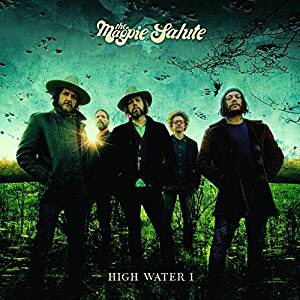
Which brings me to one of the Black Crowes’ founders, Rich Robinson and his latest band Magpie Salute.
The Crowes were a mix of the Stones, Aerosmith, The Allman Brothers, The Grateful Dead, The Band, etc. The Brothers Robinson have split and I doubt we will ever hear from the Crowes again, but the upside is that we now have two rivers were there once was only one.
Rich Robinson, whether with the Crowes, solo or now with Magpie Salute, is creating fresh classic rock. He is standing on the shoulders of giants and not mimicking his hero’s, but honoring them by make new music “in the tradition.”
Rich Robinson has combined former Black Crowes guitarist Marc Ford and bassist Sven Pipien with guys from his solo career: vocalist John Hogg, keyboardist Matt Slocum and drummer Joe Magistro.
This music explodes with rock and roll swagger. If you are tired of the same old classic rock songs, but want that same spirit in something fresh, give this band a spin. Don’t look back, I have seen the future of classic rock and I like it.

If I told you that a politically conservative magazine and website (founded by the icon of American political conservative thought: William F. Buckley Jr.), has one of the best music podcasts I have heard, would you believe me?
Another music podcast I enjoy (Steven Hyden’s Celebration Rock), had an episode titled “Can Liberals and Conservatives Still Bond Over Music?” That episode introduced me to Jeff Blehar, one of the hosts of the Political Beats podcast. He was such an engaging guest and obvious music nerd I was compelled to check out Political Beats. By the way, yes liberals and conservatives still can bond over music.
I have listened to a half-dozen or so episodes of Political Beats and I am hooked. Hosts Scot Bertram and Jeff Blehar invite political journalists and pundits from the right and left to talk about their favorite bands/artists. The basic concept is to talk through a band/artist’s discography. The two hosts and guest, nerd-out album by album. The guest is a super fan of the featured band/artist. So far Scot and Jeff seem to be super fans of everything. I assume I will get to an episode where they show some ignorance, but so far these guys are pretty damn amazing music fanboys.
I listened to a recent episode where they shook up the formula – the guest was the subject itself: David Lowery of Camper Van Beethoven and Cracker discussing the band’s discography along with some tantalizing anecdotes from the two band’s history.
The episodes are roughly two hours, but it is the kind of show you can break up, for example, after each album discussion. I have yet to hear them get political – they stick to the music despite the sponsorship of a political magazine.
My recommendation is that you look through their archive and pick a band/artist that is dear to you and give it a listen. If you are a music head this will be right in your sweet spot.


