
Allan Sparhawk (Low) on Pitchfork’s Instagram recently reminded me how great this album is. He rated it 10 out of 10.
You could not have been alive in the summer of 1978 without being aware of The Cars’ “Just What I Needed” and “My Best Friend’s Girl.” At the time, I was a budding music snob and looked down my nose at their music – considering it bubblegum. But they were a guilty pleasure. I didn’t own the album back then, so I did not know the rest of the album beyond the two hits above, plus “Good Times Roll,” “You’re All I’ve Got Tonight,” and “Bye Bye Love.” Given the cost, you had to prioritize your album purchases in those days. No reason to waste money on something that could easily be heard on the radio. In recent years, I picked up a cheap vinyl copy for my collection.
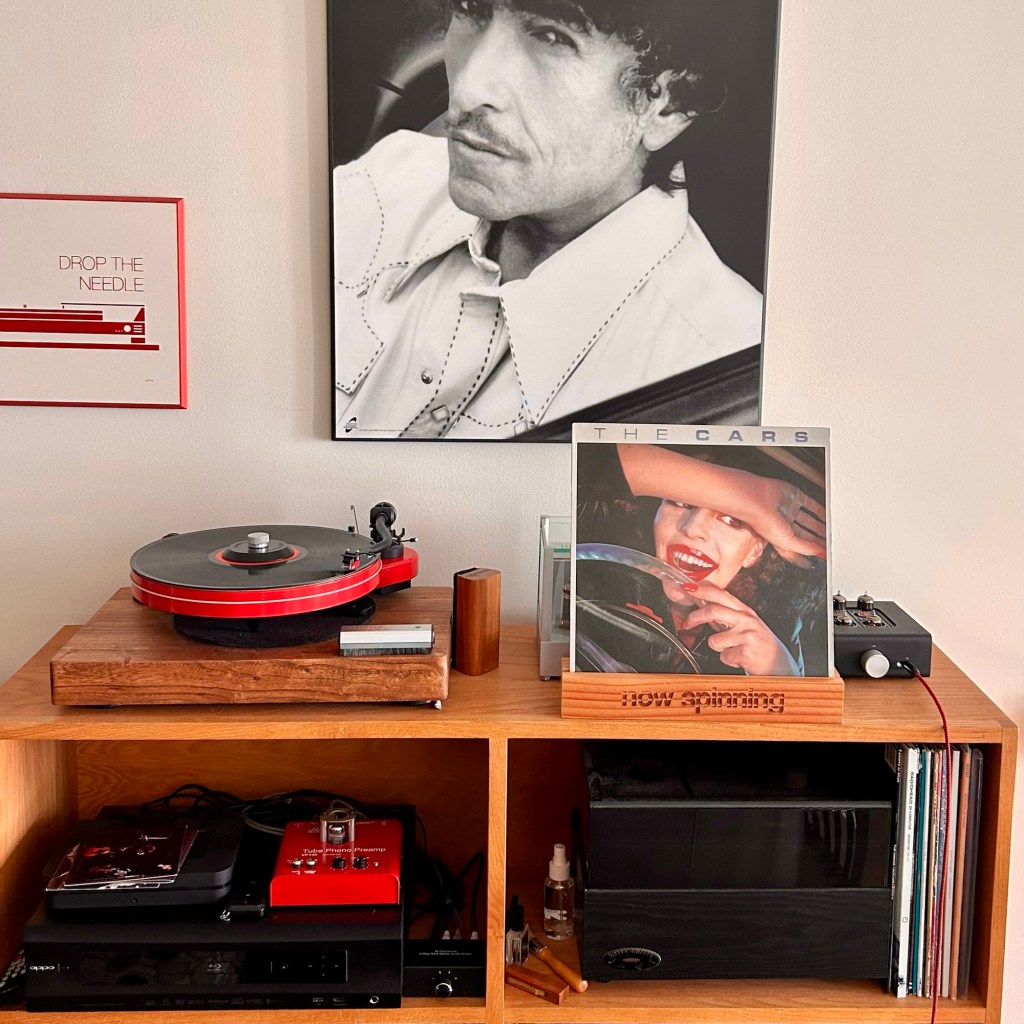
The Cars had an incredible five-album run from 1978 through 1984. But this 1978 debut brilliantly captured what would happen to music in the 1980s. They defined New Wave music. In hindsight, I have underrated their greatness.
Music critic Robert Palmer, who has written for The New York Times and Rolling Stone, described the Cars’ musical style as follows: “They have taken some important but disparate contemporary trends—punk minimalism, the labyrinthine synthesizer and guitar textures of art rock, the ’50s rockabilly revival and the melodious terseness of power pop—and mixed them into a personal and appealing blend.”
Side One of the album opens with an incredible three-song sequence: “Good Times Roll,” “My Best Friend’s Girl,” and “Just What I Needed.” Three hits in a row! The next song, “I’m In Touch With Your World,” takes The Cars formula, slows it down, and goes for quirky. “Don’t Cha Stop” felt like it could have been a hit, but it was just a touch less catchy than the hits.
Side Two opens with a one-two punch of “You’re All I’ve Got Tonight” and “Bye Bye Love”—more hits. “Moving In Stereo” is the coolest non-hit on the album. It has a spooky pop-Velvet Underground vibe. “All Mixed Up” closes that album with a completely different vibe—more of a 60s psychedelic sound. It seems a bit out of place on the album, but it is still a good song.
This is a fantastic debut—it has a bunch of hits, and the non-hits are quality deep tracks that are not filler. If you could only have one The Cars album, this would be it.
On October 29, 2024, I had my second open heart surgery to replace an artificial aortic heart valve (tissue) that was installed in 2011 (this blog was started during my recovery from that surgery). I am recovering and grateful to the medical technology that fixed me and the Abbott Northwestern/Minneapolis Heart Institute medical professionals who cared for me. I am also thankful to family and friends who helped, worried and prayed for me. Most of all, I thank my wife, Laura, my primary caregiver and, more importantly, the love of my life for over four decades.
Here is the background:(warning: some of the images below may bother some readers)
In my late 40s, I was diagnosed with a bicuspid aortic heart valve. The bicuspid valve was something I was born with and never knew was an issue until it was diagnosed. I had no cardio problems; I ran at least a marathon annually. However, as part of my annual exam, my doctor noticed that my EKG was not right and referred me to a cardiologist, who, in turn, diagnosed a bicuspid aortic valve. Once diagnosed, the plan was to check it annually via an echocardiogram and other tests. The assumption was that, at some point, the bicuspid valve would need to be replaced with an artificial valve.
Bicuspid valves are highly susceptible to stenosis (a thickening and narrowing of the valve that restricts blood flow) and/or aortic regurgitation (blood flow leaks backward into the heart due to the stenosis). This can also happen to normal tricuspid valves, but bicuspid valves are more susceptible to issues. The annual check-ups would monitor the progression of stenosis and regurgitation. Between yearly check-ups, the cardiologist said to watch for “diminished performance.” I asked, “What the heck does that mean” and he assured me that as a runner, I would notice (slower times, shortness of breath, etc.).

In the summer of 2011, I noticed “diminished performance.” I made an appointment with my cardiologist, and between a fresh echocardiogram and my symptoms, he declared it was time for surgery to replace my valve, and he hooked me up with a thoracic surgeon.
The surgeon explained my options: a mechanical or tissue valve (derived from a pig or cattle). He also noted that in addition to the bicuspid valve, I also had a weak aorta – a common genetic defect when you have a bicuspid valve. When you hear about a marathoner who dies at the finish line, it is usually because they had an undiagnosed bicuspid valve and weak aorta that ballooned and exploded (aneurysm) under the stress of the marathon. I had been lucky that never happened to me. As part of the valve replacement, he would replace the aorta with a Teflon pipe (my terminology, not his). The pros of mechanical valves are that they last a very long time. However, they require blood thinners that, in essence, make you a hemophiliac (mechanical valves also have an annoying clicking sound). A tissue valve does not require blood thinners (or any drugs to support it) and doesn’t click. However, they only had a useful life of 10-15 years, at which point you need to have it replaced. Given my active lifestyle, I decided on the tissue valve, knowing that if I lived long enough, I would likely need to replace it twice. Whether tissue or mechanical, it would be a significant surgery (crack your chest open) with a 6-week recovery.
On September 1, 2011, I had the surgery. The first few weeks were tough – recovering from having your chest cracked open was the issue, not the actual valve and aorta replacements. However, as each week passed, I felt better, and by the 6-week mark, I felt fantastic – my cardio fitness felt like I was a young man again. I could jog a mile.
Fast forward to this past summer, and I started to feel that “diminished performance” (shortness of breath) again. At the end of July, I got COVID – it was a minor case, but I developed asthma-like symptoms. At my annual cardiology appointment (September 4), it was determined that my artificial valve was showing some wear, but not significantly from prior years. There was concern that perhaps I had some arterial blockages that were causing the shortness of breath issue, so more testing was ordered. It was suggested that my asthma-like symptoms could be related to my heart. As the weeks went by, my shortness of breath got worse and worse. I also retained water (my ankles were swelled, and my stomach felt bloated). An angiogram determined that my arteries were not the issue but that my artificial valve was now quickly failing and that it would need to be replaced as soon as surgery could be scheduled. The replacement would need to be a surgical valve replacement – meaning open-heart surgery again. When I got my first valve in 2011, I had hoped that by the time I inevitably needed a new valve, I would be able to fix it with the less invasive transcatheter aortic valve replacement (TAVR) solution. Unfortunately, given my age and general good health, a TAVR was not in the cards for me – but next time (hopefully 15 years from now), I will be a TAVR candidate.
The new valve is an Edwards INSPIRIS RESILIA aortic valve. It is a bovine (cattle vs. pig) pericardial tissue valve. The beauty of new valves is they are specifically designed to be “replaced” by a transcatheter aortic valve replacement (TAVR) down the line. The Edward valve is designed to have a TAVR slip inside of it.

I was initially scheduled for surgery on November 12. I met with the surgeon on October 23, 2024; she was concerned about my escalating symptoms (I was now getting shortness of breath merely walking across the room, could not lay prone, and could barely make it up a flight of stairs). She ordered a new echocardiogram to look at the state of the valve. A few days later, I got the echo, and when the surgeon saw the results, she immediately called me and said, “You are coming in tomorrow!” My valve had significantly deteriorated since the last echo in early September. This was good news to us, as we were getting pretty spooked by my quickly deteriorating condition.
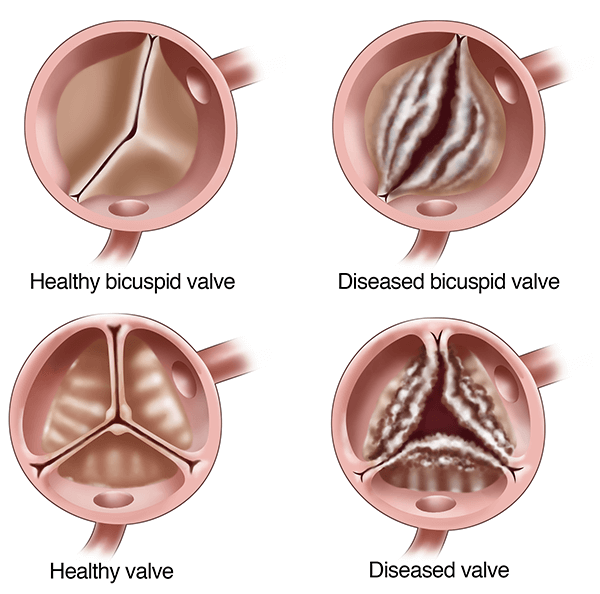
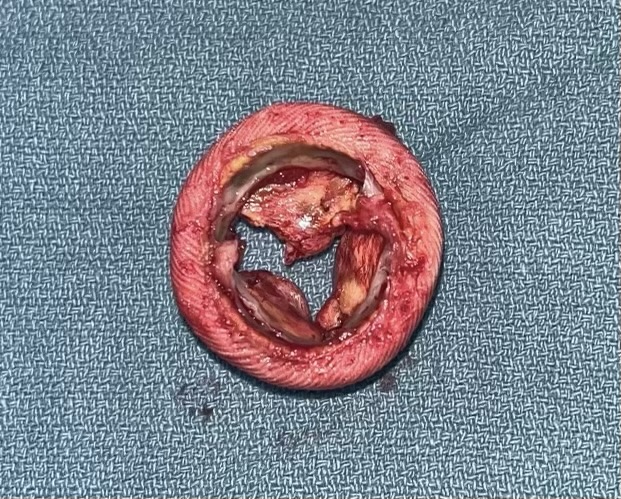
Surgery was on October 29, and sure enough, the old artificial tissue valve (which was porcine, AKA pig) was in awful condition. Below is a stock picture of what the valve looked like when it was first installed and a photo of what it looked like after removal by the surgeon. The significant gaps in the “after” photo are why I had so much trouble breathing. It turns out that the St. Jude Trifecta valve I had installed has been taken off the market as it has not performed as well as its competitors. My surgeon said I was lucky to get thirteen years out of it – most were failing at the eight-year mark.

I woke up in the ICU at about 9:00 AM on October 30 to begin my recovery. I felt about the same level of awful as I remembered from 2011. However, the next several days in the hospital were rougher than I recalled from 2011 (as a dear friend says, “A remodel is messier than new construction”). I assume that is because I was 13 years older and in a much weaker state entering surgery in 2024 compared to 2011. I had intestinal problems in reaction to drugs, and I had a couple of atrial fibrillation (Afib or AF) incidents. I was well enough to be released from the hospital in the early evening on Monday, November 4, 2024 (I was in the hospital for seven days).
As I write this post, I am two weeks past the surgery date, and I am recovering nicely. I have lost twenty pounds – primarily due to my heart condition causing me to retain water. The asthma-like symptoms have disappeared, and the water retention is fading (ankle swelling is decreasing, and stomach bloating is diminishing). My cardio is getting stronger (I can walk about a half mile, and I am getting less winded on stairs, and soon, I will start formal cardiac rehab). I have not been on narcotics since I was in the hospital – I can manage the pain with Tylenol – and the pain is a bit less as each day passes. I am on a bunch of drugs to manage potential Afib, stroke risk, water retention, blood pressure, cholesterol, etc. Hopefully, most of these drugs will not be necessary in a few months.
So, this second open heart surgery was a success. I am particularly grateful to my thoracic surgeon, Dr. Sarah Palmer, for escalating my surgery—I am not sure I would have made it to November 12, 2024 (the original surgery date). I am hopeful that I live long enough to require a third replacement valve, and that will be the less invasive TAVR solution.
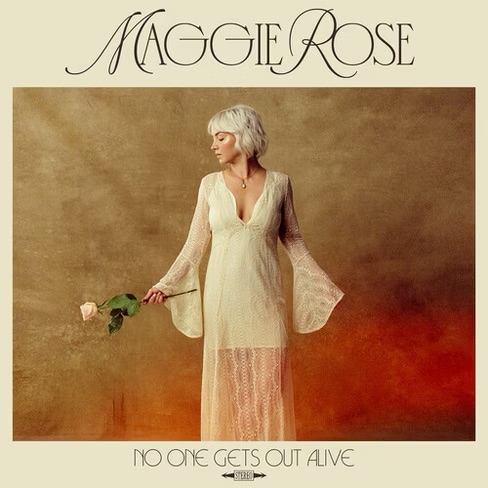
I was introduced to Maggie Rose at the Sacred Rose Festival (Chicago) in the summer of 2022. I found her an engaging performer. However, she was a bit hard to categorize: Was she country, Americana, soul, pop, or rock? After seeing her live, I checked out her recordings, which were meh. When No One Gets Out Alive came out in April of 2024, I gave it a listen on streaming, and I was instantly smitten. It was a throwback to the late 70s Laurel Canyon singer-songwriter vibe I grew up on. I have consistently returned to the album since it was released, and it will be on my Top-10 for 2024. It recently received a Grammy nomination for best Americana album.
Rose has a great voice (I would put it in the Linda Ronstadt category of greatness), but the magic here is in combining her powerhouse vocals with great songs and gorgeous and rich arrangements.
The album is produced by Muscle Shoals FAME-trained producer, audio engineer, mixer, and musician Ben Tanner. The band on the album is guitarist Sadler Vaden and drummer Chad Gamble from Jason Isbell’s 400 Unit, keyboardist Peter Levin (Amanda Shires, Gregg Allman), bassist Zac Cockrell (Alabama Shakes), keyboardist Kaitlyn Connor and guitarist Kyle Lewis from Rose’s band. I can’t emphasize the great sound that comes out of this ensemble.
In a Billboard article shortly after the album’s release, Rose says: “The theme of this record is using this finite amount of time well while we have it.” According to Billboard, she was in a reflective mood as she wrote and recorded the dynamic work, having gone through the pandemic, seen some friendships come to their natural conclusion, and lost her best friend’s dad to cancer. “All these things that made me feel connected to my community were gone,” she says.
The album has no bad tracks, but if you have commitment issues and only want to listen to one song, I recommend the first/titular track: “No One Gets Alive.”
If you are a fan of Linda Ronstadt, Bonnie Raitt, Dusty Springfield, Shelby Lynn, and ambitious studio arrangements, you will like this album. In the late 1970s, this would have been a hit album.
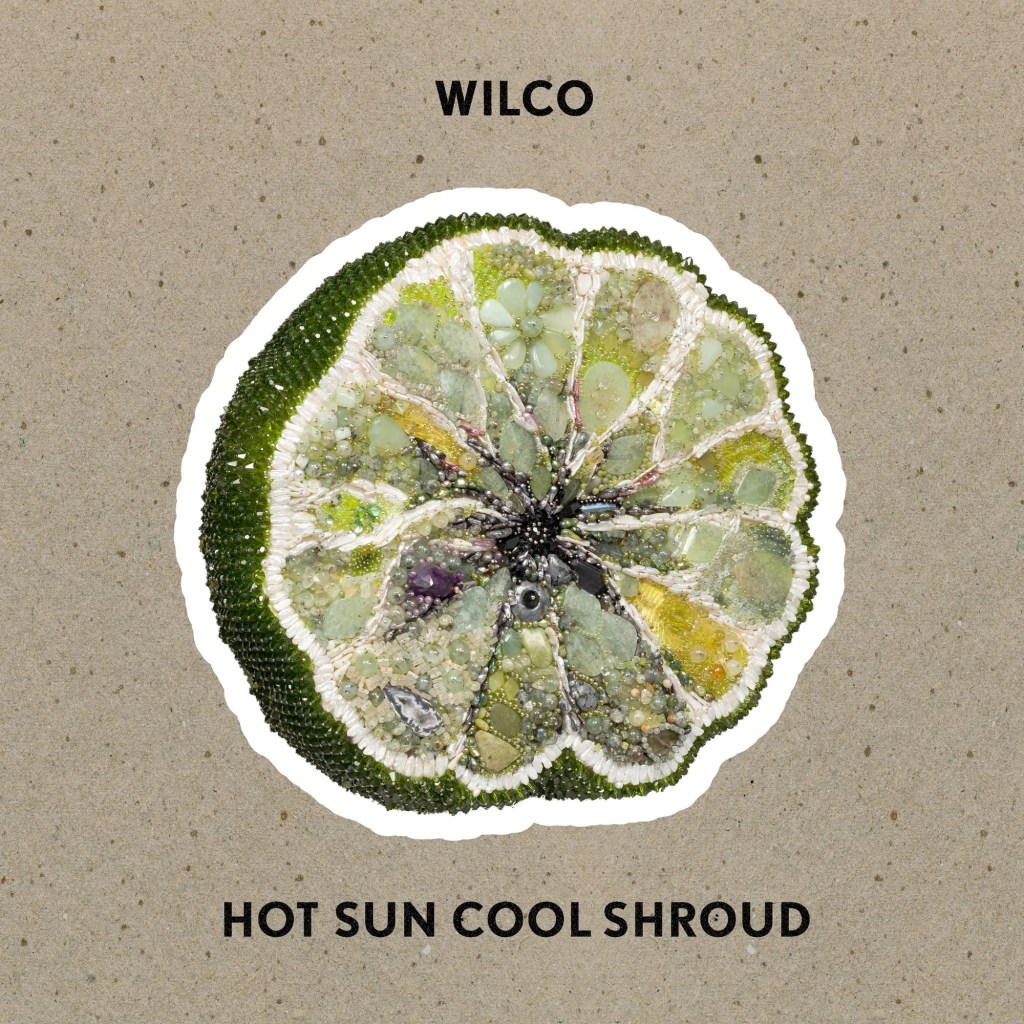
This six-track EP (a mere 18 minutes) is a collection of leftovers from Wilco’s last album, 2023’s Cousin. They were demos that were then finished by Jeff Tweedy and engineer Tom Schick. Wilco sold an exclusive white vinyl Hot Sun Cool Shroud pressing at their Solid Sound festival, and CDs will be available for sale later this year. For now, the rest of us can enjoy the EP on streaming (for me, that means 24-bit/96 kHz FLAC on Tidal).
I liked Cousin. Although it wasn’t an innovation for Wilco, it was a perfection of what they do best. In my Cousin review, I said:
“Sonically, this album is a mature update of the Yankee Hotel Foxtrot aesthetic. There is a bias toward the prettier side of Wilco – which is prettier than ever.”
Per Tweedy on this EP:
“This year we’re putting out an EP with a summertime-after-dark kind of feeling. It starts off pretty hot, like heat during the day, has some instrumentals on it that are a little agitated and uncomfortable and ends with a cooling breeze. There are tracks on Hot Sun Cool Shroud that are more aggressive and angular than anything we’ve put out in a while, and a song about love melting you like ice cream into a puddle of sugary soup. All the pieces of summer, including the broody cicadas.”
“HOT SUN” is lyrically simple: a day so hot you are motivated to nothing. Musically, it is classic Wilco: gorgeous melody, cool riffs, folk-rock arrangement, and a gust of guitar squall.
“LIVID” is a short noise rock instrumental.
“ICE CREAM” – is a mellow atmospheric lullaby. The lyric starts out simple:
“When I first saw you
You said I was cool
Enough to be
Ice creamYou melted me
On the floor…”But things get more complicated from there, and it seems to be about a relationship in which each party disappoints the other.
“ANNIHILATION” is an upbeat rocker sonically. Lyrically, it is darker: a kiss that destroys, and the lovers are okay with that devastation.
“INSIDE THE BELL BONES” is another noisy instrumental.
“SAY YOU LOVE ME” is a pretty Beatlesque ballad. It is a beautiful reminder that despite someone unique being gone, that person’s light remains. This is the gem of the album.
This EP is a nice little treat of Wilco—a Cousin desert.
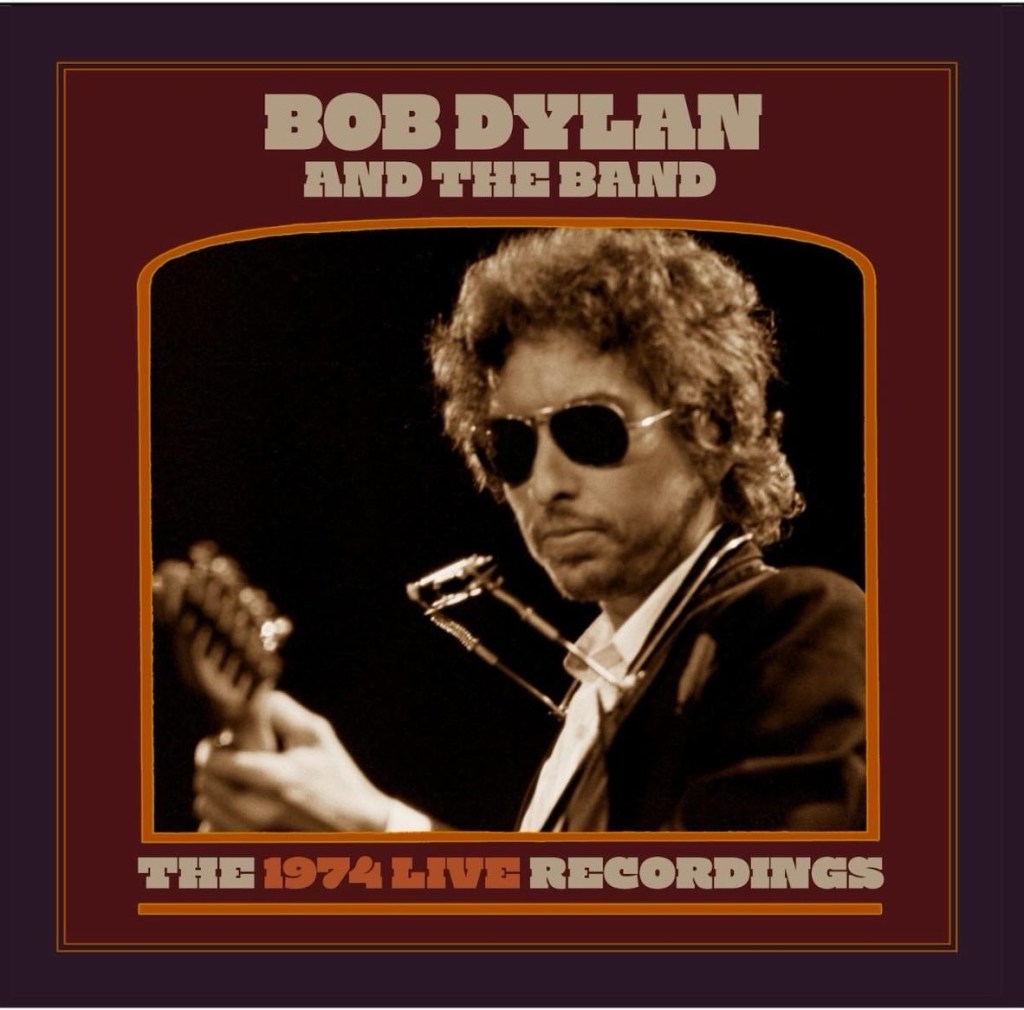
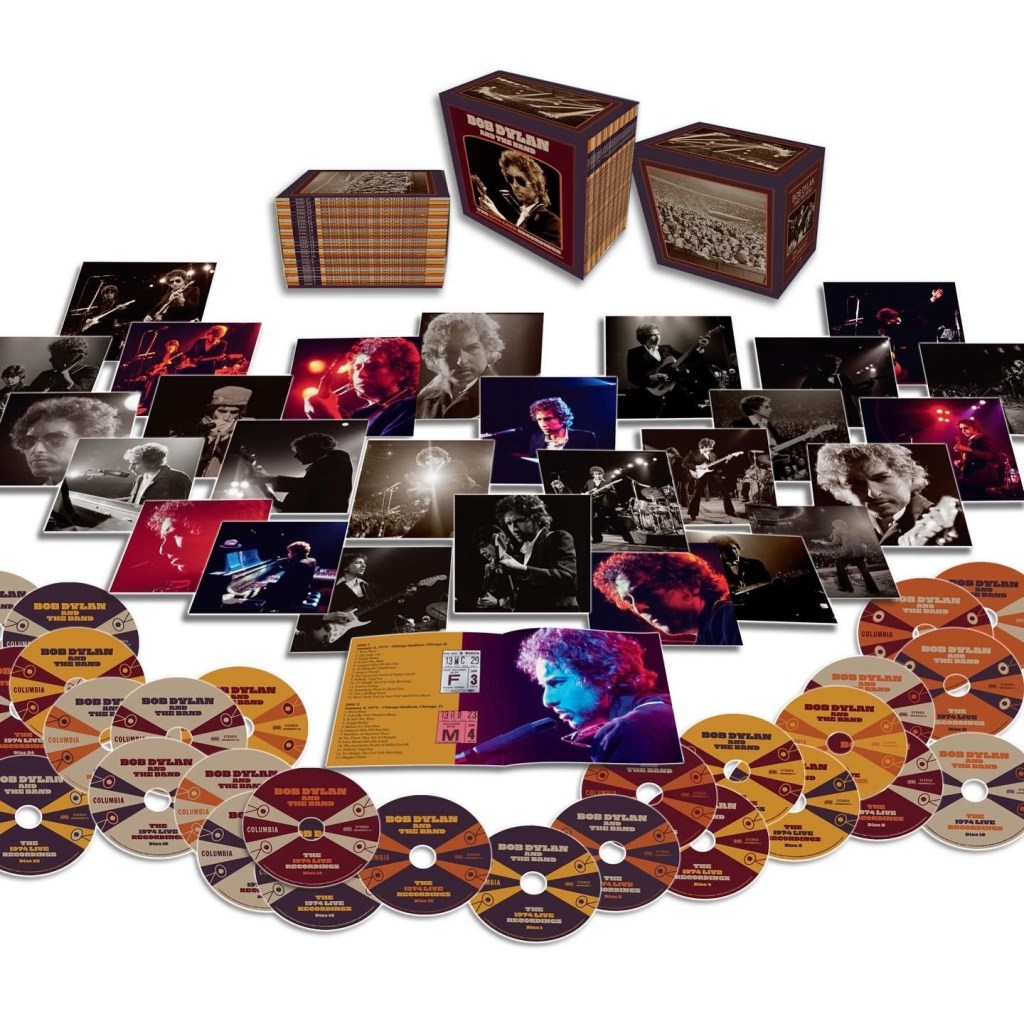
This box set is for Dylan’s obsessives: 417 tracks across 27 CDs of every surviving soundboard recording (and multi-tracks of later shows for a live album) of Dylan’s legendary 1974 comeback tour backed by The Band. Until now, the tour was captured on the live album Before The Flood – a double LP released in the summer of 1974 just a few months after the tour ended. There are also bootlegs of the shows from audience tapes. I am a longtime fan of Before The Flood but have never heard the audience tapes.
Dylan had toured with The Band in the mid-60s, but by the end of 1966, he was burned out from being the “voice of his generation,” blowback from going electric, a motorcycle accident, getting married, and having a young family. It all kept him off the road. He was musically active, releasing seven studio albums during this period.
Unlike Before The Flood, The 1974 Live Recordings does not include any of The Band’s material. At each show, The Band performed a set of their songs (they were a pretty big deal on their own in 1974). This is an unfortunate omission – at the very least, they could have included a one-CD best of The Band with Dylan 1974 – I assume it is a licensing issue.
This box set will take me a few months to digest. Fortunately, I have Ray Pagett’s Subtack, Flagging Down the Double E, which has a great piece called “A Show-By-Show Listening Guide to Bob Dylan’s Massive ‘1974 Live Recordings’ Box Set” to help guide me.
My initial impressions are:
- I love the acoustic sets
- Dylan’s voice is in top form – he sings in several voices depending on the song
- The Band is a fantastic backup band for Dylan
- Great setlists – it shifts – songs come and go, and the order changes – it is a nice cross-section of his career to that point – includes hits and deep cuts
- These are not pristine audiophile recordings – they sound better than an audience tape from the period, but not as good as an intentional live recording that was multi-tracked – plus, technology has advanced so that contemporary soundboard recordings (like what you find on Nugs.net) sound great – we are now spoiled. These performances are so good that they are worth a little muddiness and an occasional haphazard stereo mix. An exception is the solo acoustic sets – the simplicity of guitar voice (and occasional harmonica) is fairly treated by the soundboard tapes*.
*From the box set’s liner notes:
“The promoters realized this tour would be worth documenting, so many of the shows were officially recorded via a stereo soundboard mix, on both ¼” tape and cassette. By the end of the tour, Asylum Records recorded the proceedings on multitrack tape, which was the standard at the time for live recording that would be released as an album. This box includes all of those cassettes and ¼” tapes. Additionally, it includes the shows that were recorded on 16-track tape, which have been newly mixed for this collection. It was decided not to include the audience tapes that circulate as bootlegs because of their vastly inferior sound quality. Also, a note about the stereo soundboard tapes – soundboards, by their very nature, are not an optimal way to listen to a live show. These tapes were not mixed for audience consumption, and little can be done to change that. However, the recording quality is such that we felt we should include them as a document of this once-in-a-lifetime event.”
Given the breadth of this box set, I will not be giving a formal review now. However, having this critical milestone in Dylan’s career fully documented is excellent for diehard fans like me.
A 20-song sampler is available on streaming services, but if you want the whole thing, you must buy the CD box (a vinyl version would be absurd). Fortunately, it is reasonably priced – the CD box is a mere $130 – currently even less on Amazon, but I prefer to support local independent record stores even if I have to pay more.
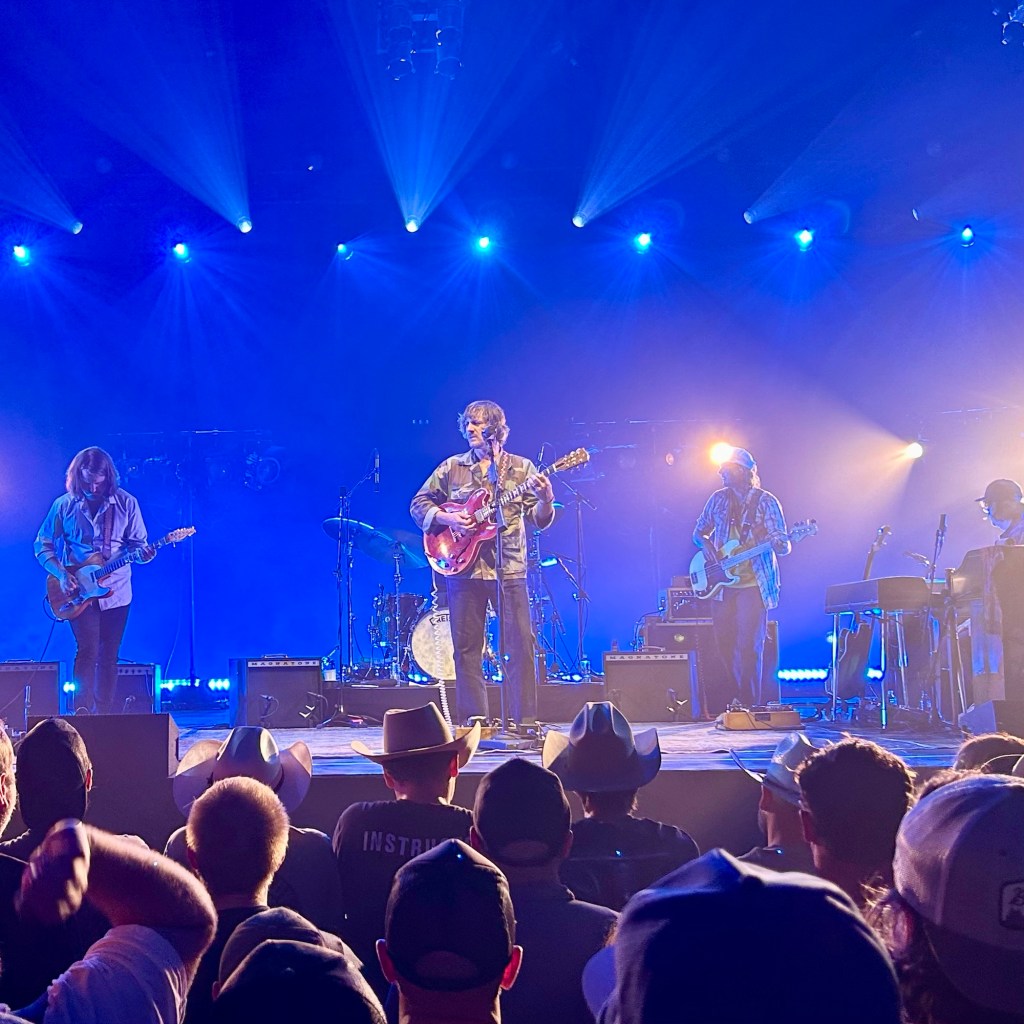
This was a great show—the best show I have attended this year. But I almost did not go because of the venue. Roy Wilkins Auditorium, AKA “The Roy,” rivals US Bank Stadium as the worst-sounding venue in the Twin Cities (it is bad enough that it has not been used as a concert venue for several years). Sturgill was stuck playing there because the more appropriate venue, The Armory, had been previously booked by pop star Gracie Abrams. The Roy lived up to its bad reputation for the Sturgill Simpson show, but Sturgill is such a great performer that he transcended The Roy. I suspected Sturgill could pull off this magic trick as the new album is excellent, and he is a great live performer. He doesn’t tour much (it has been eight years since he played in the Twin Cities), so I didn’t want to miss the opportunity. The show sold out instantly (I am not the only one in town “in the know” regarding Sturgill’s greatness).
Sturgill is a no-nonsense performer. He played on a stark stage for three hours with his four-piece band (drums, bass, guitar, and a keyboard player who could also play the sax) – Sturgill is a heck of a guitarist himself – he shredded! There was minimal stage banter, and most songs segued into the next song. Except for his rock album Sound & Fury (2019), Sturgill comes across as an alt-country/Americana singer-songwriter on his recordings, but in concert, he is a rocker (maybe even a jam band rocker). He played a nice cross-section of his catalog and some inspired covers. Each album has a different flavor, but he made their variety seamless in concert.
One of the most incredible things Sturgill and the band did was to start a song with a ZZ Top riff (”La Grange”) as an intro to his Sound & Fury song “A Good Look,“ which then transitioned to The Doors’ “L.A. Woman.” It was an epic fifteen-minute jam. Later in the show, he nodded to the Southern Rock masters The Allman Brothers Band with a cover of “Midnight Rider.” In Minnesota, we are used to being patronized with a cover of Prince’s “Purple Rain,” but Sturgill just likes the song, as I have seen it on this tour’s setlist in other cities. He performed “Purple Rain” at The Roy in Sturgill Simpson style—I didn’t initially recognize it.
As for his songs, he rocked up the yacht-rock meets the Grateful Dead songs from his new Johnny Blue Skies’ Passage du Desir, which was a fun interpretation. The rest of his catalog mostly took a rock approach, but there were some great country moments, too. Overall, the show was much more jammy than the last time I saw him, which fit Sturgill’s new songs and created an excellent concert vibe.
Sturgill’s vocals sounded fantastic despite his rupturing his vocal cords in 2021—he appears to be fully recovered. His band is tight and can easily switch between country and rock. Sturgill has a shy charisma, which is pretty engaging.
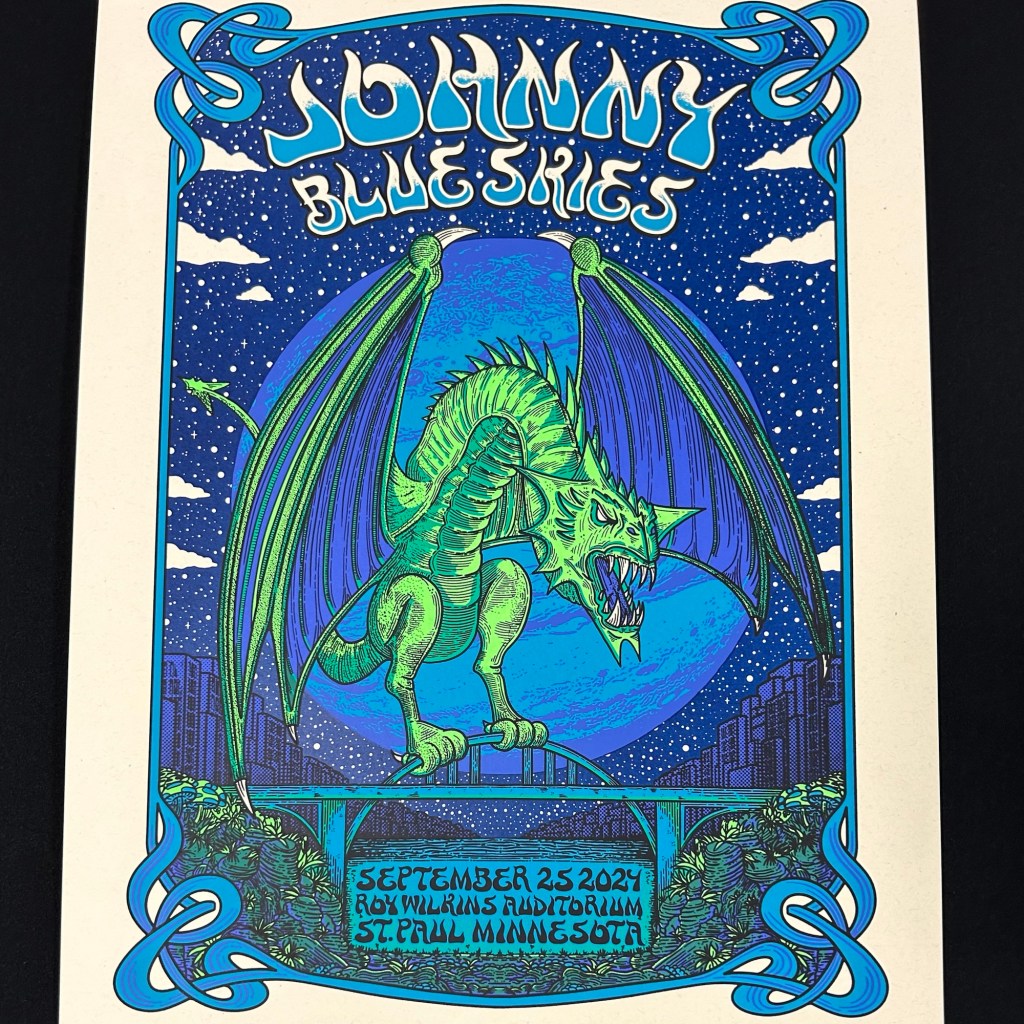
Shout out to poster artist Danny Evans for an epic gig poster:
One more thing. The ticket said an 8:00 start, and damn, it started on time! I love that.
Set List:
- Juanita
- Life of Sin
- Turtles All the Way Down
- Railroad of Sin
- The Promise – a When in Rome cover
- A Whiter Shade of Pale – a Procol Harum cover)
- Time After All
- I’d Have to Be Crazy – a Steven Fromholz cover – made famous by Willie Nelson
- Right Kind of Dream – a Johnny Blue Skies song
- All Said and Done
- Long White Line – a Buford Abner of the Swanee River Boys cover
- Fastest Horse in Town
- Mint Tea – a Johnny Blue Skies song
- If the Sun Never Rises Again – a Johnny Blue Skies song
- A Good Look – with a ZZ Top intro
- L.A. Woman -a The Doors cover
- Welcome to Earth (Pollywog)
- Best Clockmaker on Mars
- I Don’t Mind
- You Don’t Miss Your Water – a William Bell cover made famous by Otis Redding and also The Byrds in their country phase
- Living the Dream
- One for the Road – a Johnny Blue Skies song
- Purple Rain – a Prince cover
- Just Let Go
- Jupiter’s Faerie – a Johnny Blue Skies song
- Scooter Blues – a Johnny Blue Skies song
- Brace for Impact (Live a Little)
- It Ain’t All Flowers
- Water in a Well
- Midnight Rider – a The Allman Brothers Band cover
- Call to Arms
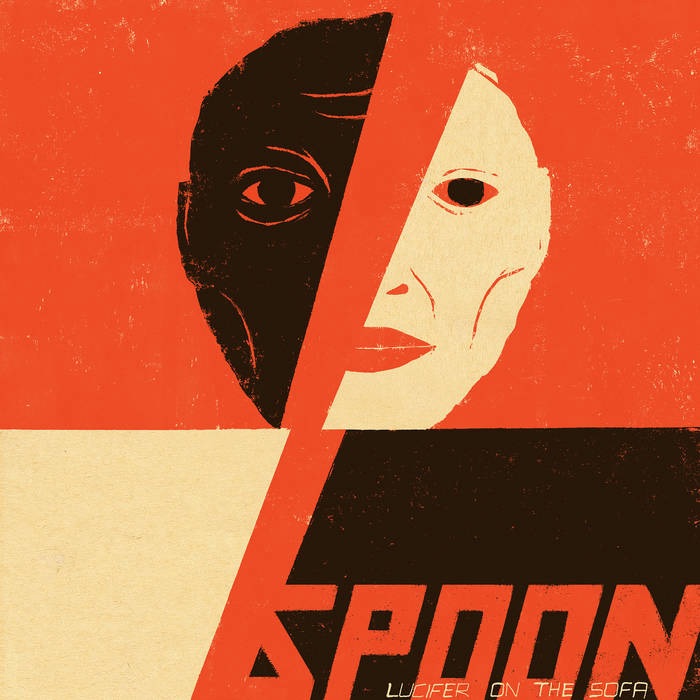
Lucifer On The Sofa
2022
Spoon has been around for over thirty years. I am neither a fan nor a hater, and I have a few of their albums in my collection, but they have never truly clicked for me. In festival situations, I found them engaging live. One of my daughter’s coworkers requested that I review this album.
After listening to the album for the first time, my first impression of Lucifer On The Sofa is a pretty impressive album by a band three decades into their career—a rarity for a tenth album in a successful rock career. Googling, you learn Lucifer on the Sofa received widespread critical acclaim (an impressive 85 on Metacritic) and was nominated for Best Rock Album at the 65th Annual Grammy Awards (2023 – Patient Number 9 by English Ozzy Osbourne won).
Even the band themselves had a sense they were on to something. Per the band’s website:
“Spoon’s tenth album, Lucifer on the Sofa, is the band’s purest rock ’n roll record to date. Texas-made, it is the first set of songs that the quintet has put to tape in its hometown of Austin in more than a decade. Written and recorded over the last two years –both in and out of lockdown –these songs mark a shift toward something louder, wilder, and more full-color.”
Enough of what others think; what do I think? I have always admired Spoon’s frontman, Britt Daniel. He has a cool rock voice and epic guitar riffs. This album perfectly displays both. It is a guitar-forward rock album, and it resonates with me in a way that no other Spoon album has. I appreciate that I was prompted to listen to it; otherwise, it would never have been on my radar. It is an impressive late-career statement from the band.
The opening track, “Held,” has an enormous aggressive rock riff. In juxtaposition to the riff, the lyrics are about emotional surrender.
“The Hardest Cut” is another nice riff, this time bass-forward. It has excellent guitar solos. Lyrically, the narrator is dreading a life change.
“The Devil & Mister Jones” sounds like Hall & Oats if they were an edgy indie-rock band. Mister Jones is a recurring character in pop/rock music (for example, Dylan’s “Ballad Of. A Thin Man”. Per Britt:
“I’m super aware of the legacy of songs about Mr. Jones. I thought about it for half a second and then I decided I do like the idea of contributing to the canon of that work. I’ve heard so many of them and I don’t think I’ve heard one that I didn’t like yet. Mr. Jones never seems to be a good guy, does he? And the guy in my song definitely is a bad man.”
Spoon’s Mister Jones is a charismatic grifter compared to Dylan’s uptight square. Given this album’s orange branding, it is hard not to think of Trump as Mister Jones. A bonus is Steve Berlin’s (Los Lobos) baritone sax. Double bonus: this song is danceable.
“Wild” was co-written by Jack Antonoff and Britt Daniel. Anonoff’s claim to fame is song co-writing and production work with female pop artists like Taylor Swift, Sabrina Carpenter, Lana Del Rey, and many more. The song has a beautiful 80s new wave vibe.
“My Babe” slows the pace; it starts as a ballad and then revs up to a full-on rocker. Lyrically, the narrator is in an emotional rut, and then his lover shakes things up – in a good way.
“Feels Alright” sounds like it could be an Oasis hit – a nice punchy pop-rock tune. Per Daniel, the song is
“…about feeling good and feeling alive, about the great feeling you have about a really great night. It’s not super deep, but if I think about it more, I’m writing about when I was young.”
“On the Radio” is about the power of music and the medium it used to be delivered (radio). I am old enough to remember when radio and music were synonymous (and symbiotic). I no longer know anyone who listens to terrestrial radio for music. This ends up being a sentimental song about an old paradigm.
“Astral Jacket” has a dreamy Beck feel: it sounds like searching. I’m not sure what an Astral Jacket is, but my guess is some kind of transport to a higher place.
The sonics of “Satellite” sound out of place with the rest of the album. This song has been a part of the band’s live repertoire since 2014. It is not a bad song, it just doesn’t fit the aesthetics of the rest of the album.
“Lucifer On The Sofa” is a cool title and an interesting image. Sonically, it returns to the aesthetics of the rest of the album. I struggled to understand what the song was about. There are several references to Austin, Texas (the band’s HQ). Fortunately, Daniel has this quote about the song to help reveal its meaning:
“That Lucifer on the sofa, it’s the worst that you can be, that you can face in times of stress. It’s a part of yourself you have to deal with. It’s a representation of bitterness or loneliness, and it’s that thing that can keep you on the couch and maybe doing nothing for a week, self-indulging. So, this song, to me, is about the battle between yourself and that character you can become.”
This is an excellent album, and I am surprised that, with all its critical acclaim, I missed it. But there is so much great music in the world it is easy to miss a masterpiece. Spoon is not the first band that I became a fan through their late era catalog, for example I also became a fan of The National and the Drive-By Truckers that way. If you are unfamiliar with Spoon, this is the place to start.
Postscript: Spoon simultaneously released Lucifer on the Moon, a dub remix of Lucifer on the Couch by British dub producer Adrian Sherwood. It is a nice bonus to the original album.
My social media presence concerns music, food, beverages, and fun with family and friends. My blog is mostly about music—primarily album reviews. Despite being very interested in and opinionated about politics, I have deliberately shied away from posting about it. I read my local paper (Minnesota Star Tribune), the New York Times, and the Wall Street Journal and listen to political podcasts. I consider myself an informed citizen, open-minded, and non-emotional about politics. I am a centrist Democrat.
I want to write about politics, so I have started a Substack Newsletter/blog focused on U.S. politics. I plan to keep the music blog focused on music. I plan to keep my Facebook and Instagram non-political (except for invitations to my Substack). But if you want to engage with me on politics, follow my Substack. I plan to post at least once a week. Warning: these political posts are generally center-left, wonky, and long-winded.
For those unfamiliar with Substack, it is a blogging/Newsletter platform where you subscribe to a writer and get an email each time they post. Substack also has an app that is great if you follow several writers. There are many topics on Substack, but writers typically stick to a lane. You do need to sign up to follow a writer like me, but there is no cost, and as best I can tell, they don’t abuse you with unwanted emails, notifications, and texts. Some writers charge for their content, but mine will be free.
Writing about politics helps me form my own opinion. I hope to garner feedback from this newsletter to hone my opinion and better understand those who disagree with me. I live in a bubble—I talk about politics with friends who share my views, and I shy away from talking about politics with people who disagree with me. I am uncomfortable talking about politics on Facebook and Instagram, but I hope my Substack will be a comfortable and respectful place to discuss politics.
Here is a link to my Substack – please click, subscribe, and comment. I hope to see you over on Substack!

I recently saw Morgan Wade at a festival (Yacht Club in St. Paul, MN). I was vaguely aware of her – she made enough of an impression on me that I prioritized seeing her Friday afternoon set. I was blown away by that live performance. She was rockin’ country and the perfect appetizer for Joan Jett and Alanis Morissette, the more prominent names on the festival poster.

Morgan initially caught my attention because her first two albums were produced by Sadler Vaden (guitarist, singer, songwriter, and producer best known as a member of Jason Isbell’s band, The 400 Unit). I am a big Isbell fan, and Vaden is a critical ingredient in The 400 Unit. If Sadler produced Morgan Wade, it would be worth listening to it.
I listened to the two Sadler-produced records, Reckless (2021) and Psychopath (2023), but neither album resonated with me. But the new album, Obsessed (2024), is clicking with me based on seeing her live, the album’s raw honesty, the stripped-down arrangements, and its Americana/alt-country sonics.
The background on Obsessed is that Psychopath was a bit of a flop. After the success of her debut, Wade had the traditional sophomore slump. Wade is quoted in Rolling Stone as saying, “My record wasn’t talked about, and that really messed with me.”
Instead of the typical Nashville co-writer approach of Psychopath, Wade wrote most of Obsessed alone and on the road. Her touring guitarist, Clint Wells, produced the album. Re-listening to Psychopath, I find it overproduced, and Wade gets lost in the production. After listening to Reckless again, I can see why it succeeded: it was a classic singer-songwriter Americana. Obsessed is a return to the straightforward Americana sound of Reckless with improved songwriting.
Obsessed has a theme: the album’s protagonist is on the road (weary, lonely, and homesick) clutching their sobriety and recovering from a romantic breakup. On paper, that sounds depressing, but the album is not; it is elevating because the bleakness (both sonically and lyrically) is so beautiful – it is classic country music “high and lonesome.” The album feels autobiographical, but I don’t want to make that assumption. The songs’ protagonist is raw and honest, with just enough hope that it feels like they will make it. This is a breakthrough album for Morgan Wade – she has found her voice – a voice that aspires to Rosanne Cash territory (deeply personal songs that blended country music with pop and rock). Morgan Wade’s vocals are twangy country, but with an indie-rock snarl – edgy and soft at the same time. There isn’t a wasted track on the album – all fourteen tracks are essential.
“Total Control” opens the album and is an excellent example of the Rosanne Cash vibe. The song sets the stage for the weary on the road theme:
“I’m tired out here on the road
I’ve spent too many nights on my own
Every way I turn just feels wrong
I’m tired out here on the road”
“Department Store” is a recollection of the narrator’s troubled teenage years. The song has one of my favorite lines on the album: “Your parents were gospel, they gave birth to rock and roll.”
In “Time to Love, Time to Kill,” the narrator recalls a breakup and the lie that they both agreed to move on, but in reality, the breakup was a significant setback for the narrator.
“Obsessed” is precisely what you would expect; the narrator is obsessed with a love interest. Here is another great line: “You’re my favorite story, won’t you give me a role? / Write all my lines, and I’ll do what I’m told / Keep me around until I’m good and old.”
In “Juliet,” Wade plays with the Romeo and Juliet trope – the narrator, who is not Romeo, is trying to seduce Juliet. “Romeo ain’t what you need / I think you should run away with me.”
“2AM in London” is a bleak song (both lyrically and musically) of loneliness and homesickness. In the past the narrator would have gotten drunk, but: “It’s a good time to get into trouble / But I don’t do that stuff anymore.” She doesn’t want a drink she just needs her lover by her side:
“I just need you to be here
I want two shadows on my wall
It’s 2 a.m. in London, baby
And I just wanna come home”
“2AM in London” is the best song on the album. It is beautiful sadness.
I had to remind myself of the “Hansel and Gretel” fairy tale: Hansel and Gretel are siblings who are abandoned in a forest and fall into the hands of a witch who lives in a bread, cake, and sugar house. The witch, who has cannibalistic intentions, intends to fatten Hansel before eventually eating him. However, Gretel saves her brother by pushing the witch into her own oven, killing her, and escaping with the witch’s treasure. The song is about former lovers that can’t get back together. I am bewildered by the line: “Like Hansel and Gretel, we put kettle on the level / But we just won’t make it back.”
“Spin” is yet another song of regret of lost love. The narrator pines for the dizziness of love: “Spin me around once more.”
In “Reality” the narrator is begging their lover to stay the night “’Cause I don’t wanna face reality / Won’t you stay with me?” Wade’s voice is a gorgeous plea dripping with twang.
“Walked on Water” (feat. Kesha) is a raw breakup song. I don’t know why this is a duet. It is a great song. Kesha and Wade’s voices go together perfectly despite their different styles. Typically, two voices would be two characters in a song (or a bit of schizophrenia), but in this song, the two voices are the same person in the same mood. So again, I am not sure why Wade made this a duet.
“Halloween” is a recollection of the moment our narrator fell in love; ironically, that moment is after the break up has already happened (caused by the narrator’s career).
“I knew I loved you that Halloween
When I saw you and I got mad
You came in with someone that wasn’t me
And I’ve never felt pain that bad
So I cried in my car at the liquor store
And I almost relapsed”
“Crossing State Lines” is a song of unrequited love with a Stevie Nicks vibe. The narrator is devastated by the breakup, and the assumption is her love interest could care less:
“Now you’re crossing state lines
And I’m trying real hard to get over you
You never wanted me and I wanted you to”
The penultimate song, “Moth to a Flame” is a about the one that didn’t get away:
“And I wrote all the songs
About the ones that got away
Thank God I could finally write
The song about the one who chose to stay”Although this might not be the healthiest relationship, as our narrator might be giving up her soul:
“And I gave up on dreams I thought would never come true
I’d trade in my Friday nights for life with you”
“Deconstruction” finishes the album on a positive note—the narrator has found a new lover. However, there is still some darkness, as the love interest lacks self-esteem, and the repeated line: “Where have you been?” has a sense of foreboding—will this love really last?
This is an outstanding album. Given that Wade straddles country, Americana, and rock, I hope she can find a fan base. The fact that this past summer (2024), she supported Joan Jett and Alanis Morissette on tour suggests she is aiming at the right audience.
I’m revisiting the Dixie Dregs (DD) catalog in reaction to acquiring The Great Spectacular, a Record Store Day 2024 release. The Great Spectacular was the band’s original 1975 demo tape, pressed on vinyl by the band (1000 copies), and it was recently reissued for Record Store Day 2024 (1200 copies). I was a DD fan in the late ’70s but have not listened to them in forty years. The Record Store Day release reminded me of my fondness for the band, so I have rediscovered their first six albums.

World’s worst band photo:
Back row: Rod Morgenstein and Steve Morse
Front Row: Stephen Davidowski, Andy West, and Allen Sloan
The DD are the ultimate 70s fusion band: they played rock, jazz-fusion, Southern Rock, country, classical, bluegrass, and prog – sometimes all in the same song. They are an instrumental band, except for two songs with vocals on their final album for Arista, Industry Standard (1982). I realize that an instrumental band is a non-starter for many. This is complex music, and so come with an open mind. The variety throughout an album can be head-spinning. But if you dig it, you will be rewarded with a fantastic music catalog. If you give it a legitimate listen and don’t like it, no problem; they aren’t for everyone. It will work, or it won’t.
The DD were initially signed to Capricorn Records, whose roster at the time was a who’s who of quality Southern Rock (Allman Brothers Band, Marshall Tucker Band, Sea Level, Wet Willie, etc.). They recorded three albums for Capricorn, and then that label went bankrupt. They were quickly picked up by Arista for three more albums. In the late 70s and early 80s, the Dixie Dregs had great press, critical acclaim, and Grammy nominations. Still, they never broke through and ultimately fizzled out after their most commercial-sounding album (Industry Standard) in 1982. Yet, to this day, The Dixie Dregs remain a loose collection of its former members, reuniting briefly for short tours and rare studio work.
The band’s star, guitarist Steve Morse, has continued a solo career and is a gun for hire (working for Kansas in the mid-80s and Deep Purple in the mid-90s through the present). Morse is considered one of the greatest guitarists of his generation, and the readers of Guitar Player magazine voted Him “Best Overall Guitar Player” five years in a row (1982-1986), qualifying him for the Guitar Player Hall of Fame.
Drummer Rod Morgenstein has been awarded Modern Drummer’s “Best Progressive Rock Drummer” for five years (1986-’90) and “Best All-Around Drummer” (1999) and was inducted into the magazine’s Honor Roll. He worked for twenty years as a professor, teaching percussion at Berklee College of Music in Boston, Massachusetts. He has been in the band Winger for years. Keyboardist T Lavitz, who joined the band during the Arista era, had an impressive career post-Dregs, playing in various bands (including Jazz Is Dead) and as a studio musician (unfortunately, he passed away in 2010). Bassist Andy West was an unsung hero in the band and kept his toe in the music business post-DD but pursued a career in the software industry as his primary gig. In addition to T Lavitz, the band has been blessed by two other great keyboard players: Stephen Davidowski on their debut and Mark Parrish on the final two Capricorn albums.
Although Morse gets most of the attention in the DD, fiddler Allen Sloan is an equally important co-star. Sloan can fiddle like the hottest Nashville cats and play the violin in classical and prog music styles. Over time, Sloan was challenged to stay with the band due to his medical career as an anesthesiologist. Revisiting the catalog, I am struck by what a fantastic performer Sloan is and how critical the violin is to the DD sound. On their last album, when Sloan had to attend to his medical career, he was replaced by an equally brilliant fiddler, Mark O’Connor.
The DD should appeal to the current jam band crowd, especially country/bluegrass fusion fans of Billy Strings, Trampled By Turtles, Nickel Creek, etc., and Allman Brothers-influenced bands like Tedeschi Trucks Band, Gov’t Mule, etc. They should also appeal to 70s jazz fusion fans (Weather Report, Herbie Hancock, Mahavishnu Orchestra, etc.). Finally, there is enough prog here (albeit with a country flavor) for old-school prog fans of ELP, King Crimson, UK, Jethro Tull, etc.
The DD debut on Capricorn, Free Fall (1977), set the template for their catalog. The band came out of the starting gate with a fully realized vision of who they were, and they were consistent in executing that vision across six studio albums. Ultimately, they were an instrumental jazz fusion band with a unique approach to jazz fusion from their peers (Pat Metheny Group, Weather Report, Return To Forever, etc.). That approach was to leverage Southern Rock, Country, and Bluegrass. Songs across their six albums generally fall into the following five categories:
- Southern Rock—imagine the most far-out The Allman Brothers Band solos, and that is DD territory, yet there are plenty of big dumb riffs to make you smile.
- Hoedown – Bluegrass or Country dance music with a little Broadway vibe and a high fun factor.
- Baroque – their take on the music of Bach – typically, this is guitar and violin duos.
- Prog—Although ultimately a jazz band and their modus operandi is a jazz aesthetic, they do have this prog thing—it was kind of Baroque rock.
- Country-fried funk – a country Curtis Mayfield or Herbie Hancock

Each album has at least one song in each of these categories, and many times, a single tune will use more than one of these categories. The dominant style is Southern Rock, but it always has a jazz aesthetic – ultimately, they are a jazz fusion band.
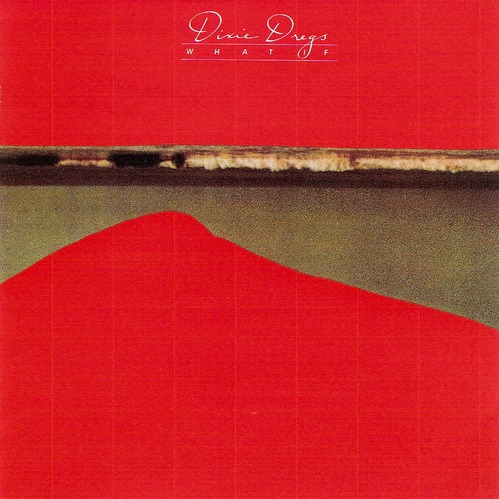
What If (1978)
The three Capricorn albums are similar, except the band got better/tighter with each release. The debut, Free Fall (1977), is remarkable in that it was a fully realized vision of the band. I purchased this album shortly after it was released and played it to death in the late 70s. The second, What If (1978), was unfamiliar to me until recently. Given my fondness for Free Fall, I don’t know why I never acquired it. I picked up a near-mint copy for 49 cents at one of the Electric Fetus (Minneapolis record store) garage sales sometime in the last five years. But even that purchase didn’t motivate me to listen, and it sat on my shelf until working on this blog post. What If is not significantly different from Free Fall; however, the band perfects the DD concept. The only personnel change is that Mark Parrish takes over from Stephen Davidowski on keyboards. The third Capricorn album, Night of the Living Dregs (1979), continues the pattern; however, the second side is selections of a live show at the Montreux Jazz Festival on July 23, 1978 (the complete show can be found on Live At The Montreux Jazz Festival 1978, available for streaming on Spotify). The live set shows this was a powerful live act, not just studio rats.
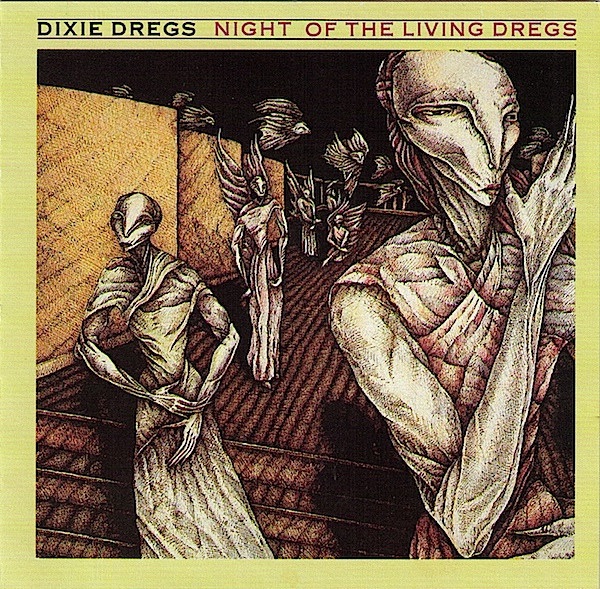
(1979)
After three studio albums, the DD were without a label. Capricorn had declared bankruptcy in the fall of 1979. Fortunately, the band was able to snag a three-album deal with Arista. In addition to the label change, keyboardist Mark Parrish left and was replaced by T Lavitz.

Steve Morse, Mark O’Connor, Rod Morgenstein, Andy West, and T Lavitz from an Arista Records photo shoot.
At the time, the move to Arista seemed like a good thing. Arista was more commercial and successful than Capricorn (they are still in business today as part of Sony), yet it was artist-friendly; for example, the label allowed Steve Morse to produce the DD albums. The downside was that Arista had expectations for an ROI; they wanted hits.
The DD were at the top of their game as they joined Arista. The band’s core had been at it for a decade; they were critically acclaimed and regularly received Grammy nominations. But it was hard to imagine how they would fit into the star-making pop machinery at Arista. Their eclectic style was going to be hard to market: it was too jazzy for the rock audience, too rock for the jazz audience, too country for the rock and jazz audiences, and the country audience was not going to go for weird improvisational instrumental music. But in the early 80s, record labels were willing to take a chance on a band like the DD, given how much money the music industry made (avant-garde saxophonist Anthony Braxton was an Arista artist during this era, for example)
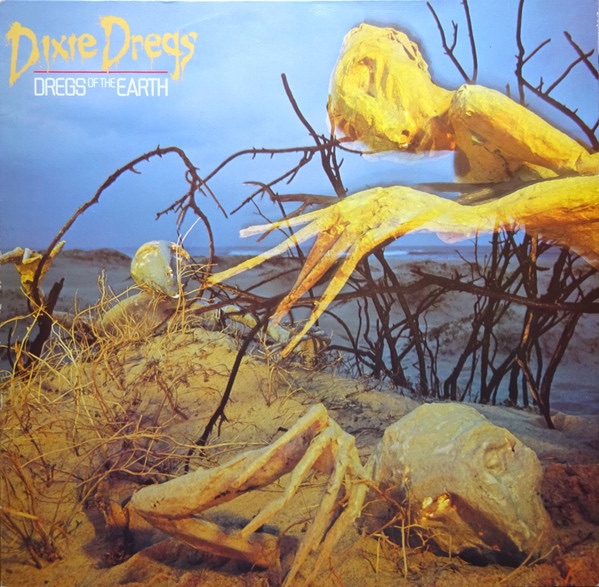
The first album on Arista was Dregs of the Earth (1980), which is similar to the Capricorn albums. It is a step forward, a bit more commercial in that it is more rock-focused but still plenty adventurous. This would be a great entry point for the band.

With Unsung Heroes (1981), Arista and the band doubled down to become an instrumental band with the album title and cover art. They ditched “Dixie” from their name and were rebranded as The Dregs. This is the “genius” of the label suits: the band is not selling well; it must be the Dixie in their name. Fortunately, the music didn’t suffer; it is the same eclectic gumbo of styles as their previous four studio albums. Unsung Heros sounds the most commercial of all of their albums thus far, yet it has an adventurous spirit that tempers it from being a sell-out. Morse is quoted as saying: “Unsung Heroes is the peak of me getting the most out of the band—certainly as a producer. I got a chance to try out all the stuff I learned from Ken Scott on previous albums. So, a lot of work and attention to detail happened. It was a very satisfying project for me.”
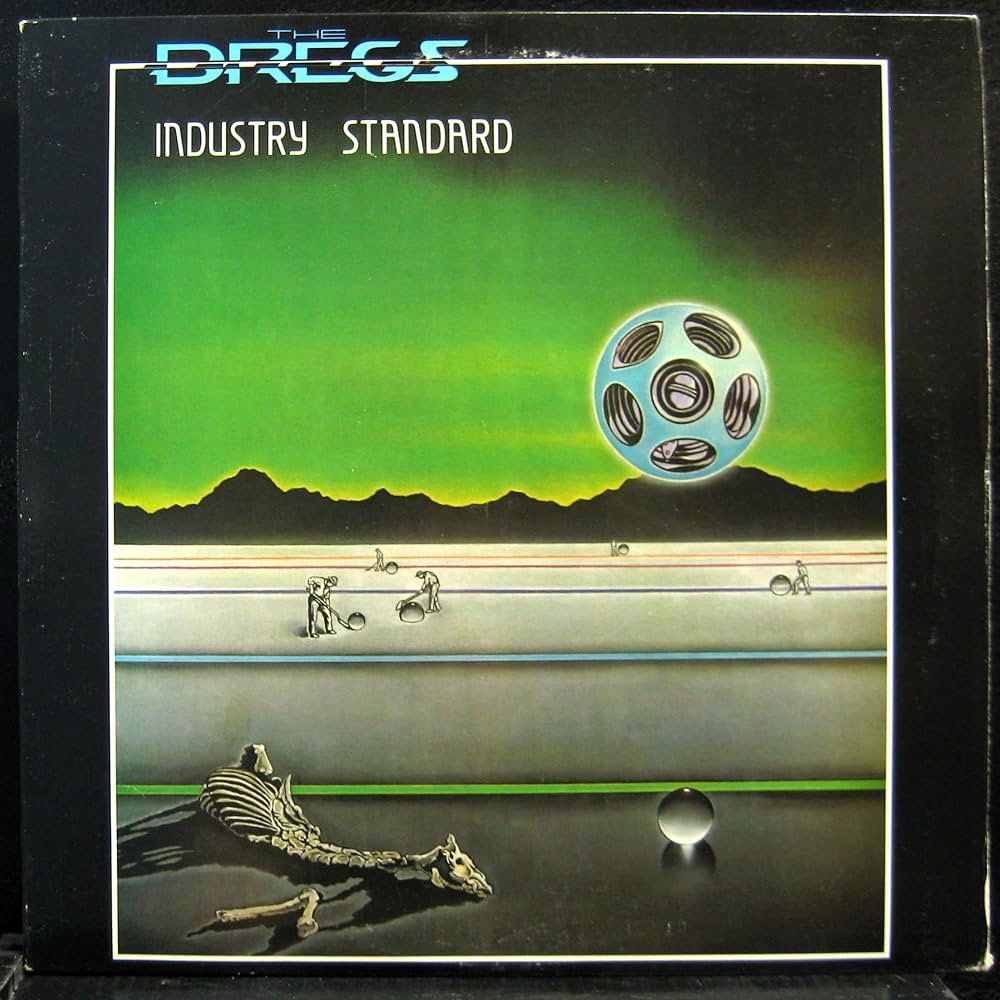
With Industry Standard (1982), their final album on Arista (and created a hiatus – their next studio album would be Full Circle in 1994), the band made their first mistake: adding vocals on two tracks. I can’t imagine the pressure the label must have put on the band to be more commercial. Morse shares the production duties with prog producer Eddy Offord (who had commercial and artistic successes with ELP and Yes). It didn’t work commercially, and Arista released the band after this album. The band disbanded; however, they have reunited occasionally, including this past spring (2024) for a tour—I missed that, but I heard they were great. The vocal tracks (“Crank It Up” featuring vocalist Alex Ligertwood, who was with Santana at the time, and “Ridin’ High” featuring Patrick Simmons of the Doobie Brothers) are generic classic rock. This is the weakest of their albums. It is not that their playing deteriorated; it is just that they were trying to be commercial, and that was just not who they were.
Today, DD would be a jam band, and there is now an audience for this kind of adventurous music. Today, it is easier for a band like the DD to make it. Not in the “hits” sense of making it, but in the sense they could do 35 shows a year (75 if ambitious) in 2500 – 5000 seat venues, making a nice living. But it was more challenging in the late ’70s and ’80s; it was a hit-on-the-radio-economy. In hindsight, it is a miracle a band like the DD made six studio albums between 1977 and 1982.
In the end, the DD had run its course. Their brand of jazz fusion was not going to generate a hit, and there wasn’t a jam band-like scene to support them. The Dregs were not a viable commercial concept in the early 80s. Jazz fusion was deteriorating into light jazz, and the DD were anything but light. But the band was not a failure; they were just at the wrong time. Steve Morse is a brilliant guitarist – he has all the soul and swagger of Jeff Beck but with a broader palette. I have spent many hours listening to the Dixie Dregs over the last month, and with every listen, I made a new discovery and grew in awe of each player. The core guitar, bass, and drum players remained constant, and the band attracted fantastic talent at the keyboard and violin. They are a band deserving more fame – they are truly unsung heroes of late 70s/early 1980s jazz fusion. They are so eclectic that it hurt their marketability at the time. I feel like their concept would work better now.
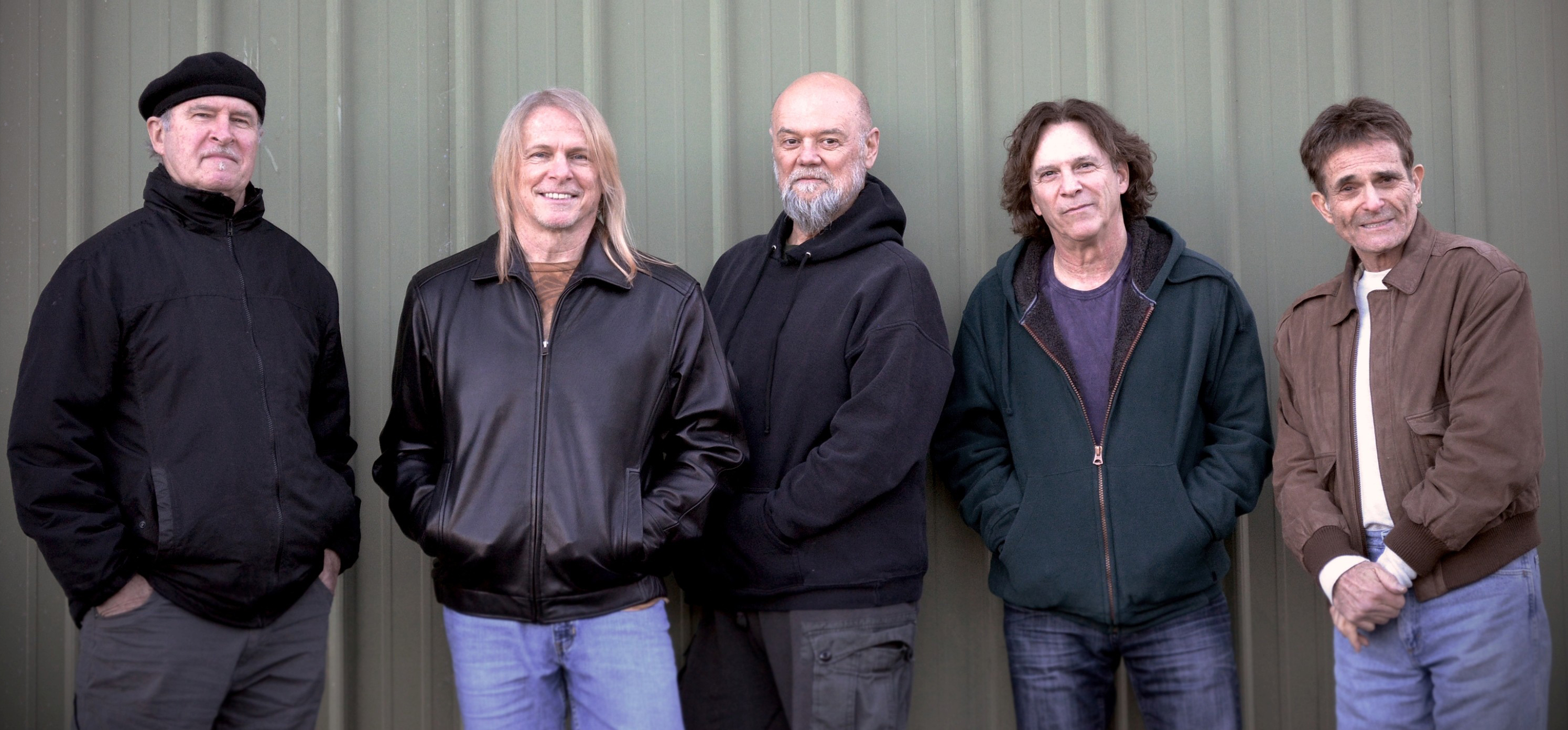
Steve Davidowski, Steve Morse, Andy West, Rod Morgenstein, and Allen Sloan
Photo: Dixie Dregs
I am grateful I never sold my vinyl records during the CD era. Even though the DD’s Capricorn and Arista catalogs are available on streaming services, having near-mint vinyl copies of these three records (and the three Capricorn records) is a beautiful legacy.
Post Script: The Great Spectacular (1975/2024)

The Great Spectacular sounds like a Greatest Hits collection for those familiar with the band. The band re-recorded The Great Spectacular songs and used them on several studio albums. These are some of their most beloved songs. Steve Morse even used one of the songs during his short stint with Kansas. On the tracklist below, I indicate what album the songs ultimately appeared in parenthesis.
“Refried Funky Chicken” (Free Fall), “Holiday” (Free Fall), “Wages of Weirdness” (Free Fall), “T.O. Witcher” (Steve Morse with Kansas on their album In The Spirit Of Things), “The Great Spectacular”(Dregs Of The Earth), “Ice Cakes” (What If), “Leprechaun Promenade” (Night of the Living Dregs), “Country House Shuffle” (Night of the Living Dregs), “What If” (What If), and “Kathreen” (never subsequently re-recorded, but it does appear on the DVD Live At The Montreux Jazz Festival 1978).
The band on the album is Rod Morgenstein (drums), Steve Morse (guitars), Allen Sloan (violin), Andy West (bass), and Frank Josephs – Fender Rhodes electric piano. Here are some comments about the album from a relatively recent interview with Steve Morse:
“The preparation for that album is the part I liked best. We were together as an ensemble and playing—usually for free—somewhere on campus at the University of Miami or around the city of Miami. The recording itself was stark and unpolished. We had to record it in one night after a long day of school and classes. It was done late at night. We were 19-20 years-old. It wasn’t really a studio. They just put the recording equipment in a live concert hall. We were set up in there with headphones. My amp was in an elevator shaft. The violin, Fender Rhodes and bass went direct. The drums were on stage. It was bizarre. We had to trudge upstairs to the very back where the projectionist would be in the movie theater and do the mix there. So, there was nothing great about the sound. But the preparation was the magic. The songs were in a good place because we had come together as a band.”
The sound on the album is way better than Morse suggests, but I get his point, as the Dixie Dregs studio albums sound fantastic. The album sounds like a high-quality demo; it is dry sonically. The biggest things I notice are the arrangements (which are more straightforward than the studio recordings), the performance of the band (they are not nearly as tight as their debut, Free Fall), and the lack of keyboards (Josephs’ playing is fine, but the Rhodes is pretty wimpy compared to the wall of keyboards the studio albums have on them). The Record Store Day vinyl is a quality pressing.


