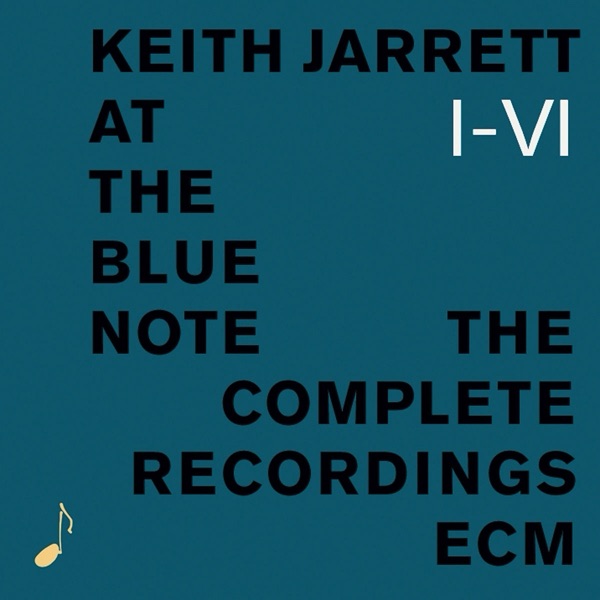
ECM 1575–80
I recently saw this CD box advertised on Instagram, which prompted me to head over to the CD shelf and listen to my copy. It has been a long time since I have listened to this collection – for a moment when I saw the advertisement, I forgot I even had it.
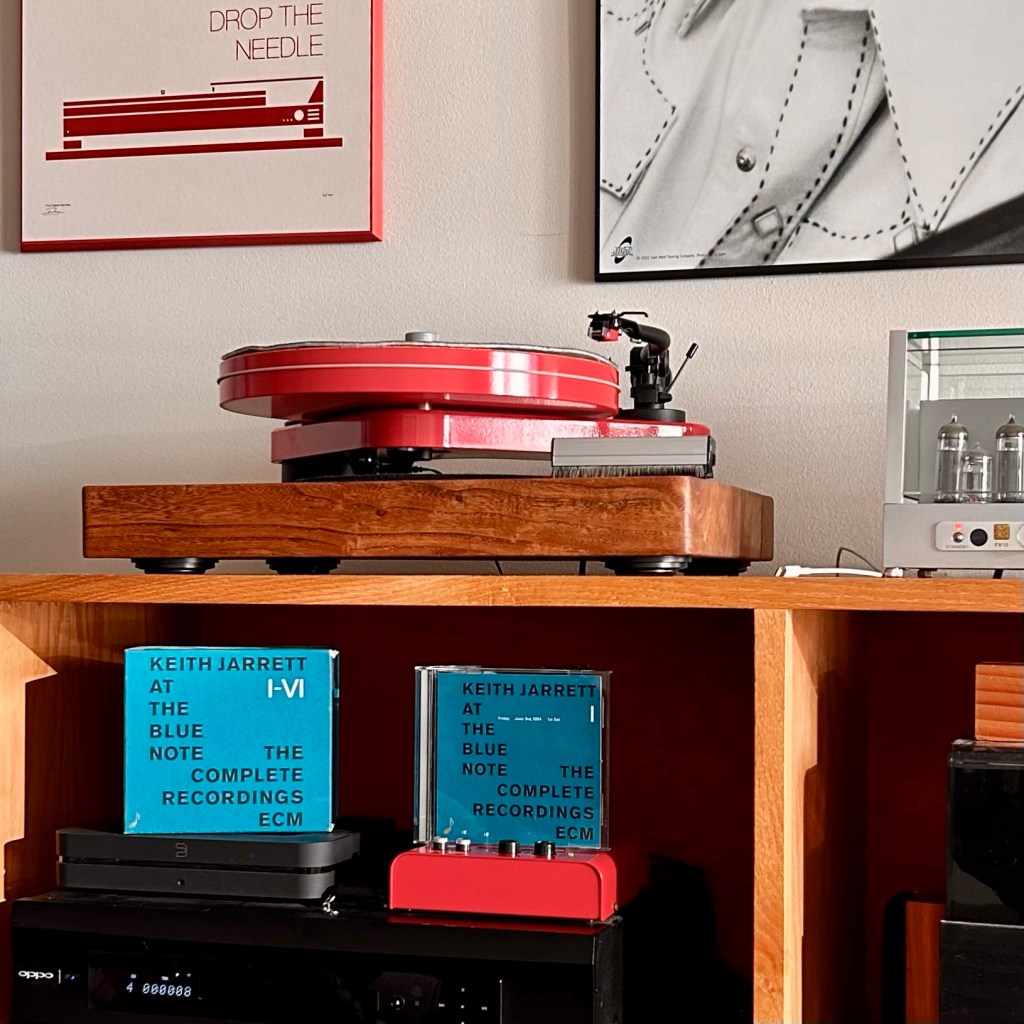
Keith Jarrett at the Blue Note is a six-CD box set by American jazz pianist Keith Jarrett’s “Standards Trio,” which features a rhythm section of Gary Peacock and Jack DeJohnette. This live recording compiles the six sets the trio performed at the Blue Note Jazz Club in New York City over three nights in June 1994 and was released by ECM in October of the following year.
Jarrett has an impressive jazz pedigree: He was a member of Art Blakey’s Jazz Messengers, Charles Lloyd Quartet and a featured member of Miles Davis’ electric fusion groups, playing electric piano and organ. He is most famous for his solo piano performances on ECM, especially the Köln Concert, the best-selling piano recording in history.
One of my favorite versions of Jarrett is the Standards Trio, which performed together for decades. In 1983, at the suggestion of ECM head Manfred Eicher, Jarrett asked bassist Gary Peacock and drummer Jack DeJohnette, with whom he had previously worked on Peacock’s 1977 album Tales of Another, to record an album of jazz standards titled Standards, Volume 1 (there were an additional eight Standards albums before Keith Jarrett at the Blue Note came out). This box set is the fruition of over a decade of the trio playing together. Rather than the typical single disk cherry-picking from a three-night stand, this is everything performed at those gigs. As Jarrett states in the liner notes, “Every note we played for three nights is included. There are no edits or choices of one track vs. another.”
The recording quality is outstanding for a live recording—you feel like you are in the club. Jarrett is panned slightly left, DeJohnette is slightly right, and Peacock is in the center. I even love how the audience is recorded—their clapping makes you feel like you are in front of the bandstand. The recording also includes Jarrett’s trademark grunts and groans. This mix provides a fantastic immersive experience and would be an excellent reference recording to show your stereo’s ability with acoustic recordings.
These jazz standards showcase Jarrett’s sense of melody. His performance is energetic yet sensitive. You can tell he is fond of and familiar with the material. DeJohnette and Peacock are the perfect rhythm section. The quality never lets down throughout six CDs (over seven hours of material). This set (you don’t have to listen to all seven hours to enjoy) and the Köln Concert are an excellent introduction to the genius that is Keith Jarrett.
In 1996, the box set was awarded “Album of the Year” in the DownBeat Critic’s Poll. AllMusic awarded it a five-star review (their best) said:
“Never mind that this same group has already had ten separate releases since 1983; this box is still well worth getting…. Throughout the three nights at the Blue Note, the interplay among the musicians is consistently outstanding. Those listeners concerned about Jarrett’s tendency to ‘sing along’ with his piano have little to fear for, other than occasional shouts and sighs, he wisely lets his piano do the talking.”
Keith Jarrett at the Blue Note is available on streaming services. The high-resolution service uses CD quality (16-bit/44.1KHz), but even with CD quality, this is a magnificent-sounding collection.
https://open.spotify.com/album/6sJLTN1J3PhPQ0OybVsqVz?si=mMWt0K8LTIaPFTq-XBMiNQ
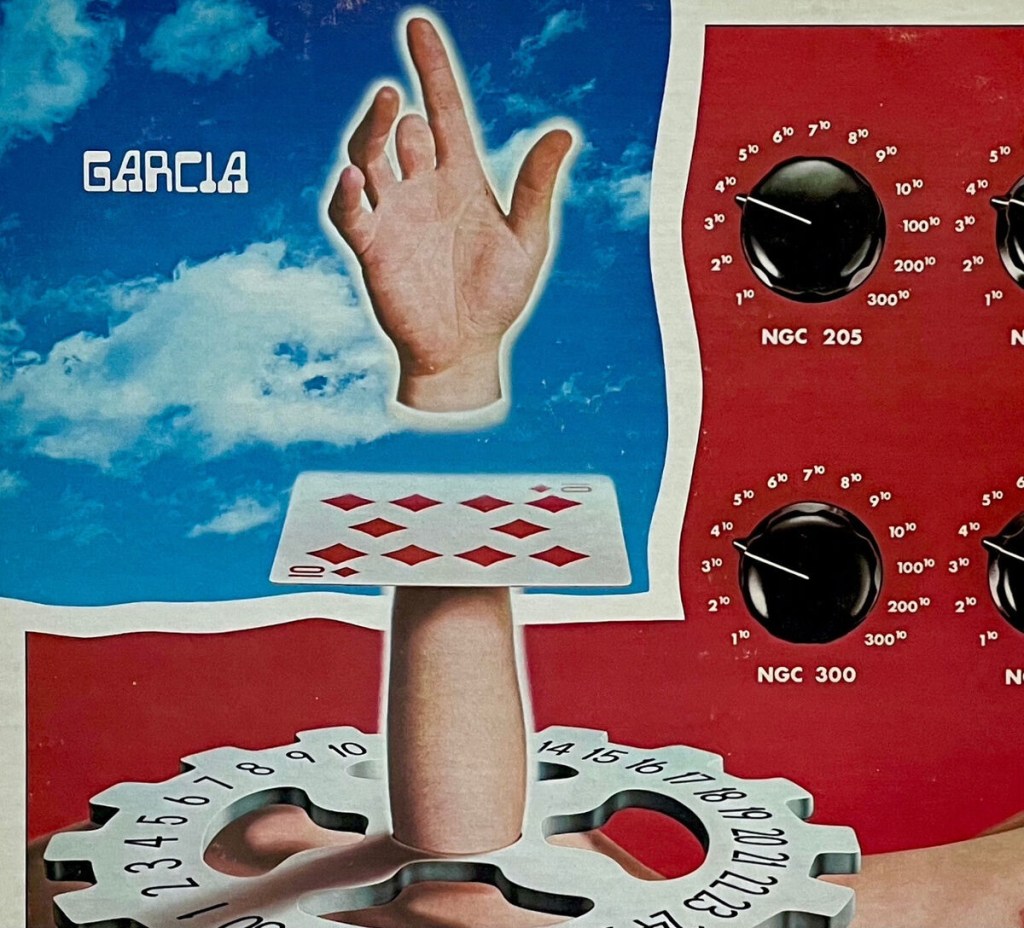
This is the Grateful Dead’s Jerry Garcia’s first solo album (released on January 20, 1972). Garcia recorded the album almost entirely alone, with only Bill Kreutzmann, one of the Dead’s drummers, assisting him. The Dead’s label at the time, Warner Brothers, encouraged Dead members to release solo material. In 1972, Garcia released this album, Bob Weir released Ace (May 1972), and Mickey Hart released Rolling Thunder (September 1972). A couple of years earlier, the Dead released their back-to-back Americana classics, Workingman’s Dead and American Beauty, to critical acclaim and commercial success. The Dead were on a roll, and the magic spilled to the solo albums. Half the songs on Garcia would have fit comfortably on Workingman’s Dead and American Beauty. However, the three songs that open side two (“Late for Supper,” “Spidergawd,” and “Eep Hour”) are weird musique concrète instrumental soundscapes that could have been on a Pink Floyd album from the era.
Garcia, side one, includes two songs that would become standards in the Dead and Jerry Garcia’s live repertoire: “Deal” and “Sugaree.” “Bird Song”’ and “Loser” fit nicely in the Dead’s Americana sound. Side two ends with another Dead/Garcia live standard: “The Wheel.” Side two also includes “To Lay Me Down,” a piano ballad that shows a different side of Garcia, a Laurel Canyon singer-songwriter. Finally, the oddball Garcia/Kreutzmann jam is “An Odd Little Place.”
Track listing (and songwriters in parentheses):
Side one
“Deal” (Robert Hunter, Jerry Garcia)
“Bird Song” (Hunter, Garcia)
“Sugaree” (Hunter, Garcia)
“Loser” (Hunter, Garcia)
Side two
“Late for Supper” (Garcia, Bill Kreutzmann)
“Spidergawd” (Garcia, Kreutzmann)
“Eep Hour” (Garcia, Kreutzmann)
“To Lay Me Down” (Hunter, Garcia)
“An Odd Little Place” (Garcia, Kreutzmann)
“The Wheel” (Hunter, Garcia, Kreutzmann)
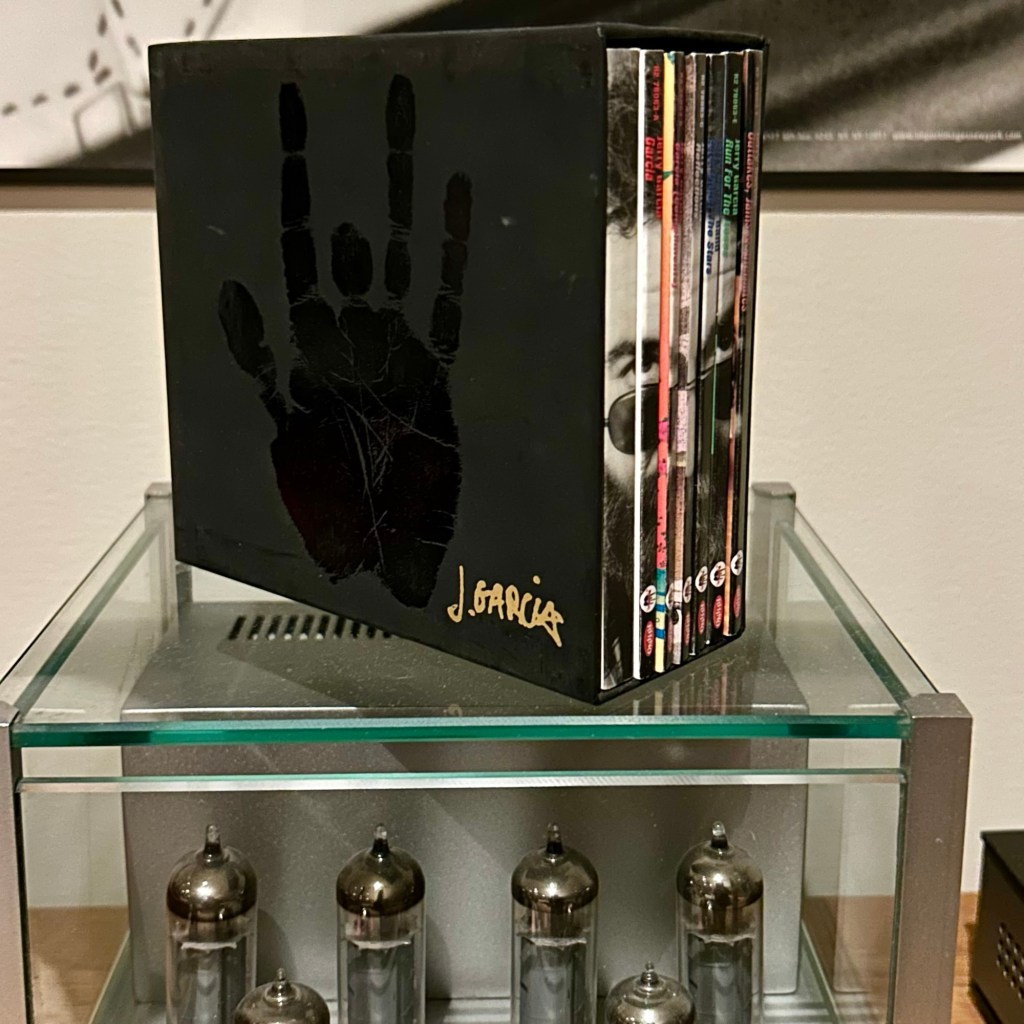
I am more of a Jerry Garcia fan than a Dead fan. My introduction to Garcia is a 1991 live album called Jerry Garcia Band. I have had a box-set collection of studio albums but never explored it deeply.
I picked up a vinyl reissue at Record Store Day 2014, but never gave it an attentive listen until this fall.
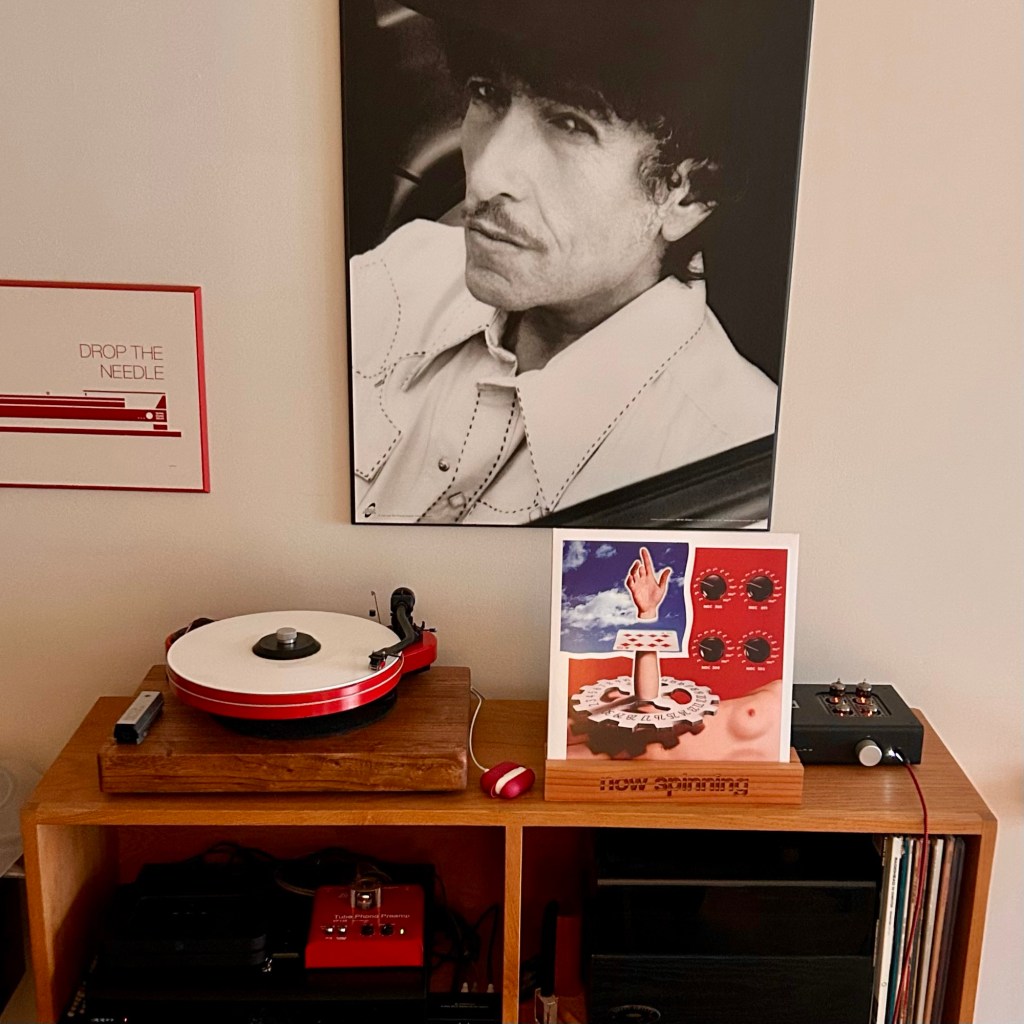
Record Store Day 2014 (white 180 g vinyl)
This is an outstanding introduction to Garcia’s solo career. I also recommend the 1991 JGB album mentioned earlier. If you want to experience the jazz side of Garcia, check out his collaboration with Merl Saunders Live at the Keystone.
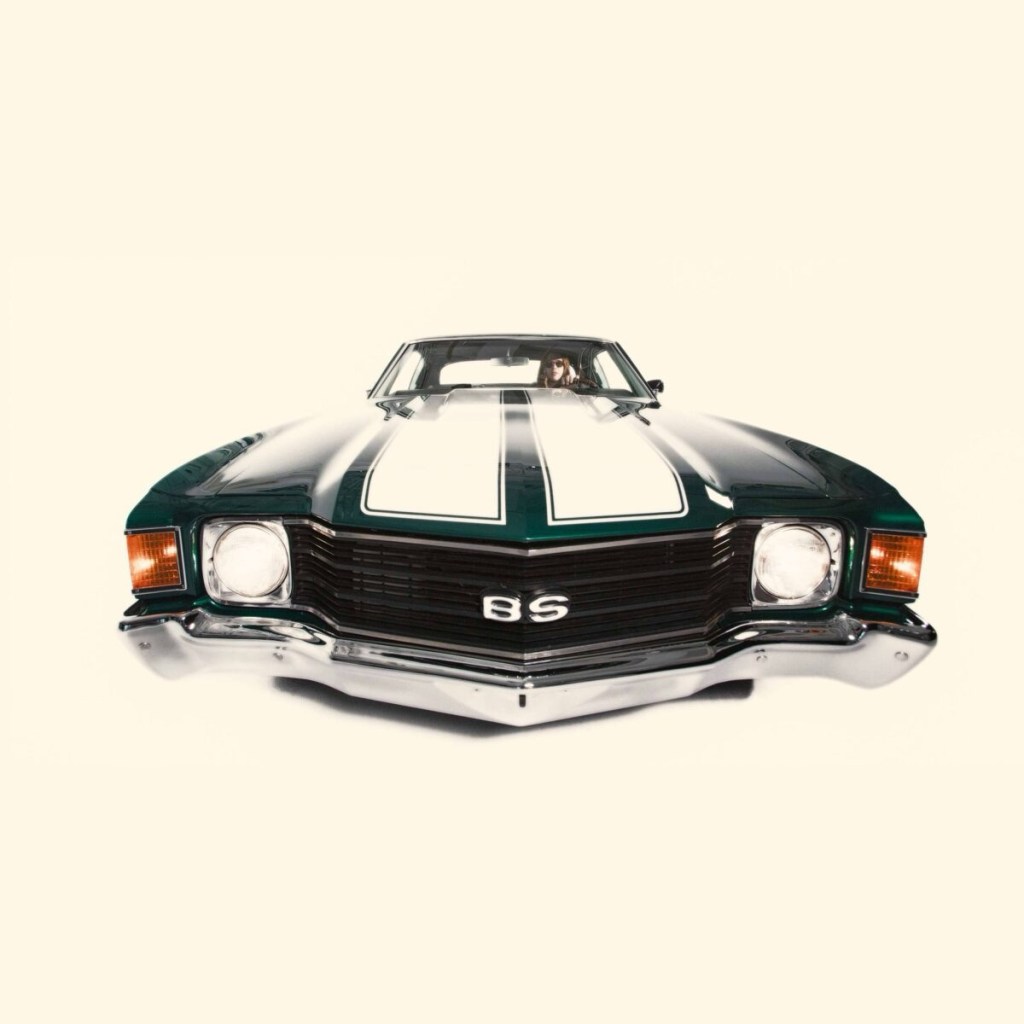
When my son first mentioned that he had seen a bluegrass artist, Billy Strings, perform early evening on the big stage at Lollapalooza (Chicago) in the summer of 2022 to a “full house” (I assume at least 40,000 people), I was impressed. Who the hell is this guy? I checked out a few of his albums on streaming, and the music was pretty cool: a mix of straight bluegrass songs (both originals and traditional songs) and bluegrass/rock/jam band fusion originals. I liked it, but it did not slay me. But I assumed, like most jam bands, the music needs to be consumed live, so I went to see him the first chance I could (in the spring of 2023 in Phoenix). That slayed me! Visually Strings brings a rock show aesthetic to the performance – lots of astounding lights, he plays loud, and he and his band absolutely shred – they are the Metalica of bluegrass bands.
Fast-forward to earlier this year, when Strings released his first live album, Billy Strings: Live Vol. 1, where he captures the live magic on a recording. The live album destroys his studio catalog. He has a new studio album, Highway Prayers, and he has figured out how to coax magic out of the studio – it is not the live sound, but something else. The songs are a bit looser, and they have more diversity. Although there is plenty of bluegrass, there are also pop, jazz, folk, and country elements. The album is original material written by Strings and various co-writers.
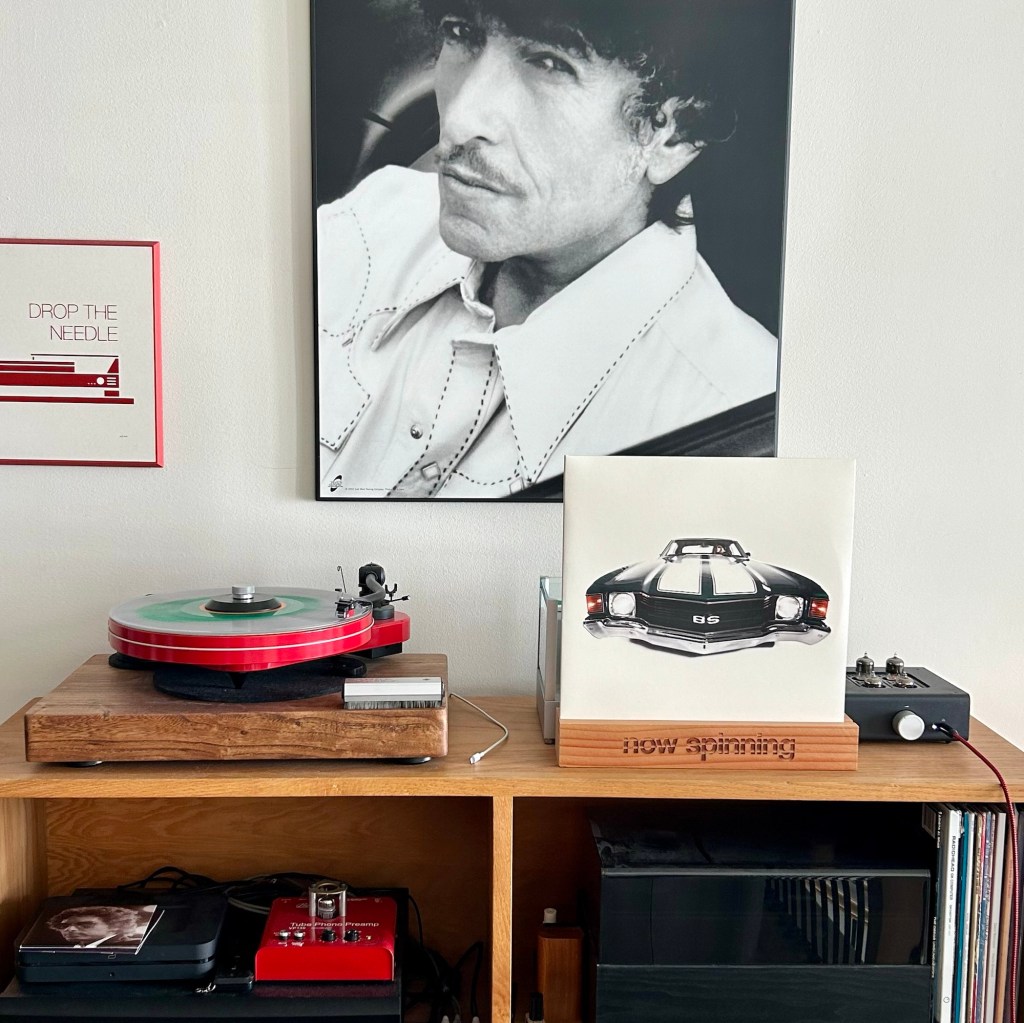
Per Billy’s website:
“Recorded in Los Angeles and Nashville, the album features Strings and his longtime band—Billy Failing (banjo, vocals), Royal Masat (bass, vocals), Jarrod Walker (mandolin, vocals) and Alex Hargraves (fiddle)—as well as additional contributions from Jon Brion (bass, drums, percussion – who also produces), Matt Chamberlain (drums), Jerry Douglas (dobro), Jason Carter (fiddle), Lindsay Lou (backing vocals), Nathaniel Smith (cello), Taneka Samone (backing vocals), Cory Henry (piano), Peter “Madcat” Ruth (harmonica, jaw harp) and Victor Furtado (clawhammer banjo).”
Highway Prayers elevates and evolves the Billy Strings sound. I highly recommend Highway Prayers and Billy Strings: Live Vol. 1 as entry points for new listeners. Below is a brief track-by-track commentary. I have also included the various videos that Billy has posted to augment the audio. As the album title suggests, there are many road themes here.
“Leaning on a Travelin’ Song” is a classic “On the Road” song in traditional bluegrass style.
“In the Clear” – is another road song, but now the road is starting to weary our narrator. He is trying to figure out his messed up life:
“Well here I am pulled over now
Just crying on the shoulder
Down the road that I’ve been driving on for days
So I aim my moral compass
But it’s spinning like a wheel
And you could take that many different ways”
This is another straight-ahead bluegrass original.
“Escanaba” is a bluegrass/jazz fusion instrumental that reminds me of David Grisman’s Dawg Music.
“Gild the Lily” is the song that separates Strings from the bluegrass traditionalists. It is a bluegrass pop fusion. It is a gorgeous ballad with the sweetest version of Billy’s voice—it is high and lonesome.
“Seven Weeks In County” has a spaghetti western vibe. It is a prison song, but our narrator is not blaming others for his incarceration—he is accountable for his sins. An elaborate cheesy western video supports the song.
“Stratosphere Blues / I Believe in You” is my favorite cut on the album. This is pure psychedelia, which is more common with Pink Floyd than Doc Watson. This is the kind of stuff that makes Strings a rock star.
“Cabin Song” is a classic bluegrass cutting session – the band shredding. Despite the band’s joyful sound, this is a lost love lament.
“Don’t Be Calling Me (at 4 AM)” is a country song with a bluegrass feel. The narrator is annoyed at an old lover looking for a hookup.
“Malfunction Junction” is another instrumental with a Grissman Dawg Music vibe and a sprinkle of psychedelia.
“Catch and Release” – reminds me of early ’60s Dylan talking blues and John Prine’s stoner humor. There are not enough fishing songs.
“Be Your Man” is a gorgeous country pop fusion. Strings songs don’t typically have a piano on his song – Cory Henry’s piano is a brilliant addition. I love this line: “It occurred to me I might’ve been the class clown then, but now I’m just a fool.”
“Gone a Long Time” is yet another traditional bluegrass-sounding original. This is a road-weary song.
“It Ain’t Before” features jaw harp and harmonica and reminds me of the Ozark Mountain Daredevils.
“My Alice” is a ballad in which the narrator fantasizes about killing his boss for inappropriately staring at his wife. There are few ballads in the Strings catalog, and I wish there were more.
“Seney Stretch” is an instrumental that shows off Strings’ gorgeous acoustic guitar tone and sense of melody. It reminds me of what the Dixie Dregs used to do: a diverse jazz/bluegrass fusion sound.
“MORBUD4ME” is stoner humor and more of a skit than a song. It has amazing vocal harmonies done in the form of a round.
xx
“Leadfoot” is a bluegrass song with a rock’ n’ roll attitude. It is about a guy who races his car in the street and dies behind the wheel.
“Happy Hollow” is another straight-ahead bluegrass song. A sentimental memory of a place.
“The Beginning of the End” is a lovely concluding song. It is not a goodbye, but a see you later.
“Richard Petty” is an acapella coda to the album. If you have ever seen Strings in concert these days, acapella songs are an absolute delight.
If you want to witness the whole album via the videos, there is a version that pulls them all together:
Highway Prayers is an hour and a quarter of pure joy. It is an excellent introduction to Billy Strings for the uninitiated and a perfect summary of the Billy Strings concept for longtime fans.

The Smile is a rock trio consisting of Radiohead members Thom Yorke (vocals, guitar, bass, keys) and Jonny Greenwood (guitar, bass, keys), along with Tom Skinner (drums) from the jazz band Sons of Kemet. The Smile is more prolific than Radiohead: They have released three albums (plus two live albums) in two years, compared to nearly a decade for the last three Radiohead albums.
The Smile sounds like Radiohead but with a looser and more jazzy vibe.
Cutouts, released in October 2024, was produced by Sam Petts-Davies during the same sessions as the previous Smile album, Wall of Eyes, released in January 2024. Per Wikipedia:
They performed several future Cutouts songs in early live performances in 2021 and 2022. Greenwood first performed the riff from “Eyes & Mouth” on Radiohead’s 2016 tour during performances of their song “Talk Show Host.”
Despite this backstory and the album title, this album is as cohesive as the other two The Smile albums—it is not an album of leftovers. I am finding this the most engaging of the three studio albums.
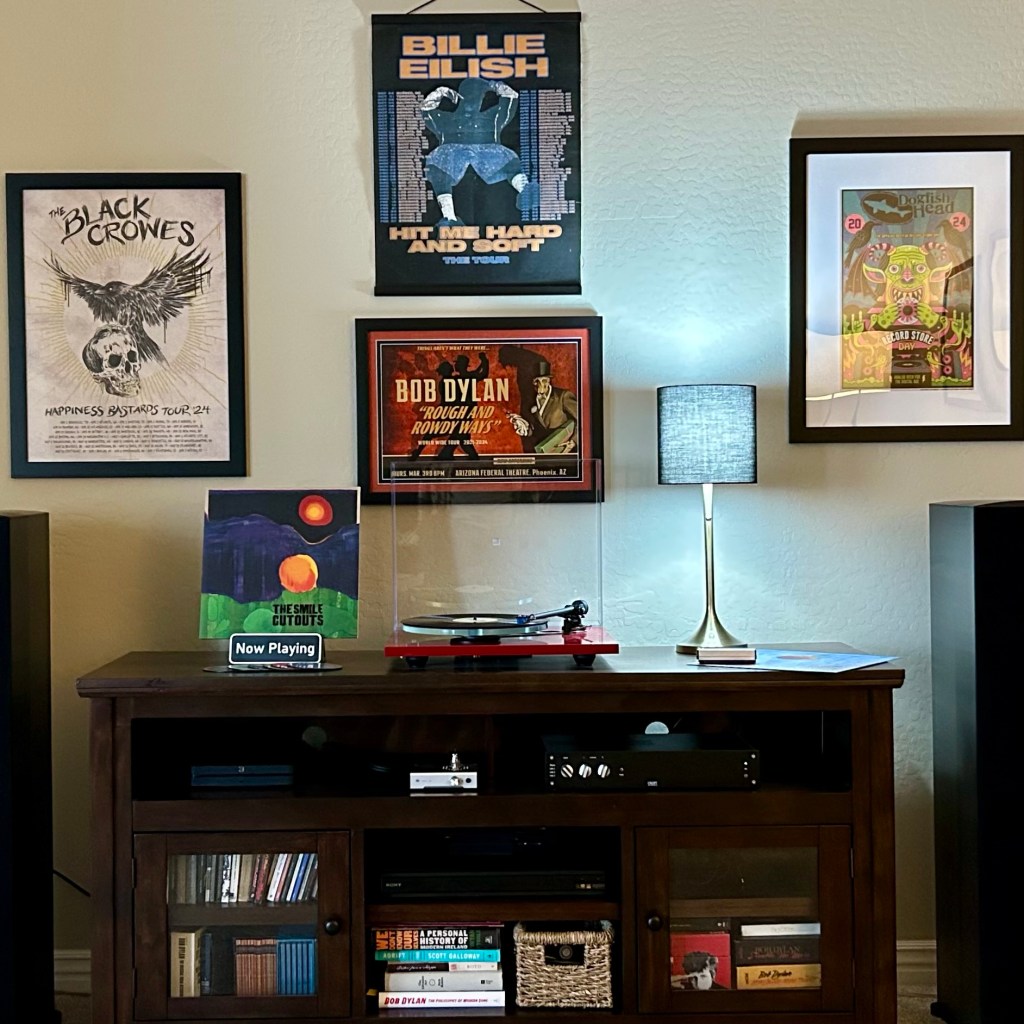
The album opens with “Foreign Spies,” which has a dirge-like feel. The band creates a warm bath of synth and electronica sounds that Yorke sings over. Lyrically, it seems to describe paranoia lurking in an otherwise beautiful world.
“Instant Psalm” opens with a string arrangement (the London Contemporary Orchestra) but quickly slips into a quiet rock riff. Yorke sings calmly about being in an intimate relationship yet not being close to that person. The song ends with a swell of strings.
“Zero Sum” has a classic Radiohead vibe but with a touch of the Red Hot Chilli Peppers in Yorke’s vocals. The song has a fabulous horn riff courtesy of Pete Wareham (baritone sax) and Robert Stillman (tenor sax). The phrase “zero-sum” refers to a situation in which whatever is gained by one side is lost by the other. Lyrically, the song seems to mock those in positions of power who are no more impressive than an outdated PC operating system like Windows 95 (referred to in the lyrics).
“Colours Fly” is another song with a Radiohead vibe. It features a spaghetti Western guitar riff and a wonderful quacking bass clarinet from Robert Stillman. Lyrically, Yorke appears to be mocking politicians who say what their constituents want to hear.
“Eyes & Mouth” is my favorite song on the album—it’s a banger! It’s funky Radiohead. Lyrically, the song is a classic Radiohead theme of alienation and detachment.
“Don’t Get Me Started” is a slow and spooky-sounding song. Yorke seems to sing about being misunderstood.
“Tiptoe” is like listening to a sparse rehearsal (almost noodling). Then, an orchestra steps in. Finally, an angelic-sounding Yorke vocal enters the mix. Lyrically, I am not sure what Yorke is up to here, but it is bleak.
“The Slip” starts with sparse percussion, drums, and a synth-bass riff, setting a groove for Yorke to work his vocal magic. He sounds like the bastard love child of Bowie and Bono. The electric guitar is a delicious slice of pop rock. Lyrically, Yorke sings about climate change, nuclear war, and political disillusionment as politicians appear to have their heads in the sand.
“No Words” is The Smile’s version of The Who’s “Baba O’Riley”/“Eminence Front” – a great combination of guitar and electronica.
“Bodies Laughing” has an acoustic guitar and a 60s bossa nova vibe. After all the lyrical darkness, the feeling here is, “What the hell? Let’s at least have a good time in the dystopia.”
Overall, the vocals are amazing. Yorke shows a vast range of vocal styles, but always unmistakably Tom Yorke. The soundscape the band creates is quite diverse. The best thing about The Smile (besides, it is a backup to the fact Radiohead is on indefinite hiatus) is that Jonny is playing lots of guitar.

Miles from India: A Celebration of the Music of Miles Davis
4Q/Times Square Records April 2008
I have no idea how I stumbled on this double CD (it was also released on a three-LP version). I assume it caught my eye in a record store. It seemed like a good idea: a collaboration of American jazz and Indian musicians (jazz and Indian classical) interpreting the music of Miles Davis produced by Bob Belden (responsible for the remastered Miles Columbia catalog). It 100% worked. This is one of my favorite jazz albums in my modest collection (jazz is roughly 15% of my CD/LP collection), so I am not a jazz expert; I am just a casual enthusiast.
I am familiar with the Miles Davis songs here, so it is fun to hear the Indian contributions. Miles had some dalliances with Indian music and instrumentation and Indian-inspired jazz musicians (John McLaughlin – who appears on this album ) during Miles’ electric/fusion period (late 60s through mid-70s). Hence, this collaboration is not a left-field idea. The Kind of Blue album has been interpreted in many ways (reggae, bluegrass, etc.) and always seems to work no matter what style it is played.
The concept of Miles From India is to recast familiar themes from such landmark recordings as Bitches Brew, In A Silent Way, Big Fun, We Want Miles, and Kind of Blue with an East meets West vibe. Some of the instruments that shine here are the electric guitar (Stern Cosey and McLaughlin), the flute (Rakesh Chaurasia), and the Carnatic violin (Kala Ramnath).
The Kind of Blue album has been interpreted in many ways (reggae, bluegrass, etc.) and always seems to work no matter what style. It works great with the Indian influences. But what works best is the material from Miles’ electric period (Bitches Brew, In A Silent Way, and Big Fun). The original recordings had an affinity for Indian music, so the tunes feel comfortable with the Indian influences here. If you are a Miles’ electric period fan and would like some world music spices added to your music, this album will meet your needs.
The American jazz musicians are a who’s who of Miles alumni from a variety of eras:
- Saxophonists: Dave Liebman (1972-74) and Gary Bartz (1970-71)
- Guitarists Mike Stern (1981-84), Pete Cosey (1973-76) and John McLaughlin (1969-72
- Bassists Ron Carter (1963-69), Michael Henderson (1970-76), Marcus
Miller (1981-1984), and Benny Rietveld (1987-91) - Keyboardists Chick Corea (1968-72), Adam Holzman (1985-87) and Robert Irving III (1980-
88) - Drummers Jimmy Cobb (1958-63), Leon ‘Ndugu’ Chancler (1971), Lenny White (1969) and Vince Wilburn (1981, 1984-1987)
- Tabla player Badal Roy (1972-3)
The Indian contingent is represented by:
- Keyboardist Louiz Banks – who also serves as co-arranges with Bob Belden
- Drummer Gino Banks
- American-born alto saxophonist Rudresh Mahanthappa
- Sitarist Ravi Chari
- Vikku Vinayakram (a charter member of Shakti) on Ghatam
- V. Selvaganesh (a member of Shakti and Remember Shakti) on khanjira
- U. Shrinivas (from Remember Shakti) on electric mandolin
- Brij Narain on sarod,
- Dilshad Khan on Sarang
- Sridhar Parthasarathy on mridangam
- Taufiq Qureshi and A. Sivamani on percussion
- Kala Ramnath on Carnatic violin
- Rakesh Chaurasia on flute
- Shankar Mahadevan & Sikkil Gurucharan on Indian classical vocals
Tracklisting – Disc 1
- “Spanish Key” (from Bitches Brew) – Gino Banks, Louis Banks, Rakesh Chaurasia, Selva Ganesh, Adam Holzman, Dave Liebman, Shankar Mahadevan, Rudresh Mahanthappa, Sridhar Parthasarthy, Taufiq Qureshi, Benny Rietveld, Wallace Roney, Mike Stern & Lenny White
- “All Blues” (from Kind of Blue) – Louis Banks, Gary Bartz, Ron Carter, Ravi Chary, Jimmy Cobb, Rudresh Mahanthappa & Vikku Vinayakram
- “Ife (fast)” (from Big Fun) – Gino Banks, Pete Cosey, Michael Henderson, Adam Holzman, Dave Liebman, Kala Ramnath, A. Sivamani & Vikku Vinayakram
- “In a Silent Way (Intro)” (from In a Silent Way) – Adam Holzman, Robert Irving III & Pandit Brij Narayan
- “It’s About That Time” (from In a Silent Way) – Gary Bartz, Ndugu Chancler, Pete Cosey, Michael Henderson, Adam Holzman, Robert Irving III & Kala Ramnath
- “Jean Pierre” (from We Want Miles) – Ranjit Barot, Rakesh Chaurasia, Adam Holzman, Robert Irving III, Benny Rietveld, Mike Stern & Vince Wilburn Jr.
Tracklisting – Disc 2
- “So What” (from Kind of Blue) – Louis Banks, Ron Carter, Ndugu Chancler, Chick Corea, Selva Ganesh, Sridhar Parthasarthy & Taufiq Qureshi
- “Miles Runs the Voodoo Down” (from Bitches Brew) – Pete Cosey, Michael Henderson, Adam Holzman, Wallace Roney, A. Sivamani, Vikku Vinayakram & Lenny White
- “Blue In Green” (from Kind of Blue)- Louis Banks, Ron Carter, Jimmy Cobb, Dilshad Khan, Shankar Mahadevan, Wallace Roney & Mike Stern
- “Great Expectations (Orange Lady)” (from Big Fun) – Ravi Chary, Pete Cosey, Michael Henderson, Adam Holzman, Marcus Miller, Taufiq Qureshi, Wallace Roney, Vince Wilburn Jr. & Vikku Vinayakram
- “Ife (Slow)” (from Big Fun) – Gary Bartz, Pete Cosey, Michael Henderson, Adam Holzman, Dave Liebman, Wallace Roney & Badal Roy
- “Miles from India” (an original composition by John McLaughlin for this album) – Louis Banks, Sikkil Gurucharan, John McLaughlin & U. Srinivas

Imaginary Day
(1997)
Pat Metheny is in my top ten artists/bands. I love everything Pat does, but the Pat Metheny Group (PMG) is my favorite version of Metheny. Imaginary Day was the PMG’s ninth studio album, and they had been working as an ensemble for nearly two decades. However, Metheny and keyboardist Lyle Mays were the only constants through that period. It was critically and commercially successful (as commercially successful as a jazz album can be), winning the 1999 Grammy Award for Best Contemporary Jazz Album, and the song “The Roots of Coincidence” won a Grammy Award for Best Rock Instrumental Performance.
The album’s signature features are taking the classic PMG sound and mixing it with experimental instruments (for example, the 42-string pikasso guitar and the fretless classical guitar) and lots of percussion instruments (Mino Cinelu, David Samuels, Glen Velez, and Don Alias contribute to the album). The album was also inspired by world music from Iran and Indonesia. Finally, it is one of the most eclectic of the PMG albums.
This post is inspired by years of listening to the album and Metheny’s track-by-track commentary from his website.
“Imaginary Day” is a ten-minute suite that opens the album like an overture. Although this is an ensemble piece, the highlights are Pat’s use of a fretless classical guitar and Lyles’s explorations on the synth. Per Metheny:
“We were recalling our recent concert tour to Indonesia and a gamelan concert we attended there. It was an ensemble of 25 Indonesian musicians playing on metal instruments, and it was one of the tightest, most well organized ensemble sounds we had ever heard. I suppose we thought we could draw some influence from that, in that our focus on ensemble playing has also been a priority over the years, and there were things about what they were doing that paralleled our thing even though we draw from different musical vocabularies. So that was the starting place for that tune; us wanting to combine the natural bluesiness of what the fretless guitar offers with something inspired by that Indonesian ensemble sound.”
“Follow Me” is the most conventional tune on the album. It has a nice yacht rock vibe. Per Pat:
“If we think of “Imaginary Day” as this album’s overture, then “Follow Me” is like once you’ve entered this new landscape, this piece sets the tone.” He goes on to say “This is a whole melody based on harmonics, which sets this dreamy tone. But at the same time, there’s a rock sort of thing that happens – and happens throughout the album. If We Live Here had an R & B flavor, this one has a rock flavor. American Garage was also in this zone, but I think this album is more rock, and it’s certainly more sophisticated.
“Into The Dream” is an intro to “A Story Within The Story” where Pat plays an acoustic solo on the 42-string pikasso guitar. This creates a shimmering harp like sound. Per Pat:
One of the great features of the instrument [pikasso guitar] is that you can make it sound as if there are two or three people playing; it allows you to create that illusion. There’s a special tuning that I’ve developed that has the guitar part of the instrument tuned very low, and the higher, ringing strings tuned very high, so you get a complete range of tones that aren’t far away from the range of the piano.”
“A Story Within The Story” is classic the classic PMG sound. In an unusual twist to the PMG sound Mark Ledford plays trumpet.
“The Heat Of The Day” Opens with what sounds like tap dancing for percussion and a fast melody. Per Pat:
“A very complex, uptempo piece that has connections to Iranian folk music, flamenco and this imaginary music we were trying to dream up to go with our imaginary day.”
“Across The Sky” is a conventional electric guitar-focused PMG ballad. Its beautiful melody is backed by lush keyboard work from Lyle Mays.
“The Roots Of Coincidence” is the most unusual song on the album and barely sounds like the PMG. It is a suite that combines atmospheric sounds with thrash metal guitar. On paper, it sounds like a mess, but on the ears, it is a masterpiece (thus the Grammy). Per Pat:
Compositionally, I think it’s our best work on the record. Over its almost eight minutes it goes through a whole range of moods and dynamic points and very abrupt changes from one thing to the next. More than anything, it really rocks, which has always been part of our potential that I don’t think we’ve ever really captured on a recording until this track.
“Too Soon Tomorrow” slows things down after the frenetic “The Roots Of Coincidence.” Per Pat:
“A ballad I wrote as we were making the record. There was a point where the album seemed that it might be a little relentless, with a lot of stylistic jump-cutting. We needed something to let things settle for a minute.”
The closer, “The Awakening,” has a Celtic feel. It is a bright and energetic tune. Per Pat:
“The effect of the whole thing at the end of the record is a wake-up call; it’s been this long journey, this long dream; you’ve gone to all these different places and this really feels like you’re back on earth. It also features a great Lyle solo.”
When I first acquired this album in 1997, I thought it was one of the best-sounding CDs I had ever heard. It still sounds great in that format today (it was also issued as a multi-channel DVD-A and cassette that I have never heard). As far as I know, it has never been issued as a vinyl LP. Streaming services present the album in CD resolution (16-bit/44.1 kHz FLAC – I use Tidal).


Jamey Johnson’s That Lonesome Song (2008) was one of my favorite albums of the ’00s. Just a few years later, he went offline as a recording artist (he continued to tour and write songs). Midnight Gasoline is his first album since 2012 (and that was a Hank Williams tribute album) – so we are long overdue for some original Jamey Johnson material.
Johnson has a gorgeous country baritone voice that echoes Waylon, Hag, George Strait, and Tony Joe White’s country funk. Musically, Johnson is country, but he also sprinkles swamp rock, the blues, and vintage R&B. If you are a fan of Chris Stapleton, Johnson is his big brother.

Returning to the studio was inspired by the death of Jamey’s buddy Toby Keith. Jamey told Billboard:
“The writing was already coming back to me, piece by piece, but I still didn’t have any ambitions on making a record. When Toby passed away, it moved everything into high gear because I realized that that was the end of his discography, that we weren’t getting another Toby Keith record. And that’s what drove me to wanting to finish my own discography. It’s what made me understand that I’m nowhere near done, and so it’s time to get busy. After he passed away, I immediately started talking about this session and started trying to get all the particulars in order. It was time for me to get in the studio again.”
Johnson recorded the album at Cash Cabin, Johnny and June Cash’s former studio now run by their son, musician/producer John Carter Cash. The first half of the album was produced by The Kent Hardly Playboys: Wayd Battle, Jim “Moose” Brown, Tom Bukovac, T.W. Cargile, Kevin “Swine” Grant, Cowboy Eddie Long, Dave McAfee, James Mitchell, and Chris Powell. The second half was Nashville Midas Dave Cobb (Chris Stapleton, Brandi Carlile, John Prine, Sturgill Simpson, Jason Isbell, The Highwomen, etc.).
The album opens with “Bad Guy,” which uses songwriting as an analogy for a relationship. The narrator wonders:
“So how did I
Become the bad guy
In this song?”
Musically, “Bad Guy” has a nice slithering swamp vibe.
The titular track, “Midnight Gasoline,” is a road song – the narrator is trying to forget a lost love.
In “What A View,” the narrator, who has seen the world, is overwhelmed by seeing his lover merely sipping a glass of wine.
“I’ve seen the lights of Paris
And I’ve seen the Taj Mahal
Those seven wonders never made me wonder at all
But I wish I could paint you a picture
And hang it up on the wall
So you could see you the way I see you
What a view”
“21 Guns” is a beautiful lament for a fallen soldier.
“Someday When I’m Old” is a simple prediction of the future: spoiling the grandkids and being a curmudgeon. But most of all being the one:
“That remembers you young and beautiful
Your dark hair falling on that pillow case
And all the secrets we shared
All the love that we made
And I’ll hold on to those precious moments
Like pieces of gold”
“Trudy” reminds me of a country-fried Van Morrison. The song has an amazing horn arrangement and features a guest vocal from Randy Houser. It is a cover of a Charlie Daniels song from his 1975 album Fire On The Mountain.
“One More Time” has a fascinating conceit: if the narrator were God, they would redo the story of Genesis and rebuild a lost love.
“Saturday Night in New Orleans” was written by Johnson, Chris Stapleton, and Tony Joe White. It has a nice swampy vibe. The song’s gist is, “Every night is Saturday night in New Orleans.”
“Sober” is a tale of the challenges of being sober while in the drinking song business. The song has a nice blues feel.
“I’m Tired Of It All” is another duet with Randy Houser. It is an end-of-your-rope country song:
“It may look like I’m having a ball
But the truth is I’m tired of it all”
“No Time Like The Past” takes a litany of cliches (time heals, count your blessings, etc.), and the narrator scoffs at them:
“If you want a heartache to last
There ain’t no time like the past”
“What You Answer To” is classic country wisdom: “But it ain’t what they call you, it’s what you answer to.”
This is an outstanding comeback. Midnight Gasoline is the first of what Johnson calls his Cash Cabin Series. Johnson spent three weeks recording about 30 songs at Cash Cabin, sleeping in his bus parked outside. I can’t wait for the next installment!
I have been publishing this music-focused blog since the fall of 2011. Most of the blog posts are album reviews. For several years, I have augmented the blog with Instagram and mini reviews (and lots of other stuff in my life). I originally started the blog as a musical diary – documenting the music I was listening to. I quickly found that blogging about music caused me to be a more engaged music fan. Another benefit was that friends, knowing I was a music head, would ask me what was new on my music radar, and I would generally draw a blank. Once I had a blog, I could easily refer to the blog to remind myself of what I was into. A final motivation was to promote music that I am a fan of in the hopes that others will listen. I rarely post a negative review because I don’t have the energy to listen and write about something I don’t like.
When I think of a music critic, I think of a professional writer employed by a publication or website. These professionals are typically assigned an album to review; therefore, their reviews are both positive and negative. A handful of music critics are like sports columnists—they write about whatever they want. I have read many music reviews (although fewer these days because of streaming), and I sense that the reviewer can be a fan, but they don’t have to be. In fact, there may be an advantage to not being a fan to have a more journalistic detachment with the subject.
If you regularly read this blog, you will notice that it is often in the first person with extensive use of the word “I.” My wife, who edits my blog, frequently teases me that there is too much “I” in my content. I recently wrote a post where I deliberately wrote in the third person and avoided using “I” (however, I failed in the postscript and fell back into the first person). The fact that I write my reviews so much in the first person makes me a blogger vs. a music critic. As a music blogger, I am a fan first and a critic second, whereas for a music critic, criticism is the priority. My music posts are less critical reviews than memorializing my relationship with a recording.
My blog posts are almost autobiographical, so I conclude that I am not a music critic and have no desire to be one. I am a music enthusiast (AKA music head) who wants to write about my relationship with music, especially new music. You will continue to get a lot of first-person narratives and the word “I” if you read Catchgroove.com.
Inspired by Miles Davis- Miles In France 1963 & 1964 – Miles Davis Quintet: The Bootleg Series, Vol. 8

Until recently, I gobbled up every Miles Davis CD box set Columbia (and other labels) could produce. But high-resolution streaming (I use Tidal) has disrupted that run. High-resolution streaming offers a lot:
- It is inexpensive (I pay $12 a month for Tidal).
- Quality – at worst, CD quality; at best, 24-bit/96 kHz FLAC.
- Extensive catalog.
- Portability – you can listen on your smartphone – you can even download when you have to be offline.
- Suggested music based on the streamer’s algorithm – I have been pleased with the suggestions.
- Ease of use – you can use your phone as your remote to operate your streaming device – you will never get off the couch again!
Steaming does have downsides, too:
- The artist gets screwed – now this is a debatable point as most of the streaming revenue goes to “rights holders” – which are often not the artists – that is not the streaming services’ fault – but no matter what, when you buy physical media (vinyl and CDs) more money is likely to go to the artist’s pocket.
- There is missing content—often, box sets are not issued in full-on streaming services but are merely a sampler; mono reissues are typically unavailable, some artists refuse to make their content available on streaming, etc.
- Finding content can be challenging, even if you know the artist’s name and album/song name.
- Given reissues – what version is on the streaming service is a crap shoot.
- Packaging: There is no pretty album cover to hold in your hand, no liner notes to read, etc.
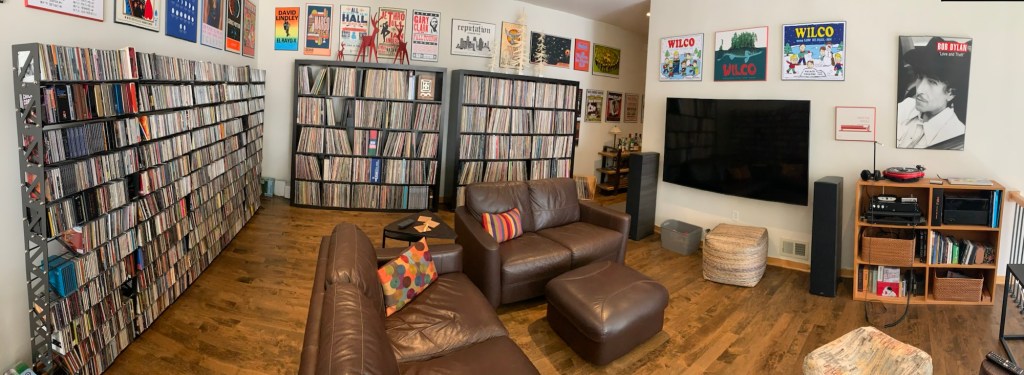
- As a 65-year-old, it is weird not to own physical media (see my collection below).
I immediately wanted a physical copy when I saw this new Miles Davis set. There were two options: vinyl ($225) or CD ($80). But I also saw it was on Tidal as a 24-bit/44.1 kHz FLAC (included in my monthly subscription).


Like Bob Dylan, Miles Davis’ Columbia recording vault is bottomless. This is the eighth Miles bootleg collection, focused on live recordings from Europe during the birth of the Miles Davis Second Great Quintet in 1963 and 1964. The live recording quality is outstanding.
Miles Davis Quintet was the jazz legend’s primary ensemble format from 1955 to early 1969. It had various iterations. The first “great” quintet featured John Coltrane, and the second great quintet featured a bunch of kids: Herbie Hancock on piano, Ron Carter on bass, Tony Williams on drums, and Wayne Shorter on saxophone. These “kids” would all have great careers on their own. This box set is from five live performances, with George Coleman on sax for the first three (1963) and Wayne Shorter (1964) for the last two.
I love Miles Davis’s live recordings. On studio recordings, his playing is generally mellow and quiet (literally muted). It would almost lead you to believe Davis is focused on tone vs. technique. But live, you realize what a brilliant and powerful trumpet player he is. On these live recordings, Miles is at the top of his game. I assume his young virtuosic sidemen are pushing him, and that invigorates him. This is an outstanding recording (audio quality) that captures an essential jazz ensemble exploding onto the scene in front of a passionate French fan base at the absolute height of their powers.
But do I need this collection on my LP or CD shelf? How often will I listen to nearly six hours of Miles in concert? How frequently will I enjoy the 20-page (LP, 32 for CD) book that includes dozens of unseen photos, ephemera, and extensive liner notes by noted journalist Marcus J. Moore? Maybe listen to the set five times? Read the book once? Columbia and the Miles Davis estate are not hurting for money.
I will resist the temptation to buy a physical copy and enjoy Miles In France 1963 & 1964—Miles Davis Quintet: The Bootleg Series, Vol. 8 via streaming. Meanwhile, I will do my best to enjoy the several Miles box sets I have not listened to in a long time.
My introduction to Sadler Vaden was seeing him live as part of Jason Isbell and The 400 Unit. At one point during the show, Isbell turned over frontman duties to Vaden to perform “Honeysuckle Blue” from Vaden’s old band, Drivin N Cryin (the song is also on Jason Isbell and The 400 Unit’s Georgia Blue album). Vaden’s performance blew me away. This was not just a guitar gunslinger for hire but a special ingredient in Isbell’s band (Sadler has been with Isbell since 2013).
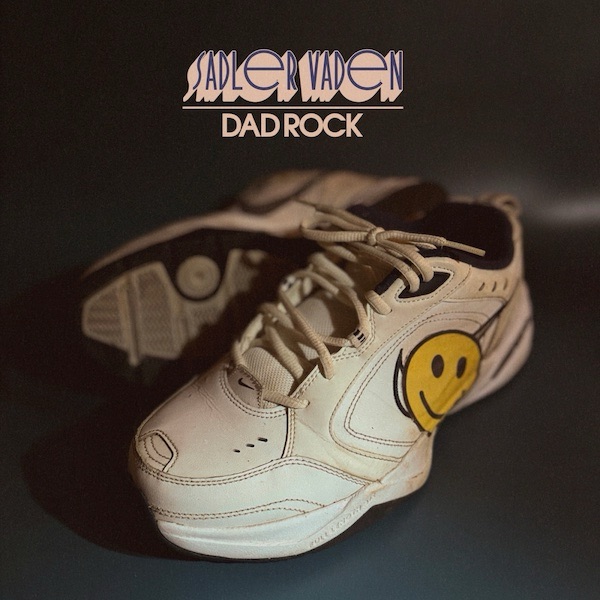
The next time Sadler appeared in my consciousness was when I noticed that he produced Morgan Wade’s major label debut, Reckless (2021). My streaming service’s (Tidal) algorithm recently suggested Vaden’s latest solo album, 2024’s Dad Rock. I gave it one listen and was immediately impressed.
Dad Rock is a stew of 70s classic rock vibes. I hear Joe Walsh (his big riff guitar, not his cartoonish vocals), Big Star, The Stones, Pink Floyd, etc., but also some contemporary sounds, like Spoon.
Dad Rock was produced by Sadler Vaden, engineered by Owen Lewis and Bobby Holland, mixed by Lewis, and mastered by Richard Dodd. Most of the album is original songs written by Vaden (“Dove” was co-written with Joel Hamilton, and “Staying Alive” is a cover of a The Whigs’ song). Musicians include Vaden (vocals, guitars, keys), Fred Eltringham (drums), Julian Dorio (drums), Timothy Deaux (bass), Dominic Davis (bass), Elliot Easton of The Cars (lead, 12-string and acoustic guitars), Benmont Tench from Tom Petty’s band (piano, organ), Art Edmaiston (tenor saxophone), Kirk Smothers (baritone saxophone) and Marc Franklin (trumpet, horn arrangement).
Side A opens with “Townsend’s Theme,” an instrumental named after Sadler’s young son. It has a nice Pink Floyd vibe. “Dove” has an epic arena rock feel and reminds me of Secret Machines (a mid-00s alt-rock band). “The New You” is acoustic-forward folk rock with a wink to Big Star. “Staying Alive” opens with Joe Walsh-like power cords and alternates with twangy power pop.
Side B opens with “Holes,” which sounds like an Americana version of Spoon. “The Rescuer” has Stones swagger, including a Stones-sounding horn section. This is my favorite track on the album. “I’ll Always Come Back” has a Jayhawks vibe. “Two Balloons” is a gorgeous nod to the sound of Big Star.
I love great guitarists who know how to draw attention to the song rather than being the guitar hero. Sadler Vaden is one of those guitarists. This album will likely fly under the radar but deserves more attention.


