This album is the definition of “Crate Digger’s Gold.” I knew nothing of Wishbone Ash other than they were an early 70s band. I was digging the $1 boxes at the recent Rock N’ Roll Sale when I pulled this double LP. For a buck I was curious as to who Wishbone Ash was. I assumed that a live album would be a good introduction to the band.
I finally gave it a spin last night – wow what a cool band. Imagine combining early Yes with The Allman Brothers and you have a bit of a sense of Wishbone Ash. But I don’t want to mislead you – they really don’t sound like anyone else – they have their own unique sound. What struck me right away was that it was a twin guitar attack. I immediately Googled them to find out who the hell are these guys.
According to Wikipedia:
Wishbone Ash are considered to be one of the major innovators of the harmony twin lead guitar format. Their contributions helped Andy Powell and Ted Turner to be voted “Two of the Ten Most Important Guitarists in Rock History” (Traffic magazine 1989), and to appear in the “Top 20 Guitarists of All Time” (Rolling Stone). Melody Maker (1972) described Powell and Turner as “the most interesting two guitar team since the days when Beck and Page graced The Yardbirds”.
This is why I crate dig – the thrill of discovering a great band or album you knew nothing about and paying next to nothing for the pleasure beyond your time. I have not listened to any other Wishbone Ash albums so I have no idea if this is representative of their catalog. But given they have a couple of incredible axe men I can only assume the live format is a great way to sample the band. There is some serious guitar slinging going on here – and not just the twin guitars – the bass player shreds too. But I can see why these guys never made it big: they don’t have distinctive vocals, they lack great hooks and monster riffs. But the twin guitar battles on top of a complex bass line is pretty damn intriguing to my jazz and jam band ears.
If you are a fan of complex rock and roll guitar or blowing sessions you will dig this album. My $1 copy was in pretty decent shape so you should not have to pay more than $5 for good copy of the LP.


I have been underwhelmed by the recent Led Zeppelin reissues. Partly because, as much as I love Zeppelin, they are classic rock warhorse that have been played to death (by both me and the radio). But mostly because I was so disappointed that the bonus material was so thin: live cuts, alternative mixes, demos. I can’t believe that a band this big did not have extra songs that did not make the cut.
Physical Graffiti does not bring any more to the table than the other reissues other than it is arguably their greatest album. Maybe I am just in the right mood. Maybe I have listened to this album a hundred fewer times than the rest of their catalog. I am digging this album – the reissue sounds stunning. If you are going to test drive one of these reissues – this is the one.
Physical Graffiti has all the tricks in the Zep bag: hard rock, folk, world music, funk, killer riffs, etc. This is a great band at the absolute peak of their powers.
As for the bonus material – more of the same – no new songs. The packaging on the deluxe edition is a very well done miniature LP.

I am more of Jerry Garcia fan than a Grateful Dead fan. I was a David Grisman fan before I was a fan of Garcia or the Dead.
Amazingly I have never owned this album in any format. I recently picked up an LP in very good condition for just 5 bucks at the recent Rock ‘N Roll Music Sale in Maple Grove (MN).
The album is live from 1973 and was released in 1975. Garcia is featured on vocals and banjo. Grisman on vocals and mandolin. This pure bluegrass vs. some of the fusion that both artist are famous for. That being said, the songs are traditional, original (3 by guitarist/vocalist Peter Rowen, 1 by Grisman and 1 by violinist Vassar Clements) and a cover of the Stones’ “Wild Horses.”
I “discovered” Grisman on his classic jazz bluegrass fusion (dawg music) Hot Dawg (1979). And I “discovered” Garcia via the Jerry Garcia Band on their 1991 eponymous live album.
This album has some high-speed picking and radiates a lot of joy. Garcia and Grisman had known each other for 10 plus years before this album was recorded. The lack of pretension is strong here. Pure love of music prevails. Garcia had such an amazing musical life outside the Dead and this is just one example of his many side gigs. This is a classic example of him subordinating his ego for the groove.
If you are a fan of picking and grinning or a fan of the Dead this LP is highly recommended.
Below is the complete Boarding House Shows which includes this album plus 45 more cuts. Also included bellow is Hot Dawg. Unfortunately Jerry Garcia Band is not available on Spotify.
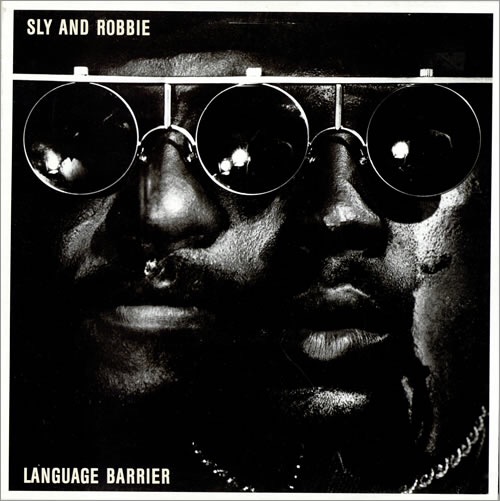
I first became aware of Sly And Robbie on the 1980 Black Uhuru album Sinsemilla. They were a big deal in the 80s appearing on reggae albums by major reggae stars like Black Uhuru, Peter Tosh and Culture, but also with major rock stars like Bob Dylan and Mick Jagger.
This album was produced by Material/Bill Laswell (another pretty big deal in the 80s). Laswell is a pretty innovative cat who rides a thin line between funk and jazz. He is equally comfortable in hip hop and dance noise.
I knew nothing about this album – I plucked it out of the crate based on Sly And Robbie and Laswell’s reputation. When I first listened to Language Barrier the first thing that I thought of was Herbie Hancock’s “Rockit,” which Laswell produced a couple of years earlier. This is barely a reggae album and that is all right. There are plenty of great reggae grooves graced by Sly and Robbie. It is cool to hear this distinctive rhythm section hijacked for another cause.
The album features some pretty fantastic guests: Bob Dylan (who plays some subtle mouth harp on one song), Herbie Hancock, Afrika Bambaata, Doug E. Fresh (aka the Human Beatbox) among others.
This album was a flop commercially, but it is still a great LP. It is a very 80s sounding record – it accentuates the art side of that periods pop – it rides the edges. It sounds pretty damn innovative in hindsight. With each listen the groove gets deeper and funkier. There are a lot of layers here. Don’t ride the surface, dive deep. If you can imagine EDM with soul, check out this LP.
As for the digging, I found this gem in near mint condition at The Electric Fetus (opened but still in shrink-wrap). A bit overpriced at $9, I am accepting of inflation in the vinyl market these days, especially at parlors of hipness like The Fetus. The album has given me great enjoyment so the groove to value ratio has been high.
Sorry not available on Spotify, so no playlist.
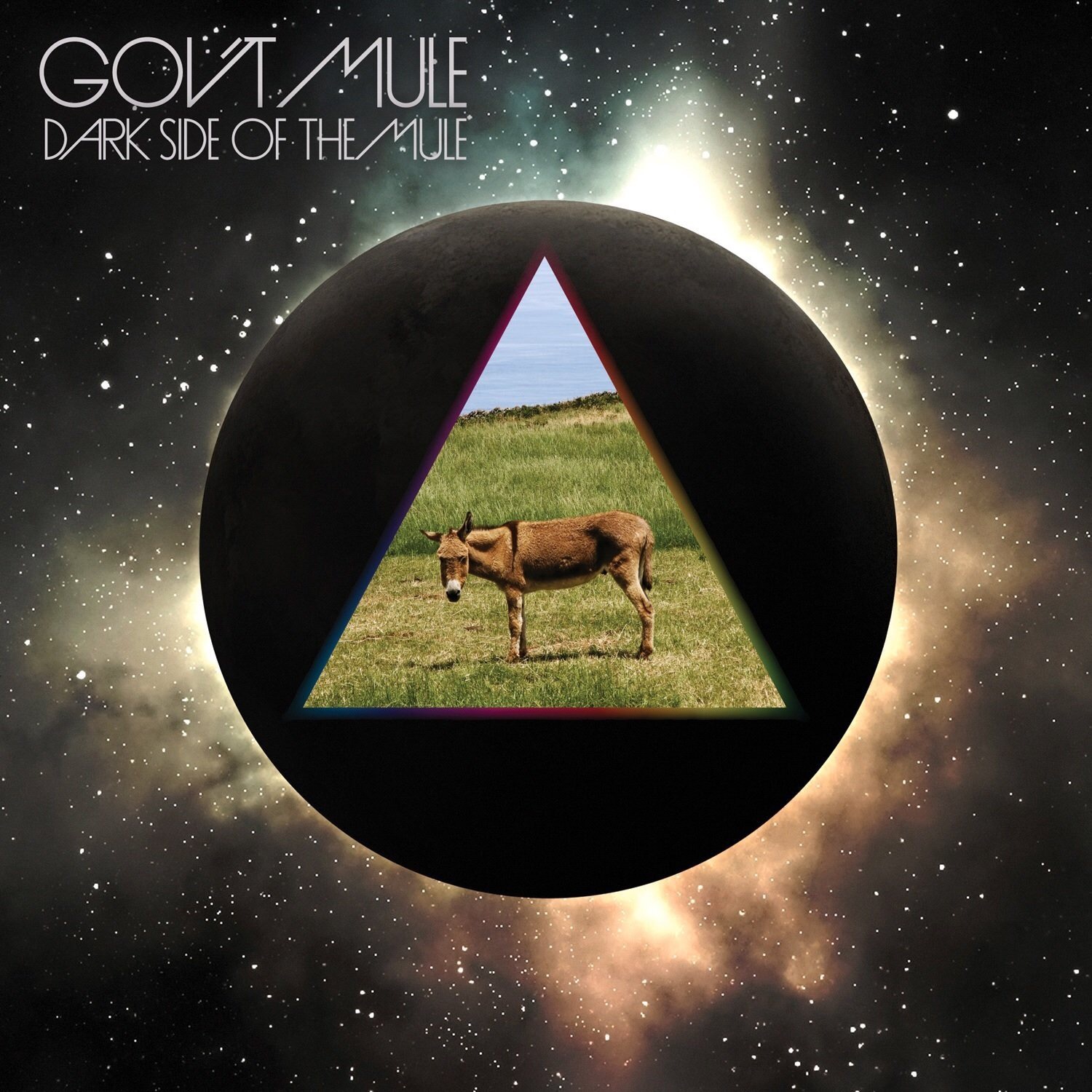
Gov’t Mule is celebrating their 20th anniversary as a band with a variety of live release that are theme based. For example they released a vinyl-only set of Stones covers for Black Friday/Record Store Day in 2014 (Stone Side Of The Mule Vol. 1). They recently released a jazz rock instant classic with John Scofield (Sco-Mule).
This release is focused on Pink Floyd covers. There are two versions – one with just the Floyd covers (single CD and double LP) and a deluxe edition that is the entire Halloween 2008 concert at the Orpheum Theatre in Boston on three CDs (including a DVD video of the show mixed in stereo and 5.1). I purchased the deluxe version. For that version the first set is predominantly from the Mule’s catalog and the second set is Floyd covers.
I am new to Gov’t Mule, but I have for a long time admired Warren Haynes work with the Allman Brothers. Last fall I picked up the Record Store Day Stones’ cover album and was struck by Haynes vocals (he can obviously rock the guitar). With the Allman Brothers his vocals are typically a bluesy Gregg Allman growl. But on the Stones covers album he affected something closer to Jagger.
On Dark Side Haynes mimics David Gilmour’s vocals and guitar playing. When you hear the Mule cover Floyd you realize how bluesy Floyd’s music is at its heart – atmospheric and foreshadowing techno, but bluesy at its heart. The Floyd covers are pretty loyal to the originals – but with just a touch of a jam band feel.
The performance is five-star and the recording is three-star (Sco-Mule is better sonically). The DVD video quality is a bit grainy, but sonically as good as the CD. Sorry, but I don’t have the tools to review the 5.1 mix. The Floyd songs are so familiar – it is fun to hear a group of talented fan-boys take them for a ride. Overall the covers are pretty faithful, but with a touch of looseness that is just right.
My experience with Stone Side, Sco-Mule and Dark Side Of The Mule has got me digging into the Gov’t Mule’s catalog (looks all but their first album is on Spotify). What a great band. I have a ticket to the Sco-Mule concert in Minneapolis this week and I am really looking forward to it. It is fun to “discover” a band who has an extensive back catalog to mine.
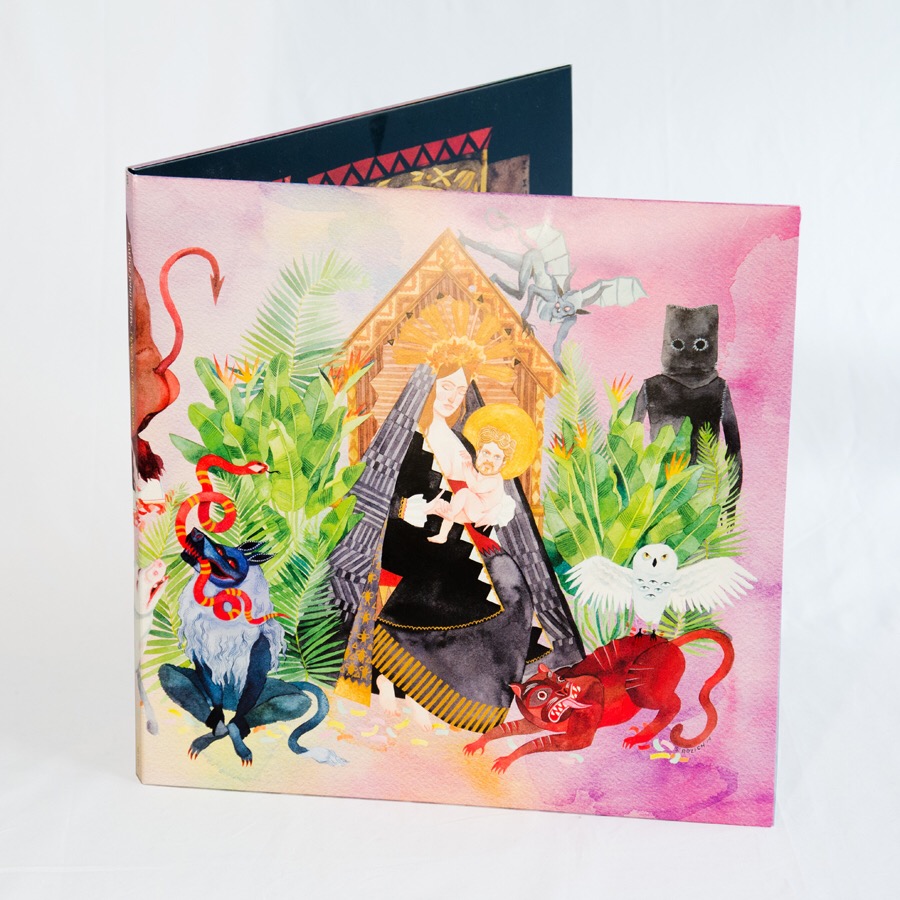
Fear Fun was one of my favorite albums of the last ten years so it’s follow-up has big shoes to fill. I Love You, Honeybear is a much subtler offering that takes a few listens to reveal its brilliance, but it is a worthy successor.
Father John Misty is still channeling a Laurel Canyon vibe with Van Dyke Parks grandeur. Songs are beautifully and richly arranged to slightly disguise wonderfully twisted lyrics (e.g. Mascara, blood, ash, and cum on the Rorschach sheets where we make love). Father John Misty is in love, but he has not lost his bite.
I first listened this album on Spotify and I thought it a bit ho-hum. I listened to it several more times (out of reverence to Fear Fun) and it started to grab me. But it was not until I listened to the LP (regular edition) that the music really popped. I have not had the privilege of listening to it on CD or high def so I don’t know if it is just the inadequacy of lo rez streams or digital mix in general. The LP is at 45 RPM for maximum vinyl sonic experience. It sounds grand and you get to really sink you head into the lush pillow of Father John Misty and all his grand ambitions (stings, harps, horns, searing electric guitar, etc.).
If you dig well crafted folk pop with laced with dark twisted fantasies I Love You, Honeybear is for you (think Joni Mitchell, a splash of Brian Wilson and a twist of Kanye West). .

I have been a John Scofield fan since I was introduced to him as part of Miles Davis’ band in the 80s. I am less familiar with Gov’t Mule but I am a fan of the Allman Brothers’ Renaissance that Warren Haynes is responsible for.
I became aware of this collaboration when I was Googling for some background information on Gov’t Mule’s Dark Side Of The Mule album. I discovered there was a Sco-Mule tour this winter. I bought my tickets to the Minneapolis show and then was delighted to learn there was going to be a Sco-Mule album too.
The album is drawn from two live shows that Scofield did with Gov’t Mule in 1999. It sounds as fresh today as if it was recorded yesterday. This is classic groove oriented jazz rock. Lots of funky shredding. The best surprise is the keyboards (Dr. Dan Matrazzo – no idea who he is but he is amazing). The album has a lot of James Brown grooves that creates a great platform for Haynes and Scofield to spar.
The album is all instrumental with most of the songs clocking in well over 10 minutes (the album is two and half hours spread over two CDs). I don’t think it is an insult to call this a great jam band. Every song is pure joy. This a classic jazz blowing session that has Haynes and Scofield playfully throw punches. They tag off to Matrazzo too. Recording quality is top-notch for a live show. There are some amazing sounds coming out of these guys. Scofield sounds like a sax, electric violin and a turntable besides his great “regular” guitar tone. Haynes is his usual bluesy self which grounds the session as Scofield goes nuts. Matrazzo is amazing keyboard player (think Headhunter’s era Herbie Hancock) – I have got to find more stuff by this guy. I can’t wait to see this gang live.

Bob Dylan, like his state-mate Prince, continues to know how to play the PR game keeping his name in the press regarding his latest artistic expression. The headline is that Shadows In The Night is Dylan’s Frank Sinatra album. Is it a joke? Is he being ironic? Is he just another aging pop star trying to make a quick buck of the great American songbook?
Well I am here to tell you Dylan is serious and that he has approached this project authentically. Let’s backtrack – Dylan has always been a musicologist, with expert knowledge of the last couple hundred years of the people’s music (pop, rock, folk, country, blues, etc.). Throughout his career he has returned to the musical equivalent of comfort food. He clearly loves the kind of music Sinatra made famous. It is hard not to be a pop music fan and not appreciate what Sinatra could do with a song.
Every few years I am reminded of Sinatra’s greatness: a song in a movie, an old clip on TV, an accolade by a respected musician, a cover version, crate digging, etc. Today it is this devoted tribute by Dylan. A great cover song of well established songs needs to be reinvention, if not a deconstruction. The cover needs to have the fingerprints of the originator and the interpreter. Shadows In The Night hits it out of the park. This is clearly a Dylan album, but it is also a tribute. It bangs you over the head with how truly great the Great American Song book is both lyrically and musically. And who, frankly, would know better than a the melded mind of Sinatra and Dylan.
My first listen to this LP (yes I am listening to the vinyl version) sounded a bit like Dylan was acting – pretending to be a crooner. I tweeted that Dylan’s croon sounds like the Electric Fetus’s floors are creaky (which is one of the best sounds in the word). But repeated listens to this album reveals Dylan’s authentic voice.
He has been hinting at this album since Time Out Of Mind. On each of his albums over that last 15 years, Dylan has written and performed original songs that would not sound out-of-place on Shadows In The Night. On his latest tour he has been playing “Stay With Me,” which is an obscure song affiliated with Sinatra. When I heard this song at Dylan show this past fall it was the highlight of the night. I assumed it was a Dylan song I had not heard before. It was only afterwards, when reading reviews, that I learned it was part of the Sinatra catalog. That night Dylan gave that song the most love of any song of the show and his most conventionally beautiful vocal treatment. The phlegm had been cleared away for this treat.
Dylan makes these songs his own. First and foremost this is the best “Dylan Voice” in years. It is as unique as his Nashville Skyline voice. And like that voice, Dylan is not being a mimic, but he is in a mood: late at night, reflective and slightly sentimental. This voice is proof that his current gravel of a voice is intentional and not a damaged wreck. Second he has arranged the songs for the Bob Dylan Band (not the traditional Nelson Riddle treatment/mimic). The primary instrument is pedal steel (an unusual, yet perfect choice – it is like a sob in the night). Third Dylan has clearly study these songs and thought about how he would present them – it sounds intentional and not tossed off – and that is a good thing. The album has a melancholy feel both lyrically and musically which seems appropriate to where Dylan is in his career and life.
The important message I want to report is that this album works – it is not a novelty album, but a legitimate artistic statement by one of the most important pop artist of our time. That message is that great songs are great songs. Songs so great that Dylan would perform them in a tender and wistful manner. Dylan once said:
Steal a little and they throw you in jail
Steal a lot and they make you king
On Shadows In The Night, Dylan is king. I have listened to this album about ten times this week and every time I hear it sounds better and moves me more. Another brilliant Dylan surprise. Dylan’s voice and phrasing are the perfect vessel to carry these gems into my ears.
Unfortunately Sony and Dylan decided to not put this album on Spotify – hopefully it will show up later. In the meantime here is a playlist of the Sinatra “originals.”
While writing up my best of 2015 I noticed the album was now on Spotify:
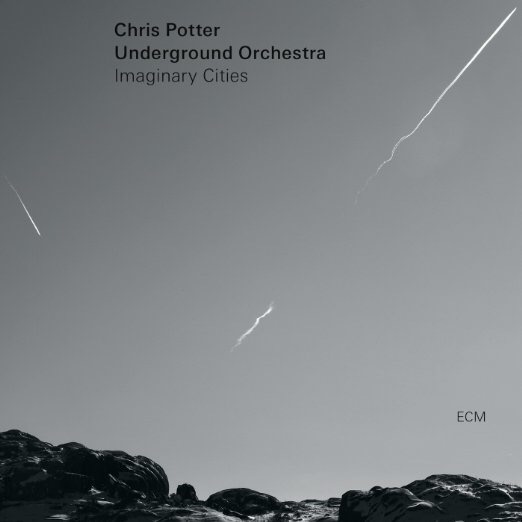
I discovered Chris Potter through Pat Metheny’s Unity Band album. I even had the privilege of meeting Potter when the Unity Band played at Minneapolis’ Dakota jazz club a few years ago.
Potter is a great instrumentalist (he plays tenor sax, soprano and bass clarinet on this album), but he is also an inspired composer. I am not familiar with Potter, outside the context of Metheny’s bands, so I don’t know how this album compares to the rest of his catalog. If this album is representative – I have been missing out. This is a great album and it will be on my 2015 best of list for sure.
The basic concept is for Potter to take his regular working band (Underground, an electric “groove”-based ensemble featuring Craig Taborn on keyboard, Adam Rogers on guitar and Nate Smith on drums) and puts it an acoustic context and augments it. The primary augmentation is a string quartet, but there is also vibraphone and marimba – thus this group is dubbed Underground Orchestra.
I assume Potter has been inspired by his boss Metheny, because the album has a strong Metheny vibe: gorgeous melodies, elaborate (yet tasteful arrangements) and when appropriate – shredding! Where Metheny would orchestrate with keyboards, his synth guitar or his Orchestrion, Potter uses players.
Potter is a great instrumentalist (tenor and soprano sax, bass clarinet) and great composer (the album is all originals). The album opens with a four section suite that mixes jazz and classical elements, but this is a jazz album. Potter plays gentle melodies and wild solos and it all works. The arrangement are top notch. This album is both easy to listen to and complex filled with deep textures. I look forward to exploring it further.
PS – this album is on ECM – a label that has never failed me!


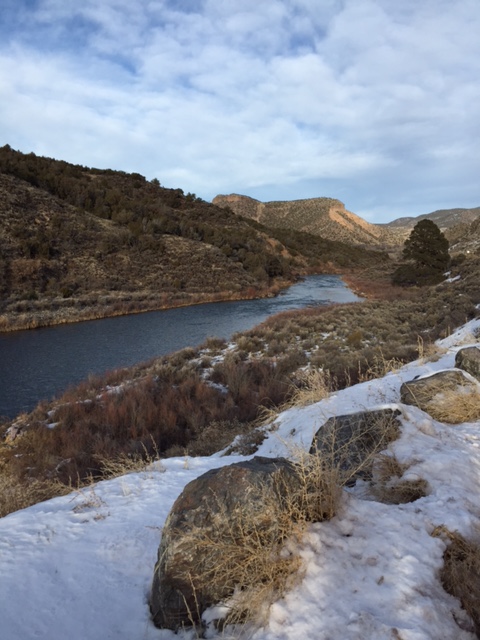
For a few years now my wife and I have had this fantasy that we would retire to New Mexico – yet we had never been there. Well we finally visited for a long weekend. Specifically we visited Santa Fe. We had an image of New Mexico, Santa Fe in particular, as a hip place to live – we assumed it had better weather than Minnesota and would be sunny most of the time. Our assumptions were mostly on the spot (January is winter in Santa Fe, better than Minnesota, but still winter). January is about as off-season as you can get in Santa Fe, but it worked into our schedule so we went anyway. The short answer is it is definitely somewhere we could imagine living – we liked the vibe and we will be back.
Highlights:
Accommodations – Sage Inn: We stayed at the Sage Inn because it was reasonably priced, a good location and it had decent reviews. I have to admit that when we drove up to hotel it was less than impressive. But we will definitely stay there again. The rooms were clean, nicely decorated, it had a better than average hotel fitness room, free breakfast, the location is great (a quick free shuttle ride to the Plaza and within easy walking distance of the Santa Fe Railyard) and a great value. We hate spending a fortune on a hotel when we are sight-seeing – we just need an inexpensive and decent place to lay our heads – the Sage Inn met and exceeded our expectations.

Event – WinterBrew: – My wife had the good sense to Google what was happening the weekend we visited Santa Fe and bought tickets to New Mexico Brewers Guild WinterBrew. The event had 16 New Mexico breweries gathered for a cozy winter evening inside the Santa Fe Farmers Market hall. Great beers, great conversations with some locals and frankly it felt like home.

Best Local Brewery and Beer – Marble Double White – Ronnie (who by the way was the best Santa Fe ambassador/sever we experienced in Santa Fe) at the Blue Corn Cafe gave me a mini beer festival on night number one of our visit to Santa Fe. The hands down winner was Marble Brewery‘s Double White which is the Belgian White Blue Moon wishes it was – fantastic flavor. It was the best beer I tasted at the WinterBrew festival too. Every Marble I tried was great.

Best Eats – Vinaigrette – By day 3 I had bloated myself on tacos, chips and beer and I needed a change-up – Vinaigrette was just what my stomach ordered. Focused on salads – I had the Spinach-Mushroom Salad with scallops and it may have been the best salad I have ever had. My wife had a daily special that was kale based and it was just a spectacular. We finished off with their flowerless chocolate tort, which, to my simplistic taste buds, was the best brownie I have ever had.
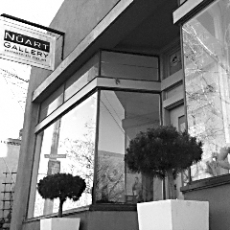
Best Gallery – NüART Gallery: My wife and I are not visual art people – we go to a museum about once a year and collect rock and roll posters (and only for shows we have witnessed) and some posters by local Minneapolis artist Adam Turman. But when in Rome… I knew Santa Fe was an art gallery town – but honestly I had no idea that there would be so many galleries (Santa Fe boast that they are the only city in the world with more than 200 world-class art galleries in two square miles). It turns out the Santa Fe gallery scene is world-renowned. It was beyond my comprehension how they could all stay in business. We probably visited about 25 galleries. I was struck by the art, but also by the galleries themselves which were amazing spaces. My favorite – not necessarily for the space – which was great – but the collection and the very friendly and informative gallery employee – was NüART Gallery. I really liked the work of Michael Bergt who had powerful images of human body that had a Aztec feel. I also like the work of John Tarahteef which appeared to me as whimsical realism.

Best Record Store – The Guy In The Groove: As great as the art galleries are in Santa Fe the record stores are pretty underwhelming (especially by my Twin Cities and Chicago standards). I found two: The Guy In The Groove and The Good Stuff. Both had very small inventories, but The Guy In The Groove had a much more interesting inventory. The Good Stuff had the better hangout ambiance. But in the end it is about the inventory and The Guy In the Groove was small but mighty (see me digging above). I picked up a very nice copy of Herbie Mann’s Right Now (1962 in mono to boot!) for $5 and a couple other jazz titles. He had some other cool stuff, but given the price (not unfair mind you) I would have wanted to sample first. Given I was from out-of-town I would be in no position to return it (the shop has a very fair return policy). Based on the three titles I picked up the store stocks clean wax. The inventory had some pleasant surprises – where on earth did a vinyl copy of Neil Young’s Mirror Ball come from? If there is enough turnover in the inventory, this could be a regular dig for me (I will definitely give it second taste the next time I am in town).

Surprise – El Museo Winter Market: After spending some time at the Saturday Farmer’s Market (which was inside – yet another great Santa Fe interior) my wife spotted an unassuming sign across the tracks. “Lets go see what that is” she suggested and so we went over and poked our heads in. WOW – this was part art fair, craft show and upscale flea market. Totally cool.
In summary: I have never been to the high desert and you can see why it captured the imagination of Georgia O’Keeffe. It is an exotic beauty – especially for an arctic-cat like me. Given it was off-season we kind of had the place to ourselves – which was kind of cool and creepy at the same time. The architecture is not that interesting from the outside, but the interiors of the various buildings were amazing. How a place with such a great outdoors has such cool insides is beyond me. Most of all this was a long overdue getaway for my wife and I. Love you Pea – thanks for making it happen!