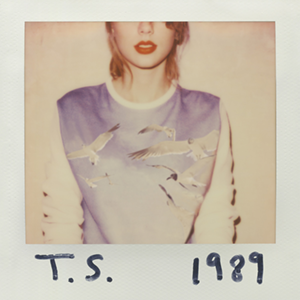
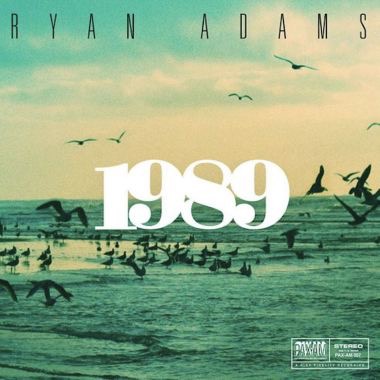
I am pretty late to the party. I am just now listening to Taylor Swift’s 1989. I am not a hater, but I have never listened to T-Swift (at least that I am conscious of) in my life. I just have not had the opportunity – especially in light of her not being on Spotify.
I like the concept of Taylor Swift. A pop star who is fully conscious of being a pop star. Kind of like U2 embraces being rock stars. No irony and no pretensions. Authenticity fake and in total control. A mirror reflecting on itself. I like that there appears to be no Svengali. But some how I was never interested to listen until now. I am a Ryan Adams fan, so I had to check it out what the hell has inspired him.
I listened to the Ryan Adams cover of 1989 the day it came out and I thought it was the blandest thing Adams had ever done. I have been giving the Taylor Swift original repeated spins and it is catchy as hell. And I admit I have heard “Shake It Off” prior to this serious listen.
I come to T-Swift as a fully blossomed pop star vs. country pop princess. So there is no shock that she opens the album with a Lady Gaga like anthem: “Welcome To New York.” That song could be performed by any pop diva, so a little underwhelming.
Adams turns the song into a late 70s Springsteen arena anthem, which seems like a pretty appropriate take.
“Blank Space” sounds exactly what I imagined Taylor Swift would sounded like both musically and lyrically – a boy crazed predator.
Adams puts on his best Nick Drake mask on. Every singer songwriter can’t seem to help having a Nick Drake moment. Interesting twist on the original.
“Style” opens like a long-lost Blondie track. The chorus is a fast forward from the 80s to contemporary pop. This is an extremely fun song and reeks of T-Swift’s sexy librarian image.
Ryan turns it into an Arcade Fire song.
“Out Of The Woods” is like a short movie. It tells a story like the best commercials. I am starting to realize what a great songwriter she is.
This is the first time Adams makes one of the songs totally his – this could easily be on one of his albums. Mellow and contemplative and dripping with emotion.
“All You To Had To Do Is Stay” is a wonderfully bitter. No delicate flower, Taylor is not heartbroken – she is pissed.
Another shade of Adams – the pop rock Ryan. Again this would not sound out-of-place on several of his albums.
“Shake It Off” is what a great pop song should be – multiple dimensions: a playful dance song, a sing along, a stadium anthem and a fuck you.
This is where it gets tricky – tackling a ubiquitous single that most people love just for the hook. Adams slows it down and gives it a Springsteen “Streets of Philadelphia” groove. He savors each word and helps you understand that under the pop sheen of the single there is a gorgeous song. Adams has taken this tactic before when he took the Stone’s “Brown Sugar” and deconstructed it to reveal its disturbing lyrics.
“I Wish You Would” is heartbreak but with your chin up. Hurt but still defiant.
This is the closest to the original, yet purely Ryan Adams.
“Bad Blood” is a cooler single to me than “Shake It Off.” It is darker and more complex musically. Everyone has a friendship gone bad and can embrace this anthem.
Pure Ryan Adams – this absolutely could be his own song. He follows the dynamics of the original, but the instrumentation and voice is all Ryan.
“Wildest Dreams” finally slows down. I like that this is quite song after all the bombastic songs before it. An embrace of love you know is going to go wrong.
Ryan pulls out his alt-country groove on this one. The opening guitar riff is thick and twangy. This has the roll down the windows on the car / turn up the stereo and go cruising groove. Upbeat melancholia.
“How You Get The Girl” sounds like it would be a pure country song if it was arranged differently.
Ryan gets his most contemplative, opening the song with just acoustic guitar strumming and soft voice. Then an occasional kick drum to emphasize the heartbreak. Taylor’s version is sassy and sarcastic. Ryan’s has a more kicked in the nuts heartbreak feel.
“This Love” is a gorgeous ballad. The least adorned song on the album. It has a purity and a vulnerability. Interestingly it is the only song on the album where Swift does not share writing credits.
Adams also takes a stark minimalist take on the song – even more unadorned than the Taylor original.
“I Know Places” is us against the world.
Ryan makes it an Elvis Costello song – what could be more against the world than that!
“Clean” ends the album with a nice atmospheric feel. It floats. Lyrically it is coming up for air after almost drowning. Redemption.
Adams goes Eagles flavored country rock on his take.
So after listening to T-Swift’s album several times I get why Taylor Swift is such a big thing. She has got the looks, the hooks and there is no gobbledygook. You fall for the character and assume it is autobiographical, but you can’t be sure if you are being deceived. You feel like you know her, but you also now she is unattainable. It is one hell of an act.
The fact that Ryan Adams would fall for T-Swift should not surprise us. He was married to Mandy Moore and used Creed to inspire Jenny Lewis. I believe he is genuinely gob smacked by Taylor and 1989. He is not ironic and this is not a career move. He loved the album enough to make it his own. Listening to the Adams’ cover after studying the original is better than hearing it cold. It is required to live in the shadow. It is not a standalone – but a genuine companion piece – which is makes it even more a love letter from a fan to the star. I now officially love Ryan’s 1989.
Taylor Swift deserves the magazine covers and mega success. I can’t remember a pop star who is so comfortable in the spotlight, yet not pandering. The fact that she has a super-fan like Ryan Adams who is willing to risk is artistic integrity by hooking on to her train is one hell of a compliment.
Sorry no Taylor – remember she hates Spotify – her one blemish.

This post has been sitting in draft status for a couple of months now. Other releases have somehow leapfrogged it. But I consistently come back to it the LP, so I owe it a post. Now it is time to write my best of 2015 post, so I feel compelled to get it out of draft status.
Craig Finn takes a different approach from his day job with The Hold Steady on this album. But his voice is so distinctive it is hard for him to stray too far.
He lures us in by throwing a familiar pitch with the opener “Maggie I’ve Been Search For Our Son.” On repeated listens this song has a lot more going on than the usual arena-bar anthems of The Hold Steady. It has Lindsey Buckingham pop finesse.
Finn throws a change-up with the second cut “Roman Guitars.” That song incorporates horns and vocals in a very anti-rock and almost dissonant way. At first It did not really work for me, but on repeated listen I started to appreciate the Tom Waits beauty of it.
“Newmeyer’s Roof” is straight ahead rock, but in a different style than the arena-bar anthems of The Hold Steady. A little more straight 80s Springsteen channeled through Arcade Fire. It is pretty deep lyrically as Finn recounts 9/11 and watching the Twin Towers fall from roof of a friend’s apartment and the years of recovering from witnessing that tragedy firsthand.
“Sarah, Calling From A Hotel” has a minimalist Bruce Springsteen Nebraska feel. It has a nice sense of despair about it.
“Going To A Show” has a wonderful sway to it. Guitar and piano. This would not be out-of-place on a Wilco album. It includes the great lyric: “I try so hard not to talk to myself/But it is hard ’cause I’m always alone.”
“Sandra From Scranton” is a portrait of desperate adulthood: “She don’t go to go to shows anymore.”
If ever a character from the bible deserved a rock song is St. Peter. “St. Peter Upside Down” flip-flops between the story of the crucifixion of St. Peter and a modern tale. The song has a great horn accent.
“Trapper Avenue” is a surreal tale that sounds like the bastard love child of Springsteen and Lou Reed.
“Christine” is the sound of longing. A nice portrait of unrequited love.
“I Was Doing Fine (Then A Few People Died)” might be the best song on the album. A great arrangement with a foundation of horns and cool background vocals. It is just short enough to be a tease.
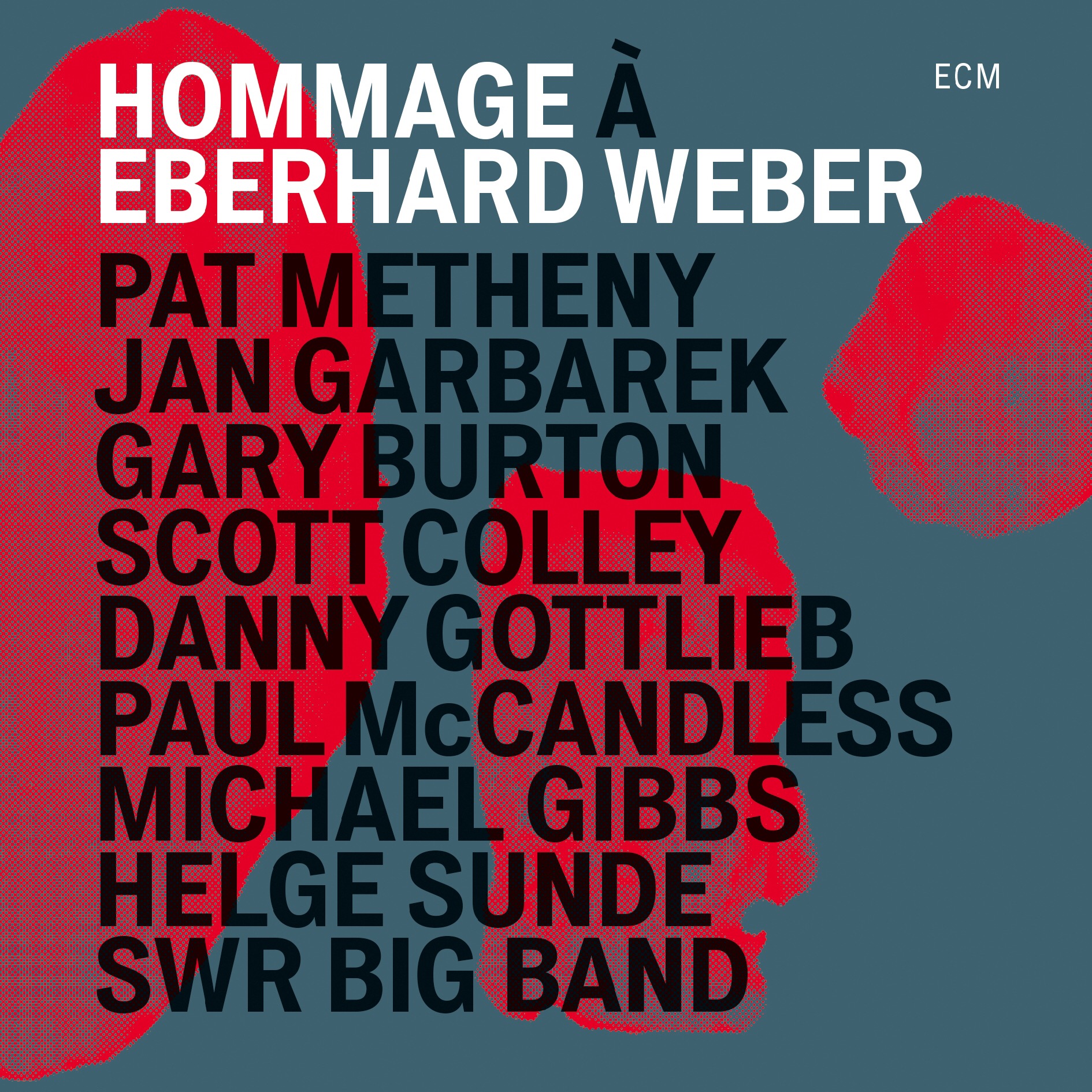
I was introduced to the ECM sound by Pat Metheny in the late 70s via his Pat Metheny Group album. I have played that album more than any other album in my collection. Once turned on to Metheny I backtracked through his albums and found a teenage Metheny in Gary Burton’s band. Which led me to the very fluid and melodic bassist in that band: Eberhard Weber. That led me to explore Weber’s ECM catalog which led me to Fluid Rustle. An album title that perfectly describes the contents.
Hommage À Eberhard Weber is credited to Metheny, but it really various artists. No doubt Manfred Eicher was looking for an excuse to issue a fresh title from ECM’s most famous son. Other big names (at least to me) are Jan Garbarek (a frequent sax player on many ECM sides), Gary Burton (perhaps the greatest vibe player of his generation), old PMG drummer Danny Gottlieb and Paul McCandless (Oregon). New to me is the SWR Big Band.
The centerpiece of the album is the second cut: “Hommage” a 31 minute composition by Metheny based on Weber improvisations and featuring tapes of Weber (the concert on which this album is based on also had video of Weber to augment the performance). Weber is represented on tape because he has been sidelined by a stoke since 2007.
The SWR Big Band backs Metheny. It is great to hear a classic Metheny composition performed by a big band. Metheny has always had grand rich arrangements, but with a very talented big band and brilliant soloists, Metheny really gets some elevation. I have always loved Metheny with horns and to have a full big band is a real thrill. The use of Weber via tape could have been a tacky gimmick, but it turned out brilliantly. I assume we can thank Metheny’s composing, arranging and adventurous musical heart for pulling a most amazing rabbit from his hat.
Pat Metheny explains his methodology in the liner notes:
“Since Eberhard’s stroke in 2007, he has not been able to play. But I felt that his sonic identity was such a huge component in his work that I wanted to somehow acknowledge it in whatever form I could. It came to me that it would be interesting to take the idea of sampling one step further; to find video elements of Eberhard improvising and then reorganize, chop, mix and orchestrate elements of those performances together into a new composition with a large projection of the Eberhard moments that I chose filling a screen behind us as we performed. It seemed like a new way to compose for me that would almost take the form of visual sampling.”
The rest of the album is filled out by Weber compositions. The range from minimalistic, just sax and Weber’s bass (the first cut staring Jan Garbarek), to complex big band pieces with multiple soloists (“Maurizius”). Weber’s tone was his calling card, but this album shows what a great composer he was.
If you are a fan of Metheny or curious what a contemporary big band sounds like, you need to check out this album. Unfortunately ECM releases are not on Spotify – so no samples. Here is a trailer to give you a little taste:
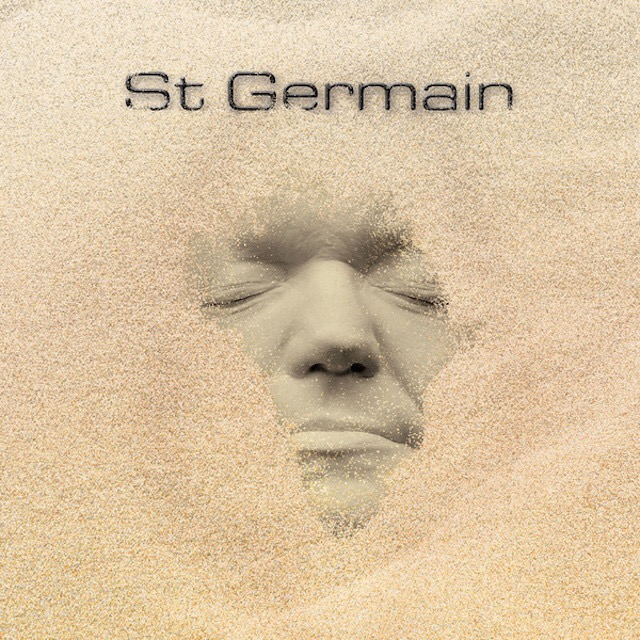
Y2K’s St Germain album Tourist is on my all time favorite album list. At the time I had never heard anything like it. Was it jazz (the Blue Note label suggested that)? Was it electronica (it had elements of Moby’s Play which was a mega hit about this time)? I did not really know, but it sounded great. Per St Germain’s Wikipedia page it is: acid jazz, nu jazz, deep house and downtempo. All meaningless categories to me. My love of this album was not unique – the album sold 3 million copies. It was one of those rare pop masterpieces that comes along every once in a blue moon.
It has been 15 years since Tourist. I had assumed that St Germain was a flash in the pan. Last week I read in the Wall Street Journal that there was a new St Germain album.
When Tourist came out I never figure out what the hell St Germain was (internet resources where not so rich back then). But recent searches have revealed it is French composer producer Ludovic Navarre, who is part of a French school of producers that spawned pop stars like Air and Daft Punk.
Tourist was jazz influenced, but the new eponymous album is Malian (Afropop) influnced. It has the same general feel as Tourist but the African feel makes it all new. Navarre’s featured muse is Malian guitarist Guimba Kouyaté who is the star of the show. His percussive and rhythmic style works perfect with Navarre’s groves. There are sampled blues vocals and featured Malian vocalists. Even though the Malian vocals are in a different language, they convey so much soul that the actual words are not important.
This is a wonderfully groovy record – give it a listen.
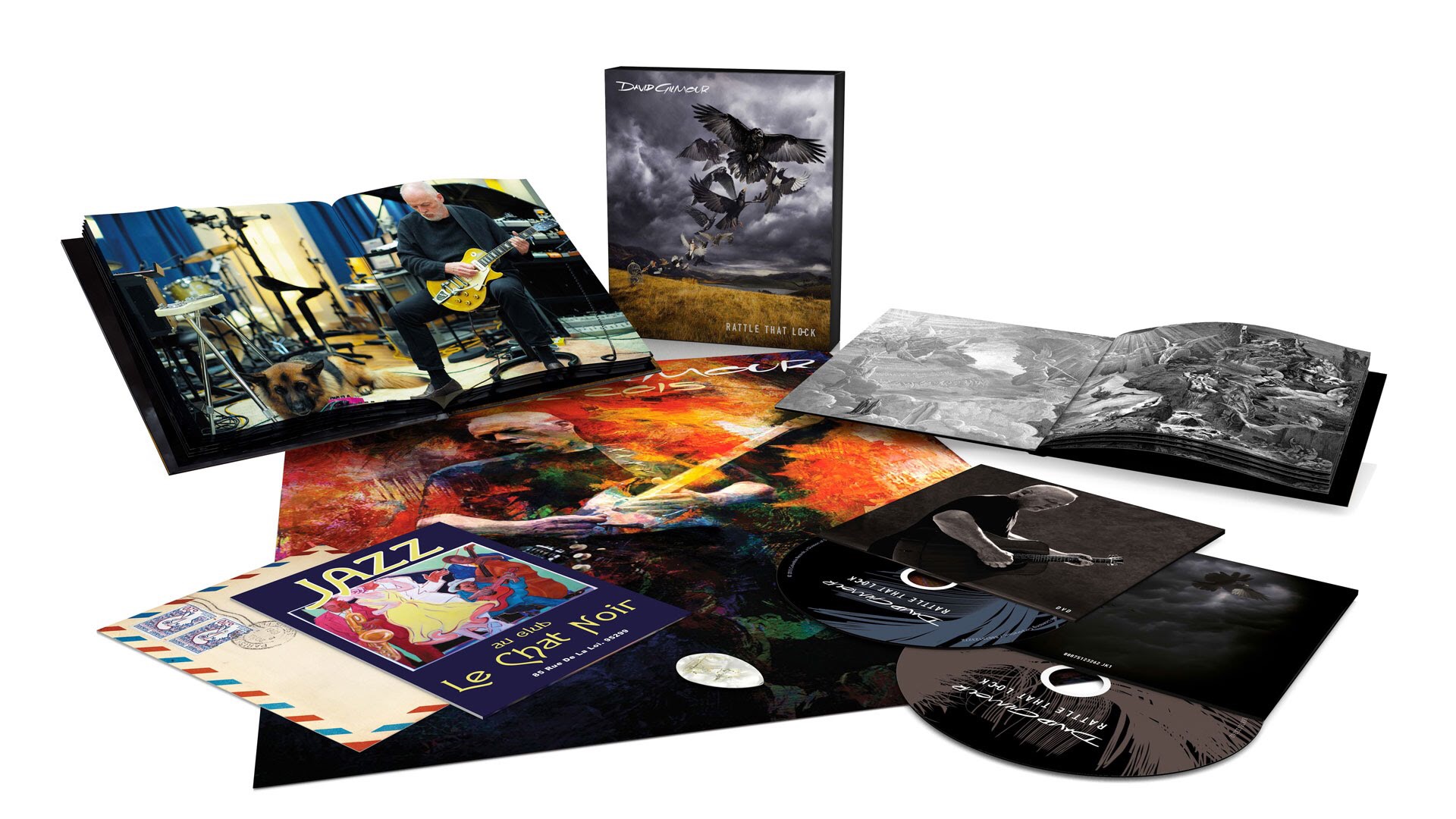
I am a Pink Floyd fan like I am a Grateful Dead fan – I like David Gilmour more than the band (similar with Jerry Garcia). The Gilmour helmed Division Bell is my favorite Pink Floyd album.
Gilmour is not very prolific and so it was with great anticipation that I waited for this release. The album is great and may be Gilmour’s best vocals ever. I had no idea he had such a fine pop voice. In short Rattle That Lock is a pop music masterpiece.
There are not many musicians these days that can afford to present their music as richly as Gilmour is able. In the grand tradition of Pink Floyd this album is total ear candy (on the Godiva side vs Tootsie Roll side). In addition to the great music, the album has two spectacular animated videos for the album’s most ambitious songs (“Rattle That Lock” and “The Girl In The Yellow Dress” – unfortunately this is not available on the internet).
“Five A.M.” is the album’s overture – an instrumental that feature Gilmour’s signature fret work. Gilmour’s electric leads have always reminded me of a cross between sonar and a seagull.
“Rattle That Lock” doesn’t even sound like Gilmour. It sounds more like The Cure than Pink Floyd. Musically the song was inspired by a French train’s pronouncement chime (a jingle) and lyrically by Milton’s Paradise Lost. How Gilmour pulls that off without the slightest pretension is a true high wire act. I learned watching the bonus material that lyrically Gilmour has long been leaning on his wife, the well-regarded novelist Polly Samson. This song displays their stunning collaboration. See the brilliant video:
“Faces Of Stone” starts out with a simple yet elegant keyboard and then Gilmour and company drop into full Punk Floyd mode with a sprinkle of Tin Pan Alley. Gilmour’s soaring guitar holds it all together.
“A Boat Lies Waiting” opens as a gorgeous melancholy instrumental. Gilmour finally begins to sing and his voice is augmented by Crosby/Nash in lush harmony. This is a loving memorial to Gilmour’s old friend and Floyd bandmate Richard Wright.
“Dancing Right In Front Of Me” starts out as little waltz and then converts into full Floyd mode.
“In Any Tongue” surges between gentle meditation and a full-out stadium rocker.
“Beauty” is a nice instrumental allowing Gilmour to display some nice guitar work.
“The Girl In The Yellow Dress” is a jazz song and it really works. It is a cinematic narrative of watching a beautiful woman take over a club. Again Gilmour sings in a voice I have never heard before. I can’t wait to play this for people and play “who is this?”
“Today”has a Talking Heads feel, yet undeniable Floyd feel. This could almost be a dance song.
“And Then…” is a nice closing meditation echoing the opening cut.
I have been listening to the Blu Ray in stereo PCM (96 kHz/24 bit) and it sounds great. It is pristine, yet warm. As to be expected this is a well-engineered album. In a day when the studio has lost its place in recordings it is great to hear rooms.

I am not sure there is a band name that so perfectly matches the band’s music. Low are the masters of the slow boil – Laconic and lugubrious. Their music is a whisper – more of a suppressed scream actually. Not depressing, but it gives the feel of deep contemplation.
I first got turned on to Low on their 2005 release The Great Destroyer. An album so great Robert Plant has covered two of its songs (“Silver Rider” and “Monkey”). Their material has been consistently good and Ones And Sixes continues the trend.
The band is defined by their minimalistic arrangements and sweet vocal harmonies of Alan Sparhawk and Mimi Parker. On their last album, The Invisible Way, Mimi took a more prominent role with the vocals and that brought the band to a new level. She has a similar role on Ones And Sixes. Low has reached that esteemed place that I will buy their latest release without sampling or reading any reviews. You just know it is going to be good (and maybe even great).
The LP opens with “Gentle” where a resting heartbeat of a rhythm anchors intertwined vocals the ends with a nice Mimi solo vocal. Although quite, the music arrangement has an edge – it sounds like beautiful rust looks.
“No Comprende” has a simple guitar riff as the foundation for a passionate Sparhawk vocal. The song ends on a tangled guitar solo and a fade to black.
“Spanish Translation” opens light an airy, gets heavy and then floats off to the stratosphere. Repeat. A lesser band would have bent to hubris and made this an anthem. Low shows restraint and we are blessed with the results.
Side B opens with “Congregation” a Parker lead. Her voice is so compelling you almost miss the nice amazing bass work going on behind her.
“No End” has a late 60s prog band feel.
“Into You” sounds like a Radiohead song if they were fronted by a chick and were not afraid to mix in a little guitar.
Side C starts light and poppy with “What Part Of Me.” A bouncy number disguises desperate lyrics:
“Can’t you see that I’m bleeding out here?
Waking up from a dream and I’m here
It’s getting hard to believing out here
It’s a 100 degrees out here.”
“The Innocents” is a guitar driven song with Wilco’s Glen Kotche contributing percussion.
“Kid In The Corner” is almost danceable. Just a plain fun track.
On to Side D – opening with the jangling guitars of “Lies.” This is the most blatantly pop song on the album. Low puts on their Fleetwood Mac pants on. This deserves to be a hit. An absolutely soaring chorus.
“Landslide” opens with ominous chords. The most metal song on the album. Think Black Sabbath on quaaludes. It has a wonderfully meandering ending like Neil Young wandering off with the Horse. Distortion has never sounded more hypnotic.
“DJ” has a thickness to it. It makes me want to take a bit out of it like a warm cookie fresh out of the oven.
This is an absolutely gorgeous sounding album. The vinyl edition is pristine and lush. As usual great packaging. Low continues to deliver.
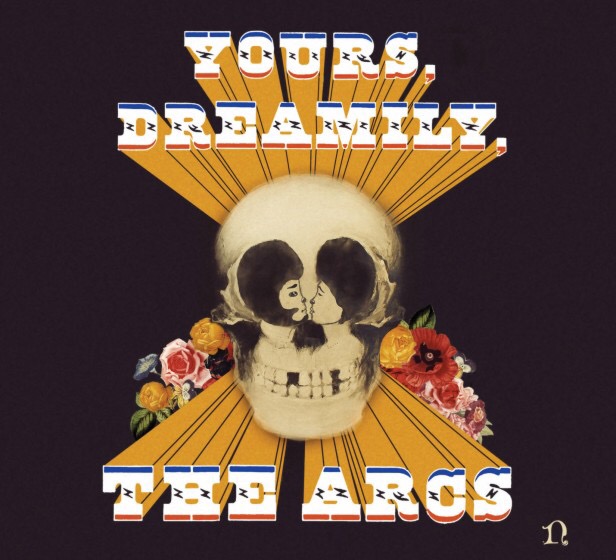
Dan Auerbach is a busy man between his main gig in the Black Keys, producing (Lana Del Ray, Jessica Lea Mayfield, Dr. John, etc.), solo work and collaborations. If that was not enough, this is his second side band (2009 Blacroc was the first).
If you are a fan of the Black Keys you will like The Arcs. The first listen sounds like a Black Keys album, but with each repeated listen some of the songs distances themselves from the Black Keys. It has Auerbach’s distinctive vocals and fuzz guitar, but some of these songs have a different groove. It is both more pop and more experimental than the typical Black Keys album.
I have listened to this album on my iPhone and ear buds and on vinyl through my home stereo. This is an album that really needs a good stereo to be appreciated. The big difference between this album and a Black Keys album is that this has much more elaborate arrangements than the garage rock of the Black Keys (although the last Keys album produced by Danger Mouse had a more produced feel). These arrangements are subtle and are lost on poor equipment. Not that the album can’t be appreciated without a good stereo, but the gimmick here is the sonics and so without a good stereo some of the songs sound pretty standard issue Black Keys (which is not a bad thing).
Side One opens with a sample from self-hypnosis instruction that very appropriately suggest that what will follow will “you may feel a pleasant tingling sensation.” Indeed.
“Out Of My Mind” kicks off the festivities in familiar fashion. This cut would not sound out-of-place on a Black Keys album.
With “Put A Flower In Your Pocket” the experiment starts. Auerbach defers the guitar soloing to another (Russ Pahl) and focus on synth and acoustic guitar. There is an almost Flaming Lips flamboyance to the cut.
“Pistol Made Of Bones” has a spaghetti western feel to the song (Danger Mouse must have worn off on Auerbach with last year’s Mouse produced Turn Blue).
“Everything You Do (You Do For You)” has an almost reggae feel (if Tom Waits was leading the band).
“Stay In My Corner” is a gorgeous ballad. Auerbach has a nice falsetto at points. He also plays some soulful slide guitar. The song has U2 magnificence.
“Cold Companion” has a grungy narcotic BeeGees feel to it. Imagine John Travolta strutting in slo-mo in a dirty white suit. The album also has cool Eagles harmonies. This is my favorite cut on Side One.
Side Two opens with “The Arc” which is pretty standard issue Keys.
Next up is “Nature’s Child” which has a very different sound mainly because it features Lee Fields (who sounds like a female vocalist) vs. Auerbach. This is also a much more atmospheric cut vs. the normal garage boogie of Auerbach and the Keys. The song also has some cool soulful changes in it.
“Velvet Ditch” is a nice piece of 70s pop-soul. Very cool ending with dissonant horns.
“Chains Of Love” is some more nice 70s pop-soul. Flor de Toloache (the first and only established all female mariachi band) spices up the song with some great vocals.
“Come & Go” sounds rich and thick, but per the credits it is just Auerbach and his production partner Leon Michels. It has a very cinematic feel.
“Rosie (Ooh La La)” has a great groove and is easy to imagine this as a hip hop sample.
“Searching The Blue” has a great opening with simple piano part. This is a gorgeous ballad that would not sound out-of-place on a Jayhawks album. Almost a John Lennon hymn. Nice rich harmonies.
In summary there is plenty for a Black Keys fan to love. Auerbach’s adventure with Danger Mouse and his production work for others seems to have released him from the garage rock ghetto to make richer music that as I said earlier is both more pop and experimental than the Black Keys.
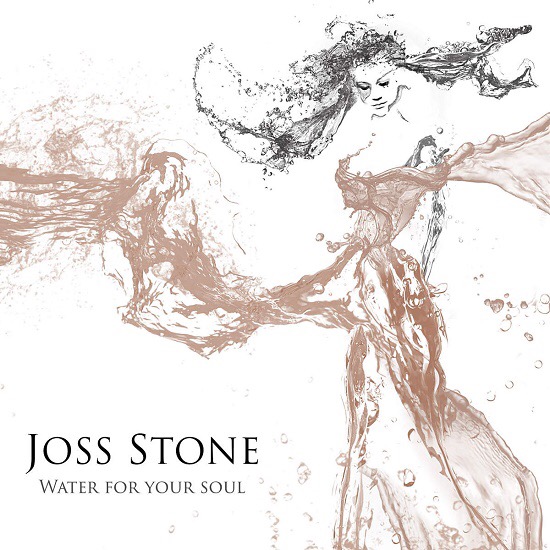
I first became a fan of Joss Stone in 2003 with her neo soul album The Soul Sessions. A big part of the charm was she was a 16-year-old with a mature voice in a retro medium. The timing coincided with Amy Winehouse’s debut and predates Winehouse’s blockbuster Back To Black by a couple of years. Stone was a very big deal in the UK but never has had the same traction in the U.S. despite her American style.
I have purchased every Joss Stone album since her debut, but none have knocked me over like that debut. My sense is she has been over produced. Listening to The Soul Sessions today it sounds fresh, funky and timeless despite over a decade of a zillion artist trying to mine retro gold.
Water For Your Soul takes a reggae-lite approach on most songs and it really works with the gorgeous instrument that is Joss Stone’s voice. She easily shifts from a breathy purr and to a rock and roll roar – often in the same song.
Per Wikipedia: The idea for a reggae record comes when Stone worked with Damien Marley on SuperHeavy in 2011. In an interview for Official Charts she stated: “Damien actually said to me, ‘Joss, you have to do a reggae album!’ I’m not crazy enough to know that a reggae album from me would be a very weird thing to do, but the songs we’ve created are heavily rooted in that sound. That’s the style of the album. There’s also the Irish fiddles, the Sarod, the tabla, the gospel, flamenco guitar.”
“Love Me” sets the tone with the pop reggae that dominates the session.
“This Ain’t Love” is a deep modern soul that would not sound out-of-place on Sade album. But rather than Sade’s mellow voice, Stone belts it out.
“Stuck On You” is a pretty ballad that is a bit over produced for my taste. It would have been an amazing cut if it had a more minimalist arrangement like the tabla outro.
“Star” opens with a nice big fat beat that has just a pinch of reggae in the big pop stew. Here the big production values of the track works and I can close my eyes and hear it backing a transition scene in a movie.
“Let Me Breath” has a nice Latin groove.
“Cut The Line” is more pop reggae that shines a light on Stone’s amazing pipes.
“Wake Up” starts with a Damien Marley toast. The reggae experiment is at full tilt here and her voice and Marley are a delightful volley.
“Way Oh” is a nice reggae slow boil. I appreciate that Stone’s take on reggae is to use her normal phrasing and not some fake Jamaican put on.
“Underworld” – by now the reggae groove is getting pretty infectious. I love this kind of soft boil that invokes a slow sway vs. a happy dance.
“Molly Town” is more of an old school reggae groove.
“Sensimilla” – a title that evokes Rastafari – is the least reggae cut on the album. Instead it is a very mellow soul ballad.
“Harry’s Symphony” is the most traditional reggae track on the album and has gorgeous reggae horns and organ punctuating the track.
“Clean Water” starts with a nice reggae groove with an almost Flamingo guitar over it. Stone jumps in on top and rides the groove with a great breathy vocal.
“The Answer” closes out the set with a Celtic groove. This song screams for a collaboration with Robert Plant and his blues meets world music meets techno sensibility.
Overall this a nicely crafted pop. Nothing revolutionary. But it is hard not to appreciate something so beautifully constructed. Stone’s voice is nicely framed by elaborate arrangements that focus more on the groove than the tinsel. Her voice is always front and center with minimal manipulation. This is classy mature pop that will appeal to retro loving millennials and nostalgic baby boomers.
And if you have the time go back to her debut:
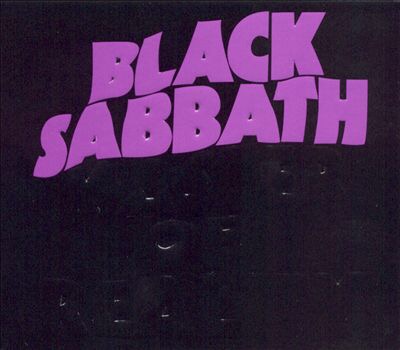
Master is Reality is my favorite Black Sabbath album and this is the first vinyl edition I have owned. I picked it up at the recent Rock N Roll Sale for $7. It is in great shape with the green Warner Bros. center label and black on black embossed cover. Unfortunately it does not have the original “envelope sleeve” containing a poster of the band. It is a great addition to my collection – it has long been on my wish list (it is not rare, but I did not want to spend more than ten bucks).
The album starts with Tony Iommi’s pot induced cough that is the appropriate intro to “Sweet Leaf.” The song is classic Sabbath riffs and lyrics that drip of teenage pot induced profundity. For example, “You introduced me to my mind.”
“After Forever” opens with a riff that must have inspired Tom Petty and then rips into classic Sabbath grunge. I typically think of Ozzy’s as a clown, but lyrically here he is pondering some tough theological questions.
“Embryo/Children Of The Grave” opens with a medieval sounding intro and then rips into heavy metal. At least a thousand bands have been inspired by Tony Iommi awesome riffs like the ones on this song.
Side Two begins with “Orchid/Lord Of This World.” “Orchid” is a baroque acoustic guitar solo, that in classic Sabbath style, transitions into heavy metal. “Lord Of This World” It is turgid slop. Devil worship with a cynical and knowing eye.
“Solitude” is the mellow side of Sabbath. This sets the agenda for many metal albums to come that it is cool to compose pretty melodies.
“Into The Void” is more classic Sabbath riffs of goodness and you can see the foreshadowing of punk and Metallica. Tony Iommi single-handedly creates so much thick sound.
This is a classic album in the heavy metal genre and Black Sabbath are cornerstones of that genre. This is Black Sabbath at their finest.

I have had a love hate relationship with the 2014/2015 Led Zeppelin reissues. They sound great, but the bonus material has been shockingly weak. I have not been able to help myself and I have purchased most of the reissues. Led Zeppelin is one of the greatest rock bands of all time and their catalog was an important soundtrack to my youth. The original CDs sucked so these reissues are a welcome correction. Like a lot of early CD reissues the vinyl was better so this is not a unique criticism of Led Zeppelin.
I remember buying Coda in 1982 (on vinyl of course) and being unimpressed. Timing is everything. The band had retired after the death of John Bonham and the band had updated their sound with In Through the Out Door. Coda was merely a set of scraps to fulfill a contract obligations. I remember being very disappointed at the time.
But time heals. In light of the disappointing bonus material of the 2014/2015, reissues Coda Deluxe is the gem of the reissues (at least it felt that way on the first couple of spins).
Coda now makes sense and the three CD version is the first legitimate set of bonus material in the reissue series. Coda was bonus material. It appears that Led Zeppelin gave us everything and left nothing in reserve. Unless Jimmy Page is toying with us, there are hardly any scraps. This is a huge disappointment to me as my other musical heroes appear to have unlimited reserves (e.g. Dylan and Miles Davis).
Disc one is the original LP which is a handful of outtakes from Led Zeppelin’s carer. Side one is early career and side two is the late career. In hindsight this was significant. The current reissues have shown us there was very little extra material.
When Coda first came out this material did not seem like an album – rather a jumbled mess. It still is a mess, but now we realize that this is the last of the juice that was going to be squeezed from the lemon.
Disk two is early leftovers. It starts out not very promising with an alternative mix of disk one’s “We’re Going To Groove,” but the next cut is an early workout of LZ IV’s “When The Levee Breaks” that is a yawn.
Next comes a rough mix of disk one’s “Bonzo’s Montreaux.” It was only of minimal interest the first time around.
“Baby Come Home” is some nice blue-eyed soul. It is an outake from LZ I and for completist it has been issued a couple of times. I had not heard it before and it is an absolute gem.
“Sugar Mama” is a genuine rarity from LZ I sessions. Another gem.
“Poor Tom” is merely a dub version from disk one.
“Traveling Riverside Blues” is a nice live Robert Johnson cover from 1969. Again completists already have this. For me it was a nice rarity.
“Hey Hey What Can I Do” was the B-side of LZ III’s “Immigrant Song.” New to me, but again completists already have this.
So in hindsight disc two did not have any revelations for the true fan, but a nice bonus for a half-assed fan like me.
Disk three kicks off with “Four Hands (Four Sticks) which is an instrumental from the so-called Bombay Sessions. The song is from LZ IV and this version is with some local Indian musicians nick named the Bombay Orchestra. As best I know this is the first release from that legendary session.
“Friends” is another song from the Bombay Sessions. The raga like feel on this arrangement is perfect.
“St. Tristan’s Sword” is a rough mix from the LZ III sessions and sadly it is an unimaginative and tedious jam.
“Desire” is a rough mix of “The Wonton Song” from Physical Graffiti. Pretty cool to see the song in process of being developed.
“Bring It On Home” is a much rougher and raucous version than LZ II. Again it is fun to see the construction process. This song had lots of controversy as uncredited plagiarism.
“Walter’s Walk” is a rough mix instrumental of the same tune from disk one. Without Plant’s distinctive vocals the song has a nice punk feel.
“Everybody Makes It Through (In The Light)” is a rough mix of a Physical Graffiti track “In The Light.” Not remarkably different from the final version.
In summary Coda is the final statement by Led Zeppelin. It is for hard-core fans. When I first picked up this deluxe edition I was impressed because I never seriously listened to Coda when it was first released and because I was so bonus material starved with the 2014/2015 reissues. After marinating in it for a couple of weeks I am amazed at how great the original studio albums are. There is no fluff. The fact that there was next to nothing left out makes it all more amazing. It is also disappointing that there is not a lost album in the archives.

 Axl's Catch Groove