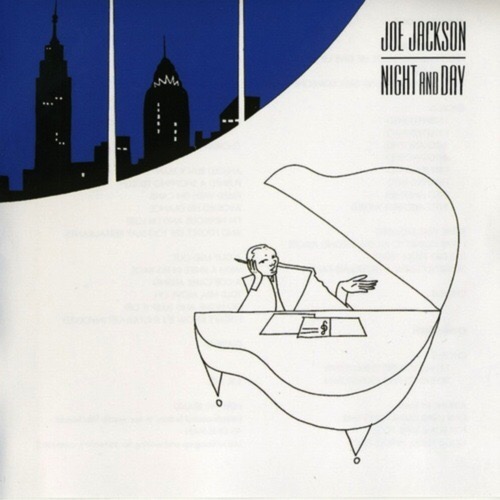
I listened to the latest Here’s The Thing with Alec Baldwin podcast. The episode featured Joe Jackson. The interview reminded me of how much I love Jackson’s Night And Day. I was inspired to give the LP a spin and to add it to my Hall Of Fame.
Jackson burst on to the scene with an amazing hit single in 1979: “Is She Really Going Out with Him?” from his debut Look Sharp. Jackson was one of the founders of what became known as New Wave (my definition of New Wave is punk rock played by musicians). I was a modest fan of his debut, missed his second, but went positively nuts over his third album Beat Crazy, which was a commercial failure. That album was pop punk, New Wave and ska. What do you do for a commercial failure’s encore? Why an album of 1940s swing and jump blues songs – stuff associated with Louis Jordan and Cab Calloway. It was another flop, but foreshadowed the retro swing revival by about ten years. Therefore, it was quite a shock that Joe’s next album, 1982’s Night And Day was Steely Dan slick with legitimate hit singles.
The Englishman’s move to New York, his attempt to be the new Cole Porter and the hunch he should record a guitar-less/keyboard focused pop album inspired Night And Day. The album has a jazzy and Latin feel, but with a punk/New Wave edge. This was a New Wave Steely Dan album – complete with the clever lyrics and a pristine studio sound (sorry for the second Steely Dan reference in as many paragraphs, but it is the most appropriate reference I can think of).
I played this album until the grooves where gray. It was perfectly of the time, yet timeless. I have never tired of it. The secret ingredient is the outstanding use of percussion. I had the good fortune of seeing the tour that supported this album; it was every bit as perfect live as this album is a studio gem.
Given this was a big hit and Joe Jackson is a bit underrated compared to his contemporaries like Elvis Costello, you should be able to pick up a high quality copy of this LP for cheap (I recently picked up a pristine backup copy for a buck).
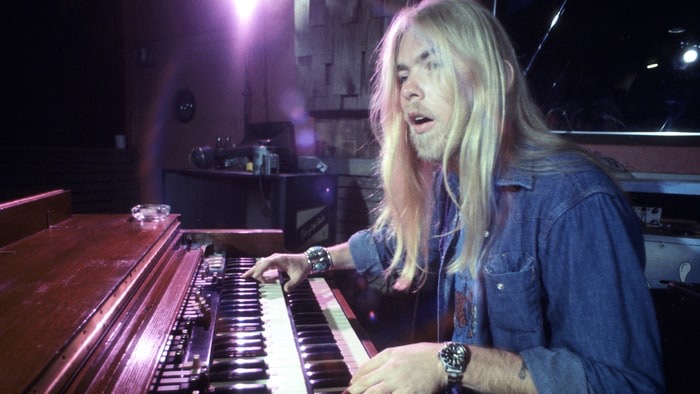 Gregg Allman is one of rock’s great singers, songwriters and song interpreters. Allman is the definition of a soulful blues singer. Gregg was the voice of most of The Allman Brother’s hits. He also had a solid solo career. His Laid Back is one of my favorite albums.
I am a fan of Gregg and of The Allman Brothers, so I read Gregg’s autobiography. One of my favorite stories from that book, was how the songs on the first Allman Brothers album were written. The rest of the band locked Gregg in a house, bought him a B3 organ and told him he couldn’t leave until he had an album’s worth of material. He came out of that writing session with some classics including: “It’s Not My Cross to Bear,” “Dreams” and “Whipping Post.”
Gregg Allman was no angel, which fittingly was part of the title of one of his solo hits. Reading his biography I found him a pretty unattractive person, but the voice was so good it was easy to look past that. Also, reading the book I learned Gregg never really healed from the death of big brother Duane.
I had the privilege of hearing Gregg helming The Allman Brothers twice (the Warren Haynes and Derek Trucks version in the mid 00s). His beautiful gravelly voice and percussive organ were magical live. I have band-issued boots of both shows. I wish I had seen him live solo. His last studio album, Low Country Blues, showed he was still a force late in his career. R.I.P. “baybrah.”
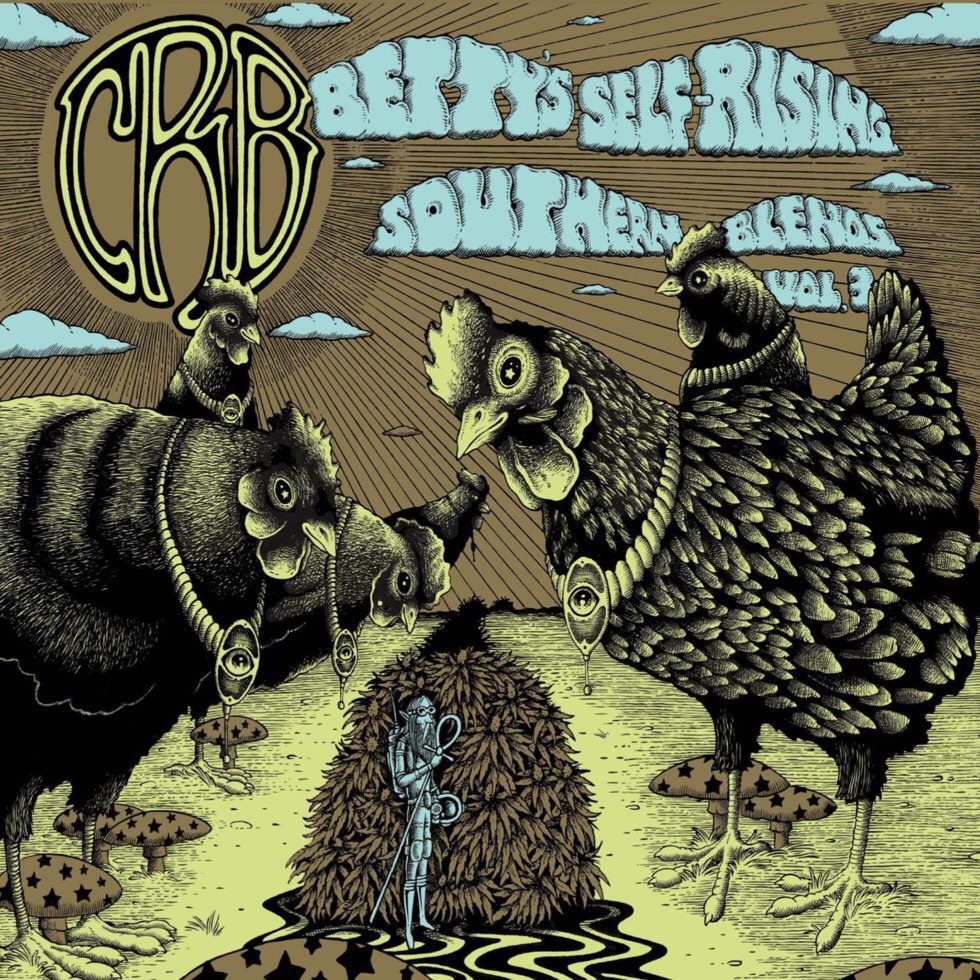
Per Wikipedia “Jam bands are musical groups whose live albums and concerts relate to a unique fan culture that began in the 1960s with the Grateful Dead, and continued with The Allman Brothers Band, which had lengthy jams at concerts. The performances of these bands typically feature extended musical improvisation (“jams”) over rhythmic grooves and chord patterns, and long sets of music that can often cross genre boundaries.” I don’t like to pigeonhole bands, but The Chris Robinson Brotherhood is a jam band and a damn good one. I have been looking forward to this release since I first heard about it.
Release Day 5/4/17
I am grooving to this new Chris Robinson Brotherhood (CRB) release via Spotify as I pregame for Laura Marling at First Avenue tonight. I ordered the LP via Amazon so I won’t get it for another week (sorry real record stores, but I had a gift certificate to burn). CRB are hit-and-miss as far as what they make available on streaming services. Fortunately, this one is on Spotify.
The Betty Blends series features recordings mixed live from the soundboard by renowned Grateful Dead engineer Betty Cantor-Jackson. The most valuable LP I have in my collection is Vol. 1. That one was a Record Store Day release. The moment I bought it, a guy tried to buy it off me (at double the price I just paid) and when I said no he cursed me out as a flipper.
Betty’s Self Rising Southern Blends Vol. 3 is a 13-track set of performances captured during CRB’s November 2015 Southeastern run through Atlanta, Georgia; Raleigh, North Carolina and Charleston, South Carolina.
First impressions are good. It is bluesier than their studio albums. It is sloppier in a good way – their studio albums can be a bit too buttoned down. It includes originals and covers. There is more diversity to the set – the recent studio albums have been a bit too cohesive.
Several Days In
I am really digging this album. It could be my favorite since CRB’s debut Big Moon Ritual.
The album opens with “I Ain’t Hiding” from The Black Crowes’ final studio album, 2009’s Before the Frost…Until the Freeze. The original cut had Some Girls Stones’ swagger. This version is mellower and more playful. It has a more Grateful Dead Shakedown Street feel.
“I Got Love If You Want It” is a Slim Harpo cover. I am not a blues scholar, but I am familiar with the Slim Harpo name. Beyond “I’m A King Bee,” I am not familiar with his work. Listening to CRB’s cover has me now listening to The Excello Singles Anthology. CRB give it a Led Zeppelin read. There is a reason Jimmy Page chose to tour with The Black Crowes to play Led Zeppelin covers.
“Clear Blue Sky & The Good Doctor” is from CRB’s Phosphorescent Harvest album. It has a happy easygoing groove. One of the things I like about the CRB is that they have an old time folk rock feel, gut the same time they have a psychedelic Pink Floyd feel. This song perfectly captures how CRB expertly walks the tightrope.
“The Music’s Hot” is another Slim Harpo cover. The original has an almost a blues rap vibe. The CRB give it a nice funky twist. It bluesy and a bit swampy.
“Roan County Banjo” is from CRB’s If You Lived Here, You Would Be Home By Now album. This is a classic CRB original that shows off who they are.
“I’m A Hog For You” is a Leiber/Stoller song that was a hit for The Coasters in 1959. Many, including by CRB influencer, The Grateful Dead, have covered it. CRB take a novelty song and turn it into nine-minute jam. The slow it down and blues it up.
“Oak Apple Day” is a CRB original from Any Way You Love, We Know How You Feel. This song has a nice calm “siting on the porch” vibe.
“Get Out Of My Life Woman” is an Allen Toussaint song that he wrote for Lee Dorsey. The Jerry Garcia Band (JGB) often performed it. The album that turned me on to Garcia was the 1991 live album simply called Jerry Garcia Band and this song was on that album. Like all Toussaint songs, it has the NOLA groove. This the perfect song for bands like the JGB and the CRB to just plain jam.
“Honeysuckle Interlude” as best I know, has not appeared on any other album. It is a short interlude/intro to the next song “Ride,” from Chris Robinson’s first solo album New Earth Mud. “Ride” has a jazz rock sound in its extended intro. This is probably Robinson’s most gymnastic vocal on the album. It is a wonderfully funky song. It is a nice long (about 15 minutes) jam.
“Tales of Thunder Teeth” is a CRB original that does not appear on any other CRB album (again as best I know). It is an instrumental with a prog-rock feel.
“Girl, I Love You” was written by Al Bell and Eddie Floyd and released on Stax under Floyd’s name. CRB gives it a soul/country read. Robinson is doing some serious testifying here.
“She Belongs To Me” is a Bob Dylan tune. What first attracted me to Jerry Garcia was his outstanding Dylan covers. CRB keep that tradition alive – turning Dylan tunes into jam band classics.
Personnel on the album is:
- Chris Robinson: vocals, guitar, harp
- Neal Casal: guitar, vocals
- Adam MacDougall: keyboards, vocals
- Mark Dutton: bass, vocals
- Tony Leone: drums
The LP
Ten days after release the LP finally arrives. I pull out the first LP and out drops a surprise and unadvertised CD – actually two CDs. This is not a CD version of the LP, but another sixteen live Betty Cantor-Jackson curated/engineered cuts. It is from the June 26, 2015 San Francisco performance at The Warfield (per All About Jazz).
CD 1:Boppin’ the Blues; Roan County Banjo; Badlands Here We Come; I’m a Hog for You; Jump the Turnstiles; Star or Stone; Meanwhile in the Gods…; Honeysuckle Interlude; Tales of Thunder Teeth.
CD 2: Tulsa Yesterday; One Hundred Days of Rain; Beggar’s Moon; Shore Power; Got Love If You Want It ; Big River; Catfish John.
I will never publish this post if I review this bonus material, so I will have to pass.
Final Thoughts
The LP sounds fantastic. It is simple black vinyl (as cool as colored vinyl is, it rarely sounds good). The LP has well done packaging: a combination of art from CRB’s regular artist Alan Forbes and photos. The best photo is the band with Betty Cantor-Jackson. I am committed; this is my favorite CRB album since their debut.
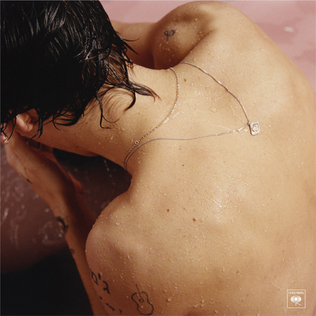
On release day (May 12, 2017), I got up for a bike ride planning to listen to the new Todd Rundgren album on the ride. I noticed that Harry Styles’ solo debut was out so I decided to try it. Styles’ appearance on SNL earlier this spring impressed me.
As I pedaled and listened to the album, I was amazed. I don’t know what I was expecting, but it was not this. This is sophisticated serious pop. As I listened, I thought of three Bs: Jeff Buckley, Beck and dare I say David Bowie. The more I listen, the more influences I hear (as the Bard says: “Steal a little and they throw you in jail/Steal a lot and they make you king”).
Styles does not have one of these tour de force pop voices. He has a good voice, not a great voice. However, he has what all the great pop voices have: authentic emotional expression. When his voice hitches on the high notes of “Sign of the Times,” it is more powerful than perfection.
I don’t know anything about Styles beyond he was in a boy band and he has celebrity girlfriends (Taylor Swift, Kendall Jenner, etc.). This does not impress me. It’s a turnoff. The SNL performance was enough to transcend my biases and give him a chance. I am glad I did.
Looking at the credits, Styles has writing credits on all the songs, but so do about five others per song. Who knows if he is really a songwriter or not. The songs are well done and the production is subtle and tasteful – unusual for celebrity pop stars. More importantly, it has staying power. Often when something sounds good on first listen it wears thin quickly. I have been listening to this album for a couple of weeks now and with every listen, it revels more depth.
What I like about Styles is he seems to understand and appreciate classic rock and pop. I hear a hundred influences, but he still manages to sound original and of the moment. I learned a long time ago that a great pop song is magic. If it were so easy, everyone would do it. When it works, it is very special and this is a special album. I like this album. Every once in a while you need to be reminded that the world needs rock stars. Harry Styles is a rock star.
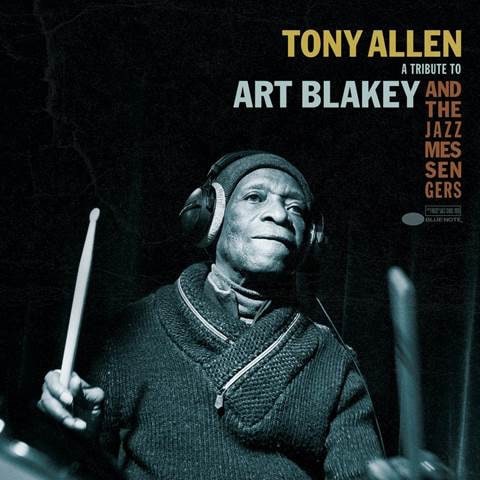
I first discovered Art Blakey in 1982 when he got a lot of buzz for a couple of young brothers in his band: Wynton and Bradford Marsalis. I soon learned that Blakey’s The Jazz Messengers was one of the great “graduate schools” of jazz. Outside of Miles Davis, there is not another bandleader with more distinguished alumni. Despite being a hall of fame jazz drummer, Blakey’s “school” may be the greater legacy.
I discovered Tony Allen via Fela Kuti. Allen is a legendary Nigerian drummer and Afrobeat pioneer and Kuti’s drummer for a number of years.
The idea is for Allen and his seven-piece band to interpret some of the legendary jazz drummer’s catalog through the Afrobeat legend’s lens. The results are perfection. A lot of Blakey’s stuff has a nice funky feel to begin with. For example, Bobby Timmons, who spent a couple of stints with The Jazz Messengers, composed the opening track, “Moanin’”. Timmons is associated with the soul jazz style of which he was an originator/founder. “Moanin'” is a naturally funky tune, so it perfect launch point for Tony Allen. Allen and company play it straight, but they can’t help but infect the tune with just a bit of their Afrobeat.
The rest of the EP includes “Night In Tunisia,” “Politely” and “The Drum Thunder Suite.” Like “Moanin'” Allen plays it straight with just a twist of Afrobeat.
The music of Africa was influential for Blakey (aka Abdullah Ibn Buhaina – his Muslim name) throughout his career. In the late-1940s, Blakey spent time traveling abroad in West Africa exploring the culture, religion and the drumming. Blakey later recorded several albums heavily influenced by African music including Orgy in Rhythm (1957), Holiday for Skins (1958), and The African Beat (1962), which featured the Nigerian drummer and percussionist Solomon Ilori. This is a nifty return volley.
My only complaint is that this is just a four song EP, I am ready for the long player! Plus Allen’s versions are about half the length of the originals. Give us more Blue Note.
Below I have mixed the Allen EP with the Art Blakey and The Jazz Messengers’ tracks they are based on. It will give you a sense of what kindred spirits the two drummers are.
PS – the cover art is a nice nod to the Blue Note tradition.
Here are some recent steaming and cable TV shows I am enjoying.
 The Get Down (Netflix) – This is a drama, borderline musical, set in 1977 in South Bronx. It is about the birth of hip-hop told through the eyes of teenage dreamers. It is a bit corny, but I have a soft spot for this because I was the same age as these kids in 1977. I recall the fashion, the headlines and the music (disco not hip-hop – I was too clueless to be aware of rap/hip-hop at the time – I did not become enlightened for another five years). It is visually ambitious and I think it accurately shows the primordial soup that hatched hip-hop. There are eleven approximately one-hour episodes that create a complete story arc. Rumored to be one of Netflix most expensive originals – it has been a flop so it is doubtful there will be more episodes.
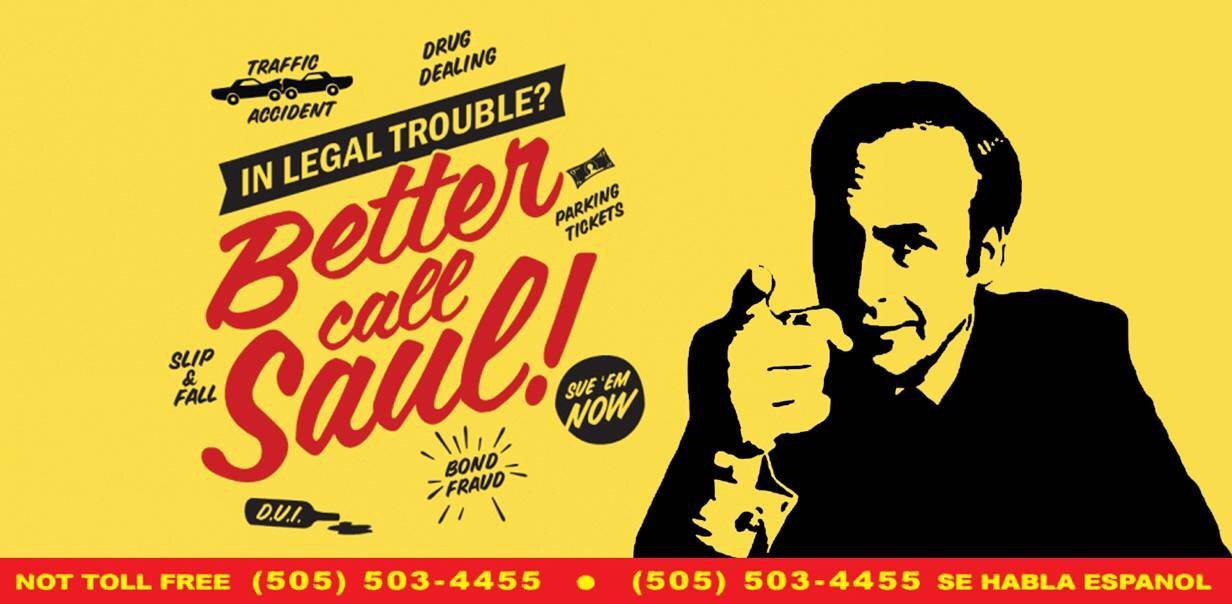 Better Call Saul (AMC and back seasons on Netflix) – I binge watched Breaking Bad and it frankly got tedious. What never got tedious was Saul Goodman – Walter White’s attorney. Comic Bob Odenkirk created a brilliant character, and is now Bob Odenkirk the dramatic actor. He was so good, AMC decided to make a spin-off show. The gimmick is: the back story on how Saul became Saul. Saul is such a lovable con man he can’t be resisted. Now in its third season. I have raved about this before.
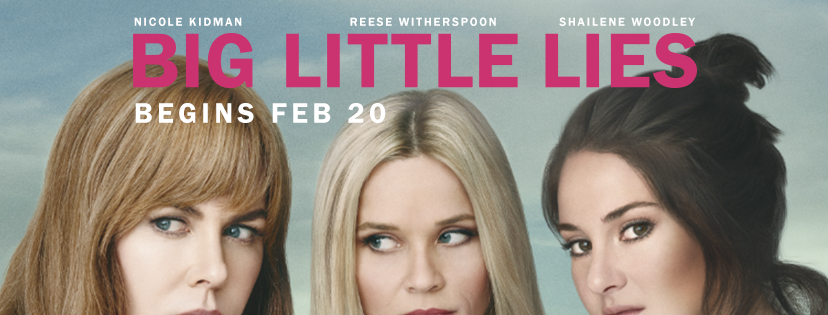
Big Little Lies (HBO) – This is what we used to call a miniseries (I guess that is still a term). It is a seven one-hour episode adaptation of the bet selling book of the same name. It is part mystery and part farce/comedy. Imagine The Real Wives of Monterey do murder. It has some of the best use of soundtrack music I can remember. It has been such a success that there are serious discussions of making this a regular series.
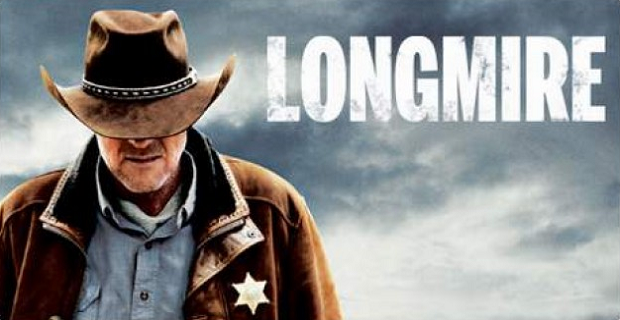
Longmire (Netflix) – This is a contemporary western set in fictional Absaroka County Wyoming. The focus is on the local sheriff Walt Longmire. In one sense, it is just another cop show. It has wonderfully engaging characters and is set in modern rural America. Longmire’s jurisdiction intersects with a reservation creating modern cowboy and Indian tensions. The show was originally on A&E, but was cancelled. It became popular on Netflix and so they have kept it alive and made new episodes – there are now five seasons on the books.
. 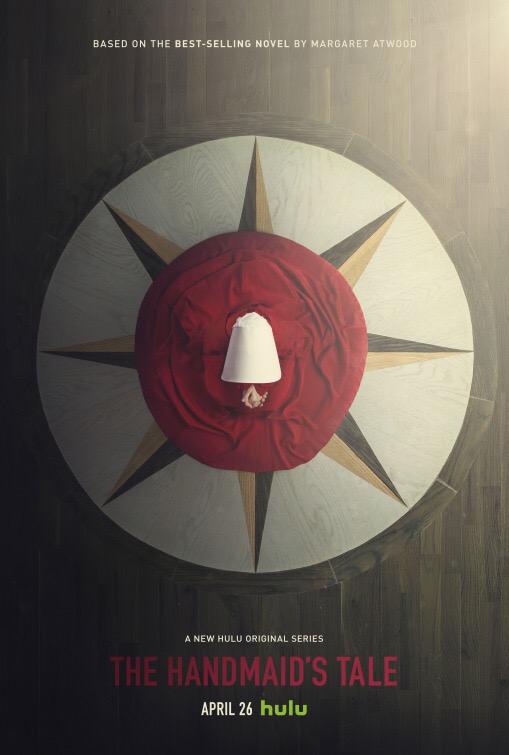
The Handmaid’s Tale (Hulu) – The series is based on the mid-80s Margaret Atwood bestselling novel. It takes place in dystopian future where women are subservient to men. Women in the society of The Handmaid’s Tale fall into four major categories:
- Wives – who are infertile
- Marthas – who are household servants
- Handmaids – who are breeding stock
- Jezebels – who are exactly who you would expect
This fantasy is too close for comfort. It is not far off from some realties of our time. It is a thought-provoking show. My only beef is its poor use of a music in its soundtrack.

Day 1 – First Listen/Release Day
I can’t remember how or why I stumbled upon Laura Marling. When I first heard her I thought she was the second coming of Joni Mitchell. I am a major fan of Joni and I am afraid we will never hear from her again. So, I am susceptible to Joni’s doppelgängers. Marling’s Once I Was An Eagle is one of my favorite albums of the last five years.
Semper Femina just came out today and I know I should not comment on an album after just three listens. Tonight my Laura and I watched Southside with You a romantic drama about Barack and Michelle Obama’s first date. So I guess it is a night for first dates.
Laura Marling evokes so many singer songwriters – sometimes in the same song: Dylan, Nick Drake, Carole King, Patti Smith, Chrisi Hynde, Leonard Cohen, Paul Simon and of course Joni.
This album is not a radical departure from her past couple of albums. It is still subtle and folky, but it does have a little more adventurous and rich arrangements. Her voice has grown and is slightly different on each cut.
I am listening via Spotify on the big boy stereo. The recording is sonically stunning, but I can feel the constraints of streaming. I can’t wait to check it out the LP. A good DAC can only do so much with a 160 kbps bit rate.
I began to wonder if there is a better option on Spotify. Sure enough I can change to 320 Kbps (pretty damn close to CD quality and nothing short of a miracle considering you don’t have to leave your house). What the hell. I can’t believe I have never adjusted this setting on the laptop that serves the big boy stereo. This is game changing – it sounds so much better. I feel foolish I have been compromising. The music is now blanketing me in its warmth.
Day 2 (Side A)
I picked up the LP today at the Electric Fetus. Giving it the first spin. It sounds lighter, more delicate and more vivid on LP vs. the Spotify stream.
The album opens with “Soothing” which has a nice slinky riff for Marling to float over. Musically it is soothing, but lyrically it is tense. It creates a nice contradiction.
“The Valley” has a Nick Drake feel and a little bit of Dylan’s “Girl From The North Country” sound.
“Wild Fire” is kind of soulful in a Carole King sort of way. This is my favorite cut on the album so far. Her voice gently sways between talk and a full-out belting.
“Don’t Pass Me By” reminds me of a Pretenders’ song on narcotics.
Over a month later (Side B)
“All This Way” has a Norah Jones vibe. The bowed cello gives the song some nice bottom end. It also has a mellow Vampire Weekend vibe too.
“Wild Once” brings back the Nick Drake vibe. Marling uses what I call her British voice. It is a bit affected, but I like it. So many British pop singers sound American, it is a treat when they actually sound British. I like how the narrator weaves between reflection and observation.
“Next Time” has a Paul Simon feel. It is a deceptively simple song. If you listen carefully to the arrangement there is a lot going on. Great use of strings without getting syrupy.
“Nouel” is pure Joni. This song’s lyric has the album’s title in it. Semper Femina means “loyalty among women” or “always women” in Latin.
“Nothing Not Nearly” is the most rocking cut on the album. Nice grungy guitar licks. Marling almost raps the lyrics. It is a great ending.
Bonus
The LP edition comes with a bonus LP of the album’s songs live at Martyrs in Chicago (a club I have actually been to). It was recorded on 11/22/15 – almost a year and a half before the release of Semper Femina. I find that delightfully weird.
Finally…
I have been marinating in Semper Femina for a few weeks now. I am not getting bored with it – it is getting better. I have not been listening to the live disk. Not because I don’t like it, it just hasn’t been convenient.
Upon further listening one of the secret ingredients of the album is Rob Moose’s string arrangements. They are tasteful and not syrupy.
One of the things that struck me early on was the range of Marling’s voice. On almost every cut it has a slightly different nuance.
The arrangements on the album are lush, but unobtrusive. They serve Marling’s voice without overwhelming it. The album has both a retro and familiar feel, yet it still feels completely of the moment.
All the songs are focused on women. “I started out writing Semper Femina as if a man was writing about a woman,” Marling explained in a press release. “And then I thought it’s not a man, it’s me — I don’t need to pretend it’s a man to justify the intimacy of the way I’m looking and feeling about women. It’s me looking specifically at women and feeling great empathy towards them and by proxy towards myself.” So many pop songs focus on romantic relationships. It is pretty cool that Marling is digging into non-romantic love.
This is a mellow album that can be enjoyed in both the background and in the foreground. If you listen to it in the foreground you will be bathed in it lushness – its rich, but subtle arrangements. Best of all, its the many voices of Laura Marling.
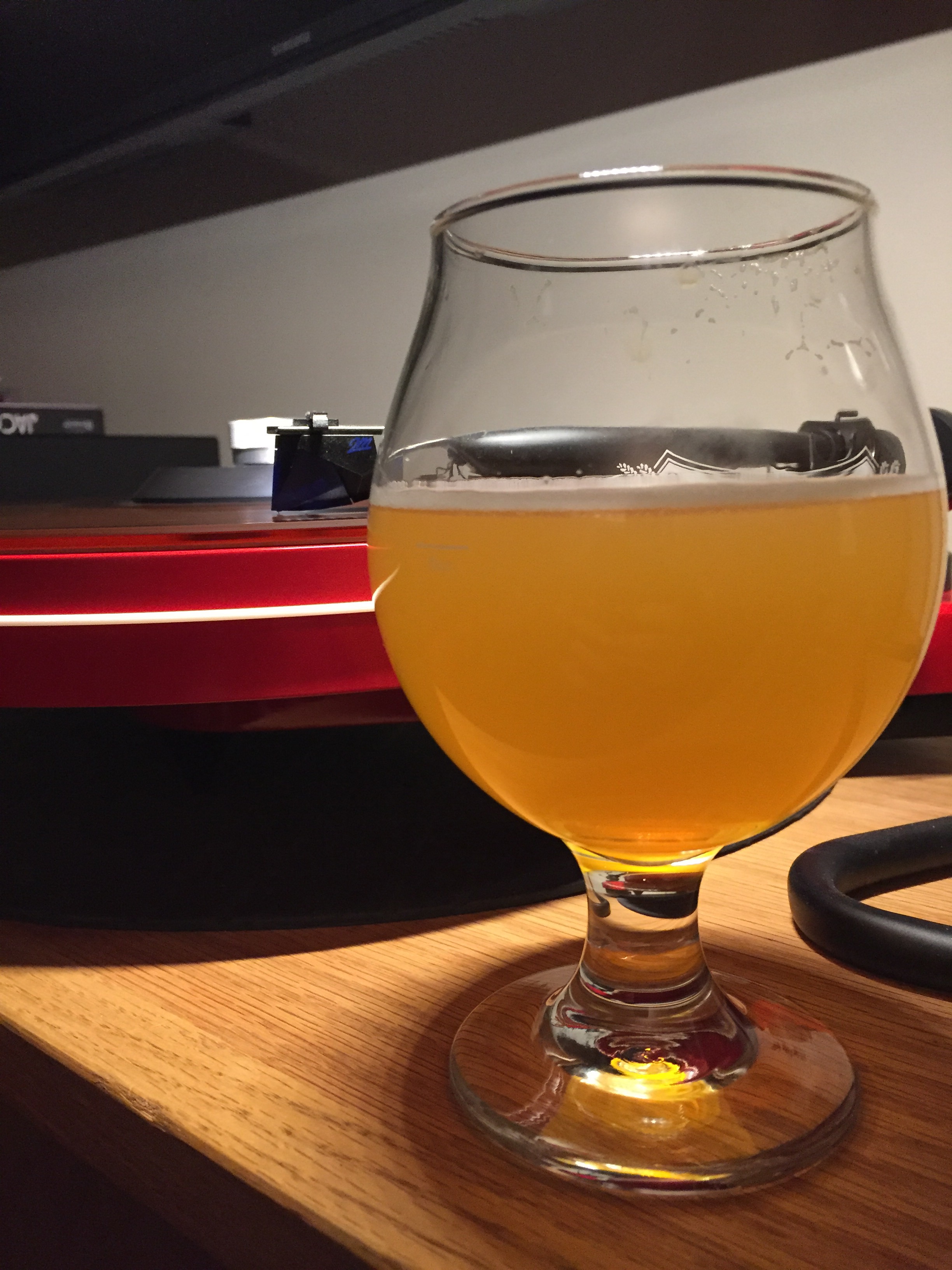
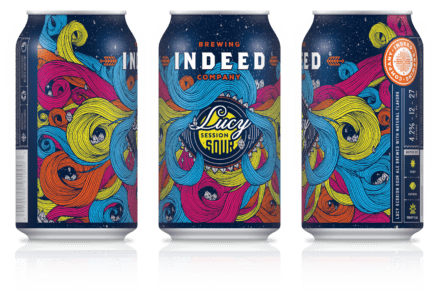
This is a delicious beer. It is like a grapefruit flavored beer. Super sour, but a touch sweet, like the first moments of a sour covered candy. Amazing stories are told in your mouth from your first drink, to savor, to swallow and finally from the lingering aftertaste. It is a consistent story, it just gets more complex in the aftertaste. It is all good – it just grows.
The beer is brewed with lemongrass, orange peel and passion fruit. At 4.2% ABV, you can guiltlessly have a few. I like a beer you can’t see through. Even though this is a light bodied beer you can’t see through it. It is a bit like a Belgian in its color and its translucence.
This is going to be a great summer beer.

I missed this one when it came out last year (2016). I really liked LaMontagne’s first album, Trouble, when it came out in 2004. But for some reason I have not followed his career.
I got turned on to this album when a song (“Part Two – In My Own Way”) was featured on an episode of The Blacklist (S3 · E16 · The Caretaker). The song had a Pink Floyd feel and I had no idea who it was. I Googled the episode and determined the song was by Ray LaMontagne from his 2016 album Ouroboros. I listened to the whole album on Spotify and loved it. I did a little research and learned that this was a joint venture with My Morning Jacket (MMJ)- with MMJ’s Jim James producing.
This album has a wonderful trippy vibe. If you like Dark Side Of The Moon/Wish You Were Here era Pink Floyd you will like this album. LaMontagne was clearly going for a pre-digital retro feel. For example, the songs are deliberately sequenced as side one/side two (although LaMontagne names them Part One and Part Two). Part One is the heavy rock side and Part Two is the mellower side.
The sonics of the album have a warm analog feel. I don’t know what the CD or high resolution digital file/stream sounds like, but my vinyl edition sounds fat and airy. The album cover has a sticker making the bold statement: “The definitive version of Ray LaMontagne’s OUROBOROS featuring exclusive vinyl mastering listening experience.” It is a gorgeous sounding pressing (and visually pleasing too: brown marble vinyl). I have nothing to compare it with (a Spotify stream is not even a fair fight), but it stands on its own as audio perfection.
Although the backup band is MMJ, they don’t hijack the gig. It doesn’t sound overtly like a MMJ album with LaMontagne as the vocalist – they have given LaMontagne his own sound. I am now intrigued to check out LaMontagne’s last album which was produced by Dan Auerbach (Black Keys). But I have a feeling that Ouroboros is something special.
LaMontagne has great pipes as I recall from Trouble, but on Ouroboros his voice is restrained – almost a whisper. That really works – it enhances the David Gilmour Pink Floyd sound. A big soulful voice wouldn’t really work in this context.
If I had heard this album in 2016 it would have been on my best of list.

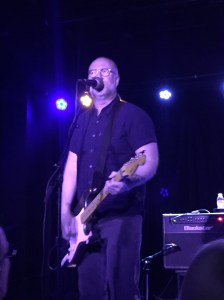
I am not a punk guy, but I am a Minneapolis guy. I am a music head, therefore I am a Bob Mould fan. It necessarily follows.
The other night I saw Bob Mould, solo electric live at the Turf Club. I loved the simplicity of the Mould’s solo electric concept: he walks on stage with his guitar case, whips out his guitar, plugs in, greets the crowd as old friends, plays his ass off for 90 minutes, says goodbye, sets his guitar down, waits a minute, spits out an encore, packs up his equipment and exits the stage. A working musician.
I saw Mould in a similar situation a year ago for a mini concert at the same venue. That show was shorter and thus rushed. It was also the day Prince died – so it had a weird vibe. I enjoyed the more relaxed pace of this show.
Mould often plays in a trio format, but even in a trio, it is pretty much solo Bob Mould – his guitar and voice dominate. He has a distinctive noisy guitar sound and the perfect voice to cut through his buzz-saw guitar storm. It is nice to hear Mould’s beautiful noise with no distractions. It is refreshing to witness such a no-nonsense show. But this would not work if Mould did not have great songs – Mould has great songs.
The highlight of the show was the closer; the theme song from The Mary Tyler Moore Show, “Love Is All Around.” Mould has been covering this song since his days in Hüsker Dü. Mould plays it without irony and with the same intensity as anything in his catalog. A true gift to the Twin Cities audience.
After the show I went over to the merch stand and was delighted to see they had an autographed vinyl copy of Sugar’s File Under Easy Listening – my second favorite Mould album after Workbook. A pretty fine souvenir from the show.
File Under Easy Listening (F.U.E.L. for short) is perfect pop punk. Mould’s gift is writing gorgeous pop ditties disguised in punk grime. F.U.E.L. lets the pop shine through more than anything else in Mould’s catalog. When this came out in the fall of 1994 I played it to death. It never got old and it sounds as fresh today as it did 20 plus years ago. Many of these songs are staples of Mould’s live shows to this day. As a bonus it is one of my favorite pieces of album art – what a gem to let this beauty out of the jewel box after all these years.
F.U.E.L. takes the classic Mould sound and gives it a little jangle and a little shine. There are outstanding harmonies. The songs have huge hooks. Throughout the album Mould unleashes some of the greatest guitar solos of his career. “Believe What You’re Saying” is my favorite Mould song of all time. It should have been a huge hit.
The icing on the cake is the sonic production – this is a beautiful sounding record. The LP is cut from the 2012 remix of the album. Per the linear notes, Mould was never happy with the original mix. Doing an A/B comparison between the 1994 CD and the 2012 remastered LP, the LP sounds 10 times better (and I always thought the original sounded good). The remastered LP is much more alive and spacious. The 2012 remaster has a ton of bonus material too (on the CD or the download – not on the LP).


