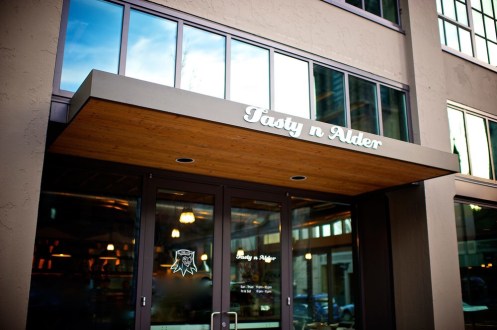
The day’s plans were to explore Portland. We slept in, putzed around the Airbnb and then headed off to brunch at Tasty n Alder. When I first looked at the menu I was unimpressed – this did not look like brunch food. But after careful examination it really was – but with a total original twist: regular dishes repurposed for breakfast – mainly by adding an egg. Food is served family style – we had four different dishes and all were great and all really worked for breakfast.
We then explored some shops in downtown, walked to the river and hit some more shops as we passed through the Pearl district of Portland. Portland’s retail is a mix of the familiar national brands/retailers and some truly original local/regional choices. Powell’s City of Books is an epic book store – per their web site: is the largest used and new bookstore in the world.
As we hit the afternoon, we ventured to our first brewery of the day: Fat Head’s Brewery. After the beer disappointments of Canada, it was great to be back in serious craft beer country. Fat Heads had a rich selection and a nice tap room – with some unremarkable outdoor space. It was in the mid-80s with no humidity, so outdoors was the way to go. The ladies had a flight, Patrick had a couple of their IPAs (Built For Speed West Coast IPA and New Order IPA) and I had an IBUsive. Good stuff – however I am oddly biased against breweries that brand with cartoon characters (in this case a guy with a fat head) and it had a mild corporate feel (sure enough looking at their web site they are kind of a mini chain founded in Ohio).

Next we moved on to a corner with three breweries: 10 Barrel Brewing Company,Backpedal Brewing and Rogue Distillery and Public House.
At 10 Barrel, not only do they have great beer, they have a great rooftop outdoor space, made better by a top-10 weather day. The ladies had a mega flight (10 beers) and Patrick and I tried their IPA’s.

We made a quick stop at Backpedal as they had an event and needed to shoo us out. Backpedal is a combination tap room and garage for their pedal pubs – they have a nice collection of beers too.
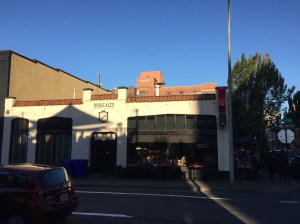
Finally we stopped at Rogue for a beer and snack, before heading back to the AirBnb for some quiet time before heading out to dinner.
Dinner was at the Screen Door – which had a reinvented southern comfort food vibe. Laura and I shared an amazing fried chicken, Al had trout and Patrick had brisket. All were delicious.
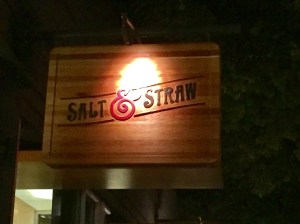
Although completely stuffed we found our way over to Salt and Straw (notable endorsement: Oprah’s favorite ice cream) for dessert. We shared a Honey Lavendar scoop (better than it sounds) and Sea Salt with Carmel Ribbons (as good as that sounds – it was better than it sounds). This was amazing ice cream – even on a full stomach it tasted amazing. It was 10:45 on a school night and the line was out the door.
With that we called it a day.
We took the train back from Vancouver. Not as nice a train as the one on the way up to Vancouver in that it did not have the BarcaLounger seats. Got to experience re-entry to the US – more serious than passing into Canada – I guess Canada is not as border crazed as the US.
Upon arrival to Seattle we picked up a rental car. We were starving, so our first order of business was lunch. Our end destination was a distillery in Woodinville (remarkably called Woodinville Whiskey Company). Al found a eatery on the way : Lot No. 3 in Bellevue. Lot No. 3 had the best bathroom doors I have ever seen. I had fish and chips – good – not greasy – not an easy feat for deep fried food.

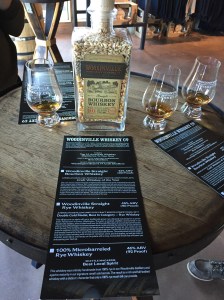
Woodinville Whiskey Company was great – I must be getting beered-out as distilleries catch my fancy more than breweries these days. Woodinville’s specialty is bourbon style spirits. We did a tasting and all were great, but their Micro-barreled Rye Whiskey was my favorite. The building was gorgeous. These folks have hit a home run (turns out they really did hit a home run in that they sold the business to Moët Hennessy this past summer).
We then started our journey to Portland. The traffic to get from Woodinville to Portland was brutal – it was 3:30 PM so right at the start of rush hour. We were tangled up until we got past Olympia. Once we got past that it was clear sailing. Evidently this is the new normal.
We got to our Airbnb in Portland’s Nob Hill neighborhood. Again we were starving and so we headed over to an upscale pizza joint: Please Louise. It was a beautiful night and the restaurants open air concept was perfect. We had a couple of pizzas that were delicious. My favorite was their triple pepperoni – three different types of pepperoni. This was high quality pepperoni. We had some beer’s and cocktails too. I had a Gigantic Brewing Solid! Hoppy American Wheat that was very tasty – very citrus flavored – light and refreshing.

We then headed over to Breakside Brewing (Slabtown Location) for a night cap. Great beer, great ambience and one of the finest tag lines I have ever seen: “tastes like vinyl sounds.” The beer I had was What Rough Beast – per their web site:
“Contemporary India Pale Ale brewed with feet firmly planted in the Northwest and a nod to New England. Mosaic and Columbus hops get lots of play here creating a beer that is tropical, fruity, dank, soft, and balanced.”
It was excellent. Highly recommended: olive oil cake for dessert.

My first impressions of Portland are thumbs up. In hindsight Vancouver is too new. I was disappointed by the food and beer in Vancouver also. Seattle was just a pass through, but it clearly has more funk than Vancouver. Just driving into the Nob Hill neighborhood here in Portland – you instantly feel the hipster hippie vibe – which I dig.
Our first Uber driver could have been right out of an episode of Portlandia – he was pretty stuck up and snobby for a driver. His antics included: thinking it was too short of a fare and we should have walked, that the area we were going to was too newly developed and that we should use Lyft vs. Uber. But our second driver was a grand Portland ambassador- welcoming us to the city. He had great English, but clearly an accent. He encouraged me to guess, my gut was Greek, but it did not seem quite right – it had a more Russian sound to it – I should have gone with my gut – as he was Greek. He chuckled and encouraged me to tip generously to make up for the error. I should have known better having grown up around a Greek family. Further proof to trust your gut.
We ended the day back at the Airbnb with a couple of Pilsner bombers from Breakside and we watched the new Lady Gaga special on Netflix. Laura, Al and I had witnessed her tour – so it was fun to see the back story of what it takes to create a new album and a Super Bowl show. One of the best parts was how much Gaga fully appreciated what a big deal playing the Super Bowl would be and how much she knew she had to deliver the goods (which of course she did).
The objectives of the day were to take in some famous Vancouver attractions: Capilano Suspension Bridge Park and Grouse Mountain.
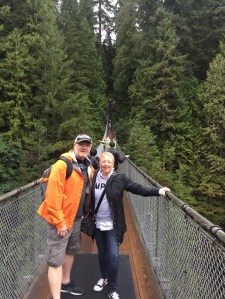
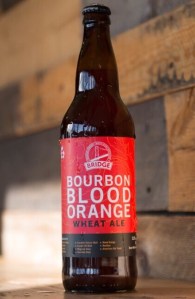
Capilano was double cool: first the bridges and second to get a flavor of the Pacific Northwest rainforest. The main suspension bridge is high over a gorge and has just enough movement to provide thrill (my wife found the movement less of thrill and claimed her legs were shakey for an hour after). The tree top bridges give you a sense of the forest canopy. There is a cliff walk that allows you to examine the water formed walls of the gorge and test your fear of heights – although firmer than the suspension bridge, it provides no distraction – just emphasizes the height. It had rained earlier in the day, which was actually kind of nice as it gave the forest a rain forest feel – gentle dampness. We had lunch at Capilano – nothing special, but I had the best beer I tasted in Canada: Bridge Brewing’s Bourbon Blood Orange Wheat Ale (even my wife liked the brew).
 Grouse Mountain was a bit of bust given that the mountain top was covered in a heavy fog/cloud. But it was still fun to ride the gondola to mid-mountain and the chairlift to the peak. Mid-mountain there was a very nice grizzly bear exhibit – not a zoo cage, but a nice roomy natural habitat.

We headed back to town and enjoyed happy hour at Rouge Kitchen & Wet Bar. After that it was back to the Airbnb for a little quiet time. Later we headed out for some ramen at a neighborhood place – Ramen Koika.
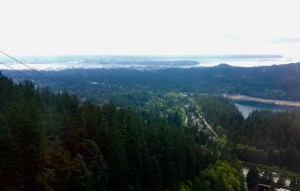
General impressions of Vancouver – I did not find it particularly Canadian, it felt like a US city. Like Seattle, it is very much a port city and has the same Pacific Northwest feel, but the big difference is that it has a very new feel – it seems most of the buildings have been built in the last 25 years.

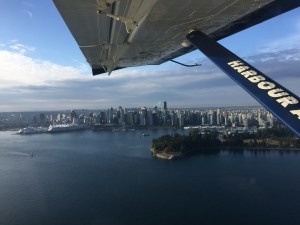
Not only was the itinerary for the day to visit the capital of British Columbia, but again the mode of transportation was the featured performer: seaplane. Downtown Vancouver actually has a seaplane airport – proof you are not in Kansas. The airport is like a very upscale bus terminal located on the water with great big windows to enjoy the view. My wife thought this up when she decided that spending most of the day on a slow moving ferry was going be kind of boring. Instead we took the 30 minute flight that was an absolute thrill. Taking off from the water, great views of the the coast and islands and landing on the water were all amazing. The plane flies at a nice low level so you can see a lot. It is a bit pricey – but totally worth it. Don’t think of it as transportation – but like the train – a ride. However, this is very efficient mode of transportation compared to the train.

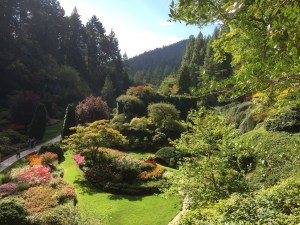
Once in Victoria first on the agenda was visiting the famous Butchart Gardens. The gardens lived up to the billing – they are spectacular. The fact that they are are out in the middle of nowhere (they are about a 30 minute bus ride from downtown Victoria) adds to their charm. Highly recommend. An added bonus was our CVS Tours driver Adrian – he gave us a nice history Butchart Gardens and pointed out the significant sights along the way – all with dry British humor.

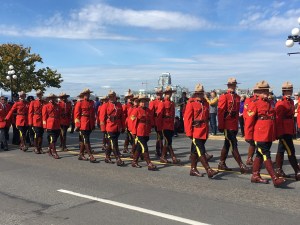
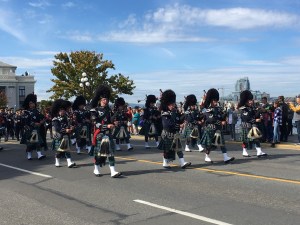
We returned to Victoria just in time to experience Canada’s Peace Officer Memorial service in front of the BC parliament building. The Canadian police sure know how to wear dress uniforms: from the classic Mounties to something similar to the Royal Guard. We got to see a neat parade with pipes and drums to boot.

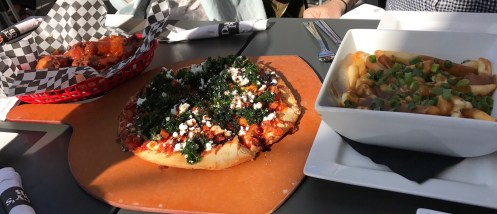
We then explored downtown Victoria. It has lots of nice shops – again this is mostly an upscale tourist trap – even the t-shirt stores are pretty nice. We were thirsty and hungry and so we found a nice sports bar (Darcy’s Pub) with some good outdoor space (it was a nice warm fall afternoon). They had some very fine poutines. We explored a few more blocks of Victoria and then headed back to the seaplane terminal for the ride back to Vancouver. I was a bit disappointed in Victoria – it had been advertised as a mini-London, but it seemed nothing more than an upscale cruise ship port and government town. If not for the Butchart Gardens and seaplane ride it would have been a bust.
Once back to Vancouver we went to Steamworks Brewpub for some beverages and a snack. I found the beer unremarkable and the pub a bit to corporate (think Rock Bottom). Given its location in proximity of the Vancouver convention center, it was low on funk (to be fair it was a Sunday night). We were pooped and headed back to the Airbnb for an early evening.
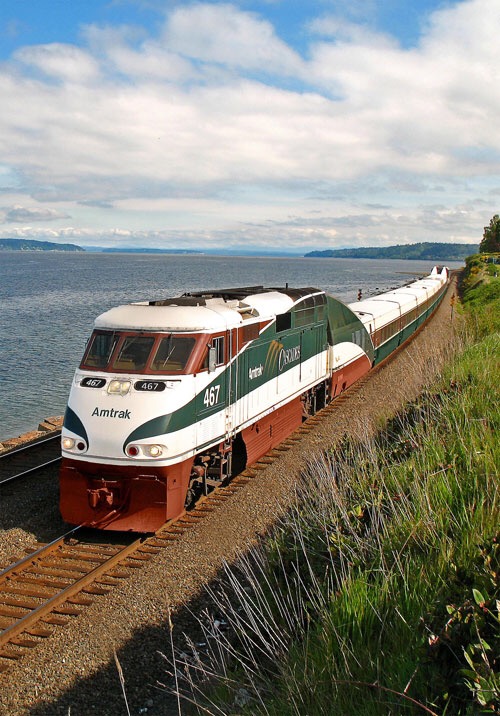
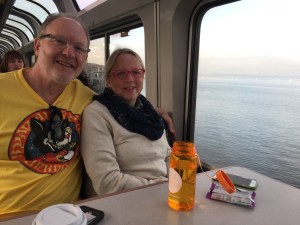
The primary adventure for the day was to take the Amtrak train from Seattle to Vancouver. It was a beautiful day and the trip has great views – for much of the journey you are riding the edge of the sea. The train is not the most efficient way to get from Seattle to Vancouver, but if you are not in a hurry it the best way. It is about a four hour ride. The train has a great sightseeing car with great windows. The regular coach cabin has comfortable reclining seating – significantly better than most plane’s first class. All this makes a train a great way to travel – but keep in mind you could have done the trip in about a quarter of the time when you count getting to the station early and the train’s meandering pace. Timing is not dependable either – we had an unplanned delay due to a freight train coming from a different direction that had its own unplanned troubles. But that being said, if you treat the this as a ride (in the amusement park sense) it can’t be beat. PS – if you want some good food – bring your own – a picnic would have made the trip perfect.

Once in Vancouver we checked into our Airbnb in the Davie Village neighborhood and went to lunch at Score On Davies. I was not very imaginative and had some more mac and cheese. The place had nice vibe, good food and some fine outdoor space. We headed back to the Airbnb for a little regrouping.
Our next adventure was to check out Granville Island. This is an upscale tourist trap that was a short water taxi ride from near our Airbnb. The water taxi was adorable – False Creek Ferries’ boats are like cute bathtub toys. We explored the various shops and settled in on Granville Island Brewery for some beverages. It was a nice brewery with a nice ambiance. The view of the city from Granville Island is pretty spectacular.


We then headed back to our neighborhood and went to The Capital on Davie for dinner. This is an upscale “dive” bar with the best value in bar food – all entrees are $4.95 Canadian and the drinks are reasonable too (and a short walk from our Airbnb sure helps too). With that it was again time to call it an early night.
Patrick flew in from Chicago and Jim, Laura and Allison flew in from Minneapolis and we amazingly showed up at the SeaTac baggage claim at the same moment. We took an Uber to our hotel (Crowne Plaza) in downtown Seattle. Our room had a pretty cool view – 22nd story helped that out.
We were pretty hungry so we headed to lunch at Ferry Noodle House – a Thai restaurant. Food was good, but the Thai Iced Coffee was the best!
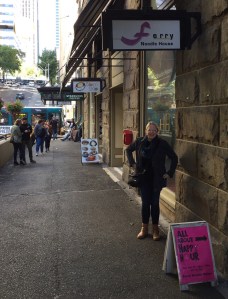
We walked to the Seattle’s Pike Place Market. We had a snack/dessert from Piroshky Piroshky. What I like about their treats is that they are not too sweet and they are original.

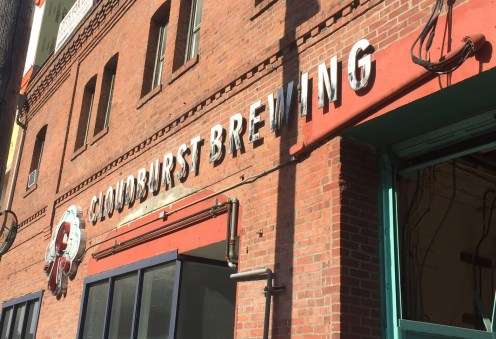
We then headed over to Cloudburst Brewery for a cold beverage. I had an Everything’s Pine which was a nice flavorful IPA without tasting like an arm pit (Welby family code for too hoppy). Per the web site it is an IPA with Chinook, Cascade, Idaho 7 and Simcoe hops. The space has a shabby chic ambience. It was crowded on a Friday afternoon, but that gave it a festive feel too. We then headed back to the hotel for some quiet time.
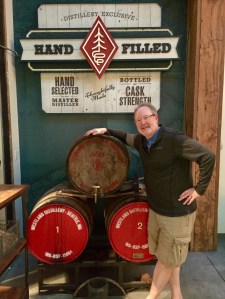
Once rejuvenated, we headed over to Westland Distillery for some fine American single malt. Westland’s gimmick is to make the American equivalent of Scotch. They do a fine job with it. Their space is quite amazing. We hit them at a quiet time and so it was like having a private tasting. We each ordered a flight of whiskey neat and Laura ordered a flight of their cocktails. Everything was great, but my favorite was Cask #448 which was their equivalent of an Islay. Per our bartender it is made with 100% Baird’s heavily peaked Scotch Barley and aged 4 years in a Buffalo Trace (Bourbon) cask. It was cask strength at 117.2 proof. It had a nice smoky flavor and despite the cask strength it was smooth. We had some pretty cool snacks: smoked salmon, some kind of shredded pork held together with bacon fat – it was kind of pork pâté (pork rillettes), cheese and crackers. It paired beautifully with the whiskey. If you are a fan of the brown juice, I highly recommend the Westland. This was by far the highlight of the day.

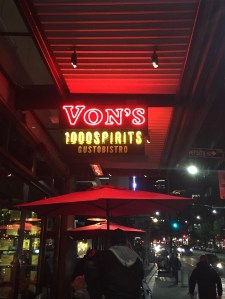
We headed to Von’s 1000 Spirits Gustobistro for dinner. We had a couple of pizzas and some mac and cheese. Their speciality is sourdough. Both the pizza crust and the mac was sourdough based. The food was great and we were all stuffed. Their other speciality is small batch spirits, but after Westland we chose beer with dinner. After a long day and knowing we were going to have an early morning, we hit the hay.
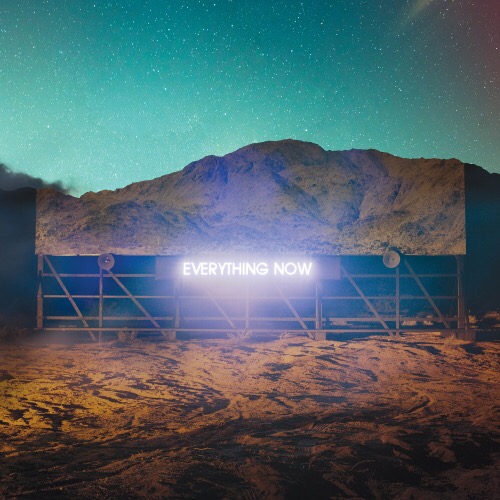
When Arcade Fire hit the scene with their debut Funeral in 2004 I was intrigued, but not sold. With each subsequent album, they hooked me a bit more until 2013’s Reflektor – that sealed the deal – I was now a fan.
I missed the Reflektor tour, but I was not too disappointed. How could an artsy band like Arcade Fire successfully pull off an arena show? I recently saw Arcade Fire at Lollapalooza and they are a legitimate festival headliner, so I think they must be just fine as an arena act.
Everything Now takes the art dance pop of Reflektor up a notch. This is pure pop with a dash of the subversive. It reminds me of the Talking Heads at their prime: an indie-art-rock band that is not afraid of writing a catchy song – even creating a hit record. The band collaborated with Daft Punk’s Thomas Bamgalter and Pulp’s Steve Mackey to pour a little sugar on the proceedings.
The album opens with a foreshadowing intro: “Everything_Now (continued).” That song segues into the single “Everything Now” which sounds like a muscular Abba song with some world music spice added to the mix. Arcade Fire opened their Lollapalooza set with this one-two punch. It is a serious show of confidence and evidence of the legitimacy of their pop credentials – they ignited their live show with new music. The crowd loved it.
“Signs of Life” is an art-funk in the grand tradition of the Talking Heads. I can’t help the continued Heads comparisons – they have so much in common: artsy, pop, a real band (i.e., consistent lineup) with a charismatic oddball front man (Win Butler), a strong female foil (Régine Chassagne) and most of all: funky as hell.
“Creature Comforts” is lush electronica coopted into an arena anthem.
“Peter Pan” opens with an old school reggae feel and evolves into a more contemporary pop feel without losing that underlying reggae beat.
“Chemistry” merges old time rock and roll with a bit of ska and little 80s new wave.
“Infinite Content” is a punk amphetamine that transitions into a lugubrious cowpoke ballad of the same song renamed “Infinite_Content.”
“Electric Blue” has a nice Tom Tom Club sounding (sorry more Heads comparisons) featuring Régine Chassagne on vocals. In concert, Régine Chassagne is essential. She creates a great contrast both musically and visually with her femininity.
“Good God Damn” has a Some Girls/Emotional Rescue era disco-Stones feel in both sound and lyrics.
“Put Your Money On Me” cops Bon Jovi’s “Livin’ On A Prayer’s” bass line and turns it into an alt-rock sermon.
“We Don’t Deserve Love” has a slow country ballad groove (assuming a hipster indie rock ban was doing the twangin’). It has heartbreaking lyrics too.
“Everything Now (continued)” is coda of the opening tune.
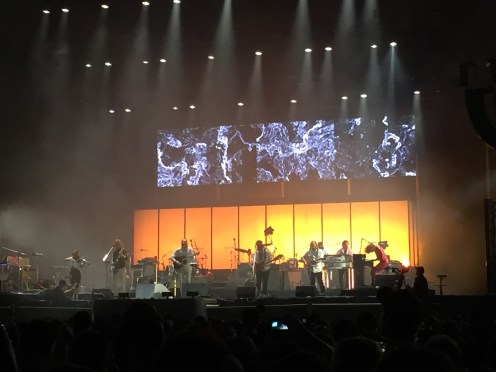
As a live act, Arcade Fire are visually spectacular without being gimmicky. They are tight and well rehearsed, yet spontaneous. They played songs off all their albums – with a heavy dose from Everything Now. A playlist based on the Lollapalooza set and a YouTube video of the Lollapalooza show are below.
As part of their encore, they mixed one of their first hits, “Wake Up,” with John Lennon’s “Mind Games” and a sprinkle of Radiohead’s “Karma Police.” It was an amazing finale. There is nothing better than a well thought out and executed cover. I highly recommend that if Arcade Fire comes anywhere near your town this fall with their Pre-Infinite Content tour – you should check them out.
I am one of those people who has a large music collection and every once in a while I forget I have something in my collection:
- Buying something I already have
- Letting a once loved album slip my mind
- Not realizing greatness is wasting away on my shelves
The Way Up falls into this latter category.
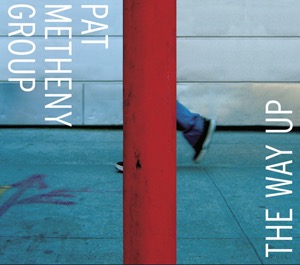
A work colleague recently mentioned that his piano teacher, who had a degree in music composition, suggested he should listen to The Way Up by the Pat Metheny Group (PMG). My colleague asked if I was familiar with the album. I said yes because I have all of Metheny’s albums, but it was a bit of a lie because I could not recall the cover art, let alone the music. He raved that it was good. Knowing he has good taste, I pulled it off the shelf and gave it a spin.
Being hooked by an album is based on your receptiveness and state of mind at the time of its arrival. I am not sure where my head and ears were in January of 2005 when The Way Up was released, but boy did I overlook a masterpiece (the album was not missed by everyone, it won the 2006 Grammy Award for Best Contemporary Jazz Album). This turned out to be the last PMG album and it may be because Metheny had fully realized the PMG concept with this album. Listening to it now, it is arguably PMG’s finest work.
I am a big Metheny fan, but given how prolific he is I think I can be forgiven that I have not deeply examined all of his recordings and etched them into my soul. I lost interest in the PMG during the Geffen period (1987-1996) but not with Metheny’s other work. I loved PMG’s Imaginary Day, but lost interest again with Speaking Of Now. I am guessing I just bought The Way Up, listened a few times and filed it without it leaving an impression.
Unlike previous PMG albums, The Way Up was composed as a long form piece. At nearly 70 minutes, it is pushing the limits of the Red Book CD format. Per Wikipedia::
The main idea for the piece had been germinating for several years before finally being officially composed and recorded in 2003-04. Metheny has remarked that, The Way Up became a sort of protest song to counter the influence of, in his view, an increasingly impatient, shallow, and simple-minded world.
This album contains everything in the PMG playbook including: jazz, prog rock, elaborate arrangements, bold compositions, improvisational solos, what sounds like a guitar orchestra, dynamics, lyricism, adroit playing and the instantly recognizable sound of Metheny (proof: I slipped the CD in the car stereo and my wife immediately recognized it was Metheny having never heard the album before).
Although it is presented as one ginormous 68-minute song (split into 4 tracks for CD and 3 tracks for Spotify), it sounds like dozens of 1 to 3 minute vignettes seamlessly and elegantly woven together. It is the PMG’s tour de force. It is a studio created masterpiece, but somehow they played it live (I have to get my hands on the DVD).
I can’t believe this has been gathering dust on my shelves for over 10 years (I regularly dip into the Metheny catalog, but somehow never dusted this one off). It is a grand parting shot from a band that is unlikely to be heard from again.
It is ambitious and complex music, but accessible. That is a big part of Metheny’s genius: making complex music accessible. Turn it down low and this can be background music and turn it up loud and it fully engages you. If you actively listen to the composition, the arrangement and the solos will amaze you. With this album, the PMG honed everything they had been doing for almost 30 years into a perfectly realized album.
I am kind of glad I missed it upon release – this is an unexpected gift.
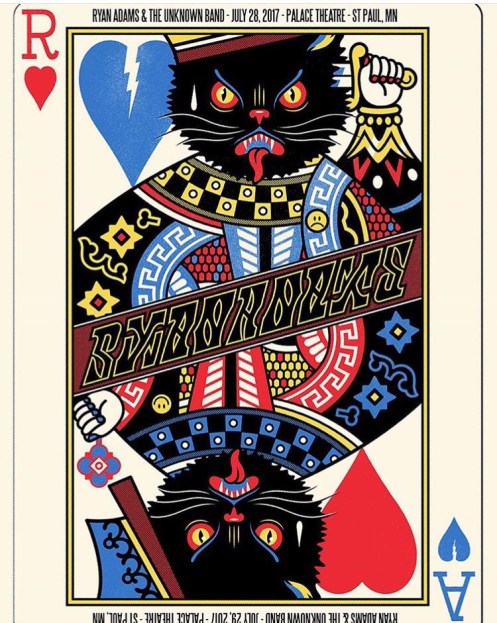

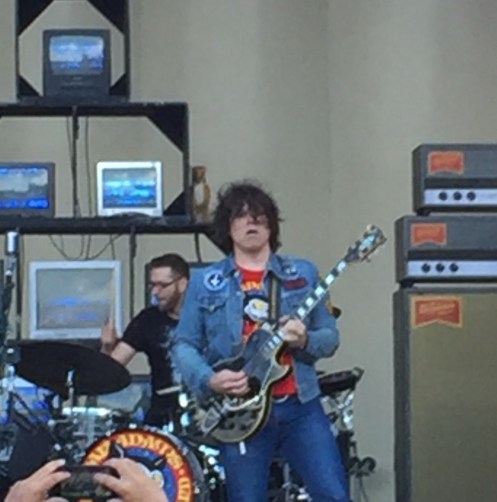
I have seen Ryan Adams several times over the years. Fortunately I have been fortunate to have only seen “the good” Ryan (although his days of on stage misbehaving seem distant at this point). The Palace show continued my streak of seeing the “good” Ryan. This the most rock and roll of the recent shows that I have seen. I don’t know if Ryan adjusts to the venue (or perhaps selects venue based on tour), but a harder rock show seemed appropriate at the Palace Theatre.
This was my first show at the Palace Theatre, a new 2,800-capacity concert venue for contemporary music in the Twin Cities (St. Paul). It is pretty cool vibe. The building is a 100 years old. The renovation appears to have focused on making the venue sea worthy, but not restored. Surfaces look sand blasted and unfinished, yet there are plenty of modern touches. For my aesthetic it looked pretty cool – it is kind of like $250 distressed designer jeans – you want to mock them, but you also want them.
I do have a beef : It is not a great sounding venue (at least not on the general admission floor). When I stood close to the stage the sound was directed over my head. When I went to the rear and elevated part of the GA floor the balcony was messing with the sound. The best spot I found was right in front of the soundboard (usually is), that is slightly elevated and in front of the balcony. I would be curious what the balcony sounds like. Given all the hard surfaces this is not a forgiving venue. It is not Roy Wilkins bad, but it is not Northrop either (my vote for best sounding music venue). I think First Avenue sounds better. But it is brand new and it looks like the focus was getting the venue functional. Hopefully it will be successful and the city will have enough money to soften the venue with some acoustical treatments. In summary, I much prefer it for a rock show over the State and Orpheum – those theaters are too nice (and sit down). It is nice to have a rock venue that is twice the capacity of First Avenue. I am hopeful about the Palace as a music venue.
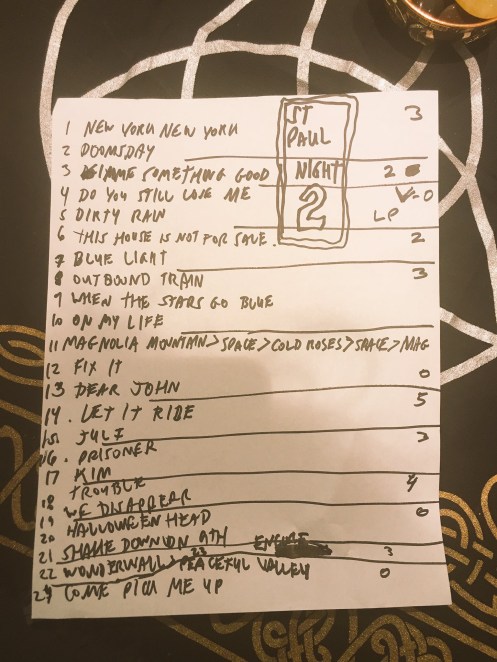
Back to Ryan Adams. As I mentioned this was rock and roll Ryan. This should not be a surprise because his recent album, Prisoner, is an electric guitar focused LP. The set list was a good cross-section of his catalog with emphasis on Prisoner.
A couple of highlights for me:
- The extended jam on “Magnolia Mountain/Cold Roses” – it was a mix of jam band, classic rock (I swear I heard a nod to Yes) and punk. It was wonderful detour.
- A deconstruction of “When Stars Go Blue” with one of the most effective uses of a disco ball that I can remember.
- What appeared to be a made up song on the spot about St. Paul.
Adams is at the top of his game. He is in an enviable position: he seems in complete control of his career and he is just popular enough to be profitable, but he is not a sellout. He continues to pump out great songs and is able to mine his catalog without being sentimental. His abilities as a performer and frontman have become more confident and entertaining.
As much as I loved the show, it was not quite right. Six nights later I figured out why. As a nice little dessert, I got to see Ryan for a one hour festival set at Lollapalooza. The sound was perfect – that was what made the Palace show unsatisfying – the crappy sound. It is hard to compete with a beautiful night, a festival mood and outside sound. It was fantastic. Ryan has gotten used to headlining – he was focused on managing his time and comically finished nine minutes early after a spectacular grand finale of “Shakedown on 9th Street.” Ryan came sheepishly back on stage and announced he had the perfect song to fill the time: “Magnolia Mountain.” He shrunk the twenty-minute version from St. Paul down to his allotted nine. The cherry on top was Adams’ shear joy. He was delightfully playful and our proximity allowed you to see the smile on his face.
My Spotify playlist is a more accurate set list of the Palace show than the photo of the set list Ryan tweeted below. Also is a playlist from Lolla.
This was our first Rock The Garden – a one day outdoor music festival in Minneapolis sponsored by The Current (the local public radio pop station – imagine a college radio station with a big budget) and the Walker Art Center (the Minneapolis version of MOMA). My ever vigilant wife spotted the chance to buy the tickets earlier this year (it always sells out in a heartbeat).
We saw three acts: Benjamin Booker, The Revolution (Prince’s Purple Rain era band) and Bon Iver. Headliner Bon Iver, who despite his proximity, had not played the Twin Cities market since 2011. It was a beautiful sweaty summer eve in Minneapolis.
We spent most of Booker’s set exploring the grounds and getting our bearings. My wife found a prime spot – balancing comfort and sight lines – flat ground (most of the viewing is on an uncomfortably steep hill) and a close unobstructed view of the stage and the big screen. We did get a chance to soak in a decent share of Booker’s set.
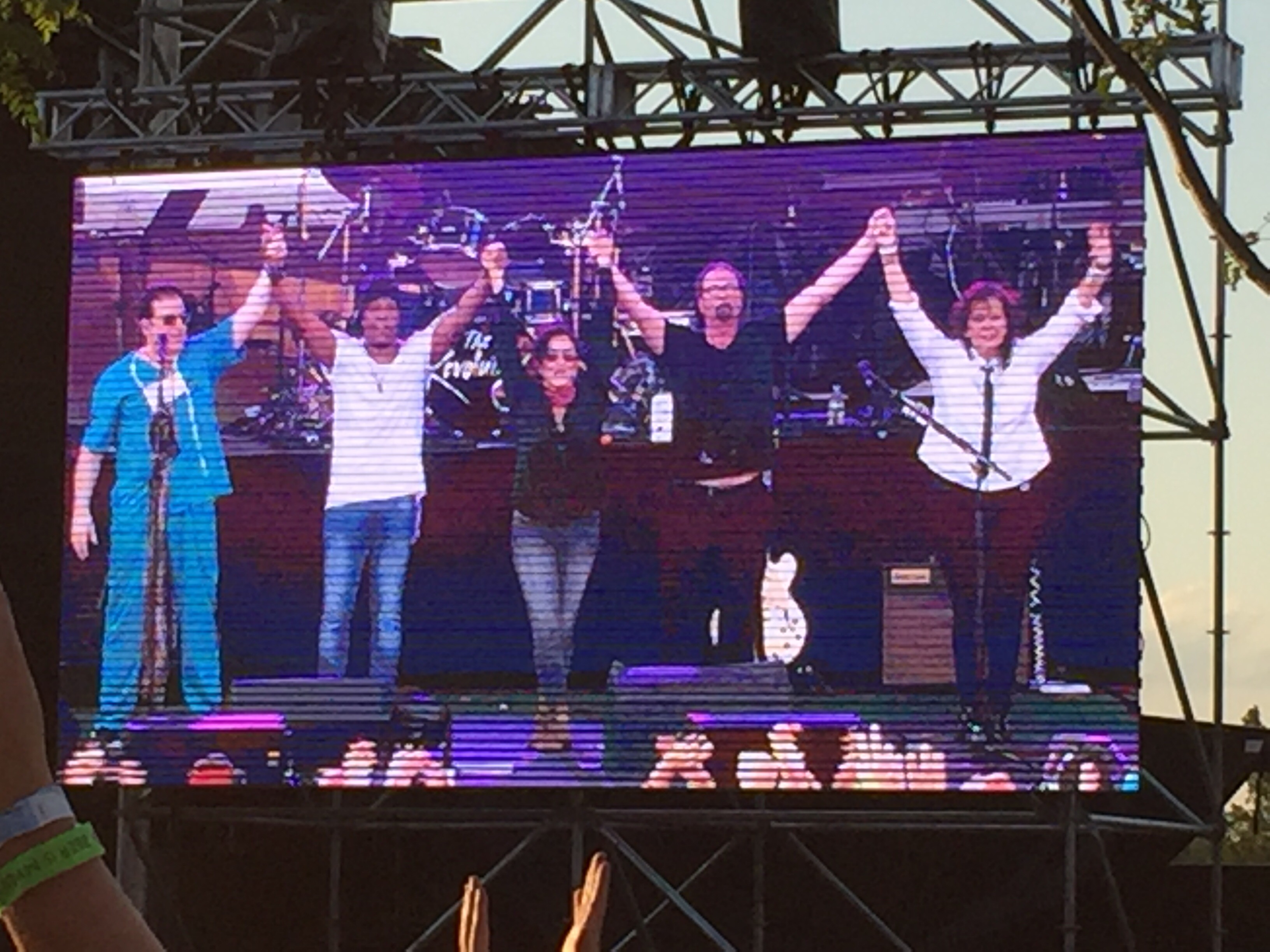
I had low expectations of The Revolution. I figured this was nothing more than a high-profile tribute band. If The Dead seems like a silly endeavor without Garcia, Prince’s band without Prince sounds downright absurd. The Revolution is a solid band, but they need a frontman (duh). This gig was blessed with Mint Condition’s frontman Stokley Williams for half the set. They ended up crafting a sentimental, yet poignant set that truly touched me. It mixed joy and tears: I worked myself up into a lather on “Let’s Go Crazy” and choked up for “Purple Rain.”

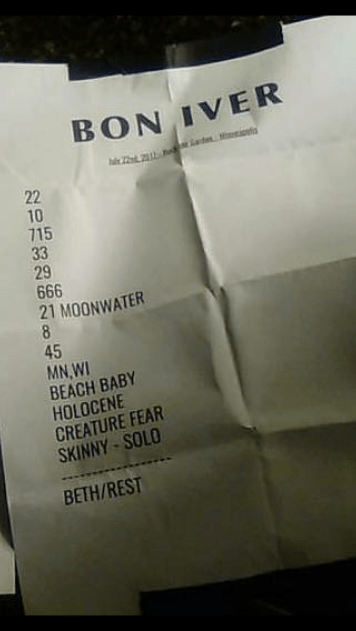
I have been a minor Bon Iver fan. I have the albums and I have listened to those albums out of obligation (the Twin Cities have claimed Wisconsin native Justin Vernon as one of our own). I have to admit Vernon’s stuff has never real hooked me. Sometimes seeing a band live is required. Vernon’s stuff seemed like the work of a studio rat and I was hard pressed to see how he could translate his studio art into a live set. Wow was I wrong. Bon Iver was amazing live and now I have crossed the threshold to true fandom.
Vernon had an amazing band: two drummers and 5 saxophones is not your typical road crew. Vernon deftly handle the vocals and electronics. I am not sure his hushed set would work in every venue, but in front of 10,000 card-carrying music heads he was in the right place at the right time – pure magic. Since the show I have listened to the Bon Iver catalog and it all makes sense to me now. I am converted – I see the light.


 Axl's Catch Groove