
Josh Tillman is a folkie with Sgt. Pepper ambitions. Like Vincent Damon Furnier, who plays Alice Cooper, Tillman brilliantly inhabits a character: Father John Misty. You are not sure where the man ends and the character begins. The character is not goth, does not wear makeup or a mask. Instead the character is the classic singer songwriter: an annoyingly sincere and pretentious asshole. In Tillman’s own words: “There’s something innately false about performance, I wanted to be authentically bogus rather than bogusly authentic.” Tillman has honed the Misty character over four albums and it never gets old. If you ever get a chance to see him live do it. On stage he slithers – the perfect visual for his music.
With three great albums in a row, Misty was contending to be my new Ryan Adams. Now he has thrown down a fourth great album. He really is in the Ryan Adams stratosphere – the kind of guy who can’t make a bad album.
God’s Favorite Customer is a new progression. Misty is all out psychedelic and he takes his folk rock to a Fleetwood Mac/Steely Dan level. That is, he has created his own voice and he is making production perfect easy listening, yet twisted pop. In the late 70s/early 80s this kind of act would have been huge. The late 70s and early 80s was the era that formed my musical taste, so this music is right up my alley. Misty has discovered this treasure chest and created his own version – a unique and distinctive style. This is not a classic rock impression, Misty has made a brand new classic rock. It is totally contemporary and not a tribute. This is music for now.
I know a lot of people are down on the state of the music business. But this is a great time to be a music fan. You have access to everything for a nominal fee (streaming). Musicians have to make their money touring and so they are forced to be great performers or be lost. Most shows I see these days are great because of that. And vinyl is back – what else needs to be said? Misty is a great example of what is right with the music business right now. Misty checks all the boxes:
- Songwriter
- LP maker (musician, arranger, producer, salesman, etc.)
- Performer
- Provocateur
I have been struggling recently to keep up on my blogging. I have been listening to a lot of music and enjoying it, but I was not getting the buzz. I needed a new album to grab me. Misty has grabbed me.
Last year’s Pure Comedy was a slow burn. It took me awhile to appreciate it. God’s Favorite Customer is more like a sequel to I Love You, Honeybear. It catches you on the first listen. Although Fear Fun is an outstanding debut, Misty has significantly grown. God’s Favorite Customer finds Misty more comfortably in character – dare I say sincere. Maybe this Misty character is not a put-on after all. But don’t worry, Misty has not lost any of his humor, cynicism or bite.
Misty has always been a great singer, but on God’s Favorite Customer he seems to have gotten even better.
The album opens with “Hangout At The Gallows” which is classic Misty, both sonically and lyrically. This is Misty at his most elaborate. This song could comfortably fit on The Beatles’ Abby Road or Radiohead’s Ok Computer.
“Hangout At The Gallows” seamless segues into “Mr. Tillman” which is like looking into a mirror with a mirror. Misty the character is telling a story about Tillman the guy who plays the Misty character. One of the recurring themes of this album is going crazy alone at a hotel. “Mr. Tillman” introduces that theme here.
“Just Dumb Enough To Try” is Misty at his 70s classic rock finest. It has the sound of Madman Across The Water era Elton John crossed with The Moody Blues. It is a juxtaposition of gorgeous music and tortured lyrics.
“Date Night” is the pure swagger of a cad.
“Please Don’t Die” closes out side one. This song could easily fit on one of several Ryan Adams albums. It is aching.
When you go to the flip side and set the needle into “The Palace,” you enter deep into the twisted psyche of Father John Misty. It is a combination of depression and humor. The sound of a man who has spent too much time contemplating his navel and is now sinking into an abyss and the only escape is to reunite with his true love. This could easily be a Joni Mitchell song.
“Disappointed Diamonds Are The Rarest Of Them All” sounds like a lost ELO hit. Misty eviscerates Madison Avenue sentiments:
Disappointing diamonds are the rarest of them all
And a love that lasts forever really can’t be that special
Sure we know our roles, and how it’s supposed to go
Does everybody have to be the greatest story ever told?
The titular cut has the nonchalance of Penn/Moman’s “Dark End Of The Street.” It is a gorgeous ballad.
On “The Songwriter” Misty turns the tables on himself. A kinder and gentler “Positively 4th Street.”
The album ends with “We’re Only People (And There’s Not Much Anyone Can Do About That)” a meditation on the fact that we don’t know anything about who we really are:
People, we’re only people
There’s not much anyone can do, really do about that
But it hasn’t stopped us yet
People, we know so little about ourselves
But just enough to wanna be nearly anybody else
How does that add up?
It is a nice bow to tie up the album.
Is this Misty’s best album yet? It might be.
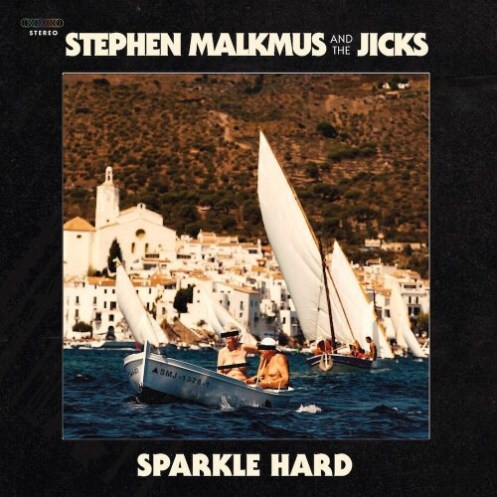
If Jerry Garcia had been a punk, he might have sounded something like Stephen Malkmus. Malkmus plays guitar with the imagination and creativity of a jam band gun slinger with the economy of a punk.
I discovered Malkmus via his solo career vs. his former band Pavement. I like Pavement, but they don’t have an album I like as much as any of Malkmus’ solo albums.
Malkmus has always been a great guitarist. His solo career has many great guitar solos, but this album’s vocals are the standout for me. Few rock artists vocals actually get better with age – Malkmus is one of the rare exceptions. He started his career with a vocal style that was slightly more energetic than Lou Reed. Over time, it has become richer and more varied. On Sparkle Hard his vocals have matured into an instrument that rivals his axe.
The album is a nice summary of what Malkmus does best, yet it feels totally fresh. Per the Matador website regarding Sparkle Hard:
It’s light ’n’ breezy, head-down heavy, audacious, melancholic and reflective, goodtime and bodacious, and it pulls off the smartest trick: it’s both unmistakeably The Jicks and – due to the streamlining of their trademark tics and turns, plus the introduction of some unexpected flourishes (Auto-Tune! A fiddle! Guest vocalist Kim Gordon! One seven-minute song with an acoustic folk intro!) – The Jicks refashioned. If 2014’s Wig Out At Jag Bags balanced the lengthy prog workouts of Pig Lib with Mirror Traffic’s sparky pop moments, then Sparkle Hard bears less obvious direct relation to what’s come before. It also has turbocharged energy and enthusiasm by the truckload.
Malkmus has crafted a slightly twisted Classic Rock album. The arrangements are elaborate without being busy. Malkmus continues to churn out quality material thirty years into his career. His solo career is now twice as long as his more famous tenure in Pavement. If you have not checked Malkmus out, Sparkle Hard is a great entry point.
 I remember my first Record Store Day (RSD). I don’t remember the specific year – it could have been the first or second year of the event. I showed up at the Electric Fetus at about 3:00 in the afternoon, only to learn that things were picked over. Since then I have learned you need to get up early on a Saturday morning and wait in line. Just like back in the day when you had to wait in line for concert tickets (yes some people sleep over). RSD is the definition of the cliché “the early bird gets the worm.” Fortunately, my wife thinks it is fun to wait in line for RSD, she makes sure it is on our calendar and participates in “the sport.”
Several weeks before RSD “the list” is released. The list is the inventory of exclusive limited releases that will be available. There is a count for each release on the list. The closer the number is to 10K means it will be pretty easy to acquire and the closer the number is to 1K indicates it is going to be a crapshoot. I study the list several times. Eventually, I highlight and prioritize my wish list. Typically there is at least one elusive selection (that closer to 1K quantity I just mentioned) and one or two budget busters (multi-disc boxed sets).
The Electric Fetus, my favorite record store, knows how to throw a good Record Store Day: they are well-organized, have food, portable outhouses, live music and most of all a great selection. Over the years the Fetus’ RSD inventory has consistently allowed me to retrieve 90% of my wish list (assuming I am in line by 5:30 A.M.).
This year my wish list was topped by two Grant Green archival albums (rare at 1500 copies each) and a Chris Robinson Brotherhood live set (rare at 1200 copies and expensive since it is a 4 disc set). I acquired two of the three (one Green and the Chris Robinson Brotherhood) and a few more selections (see above photo if you can’t endure several wordy posts to get to the punchline).
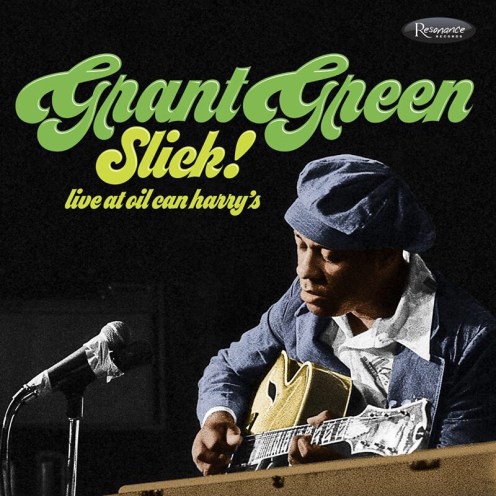
Grant Green – Slick! Live At Oil Can Harry’s
When I first reviewed the 2018 RSD list I highlighted two Resonance Records releases by Grant Green. Resonance Records is a nonprofit; per their website:
Resonance Records is a division of the Rising Jazz Stars Foundation, a California 501(c)(3) non-profit corporation created to discover the next jazz stars – passionate, brilliant musicians from around the world. We assist and support them through recording, performance opportunities and distribution of their art. Every Resonance CD and DVD is produced without compromise, to create and preserve our artists’ jazz legacy
Resonance is focused on unreleased archival recordings of jazz greats. One of my favorite albums is an NPR radio broadcast of a Jaco Pastorius concert issued by Resonance. One of Resonance’s marketing gimmicks is to issue high quality limited edition LPs for RSD followed by the CD release a few weeks later. Resonance releases are not on streaming services and has been a very reliable label for me.
Before RSD 2018 I read a review of the albums in the Green LPs in the Wall Street Journal:
In an era often belittled by jazz fans, guitarist Grant Green spearheaded a movement that expanded hits in innovative ways
I was hooked. I had to have these two Green releases.
On the morning of RSD 2018, I had my usual case of nerves about my wish list. With only 1500 copies of each of the Green LPs – it was going to be dicey. I got everything on my list, but the Grant Green LPs at the Fetus. They had one copy of each, but they had been nabbed before I had my chance, even though I was number 33 in the queue, which meant I was up at 4:30 A.M.
After the Fetus we (my daughter had now joined my wife and I in the festivities) continued to pursue the Green LPs. We then hit up Cheapo, Fifth Element and Hymie’s – no luck. We then headed over to St. Paul to Barely Brothers and scored Slick! Live At Oil Can Harry’s. One down, but Funk in France: From Paris to Antibes (1969-1970) would remain elusive. We tried Agartha – no luck (they had a copy of Slick too). We checked out Caydence Records & Coffee – no luck. We headed home to regroup. I called Mill City Sound and Solid State – whiffed. The last try was Rock Paper Scissors Goods – again a swing and a miss.
But I don’t want to obsess on what was lost, but what was found. Slick! Live At Oil Can Harry’s is a great album and represents everything that is wonderful about RSD: a buried treasure of a recording, high quality wax, quality packaging, an artistic revelation and it is rare.
I have noted before that lite jazz is a challenge to pull off. Most often it is cheesy and only occasionally it is brilliant. Grant Green is one of those rare lite jazz musicians who can create masterpieces. Technically Green predates the lite jazz era and comes from the soul jazz era. He laid the foundation for what was soon to come.
This live set, from late in Green’s career was recorded at Oil Can Harry’s in Vancouver BC Canada on September 5, 1975 (Green passed in 1979). It is a good sample of his career. Side A is a Charlie Parker song, “Now’s the Time,” that Green plays as bluesy bop. Side B is a Jobim song, “How Insensitive (Insensatez)” that Green plays as bluesy bossa nova.
So we have a theme here: bluesy. Green is bluesy. I use that term because he is not playing straight blues, but allowing the blues vocabulary to form his take on jazz standards.
When we get to the second platter, Green goes somewhere else. First he is not using jazz standards, but contemporary jazz rock, soul and funk hits of the time (mid-70s). He does this in a medley format over sides C and D. The first platter is easy listening jazz, platter two is more adventurous, but completely accessible. Side C’s medley starts with jazz rock icon bassist Stanley Clarke’s “Vulcan Princess.” It then moves into Ohio Players “Skin Tight.” The side finishes with Bobby Womack’s “Woman’s Gotta Have It.” Side D is Stevie Wonder’s ” Boogie On Reggae Woman” and the O’Jays’ “For the Love of Money.” I made a playlist of the originals and it is a viable playlist – especially sides C and D.
This is the best of what I like about RSD: being introduced to an artist I am only vaguely familiar with and being motivated to take a deep dive into that artist’s catalog. I thought I knew who Grant Green was; I assumed he was a minor league version of Wes Montgomery or George Benson. Now I realize he is an amazing underrated jazz guitarist who should be on the same pedestal with those titans. Not only is he a great player, but he has exquisite taste. Expect to hear more about Grant Green as I explore his catalog.

Wilco – Live At The Troubadour 11/12/96
The re-release of Wilco’s first two albums late last year was the best, but being the obsessive completest that I am, I was disappointed that the vinyl version of Being There did not include the 1996 concert that was part of the CD release. RSD 2018 filled in that blank with a vinyl release of Wilco – Live At The Troubadour 11/12/96.
This is the first official release of their November 12th, 1996 performance at Los Angeles iconic Troubadour, considered as one of Wilco’s essential live recordings. It has long been bootlegged and circulated among fans. It lives up to the hype.
Wilco’s first album, A.M., is one of my favorite albums. But Jeff Tweedy freely admits A.M. was not a Wilco album, but his half of an Uncle Tupelo album. It wasn’t until the next album, Being There, that Wilco became Wilco. This concert is from the Being There era. It is a thrill to have a live artifact (vinyl to boot) from a defining moment, of one of my favorite bands. Thank you RSD 2018. Stream starts at track 35.

Miles Davis Rubberband EP
Per RSD 2018 website:
In 1985, Miles Davis shocked the music world by moving from Columbia Records to Warner Bros. Records and started recording Rubberband. This album marked a radical departure for him, with funk and soul grooves, and was to include vocals by Al Jarreau and Chaka Khan. The album was subsequently shelved and Davis went on to record Tutu.
Rubberband’s title track has been updated and remixed by its producers, with vocals by R&B / jazz singer Ledisi. Randy Hall and Zane Giles also finished the original version for this exclusive 4-track Record Store Day EP. The cover artwork is a painting by Davis. Worldwide run of 6000.
RSD has long been a PR tool to tease a future release. A whole album release is on the cards for later this year.
Per JazzFm.com:
“It was fat grooves, really funky, Miles talking. It was street and funky and dirty. We didn’t go after writing a great jazz song, Miles wanted the street thing; he wanted the chord changes he wanted to play. The basis was to take it to the street like ‘On The Corner’, it was Miles taking more chances,” said Hall. Giles added, “Miles kept saying ‘I don’t wanna do my usual stuff. I wanna do something different.’”
By today’s standards this reimagined version has a hip hop vibe. The EP ends with the original version of the song and I have to admit the remixed version is an improvement.
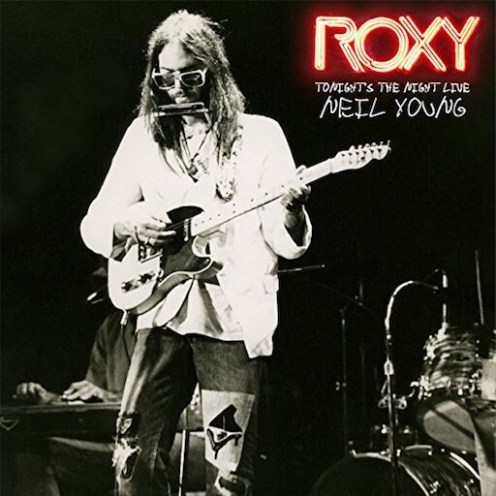
Neil Young: Roxy – Tonight’s The Night Live
Neil and his label Reprise co-opt RSD by issuing a vinyl version of an album that was being released on CD and streaming services anyway. All the same, it is a treat to hear Tonight’s The Night in a different context. Somehow Neil makes his maudlin classic fun. I assume it was the cocaine or tequila.
The back story is that Neil and band had been recording Tonight’s The Night in the late summer of 1973. They initiated a new LA club, the Roxy, over three nights (9/20-22) playing the live debut of nine songs that would eventually appear on 1975’s Tonight’s The Night. Per Young:
“We really knew the Tonight’s The Nightsongs after playing them for a month [in the studio], so we just played them again, the album, top to bottom, without the added songs, two sets a night, for a few days. We had a great time.”
It was and is a little bit of magic. A great cherry on the top of one of Young fan’s most beloved albums.
That ends part one – I have more records to digest!
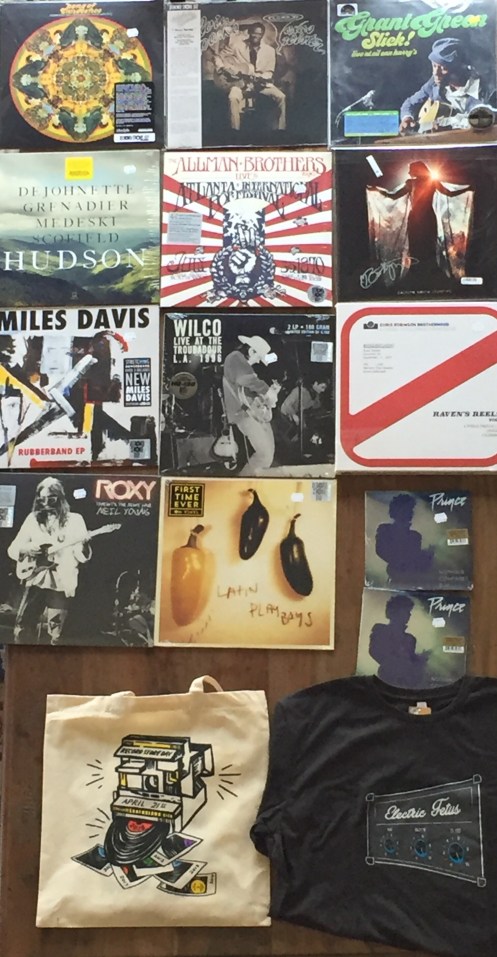
Latin Playboys – Latin Playboys
In the mid 90s Los Lobos was on a roll. They had released several classic albums over a ten year run. They had so much juice that David Hidalgo and Louie Pérez formed a supergroup with producer/keyboardist Mitchell Froom and producer/engineer extraordinaire Tchad Blake without diluting their brand.
This music is weird, but listenable. As AllMusic critic Richie Unterberger described it:
“…a twisted and avant-garde take on roots music. Latin Playboys draw from blues border music, experimental studio trickery, and cinematic sound textures.”
This is an album from the heart of the CD era (1994) and the RSD gimmick is that this is the first time the album has been issued on vinyl. I loved this album at the time, but it fell off my radar. It is a delight to be able to spin it on my turntable.

Prince – Nothing Compare 2 U
Speaking of being on a roll, in the mid 80s Prince could do no wrong. He had hit albums, hit songs, spin-off groups, hit movie and hits for other artists.
In 1984 Prince was exploding with creativity – writing at least a song a day. “Nothing Compares 2 U” was part of that eruption. Prince’s sound engineer, Susan Rogers, recalls it “came out like a sneeze.” Prince recorded the song immediately, but never released that version until now. He did place it on the album of one of his pet projects The Family whose album flopped. About five years later Sinéad O’Connor reimagined the song and made it an international hit. It has become one of Prince’s most beloved songs.
Despite the success of O’Connor’s version, Prince hated Sinéad’s cover. Paul Peterson, who was the voice of The Family, recalled:
So when Peterson heard O’Connor’s version – and saw the famous tearful video on MTV – he first thought, “That should have been me,” but later loved it and told Prince he was pleased that [Prince would] get lots of money from her recording. “He went: ‘Money?! It’s not about money!’ He told me he didn’t like it [O’Connor’s version]. Unless he asked them, he didn’t like anyone covering his songs.”
Prince was never one to reveal his muse, but this song is alleged to be an ode, not to a lover, but to his housekeeper who had to leave Prince to take care of a family emergency. This housekeeper kept Prince’s life in order and he was at loss without her.
RSD2018 was the same weekend that Minneapolis was celebrating Prince. Prince’s label pressed 1984 purple 45s of “Nothing Compares 2 U” for the celebration weekend attendees and provisioned 300 copies to the Electric Fetus for RSD.
The Prince version is close to The Family version, with the exception the Prince’s version has a banging sax solo. It is more of a rock song than O’Connor’s version. But the truth is O’Connor nailed the song in the same way Hendrix nailed Dylan’s “All Along The Watchtower.” She found a gem that even the composer did not see and completely reinvented it. But it is still cool to witness the original vision.
My wife and I had our copy framed in a clever way so as not to damage the record or cover by our favorite framing store Posters On Board. They do a fabulous job on framing – especially their titular poster mounting technique.
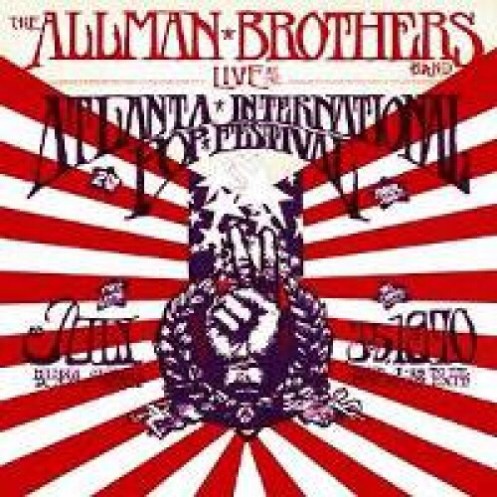
The Allman Brother Band – Live at the Atlanta International Pop Festival: July 3 & 5, 1970
One of the most important albums of the classic rock era is the Allman’s At Fillmore East. Live at the Atlanta International Pop Festival: July 3 & 5, 1970 predates that album by about a year. Atlanta was originally released in 2003 on CD. The Allmans were still pretty fresh on the scene when Atlanta was recorded (their debut came out in November of 1969 and was a commercial flop – as was its follow up in the fall of 1970).
Atlanta features songs from their first two albums and At Fillmore East. Despite their youth, they sound sure of themselves. They are just as amazing as they are on At Fillmore East. It is hard to imagine that they hatched as a fully realized classic rock band (Duane was just 23 and Gregg was 22 when this album was recorded), but they did.
I just gave At Fillmore East a fresh listen. The Allmans got better over the next year, so the paragraph above was a bit overstated. As great as they sound on Atlanta, they are next level a year later. There is a reason At Fillmore East has the accolades, it deserves them. As important as the Allmans are to the classic rock era, their fans deserve a historic document like Atlanta.
The album is not available on streaming services. But it is On YouTube:
Almost through the RSD2018 pile – one more post to go!

When you blow several Benjamins on Record Store Day (RSD) it takes a while to digest it all. My last post talked about four releases from my RSD 2018 haul. Here are a few more.
 DeJohnette, Grenadier, Medeski & Scofield – Hudson
Why I did not give this an album a serious listen in 2017 is beyond me. I was well aware of this supergroup debut and I did listen to it on Spotify when it first came out – just not seriously. Hudson has some of my favorite jazz musicians playing on it. Sometimes, an album is released in the midst of too much other music or at a time when your ears are just not open. Anyway, this is a great album I missed in 2017.
The album features originals by DeJohnette and Scofield and covers of rock songs that have a New York Hudson Valley connection. Those “Hudson Valley songs” include a couple of Dylan songs, a song by The Band, one by Hendrix (LP only) and Joni’s “Woodstock.”
Sco dominates the proceedings with his rich fat tone. His guitar sounds so good I feel like I can taste it. It reminds me of a really good soft caramel. Medeski is one of the most sympathetic keyboard sidemen in the business. His solos are subtle and tasteful. Grenadier (bass) and DeJohnette (drums) are a rock solid rhythm section. They have no need to dominate – they accentuate. DeJohnette provides additional value composing a third of the selections.
The vinyl edition has a slightly different song sequence and one additional song (Hendrix’s “Castle Made Of Sand”). Oddly, the revised sequence of the LP is better than the digital sequence. I assume the LP format dictated the new sequence.
In addition to some straight jazz, there is also some Bitches Brew improvisational funk, gospel (including some soulful vocals from DeJohnette) and even a homage to Native American music. This is an album that should have been on my best of 2017.
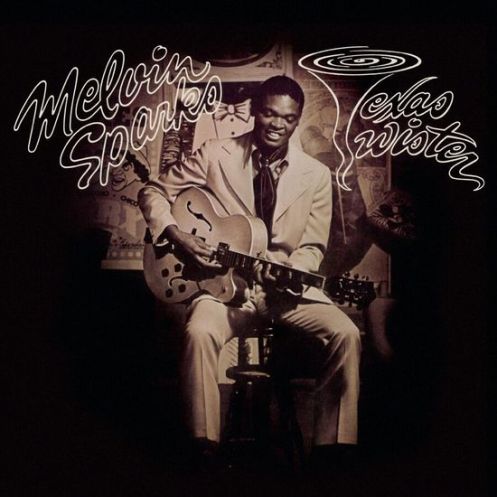
Melvin Sparks – Texas Twister
Another funky jazz guitarist that caught my eye on “The List” was Melvin Sparks. I was only vaguely familiar with Sparks, but I trusted that RSD was not going to let me down so I nabbed this LP.
Sparks comes from a fine pedigree: as a high school student he was working with Hank Ballard and the Midnighters. He then worked with the Upsetters, a touring band formed by Little Richard, which also backed Jackie Wilson, Curtis Mayfield and Marvin Gaye. Eventually, he found his way to NYC where he was a session cat for Blue Note and Prestige. He was a go-to player in the soul-jazz scene of the late 60s and early 70s. He often played with keyboard greats like Jack McDuff, Dr. Lonnie Smith and Charles Earland.
Texas Twister is a generous helping of slick soulful jazz, spiced up with some hard bop on the second side. When I say slick, I don’t mean sappy slick, I mean Steely Dan slick. The titular cut is super funky, but there is plenty of serious jazz soloing by Sparks and the band. Overall, the album is playful, yet this is some serious talent.
Per the Light In The Attic web page:
This record is a delight and there’s A LOT happening while Sparks is peeling off some fluid lightning riffs! Texas Twister features Idris Muhammad on drums, which means a frenzy of funky JB-influenced over-the-top soul-jazz drumming. Featured on Hammond Organ is the great Ceasar Frazier and bass duties are handled by Wilbur Bascomb (know for his performance on Jeff Beck’s ‘Wired’ album and the soundtrack for the 1979 film version of Hair). Add some extremely tight horns and congas to the mix (which gives this album a sweet Latin Jazz vibe) and you’re swinging all night long. All of the above is carefully overseen by engineer Malcolm Addey & producer Bob Porter (known for their work with Quincy Jones, Charles Mingus, Duke Ellington, Nat King Cole, Miles Davis, Coltrane etc).
Texas Twister is the first seven cuts of this stream:
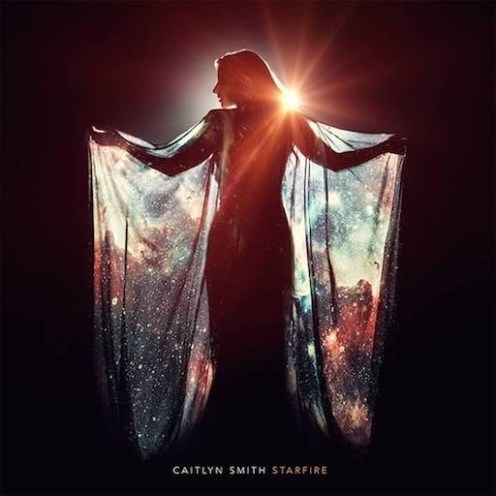 Caitlyn Smith – Starfire
Smith is on my radar because she is a local gal (raised in Cannon Falls, Minnesota) who has had some Nashville success as a songwriter (Rascal Flatts, Kenny Rogers & Dolly Parton and a huge hit with Meghan Trainor & John Legend: “Like I’m Gonna Lose You”). In 2016 Rolling Stone named her one of “10 New Country Artists You Need to Know” describing her as
The most versatile honky-tonk singer you’ve ever heard, a virtuoso vocalist capable of torch, twang and a whisper-to-a-scream range.
So, we are kind of proud of her. Starfire is her major label debut.
All that being said, I have to admit I have not listened to Smith until recently. My first impression is that she was a bit generic modern country. Great voice, catchy songs. I listened to a playlist that mixed her songs covered by others with her own takes. I learned that when Caitlyn sings her own songs it is something special. Her versions popped out of the playlist – after all she is a singer songwriter.
This is one of those albums that every time you spin it more is revealed:
- The vocals become more complex
- The lyrics become more clever
- The song sequencing is carefully curated (e.g.: side 2’s three city songs in a row)
- The arrangement’s subtleties blossom
Smith is a nice combo of rock and roll swagger and country twang. She can howl and purr.
From a RSD perspective there are two extra cuts on the LP and the Fetus had autographed copies.
Below is the playlist I talked about along with the full album less the bonus cuts.
It is going to take a couple more posts to get through the rest of the RSD2018 booty.
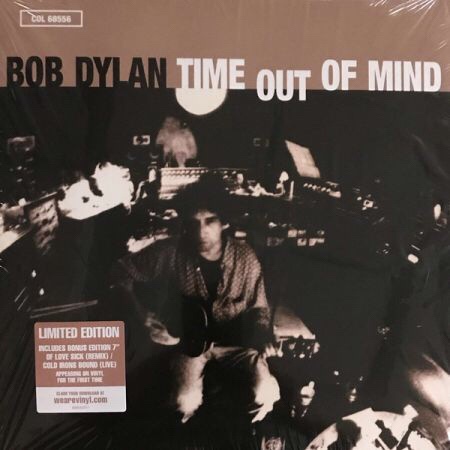
I recently picked up the 20th anniversary LP version of Dylan’s Time Out Of Mind – one of my top five Dylan albums. Released deep in the CD era, not many LPs were released and a used copy is now close to $100. So $22 for a reissue is more my speed. The purchase reminded me that it belongs in my hall of fame. The vinyl reissue sounds great.
This album represents a true comeback for Dylan. It was critically acclaimed, sold well and won three Grammys. The 80s and 90s were a tough road for Dylan. Prior to Time Out Of Mind Dylan’s muse was so lost he did two cover albums of folk songs. Returning to folk songs must have revived Dylan’s spirit, because after soaking in the past, he created a masterpiece and set the foundation of his music for the next twenty years.
At the time I was excited that Daniel Lanois was the producer. Several years earlier Lanois had produced Dylan’s excellent album Oh Mercy. Dylan had famously hated recording that album and had seriously butted heads with Lanois so it seemed odd they would get together again.
On Time Out Of Mind Dylan sings the blues. It is Dylan’s unique take on the blues: weary and regretful. When Dylan presented Lanois with songs, Dylan said the songs were about “the dread realities of life.” Lanois recently recalled the songs “had regret and hope, beauty and optimism. A lot of life experience. They were so complex.”
Dylan and Lanois fought, but out of that conflict came a beautifully cut gem. As much as Dylan claimed to hate Lanois sound, it informed his road band and subsequent albums to this day. Dylan had tried a lot of angles and producers in the 80s, but he couldn’t find his sound. Ultimately, with Time Out Of Mind he found it. The sound is swampy, bluesy, country, atmospheric – Dylan’s version of Americana. The music is the perfect pairing of Dylan’s forlorn lyrics and rough gravel road of a voice. Once he found this new sound, Dylan would never need another producer again – he has been self-produced ever since.
On first listen the album sounds a bit depressing, but as the original Rolling Stone review stated, as the album ends with 16-minute-long “Highlands,” Dylan “detours from its verse-chorus-verse path to an extended narrative bridge, the deadpan twang in Dylan’s voice becomes more pronounced, and his old sly glee can be glimpsed.” That is the greatness of the blues – they wink with honesty at the challenges of life. Dylan does not candy-coat getting old and having problems, but he is not going to let his troubles beat him either. Dylan is brutally honest in his observations, yet somehow optimistic. He is simply Dylan. And at the time that was a big deal, because we thought we had lost him.
My favorite cut is “Highlands” with its long meandering lyrics and lethargic but infectious groove, The song reminds me of “Ballad Of A Thin Man,” only now the joke is on the hipster: mortality. Dylan is both philosophical and visual: one minute he is reflecting and the next he is creating a mini-movie.
Per Wikipedia regarding “Highlands” could have been even longer:
In Jim Dickinson’s (Memphis musician and producer) account, “I remember, when we finished ‘Highlands’—there are two other versions of that, the one that made the record is the rundown, literally, you can hear the beat turn over, which I think Dylan liked. But, anyway, after we finished it, one of the managers came out, and he said, “Well, Bob, have you got a short version of that song?” And Dylan looked at him and said: ‘That was the short version.
The album has stood the test of time by simply being timeless. I never tire of listening to it. After all the recent crooner cover albums I wonder if he has one more masterpiece in him? I would love for him to pick one more fight with Danny Lanois.
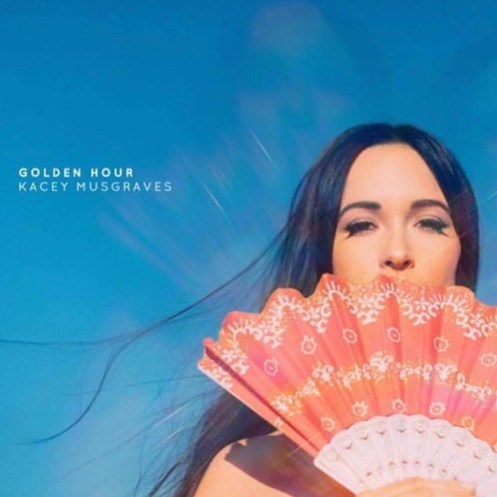
I have been vaguely aware of Kacey Musgraves since her debut Same Trailer Different Park (2013). All I knew is that she was a bit sassy and not conforming to Nashville standards. I listened to that album when it came out, but it never hooked me.
Golden Hour has received plenty of prerelease hype suggesting Musgraves was going to fly the country bird-cage and go full-on pop. I gave it a quick listen and was instantly hooked.
Golden Hour sounds more Laurel Canyon than Nashville. As she heads down the pop road, Kacey is taking her cues from Jenny Lewis vs. Taylor Swift. This is a near perfect synthesis of pop and country. The arrangements are pop with just a sprinkle of country. Similarly, the vocals are pop with a touch of twang. Lyrically, this is pure country. Musgraves has an easy and authentic style.
There is not a bad track on the album. A highlight for me is the opening cut “Slow Burn.” The song is about as country sounding as this album is going to get: acoustic guitars, banjo picking and a slight twang in Kacey’s voice. It has some great lines like:
Texas is hot, I can be cold
Grandma cried when I pierced my nose
Good in a glass, good on green
Good when you’re putting your hands all over me
Another highlight is “Space Cowboy.” The content took me by surprise based on the title. I assumed it was going to be about a stoner boyfriend, but it is a classic country song about a man with commitment issues. With clever phrasing, Kacey releases her man by saying “you can have your space, cowboy” with a powerful pause between “space” and “cowboy.”
You can have your space, cowboy
I ain’t gonna fence you in
Go on, ride away in your Silverado
I’ll see you around again
‘Cause I know my place, and it ain’t with you
Sunsets fade, and love does too
Though we had our day in the sun
When a horse wants to run, ain’t no sense in closing the gate
Warning: this is sweet country pop, but the sweetener is cane sugar not saccharin.
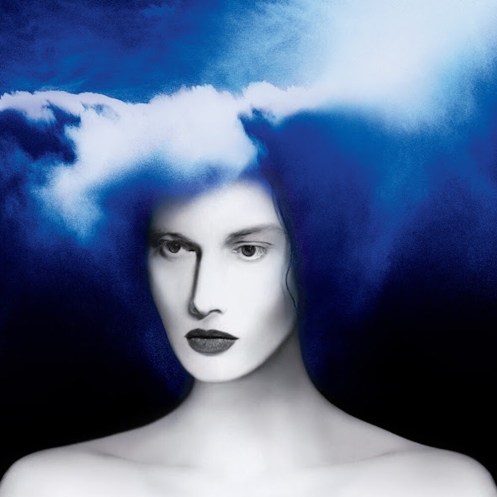 It looks like some critics are panning Jack White’s new album. For example Pitchfork:
With the joy and wit all but absent from his songwriting, Jack White’s third solo album becomes a long, bewildering slog.
I don’t agree it is worthy of all that bile. I like the album.
I respect Jack White and his various projects, but they never clicked for me. Boarding House Reach works for me. I am at the point in my listening career where I can’t help but hear influences in almost everything I listen to. On Boarding House Reach I hear Bowie, Prince, Todd Rundgren, Led Zeppelin, Zappa and hip hop influences. But it is unmistakably Jack White.
The album is weird, but not unlistenable weird. Jack White is a certified weirdo; weird is his modus operandi. He is fun and interesting weird.
Not all critics hate the album. Steven Hyden loves the album and gives it a well thought-out review. He makes a not so crazy comparison:
For the past week, as I’ve listened to Jack White’s very good and pleasingly strange new album Boarding House Reach, I’ve thought often about Prince. Jack White reminds me of Prince. Is that an obtuse comparison? I’m not aware of anyone making the connection before, but the more I think about it, the more obvious it seems. Not only is Jack White like Prince, Jack White might very well be Prince.
So what do I like about this album?
- The elaborate hip hop influenced arrangements
- The monster guitar riffs
- Keyboards competing with those guitar riffs
- The funk
- Jack White’s career of reinventing the blues – this is yet another inspired twist
- The weirdness: Jack raps, there are spoken word interludes, there are a variety of styles (hard rock, country, jazz, gospel, prog, hip hop, etc.), Dvořák is a co-writer of one song, etc.
The back story is that White wanted to shake up his routine for this album. So he used Pro Tools (White is legendary for his love of analog recording techniques) for the first time and played with musicians he has never worked with before – many of those musicians work in the hip hop space. Jack White’s experiment on Boarding House Reach is a success.
I was always more of a Black Keys guy vs. White Stripes guy, but I have faithfully monitored Jack White’s career. This is the first White album that has struck a chord with me. I was hooked on the first listen. It is the kind of album that has motivated me to re-listen to his entire catalog. Kudos to Jack White for continued risk taking.

I discovered this fine brew via my neighborhood liquor store Top Ten Liquor (St. Louis Park). I was shopping for some barrel aged brew and one of the staff suggested this special release from Big Axe. Although, not a barrel aged brew it has some similar features.
Per Untapped:
Paired with StoneHouse Coffee to age their coffee beans in a bourbon barrel, then made cold press from the beans and added it to our chocolate oatmeal stout. Fragrant and rich, this is a sipping beer.
My first reaction is that it tastes like quality coffee ice cream. This chocolate oatmeal stout has a nice mild sweet coffee flavor.
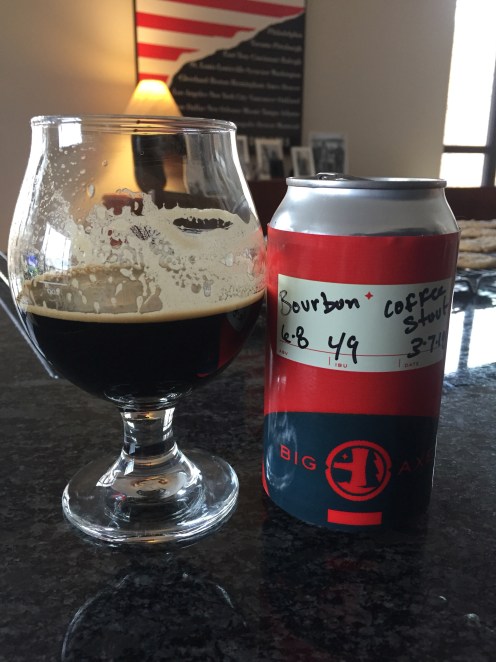
It has the deep rich flavor of a typical bourbon barrel aged stout without the boozy flavor. It has a relatively low ABV for this style of beverage (6.8). There is a slight caramel and smoke after taste. This is a beer that should be sipped slowly as it gets more complex as it warms. The warmer it gets the stronger the coffee flavor and the sweetness is enhanced. It pairs well with sweets so this is an excellent desert or snack beer. Highly recommended.

It never ceases to amaze me the way Columbia, Miles’ & Trane estates continue to pull masterpieces out of their asses. I threw The Final Tour (AKA Boot-V6) on the other day while I was working and had to turn it off – it was too distracting – because it is that good!
All music-heads appreciate that Miles and Trane are musical GOATs. And I mean all-time/all genre greats, not just jazz, American or 20th Century. They are the best of what the human mind and heart are capable of: Art.
Just because you appreciate an artist does not mean you are an obsessive fan. I am close to the obsessive end of the spectrum with Miles and Trane. I have spent as much money on Miles and Trane as Dylan. I have been a bit overwhelmed by The Bootleg Series. A few of those releases have not resonated with me. Plus I have been distracted by other music. I figured the playing on Boot-V6 would be awesome, but the audio subpar. I have listened and can report the playing and audio are A+.
Coltrane’s greatness credentials are impeccable. Miles’ are a bit stained. A drug fueled exodus from the world followed by a decision to go pop in the 80s – as if going rock was not bad enough in the 70s – will hurt your rep. Miles is greater than Trane. Defending that statement is a topic for another post.
Anytime these two titans play together it is a big deal. I am a huge fan of Kind Of Blue (who isn’t). Boot-V6 is a document of a spring 1960 European tour post the success of Kind Of Blue (summer of 1959) and just as Trane was launching into the stratosphere (Giant Steps had been released two months prior to this tour). The band is tight, comfortable with the repertoire (but not bored with) and the soloing is inspired.
If your exposure to Miles is Kind Of Blue, Bitches Brew and pop Miles – no shame in that – I lived there for twenty years – you might be under the impression that Miles can’t shred. When he played live he could shred – even in the 80s. On Boot-V6 Miles shreds and of course Trane shreds. Heck, the rhythm section shreds (Wynton Kelly on piano, Paul Chambers on bass and Jimmy Cobb on drums). This a legendary band on a very good run. Per Miles’ website:
The Final Tour is essential listening, an invitation to travel through time to experience the enduring beauty and magic of Miles and Trane at the peak of their collective powers.
I am a bit of an audiophile and the audio on this recording is top-notch. Which has me pretty gooey about this album. I am listening to it via the Tidal stream through my Oppo BDP-105D delivered by my Grado SR80 cans (I realize this is budget audio, but it is still audiophile quality). It sounds spectacular and once I get over that, I will be able to really listen to the music. I am in no rush to get past the brilliance of the recording quality. It is a nice hot tub to soak in.
Per Miles’ website:
The repertoire performed in this collection is a veritable Miles Davis “Greatest Hits” including “ ‘Round Midnight”, “Bye Bye Blackbird”, “On Green Dolphin Street”, “Walkin’ “, “All Of You” and “Oleo”, all of which he had made his own and had been performing for some time. As well as more recent additions to the repertoire which were composed by Davis – “So What” and “All Blues” — both from Kind Of Blue.
If you play Kind Of Blue to mellow out and ever wondered what the intensity would be like if you turned it up several notches – you have Boot-V6.
These guys cut loose in ways that we’re unimaginable on the studio recordings. The musical conversation is fascinating. Each solo is a revelation. And I have to admit, as much as I love Miles, Trane steals the show. His solos anticipate the histrionics that would come out of his horn over the next several years. Wynton Kelly’s piano solos are joyful. When Kelly is in rhythm section mode, he sets a firm foundation for Miles and Trane to blast away. Paul Chambers bass playing is so smooth it almost sounds bowed at points. Jimmy Cobb’s drumming is the most subtle of the five. I appreciate a great drummer who is comfortable as an accompanist and does not have a need to show off. The simpatico between the five is profound. The Final Tour is highly recommended if you are even a minor jazz fan. This is an important release and will be on my best of 2018 for sure.
Release versions: The full release is available on streaming services, downloaded services and CD. There is a single LP of the Copenhagen show available in stores. There is a double LP of the Paris show, but that is an exclusive Vinyl Me Please release.

 Axl's Catch Groove