

I have been posting fewer blog posts lately in favor of Instagram and Twitter. Some of this is laziness, but also I get more traction on those platforms.
My approach on Instagram is short takes on what I am listening to, drinking and eating with a photo. Pre Covid I would highlight activities like concerts and sporting events.
My approach on Twitter is to embrace the medium and give even a shorter take on the same stuff I would post on Instagram.
If you like this blog consider following @catchgroove on Instagram and Twitter. Thanks.

I heard a lot of positive hype on this album in 2020, but not being familiar enough with Schneider’s work I was reluctant to lay out $25 for a hi-res download. My typical purchase of music (mostly vinyl and occasionally downloads and CDs) is predicated on my being very familiar with the artist or being able to test drive the album on a streaming service. This album wasn’t on streaming services, so I forgot about it.
I recently won a 24-BIT/96HZ FLAC version of Data Lords in a contest from the website All About Jazz. I have had a chance to listen to it and it lives up to the hype. It is an instrumental concept album. Per Maria Schneider:
“…I feel my life greatly impacted by two very polarized worlds: the digital world, and the organic world. While one world clamors desperately for our constant attention, the other really doesn’t need any of us at all. …Feeling both of these opposite worlds represented in my recent music, I have decided to make this a two-album release reflecting these two polar extremes.”
I did some research on Schneider and now I understand why she would not issue her work on a streaming service. She finds the streaming services and labels (along with the various digital Goliaths) as anathema. In an article/interview she states:
“The way the music streaming economy works is [based on] how many times people listen to a piece of music and everybody is paid according to a play. So now everybody starts making their music shorter, so they can get more plays and what’s really absurd about it is somebody like me is making a record that costs hundreds of thousands of dollars and if I agree to have my music on a streaming site I’m being paid the exact same rate as a kid who makes a record in his bedroom.”
I understand the frustration, but because of her stance, fewer people are hearing her music. There are few artists who can avoid the streaming services and labels and Schneider appears to be one of them. But point taken – record labels and streaming services suck for creators.
Per a piece on NPR Schneider was inspired by her work with David Bowie – the song “Sue” from Blackstar. Data Lords uses some of the same jazz musicians that Blackstar did. In an email to Bowie she said:
“I felt like someone twisted my head so far to the right, it snapped off. What have you done to me?!” Bowie’s reply was short and sweet: “my work here is done!!”
But what about the music? This an epic big band/jazz orchestra (18 pieces). The first half of the album is the “digital world” and the second half is the “natural world. Both halves are beautiful. The digital world half is aggressive and in your face – in Schneider’s words: clamoring desperately for our constant attention (thanks Mr. Bowie). The natural world half is pastoral and conventionally beautiful (from what I have read, Schneider’s wheelhouse).
It is hard to categorize music, but I would easily categorize this as jazz. It is orchestral – given the size of “the band” and the elaborate arrangements. The ensemble has mostly traditional jazz instrumentation: horns and more horns and a conventional rhythm section of piano, bass and drums. A guitar and one odd ball: an accordion.
The album is exquisitely recorded. The 24-BIT/96HZ FLAC is warm and easy to listen to.
Having had a chance to hear the album, I wouldn’t hesitate to pay. Available at ArtistsShare as a download or CD.
The band:
Steve Wilson – alto/soprano/clarinet/flute/alto flute
Dave Pietro – alto/clarinet/piccolo/flute/alto flute
Rich Perry – tenor
Donny McCaslin – tenor/flute
Scott Robinson – baritone/Bb, bass & contra-bass clarinets/muson
Tony Kadleck – trumpet/flügelhorn
Greg Gisbert – trumpet/flügelhorn
Nadje Noordhuis – trumpet/flügelhorn
Mike Rodriguez – trumpet/flügelhorn
Keith O’Quinn – trombone
Ryan Keberle – trombone
Marshall Gilkes – trombone
George Flynn – bass trombone
Gary Versace – accordion
Ben Monder – guitar
Frank Kimbrough – piano
Jay Anderson – bass
Johnathan Blake – drums/percussion
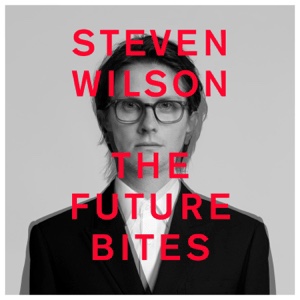
I don’t know how Steven Wilson and Porcupine Tree escaped my attention over the last 25 years. Seems like something I should have noticed. I saw this album upon release and ignored it – I did wonder about it as it seemed to be getting some hype. I recently listened to a podcast with Wilson, and he was so interesting that I was compelled to check out the new album. Once I heard the interview it jogged my memory that he is well regarded as remixer (both stereo and surround) of choice for various classic rock acts and audiophiles (a side hustle). His remix of the Jethro Tull catalog is amazing.
The Future Bites is a concept album performed in a sophisticated pop style that sounds contemporary, but familiar to these classic rock ears. Kind of like if Pink Floyd had been informed by hip hop and electronica. Per Wilson’s website:
“The Future Bites deals with two recurring themes of my musical output, identity and technology. It picks apart our 21st century utopia, while also allowing for moments of personal growth and optimism. It’s less a bleak vision of an approaching dystopia, more a curious reading of the here and now”
Steven Wilson
Sonically the album sounds great. Not surprisingly given Wilson’s work as a remix engineer on classic recordings. If you want a little taste, check out the song “12 Things I Forgot” – it is like a long-lost ELO song – pure ear candy. Another great song is “Man Of The People.” In the podcast interview, Wilson said it was his favorite of the album and he envisioned it as Marvin Gaye meets Pink Floyd – pretty spot on.
It is early in the year to make this claim, but this will be on my top-10 for 2021. Looking forward to diving down the Steven Wilson/Porcupine Tree rabbit hole.
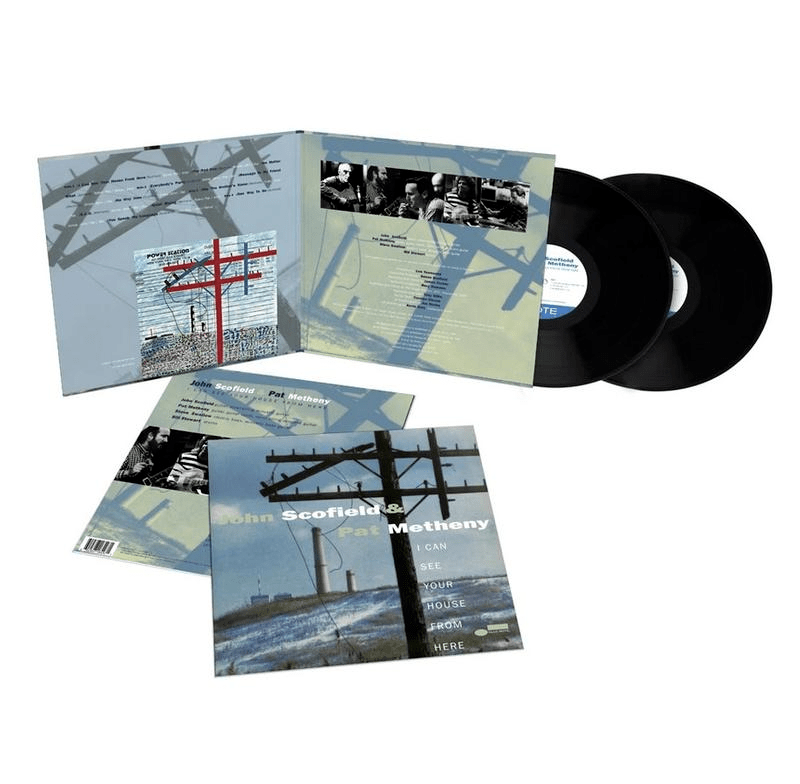
Mastered by Kevin Gray at Cohearent Audio from the original master tape
Plated and pressed at RTI
This is one of my favorite albums from two of my favorite guitarists: John Scofield & Pat Metheny. I Can See Your House From Here is a worthy candidate for the Blue Note Tone Poet series. Per Blue Note:
“The Blue Note Tone Poet Series was born out of Blue Note President Don Was’ admiration for the exceptional audiophile Blue Note LP reissues presented by Music Matters. Was brought Joe Harley (from Music Matters), a.k.a. the “Tone Poet,” on board to curate and supervise a series of reissues from the Blue Note family of labels.”
First, this is an excellent performance by Scofield and Metheny. Second, each of the guitarists brought great compositions to the session. Third, the rhythm section of Steve Swallow (bass guitar) & Bill Stewart (drums) could not be more perfect. Finally, the sonics of the recording are audiophile reference quality. The original CD from 1994 sounded fantastic – this vinyl record sounds even better. In a recent post I said:
“…which sounds better vinyl or digital? I can give you a definitive answer: it depends on the specific recording. How an album was recorded, how it was mastered and how it was transferred to the final state (a vinyl record or a digital file) can make a vinyl record sound better than the digital file and vice versa.”
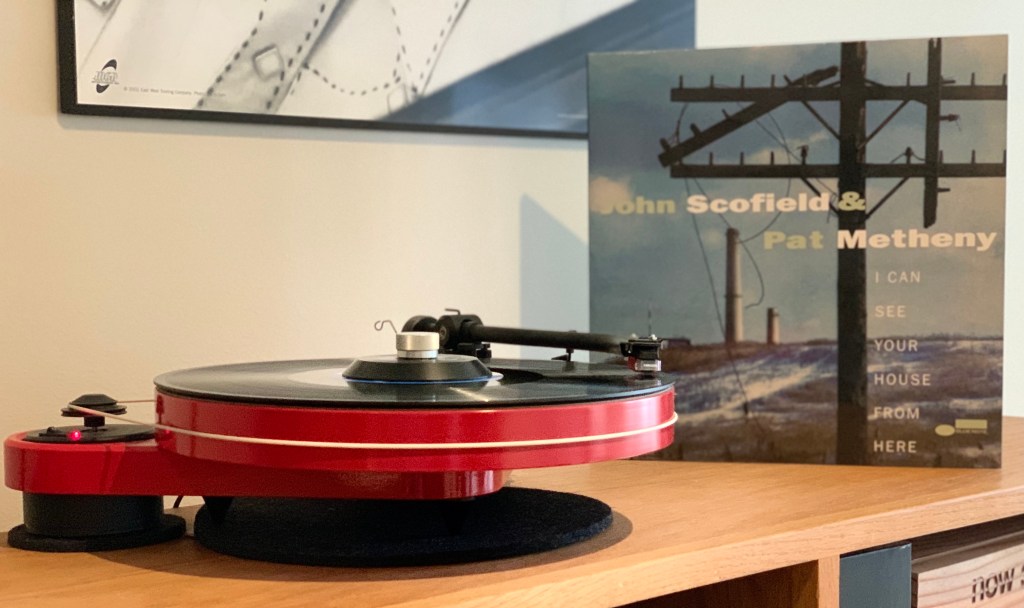
This Tone Poet release is a great example of the art of mastering to vinyl. In the hands of an expert artist, the vinyl medium can’t be beat. Unfortunately, it is rare that such care is taken. This version is perfection – all the care was taken, it sounds gorgeous. This will be my go-to vinyl reference recording. Ironically, this vinyl is sourced from digital (in this case, 88.2 kHz/24-bit) as this was originally a digital recording. But even with a digital source, a vinyl craftsman can work their magic. I look forward to listening to more of the Tone Poet catalog.
John Scofield is heard on the left channel and Pat Metheny on the right of this stereo recording. Despite two guitar wizards, this is not a cutting contest, but rather a freewheeling conversion between friends. I have a kind of synesthesia when it comes to music – I can taste certain sounds – this is one of those tasty albums.
It was recorded in one of the greatest Studios – The Power Station in NYC – a piece of art itself.

Although you won’t get the total feel of the audiophile LP, you can still hear the beauty of the performance and compositions on the stream:
I am excited to hear a new season of Cocaine & Rhinestones podcast is coming April 20, 2021. Here is an announcement:
https://open.spotify.com/episode/2XFi5TAZDxJGCKaM9Gbc5i?si=IfSZtw2yRxS2KjDWlB4W3Q
For those of you not familiar with this podcast, it is about country music history. Tyler Mahan Coe is the researcher, writer, and presenter. The 14-episode first season debuted in October 2017. The show was critically acclaimed and popular.
Coe is wonderfully opinionated, but backs it with exhaustive research. This is not a dry reporting of history – Coe is a captivating storyteller. Here is my review from a few years ago.
In season one each episode focused on “some mystery about country music” like: the controversy over Loretta Lynn’s recording of “The Pill”, the meaning of Merle Haggard’s “Okie from Muskogee”, and the musical relationship of the Louvin Brothers. I can’t emphasize how deep Coe gets into a topic – episodes typically are 90 minutes or more. Coe augments episodes with “liner notes, “clarifications and corrections” and sources. I assume season two will follow the same basic format, but Coe has suggested some enhancements. Think of this as an audio documentary vs. a conversational podcast.

I was listening to the My Favorite Album Podcast and Nashville singer songwriter Kim Richey selected Joni Mitchell’s Miles Of Aisles and it reminded me of how important that album was to forming my musical taste.
My introduction to Joni Mitchell was probably Judy Collins’ cover of Joni’s “Both Sides Now” – a ubiquitous hit song from my youth. But I had no idea it was Joni or who Joni was. That came in the fall of 1977.
I was a freshman in college and I liked music, but I was very naïve in my taste. I made friends with a guy in the dorm who was a few years older than me and way cool (shout out to Uncle Paul). Why he took a geek freshman like me under his wing is beyond me, but we have ended up as life-long friends. Anyway, he rolled one and we smoked it. He went over to his turntable and dropped the needle on Joni’s Court and Spark and in that instant my life changed – I became a musichead.

Uncle Paul also had Miles of Aisles. That was the first Joni album I bought because it was kind of a greatest hits: a live album of songs from across her career – past, present and (oddly) future.
The live album is from the Court And Spark tour. It combines rearranged versions of some of her most famous songs and obscurities (even a couple songs that would show up on future studio albums). Half the album is with a jazz fusion band, The L.A. Express, and the other half solo.
I was introduced to the Mitchell catalog via these versions and discovered the originals later as I acquired the original albums. Experiencing these live rearrangements first helped me understand what a true musician Joni was.
Side one opens the album with “You Turn Me On I’m A Radio” from 1972’s For The Roses. She gives it a jazz twist with the L.A. Express on this version. Next, she goes back to 1970’s Ladies Of The Canyon with “Big Yellow Taxi,” “Rainy Night House” and “Woodstock.” She leverages the L.A. Express to reinvent her sophisticated folk into sophisticated pop jazz.
For side two she ditches the band and goes solo with the relatively obscure “Cactus Tree” – the last song from her debut Song to a Seagull. Next “Cold Blue Steel and Sweet Fire” from For The Roses augmented with a lonely soprano sax from Tom Scott. She pulls out another one from For The Roses: “Woman of Heart and Mind.” She returns to the hits with “A Case Of You” and “Blue” (on piano) from Blue.
Side three opens with a Joni monologue which segues into the sing along “Circle Game” from Ladies of the Canyon. Staying acoustic and stripped down she plays “People’s Parties” from the recently released Court and Spark. Next is “All I Want” from Blue. Moving over to piano she plays “Real Good For Free” from Ladies Of The Canyon. The side ends with “Both Sides Now” from Clouds. After a solo acoustic introduction to that song, the L.A. Express joins in – a set up for side four.
Side four she goes all in with the L.A. Express opening with a bold arrangement of Blue’s “Carey” and “Last Time I Time I Saw Richard”. Next, she foreshadows three albums into the future with “Jericho” from Don Juan’s Restless Daughter. As best I know “Love or Money” has not appeared on another Joni Album.
This is a great introduction to Joni and a must have for long time fans. Also, this is one of my favorite album covers – love the combination of a photo and Joni’s painting.

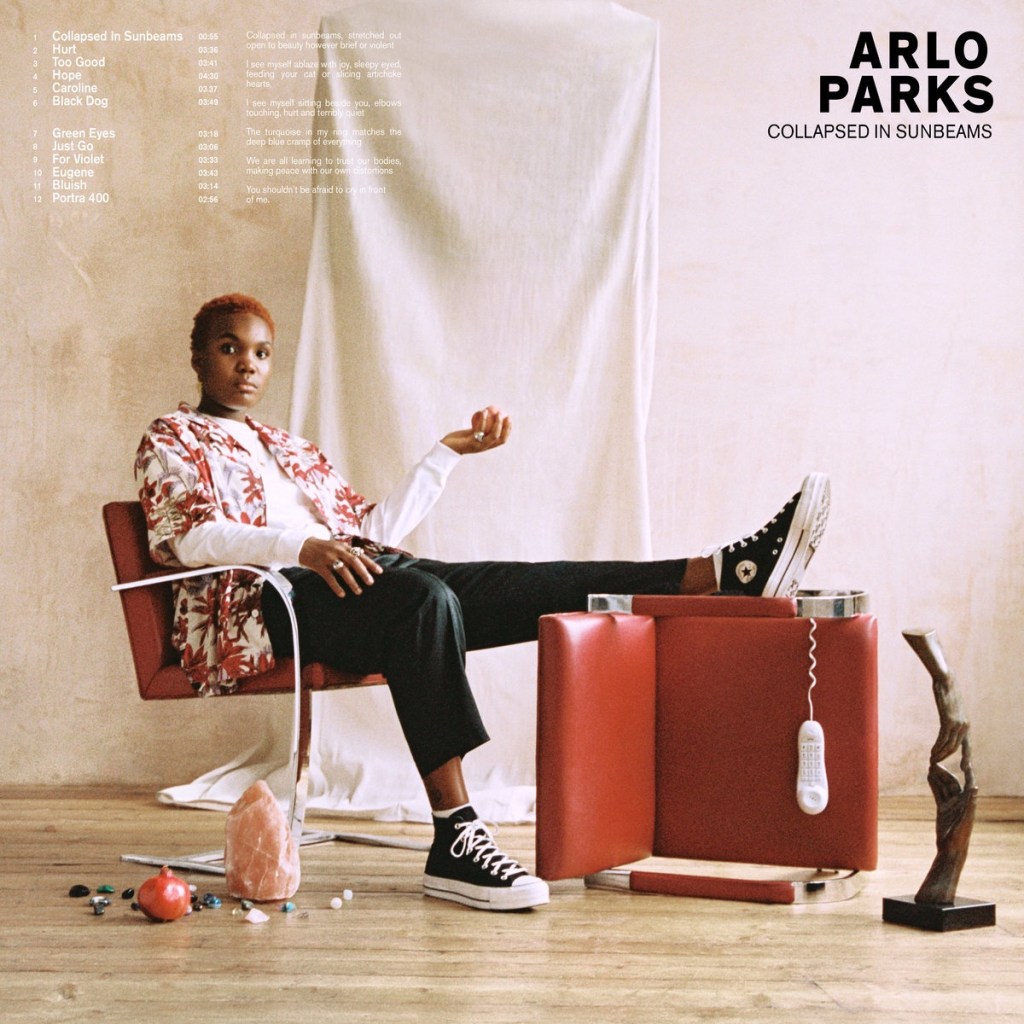
For long time followers of this blog, you may have picked up on the fact I have a thing for female singer songwriters. It started with Joni Mitchell in the late 70s. Arlo Parks is my latest infatuation. Arlo Parks has been getting lots of hype in anticipation of her debut album that came out 1/29/21. So I have not exactly discovered her.
Per her website:
Arlo Parks is a singer-songwriter from London. In her words she spent most of school feeling like that black kid who couldn’t dance for shit, listening to too much emo music and crushing on some girl in her Spanish class. Her songs are confessional and tender, mainly inspired by Portishead and Earl Sweatshirt.
Per her website
I don’t like having to label music, but it is a useful way to explain what an artist or band sounds like. For Arlo Park I would call it “folk soul.” It has the intimacy and simplicity of folk music and some subtle funk and hip-hop vibe to give it soul.
Park is known as a poet and songwriter. The album opens with a spoken poem (not a rap) and a few of the other songs have spoken word parts. For the most part Park is singing in a relaxed easy-going style. Lyrically the songs are relationship oriented. They alternate between first person obsessions and third person observations. Most of the songs are stories – almost mini movies. The instrumentation has more of a hip hop beats feel than typical R&B or soul music. There is a freshness and originality to the album. It sounds nothing like Maggie Rogers’ Heard It In A Past Life, but it has the same sincere and youthful vibe. I love the Britishness of her phrasing.
I know it can be hard to commit to a whole album when sampling a new artist. If you just want a little taste, try “Black Dog.” That is a great example of what Arlo Parks is all about. I have a feeling I am going to wrap myself up in this album for the next few months.
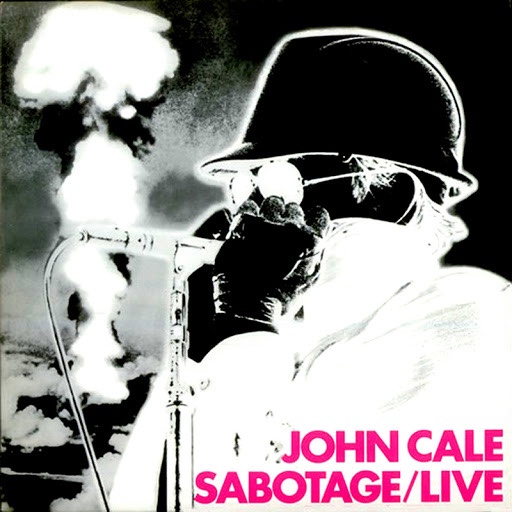
I don’t recall how I got turned on to this album when it came out in December of 1979. It must have been touted in some music magazine like Rolling Stone. I certainly wasn’t a Velvet Underground or John Cale fan at that time. It was more punk than what I was into. But I was completely obsessed with it.
Sabotage/Live was recorded at CBGB, New York on 13–16 June 1979, and released by SPY Records. SPY Records was founded and owned by Cale and Jane Friedman, who was the manager of Patti Smith, and Cale’s girlfriend at the time. The idea of the label was for all the artists to be produced by Cale. The label never panned out, but Sabotage/Live is a masterpiece and a pretty amazing legacy for any label.
“Mercenaries (Ready for War)” is the single and pretty epic rock song. It set the tone for the album: dark, cynical paranoid and apocalyptic. It has this classic opening line:
“Mercenaries are useless, disunited, unfaithful
They have nothing more to keep them in a battle
Other than a meager wage
Which is just about enough to make them wanna kill for you
But never enough to make them wanna die for ya”
“Baby You Know” sounds like a cross between The Doors and The Monkeys. “Evidence” sounds like a punk rock version of Santana. “Dr. Mudd“ sounds like the punkier side of the Talking Heads. “Walkin’ The Dog” is a twisted cover of the Rufus Thomas soul song. “Captain Hook” is punkified prog rock – it is epic and awesome. “Only Time Will Tell” is a beautiful ballad sung by Deerfrance. “Sabotage” is darkness – it sounds like a punk rock Black Sabbath song. “Chorale” is a very cool ending to the album: a hymn – it is the perfect walk off song to what must have been an epic live show. The vinyl record ends with an obnoxious alarm sound that plays endlessly in the catch groove – pretty nifty gimmick.
Overall the album seems like the appropriate response of the Velvet Underground alumnus to punk and New Wave. The Velvet Underground were direct influences on the CBGB crowd (The Ramones, Blondie, Talking Heads, Television, etc.). With the exception of The Ramones (who were truly punk), Blondie, Talking Heads and Television were art rock in the grand tradition of the Velvets. Cale’s Sabotage/Live seems like a love letter to the CBGB scene from an elder art-rock statesman.
The album is not available on conventional music streaming services, but it is on YouTube.
P.S. never has the album art been a more perfect match to the music.

Tone Poem is the third album by Charles Lloyd & The Marvels. The group is impossible to categorize, is it jazz, country, folk, rock, etc.? On a previous release by this band I said:
“I am a jazz and country music fan and typically when you merge those you get western swing. This is something altogether different. It is Americana Jazz, mellow, yet rich.”
The quintet features the 82 year old master saxophonist/flutist with Bill Frisell on guitar, Greg Leisz on pedal steel guitar, Reuben Rogers on bass, and Eric Harland on drums.
The first album was fantastic. The second took it up a notch by adding Lucinda Williams on vocals. This one is as good as the first two. At 82 years young, Lloyd appears to have lost nothing in his playing ability and creativity.
For me the star of the show is the complementary conversation between Frisell and Leisz. Frisell is in the left channel and Leisz in the right. Their tones mingle so well.
The songs are Lloyd originals along with songs by Ornette Coleman, Thelonious Monk, Leonard Cohen, Gabor Szabo, and Bola de Nieve. The band has such a distinct sound that despite the diversity of composers, they sound like originals.
Sonically this recording is perfect. Lots of separation over a broad soundstage and super clean. This album is a fitting addition to the acclaimed Blue Note Tone Poet series. The series is aimed at audiophiles. I have only listened to the high resolution streams, but the vinyl in the series are supposed to be amazing.

My son recently tipped me off that Vampire Weekend commissioned a couple of artists to cover the shortest song on Father Of The Bride. They commissioned acclaimed jazz saxophonist Sam Gendel and the Connecticut jam band Goose to both create their own reinterpretations of “2021”on an EP titled 40:42. Vampire Weekend gave Gendel and Goose the directive to turn their one minute and thirty-nine second long song into two twenty minute and twenty-one second versions (hence the title 40:42). The Gendle version didn’t do much for me but the Goose version blew me away.
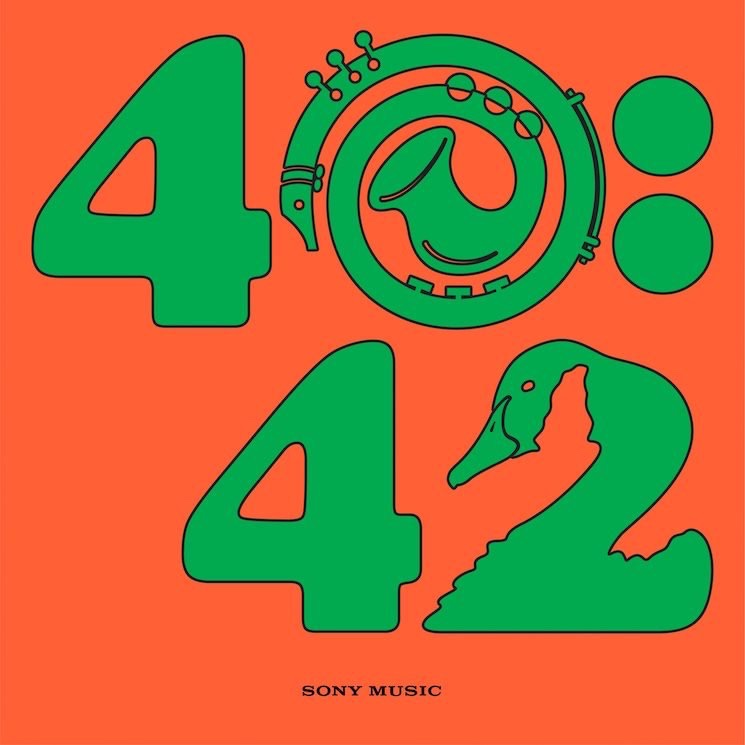
I have always felt the Jerry Garcia and Grateful Dead influence in Vampire Weekend, but the Garcia influence is totally in your face in the Goose cover of “2021.” If your favorite part of a Grateful Dead song is the meandering Jerry Garcia solo, you are going to love Goose. The Goose of Ted Tapes reminds me a lot of Circles Around The Sun a predominantly instrumental Dead inspired jam band. Sampling some of the Goose catalog, it appears Ted Tapes is an instrumental anomaly, most of their catalog has vocals.
There is a big fun factor to Goose – as their bio on their website states:
“Goose could be likened to a keg party in the woods on a summer night with all of your closest friends.”
The quartet, based in Norwalk, CT, is comprised of Rick Mitarotonda (vocals, guitar), Peter Anspach (vocals, keyboards/guitar), Trevor Bass (bass), and Ben Atkind (drums).
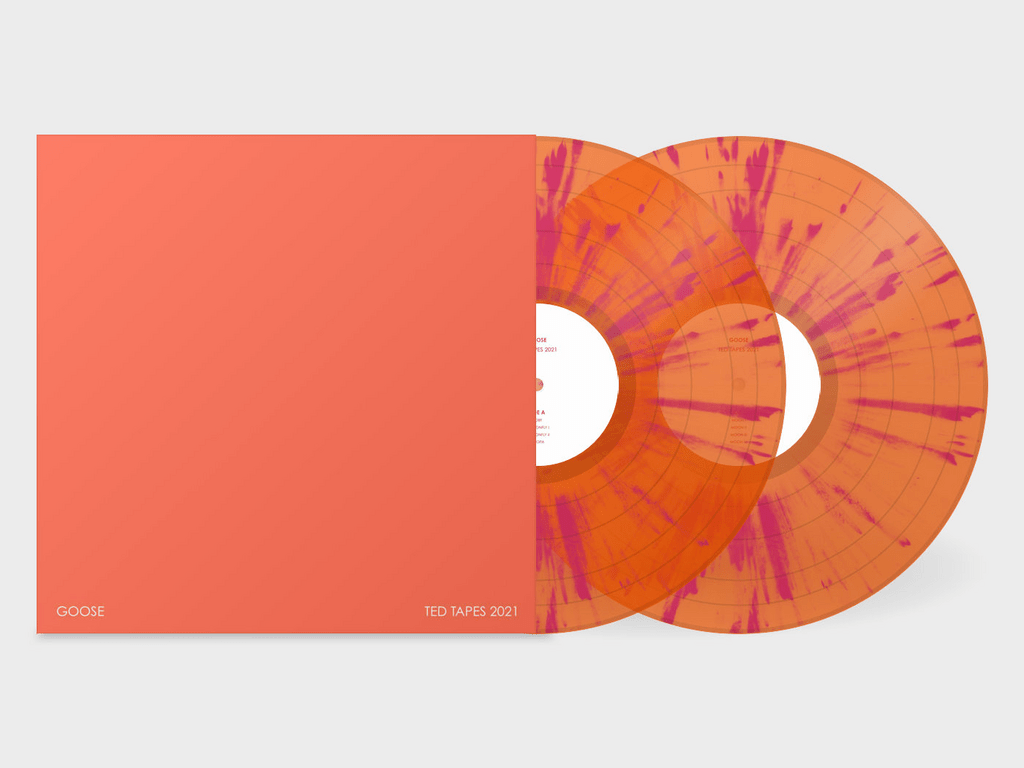
When I heard Ted Tapes 2021 I was all in. Ted Tapes 2021 is 16 instrumental tracks from band soundchecks and rehearsals held between April 2019 and December 2020. It is available on the various streaming services. I am enthusiastic enough about the release to preorder the vinyl via Bandcamp.
Though clearly a jam band, this is not noodling – these are songs. They are pleasant enough to be background music, but engaging enough for to for serious listening. Rick Mitarotonda’s guitar is the most prominent feature of the bands sound, but this is a very tight ensemble, so I don’t want to give the impression this is showy shredding by the guitar player. I am surprised that these jam sessions sound thoughtfully composed – the band is super tight. I have heard the band’s sound described as folk-funk and that is as good a description as any. But I also hear a bit of prog and 70s jazz rock fusion too. But the Grateful Dead folk vibe does prevail. Great album – check it out.


