Despite the Kindle, the iPad, etc. the physical book store is still relevant. I was browsing in Barnes and Nobles yesterday and I tripped on this magazine. It was about a year ago that I discovered the Oxford American. That issue was also their Southern music issue focused on Alabama.
I read about half that issue before I lent it to the one and only Charlie Moonbeam. He convinced me that because he was an Alabama native it should be in his possession and I acquiesced.
My daughter was in search of an appropriately colored Moleskin when I nearly wet myself at the sight of this issue of the Oxford American. My wife and daughter were already in the buying queue when I rushed them in a near incoherent state – “here buy this – I must have it.”
I still have not yet broken it out of its plastic bag so hopefully there will be a follow-up post with a review of the contents. For now merely savor this amazing cover with the one an only Howlin’ Wolf.
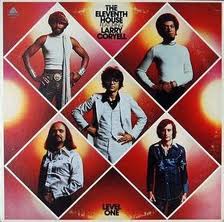 Just when you think you know a genre you are reminded of how ignorant you really are. I picked this up at Half Priced Books in Highland (St. Paul MN) yesterday based on the fact that I knew Larry Coryell was a great jazz guitarist and because the cover was so outrageously 70s. Change the guys and this could be an Earth Wind and Fire album cover. So based on that I figured it was worth my $4.00 investment.
- Well it turns out this is an outstanding jazz rock fusion album – on par with anything Return to Forever, Mahavishnu Orchestra, or Weather Report was putting out at the time (mid 70s). Although it echos those bands, it does have an original sound-perhaps a bit more accessible than those bands.
Coryell’s playing is diverse – from funky to metal. I particularly like that it has a trumpet player on it – Coryell’s tone mixes well with the horn. The other big time player on this is Alphonse Mouzon on drums/percussion. He was dominant player of the time (Weather Report, Miles Davis, etc.)
I did a little research and sure enough this was a pretty influential band within the genre and this LP is considered one of their best. As best I can tell it is not available on CD or digitally. Highly recommended.
 I have had the good fortune of seeing the “good” Ryan Adams over the years. Last night was one of those “good” nights in Minneapolis. This was a solo show – just Ryan, two guitars and a piano. He played a wonderful cross section of his career – I am way too lazy to keep a set list so see here. He spun the wheel from Whiskeytown to his most recent LP.
Ryan was in a slow and savor it mood. When you grab a piece of caramel you have two choices gobble it down or let it melt in your mouth – this was a melt in your mouth show. Ryan took his repertoire and down shifted. A song like “New York” that was first presented on record as a fast up-beat rocker was presented here as a dirge. As a long time fan I was delighted by this deconstruction.
Ryan played his songs earnestly but between songs he was wonderfully goofball – telling bad jokes, offbeat stories, and singing to himself as he moved himself from one position on stage to another. When singing a song he took himself seriously, but between songs he did not – gleefully poking fun at himself. Even at one point extemporaneously composing and mocking his own songwriting cliches.
As a long time fan, I felt I had been invited into Ryan’s living room for a jam. He played a generous 2:45 hours. Although that was extended by stories and stumbling tunings. He even made muffed tunings a hoot by delightfully cursing his guitars and the cool humid air that was torturing them.
He mocked the end of his show saying ” this is the part of the show where I being planning my exit strategy” but totally delighted the Minneapolis crowd by finishing the show with a Bob Mould song (naturally an obscure one). Just prior to that he showed his glam rock cred by covering a tacky Ratt song. Chuck Klosterman would have been proud.
Opener Jessica Lea Mayfield was predictably bad. I had listened to her album “Tell Me” for breakfast – it is a very good album, but it is good because of the arrangement/instrumentation. I knew if she tried this solo it would be questionable and unfortunately it was.
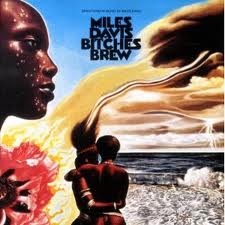 I have been listening to Bitches Brew for about 30 years. First as a vinyl, then as CD, and then as the CD set #6 in the Miles Davis complete sessions sets. But recently I picked up a 180 gram audiophile pressing at the Minnesota Record Show. There was a lady there who had a boatload of vinyl re-releases for a reasonable price.
I have been sitting on this one for a couple of weeks and listened to it if for the first time tonight – wow does it sound dandy. As many times as I have listened to this album it sounds fresh again. This is one of my top ten albums of all time – so to hear it fresh again is a real privilege.
For those not familiar – this was Miles at his most innovative – reinventing jazz for the umpteenth time. This was Miles attempt at rock, funk and jazz. This was Miles selling out. Funny thing is that Miles did not sell out – he merely invented a new genre – jazz rock.
I can’t even being to tell you how outstanding this album is – it is a certifiable classic. And for me it is a thrill to hear it and feel it like it is the first time. The fact that I am getting to listen to a clean analog version of this classic is beyond belief. Long live vinyl!
 This might be The Black Keys version of ZZ Top’s Eliminator. Not that it sounds like ZZ Top, but that it could be the breakthrough album that brings them to big time rock and roll fame. The Black Keys remind me a bit of AC DC in that they have been making the same album for the 10 years – perfecting the sound with each album (that is a complement).
Just to make sure I re-listened to Rubber Factory. Production values have increased since then, keyboards have been added, and background vocals added, but ultimately this is classic dirty white-boy 70’s bloose.
I like the Black Keys, but I also realize how derivative they are. But as Bob Dylan says “steal a little and they put you in jail, steal a lot and they make you king.” The Keys are kings. The fourth track, “Little Black Submarines” is a classic example – even my non-music fan wife, upon walking by my listening room, said – “it sounds like any second they are going to break into Stairway to Heaven.”
The Black Keys hook up with Danger Mouse a few albums ago was a match made in heaven. D-Mouse add just a enough sugar and cream to the Keys’ bitter coffee to make it desert. Ultimately the Keys’ do not sell their souls, but sweeten their sound in a way that makes it more original – more contemporary. An appropriate nod to the hip hop culture that they rightly fit into despite being a rock and roll band.
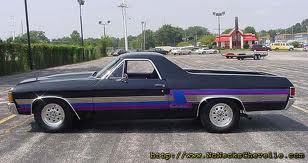
My only disappointment is the cover art. I love El Caminos and instead the album is littered with great photos of mini vans. I was really hoping for a montage of the real deal. But despite that, it is a cleaver analogy of the album. Each mini van is old slightly rusted, but sparkling clean. The epitome of a un-cool suburban vehicle, yet so practical. Hey someone throw me the Keys!
For a treat here is are real El Camino:
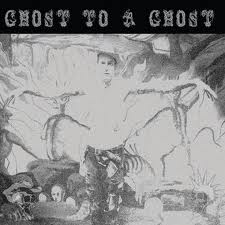 How does a CD get into the Target rack? Recently I was at Target and I saw Hank 3 Ghost to Ghost in the rack. How did it get there? This is a an independent release in a major retailer. A few days later I saw it at Best Buy. This mystified me. I was so amazed it was sitting in the racks at Target that I had to buy it (the fact it was a double disc for $9.99 helped too).
Hank 3 is Hank Williams the 3rd – grandson of the father of modern county music Hank Sr. Hank 3 stands closer to the innovative pedigree of his granddad than is pop leaning daddy.
This is not traditional country or even pop country – at best it is punk country. The first CD is pretty classic cow-punk. Hank 3’s voice is like his grandpappy’s at points, like Dylan’s at other points, but always with an amphetamine edge. This is country on meth. I am a long-term fan of alt-country – but this is much edgier than typical alt-county. Hank 3 make Ryan Adams seem like James Taylor.
CD 2 is much more atmospheric – almost a like a movie soundtrack. Although it has a few songs that could fit on CD 1.
Overall if you are a fan of country, punk, rock and you like all of that edgy you will like this release.
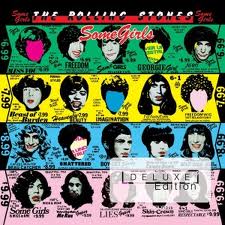 Well it has been quite a couple of weeks for reissues of my all time favorites – one week The Who’s Quadrophenia and this next week the Stones’ Some Girls. Like last year’s Exile reissue, this like getting a new Stones album. In addition to remastered version of the original album there is a second CD of Some Girls era scraps. Some of these were incomplete tracks that the boys finished recently – a similar approach to the Exile reissue.
When this album was released in 1978 the Stones were considered has-beens. Punk was thumbing it nose at successful bands like the Stones. But the Stones were always punks themselves and they took the sniveling punks threat as a reason to pick up their game. They took a deep breath and cut their most successful album.
The Some Girls sessions were legendary for a treasure trove of creativity – seeding content for Stones albums for the next ten years. I assumed the well was dry, but for this edition they pulled out another 12 tracks – virtually an additional album.
The original album is an absolute masterpiece and does not need a review, beyond that the remaster sounds great. Instead I will focus on the bonus CD.
- Claudine – This is semi famous track that was allegedly stuffed due to a potential law suit. The Stones mocking tell the tale of a Claudine Longet a singer/socialite who “accidentally” killed her Olympic skier boyfriend Spider Sabich. This is a rollicking track.
- So Young – A bluesy number in praise of jail-bait. This could have easily been on the original album.
- Do You Think I Really Care – This is probably my favorite track. Classic Stones mock country.
- When You’re Gone – A classic Stone blues. Raw and dirty.
- No Spare Parts – Another Stones mock country. That wonderfully sloppy, but tight Exile sound.
- Don’t Be A Stranger – This sounds like an update. A little too obviously a new track (although I assume based on a Some Girls fragment). Very upbeat poppy modern Stones sound. A bit out-of-place for the rest of the period pieces.
- We Had It All – A Keith Richard tender vocal. s a song written by Troy Seals and Donnie Fritts and originally recorded by Waylon Jennings on his 1973 album, Honky Tonk Heros.
- Tallahassee Lassie – this is a cover of an old-time rock and roll standard. The boys play it in a nice and 50s rock and roll style.
- I Love You Too Much – a very classic Stone sounding throw away that could be on almost any album. But a Stones throw away is better than most artist best work.
- Keep Up Blues – That classic Stones take on the blues. All dirty and with Euro trash lyrics.
- You Win Again – A Hank Williams cover with the boys doing their best take on straight county – which sounds exactly what you would expect from rich English drug addicts – wonderfully perverse. Ronnie Wood tears it up on the pedal steel.
- Petrol Blues – The most primitive track on the CD. A total Jagger solo vocal and piano . A fragment. Ranting on oil. Sadly this could be written today vs. 1978.
So over all a real hoot for a Stones fan. A bit much for the casual fan.
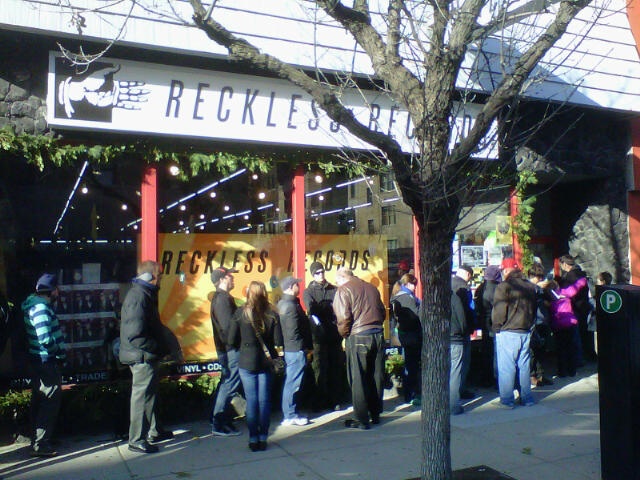
 While crate digging at Restless Records I struck up a conversation with a stranger. We continued the conversation while paying at the counter, when he asked “what kind of turntable do you have?” I reacted by telling him and then reached to show him a photo of my turntable on my phone as he simultaneously did the same thing with his phone. He joked “wow it is like we are showing photos of our kids.” A few hours later we ran into each other again as I was leaving Dave’s Records and he was arriving and exchanged greetings like old friends. A good music nerd memory from Record Store Day Black Friday.
 It was a beautiful day in Chicago for Black Friday. The family is in Chicago to celebrate the holiday weekend with my son pwelbs who lives their.
I had the good fortune to visit Reckless Records on Broadway this AM just as they were opening. My guess is there were about 50 people in line to pick up some special editions for Records Store Day – Black Friday. I picked up Wheedles Groove, Wilco, Ryan Adams, and Miles Davis. I added some nice used vinyl too. It was so great to feel a major record store buzz with a bunch of other music nerds.