
I am a sucker for Jerry Garcia’s live albums – specifically Record Store Day (RSD) releases. Garcia had a repertoire of “Jerry standards” (mostly covers, but some originals too) that he cycled through his live shows in bands of various configurations – so the joy is the unique vibe of each show (different musicians, different styles, different venues, the mood of Jerry, the mood of the audience, etc.) I have about 30 different recordings of live performances of Jerry outside the context of the Dead – mainly as the Jerry Garcia Band (several are RSD releases). All are good (solid performances and quality recordings), but some resonate with me more.
Electric on the Eel: August 29th, 1987 resonates with me. Jerry sounds particularly on top of his game: soulful vocals, tasty guitar solos, and a well-rehearsed, yet loose, band. That is not unusual for the Jerry Garcia Band, but there was some extra magic going on that night – good mojo.
A particular highlight for me is Jerry Garcia Band’s interpretation of the Dylan standard “Forever Young.” Vocally, Jerry doesn’t imitate Dylan, but he certainly channels him. This is a very different vocal take than you would ever hear on a Grateful Dead song—it is Dylanesque.
Every song is an excellent rendition – I highly recommend it.
Electric on the Eel is a live album released by the Jerry Garcia Band on March 15, 2019. It contains three complete concerts on six CDs. The shows were recorded on August 29, 1987, June 10, 1989, and August 10, 1991, at French’s Camp in Piercy, California, near the Eel River. This RSD album is from the 1987 show, and it is the first time that the show has been released on vinyl.

The Jerry Garcia Band Eel River shows were co-produced by Bill Graham Presents and the Hog Farm (considered America’s longest-running hippie commune). Evidently, the hippie rural setting created a unique vibe that was not always present in the urban settings Jerry usually played in. The band included keyboardist Melvin Seals, bassist John Kahn, drummer David Kemper, and backup singers Gloria Jones and Jaclyn LaBranch for all three shows.
RSD Black Friday 2024 limited edition of 4,000 pressed on Orange Sunshine vinyl.
The full 6-CD version of the album is available on streaming services.
Tracklist
SIDE A
A1. How Sweet It Is (To Be Loved By You) – James Taylor cover
A2. Forever Young – Bob Dylan cover
A3. Get out of My Life, Woman – Allen Toussaint (songwriter) and Lee Dorsey (performer) cover
SIDE B
B1. Run For The Roses – Garcia solo (written with Robert Hunter)
B2. And It Stoned Me – Van Morrison cover
B3. My Sisters And Brothers – Charles Johnson cover
SIDE C
C1. Deal – Garcia solo (written with Robert Hunter)
C2. The Harder They Come – Jimmy Cliff cover
SIDE D
D1. I Shall Be Released – Bob Dylan cover
D2. Think – Jimmy McCracklin cover
D3. Evangeline – Los Lobos
SIDE E
E1. Gomorrah – Garcia solo (written with Robert Hunter)
E2. Let It Rock – Chuck Berry cover
SIDE F
F1. That Lucky Old Sun – Frankie Laine cover
F2. Tangled Up In Blue – Bob Dylan cover
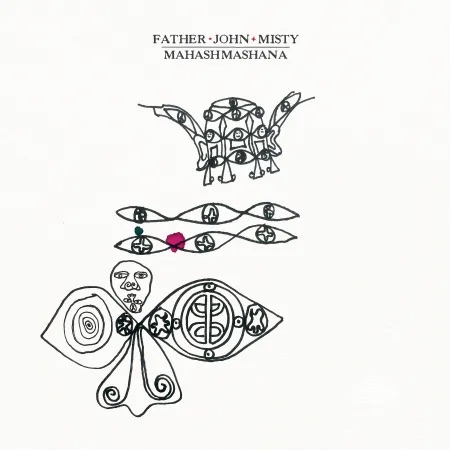
Father John Misty (FJM) née Josh Tillman’s new album, Mahashmashana, returns to Fear Fun and I Love You, Honeybear territory, but with a fresh new take on his smarmy lounge singer mystique. The FJM I fell in love with in 2012 is back!
2022’s Chloë and the Next 20th Century departed from the typical FJM sound. On that album, he doubled down on his smarmy lounge singer schtick with a big band, bossa nova, and Muzak arrangements (or, as FJM says: “fake jazz”). On Mahashmashana, FJM is back to his epic singer-songwriter self of his first four albums. That persona is one part Springsteen (epic and grandiose), one part Harry Nilsson (sweet yet twisted), one part Randy Newman (humor/cynicism/sarcasm), one part George Harrison (spiritual and seeking), and a pinch of Bon Iver (atmospheric). Although Mahashmashana is sonically in the territory of his first four albums, but this is a fresh take.
Per Wikipedia, the [album’s] title refers to the Sanskrit word Mahāśmaśāna (महाश्मशान), meaning “great cremation ground.“ Tillman chose the word after reading it in Bruce Wagner’s 2006 novel Memorial and feeling inspired by it: “Just visually, it has all these sha-na-nas and ha-ha-has in it. With the record, there’s a lot in there about the self and about identity, and I think just the micro and the macro scale of endings.”
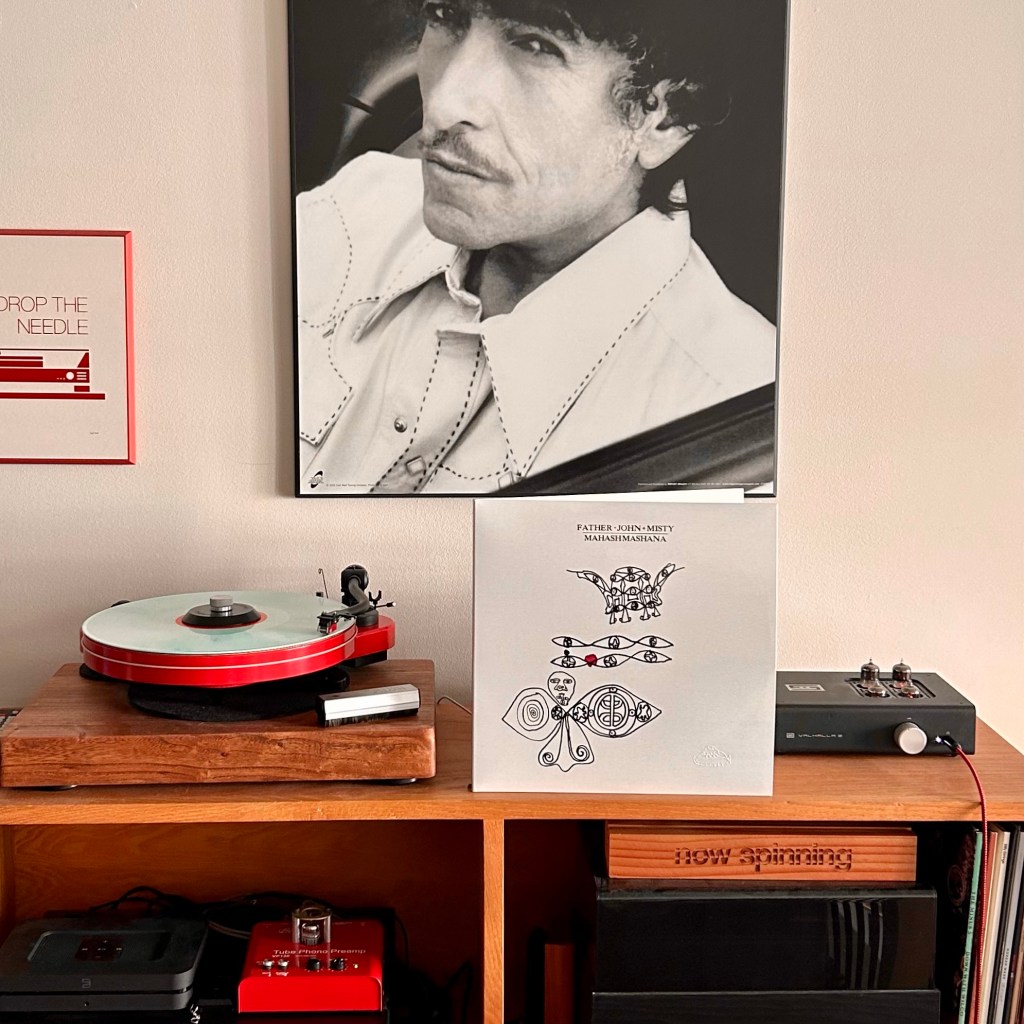
The titular track, “Mahashmashana,” opens the album in a dream sequence. It is an epic nine-plus-minute song with strings, a wailing sax, and Josh fully embracing the FJM persona. As for what the song is about, I have no idea. But there is a pair of lovers, mockery of religion, dancing corpses, etc. If this was the only great song on this album, the album would be a success—but it is not. It is an overture to another FJM masterpiece.
I listened to a recent FJM interview, and he talked about wanting this album to be something dumb after his previous “fake jazz album” (Chloë and the Next 20th Century). “She Cleans Up” is a big dumb rocker. I hear Elvis Costello’s “Pump It Up,” Bob Dylan’s “Subterranean Homesick Blues,” and Viagra Boys’ “Punk Rock Loser.” The vocals remind me of Spoon and the rock version of T Bone Burnett (Alpha Band and Truth Decay/Trap Door). The first verse is about Mary of Magdalene knowing that her lover Jesus is going to die and she is not having it. The next verse is a contemplation of the 2013 movie Under the Skin. The final verse concerns a wannabe actress’s “me too” moment. Big ideas for a dumb rock song.
“Josh Tillman and the Accidental Dose” sonically has a Beck Sea Change/Morning Phase vibe that fits nicely on FJM. Lyrically, The narrator of the song has an existential crisis while on psychedelics (FJM likes to self-medicate with micro-doses of LSD).
“Mental Health” is a gorgeous power ballad. FJM mocks our society’s obsession with mental health and fixation on authenticity when we are crazier and more inauthentic than ever.
FJM referred to the sound of “Screamland” on the Zane Lowe Show as a mutilated Hillsong. Hillsong is worship music that incorporates pop music. The song is a new sound for FJM. It is beautiful and noisy at the same time—like a Bon Iver or Low song. Tillman credits producer BJ Burton with messing with the song to achieve his vision—“mutilated it like I wanted it.” Alan Sparhawk of Low contributes to the beautiful noise.
“Being You” is a beautiful soft rock – almost Yacht Rock song. Lyrically, FJM is wondering about an imaginary movie director.
“I Guess Time Just Makes Fools of Us All” is JJ Cale meets Stevie Wonder in the form of a disco song. This is one of my favorite tracks on the album. This song appeared in FJM’s “Greatest Hits” collection, released earlier this year.
“Summer’s Gone” is a pretty ballad about time (time is a recurring theme on the album).
Mahashmashana is produced by BJ Burton. Burton takes a slightly different route than long-time FJM producer Jonathan Wilson (who still has executive producer credit on the album). Tillman says that Wilson’s influence is still there despite Wilson not being directly involved. Burton helps FJM return to form yet not repeat himself.
In interviews, Josh Tillman suggested this could be his last FJM album. He said he envisioned making six FJM albums, and this is the sixth. I hope that is not so, as Mahashmashana is a high watermark in his catalog. Mahashmashana is one of my favorite albums of 2024!
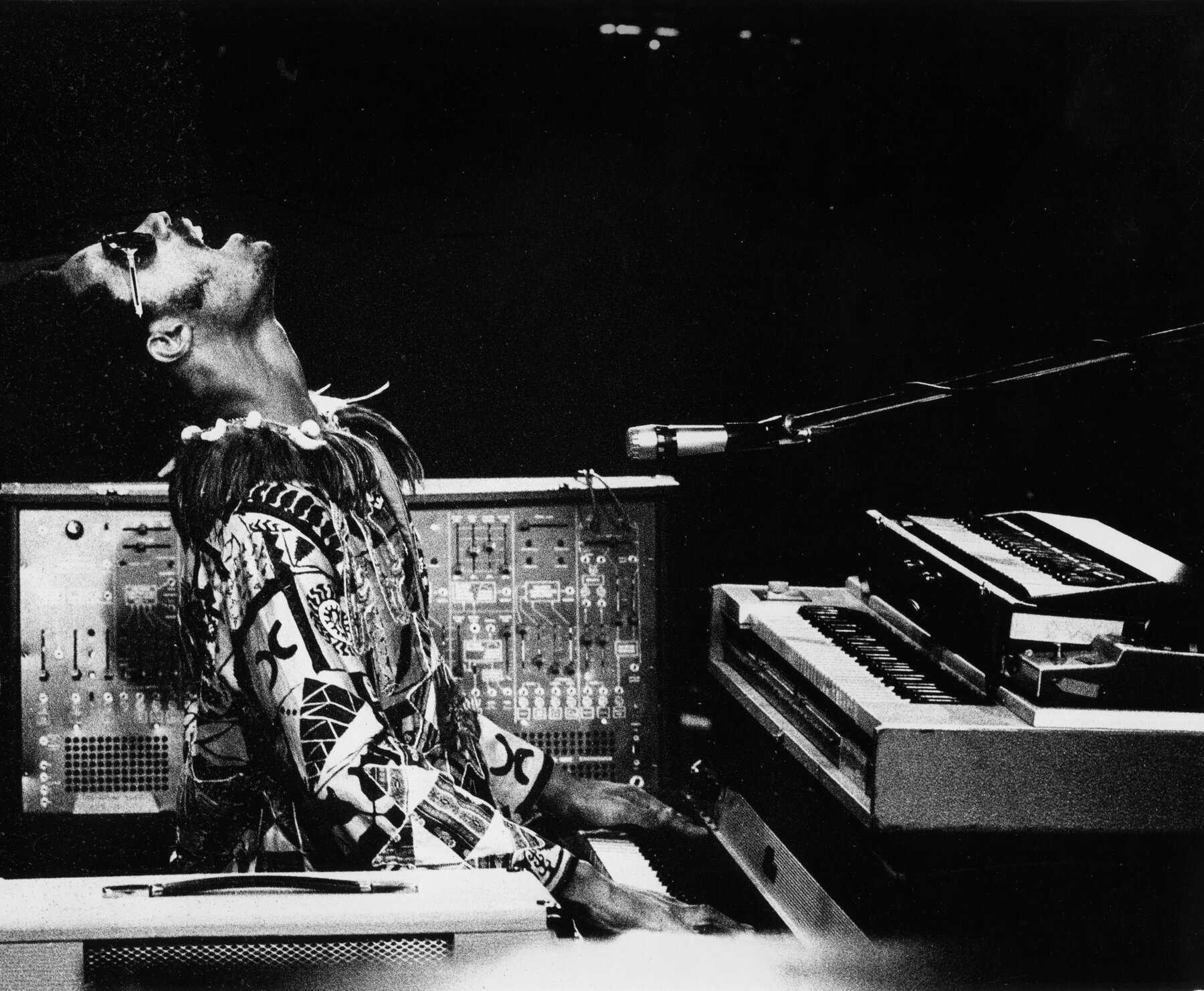
Music critic Steven Hyden has a Five Album Test: an artist or group releasing five consecutive albums ranging from very good to flat-out excellent. Many artists have five good to excellent albums over their career, but very few string five together consecutively. Stevie Wonder did it during his “classic period,” from 1972 to 1976, when he released a streak of five great albums (and three absolute masterpieces):
Music of My Mind (1972)
Talking Book (1972) – masterpiece
Innervisions (1973) – masterpiece
Fulfillingness’ First Finale (1974)
Songs in the Key of Life (1976) – masterpiece
The Wonder Of Stevie Podcast focuses on this five-album run. This podcast inspired me to visit and revisit these five albums. The pod does an excellent job explaining the five-album’s background and context. A couple of crucial points from the pod:
- The five-album burst of creativity was based on Wonder renewing his contract with Motown and securing the right to be in complete artistic control of his musical output.
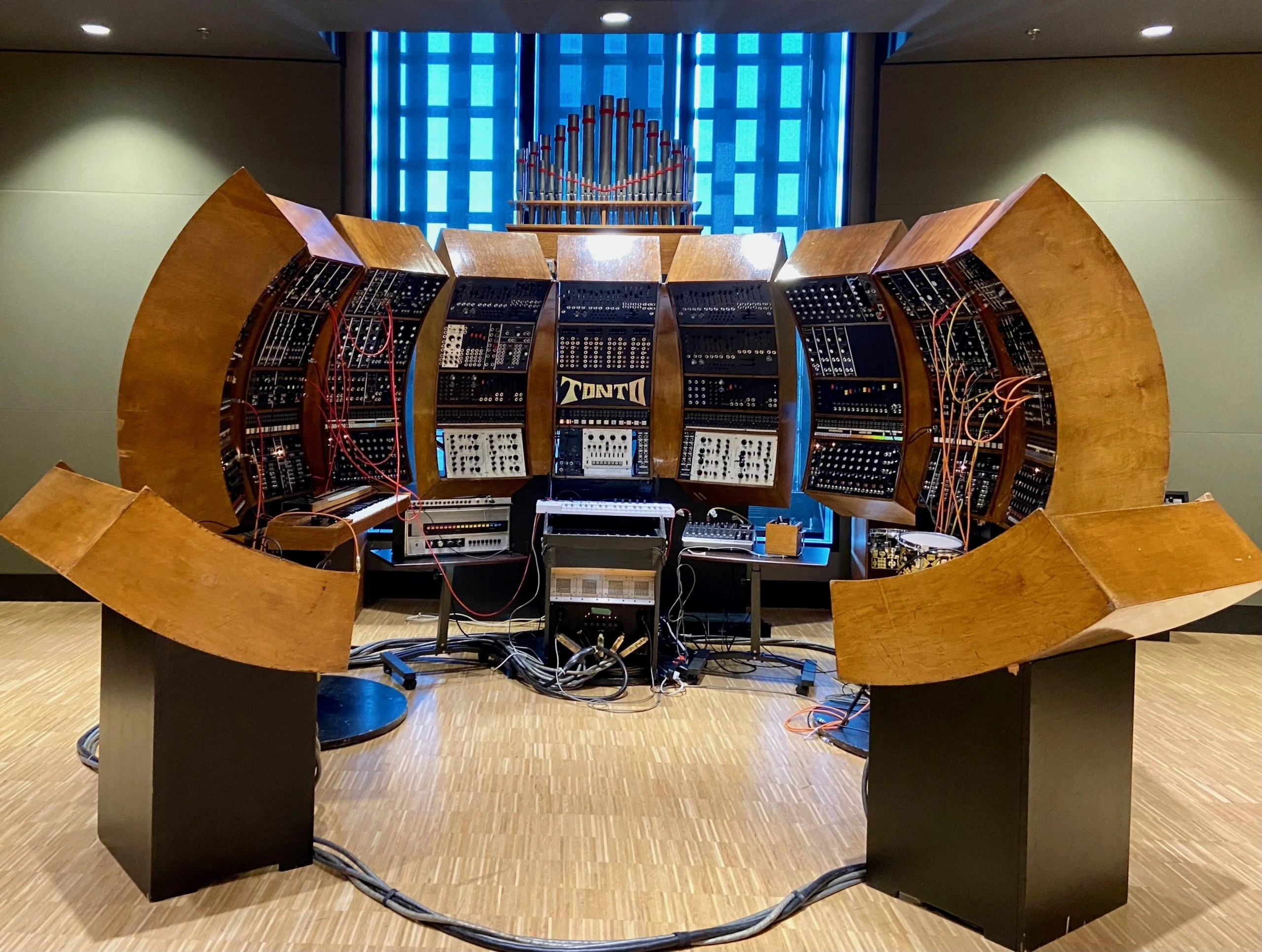
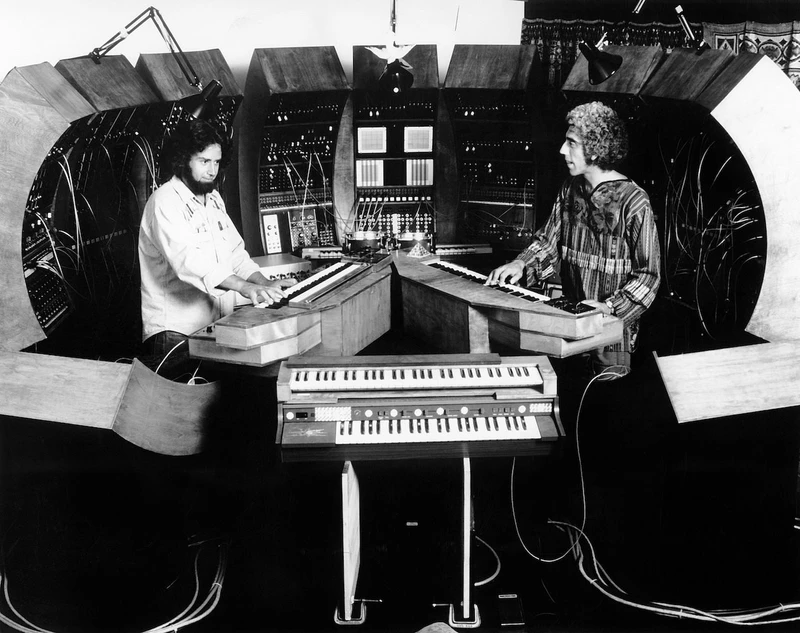
- Wonder “discovered” a synthesizer and a couple of technical partners in crime. Stevie was inspired by Tonto’s Expanding Head Band’s album Zero Time. The album featured TONTO, an acronym for “The Original New Timbral Orchestra.” Malcolm Cecil designed and constructed TONTO, the world’s first and still largest multitimbral polyphonic analog synthesizer. Malcolm and Robert Margouleff composed and performed the music on Zero Time using TONTO. They subsequently collaborated with Wonder on the first four Wonder classic albums discussed in this post.
Coming into this retrospective, I was only familiar with Talking Book, Innervisions, and Songs in the Key of Life. I experienced those three albums in the late ’70s and have continued to enjoy them over the years. I am only now listening critically to Music of My Mind and Fulfillingness’ First Finale.

With a new contract from Motown and a license to do whatever he wanted, Stevie created Music of My Mind. It was a one-man-band record, with Wonder playing most of the instruments (he did need sidemen for things like horns and guitar). He harnessed synthesizers (a very new instrument at the time), with the help of the TONTO engineers/musicians Malcolm Cecil and Robert Margouleff, to create organic, funky sounds with this electronic tool. The synthesizers captured Wonder’s artistic vision – Stevie has said, “The synthesizer has allowed me to do a lot of things I’ve wanted to do for a long time but were not possible until it came along.”
The album hit No. 21 on the Billboard LP charts, and critics noted Wonder’s artistic growth; however, it was not a commercial breakthrough. Some essential tracks on the album are:
- The opening track, “Love Having You Around,” sets the template for Wonder’s funky organic synth sound, which he will leverage for the rest of his career.
- “Superwoman (Where Were You When I Needed You)” was the album’s single (it had moderate success). It is a synth-forward love ballad in two parts. Part one tells the story of the narrator’s love interest, Mary, who wants to be a movie star. Part two is the narrator lamenting that Mary is not returning from her new life; thus, the love affair is over.
- “Keep on Running” is a jam more than a song – its infectious groove can’t be denied.
- “Happier Than the Morning Sun” is a song built on a cool clavinet riff.
Wonder has not fully figured out his new sound, and the tracks are preliminary sketches for the masterpieces that would come later. He successfully proves that his new studio keyboard toys are not just for science fiction soundtracks but are the essential vision of the sound of R&B for the next several decades.
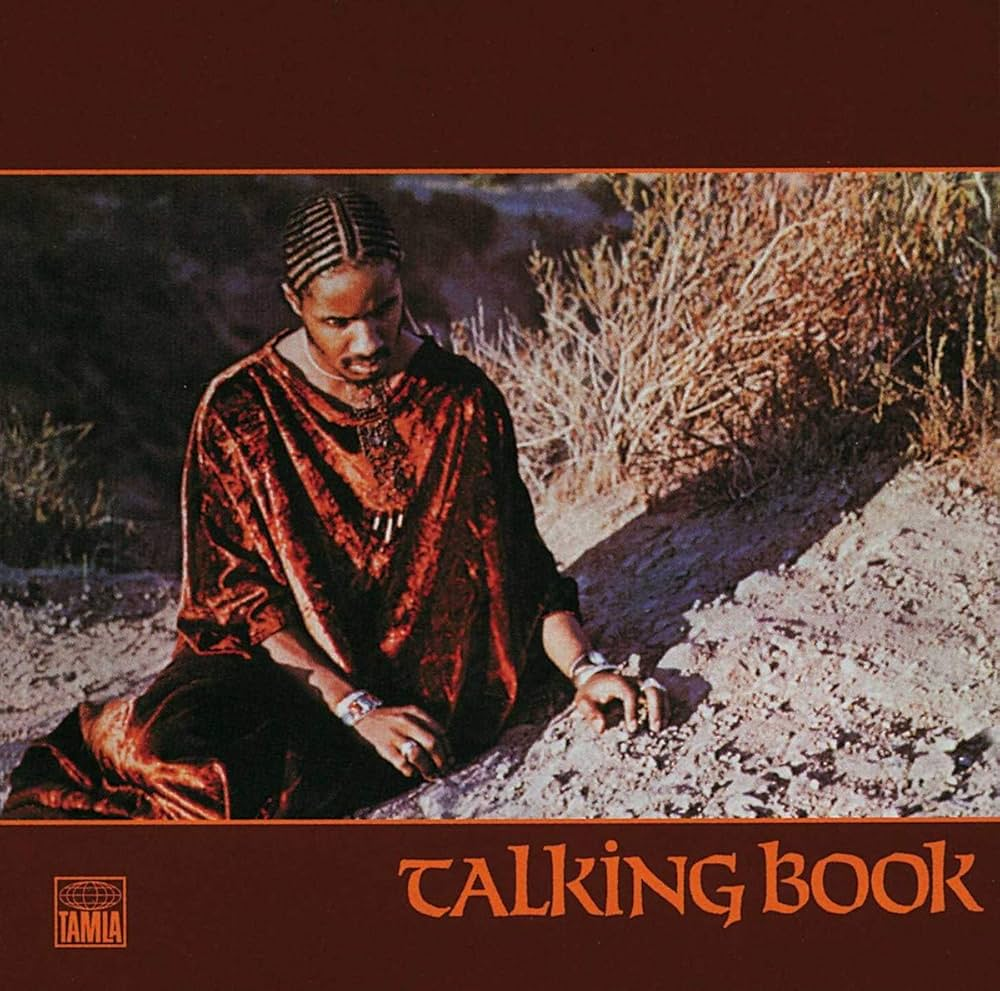
Talking Book (1972) is the album that brought Stevie to mega-stardom. Commercially, the album peaked at number three on the Billboard Top LPs chart and finished at number three on Billboard’s year-end chart for 1973. The single “Superstition” reached number one on the Billboard Hot 100 and Hot Soul Singles charts, and the ballad “You Are the Sunshine of My Life” hit number one on the Hot 100 and Easy Listening charts. Wonder won his first Grammy with “You Are the Sunshine of My Life,” winning Best Male Pop Vocal Performance, and “Superstition,“ winning Best Male R&B Vocal Performance and Best R&B Song.
“Superstition” is one of the most outstanding singles in my lifetime. It was initially written for Jeff Beck, who Wonder admired (it appears on the 1972 album Beck, Bogert, Appice). Stevie’s version is so much better than Beck’s. Beck’s is a rock song, and Wonder makes it a funk/dance banger with a message: the lyrics describe popular superstitions and their harmful effects. If you want to understand the genius of Wonder, this is exhibit number one. The rest of the album is excellent, but singles “You Are the Sunshine of My Life” and “Superstition” cast a long shadow over the rest of the songs on Talking Book.
Beck ultimately recorded a fantastic cover of Stevie’s “Cause We’ve Ended As Lovers” on his 1975 Blow By Blow album (the song was originally on Wonder’s backup singer Syreeta’s 1974 album Stevie Wonder Presents Syreeta).

Innervisions was my introduction to Stevie Wonder. I have written before about how going to college was my musical awakening. I strongly remember a dorm friend dropping the needle on this masterpiece. My mind was officially blown. The music was funky but with a unique sound. I can’t think of any R&B artists doing anything like this. There were other R&B creative geniuses at the time – but each was doing their own thing (James Brown, Curtis Mayfield, Al Green, George Clintion/P-Funk, Marvin Gaye, etc.). It was an incredibly fertile period that would be the foundation for two new R&B geniuses who would dominate the pop charts in the 80s: Michael Jackson and Prince. I remember being amazed that a blind man could have such vivid vision manifested in music for the ears and body vs. the eyes.
Innervisions is the first among equals in the five-album run. Every song is essential, but even amongst those, three songs absolutely tower over Wonder’s catalog:
- “Living For The City” – a funky political observation
- “Golden Lady” – a gorgeous love ballad
- “Higher Ground” – rowdy funk with a message
If there is one Stevie Wonder album you must hear, it is Innervisions. This is a Hall-of-Fame LP.

This album had both critical and commercial success. It topped the Billboard Top LPs & Tapes chart, where it remained for two weeks, and also reached number one on the Billboard Soul LPs chart, where it spent eight non-consecutive weeks between October 5 and Christmas 1974. At the 17th Annual Grammy (2015) Awards, it won in three categories: Album of the Year, Best Male Pop Vocal, and Best Male Rhythm and Blues Vocal Performance (for “Boogie On Reggae Woman”) at the ceremony held in 1975. Despite its success, the album completely missed my radar then and in subsequent years.
Listening to it now is like finding a lost treasure. It includes Stevie’s gorgeous ballad side and true funk soldier side. There isn’t a bad track on the album.

Songs in the Key of Life was a very ambitious album to conclude this five-album cycle: a double album with a 7-inch four-song bonus EP. The album debuted at number one on the Billboard 200 chart, and the singles “I Wish” and “Sir Duke” reached number one on the Billboard Hot 100. The album spent thirteen consecutive weeks at number one on the Billboard 200. It won Album of the Year at the 19th (1977) Grammy Awards. Other highlights are “Isn’t She Lovely” and “Ordinary Pain.” This is the only album of the five that does not include Malcolm Cecil and Robert Margouleff as part of the production team.
I was in high school when Songs came out. I was not yet a musichead, but it was impossible to be unaware of this album—it was something you could play from start to finish at a party. The singles were ubiquitous, but people were listening to the album. I was not. It took until I was a freshman in college (1977/78) when I finally got into this album (and Innervisions). I go back and forth about Stevie’s greatest album, Songs or Innervisions.
Despite having twenty-one tracks and an hour and forty-five minutes, this album doesn’t drag or feel bloated. Every song is good to great, and several are classics. It sums up everything that is great about this five-album run: gorgeous love songs, thermal nuclear funk, socially conscious lyrics, and pure fun. Songs is also Stevie at his jazziest. It also has a 70s singer-songwriter vibe. Stevie’s vocals are outstanding throughout. The more I think about this, the more I realize that Songs is Stevie’s apex mountain.
Summary
These five Stevie Wonder albums represent one of pop music’s all-time most extraordinary creative bursts. Much of the music is timeless—it sounds as fresh today as it did when it first came out. Along with Marvin Gaye, Sly Stone, Curtis Mayfield, and James Brown, Stevie reinvented R&B as more than dance music – as profound as anything in pop and rock music.
These five albums are available in high-resolution on various streaming services (I use Tidal) as 24-bit/96 kHz FLAC files. Given Wonder’s commercial success, these albums are generally available and used at a reasonable cost for vinyl LPs and CDs.
After this run, Stevie’s output doesn’t live up to this level of excellence. The next album, Stevie Wonder’s Journey Through “The Secret Life of Plants” (1979), was a soundtrack to a documentary—it is more weird than good. He had a near return to form with Hotter than July (1980) – the single “Master Blaster” is a banger, and “Happy Birthday” helped bring about Martin Luther King Day. After Hotter than July, it is more soundtrack albums and easy-listening pop—nothing essential. He hasn’t released a studio album since 2005. He has continued to perform concerts. I can’t disparage Steve’s mediocre late career when he has these consecutive gems in his catalog – arguably the greatest five-album streak in pop/rock music.
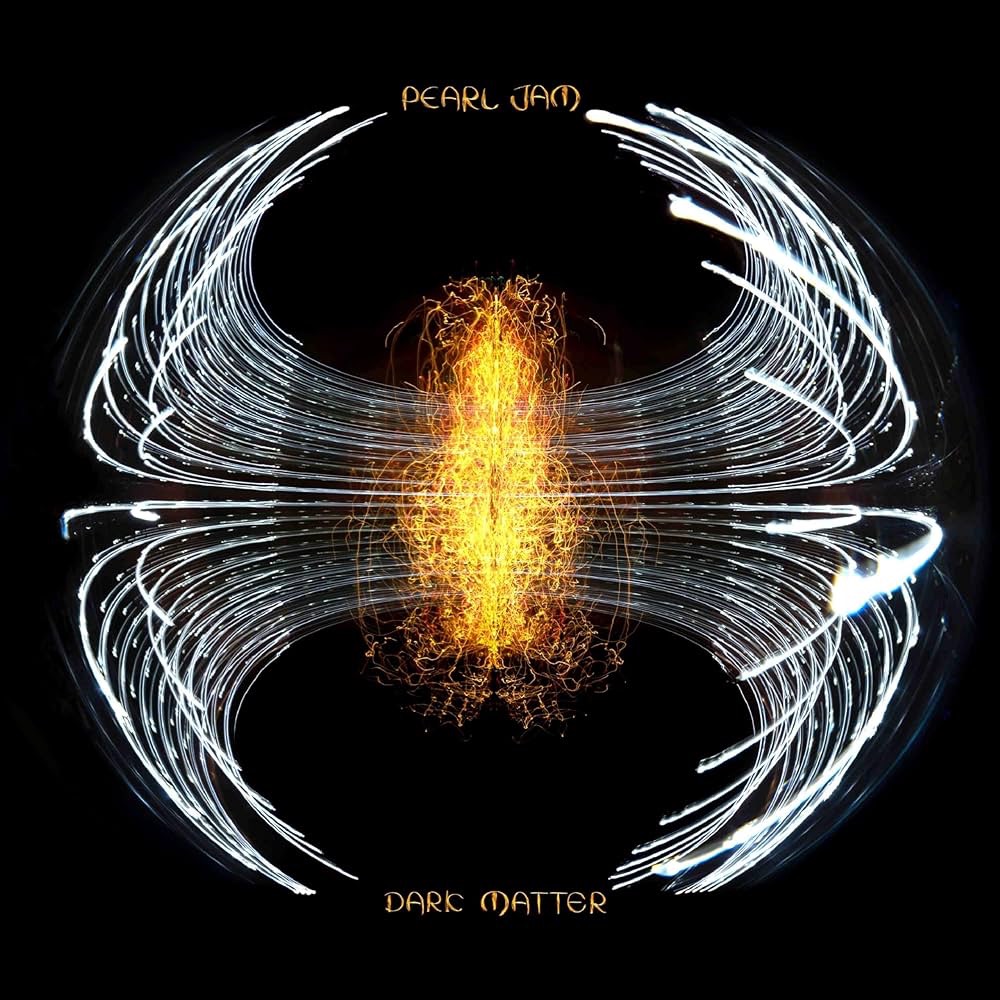
I am a minor Pearl Jam fan. When it came to Seattle grunge, I was a Soundgarden guy. That being said, the first three Pearl Jam albums (10 from 1991, Vs. from 1993, and Vitalogy from 1994) were great. I faithfully bought every studio album after those three, but they never hooked me. Then, in 2020, Gigaton came out, and I loved it. Now comes Dark Matter, which is as good as anything in their catalog. Producer Andrew Watt is the new Rick Rubin – a legend whisperer. He resuscitated the Stones on Hackney Diamonds (2023) and Ozzy Osborne on Patient Number 9 (2022). Pearl Jam was not dead, given the quality of Gigaton, but Dark Matter is even better than Gigaton – a late-career masterpiece.
Per guitarist Mike McCready, the band went back to their hard-rocking roots, saying the album is “a lot heavier than you’d expect.” He went on to say:
“We worked with Andrew Watt, who’s a younger pop producer-type guy, but he’s really a rock guy at heart — I think we’re his favorite band. When we were in the studio with him this past year, he really kicked our asses, got us focused, and playing, song after song. It took a long time to make Gigaton, but this new one didn’t take long. Andrew was like: ‘You guys take forever to make records. Let’s do this, right now.'” He added: “Andrew pushed us to play as hard, melodic and thoughtfully as we’ve done in a long time. I feel like Matt Cameron’s drumming has elements of what he did in Soundgarden.”
The album is guitar-heavy, and Eddie Vedder’s vocals are outstanding. “Wreckage” is the band’s take on heartland rock—a highly accessible single. If you are a fan of early Pearl Jam and they have dropped off your radar, Dark Matter is a good reason to revisit the band.
Available in high-rez on streaming services (24-bit/48 kHz).
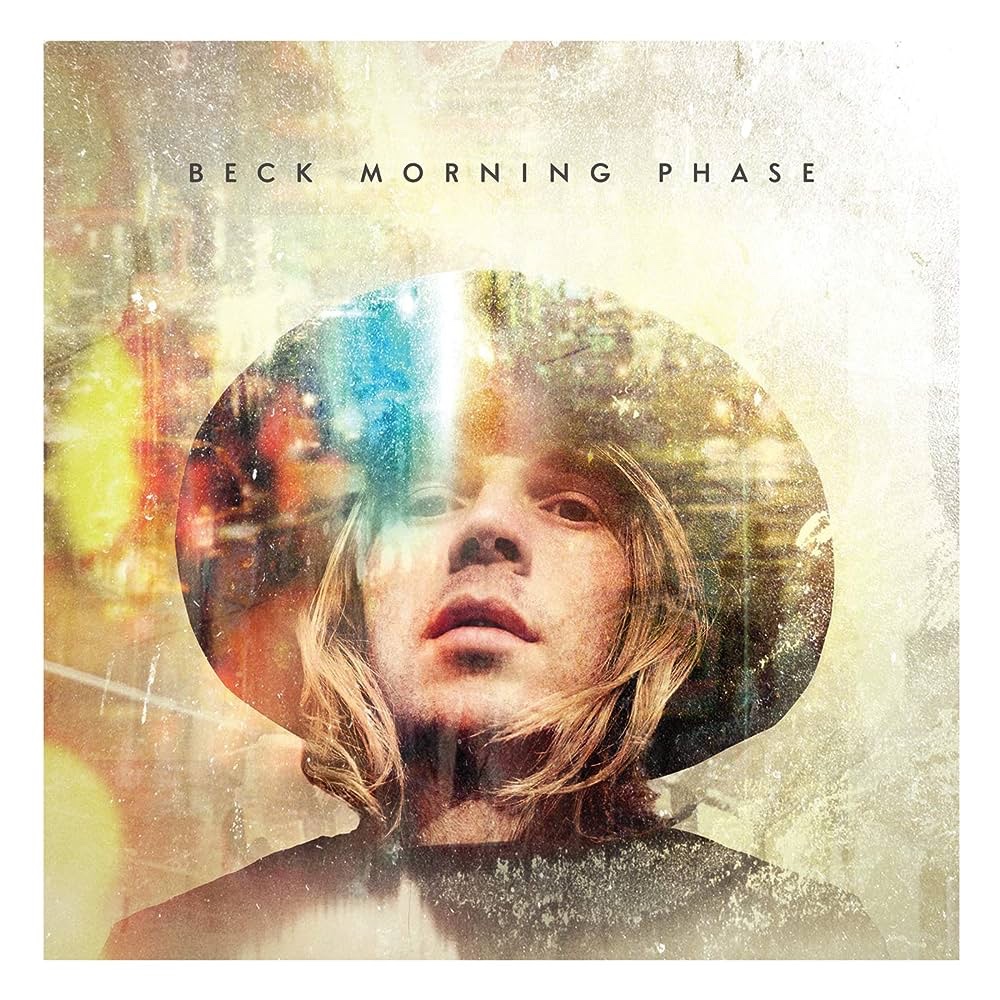
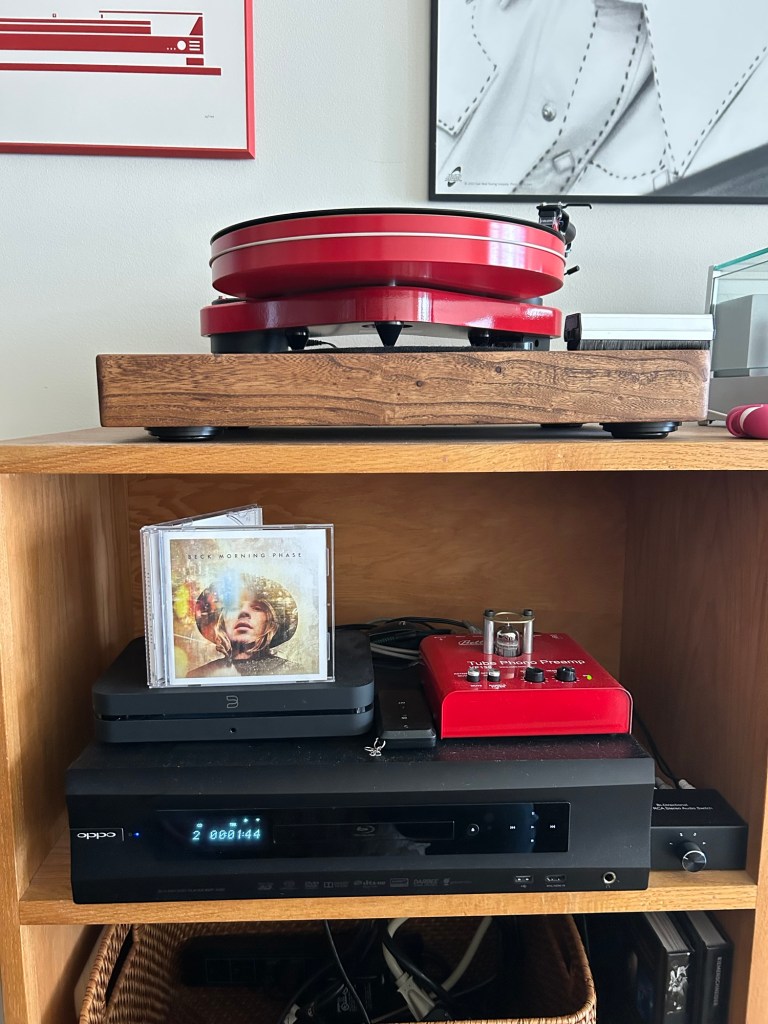
I am not a huge Beck fan, but there are a few albums I am in deep on, including Morning Phase (2014). I originally purchased it as a CD. This vinyl copy was sourced from the Electric Fetus “new” used bins. It appears to be an original from 2014.
Morning Phase was a return to “sad-Beck” – a companion or sequel to Sea Change (2002). Most of the musicians who recorded Sea Change returned to record Morning Phase, except Sea Change producer Nigel Godrich (Radiohead).
I reviewed the album when it first came out – see link. Back in the day, I said: “A suitable album for a pop star’s first album in his 40s. The album has lots of Classic Rock flourishes: a bit of a Moody Blues, the mellow side of Pink Floyd, the ballad side of Elton John, Nick Drake, Neil Young and even some Simon and Garfunkel. It is very atmospheric and wonderfully melancholy.”
Per Wikipedia: “Upon release, the album received critical acclaim and was nominated for five awards at the 57th Annual Grammy Awards, winning three: Album of the Year, Best Engineered Album, Non-Classical and Best Rock Album. Beck performed the album’s song ‘Heart Is a Drum’ with Chris Martin at the ceremony.”
CD
Morning Phase is an elaborately orchestrated and highly engineered album. The soundscape is a significant part of the gimmick, but it is also kind of low-fi. The CD sounds fantastic, and despite the digital format, it sounds warm.
Vinyl
The LP was a bit staticky on the first pass. I gave it a serious cleaning with my Nitty Gritty, and it sounded much better. Given this is a very lush album, the analog sound of vinyl is very nice. But given that it is a quiet album, every pop, and click is exaggerated. Given how calm and mellow this album is, the digital format is preferred.

I don’t typically buy expensive used records (AKA more than $10. This album was $23 but is significantly more costly on Discogs. I love it so much that I think having a vinyl copy is worth it.
High-Resolution Stream (Tidal)
The high-resolution stream is 24-bit/96 kHz FLAC. It doesn’t sound significantly better than the CD. However, the soundstage is more expansive and rivals vinyl for analog warmth. I wish my CD player (an Oppo) and Streamer (a Bluesound Node) shared the same DAC for a more apples-to-apples comparison. The high-resolution stream is slightly better than CD and vinyl, so it is the preferred format.
I’m getting new insights into this album as I relisten: I now hear the Radiohead influence on some songs. Beck is a better vocalist than I realized—I hear Tom Yorke, Chris Cornell, and Van Morrison in addition to the influences I first noticed when the album came out (Pink Floyd, Elton John, Nick Drake, Neil Young, and Simon and Garfunkel).
ECM 1575–80
I recently saw this CD box advertised on Instagram, which prompted me to head over to the CD shelf and listen to my copy. It has been a long time since I have listened to this collection – for a moment when I saw the advertisement, I forgot I even had it.
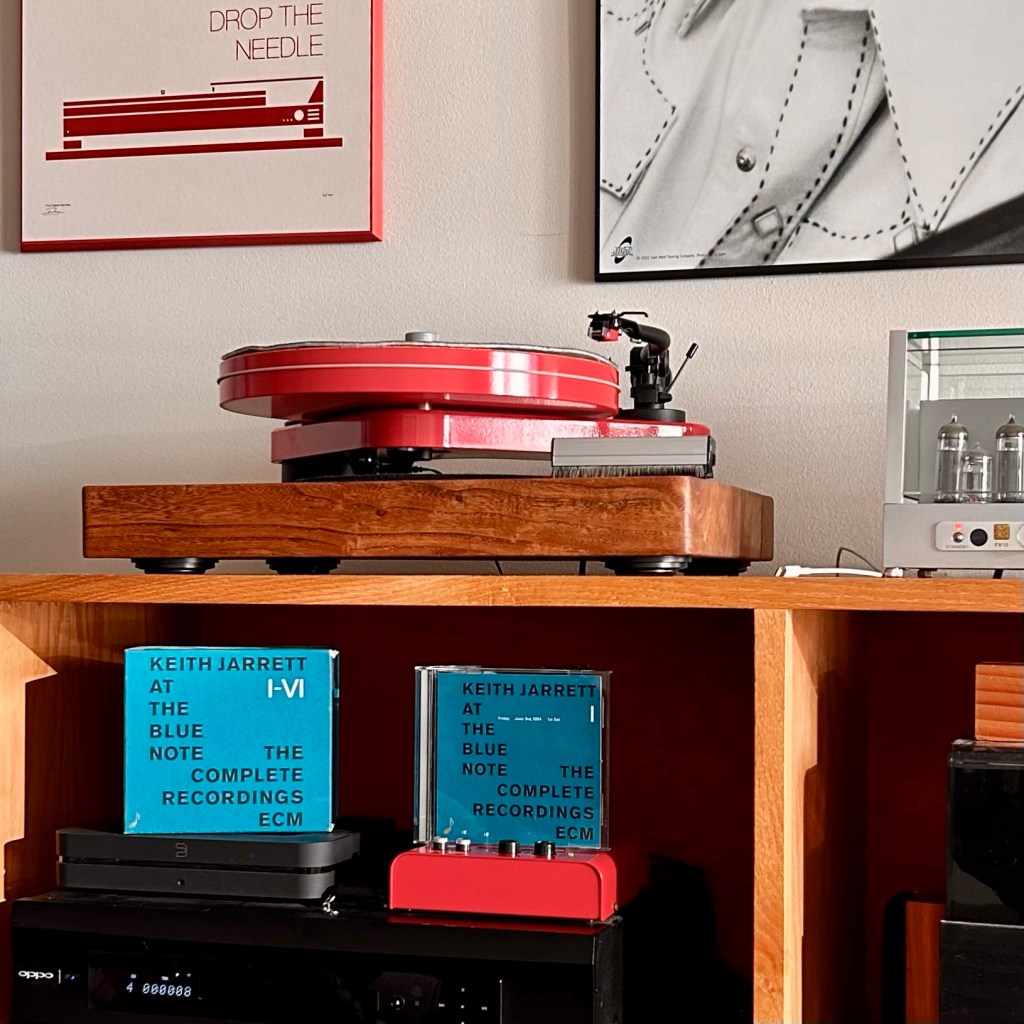
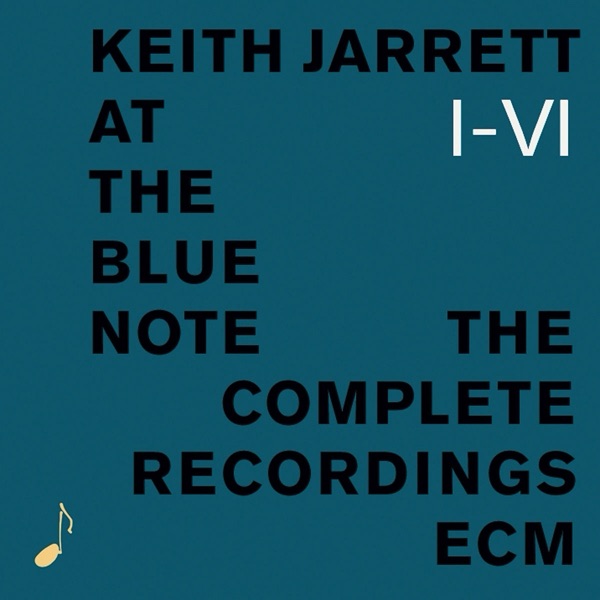
Keith Jarrett at the Blue Note is a six-CD box set by American jazz pianist Keith Jarrett’s “Standards Trio,” which features a rhythm section of Gary Peacock and Jack DeJohnette. This live recording compiles the six sets the trio performed at the Blue Note Jazz Club in New York City over three nights in June 1994 and was released by ECM in October of the following year.
Jarrett has an impressive jazz pedigree: He was a member of Art Blakey’s Jazz Messengers, Charles Lloyd Quartet and a featured member of Miles Davis’ electric fusion groups, playing electric piano and organ. He is most famous for his solo piano performances on ECM, especially the Köln Concert, the best-selling piano recording in history.
One of my favorite versions of Jarrett is the Standards Trio, which performed together for decades. In 1983, at the suggestion of ECM head Manfred Eicher, Jarrett asked bassist Gary Peacock and drummer Jack DeJohnette, with whom he had previously worked on Peacock’s 1977 album Tales of Another, to record an album of jazz standards titled Standards, Volume 1 (there were an additional eight Standards albums before Keith Jarrett at the Blue Note came out). This box set is the fruition of over a decade of the trio playing together. Rather than the typical single disk cherry-picking from a three-night stand, this is everything performed at those gigs. As Jarrett states in the liner notes, “Every note we played for three nights is included. There are no edits or choices of one track vs. another.”
The recording quality is outstanding for a live recording—you feel like you are in the club. Jarrett is panned slightly left, DeJohnette is slightly right, and Peacock is in the center. I even love how the audience is recorded—their clapping makes you feel like you are in front of the bandstand. The recording also includes Jarrett’s trademark grunts and groans. This mix provides a fantastic immersive experience and would be an excellent reference recording to show your stereo’s ability with acoustic recordings.
These jazz standards showcase Jarrett’s sense of melody. His performance is energetic yet sensitive. You can tell he is fond of and familiar with the material. DeJohnette and Peacock are the perfect rhythm section. The quality never lets down throughout six CDs (over seven hours of material). This set (you don’t have to listen to all seven hours to enjoy) and the Köln Concert are an excellent introduction to the genius that is Keith Jarrett.
In 1996, the box set was awarded “Album of the Year” in the DownBeat Critic’s Poll. AllMusic awarded it a five-star review (their best) said:
“Never mind that this same group has already had ten separate releases since 1983; this box is still well worth getting…. Throughout the three nights at the Blue Note, the interplay among the musicians is consistently outstanding. Those listeners concerned about Jarrett’s tendency to ‘sing along’ with his piano have little to fear for, other than occasional shouts and sighs, he wisely lets his piano do the talking.”
Keith Jarrett at the Blue Note is available on streaming services. The high-resolution service uses CD quality (16-bit/44.1KHz), but even with CD quality, this is a magnificent-sounding collection.
https://open.spotify.com/album/6sJLTN1J3PhPQ0OybVsqVz?si=mMWt0K8LTIaPFTq-XBMiNQ
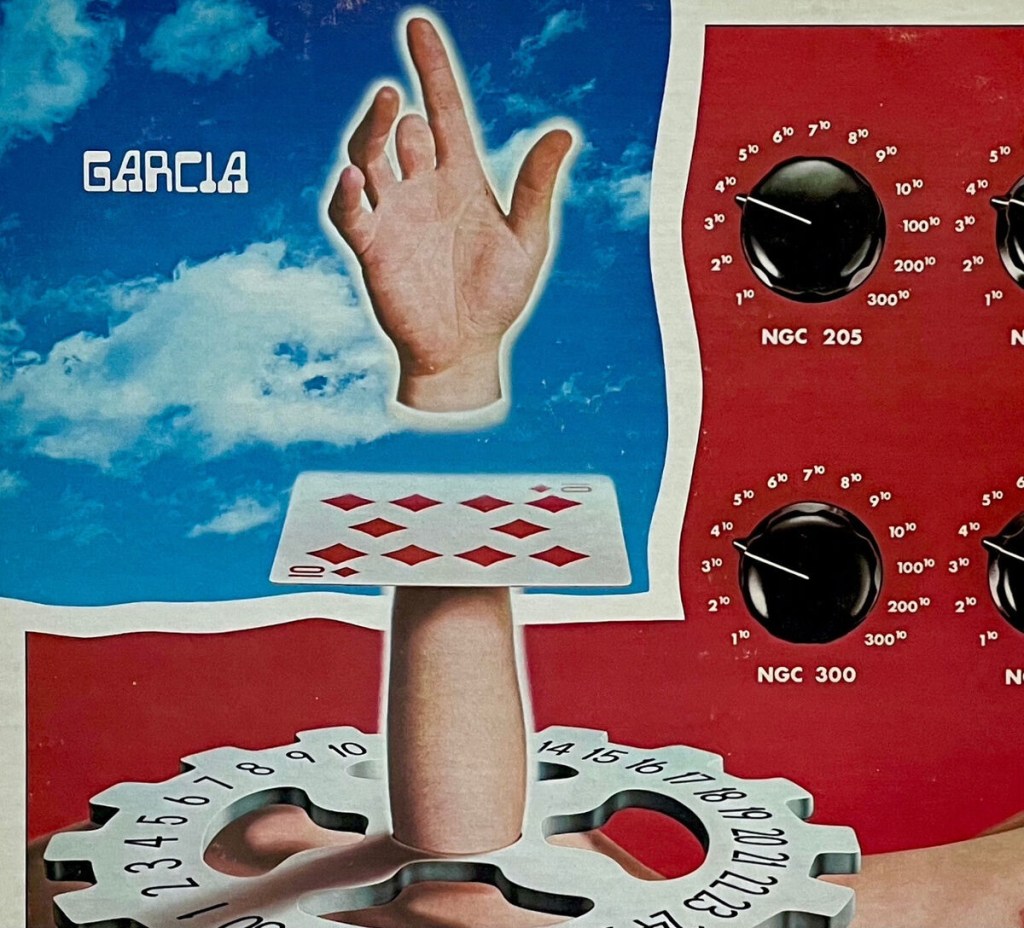
This is the Grateful Dead’s Jerry Garcia’s first solo album (released on January 20, 1972). Garcia recorded the album almost entirely alone, with only Bill Kreutzmann, one of the Dead’s drummers, assisting him. The Dead’s label at the time, Warner Brothers, encouraged Dead members to release solo material. In 1972, Garcia released this album, Bob Weir released Ace (May 1972), and Mickey Hart released Rolling Thunder (September 1972). A couple of years earlier, the Dead released their back-to-back Americana classics, Workingman’s Dead and American Beauty, to critical acclaim and commercial success. The Dead were on a roll, and the magic spilled to the solo albums. Half the songs on Garcia would have fit comfortably on Workingman’s Dead and American Beauty. However, the three songs that open side two (“Late for Supper,” “Spidergawd,” and “Eep Hour”) are weird musique concrète instrumental soundscapes that could have been on a Pink Floyd album from the era.
Garcia, side one, includes two songs that would become standards in the Dead and Jerry Garcia’s live repertoire: “Deal” and “Sugaree.” “Bird Song”’ and “Loser” fit nicely in the Dead’s Americana sound. Side two ends with another Dead/Garcia live standard: “The Wheel.” Side two also includes “To Lay Me Down,” a piano ballad that shows a different side of Garcia, a Laurel Canyon singer-songwriter. Finally, the oddball Garcia/Kreutzmann jam is “An Odd Little Place.”
Track listing (and songwriters in parentheses):
Side one
“Deal” (Robert Hunter, Jerry Garcia)
“Bird Song” (Hunter, Garcia)
“Sugaree” (Hunter, Garcia)
“Loser” (Hunter, Garcia)
Side two
“Late for Supper” (Garcia, Bill Kreutzmann)
“Spidergawd” (Garcia, Kreutzmann)
“Eep Hour” (Garcia, Kreutzmann)
“To Lay Me Down” (Hunter, Garcia)
“An Odd Little Place” (Garcia, Kreutzmann)
“The Wheel” (Hunter, Garcia, Kreutzmann)
I am more of a Jerry Garcia fan than a Dead fan. My introduction to Garcia is a 1991 live album called Jerry Garcia Band. I have had a box-set collection of studio albums but never explored it deeply.
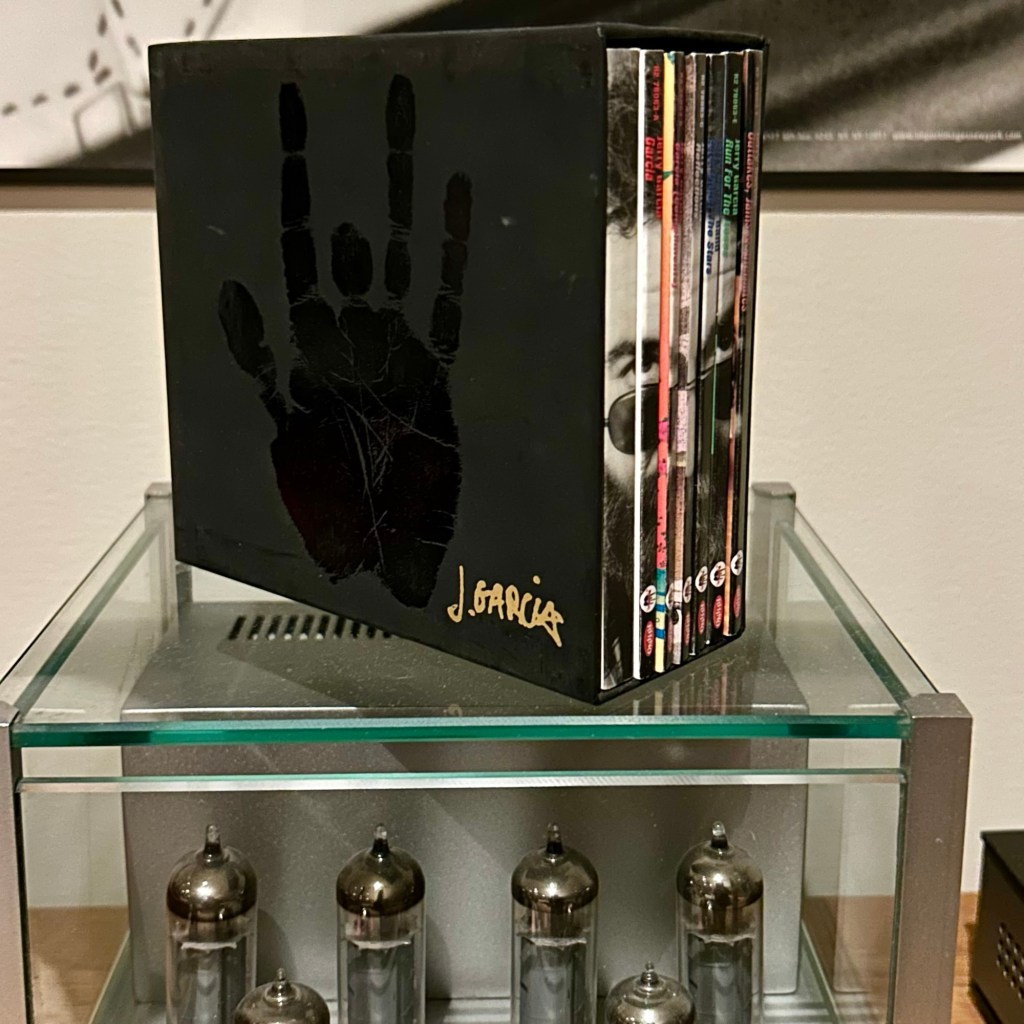
I picked up a vinyl reissue at Record Store Day 2014, but never gave it an attentive listen until this fall.
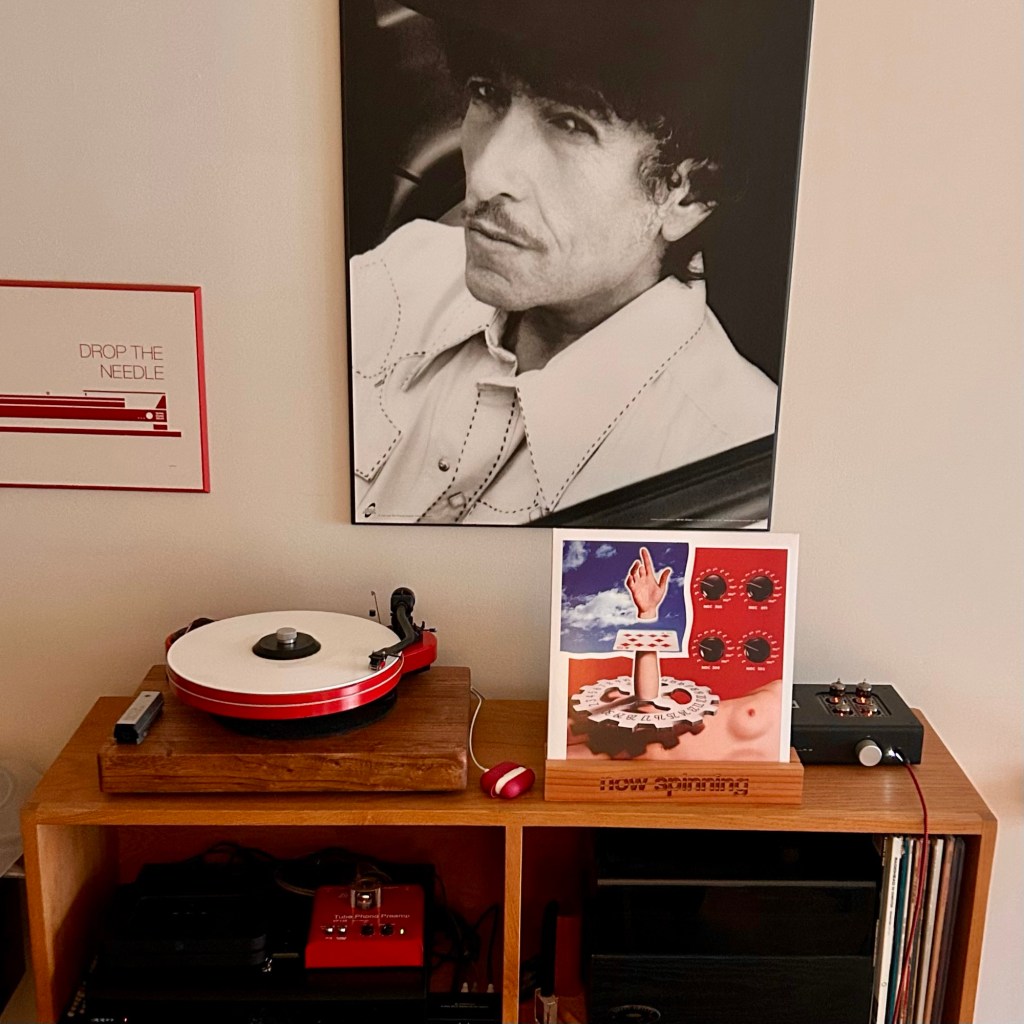
Record Store Day 2014 (white 180 g vinyl)
This is an outstanding introduction to Garcia’s solo career. I also recommend the 1991 JGB album mentioned earlier. If you want to experience the jazz side of Garcia, check out his collaboration with Merl Saunders Live at the Keystone.
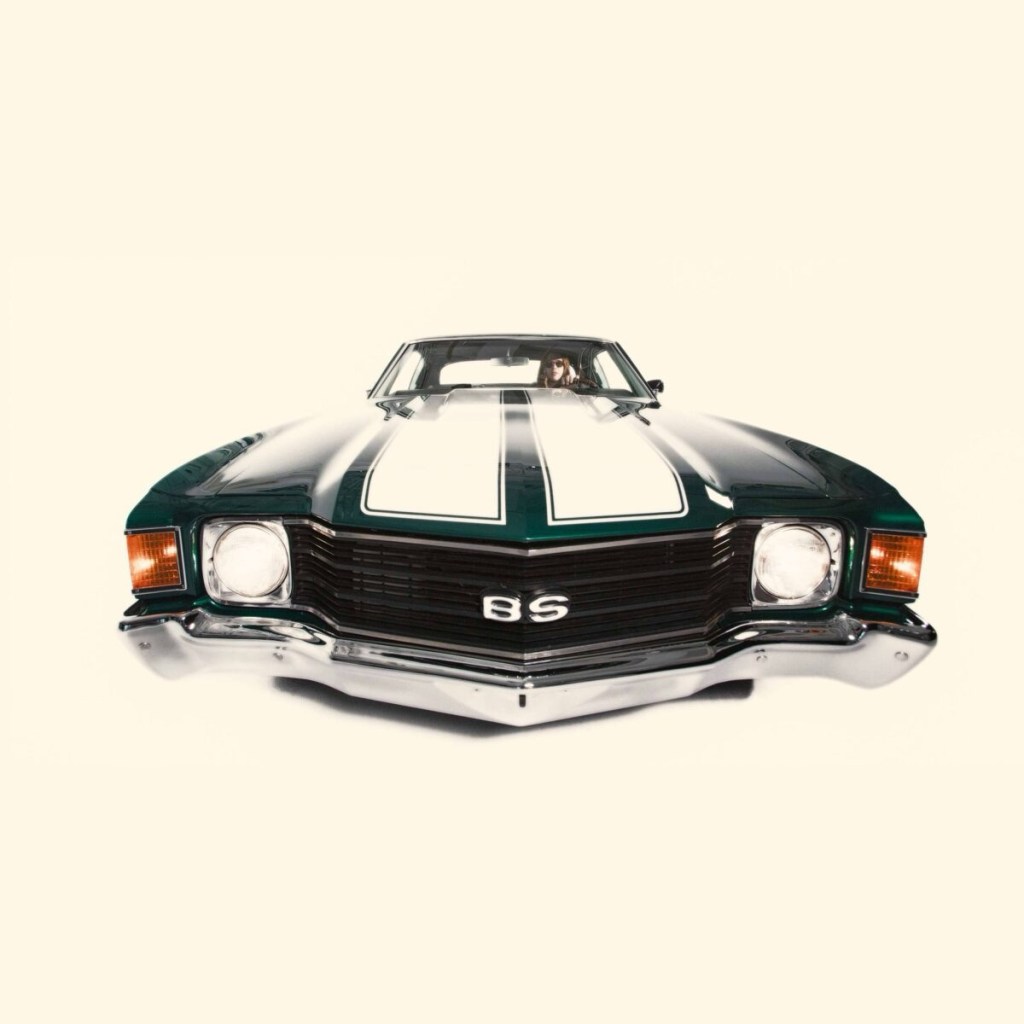
When my son first mentioned that he had seen a bluegrass artist, Billy Strings, perform early evening on the big stage at Lollapalooza (Chicago) in the summer of 2022 to a “full house” (I assume at least 40,000 people), I was impressed. Who the hell is this guy? I checked out a few of his albums on streaming, and the music was pretty cool: a mix of straight bluegrass songs (both originals and traditional songs) and bluegrass/rock/jam band fusion originals. I liked it, but it did not slay me. But I assumed, like most jam bands, the music needs to be consumed live, so I went to see him the first chance I could (in the spring of 2023 in Phoenix). That slayed me! Visually Strings brings a rock show aesthetic to the performance – lots of astounding lights, he plays loud, and he and his band absolutely shred – they are the Metalica of bluegrass bands.
Fast-forward to earlier this year, when Strings released his first live album, Billy Strings: Live Vol. 1, where he captures the live magic on a recording. The live album destroys his studio catalog. He has a new studio album, Highway Prayers, and he has figured out how to coax magic out of the studio – it is not the live sound, but something else. The songs are a bit looser, and they have more diversity. Although there is plenty of bluegrass, there are also pop, jazz, folk, and country elements. The album is original material written by Strings and various co-writers.
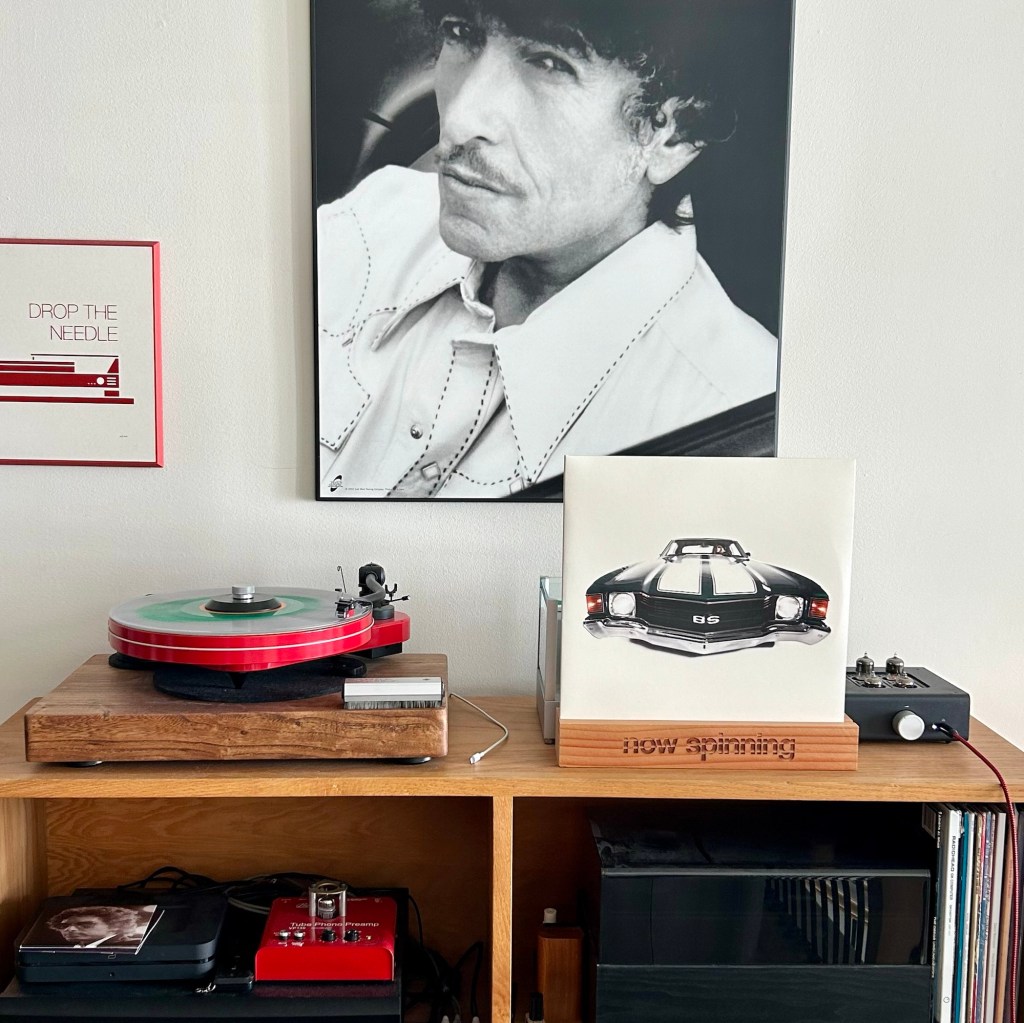
Per Billy’s website:
“Recorded in Los Angeles and Nashville, the album features Strings and his longtime band—Billy Failing (banjo, vocals), Royal Masat (bass, vocals), Jarrod Walker (mandolin, vocals) and Alex Hargraves (fiddle)—as well as additional contributions from Jon Brion (bass, drums, percussion – who also produces), Matt Chamberlain (drums), Jerry Douglas (dobro), Jason Carter (fiddle), Lindsay Lou (backing vocals), Nathaniel Smith (cello), Taneka Samone (backing vocals), Cory Henry (piano), Peter “Madcat” Ruth (harmonica, jaw harp) and Victor Furtado (clawhammer banjo).”
Highway Prayers elevates and evolves the Billy Strings sound. I highly recommend Highway Prayers and Billy Strings: Live Vol. 1 as entry points for new listeners. Below is a brief track-by-track commentary. I have also included the various videos that Billy has posted to augment the audio. As the album title suggests, there are many road themes here.
“Leaning on a Travelin’ Song” is a classic “On the Road” song in traditional bluegrass style.
“In the Clear” – is another road song, but now the road is starting to weary our narrator. He is trying to figure out his messed up life:
“Well here I am pulled over now
Just crying on the shoulder
Down the road that I’ve been driving on for days
So I aim my moral compass
But it’s spinning like a wheel
And you could take that many different ways”
This is another straight-ahead bluegrass original.
“Escanaba” is a bluegrass/jazz fusion instrumental that reminds me of David Grisman’s Dawg Music.
“Gild the Lily” is the song that separates Strings from the bluegrass traditionalists. It is a bluegrass pop fusion. It is a gorgeous ballad with the sweetest version of Billy’s voice—it is high and lonesome.
“Seven Weeks In County” has a spaghetti western vibe. It is a prison song, but our narrator is not blaming others for his incarceration—he is accountable for his sins. An elaborate cheesy western video supports the song.
“Stratosphere Blues / I Believe in You” is my favorite cut on the album. This is pure psychedelia, which is more common with Pink Floyd than Doc Watson. This is the kind of stuff that makes Strings a rock star.
“Cabin Song” is a classic bluegrass cutting session – the band shredding. Despite the band’s joyful sound, this is a lost love lament.
“Don’t Be Calling Me (at 4 AM)” is a country song with a bluegrass feel. The narrator is annoyed at an old lover looking for a hookup.
“Malfunction Junction” is another instrumental with a Grissman Dawg Music vibe and a sprinkle of psychedelia.
“Catch and Release” – reminds me of early ’60s Dylan talking blues and John Prine’s stoner humor. There are not enough fishing songs.
“Be Your Man” is a gorgeous country pop fusion. Strings songs don’t typically have a piano on his song – Cory Henry’s piano is a brilliant addition. I love this line: “It occurred to me I might’ve been the class clown then, but now I’m just a fool.”
“Gone a Long Time” is yet another traditional bluegrass-sounding original. This is a road-weary song.
“It Ain’t Before” features jaw harp and harmonica and reminds me of the Ozark Mountain Daredevils.
“My Alice” is a ballad in which the narrator fantasizes about killing his boss for inappropriately staring at his wife. There are few ballads in the Strings catalog, and I wish there were more.
“Seney Stretch” is an instrumental that shows off Strings’ gorgeous acoustic guitar tone and sense of melody. It reminds me of what the Dixie Dregs used to do: a diverse jazz/bluegrass fusion sound.
“MORBUD4ME” is stoner humor and more of a skit than a song. It has amazing vocal harmonies done in the form of a round.
xx
“Leadfoot” is a bluegrass song with a rock’ n’ roll attitude. It is about a guy who races his car in the street and dies behind the wheel.
“Happy Hollow” is another straight-ahead bluegrass song. A sentimental memory of a place.
“The Beginning of the End” is a lovely concluding song. It is not a goodbye, but a see you later.
“Richard Petty” is an acapella coda to the album. If you have ever seen Strings in concert these days, acapella songs are an absolute delight.
If you want to witness the whole album via the videos, there is a version that pulls them all together:
Highway Prayers is an hour and a quarter of pure joy. It is an excellent introduction to Billy Strings for the uninitiated and a perfect summary of the Billy Strings concept for longtime fans.

The Smile is a rock trio consisting of Radiohead members Thom Yorke (vocals, guitar, bass, keys) and Jonny Greenwood (guitar, bass, keys), along with Tom Skinner (drums) from the jazz band Sons of Kemet. The Smile is more prolific than Radiohead: They have released three albums (plus two live albums) in two years, compared to nearly a decade for the last three Radiohead albums.
The Smile sounds like Radiohead but with a looser and more jazzy vibe.
Cutouts, released in October 2024, was produced by Sam Petts-Davies during the same sessions as the previous Smile album, Wall of Eyes, released in January 2024. Per Wikipedia:
They performed several future Cutouts songs in early live performances in 2021 and 2022. Greenwood first performed the riff from “Eyes & Mouth” on Radiohead’s 2016 tour during performances of their song “Talk Show Host.”
Despite this backstory and the album title, this album is as cohesive as the other two The Smile albums—it is not an album of leftovers. I am finding this the most engaging of the three studio albums.
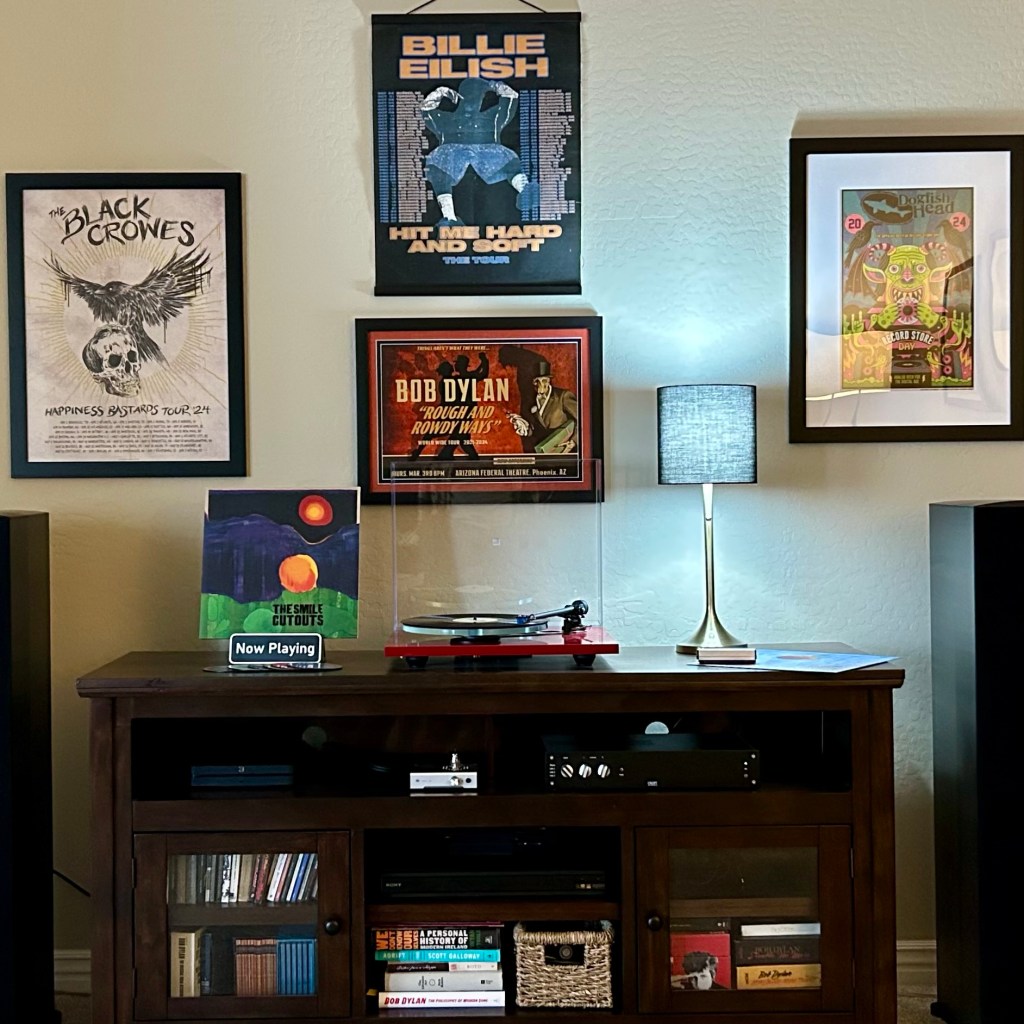
The album opens with “Foreign Spies,” which has a dirge-like feel. The band creates a warm bath of synth and electronica sounds that Yorke sings over. Lyrically, it seems to describe paranoia lurking in an otherwise beautiful world.
“Instant Psalm” opens with a string arrangement (the London Contemporary Orchestra) but quickly slips into a quiet rock riff. Yorke sings calmly about being in an intimate relationship yet not being close to that person. The song ends with a swell of strings.
“Zero Sum” has a classic Radiohead vibe but with a touch of the Red Hot Chilli Peppers in Yorke’s vocals. The song has a fabulous horn riff courtesy of Pete Wareham (baritone sax) and Robert Stillman (tenor sax). The phrase “zero-sum” refers to a situation in which whatever is gained by one side is lost by the other. Lyrically, the song seems to mock those in positions of power who are no more impressive than an outdated PC operating system like Windows 95 (referred to in the lyrics).
“Colours Fly” is another song with a Radiohead vibe. It features a spaghetti Western guitar riff and a wonderful quacking bass clarinet from Robert Stillman. Lyrically, Yorke appears to be mocking politicians who say what their constituents want to hear.
“Eyes & Mouth” is my favorite song on the album—it’s a banger! It’s funky Radiohead. Lyrically, the song is a classic Radiohead theme of alienation and detachment.
“Don’t Get Me Started” is a slow and spooky-sounding song. Yorke seems to sing about being misunderstood.
“Tiptoe” is like listening to a sparse rehearsal (almost noodling). Then, an orchestra steps in. Finally, an angelic-sounding Yorke vocal enters the mix. Lyrically, I am not sure what Yorke is up to here, but it is bleak.
“The Slip” starts with sparse percussion, drums, and a synth-bass riff, setting a groove for Yorke to work his vocal magic. He sounds like the bastard love child of Bowie and Bono. The electric guitar is a delicious slice of pop rock. Lyrically, Yorke sings about climate change, nuclear war, and political disillusionment as politicians appear to have their heads in the sand.
“No Words” is The Smile’s version of The Who’s “Baba O’Riley”/“Eminence Front” – a great combination of guitar and electronica.
“Bodies Laughing” has an acoustic guitar and a 60s bossa nova vibe. After all the lyrical darkness, the feeling here is, “What the hell? Let’s at least have a good time in the dystopia.”
Overall, the vocals are amazing. Yorke shows a vast range of vocal styles, but always unmistakably Tom Yorke. The soundscape the band creates is quite diverse. The best thing about The Smile (besides, it is a backup to the fact Radiohead is on indefinite hiatus) is that Jonny is playing lots of guitar.

Miles from India: A Celebration of the Music of Miles Davis
4Q/Times Square Records April 2008
I have no idea how I stumbled on this double CD (it was also released on a three-LP version). I assume it caught my eye in a record store. It seemed like a good idea: a collaboration of American jazz and Indian musicians (jazz and Indian classical) interpreting the music of Miles Davis produced by Bob Belden (responsible for the remastered Miles Columbia catalog). It 100% worked. This is one of my favorite jazz albums in my modest collection (jazz is roughly 15% of my CD/LP collection), so I am not a jazz expert; I am just a casual enthusiast.
I am familiar with the Miles Davis songs here, so it is fun to hear the Indian contributions. Miles had some dalliances with Indian music and instrumentation and Indian-inspired jazz musicians (John McLaughlin – who appears on this album ) during Miles’ electric/fusion period (late 60s through mid-70s). Hence, this collaboration is not a left-field idea. The Kind of Blue album has been interpreted in many ways (reggae, bluegrass, etc.) and always seems to work no matter what style it is played.
The concept of Miles From India is to recast familiar themes from such landmark recordings as Bitches Brew, In A Silent Way, Big Fun, We Want Miles, and Kind of Blue with an East meets West vibe. Some of the instruments that shine here are the electric guitar (Stern Cosey and McLaughlin), the flute (Rakesh Chaurasia), and the Carnatic violin (Kala Ramnath).
The Kind of Blue album has been interpreted in many ways (reggae, bluegrass, etc.) and always seems to work no matter what style. It works great with the Indian influences. But what works best is the material from Miles’ electric period (Bitches Brew, In A Silent Way, and Big Fun). The original recordings had an affinity for Indian music, so the tunes feel comfortable with the Indian influences here. If you are a Miles’ electric period fan and would like some world music spices added to your music, this album will meet your needs.
The American jazz musicians are a who’s who of Miles alumni from a variety of eras:
- Saxophonists: Dave Liebman (1972-74) and Gary Bartz (1970-71)
- Guitarists Mike Stern (1981-84), Pete Cosey (1973-76) and John McLaughlin (1969-72
- Bassists Ron Carter (1963-69), Michael Henderson (1970-76), Marcus
Miller (1981-1984), and Benny Rietveld (1987-91) - Keyboardists Chick Corea (1968-72), Adam Holzman (1985-87) and Robert Irving III (1980-
88) - Drummers Jimmy Cobb (1958-63), Leon ‘Ndugu’ Chancler (1971), Lenny White (1969) and Vince Wilburn (1981, 1984-1987)
- Tabla player Badal Roy (1972-3)
The Indian contingent is represented by:
- Keyboardist Louiz Banks – who also serves as co-arranges with Bob Belden
- Drummer Gino Banks
- American-born alto saxophonist Rudresh Mahanthappa
- Sitarist Ravi Chari
- Vikku Vinayakram (a charter member of Shakti) on Ghatam
- V. Selvaganesh (a member of Shakti and Remember Shakti) on khanjira
- U. Shrinivas (from Remember Shakti) on electric mandolin
- Brij Narain on sarod,
- Dilshad Khan on Sarang
- Sridhar Parthasarathy on mridangam
- Taufiq Qureshi and A. Sivamani on percussion
- Kala Ramnath on Carnatic violin
- Rakesh Chaurasia on flute
- Shankar Mahadevan & Sikkil Gurucharan on Indian classical vocals
Tracklisting – Disc 1
- “Spanish Key” (from Bitches Brew) – Gino Banks, Louis Banks, Rakesh Chaurasia, Selva Ganesh, Adam Holzman, Dave Liebman, Shankar Mahadevan, Rudresh Mahanthappa, Sridhar Parthasarthy, Taufiq Qureshi, Benny Rietveld, Wallace Roney, Mike Stern & Lenny White
- “All Blues” (from Kind of Blue) – Louis Banks, Gary Bartz, Ron Carter, Ravi Chary, Jimmy Cobb, Rudresh Mahanthappa & Vikku Vinayakram
- “Ife (fast)” (from Big Fun) – Gino Banks, Pete Cosey, Michael Henderson, Adam Holzman, Dave Liebman, Kala Ramnath, A. Sivamani & Vikku Vinayakram
- “In a Silent Way (Intro)” (from In a Silent Way) – Adam Holzman, Robert Irving III & Pandit Brij Narayan
- “It’s About That Time” (from In a Silent Way) – Gary Bartz, Ndugu Chancler, Pete Cosey, Michael Henderson, Adam Holzman, Robert Irving III & Kala Ramnath
- “Jean Pierre” (from We Want Miles) – Ranjit Barot, Rakesh Chaurasia, Adam Holzman, Robert Irving III, Benny Rietveld, Mike Stern & Vince Wilburn Jr.
Tracklisting – Disc 2
- “So What” (from Kind of Blue) – Louis Banks, Ron Carter, Ndugu Chancler, Chick Corea, Selva Ganesh, Sridhar Parthasarthy & Taufiq Qureshi
- “Miles Runs the Voodoo Down” (from Bitches Brew) – Pete Cosey, Michael Henderson, Adam Holzman, Wallace Roney, A. Sivamani, Vikku Vinayakram & Lenny White
- “Blue In Green” (from Kind of Blue)- Louis Banks, Ron Carter, Jimmy Cobb, Dilshad Khan, Shankar Mahadevan, Wallace Roney & Mike Stern
- “Great Expectations (Orange Lady)” (from Big Fun) – Ravi Chary, Pete Cosey, Michael Henderson, Adam Holzman, Marcus Miller, Taufiq Qureshi, Wallace Roney, Vince Wilburn Jr. & Vikku Vinayakram
- “Ife (Slow)” (from Big Fun) – Gary Bartz, Pete Cosey, Michael Henderson, Adam Holzman, Dave Liebman, Wallace Roney & Badal Roy
- “Miles from India” (an original composition by John McLaughlin for this album) – Louis Banks, Sikkil Gurucharan, John McLaughlin & U. Srinivas

 Axl's Catch Groove