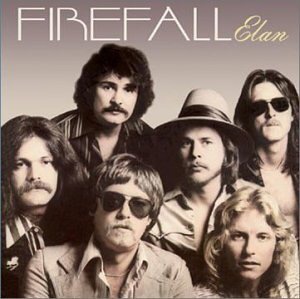
This is how good the 70s were for music: a minor league band could put out a masterpiece and go platinum plus (greater than a million units sold). A band that was on par with The Eagles for songwriting and musicianship, but not really beloved. I can think of several 70s bands like this.
You may be familiar with Elan’s top-40 hit “Strange Way” that still gets played on classic rock radio. These guys were more than one hit wonders (they charted 11 singles). They had an impressive pedigree in country/folk rock (direct or indirect connections to The Flying Burrito Brothers, Gram Parsons, Buffalo Springfield and The Byrds). They honed their craft as road warriors touring in support of top acts like Leon Russell, The Doobie Brothers, The Band and finally Fleetwood Mac (when the Mac was the biggest band in the world). The point is these guys were very talented.
I am a fan of a lot of contemporary acts that like have a 70s country rock Southern California vibe (i.e. Father John Misty, Ryan Adams, Jenny Lewis, The Jayhawks, etc). Firefall is a textbook example of this style. Not as famous, original or archetypal as bands like Crosby, Stills & Nash (CSN), The Eagles and Fleetwood Mac, they were still damn good. They had two quality singer songwriters in Rick Roberts and Larry Burnett. They had a gunslinger guitarist – Jock Bartley. A country rock legend – drummer Michael Clarke. A secret spice: an amazing keyboard and woodwind player – David Muse. The group was rounded out by a very experienced and professional bassist, Mark Andes, who brought some jazz and prog influences to the band. To pull it all together these guys have CSN quality harmonies.
Side one opens with a classic rock staple: “Strange Way.” It is a ballad with an arena rock chorus. This is pure ear candy. This was the kind of song that you would spin to show off your stereo back in the day.
“Sweet And Sour” shows off Firefall’s great vocal harmonies. You swear it is a lost CSN classic.
“Wrong Side Of Town” brings a new groove to the album: funky, jazzy and sassy.
“Count Your Blessings” is a soft rock beauty with a light country sway. It has a simple message:
“And you’ll be alright
When your laughter reappears
And you learn to count your blessings
Not your tears”
“Get You Back” lets you know these guys can rock. It is pure Southern Boogie.
Side two opens with “Anymore.” This song has a Stephen Stills feel. However, Rick Roberts has a more powerful vocal than Stills. The song has a sprinkle of some swampy funk.
“Baby” is some more soft rock. Guest Laura Taylor contributes some sexy harmonies. David Muse drops a Grover Washington Jr. quality soprano sax solo.
“Goodbye, I Love You” is another slick single. Just not quite as amazing as “Strange Way.”
“Sweet Ann” takes the album on a more traditional country rock tangent. But it is still a bit off (in a good way) with an organ and flute solos.
“Wind Of Change” closes the album on a rocking note. More Southern boogie, but with CSN harmonies.
This is a great album and an easy find. I see this frequently in the dollar bins. In fact, I recently picked up a near mint copy for a buck.

I discovered Lowell George, and his band Little Feat, from his/their famous fan Jackson Browne. I was really into Browne’s 1980 album Hold Out. On that album there is a song, “Of Missing Persons,” that was written for Inara George, the daughter of Lowell George. George had died a year prior to the release of Hold Out.
Based on that song I sought out George’s one solo album Thanks I’ll Eat It Here and the Little Feat catalog. What a treasure chest George’s music is.
At the time this album was recorded, George felt Little Feat was venturing too far toward jazz rock fusion, a style he hated, so he retreated back to the Dixie Chicken vibe on this solo debut. The album is a mix of covers and George originals. The album has an easy, almost tossed-offed feel, but if you listen to it carefully it is deeply soulful, cleverly arranged and expertly played by the top session cats of the day (late 70s). Sadly, this would be George’s last album as he died shortly after its release.
George had an interesting career – he was in Frank Zappa’s Mothers of Invention, The Standells and Little Feat. There is no coherent narrative between those three bands. He produced one of the Grateful Dead’s most pop sounding albums – Shakedown Street. He was a multi-instrumentalist, most famous as a slide guitarist. He had a rich soulful voice and wrote some great songs. In short, he is an amazing footnote in rock music history.
This album is a perfect calling card for the music of Lowell George. It’s pretty easy and inexpensive to acquire on LP and CD (under $5).
The album opens with a brilliant cover of the Allen Toussaint song “What Do You Want the Girl to Do.” This song opened the door for me to the genius of Allen Toussaint. Little Feat stood on the broad shoulders of Toussaint’s New Orleans funk.
“Honest Man” is a George original and it has a slight reggae lilt.
“Two Trains” is a reprise of a Little Feat classic (originally composed by George). This version is a bit funkier than the original from Dixie Chicken.
Side one ends with another perfect cover: Ann Pebbles’s “Can’t Stand The Rain.” The Pebbles original is amazing and some how George manages to duplicate the beauty of the original, yet make it his own.
Side two opens with a Lowell George, Van Dyke Parks and Martin Kibbee (aka Fred Martin) number that has a mariachi feel. “Cheek To Cheek” is a love song to a woman stranded south of the border (I guess this has been a long-standing issue in America).
George takes Rickie Lee Jones’ lethargic “Easy Money” and turns it into Little Feat magic.
“20 Million Things” is a George original that is heartbreakingly beautiful. I would love to hear Keith Richards cover this song – it would be perfect for him.
“Find A River” is by session ace Fred Tackett. It has a nice Jackson Browne feel.
“Himler’s Ring” is written by the great songwriter Jimmy Webb. George gives it and old-time vaudeville flavor. Himmler, who was the head of the Nazi SS, awarded honor rings, also known as death’s-head rings, to his most loyal and valiant officers.
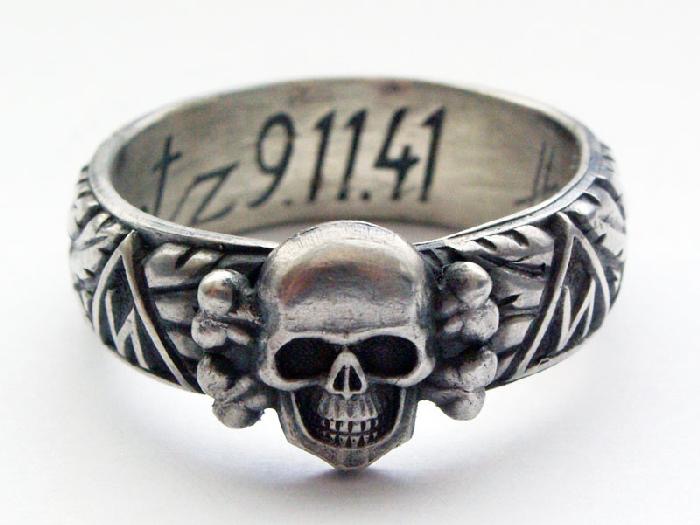
The playfulness of this song is quite ironic given the ghoulish source of its inspiration.
“Heartache” is a George original that is a CD bonus track (it is also on the Spotify version of the album). It has a country song feel. It is the least produced song on the album and it is a nice little coda.
The cover art is by Neon Park (he did all the Little Feat LP covers except their debut) parodies Édouard Manet’s famous painting “Le déjeuner sur l’herbe” with Marlene Dietrich, Fidel Castro and Bob Dylan having a picnic.
This album would be in my hall of fame, if for no other reason than it turned me on to Little Feat and Allen Toussaint, but it is a classic in its own right.
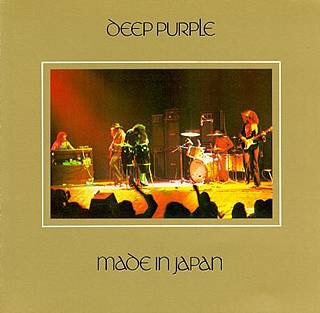
One of my earliest rock and roll memories is listening to an 8 Track of Deep Purple’s Machine Head in my camp counselor’s pick up truck. I would have been about twelve at the time. I was pretty naive about rock and this album captured my imagination: it sounded wild, dangerous and forbidden.
Deep Purple was what we used to call heavy metal or hard rock. They were part of the “unholy trinity” of British heavy metal (Led Zeppelin and Black Sabbath). For whatever reason, Zeppelin and Sabbath have never lost their cachet, but Deep Purple has fallen off the radar (it took until 2016 to get inducted into the Rock And Roll Hall Of Fame – a criminal omission – and at that date an insulting afterthought). You can easily pick up this double LP in good condition for under $5 (it sold over 2 million copies in the US). I paid $4 for a near mint copy, however it is a record club edition (these can sometimes be of dubious quality, but I got lucky this is a good one and sounds great).
Made In Japan, like Machine Head is the Mark II line up – the second and most commercially successful Deep Purple line-up: Ian Gillan (vocals), Jon Lord (keyboards, backing vocals), Roger Glover (bass), Ian Paice (drums), and Ritchie Blackmore (guitar). It is a live album featuring their best songs.
Deep Purple was epic because it had it all: great riffs, face melting guitar solos, thundering drums, seismic bass, the devil’s organ and classic hard rock vocals. But none of that would have mattered if they didn’t have great songs – Deep Purple had great songs.
I remember a few years ago, a friend of my son, called me up and asked me why the vintage vinyl double album he just bought had odd side numberings. The flip side of side one was side four and the flip side of side two was three. There is a good reason. Back in the day there used to be a kind of turntable called a “changer.” With a changer you would stack several records on a spindle and it would play multiple records in sequence without user intervention. Often double albums were designed with disk one with side one and four and disk two with a side two and three. Then you could use a changer to play side one and two without having to get up to flip the record. Once those two sides were done you would flip both records without shuffling and it would play sides three and four.
I was reminded by this when I was playing the LP version of Made In Japan and I was expecting to hear side two after the flip, but instead I heard side four. Instead of hearing the heavy metal classic “Smoke On The Water” I heard the equally classic “Space Truckin’.” I knew it was wrong, but “Space Truckin'” live is such a great jam I had to hear it out. A full side of glory.
Back to side one. It opens with a pretty close to the studio version of Machine Head’s “Highway Star.” Which is one of the most bad ass songs of the early heavy metal period. Ian Gillian’s vocals are perfect. Richie Blackmore’s guitar solo would not sound out-of-place in a Metallica show. A great live presentation. This is followed by a more adventurous reading of “Child In Time” from Deep Purple in Rock. This is almost prog. This is a great opportunity to hear what a great vocalist Ian Gillian is. He goes from a whisper to a scream. And what a screamer Ian is. It is raw emotion. On par with anything Plant or Daltrey has done. And so blatantly British. Again Blackmore let’s it rip. I had forgotten how great he is. Bluesy, but foreshadowing thrash. These guys are as good as Zeppelin.
Side two opens with the one song that will not allow Deep Purple to be forgotten: “Smoke On The Water” which is one of the greatest rock songs of all time. One of the first and only riffs I ever learned on the electric guitar. That riff is so iconic and perfectly simple. Blackmore had the ability to create both simple monster riffs and complex epic solos.
“The Mule” is from The Fireball. The song is famous for drummer Ian Paice’s live solos on this song. On this version he solos for about 6 minutes. It is actually a pretty tight and engaging drum solo. The album has a nice stereo mix of the drum solo which is a bonus.
On to side three. “Strange Kind Of Woman” is also from Fireball. It is probably the most conventional blues boogie in the album. Again Ian Gillan and Blackmore steal the show. There is a great volley back and forth between Blackmore and Gillian as Blackmore tears off a lick and Gillian imitates it with his voice. The songs ends with a tremendous Gillian scream that must have inspired many a heavy metal vocalist.
Lazy is from Machine Head. The song opens with a spacy and trippy keyboard with a hint of garage rock before it finds a sweet jazzy groove. Blackmore joins the groove with some funky guitar. He introduces the riff gently and then the band explodes the riff and we have a heavy metal song. Yet the song swings. This is something that AC/DC must have been inspired by – as heavy as AC/DC is, they always swing. The song is playful as heck – something often missing in metal is fun and humor (again AC/DC never forgot that).
If you are not familiar with Deep Purple this would be a great introduction. If you are a fan you probably already own it. If you are a casual fan of classic rock, this need to be in your collection. If you are a jam band fan you will appreciate the imaginative and stretched out arrangements of Deep Purple’s hits. There is also a deluxe CD edition (also available on Spotify) that extends the album with an extra five songs. I have not listened to that version – as I prefer to take the medicine in its original form.
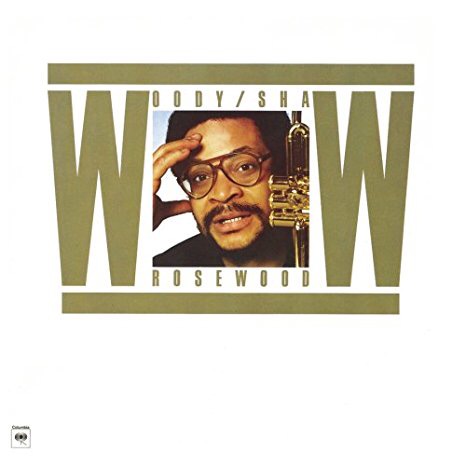
Rosewood is one of my first jazz crushes. Woody was on Dexter Gordon’s 1976 Homecoming: Live at the Village Vanguard and 1977 Sophisticated Giant. Sophisticated Giant and Homecoming would make my top-10 jazz albums. On both albums Woody’s horn playing really stood out. Each album had a Shaw composition too. When Rosewood came out the next year I was ready to check out Dexter’s gifted sideman. It was Shaw’s major label debut (Columbia) and it featured three of his compositions.
The late 70s was a good time for straight jazz. A major label, like Columbia, was so rich it could afford prestige artists like Dexter Gordon and Woody Shaw. The fusion era had created major successes like Weather Report. Jazz artists like George Benson where commercializing their sound and making hits. Artist like Gordon and Shaw where moderately successful – major successes by jazz standards – creating an environment where a major label like Columbia was comfortable making a major investment in straight ahead jazz. I am convinced this created a vibe where Columbia was brave enough to invest in the Young Lion movement led by Wynton Marsalis.
An album like Rosewood was actually promoted by Columbia. In hindsight this is pretty amazing because Rosewood is straight ahead neo-bop. This is not diluted cross over jazz. It is real jazz, yet accessible. This kind of jazz had kind of fallen off the face of the earth – but not really – it was alive and well in Europe. Gordon’s 1976 New York “homecoming” created a buzz and interest in bop that he and others had kept alive in Europe while they had fallen off the radar in the United States. Rosewood was part of this neo-bop buzz. I had the good fortune of busting my jazz cherry on albums like Homecoming: Live at the Village Vanguard, Sophisticated Giant and Rosewood.
Woody Shaw toured on Rosewood and I got to see the Shaw quintet live at the University of Minnesota’s Whole Coffeehouse in 1978 (a perfect venue for acoustic music). That tour was documented on Stepping Stones – Live at the Village Vanguard.
What I love about this album is:
- Woody – his trumpet has great tone and his soloing is muscular and sophisticated. It is technical, yet musical.
- Compositions – there are great jazz songs. Memorable melodies and great foundations for the soloists.
- Arrangements – the album presents both Woody’s working quintet and his concert ensemble. The concert ensemble arrangements are gorgeous and the quintet is dexterous.
- Listenable – I have listened to this album hundreds of times and I have never tired of it and I never stop discovering additional nuances on each listen.
The titular piece “Rosewood” opens the album. The Shaw composed piece was written for Shaw’s parents. The song exploits the concert ensemble. It sounds like a jazz orchestra. The song has a hummable melody. The arrangement is stunning and complex, yet it allows ample space for the soloists.
“Every Time I See You” is another ensemble piece. The song was composed by the band’s pianist Onaje Allan Gumbs. It reveals all the musical glory of the ensemble and it allows Woody to tear off a bad ass solo. Woody is quoted on the linar notes regarding this song: “It’s hard to play simply and still make it work.”
“The Legend of Cheops” is yet another composition by one Of Woody’s sideman, this time drummer Victor Lewis. Again this is a tune that highlights the ensemble strengths: elaborate musical arrangements and brilliant soloing.
“Rahsaan’s Run” starts side two. This song features the quintet. This Shaw composed number is a tribute to Rahsaan Roland Kirk, who at the time of this recording had recently passed. Shaw had worked extensively with Kirk. The song is not a dirge, but a joyful expression of the man.
“Sunshowers” uses the ensemble and is a tune by Woody’s bassist Clint Houston. The song offers a great opportunity for the horns and piano to solo unbridled. It is beautiful noise.
“Theme For Maxine” is for Woody’s wife and manager Maxine Gregg. This is, as you might guess, a beautiful ballad. The song featuring the quintet, replaces regular sax man Carter Jefferson with Joe Henderson (who has a history with Woody as they played together with Horace Silver in the mid 60s). Woody and Joe each solo brilliantly, but the real thrill is when they play together in tandem. Their two horns together is like hearing a whole orchestra or choir. It is truly a 1+1>2 equation.
The CD reissue includes three additional tracks: “Isabel, the Liberator,””Joshua C.” and “Why?”
This album is one of a handful that lured me into a life long love of jazz. No matter how complex jazz gets, it ultimately must have a deep groove to capture my heart. This album grooves deeply.
A final note: this album is finely recorded and is one of my reference recordings.
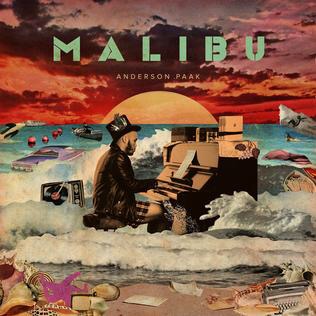
When this album came out in early 2016 I was aware of it and I listened to it on Spotify, but it did not grab me. My wife and daughter were recently at the taping of the Ellen Show and .Paak was the musical guest. Seeing him on the Ellen Show I was impressed by his music and showmanship. My wife got a free CD from the Ellen Show so I gave it a second chance. See .Paak’s performance on Ellen below:
.Paak alternates between neo-soul and hip hop. My first listen immediately invoked Kendrick Lamar and D’Angelo – two guys who are not afraid to show their love of soul, jazz and funk in their productions. I was surprised, after reading about .Paak, that he was under the influence of Dr. Dre vs. Lamar and his cohorts. The more I listened, the more I concluded that .Paak is a hip hop Marvin Gaye. His pop sensibilities are on the level of Michael Jackson. I realize that these are over the top comparisons and they are meaningless unless .Paak continues to deliver for another twenty years. But for this one moment .Paak has delivered a pop masterpiece so lets just savor it.
The opening track “The Bird” is a neo-soul-jazz gem. The song appears to be autobiographical and highlights influences – positive and negative in his life. .Paak has a nice gritty croon on this song.
On “Heart Don’t Stand a Chance,” .Paak has a sing-song rap flow. The cinematic song has a sexy feel, both musically and lyrically.
“The Waters” is produced by Madlib and features BJ the Chicago Kid. This is a nice slow burning rap. This song would sound amazing in a dark club with disco ball raining shards of light on the crowd.
“The Season / Carry Me” is an elaborate hip hop masterpiece that weaves two productions seamlessly together.
“Put Me Thru” has a Prince meets Stevie Wonder vibe. Retro in a very cool way.
“Am I Wrong” (featuring Schoolboy Q) is a hit single and has a dab of Kendrick Lamar, Outcast, Earth Wind & Fire and Dr. Dre. This is brilliant pop hip hop. As slick (in a good way) as anything Quincy and Michael produced. See the Ellen clip above: .Paak can deliver the goods live too.
“Without You” – Throughout Malibu, .Paak has been referencing a gal he is falling for. Here he fully proclaims his love. He trades rhymes with Rapsody (who makes it clear .Paak had better stay true) and the song is finished off with a cool little vocal from Nai Palm from Hiatus Kaiyote.
“Parking Lot” has a Vampire Weekend feel. A bouncy, summertime, roll down your windows and cruise track.
“Lite Weight” (featuring The Free Nationals United Fellowship Choir) opens with a Wolfman Jack sample with a surf music reference. Throughout the album .Paak slips in clips that have a surfer theme – I have not figured out what this has to do with the songs – beyond the album is called Malibu and Malibu has great waves. “Lite Weight” has a monster groove in the tradition of Dr. Dre.
“Room in Here” (featuring The Game and Sonyae Elise) has a modern groove over a tasteful cocktail-jazz piano.
“Water Fall (Interluuube)” is a short mellow ballad where .Paak brags about his abilities to make his gal – well you know…
“Your Prime” is a lush ballad that feels like a warm cozy blanket. Lyrically it is a bit dark in that .Paak is lecturing his lady. She will only be in her prime of her beauty for a short time and she better leverage that to get her man before she is past her prime.
“Come Down” is a nice funk workout and party anthem.
In “Silicon Valley” .Paak gets serious and talks about real love. He wants to get beyond the pretty package. He says to his lady: “open your heart.” .Paak does not lose his humor in this seduction, asking “What’s behind them tig-ol-bitties?” That is a term I have never heard before, but I figured it out pretty quick given the song’s title.
“Celebrate” has monster riffs: first a bass, then a guitar and finally some funky gospel piano. It then has a gorgeous bridge that is soaked in 70s LA pop sheen.
“The Dreamer” (featuring Talib Kweli and Timan Family Choir) opens with chorus pedal infused guitar riff intertwined with a choir. This song is .Paak’s declaration of how far he has come and a shout out to the other dreamers who .Paak is reminding “you can do it too.”
This one’s for all the little dreamers
And the ones who never gave a fuck
I’m a product of the tube and the free lunch
Living room, watching old reruns
And who cares your daddy couldn’t be here?
Mama always kept the cable on
I’m a product of the tube and the free lunch
Living room, watching old rerunsDon’t stop now, keep dreaming
Don’t stop now, keep dreaming
Don’t stop now, keep dreaming
Don’t stop now, keep dreaming
Don’t stop now, keep dreaming
Don’t stop now, keep dreaming
Don’t stop now, keep dreaming
Don’t stop now, keep dreaming
Don’t stop now, keep dreaming
Overall this album is an ambitious piece of pop. A hip hop Pet Sounds or Off The Wall. It comes from the tradition of Kendrick Lamar, D’Angelo, Outcast, The Roots etc. Artists who know how to mine soul, funk, disco and pop and make it their own.
I have not quite figured out the surfer narrative samples. But that will give me something to think and Google about. Sorry I missed this on my best of 2016, but at least I finally caught up to it (thanks to my wife and daughter’s trip to see Ellen). Consider this post an amendment to the 2016 best of list.
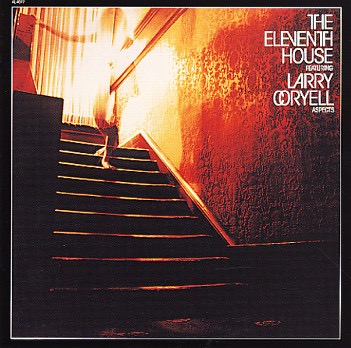
Larry Coryell is one of the guitar gods of the jazz fusion era. His band The Eleventh House is right up there with fusion masters like Weather Report, Return To Forever and Mahavishnu Orchestra. The Eleventh House is on the funkier side of fusion.
This album is a joint venture with the Brecker Brothers. Their horns spice up the album and Randy Brecker is the producer.
I was familiar with The Eleventh House, Coryell and the Brecker Brothers when I pulled this album from the crates of The Electric Fetus. The pedigree caught my eye, but the $1.99 price sealed the deal.
The combo of Coryell’s searing guitar and funky horns is a match made in heaven. The rest of the band is outstanding too. The arrangements are complex, yet accessible.
I have picked up a variety of Coryell, The Eleventh House and other Coryell combos over the years, but none of them has resonated with me. For some reason this LP did resonate with me. Perhaps it is the funky nature of the album or the presence of the horns, but of course it is the guitar. Coryell has a relaxed swagger that is irresistible.
 Bob Lefsetz has said for a while now that contemporary country music is today’s classic rock (or something like that). Eric Church is what we used to call country rock. Church’s music works as well as anything you hear on classic rock radio. If you are a country fan, it works for you too. My wife and I saw him at his recent Minneapolis concert and he delivered all the goods: great songs, country, rock and a true entertainer’s savvy to pull it off in a sold out arena.
I don’t have a lot of experience with contemporary country, but as a general music fan I was impressed. My tastes trend towards alt-country/Americana, yet I am not such a music snob that I can’t recognize good music in genres I am not that familiar with. I first got turned on to Eric Church from his hit “Springsteen” from his album Chief. That song and album told me this guy was the real deal. This past spring our family went to the Grand Ole Opry and Church was the featured act. He did about an hour solo acoustic and it was pretty obvious he was a great songwriter.
There is nothing better than seeing an artist that is at the crest of their wave. Church has been around long enough that he has a catalog of hits and deep cuts to fill out a three-hour show. He has a devoted tribe that can sell out an arena. Even though I am a minor fan, it was a thrill to be part of an arena throng that sing along to their favorite songs.
I really appreciate that despite his status, Church made the tickets affordable (ours were 25 bucks) and he has made it nearly impossible for scalping.
In this day in age, when records are merely advertising for the live show, you better know how to present your goods live. Church had a nice stage, a great band, simple effective lighting and about as good a sound as you can expect in an arena known for its bad sound. Church has a big enough personality to work an arena audience, without it seeming contrived. He has the magic one-two punch: great songs and a genuine passion to perform them.
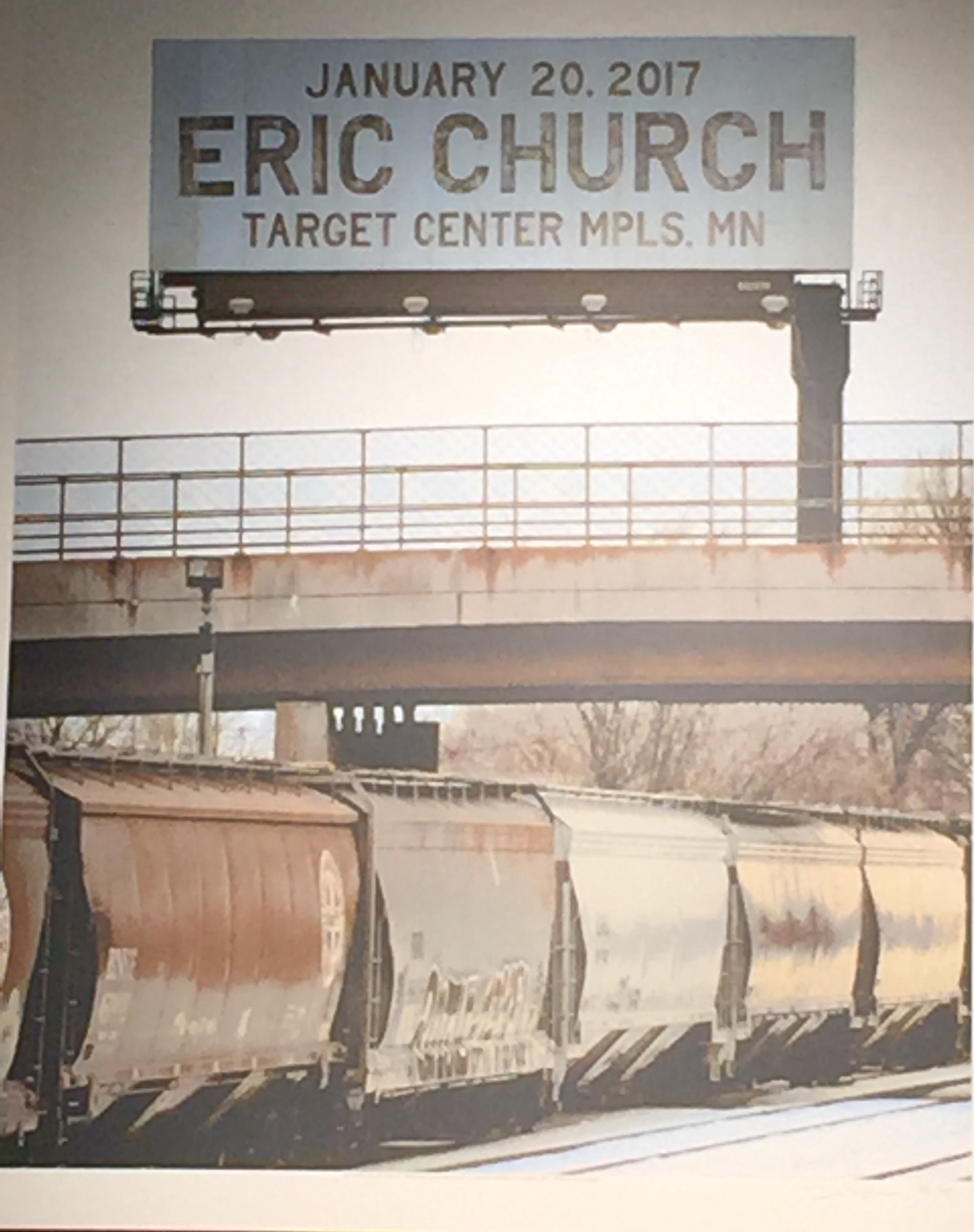
Some bonus points for the show: it was a Friday night, a limited edition poster (above) and it was my wife’s birthday. Thanks for a great birthday present for Laura Mr. Church! I am officially converted.
I compiled the playlist below from Setlist.fm and it appears accurate from my memory.
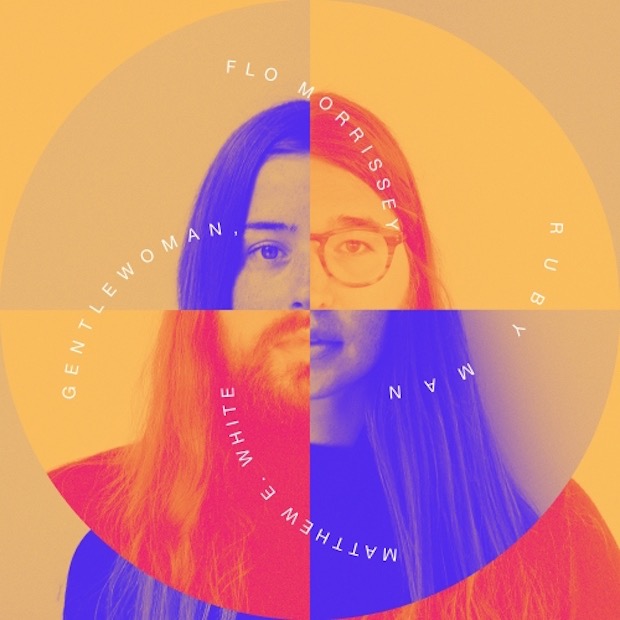
I have been a Matthew E. White fan since his 2012 release Big Inner. White has amazing pop sensibility – he is Lee Hazelwood updated for today’s ears. I was not familiar with Flo Morrissey. This album is all covers – some pretty famous songs and some not so famous.
This album has a great back story. White saw a review of Flo Morrissey’s album in the U.K. newspaper Guardian (it was next to a review of White’s own album). He was intrigued and reached out to her – and the rest is history.
“Look At What The Light Did” – I am not familiar with Little Wings who did the original. Listening to that original (I have added a playlist of all the original songs), I feel like Morrissey and White have given it an upgrade. They took a simple folky arrangement and reinvented it into a full-out pop song. It now has that late 70s Laurel Canyon pop feel.
“Thinking ‘Bout You” is a Frank Ocean cover from his brilliant debut Orange. Morrissey and White’s duet shows how brilliant Ocean is. It takes their two voices to duplicate the original’s brilliance. Having a man and a women sing this song makes it more obvious that this song was meant to be a duet (the Ocean’s original is his normal voice accompanied by his falsetto).
“Looking For You” – Nino Ferrer is another new one for me. Morrissey and White’s cover is pretty straight. This song really stuck in my head and I was compelled to find out who the hell Nino Ferrer is. Turns out he was an Italian-French singer songwriter in the 60s and 70s – a reluctant French pop star on the scale of Serge Gainsbourg. I dialed up the original song “Looking For You” that appeared on: Nino and Radiah. Listening to that album for the first time, I was delighted to discover the album is nothing short of brilliant. If you enjoy White and his peers, for example Father John Misty, you are going to dig Nino and Radiah. I have not explored the rest of Nino’s catalog. I have a feeling there will be a future blog post dedicated to Nino.
“Colour of Anything” is by James Blake. Blake has never resonated with me, but after listening to Morrissey and White, I have new appreciation for Blake’s songwriting and voice.
“Everybody Loves the Sunshine” is by Roy Ayers. Ayers made a name for himself with his funk, soul and jazz compositions (and by being one hell of a vibes player too). Both the original and this cover are funky quiet storms.
“Grease” is the theme song from the movie of the same name. It was written by Barry Gibb (of the Bee Gees) and was originally sung by Frankie Valli. The original has a watered down pop disco feel. The Morrissey/White cover is more funky and soulful than the original. The original was a bit of a kitschy ear worm and the cover is too – but much subtler.
“Suzanne” – White takes the lead vocals and he channels Leonard Cohen (the singer-songwriter of the original). The arrangement mimics the original with Morrissey’s voice substituting for the strings in the original.
“Sunday Morning” – Morrissey takes the lead on the Velvet Underground classic. The original is one of the most conventionally beautiful songs in the VU and Lou Reed catalogs. White and Morrissey muddy it up and give it a punk Beach Boys treatment.
“Heaven Can Wait” – This Charlotte Gainsbourg cover is my favorite song on the album. It has a dark psychedelic feel to it.
“Govindam” is from George Harrison’s Hindu devotional production of The Radha Krsna Temple (a UK branch of the Hare Krishna movement). This is the only cover that does not fully work for me. The original is better. But it is a good ending to the album as the ghost of Harrison haunts Gentlewoman, Ruby Man.
This is the first album of 2017 that I can absolutely guarantee will be on my top ten list for this year. I insist you give Gentlewoman, Ruby Man and the source material a listen.
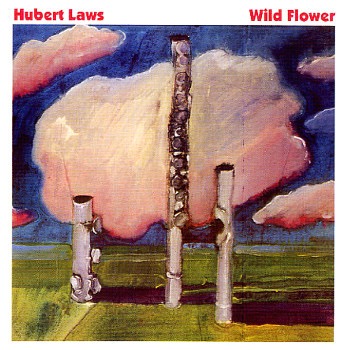
I picked this LP up at the Electric Fetus garage sale last year for 49 cents. I snatched it up, because Hubert Laws is a jazz flutist. I played the flute as a kid and so I am a sucker for a great flutist. Per Wikipedia: “Laws is probably the most recognized and respected jazz flutist.” I have several of his releases and all are good so I figured for a half a buck I can’t go wrong. A bonus: for a cheap used record this one is in remarkable condition.
Five of the six tunes here are highly arranged string pieces. Most of the time strings and jazz are the kiss of death. They typically are syrupy. But this string section is different – it is some how not syrupy. The strings actually sound good and make the album better vs. detracting from the album. It is like the strings are a sympathetic accompanist bordering on a sparring second soloist. The strings create the perfect net for Laws’ high wire act. Laws has the great gift of being able to both shred on the flute and sing sweetly.
The last song on the album is a major detour from the rest of the album. It is a much more conventional jazz combo (featuring Chic Corea and Gary Burton). When I looked at the back cover and saw that line up, I expected this to be a harsh add-on, but instead it is an appropriate cherry on top.
This is the whole point of crate digging: pick something on a whim and be amazed.
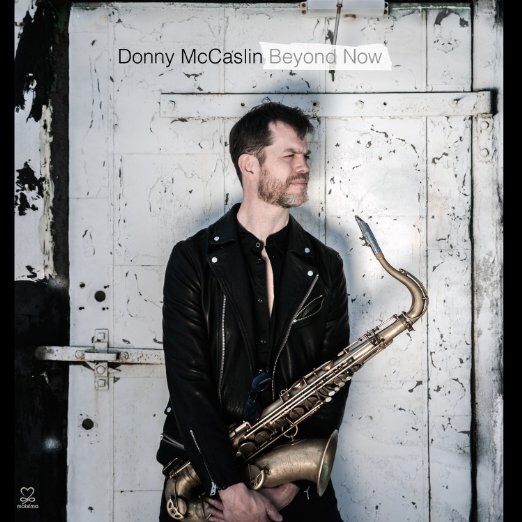
What is jazz? Joni Mitchell’s late 70s albums are jazzy, but her 1979 release Mingus is jazz. David Bowie’s grand farewell, Blackstar, is jazzy. Blackstar bandleader Donny McCaslin’s Beyond Now is jazz.
Beyond Now is deeply haunted by Bowie. It is both a companion to Bowie’s Blackstar and a standalone work.
McCaslin’s band reminds me a lot of Weather Report. It is not derivative or imitative of Weather Report, but it is:
- A sax and keys based combo
- Jazz/rock fusion
- Orchestral (with a only handful of instruments)
- Not confined by boundaries.
At times,it sounds like LCD Sound System (“A Small Plot Of Land” – which is actually a Bowie cover), punk (e.g. FACEPLANT) and ECM fusion (most of the rest).
Per McCaslin’s website the Bowie connection started like this:
The once in a lifetime opportunity to work with David Bowie came after composer Maria Schneider, a longtime collaborator, recommended McCaslin and his group to Bowie. Schneider and Bowie were collaborating on the track “Sue (Or in a Season of Crime),” which featured McCaslin as a soloist. In June 2014, Bowie heeded Schneider’s advice and made a visit to hear McCaslin and company at the 55 Bar in Greenwich Village. Soon after, Bowie began corresponding with McCaslin over email and sending music, forming a new collaboration and friendship that transpired through the recording of Blackstar until Bowie’s passing. The result is Beyond Now, which documents “David Bowie’s Last Band” as they were processing both their grief and Bowie’s distinctive impact.
I have been listening to the album for several days now and it gets better with each listen. If you liked Bowie’s Blackstar you will likely enjoy this. If you are a fan of 70s jazz/rock fusion (with some serious saxophone shredding) and you are open to a contemporary update on that concept – check this out.
So back to the original question, what is jazz? Is it improvisation? Is it clichéd instruments (e.g. horns)? Is it sophisticated blues? Is it black? Is it free or bound by rules? I suggest it is undefinable or as one of my jazz heroes (Pat Metheny) says – jazz is a verb:
I have to admit that more and more lately, the whole idea of jazz as an idiom is one that I’ve completely rejected. I just don’t see it as an idiomatic thing any more…To me, if jazz is anything, it’s a process, and maybe a verb, but it’s not a thing. It’s a form that demands that you bring to it things that are valuable to you, that are personal to you. That, for me, is a pretty serious distinction that doesn’t have anything to do with blues, or swing, or any of these other things that tend to be listed as essentials in order for music to be jazz with a capital J.
Donny McCaslin and band are an action word. I can’t think of a better Bowie tribute than this album.


