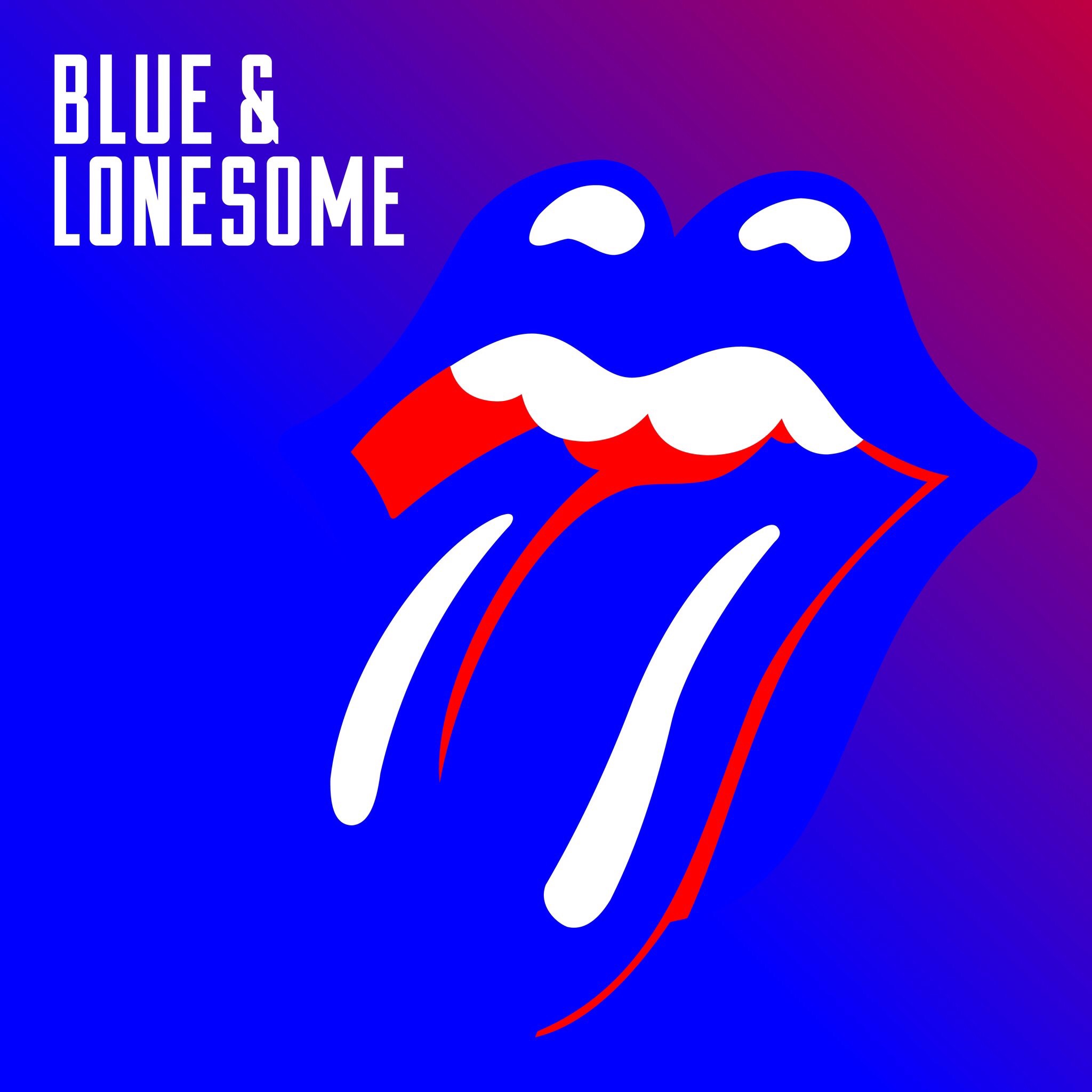
When most rock or pop acts go down the covers-album route, it usually means artistic bankruptcy. But not The Rolling Stones, for them it is delivering us a perfect treat: a raw blues album.
The Stones are fundamentally a blues band. Their take on the blues has been wonderfully inaccurate, but totally authentic. Rather than doing historically accurate blues covers, they have just been themselves: British, punk, boozy, irreverent, but in love with the blues. Being purists was not their thing, being The Rolling Stones is their thing.
The delight of this album is Mick Jagger. How at 73 his voice sounds better than it did when he was 23 is a freak show. I have witnessed a lot of front men over the years and Jagger is hands down the greatest rock front man I have ever witnessed (sorry Prince, Bruce, Paul, Bono, Roger, Robert, Freddie, etc). The key word is “is” – not was, but is.
This album features Jagger’s vocals and harp playing. The rest of the band sounds great, but what is truly special here is Jagger. To quote someone who should know a thing or two about Jagger, Keith Richards: “This is the best record Mick Jagger has ever made. It was just watching the guy enjoying doing what he really can do better than anybody else.” He added “And also, the band ain’t too shabby.” Enough said.
The live in the studio album features 12 covers (the first ever Stones all covers album) of songs originally made famous by Little Walter, Jimmy Reed and Howlin’ Wolf. It was pounded out in just three days. This is a labor of love – no this is not labor, but effortless joy. This is the Stones doing what the Stones do best. For those who wonder where their genius rock recipe came from, here is the basic ingredient: the electric Chicago blues.
The Stones are yet another example of classic rock icons who retain their brilliance 50 plus years into the game. I hate to sound like an old fogey, but the Stones and their peers represent the golden age of rock/pop. If you need proof just listen to this album and keep in mind these senior citizens just tossed it off. Again to quote Richards: “It made itself.” To which Ronnie Woods adds after “a lifetime of research, really.”

The last couple of years I have been listening to a lot of podcasts. Yesterday I got the bright idea to google “jazz podcast” and I found a short interview with Freddie Hubbard from the 90s and I was reminded of my love of Super Blue. I googled some more and found the Jazz Bastard Podcast. I then listened to an episode focused on Freddie Hubbard. That motivated me to pull out one of my favorite jazz albums: Freddie Hubbard’s Super Blue.
First let me say I really liked the Jazz Bastard Podcast. I will be checking out more episodes. The format is simple: a couple of articulate jazz fans select a topic (in this case Hubbard), pull a handful of signature albums related to the topic, play 30 second snippets and then riff on those albums. These guys are knowledgeable, but not pretentious snobs. They say what they know, have strong opinions and are not afraid to reveal their ignorance. They are honest and enthusiastic.
The Jazz Bastard Podcast’s take on Hubbard is that he is a very good player but not a hall of famer. That seems fair.
I am not sure how I came upon Super Blue, but I am pretty sure I picked up the album shortly after it came out in 1978. I loved it at first listen and it was in regular rotation on my turntable for several years. It is a who’s who of great jazz cats: Herbert Laws, Joe Henderson, Ron Carter, Jack DeJohnette, Kenny Baron and on one cut George Benson.
I am not that familiar with Hubbard’s discography, but if you were to take his Blue Note stuff and merge it with his CTI stuff, Super Blue is what you would get (Super Blue is on Columbia). It is slick, but not syrupy. It has some hard bop, but is accessible.
The production values are gorgeous. This is a great sounding record. Hubbard is a virtuosic player, but what prevails is his rich tone. Whether he is milking a ballad (“The Surest Things Can Change”), hard bopping (“Theme For Kareem”) or funking out (“Super Blue”), Hubbard’s tone prevails. His tone is like soft caramel. The sidemen augment, but don’t overpower – this is clearly a Hubbard date.
This is not a 5 star record, but is very good on and it is important to me because it was influential in forming my love of jazz when I was 19 years old. My ears were young and inexperienced when I cut my teeth on Super Blue. Listening to it nearly four decades later it still sounds great. I am sure my appreciation of the CTI catalog was formed by this Columbia release.

Here is an album I missed in 2015. I stumbled across it recently on Neal Casal’s Instagram. Casal is the guitarist in the Chris Robinson Brotherhood. Casal mentioned Circles Around The Sun would be doing a live show. So I googled the band and discovered they released an album late last year.
What a story the band has. In 2015 the remaining members of the Grateful Dead put on a set of mega concerts called Fare Thee Well. Neal Casal was asked by the concert’s video director, Justin Kreutzmann, to compose and record more than five hours of original music to be played along with the visuals Kreutzmann was preparing for the Fare Thee Well intermissions.
Casal pulled together a studio band of keyboardist Adam MacDougall (a fellow member of the Chris Robinson Brotherhood), bassist Dan Horne (Beachwood Sparks and Jonathan Wilson) and drummer Mark Levy (The Congress).
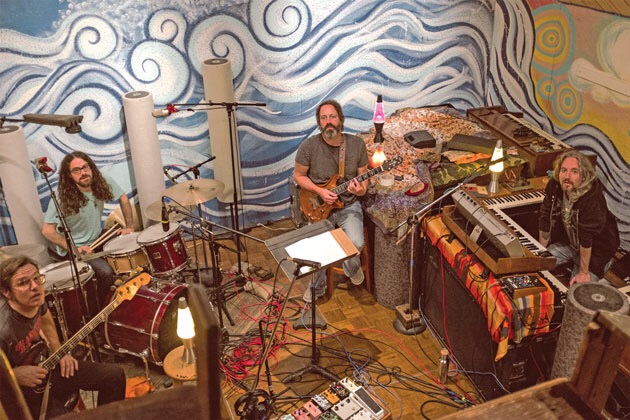
All of the music on Interludes For The Dead was written collectively and spontaneously in the studio by the four players – with nothing prepared beforehand or added afterward – and recorded live by engineer J.P. Hesser. It was two long days in the studio.
I went over to Spotify and gave it listen and instantly fell in love with it. This is more than audio wallpaper – this is not ambient background music. Yes it is extended psychedelic jams, but these feel like songs.
It sounds like The Dead, yet to quote Casal from the liner notes “without feeling contrived or mimicked.” As I listen to these instrumentals I hear The Grateful Dead, Chris Robinson Brotherhood, electric-era Miles Davis, Laurel Canyon rock, psychedelic funk and Pink Floyd to name a few.
This is an album that can be played low as background music or loud as foreground music. If I had found this album in 2015 it would easily made my top 10 list.
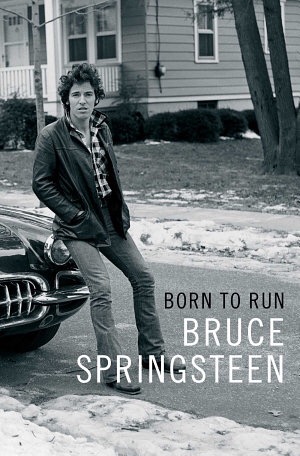
Post Born In The USA Springsteen’s autobiography begins to slog along. He fails at his first marriage, struggles with success, depression, finds peace with his dad, finds his soulmate and never records anything close to the significance of his first seven LPs again. I have diligently purchased every album Bruce has put out since Born In The USA. None of these albums have been stinkers, but none have matched the brilliance of the first seven.
As I finished the book I started re-listen to his post Born In The USA catalog. I started with his most recent, 2014’s High Hopes. I had forgotten Bruce’s “hip hop” album featuring Tom Morello. It is actually pretty good. As I listened I was reminded that this was a pretty cool update of the Springsteen sound. Not an embarrassing update – a proper update. I looked at my original review and I still like it, but perhaps with less enthusiasm:
Whenever a classic rock act like Bruce Springsteen pulls out a late inning masterpiece I am amazed. The titular song summarizes it all – a brilliant merger of classic E Street band jam, Springsteen dirt under the fingernails optimism and Morello’s hip hop rock guitar. It sets the table for a brilliant album. The songs are political, personal, sentimental, anthems, gritty and rocking – classic Bruce – not bad for an aging rock star in his mid 60s – relevance.
Next I moved on to 2007’s Magic because I had such great memories of “Girls In Their Summer Clothes” which is one of Bruce’s sexiest songs. This is another album I forgot how much I liked.
When I listened to Tunnel Of Love I realized that I like every song on the album. And some I really like. When this album came out I listened to it a lot. I forgot how etched it is into my soul.
In 1995 Springsteen had some challenging demons to exorcise: born and raised blue-collar poor, hardened in bar bands, exploited by the star maker machine – he had survived and thrived. He was now a very rich man – a true rock star. And he was feeling pretty damn uncomfortable. From that stress came a pretty amazing piece of art: The Ghost Of Tom Joad – an ode to the common man. And it was a subtle masterpiece.
Ok this retrospective of post Born In The USA LPs is not defending my thesis: after 1984 Springsteen never record anything close to the significance of his first seven LPs. Of course he did. He just went from being a hit maker to cult recording artist who happened to maintain his arena rock brilliance resulting in mega-dollar grossing tours. He became a rock star who was not content to rest on his laurels and he continues to be compelled to create new material.
The book’s narrative from 1985 until now is rarely as compelling as the first half of the book. In the first half, he helps you understand the source of the art. In the second half he does a lot of self-analysis which is interesting to a point. His personal history from 1985 to now is just not that interesting – he is a hugely successful rock star who doesn’t have rock and roll stories. This led me to conclude that his music from this period was not that interesting either. But re-listening to the samples above proved my conclusion wrong – he has continued to create vital material. I wish he had dissected the source of these albums in the autobiography they way he did for the first seven albums in the first half of the book. Oveall the book is pretty must read for a Springsteen fan.

I kept buying R.E.M albums long after I cared about them. Accelerate falls into this period. I probably listened to it 5 times. Eight years have passed and as I listen to it tonight I can’t recall a single song (I have listened to it 3 times tonight – makeing up for lost time).
Today I was listening to Alec Baldwin’s Here’s The Thing and Michael Stipe was on. Stipe mentioned one of the songs he is most proud of is “Supernatural Superserious” from Accelerate. Not surprisingly I had no recollection of the song.
The song reflects on teenage angst and innocence. What seemed so important back then is forgotten. But if you ran into you today you would be touched by the beauty.
This
Inexperience, sweet, delirious.
Supernatural, superserious.
Inexperience, sweet, delirious.
Supernatural, superserious,
Wow.
Wow indeed. What a great song I missed.
The whole album is pretty good in hindsight. This was their 14th studio album and their second to last. It was not one of their masterpieces, but for a band as great as R.E.M. even their end of the day material stands up and exceeds the norm. They had not lost their sense of adventure and most importantly they rocked. This was one great pop band. Accelerate alternates between punk and Jethro Tull like folk rock. But through it all – as always – it unmistakably R.E.M. I wonder how many more gems are lost on my shelves?

It is hard to call yourself an early adopter of Norah Jones given her 2002 debut was a huge success (at least 26 million copies and 8 Grammys – she was the Adele of her time). Everyone was an early adopter.
I like to claim I beat the tsunami of Norah Jones fans by several months. I first discovered her on a 2001 cameo on jazz guitarist Charlie Hunter’s album Songs From The Analog Playground. She covered one of my favorite songs: Roxy Music’s “More Than This.” I had no idea who she was and I was enchanted. I anticipated Come Away With Me not only because of the Hunter cameo, but due to some pre-release hype I had read that suggested that this unknown’s new album would have all the ingredients I love. It lived up to the hype and is one of my all-time favorite albums.
Norah Jones never had the ambition to be “Norah Jones” and so she has been trying to deflect her early success by continuously reinventing herself. This album is billed as Come Away With Me reprised. But from my perspective it is Come Away With Me 2.0: new and improved. Over the years she has become a better singer, a better songwriter and a more adventurous arranger. Most of all she has a confidence and swagger that was missing in her early career.
Day Breaks opens with “Burn” which is straightforward jazz. Jones at the piano, a storied jazz drummer and acoustic bassist ( Brian Blade and John Patitucci), vocals that nod to Billie Holiday, a Frank Shorter sax solo and a pinch of a Hammond B-3. Best of all noir lyrics:
The plot begins with you
And me in dark lit rooms
Your cigarette cuts through
I wear it like perfume
A treat on this album, and on this track in particular, is the work of sax genius Wayne Shorter. I have read that one of Jones motivations with this release was to record a jazz album in order to work with Shorter. Shorter is a great accompanist of women vocalist. My first exposure to Shorter was is work with Joni Mitchell so he is no stranger to adventurous jazzy pop singers.
“Tragedy” is a lethargic soul song – think of a female Ray Charles “on the nod.”
“Flipside” is again soulful, but this time caffeinated. The cut has a more prominent B3 – this time with the great Dr. Lonnie Smith at the controls.
“It’s A Wonderful Time For Love” gives Dianna Krall a run for her money.
“And Then There Was You” is a classic sounding ballad that fits Jones nonchalance perfectly. There are strings to give it an even more retro feel.
Side one ends with a Neil Young cover: “Don’t Be Denied.” So far side one has been Jones originals (with various cowriters). “Don’t Be Denied” is an obscurity in the Young catalog – a song from the out of print rarity Time Fades Away. It is one of Young’s most personal songs recalling his famous father splitting from the family as boy to Neil’s own success in the Buffalo Springfield. A tale that I am sure must resonant with Jones. Jones gives the cover her country-fried jazz approach.
Side two opens with the titular track. “Day Breaks” has more contemporary feel than the rest of the album and would not have been out-of-place on the Danger Mouse produced Little Broken Hearts (2012). It ends with a really cool Wayne Shorter solo.
“Peace” is a gorgeous ballad that again has a Billie Holiday feel. This is a Horace Silver cover.
“Once I Had A Laugh” has a nice languid Nola feel.
“Sleeping Wild” is classic Jones – wistful.
“Carry On” is the lead single from the album. It recalls the feel of her debut, but with greater maturity.
The album concludes with “Fleurette Africaine (African Flower),” a Duke Ellington cover. It is basically an instrumental featuring Jones humming and Wayne Shorter’s sax.
I have every Norah Jones album (and most of her cameos and other projects), but none of them quite enchanted me the way her debut Come Away With Me did unit now. Day Breaks is a masterpiece – pulling together everything she has learned over the last 15 years as a pop star. It is jazz and it is pop. It is challenging, yet easy. It is mature, yet fresh. Jones is often dismissed as creating merely pretty music, jazz-light and worst of all boring (Snorah Jones). Jones is deceptive – there is a great depth to her music that can get disguised by its superficial beauty. Listen carefully to her vocal phrasing, her easy touch on the keyboard, exquisite arrangements, amazing sidemen and you will begin to understand what a “musician’s musician” she really is.


In my youth I got turned on to German beer. A friend of mine figured out that if he confidently walked into a liquor store and bought a six-pack of imported beer he would not get carded. Pretty brilliant and it corrupted my pallet in anticipation of the craft beer craze we now enjoy.
Over the last few years I have imbibed in higher and higher IBU beers. Occasionally distracted by sours and barrel finished stouts. The richer the flavor the better.
But every once in a awhile I am reminded of the virtues of a “regular” beer. Nothing tastes better than a PBR at a nut-to-butt show at First Avenue. The Summit West London Ale I had at the recent Wilco show tasted amazing. And then there are Oktoberfest beers.
Oktoberfest beers are generally Märzen beers (which are Bavarian malty lagers). After all the hops it is a delight to have a malty beer for a change. Malty beers trigger good memories from my youth when I was malt vs. shake guy. That must have some impact on why a malty beer tastes so good to me.
October is almost over and I have tried a few Oktoberfest beers this season. Two stuck out: Spaten and Surly.
This year I picked up a case of Spaten Octoberfest and was reminded of how much I like a good malty German beer. Spaten brewery claims a brewing heritage that goes back to 1397 and claims this is the first Oktoberfest beer first served at the Munich festival in the mid 1860s. Beer experts advocate it is a benchmark for the Ockoberfest style. It has a gorgeous amber-caramel color. Malt flavor dominates with only a slight taste of hops in the aftertaste. It is a great beer for this time of the year. It tastes like fall. My grade is this good beer (my scale is simple: shitty, OK, good, great and the highest grade – crave).
Craft brewers are naturally drawn to try their hand at Oktoberfest style beers. In general I take a pass – why bother when you can easily have the real thing. As a Minnesotan I can’t help but support the king of the local craft beer scene (Surly) and I am always willing to try their seasonal offerings. So when I saw Surly Fest at Costco I could not help but give it a whirl.
This is not a simple Märzen. There is a lot going on here. The Märzen is just a foundation. Surly has made it a bit of a rye. And just enough hops to accent the Märzen and not overwhelm it. My test of a better beer is how does it taste as it warms. A shitty beer will taste worse. A better beer will taste not necessarily better but different in a good way. A great beer has several flavors as it warms each step revealing new delights. You don’t want to drink it warm, you want to drink it while it warms. Fest positively transforms itself as it warms. The grade for fest is that it is a crave beer.
See you next year Oktoberfest.
 I love me some polyvinyl chloride as much as the next guy, for example, I have a twelve-foot by six-foot wall of it.

Kids! Can we call them LPs (short for long player or long play) or records vs. vinyl (or worse yet vinyls). Call me old-fashioned – I hate the term vinyl.
Now I appreciate that records are back and I accept that for some people it is a fetish vs. a media source – that’s cool. I also realize that in a digital world the term “album” has survived and so saying you collect albums is a bit vague. The term record has survived the digital age too – so to say you collect records is a bit vague too. So I can see why people use the term vinyl to distinguish the medium from digital mediums.
LP is a great term. Per Wikipedia, “the LP is an analog sound storage medium, a vinyl record format characterized by a speed of 33 1⁄3 rpm, a 12 or 10 inch (30 or 25 cm) diameter, and use of the microgroove groove specification. Introduced by Columbia in 1948, it was soon adopted as a new standard by the entire record industry. Apart from a few relatively minor refinements and the important later addition of stereophonic sound, it has remained the standard format for vinyl albums.”

I really don’t have a good reason to hate the term vinyl. The HBO series Vinyl sucked so bad that it did not help the term. But I think the real issue is that I am old enough to be crusty about the issue. When I was a young collector all we had were vinyl records and we called them albums, records and LPs and we bought them at record stores. I can’t remember ever using the term vinyl. So maybe I am just being a snob about the term. But patronize me, don’t say vinyl. If this request seems unreasonable keep in mind you would never say let’s listen to some PVC. Oh hell – I am just glad you are listening with a serious ear!


From my perspective Darkness is the first great Springsteen album and reading his autobiography it sounds like he agrees. He found his voice and the E Street Band found its sound. It has the rock fury of The Clash and the lyrical power of Dylan. Bruce had finally figured it all out. In his autobiography he states:
“By 1977, in true American fashion, I’d escaped the shackles of birth, personal history and, finally, place, but something wasn’t right. Rather than exhilaration, I felt unease. I sensed there was a great difference between unfettered personal license and real freedom. Many of the groups that had come before us, many of my heroes, had mistaken one for the other and it’d ended in poor form. I felt personal license was to freedom was masturbation was to sex. It’s not bad, but it’s not the real deal. Such were the circumstances that led the lovers I’d envisioned in “Born to Run,” so determined to head out and away, to turn their car around and head back to town. That’s where the deal was going down, amongst the brethren. I’d begun to ask myself some new questions. I felt accountable to the people I’d grown up alongside of and I need to address that feeling.”
And thus he made Darkness on the Edge of Town (1978). Springsteen was addressing “that feeling:” dead-end jobs, love, bad luck and trying to do the right thing.
“Some guys they just give up living
And start dying little by little, piece by piece,
Some guys come home from work and wash up,
And go racin’ in the street.”
The album is tighter and less busy than what had come before it. It rocks, it has anthems, it seeks to understand and it is joyful, yet it has moments of longing, anger and sadness.
The album has the classic E Street Band: Clarence Clemons (sax), Danny Federici (organ), Roy Brittan (piano), Garry Tallent (bass), Steve Van Zandt (guitar), Max Wienberg (drums) and of course Bruce (vocals, guitar and harmonica). The songs on this album would be in the Springsteen set list for the rest of his career.
This is the Springsteen that would influence a batch of artful rockers: The Hold Steady, Titus Andronicus and Arcade Fire to name a few.
The book continues to reveal how deliberate Springsteen’s art is – there are no accidents – every note, every beat and every word are carefully placed. Even when he gets sloppy, like on The River, it is on purpose. He had a grand plan and he was working it. He was in the star making machine, but he was his own man – he was not about to be the pawn – he was going to be king.
I am about a third of the way through Bruce Springsteen’s autobiography Born To Run. That inspired me to pull out the first Springsteen album I ever bought: 1973’s Greetings From Asbury Park N.J. I am at the part of the book right after he released this album which happened to be his debut.
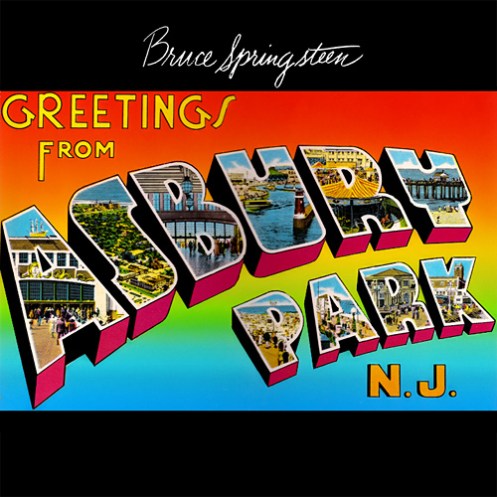
I remember how disappointed I was when I bought this album in the fall of 1978. Darkness On The Edge Of Town had blown up that previous summer. I did not need to buy that – it was all over the radio. I had just seen Bruce live at the St. Paul Civic Center and I had seen the light. So I went out to buy a Springsteen album. I was not going to buy a hit record like Born To Run or Darkness. So I bought his debut because it had the original “Blinded By The Light” and “Spirit In The Night” which had been big hits for Manfred Mann’ Earth Band. Those two songs had been the highlights of the Springsteen live show I had seen.
I brought it home and dropped the needle. Holy Shit! This was not what I had seen live. This was weird singer songwriter stuff – more on the Tom Waits end of the singer songwriter spectrum vs. the James Taylor end. It took me a few years, but I eventually figured out what a masterpiece Greetings is. He would quickly depart from this sound for something more rock. But for a moment in time Springsteen was Elvis Costello (before there was such a thing), a New Jersey Van Morrison and an east coast punk Dylan.
I came to this album after Springsteen was a star. I was excavating. It was fun to skip back in time. You could hear the genius, but you knew (if you were honest with yourself) you wouldn’t have gotten it when he was a nobody. Hats off to anyone (not from Jersey who had seen him live) who got this album when it first came out. I barely got it after he was a star.
The album was ambitious on every front: epic lyrics, eccentric vocals and rich complex arrangements. When I first heard it, I hated it. But as I have stated in another post, when you are 19-year-old college student you don’t blow $5 bucks on an album and not listen to it. I listened to it and after about 100 spins over a few years it finally hooked me. But it was only after I had become more of a Springsteen fan and post Elvis Costello and Graham Parker that this LP really made sense.
It has been about 5 years since I listened to this album. It sounds more punk than I remember. At the same time it sounds more jazzy too. The vocals are amazing. They are not more elementary or primitive – they are more sophisticated than what was to come. The LP doesn’t foreshadow Springsteen’s later greatness. Instead it is something else – a genius trying to find his voice. I have grown to love this phase, but he would never have become a star if he had not edited himself down – both lyrically and vocally. This is some wild shit. Springsteen confesses in his autobiography:
“I never wrote completely in that style again. Once the record was released, I heard the Dylan comparisons, so I steered away from it. But the lyrics and spirit of Greetings came from an unself-conscious place. Your early songs emerge from a moment when you’re writing with no sure prospect of ever being heard. Up until then, it’s been you and your music. That only happens once.
The last. song on the album, “It’s Hard To Be A Saint In The City,” foreshadows the Springsteen that would emerge on Born To Run. But overall this is like a different artist than the one who was to come. It is pretty special to have this artifact of a rock genius.
I have come to love Greetings From Asbury Park N.J – sometimes it takes forty years to figure out the truth.
So far I am really enjoying the autobiography. Springsteen is honest and self-aware. You realize he is no fluke – he had a vision and reached out and grabbed it. One of the most fascinating things is that Springsteen understood that although he was a competent rocker, he need to be a songwriter. He derailed a successful bar band career to double down on his songwriting.
The story is generally linear, but with this wonderfully poetic insights – the best part of the book is that there are passages where his language is lyrical.
Springsteen has released a song anthology as a companion to the book. Check out Chapter and Verse. I hope to be back after the next third of the book and what ever Springsteen LP is inspiring me at that point.

 Axl's Catch Groove