
I first “discovered” Mavis Staples in 1989 with her album Time Waits For No One. Because it was produced by Prince, I had to check it out. The notion that Prince would produce a mature soul/gospel artist was intriguing. It was a good album and it got me digging to find out more about Mavis Staples. I picked up a Staples Singers anthology and that sealed the deal – I became a Mavis Staples fan.
Prince was not the first Minnesota boy who fell under the spell of Mavis Staples – Dylan once proposed to her. In 2010 another member of my rock pantheon was bewitched by Staples: Wilco’s Jeff Tweedy. Tweedy produced Staples’ 2010 comeback You Are Not Alone. It was such a success that it won a Grammy.
Time Waits For No One is the third Tweedy/Staples project. Mavis Staples is the perfect canvas for Jeff Tweedy. Although Staples has an independent voice and point of view, she can fit perfectly into two very different distinctive artistic visions: Prince and Jeff Tweedy. Ironically, given she is ultimately a soul/gospel singer, the Tweedy (an alt country/alt rock guy) collaboration works better than the Prince (who is closer to Staples’ musical DNA) collaboration. In fact the more “Wilco” Tweedy makes Mavis, the more true to herself Mavis sounds. It is a bizarrely symbiotic relationship between Jeff Tweedy and Mavis Staples. But they are both Chicagoans and the Staples Singers had a bit of country in their groove. For example, The Staples Singers’ cover of The Band’s “The Weight” eclipsed the original.
On the first two projects, Tweedy wrote some of the songs and borrowed the rest. For this set, they are all written by Tweedy or co-written by Tweedy and Staples. Although, I loved the first two Tweedy/Staples albums, this one is the best of the three for me. All three projects share some of the same musicians (some of whom are in Staples’ road band), so maybe they are just approaching their 10,000 hours together. The big difference for me is this album has more cohesion – both in sound and in lyrical content. This is Tweedy’s most political set of songs. According to Tweedy:
“I’ve always thought of art as a political statement in and of itself—that it was enough to be on the side of creation and not destruction. But there is something that feels complicit at this moment in time about not facing what is happening in this country head on.”
Tweedy and Staples get so deep into this collaboration, that on their duet “Ain’t No Doubt About It,” you can barely tell their voices apart. They are not impersonating each other, it is synchronicity.
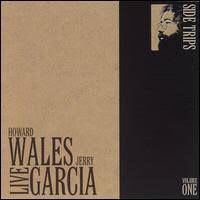
I am not a Grateful Dead fan, but I am not a hater either. I fully respect their legacy. I am a Jerry Garcia fan. He can play rock, country, bluegrass, folk, pop, soul, blues, and on this LP: jazz rock fusion. Over the years I have collected a lot of his solo work. I am especially fond of the jazzier side of Garcia.
Side Trips: Volume One (Live) is some deep soul jazz in a jazz rock setting: drums (Bill Vett), bass (John Kahn), keyboards: B3 organ and Fender Rhodes piano (Howard Wales) and of course, electric guitar (Jerry Garcia). In 1970 Howard Wales invited Garcia to regularly sit in with him for a Monday night jam at a club in San Francisco (the Matrix). Fortunately, some of these jams were recorded (in incredibly high quality as a bonus). This album was originally released on CD in 1998 and was recently re-released as a Black Friday Record Store Day release on vinyl.
All the songs are written by Wales. The first cut, “Free Flight,” is an 18 minute jam that allows all the players to shine, but the focus is on Wales and Garcia. If you didn’t know it you might identify the guitar player as John Scofield. Garcia’s tone and approach to his solos is similar to Sco. I wondered if Sco was influenced by Garcia. I googled the topic and Sco acknowledges Garcia’s greatness, but admits to not really being aware of the Dead in any meaningful way until well into his career – I believe him. I think it is fair to say that all Wales, Garcia and Scofield) are all under the influence of electric Miles Davis. It is amazing to me that a guy like Garcia who was not schooled in jazz could be so comfortable playing in the jazz context. But I should not be surprised, the Dead were improvisers and jazz at its core is improvisation.
“Space Funk” is well named. It is delightfully ponderous navel gazing funk. The song starts out with a long Garcia solo. Wales starts a conversation with Garcia and they volley licks for several minutes until the song fades out leaving you wanting more.
“All For Life” is the longest jam on the album clocking in at nearly 25 minutes. It has a Traffic (the band) mixed with “Bitches Brew” vibe. Garcia and Wales are in a deep dialogue. It is the most polite cutting contest you could ever imagine.
“Venutian Blues” ends the set with a bluesy groove. It has that late night feel, a nice slow jam.
This album is exactly why I love Record Store Day: an obscurity I would never have discovered on my own. This is also why I love Jerry Garcia: adventurous and accessible.
Per jerrygarcia.com:
From 1970 to 1972, Jerry Garcia and keyboardist Howard Wales played together around the bay area and on the east coast. It was usually instrumental—a jazz session with a lot of other influences thrown in. Sometimes they played as a trio, including Bill Vitt on drums, and other times a bassist, such as Richard Favis or John Kahn, would sit in on the session. This collaboration would mark the beginning of Jerry’s twenty-five-year partnership with Kahn. For Jerry, the appeal of this outfit was the ability to play in a more relaxed context than the Dead. Wales was a serious musician, and Jerry had to work hard to keep up with him, which he would say did more for his ear than anyone else he played with.
I recently attended an Audio Society of Minnesota meeting where the featured presenter was writer Josiah Titus, a contributor to Dust & Grooves. Titus gave a fascinating presentation on his experiences meeting obsessed record collectors as part of his participation with the Dust & Grooves project. This got me thinking: am I a record collector?
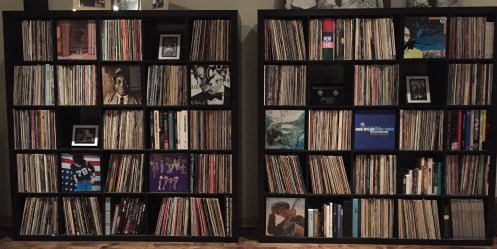 I have a lot of vinyl LPs (see the 12’x6′ Wall above), CDs (see the 12’x5′ wall below) and some 45s. I obsess about acquiring particular albums. I recently had to purge a bunch of CDs my adult children left behind and it was traumatic for me and would not have happened without the encouragement of my wife. But I got through it. It felt good in the end – kind of like when a scab finally falls off.
 I have a nice stereo, but I don’t think of myself as an audiophile. Similarly, despite having more LPs and CDs than the average person, I don’t see myself as a record collector either. I see myself as a guy who has a higher than average passion for music. A bit of a music-head, but not nearly as music nerdy as others I have met.
I don’t see my albums as having value beyond the pleasure they give me from listening to them. That is, they are not collectibles. I like being around them in my listening space, but I don’t think I fetishize my albums. They just provide warmth.
So here are some facts on the matter:
- I have about 4,000 LPs, 3,000 CDs and 200 45s.
- When the CD era arrived I pretty much stopped buying vinyl LPs, but I never got rid of vinyl LPs (most people did).
- When I see one of my favorite albums in good shape for a good price I will pick it up as a spare.
- My records are filed in alphabetical order, but I usually have about 200 un-filed because they are “in rotation.”
- I get up early and wait in line for several hours on Record Store Day.
- I love record stores and could easily spend a couple of hours digging in a small shop.
- I named my blog after the infinite loop in the lead-out at the end of the record.
Despite those facts, I have never bought an album on Discogs. I don’t think I have ever paid more than $20 for a used record – it is rare I spend more than $5. In reality I listen to most music via Spotify on my iPhone through ear buds – but if I have the time I like to listen to LPs on the big boy stereo.
To the casual observer, I am a record collector. In the obsessive world of record collecting, I am just a guy with a bunch of records – a piker. I like good music and I like listening with a bit of ritual attached to it. Although I do not see myself as a record collector, on the record collector scale of 1 to 10, I am clearly higher than a 5.
PS – As part of my final edit of this post, I figured I should fact check my LP and CD counts. My original count was a pure guess. For the fact check I did not count every LP and CD, instead I counted two sample shelves from each of my storage units (there are about 80 LPs per cube of my IKEA Expedit and about 55 CDs per shelf of my Boltz rack). The result is I originally underestimated my LP count by 50% and CD count by 40% (the counts above are now solid estimates). I am starting to reconsider discounting myself as a collector.

I first got turned on to Bob Dylan in the fall of 1977 when I entered college. My dorm neighbor Paul, who was a few years older than me, took me under his wing. One of the several things he turned me on to that fall was Dylan. I recall Highway 61 Revisited, Desire, Greatest Hits Vol. 2 and Pat Garrett from his collection.
The summer after freshman year (1978) I bought my first Dylan album, a new release, Street Legal. I was disappointed in Street Legal compared to what I had previously heard and enjoyed from Dylan. Over the years, I have come to fully appreciate Street Legal, but at the time I did not understand it. At the time, I continued to mine Dylan’s back catalog vs. listening to Street Legal.
The next summer (1979), Slow Train Coming was released. I was experiencing a classic Dylan pivot in real-time and I was in the perfect place to fully appreciate it. I loved that album and it’s follow ups Saved and Shot Of Love. All three were Christian albums – quit a shock to most of Dylan’s audience. I found a passion in those albums that seemed to be lacking in Street Legal. I had just dropped out of a Catholic seminary, so I did not find it offensive that Dylan was embracing Christianity. At the time I was trying to find my way in faith and spirituality and admired (and was a bit jealous of) Dylan’s fresh certainty in Jesus.
I remember at the time, that even though the rock intelligentsia was annoyed that Dylan was a born again Christian, they could not deny the brilliance of his live performances of the new Christian material. Dylan had a crack band and a small female gospel choir. He had developed a uniquely Dylanesque take on gospel music. I never got a chance to witness Dylan’s Christian phase live and I have been pining for the Bootleg series to present it.
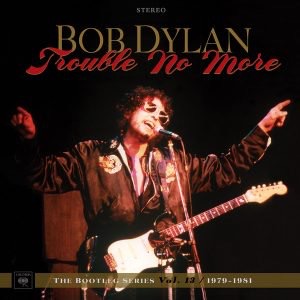
Trouble No More takes a deep dive over eight CDs and one DVD of the Christian era. Six CDs of live material and two of unreleased and rare material. As much as I have loved Slow Train Coming, Saved and Shot of Love, it is otherworldly to hear that material live. And like most eras of Dylan’s career, he left amazing material off the albums. Bootleg Vol. 13 is a treasure chest of previously hidden gold (unreleased songs and live cuts) from his Christian period.
One of the all time greatest linear note essays is on Vol. 13. Proud atheist and Dylan fanatic, Penn Jillette (of Penn and Teller fame), comes to terms with how great Dylan’s Christian period was (Jillette admits he was a hater of the Christian trilogy when it was released back in the day). Jillette is candid, confessional, insightful and most of all entertaining in his essay. Here is a taste:
I am the fool who still says in his heart there is no God, but Dylan’s gospel is stronger than my lack of faith.
One of the joys of this release are the many variations of the key songs from the Christian era and how those songs morphed and evolved over a three-year period.
The principal pleasure of this album is Dylan’s singing. It is passionate, fierce and soulful. He was clearly inspired. The band, backup singers and arrangements rival the best of Dylan’s career. Dylan has always had great bands, but this one is extra special. By the end of the era he was mixing his hits into the set list. Although it is great to hear these songs with this version of Dylan and his band, he is not nearly as passionate performing them as he is the Christian material. You realize how into this new music he was when you hear the old songs next to the new songs.
Many have been bewildered by Dylan’s born again Christian era, but the lesson of Trouble No More is don’t try to understand, just enjoy its devotional beauty. It is a leap of faith that will reward.
The full deluxe release is not on Spotify, only a 15 song appetizer. The regular edition is a mere two CDs (but 10% of the cost of the deluxe edition). Sorry you will need to layout $150 to get the full super sized meal (or wait a few years – the full Bootleg editions will eventually show up on Spotify). If you can’t afford the financial commitment, listen to Slow Train Coming, Saved, Shot of Love and the Trouble No More sampler (all linked below) for a rich dive into Dylan’s Christian era. The deluxe edition has some nice packaging in the form of a mini coffee table book and excellent essays and song-by-song commentary.
Dylan has amazed and baffled his audience for nearly 60 years. I remember well how poorly the rock world reacted to this material. I was ignorant enough and square enough to not know any better and I fully embraced it. It is a thrill to have eight CDs worth of material from this era to bathe in. It has been a slow train for this music to finally get its props.
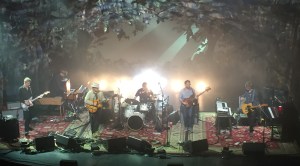
The Palace is a new venue in the Twin Cities. It is the perfect size for a lot of cult bands. It has a wonderful shabby chic aesthetic and great sight lines. Unfortunately I have been disappointed with the sound – too muddy. Disappointed enough that I was committed to never seeing another show there again. Then I got a major temptation when Wilco announced a two night stand at The Palace – I resisted and they sold out immediately. A few days later they announced a third show on a Friday night. FOMO overwhelmed me and I bit. Thank goodness I did as this was a great show – one of the best Wilco shows I have witnessed (I have seen them 5 or 6 times).

First let’s get the sound issue out of the way. It sounded better than Ryan Adams and Beck shows I saw earlier this year. Those shows I experienced on the floor. I suspected that the balcony might sound better given the house PA looks biased toward the balcony. My Wilco ticket was in the balcony and sure enough it was better. That being said it is not great – just acceptable. It is good enough for me to rescind my ban on the Palace. But I will definitely be aiming for balcony seats for future shows.
Now on to Wilco – the boys sounded great: passionate, loose and rocking. This was the last night of a three night stand, the last night of the tour and the eve of a planned year-long hiatus. So there was a special vibe. They had a diverse set list (see below) dipping into their full career (including Uncle Tupelo).
Guitarist Nils Cline was absolutely on fire. Every solo was something to behold and ranged from conventional to outright weird. Plus he is fun to watch – lots of odd contortions. The whole band walked the razor’s edge between total rehearsed professionalism and loose garage rock buddies. Most of all there was a joy in their playing – and that was the key word -they were playing. Jeff Tweedy was in great voice and charming in his stage banter. He seems to get the special bond his band has with its audience. He acknowledges without pandering.
Visually they had a stage set that made it look like they were playing in some kind of spooky psychedelic woods. The lighting was dramatic and contributed to the overall effect of the show: delightfully weird.
There were so many highlights and the show gained momentum with each song. As I assembled the set list in a Spotify playlist below (thanks setlist.fm), I recalled how much I liked the performance of each song. I came so close to not seeing Wilco on this tour due to my dislike of The Palace. Thank goodness my FOMO won out. Wilco you reminded me why you are one of my favorite bands.
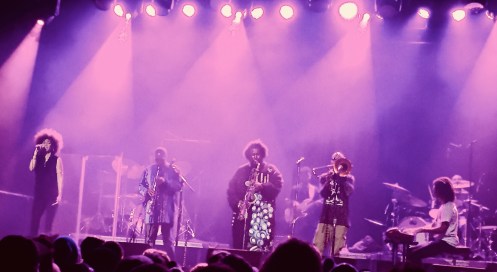
Two years ago, I saw Kamasi Washington at the Icehouse in Minneapolis. It was an intimate space for an epic artist like Kamasi. First Avenue is a better fit. Kamasi has grown in confidence and skill as a performer and as an entertainer since I saw him last. He has charming stage banter and visibly enjoys his sidemen.
As much as I enjoy the super sized arrangements of Kamasi’s recordings, it is an equal thrill to hear him in a more stripped down and rawer context. Of course, a small combo for Kamasi is two drummers, bass, keyboards, trombone, a female vocalist and his dad on flute and soprano sax.
First Avenue is a rock club and the crowd reacted to Kamasi and band like they were a rock act. Although Kamasi’s brand of jazz is very accessible, he doesn’t play down to the crowd – this is straight ahead jazz. Imagine if Coltrane had been on the CTI record label. Adapting to his surroundings, Kamasi played loud and aggressive.
Kamasi has a great band and he gave each of the soloists plenty of room. Trombonist Ryan Porter is especially gifted, he has great tone and adventurous solos.
Kamasi’s genius for me is as a composer, he writes great jazz melodies. He also is a great arranger, both on recordings, where he has more resources, and live. A great example was the opening number, “Change of the Guard.” On the record (The Epic) it is an elaborate arrangement and live he just focused on the great melody.
Other highlights for me were “Henrietta Our Hero” and “Truth.” “Henrietta” featured vocalist Patrice Quinn. My only disappointment in the show was that Quinn’s role was diminished from the Icehouse show. She is a great jazz vocalist with a vintage style. Her backup singing got lost in the maelstrom of this show. “Truth” allowed the featured soloists to weave independent melodies into an inspired ensemble performance. A musical lecture on the beauty of diversity.
Washington is a great player, band leader, composer and arranger. He is crossing over to the rock and hip hop audience without diluting the jazz. He is an exciting and entertaining performer. He is a worthy face of jazz’s future.
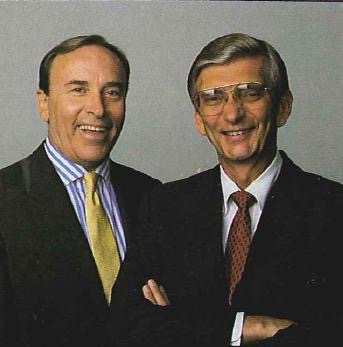
Charlie Boone and Roger Erickson
I was sad to hear of the passing of WCCO radio legend Roger Erickson. When I was a kid, half the state of Minnesota listened to WCCO radio and Roger Erickson was one of its biggest stars.
In the summer when I was a kid, I used to listen to the mid morning Boone and Erickson radio show. I loved their corny jokes and G rated humor. I would call in to their show and tell a joke. They must of thought it was a cute gimmick because they encouraged me to be a regular contributor.
One day they invited me to visit the studio and sit in on the show. I took them up on their offer. I took the city bus to downtown Minneapolis to visited the show. Boone and Erickson could not have been nicer.
That summer, I continued to listen to Boone and Erickson and pretended I was a radio announcer like them on my little reel to reel tape recorder (sadly their is no evidence of this). Eventually, I grew out of of this stage and Boone and Erickson were no longer cool to me.
Today I remember their kindness and I am saddened they are both gone (Boone passed a couple of years ago). I remember Roger Erickson as a consummate radio professional, but also a clown. My greatest memory will be the kindness he showed to to me, an anonymous latchkey kid, by taking my jokes seriously.

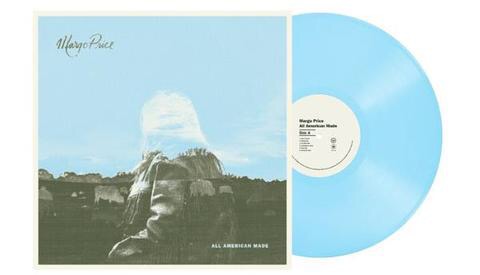
Margo Price’s Midwest Farmer’s Daughter was one of the most exciting debuts in recent years and one of my favorite albums of 2016. We (my wife and daughter) saw her live at First Avenue this year and she is a great live performer too. I first fell for alt-country chanteuses in the late 70s when I discovered Emmylou Harris. Sadly, to hear real country you have to chase after alt-country artists like Margo Price.
This is no sophomore slump. Midwest Farmer’s Daughter was not the work of a rookie – Price was a mature talent in her early thirties with plenty of life and musical experience when she recorded it. So it is not surprising she has released a solid follow up.
This past summer Price released Weakness, a four song EP, and it was excellent. It was configured as a couple of seven inch 45s. I was a bit worried it was going to take a bite out of her eventual full LP, but only the titular cut is on All American Made.
The LP kicks off with “Don’t Say It,” a stinging honky tonk country rock song. Margo tosses off one liners, but the message is clear: don’t mess with this lady.
“Weakness” is a reprise from the Weakness EP. It is a classic country confessional with the key confession being: “sometimes my weakness is stronger than me.”
“A Little Pain” is a good antidote to feeling sorry for yourself when you don’t have real problems: “a little pain never hurt anyone.”
I can’t imagine what a thrill it must have been for Margo to record a duet with the legendary Willie Nelson. “Learning To Lose” features Willie. On this song Margo goes Nashville – not contemporary Nashville, but vintage countrypolitan. I usually don’t like strings, but here they work perfectly. In the midst of it all Willie whips out a nice little guitar solo on Trigger. There are some pretty good lines here including:
“And the only devil I’ve seen is in the mirror
And the only enemy I know is my mind”
“Is winning really learning to lose”
On “Pay Gap” Margo is a feminist – Tammy Wynette style:
“Pay gap, pay gap
Don’t give me that feminist crap
Pay gap, pay gap
They’re ripping my dollars in half”
“Nowhere Fast” is about the treadmill you can’t get off:
“Living in the present trying to forget the past
Yeah, I’m going nowhere fast”
“Cocaine Cowboys” sounds like a rewrite of “Paper Cowboys” from the Weakness EP. “Paper Cowboys” called out a phony and so does “Cocaine Cowboys.” It also has one of my favorite rhymes on the LP: saddle and Seattle.
“Cocaine cowboys, they’re bad in the saddle
But they’re coming from New York, LA and Seattle”
“Wild Women” makes the simple observation that “Wild women don’t worry.” But also the more profound observation: “Looking for an answer but a question is what I need.”
“Heart Of America” is a farmer’s daughter’s lament. Margo still feels the sting of the 80s farm crisis:
“And you can pray to anybody’s Jesus and be a hardworkin’ man
But at the end of the day, if the rain it don’t rain
We just do what we can”
“Do Right By Me” has a gospel feel thanks to the soulful refrain by The McCrary Sisters, who sound like the Staples Singers.
“Loner” is the only song on the LP that is not penned by Margo, but it is penned by her husband Jeremy Ivey. The song asks what is wrong with being a loner? It takes no prisoners with the line:
“You can take your pick, you either came from an ape
Or the dad of a magic man up on a cross”
“All American Made” ends the album on an acoustic Neil Young groove. Margo ponders the politics of our time without getting preachy. Over samples of presidential speeches, Margo wonders about both the goods and the bads that are American made.
With this album Margo Price proves she is the real deal. So many sophomore albums are duds, but she has delivered a worthy rival to her debut. She is as pure country as you can get. As I said in my review of her debut: “With a voice somewhere between Emmylou and Dolly and with the pen of Loretta Lynn, Margo Price storms out of a Memphis studio in a Nashville state of mind.” She continues to work outside the country machine: recording at Sun Records studio in Nashville, releasing on Jack White’s Third Man Records and singing and playing in a vintage county style. Margo Price will be in my “best of” again this year.

One of my top-five concerts of all time was The Replacements 2014 reunion show at Midway Stadium in St. Paul Minnesota. I was shocked at how good they could play, given my memory of their 1987 show at the Orpheum in Minneapolis where they were remarkably awful. The highlight of the 87 show was Westerberg falling off the stage. Their legend was that live they were sublime or they sucked. I have always kicked myself for not catching one of those sublime shows from the glory years. Finally, there is a document of the original lineup’s greatness with this recording of a 1986 show.

Poster from 2014 reunion show
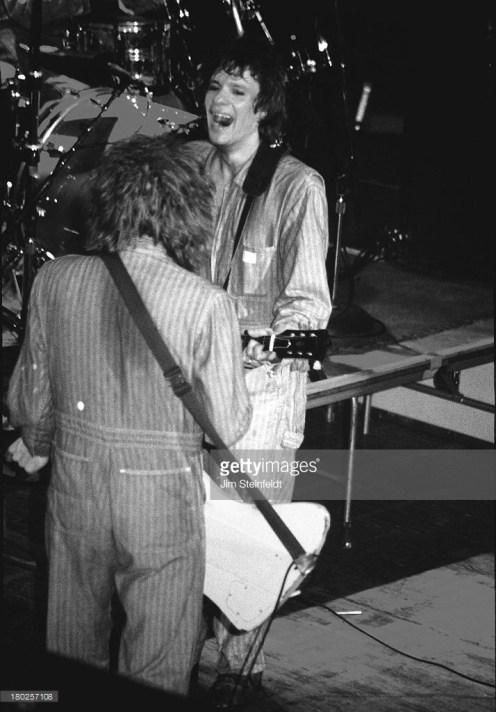
One of my vivid memories of the 1987 show was that the boys wore overalls and the Orpheum stage was stripped bare.
In 1986, the band was at their critical and commercial height. They had signed to Sire, released the critically acclaimed album Tim and performed a career defining middle finger salute on Saturday Night Live (which resulted in them being banned from the show). Sire’s plan was to use this recording as a promotion tool given the boys refusal to play the MTV video game. When guitarist Bob Stinson was kicked out of the band shortly after the show, Sire shelved this recording and it has been sitting gathering dust for 30 years.
This is a quality live recording and remarkably the boys are on good behavior and not subverting the Sire investment in a legitimate live recording. It is a nice snapshot of their catalog at that point in their career. The guitar interplay between Westerberg and Stinson is delightful. It could be argued that this was the end of The Replacements because subsequent albums became more and more Westerberg solo albums. So if you never got a chance to see them live, or if you did and you want a great souvenir, this album is highly recommend.

I have not given The Waterboys a thought or a listen in a long time. I recently went to see U2 at US Bank Stadum in Minneapolis. Sadly one of the highlights of that show was the last song played before the lads came on: The Waterboys’ “The Whole Of The Moon.” I made a note to myself to pull out This Is The Sea and give it a spin.
A couple days later I was at Mill City Sound record store when I saw the double (and deluxe triple) LP Out Of All This Blue by The Waterboys as a new release. I did not even think The Waterboys/Mike Scott was still a going concern.
I was intrigued, but not willing to commit. So a day later I dialed it up on Spotify and gave it a listen. It is good and best of all a bit funky.
I loved This Is The Sea and Fisherman’s Blues (and the first two The Waterboys alum Karl Wallinger’s World Party albums from roughly the same period). But I lost interest and have not followed the band since then. But it sure was interesting that Mike Scott had a super-sized release like this late career.
The album has the grandeur of Springsteen, the Celtic soul of Van Morrison, the pop sensibility of Belle and Sebastian and the folky humor of John Prine.
There is not a bad cut on the album, but there a few songs that really stick out as gems:
- “New York I Love You” a Springsteen-ish rap
- “The Connemara Fox” a Dylanesque rocker that has special relevance because Connemara references the region of Ireland that my dad grew up
- “Nashville, Tennessee” a twangy rocker with a couple catchy phrases like “I’m one part psychedelic gypsy, and three parts blue-eyed refugee” and “My soul is in Memphis, but my ass is in Nashville, Tennessee.”
This album is a delightful surprise and will have me backtracking through The Waterboys’ catalog of the last 25 years to see what else I might have missed.
The album has a delightful tossed off almost demo feel. Normally I would find that half baked, but here I find it pleasant, unpretentious and most of all fun.
Lyrically there are lots of love songs balanced by songs of adventure. The backstory of the album is that Mike Scott fell in love and married a Japanese artist. Their romance and The Waterboys touring the world is the influence for this batch of songs.
Musically it is a nice mix of The Waterboys diverse styles they have toyed with over the years: “big music” (think mid 80s rock like U2), Celtic soul, folk rock, country, mainstream rock and new to me, a bit of a funk and hip hop influence.
My initial listens were via Spotify and some of the songs had a lo fi feel. After about 20 listens I am finally listening to the vinyl version. What a a revelation that is. The songs that had a lo fi feel open up into a much richer sound. What once had a demo feel now has a hip hop aesthetic. The sound is deep and textured. It is not at all pandering to contemporary taste, but rather an artful fusion of rock and hip hop.
It is delightful to know an old rocker still has some swagger.

 Axl's Catch Groove