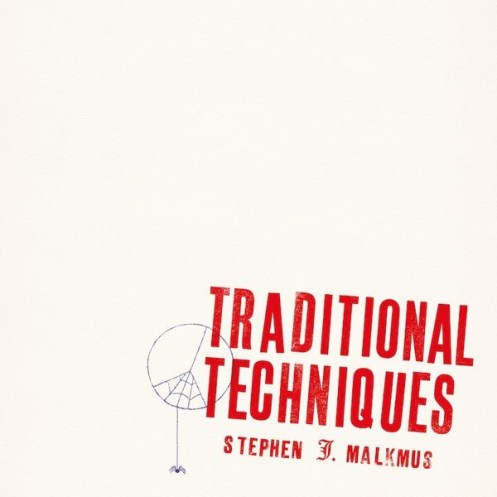
I am a bigger fan of Stephen Malkmus’ solo work than his work in Pavement. This latest solo effort is top-notch. Per the LP sticker:
…Malkmus shines a light on his guitar playing with a set of folky jams.
All Malkmus albums shine a light on his guitar playing, but I get what they are saying. With these sparse semi-acoustic arrangements Malkmus’ guitar really pops.
I am burying the lead: This album is as good as anything Malkmus has done over his career. It is a new mellow. It is a new sound – Malkmus as folky. Don’t be deceived by how laid back this is, it is raging. The arrangements are deep and psychedelic, Malkmus spices the arrangements with world music. There are some stinging guitar solos, the lyrics are wild-ass. I have no idea what the words are about, but they sure are interesting. He is super mellow in his vocal delivery, but there is so much going on. There is more nuance to his vocals then I have heard before.
The Pitchfork reviewer (Evan Rytlewski) gets it right:
The most surprising thing about the album isn’t how far Malkmus has strayed from his comfort zone. It’s how at home he sounds there.
Per Malkmus’ label (Matador):
Traditional Techniques is new phase folk music for new phase folks, with Malkmus as attuned as ever to the rhythms of the ever-evolving lingual slipstream. Instead of roses, briars, and long black veils, prepare for owns, cracked emojis, and shadowbans. Centered around the songwriter’s 12-string acoustic guitar, and informed by a half-century of folk-rock reference points, Traditional Techniques is the product of Malkmus and engineer / arranger Chris Funk (The Decemberists). Playing guitar is friend-to-all-heads Matt Sweeney (Bonnie “Prince” Billy, Chavez, too many others to count), who’d previously crossed paths with Malkmus on the opposite end of the longhairs’ map of the world, most lately gnarling out together back east in the jam conglomerate Endless Boogie.
This album sounds like Lou Reed made a Father John Misty album. This LP hits me in a sweet spot, this may end up being my favorite Malkmus album.

The main reason I write this blog is to review albums to help me appreciate the music I like even more. Trying to figure out why I like something deepens my understanding of that thing. A bonus is when someone trusts my opinion enough to actually listen to something they might not have otherwise tried.
I started writing this blog in the fall of 2011 and I can’t think of a post that was a “bad review.” My theory has been that I don’t want to waste my energy on something I don’t like or shine a light on something I don’t think is worthy of attention. But I think I need to reconsider that.

I was recently listening to an episode of the New York Times Popcast (check out the pod at about the 42-minute mark) and was hooked by a conversation between NYT’s pop critics Jon Pareles (JP) and Jon Caramanica (JC). They were answering a listener’s request for advice on how to be a pop critic and they shared some great insights:
- There is a difference between an enthusiast and a critic. An enthusiast, per JP, is someone who jumps up and down and points at something they care about. A critic is not just pointing out what they like, they are, per JC, trying to tell the story of the artist/album/record/performance. They are trying to give it context (that is, where does it fit in the broader context of pop music), trying to figure out if it hits you on a primal level or an intellectual level, wondering how people will respond to it. Determining what kind of audience is the music trying to attract.
- A critic can really dislike something but can understand it in a broader context. If you want to learn to be a critic, you need to write about something you hate. Figure out why it works for some, but not you. Who it is speaking to, why you think it is pernicious or lame, why it seems cliched or last year’s trick (JP).
In light of that conversation and my desire to be more than a mere enthusiast, I present to you my first bad review.
It took me a while to think of an album to give a bad review. I wanted it to be something current and something that had some cultural relevance. I heard all the hype about Tame Impala’s 2015 album Currents and tried several times to catch the wave. It had the right label to catch my attention: neo-psychedelic pop. But it failed to catch my interest. It was clearly catnip for critics, but I was not the right animal. So I thought I would try again with The Slow Rush. I gave it a listen and Bingo!
My short review is The Slow Rush is vapid. I will try to elaborate.
The music is not offensive or annoying, it is just not engaging. It shimmers and it sparkles. It reminds me of a generic teen exploitation movie: B actors are slow dancing under a disco ball at a high school dance – a tired image. If you were flipping channels you wouldn’t stop for this movie, you would keep flipping. I was listening to the album in the car and I was not sure if a song was on repeat or not – the album is monotonous drivel.
I don’t hate it, it just doesn’t leave an impression. I listened to it at least five times and I can’t recall a single song. If you played me a cut I am not sure I would even find it familiar, let alone identify the band.
Just out of curiosity I went over to Pitchfork to see what they think. They gave it a great score – an 8.0. WTF? What am I missing? So I read Jillian Mapes’ review and there was nothing she said that made me question my opinion. In fact, she validated my thoughts:
“The repetition of phrases pairs well with the dubby, trance-like aspects of the music. Think of it as psychedelia for people with meditation apps and vape pens: Instead of opening your mind, you’re just trying to silence it.”
I guess I am looking for music to excite my mind, not tame it. I like art on my walls, not wallpaper. The best I can say about Tame Impala is that it’s neutral musical wallpaper.
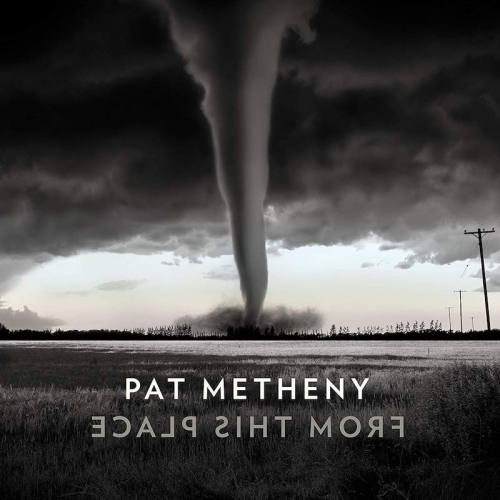
I can’t listen to this new Pat Metheny album without thinking of Metheny’s long time collaborator Lyle Mays who recently passed away. From This Place is a guitar, piano and orchestra album. These last two features were the kind of contributions Lyle Mays typically made as keyboardist, composer and arranger in the Pat Metheny Group. Although this album’s creation predates Mays’ passing, I choose to savor it in Mays’ memory. Fortunately for us and in remembrance of Mays, From This Place is an extraordinary album.
The core musicians on the album besides Metheny, are long time Metheny drummer Antonio Sanchez, bassist Linda May Han Oh, and pianist Gwilym Simcock. In addition, there is the Hollywood Studio Symphony conducted by Joel McNeely.
The addition of an orchestra is not an insignificant sweetener, it is core to the songs on From This Place. Adding an orchestra in jazz is dicey. In the wrong hands, it can distract or come across as a hackneyed attempt to make the music easier to digest. But in the right hands, it is an organic and essential component. With Metheny, the orchestra is in the right hands. This is not a surprise given Metheny’s experience with synthesizers and his Orchestrion projects. Metheny’s work has always been highly orchestrated, this album just uses a conventional symphony orchestra instead of automated constructs.
Metheny is from the American Midwest and over his career he has created many sonic love letters to the land he loves. But as we all know, there is trouble in paradise. Metheny signals his concern right off the bat with the album cover: our beautiful land is being attacked by a native predator: a twister.
The opening track is not subtle in title or content. “America Undefined” is the sonic equivalent of the album cover art. It starts out gentle and quiet, evolves into a complex beauty and ends violently. It is a fascinating instrumental editorial.
The content of the titular track is best expressed in Metheny’s own words from his website:
“On November 8, 2016, our country shamefully revealed a side of itself to the world that had mostly been hidden from view in its recent history. I wrote the piece From This Place in the early morning hours the next day as the results of the election became sadly evident.”
The song (it is more of a hymn) feature words by Alison Riley and vocals from her partner Meshell Ndegeocello. Per Metheny the words:
“…captured exactly the feeling of that tragic moment while reaffirming the hope of better days ahead.”
Although the album has a political context, I don’t think that over time it will be dated. Again Metheny’s words:
“Music continually reveals itself to be ultimately and somewhat oddly impervious to the ups and downs of the transient details that may even have played a part in its birth. Music retains its nature and spirit even as the culture that forms it fades away, much like the dirt that creates the pressure around a diamond is long forgotten as the diamond shines on.
I hope this record might stand as a testament to my ongoing aspiration to honor those values.”
Metheny is his usual phenomenal self. Sanchez and Han Oh are tasteful accompanists. I have not heard Simcock before and he is a star. He is a perfect foil to Metheny. In addition, Gregoire Maret (harmonica), and Luis Conte (percussion) make essential guest appearances.
Metheny’s work is always complex. At first taste, it is always delicious and easy to enjoy. But if you dig in, there is a richness and sophistication that rewards your effort. I am in the first taste stage of From This Place and I am confident that it is going to be a rewarding rabbit hole over the next several months. Metheny has never made a bad album, but this one stands out as a special masterpiece in his catalog. I may be forced to write a follow-up review after I have fully digested this album in a few months.
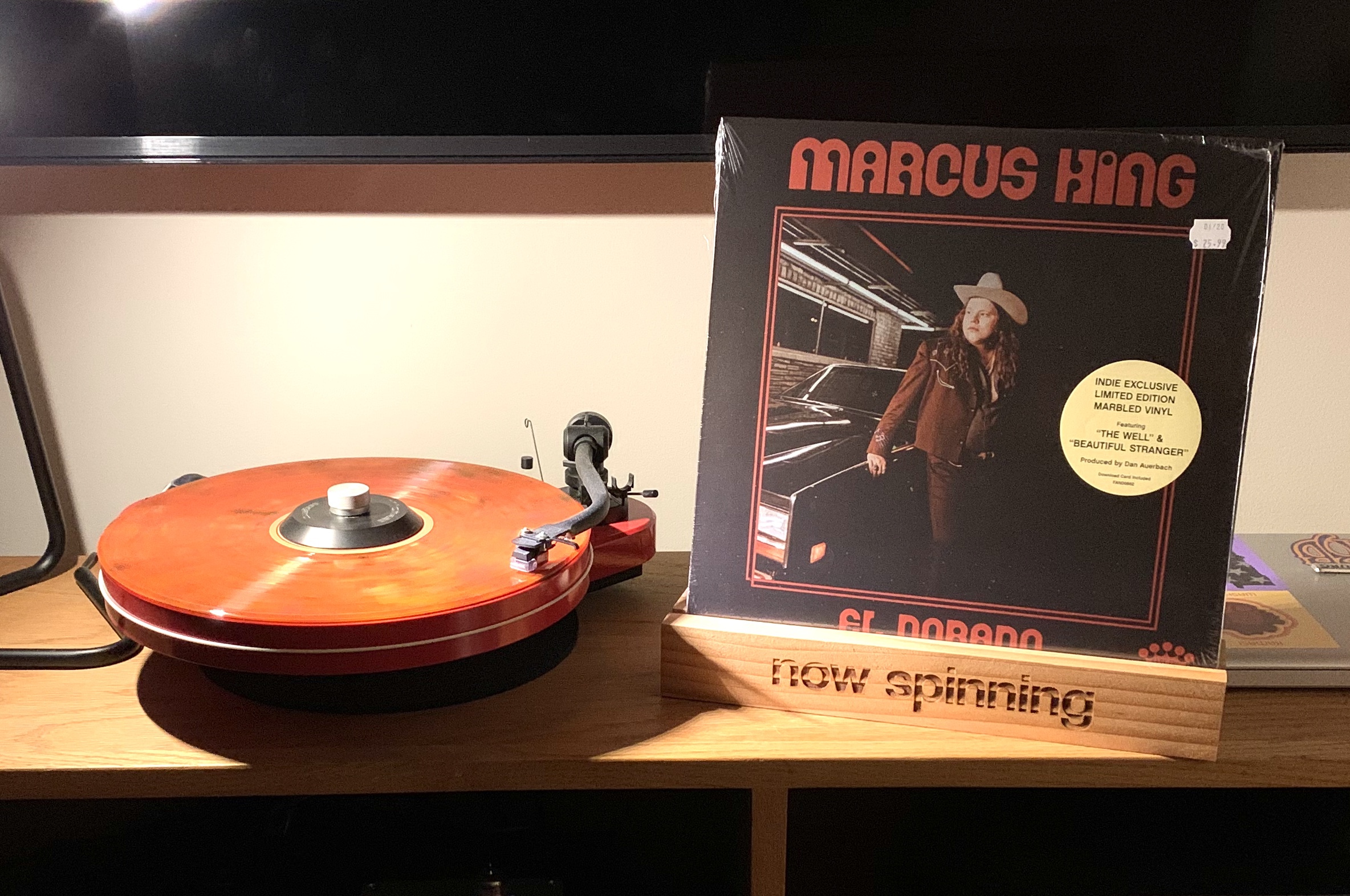
I liked Marcus King’s album Carolina Confessions, but El Dorado is at the next level of excellence. Produced by the Black Keys’ Dan Auerbach, this could be the album that makes King a star.
Marcus King is a purveyor of what we used to call southern rock (Allman Brothers, Lynyrd Skynyrd, etc.). Hard rocking blues rock with a pinch of country.
Great blues-rock guitar players are a dime a dozen and so Auerbach has focused El Dorado on King’s other great gift: his vocals. There is still plenty of King’s guitar shredding, but there is a particular emphasis on King’s vocals. King purrs and roars and everything in between. At times he sounds like a sweeter Faces’ era Rod Stewart and sometimes like Greg Allman. You can hear the influences, yet King has his own voice.
Carolina Confessions was a by the book Allman Brothers devotional. El Dorado is a more diverse affair: acoustic blues, Black Keys styled garage rock, Ray Charles inspired ballads, country, Muscle Shoals’ soul, a little swamp rock and of course a touch of the Allmans. On paper, this sounds disjointed – a messy smorgasbord plate, but on the album, it works as a perfectly executed full course meal. I have a feeling this album is going to be in my rotation for a long time to come.

I am a minor fan of Santana. Specifically, I am a fan of the first four albums from 1969 – 1972 when Carlos Santana and his band helped create jazz-rock fusion. I did not follow his career after that and his Supernatural phase was a bit too much of a pop sellout for my taste. Long and short, Santana fell off my radar.
I like to look at year-end album “best of” lists for two reasons: to validate my taste and to find out if I have missed something. Those lists end up reminding me that my music taste is pretty pedestrian and I always seem to miss something. Africa Speaks is an example of a 2019 release I totally missed. The New York Times’ Jon Pareles had Santana’s Africa Speaks as number three on his 2019 list. This was the only legacy artist on his list and so I gave it a listen. Turns out, it is as good as those first four albums. Santana still has it.
So how is it that Carlos Santana still “has it” fifty years into his career? First Rick Rubin (who produced), second Buika (who composed most of the songs and sings) and most importantly Carlos Santana’s adventurous musical soul. Per Rolling Stone this is how it went down, Santana said to Rubin:
‘”I know you’ve worked with everybody like Johnny Cash and the Chili Peppers and Metallica,’ And he goes, ‘Well, what are you interested in doing?’ I said, ‘Nothing but African music.’ So can you believe it? We record 49 songs in 10 days. He was very gracious, because it was like a hurricane to record six, seven songs in a day. Rick said, ‘With Clive Davis, you had a bunch of guest stars and singers. Who do you want in here?’ I said, ‘I only want two women: Laura Mvula and Buika.’ And he said, ‘OK.’ So we called them and they said yes.”
The two main features on the album are Santana’s red hot guitar playing and Buika’s compositions and vocals. If you liked Santana’s early work you are going to like this. In addition to great songs and performances, the album is exquisitely recorded and mixed.

I was reading Pitchfork’s New Music Friday suggestions and this caught my eye:
Suite for Max Brown is a tribute to guitarist Jeff Parker’s mother, whose photograph appears on the cover. Parker recorded the album with his New Breed ensemble, which features Makaya McCraven on drums, vocals from Parker’s daughter Ruby, and others.
In his Best New Music review of the album, Steven Arroyo writes, “Suite for Max Brown is a place where a 26-second, Dilla-indebted loop of an Otis Redding sample and 10 minutes of a jazz quintet weaving around what sounds like someone stacking plastic cups can share a tracklist; each is equally meaningful.”
I gave it a listen and I am fascinated. What the hell is this? Is it jazz, hip hop, rock, sound effects, electronic doodling, etc.? My conclusion: it is organized beautiful noise, that is, music. Sometimes, classifying music is a futile activity, I am just glad I stumbled across this gem.
This is weird and adventurous music, it is out there. It is experimental but grounded in a kind of gentleness that allows it to go down easy. If you are a fan of jazz and the kinds of things J Dilla did and Madlib still does, you may like this. Imagine if a band like Weather Report or an artist like Charles Mingus had been informed by hip hop.
My first listen had my head spinning, by my second listening, I embraced its beauty. Louis Armstrong famously said:
There is two kinds of music, the good, and the bad. I play the good kind.
Jeff Parker plays the good kind, albeit the weird kind.

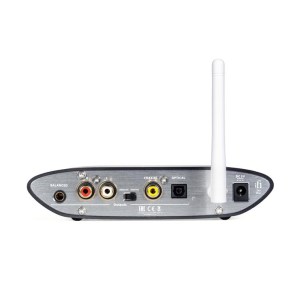
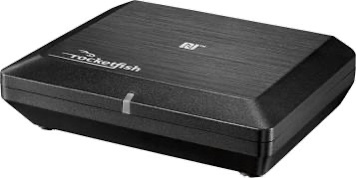
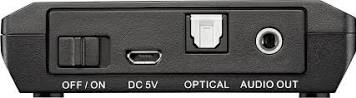
We recently purchased new speakers for our main living space. The primary source of music in that space is streaming (Tidal and Spotify) from our iPhones. I bought a Rocketfish RF-BTR315 Bluetooth receiver (photo below) to tide us over, but I wanted something with a little more quality. The Rockfish worked and sounded fine – its primary deficiency is that you need to be in fairly close proximity to broadcast to the receiver. But for a $35 solution, I had no complaints.
I realize that Bluetooth is not an audiophile solution for streaming, but it is convenient. For example, devices effortless pair and no additional software is required and Bluetooth has a low price point. If you have someone over and they want to play music from their phone, it is easy for them to connect to a Bluetooth receiver.
I did some research on an upgrade to the Rocketfish. I was looking for:
- A quality DAC
- Something that I could stream various apps from my phone (primarily Spotify and Tidal)
- Something that could play Tidal MQA
- Something better than Bluetooth for connectivity
- A reasonable price (e.g. under $300)
I found various solutions like Bluesound’s NODE 2i at $550 and iFi’s Pro iDSD at $2800 – you see a pattern here – expensive. I am reluctant to pay big bucks for a digital solution that is likely to be outdated within a year. It is not like speakers, amps, and turntables which are evergreen. Then I found a reasonably priced solution – the iFi Zen Blue HiFi Bluetooth Receiver at $130.
Per the manufacture’s web site:
It uses Bluetooth5.0®, the very latest version, and the newest Qualcomm 5100 chip to process all incoming Bluetooth® data. There ESS Sabre DAC chip is there to ensure an extremely smooth digital to analogue conversion. Banish standard ‘Bluetooth Blues’ with the iFi hi-res implementation.
I am not technical – so I can’t vouch for Zen’s technology, but I can tell you it sounds great and I can go anywhere in my two-story condo with my phone and the Zen stays connected. I did A/B test against my laptop hardwired to an Audioquest Dragonfly Black DAC and it sounded just as good to my not so golden ears. Granted the Dragonfly is not exactly a high-end solution.
The Zen checks most of my boxes except MQA and that it is Bluetooth. Tidal Masters (MQA) sounds better than Spotify tracks on the Zen, so it is complementing the source. It definitely sounds better than the Rockfish. As I mentioned above, I could not detect diminished sound quality when I A/B tested to my Dragonfly. For $130 it is plenty hi-rez for my needs.
The device itself has excellent build quality. It gets good reviews online. Ifi has a good reputation in the digital audio space.
Some common complaints are that the display is too bright (not a problem for me as I have it in a cabinet and in my particular application I am not staring at it) and you can’t turn it off (not an issue for me as I have it plugged into my receiver’s switched outlet which means when I turn off the receiver it cuts power to the Zen). I dig its retro 60s space-age styling. It has an impressive output stage with both analog and digital outputs. It has an additional balanced analog output if you have equipment that can take advantage of that feature (I don’t).
iFi is not over hyping the product when they say;
“This ultra-affordable hi-res Bluetooth® streamer enables you to chillax in style.”
I can comfortably recommend this product.
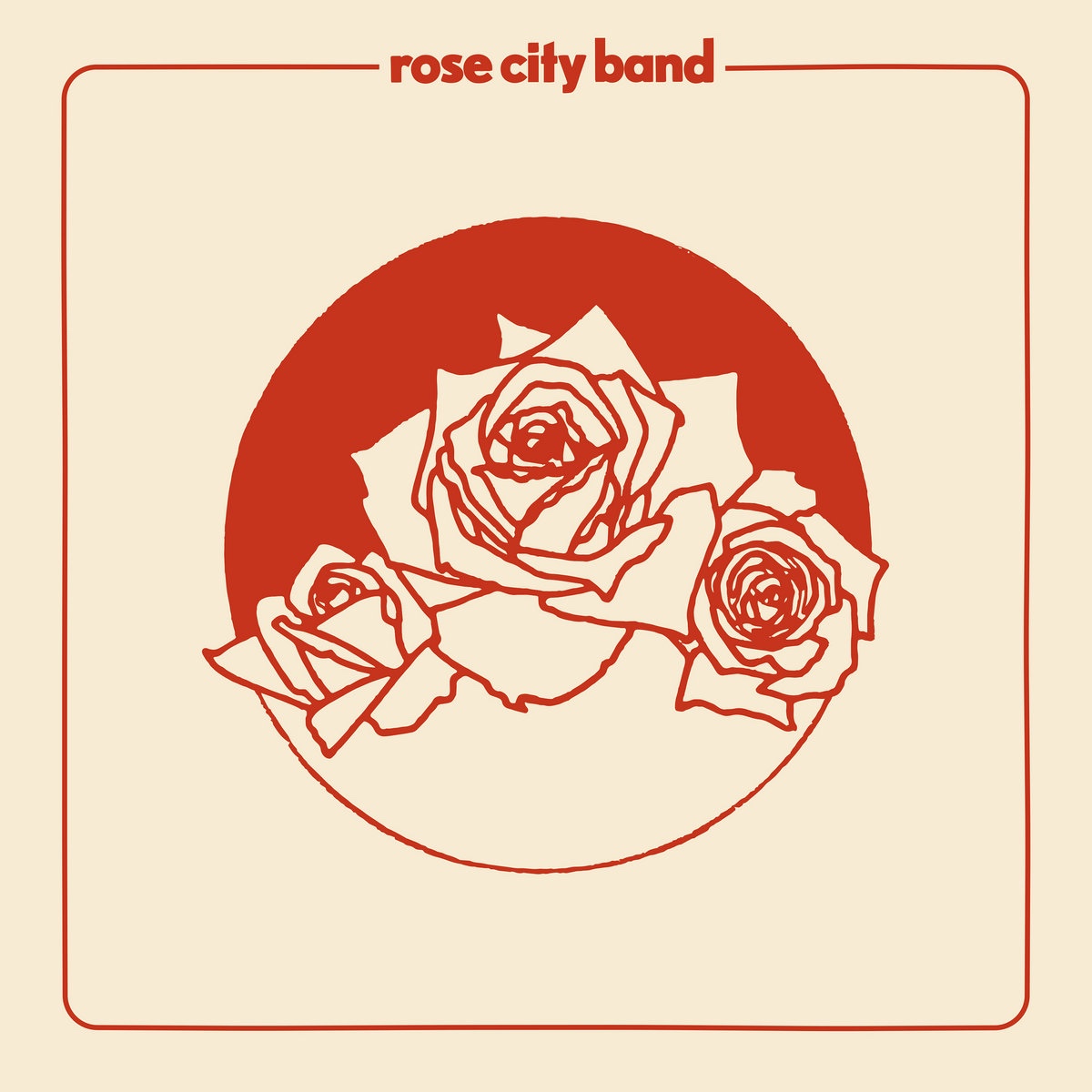
I saw this album in the AllMusic new release email and listened to it purely based on the cover art (congratulations Darryl Norsen – mission accomplished).
My first reaction was that this was country shoegaze. Here is what it evoked:
- J.J. Cale’s hypnotic vibe
- The mellower side of Neil Young, e.g. “Four Strong Winds” from Comes A Time
- The Rolling Stones’ country schtick on Quaaludes, e.g. “Dead Flowers”
- Rattlesnakes by Lloyd Cole and the Commotions (one of my favorite LPs from the 80s)
- Nick Drake
- Murmur era R.E.M.
- The Velvet Underground
I absolutely love it – enough so to rush out post-snowstorm and pick it up on vinyl.
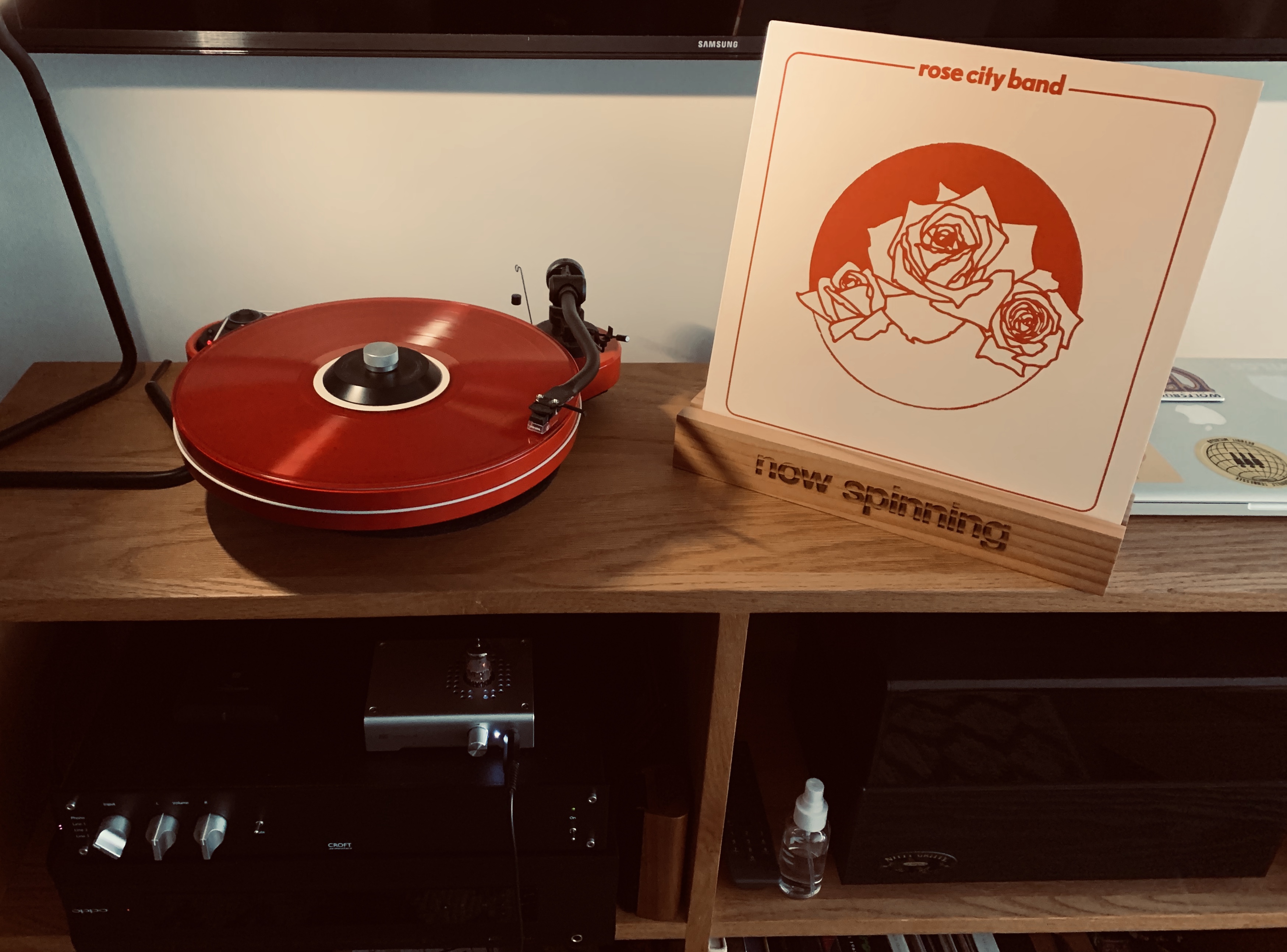
Producer Ripley Johnson (Wooden Shjips / Moon Duo) describes the album:
“The band was aiming to capture a timeless, natural sound, not quite of the present, past, or future, but phasing in between the consciousness of now and the stoned dream-state of the eternal. Sort of a back porch jam just as the shrooms are starting to kick in. Handmade and human, but also cosmic and transcendental. The goal is to let the music speak for itself and hopefully find a weird and wonderful audience somewhere out there.”
I have no idea if this is a real band or the studio creation of Ripley Johnson. I could not find anything useful on line or on the LPs liner notes regarding the band. I assume this is a Johnson side project. The band has Twitter and Instagram accounts, but those are not very revealing .
The album came out last summer on Johnson’s label (Jean Sandwich Records) and this is a reissue now that the band is signed to Thrill Jockey.
This is the perfect blend of cosmic Americana twang and chill vibes. Braided guitar riffs, easy going beats, and plaintive murky vocals. The vocals are as indecipherable as early R.E.M. and I am OK with that – I am here for a vibe not a lecture.
I will be spinning this one a lot. I think I am exactly the weird and wonderful audience the band is aiming for.
P.S. Rose City is Portland Oregon.
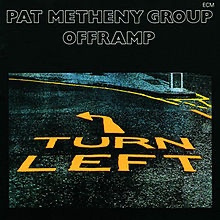
Offramp is an important milestone in the Pat Metheny catalog:
- Pat discovered and mastered the guitar synthesizer (Roland GR-300) and it would forever impact his work – it made his compositions orchestrations and not merely arrangements. The guitar synth significantly increased his palette.
- Pat revealed his love for Ornette Coleman (on the opening track and the titular track).
- Pat introduced some subtle vocals to the Pat Metheny Group (PMG) sound. He and Mays had experimented with that the year before in their side project As Falls Wichita, So Falls Wichita Falls. Adding vocals to the PMG sound brought it to a larger audience. The vocals are not pop, but another jazz instrument.
- He challenged his audience – he was going to be an adventurous artist. It was not going to be all silk, there was going to be some rag wool too. He did not lose his audience, he grew it.
At the time that this album was released, I was a big fan – I saw him live with each album cycle. The Offramp show I saw was at the next level from what I had heard on records and what I had seen in the previous live shows.
I was first introduced to Metheny via the first PMG album which is pastoral folk-jazz. I backtracked through Metheny’s solo career and sideman work which was conventional jazz. After that first PMG album, he did a solo album that was just Pat multi-tracking resulting in conventional ECM audio wallpaper. The second PMG album (American Garage) was a nod to rock and pop. His next, 80/81, gave him credibility with the jazz heads as it was a traditional jazz combo playing conventional post-bop jazz. As Falls Wichita, So Falls Wichita Falls was a wonderfully odd soundscape of melodic sound effects.
Then came Offramp, which became the blueprint for the rest of his career: adventurous post-bop jazz, easy listening folk-jazz, elaborate cinematic arrangements and weird sounds that complement vs. distract. A perfect cocktail in the LP format.
A big part of Offramp’s sound is the guitar synth. Pat made the guitar synthesizer sound as organic as a horn. Clearly, Pat’s guitar synth solos are horn solos. When you put a tool like the Roland GR-300 in the hands of a guy with Pat’s technical savvy and music skills you get magic.
In my mind, this is the album that made Patrick Bruce Metheny PAT METHENY. After the first two PMG albums, he risked being a jazz-pop cat – the kind of thing Kenny G became. But he had a different plan: he was going to make some real accessible shit and then sneak a fast one on you with some far-out-bat-shit-crazy-jazz. It was a nice compromise. He opened a lot of ears including mine.
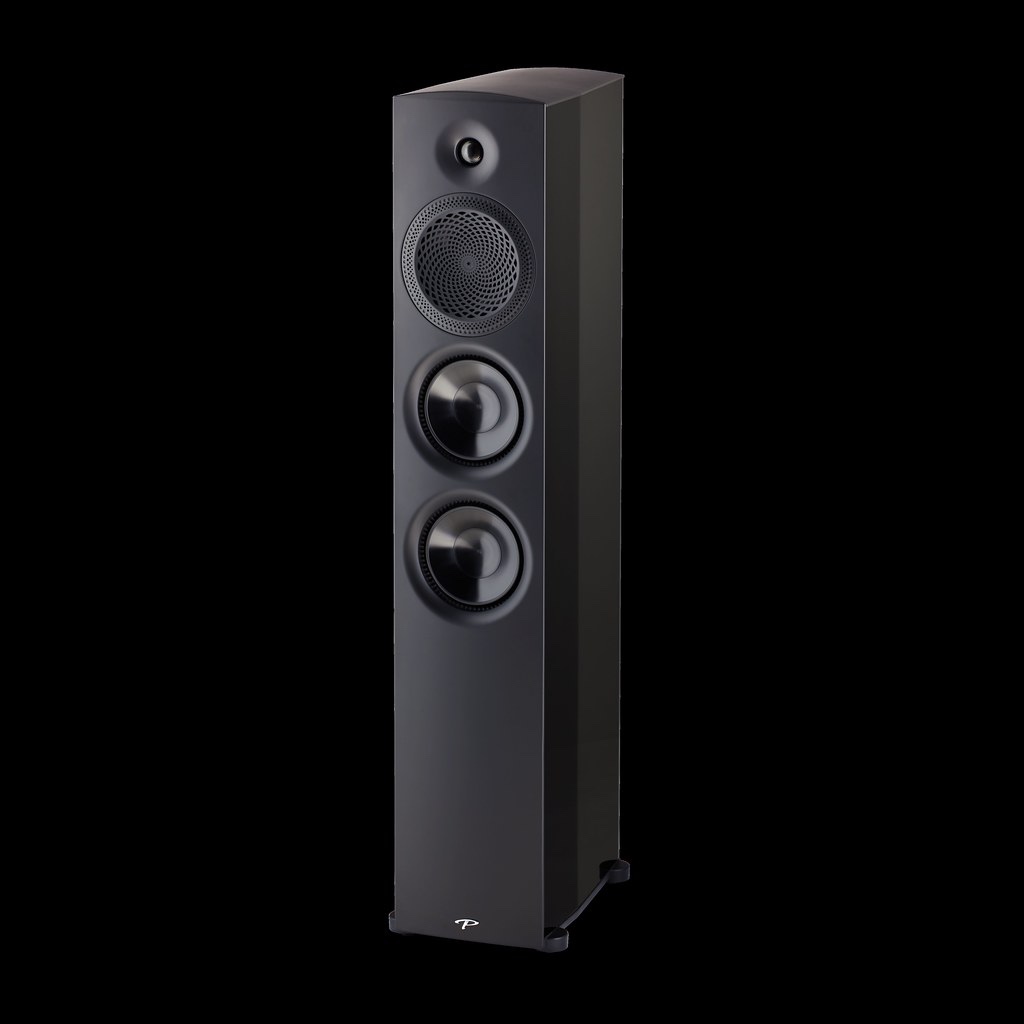
I have had a pair of Paradigm bookshelf speakers for many years (Monitor SE Atom) and I have enjoyed them immensely. I appreciate their accurate representation of sound. So when it was time to go shopping for some tower speakers (when your wife suggests buying new speakers – get busy), Paradigm was on top of my list of speakers to check out.
We live in a loft-like space (open concept and high ceilings) and we wanted a speaker that would fill that space. Some of the checkboxes were:
- The speakers would be used for stereo music vs. a home theater situation.
- They needed to have a wide soundstage – these would not be sitting in sweet spot speakers.
- They need to sound good at low volume – they will be primarily enjoyed passively (AKA background music).
- They needed to be efficient as they will be powered by a small amp (NAD 7240PE which is conservatively rated at 40 watts).
- They need to have adequate bass as they will not be augmented by a subwoofer.
- They need to look good in a nonintrusive way.
- They need a moderate footprint.
We went to Stereoland and listened to their Paradigm, KEF, and Golden Ear speaker lines. We fell in love with Paradigm’s Premier 800F speakers despite the fact they were over our price point. The 800Fs checked all the boxes above and so we walked out with a pair with an espresso grain finish.
No speaker can be judged until you get them home. The components that will feed them matter, but the biggest wild card is the room. The 800Fs sound great from all angles of our listening space. Like their smaller cousins (my old Monitor SE Atom speakers), they accurately reproduce sound. But, because they are so much bigger than the Atoms they fill the space and cover you with a warm blanket of beautiful noise.
On the technical side, the 800F has four drivers: a tweeter for high sounds, a midrange for middle sounds and two woofers for bass. The bass is a 3-way bass reflex. Bass reflex means, that in addition to the two woofers, there is a port on the rear of the speaker cabinet. This port enables the sound from the rear side of the woofers to escape the speaker’s enclosure. This increases the efficiency of the speaker at low frequencies (bass) as compared to a typical closed-box speaker. This is a standard feature of Paradigms – even my little bookshelf Atom Paradigms had this feature. I love the bass on these speakers – it packs a punch without booming. The tweeter and midrange use Paradigm’s patented PPA lens, which stands for Perforated Phase-Aligning Driver Lenses. Per Paradigm: “high frequencies tend to congregate, and can sound muddled, obscuring details and shrouding image clarity.” PPA resolves that. I don’t really understand all of that (bass reflex and PPA), but the 800Fs are the best sounding speakers I have ever owned (including my beloved Klipsch KG2s).
Speakers are the most personal audio choice you can make. I would be hard-pressed to recommend speakers to someone. The only way to make a decision is to work with a good dealer like Stereoland who has a brick and mortar presence. Then you can audition the speakers in the store and ultimately test drive them at home. My wife and I love these speakers – they are a good match to our home both visually and most importantly sonically. We are pleased with our choice and look forward to many years of enjoyment.
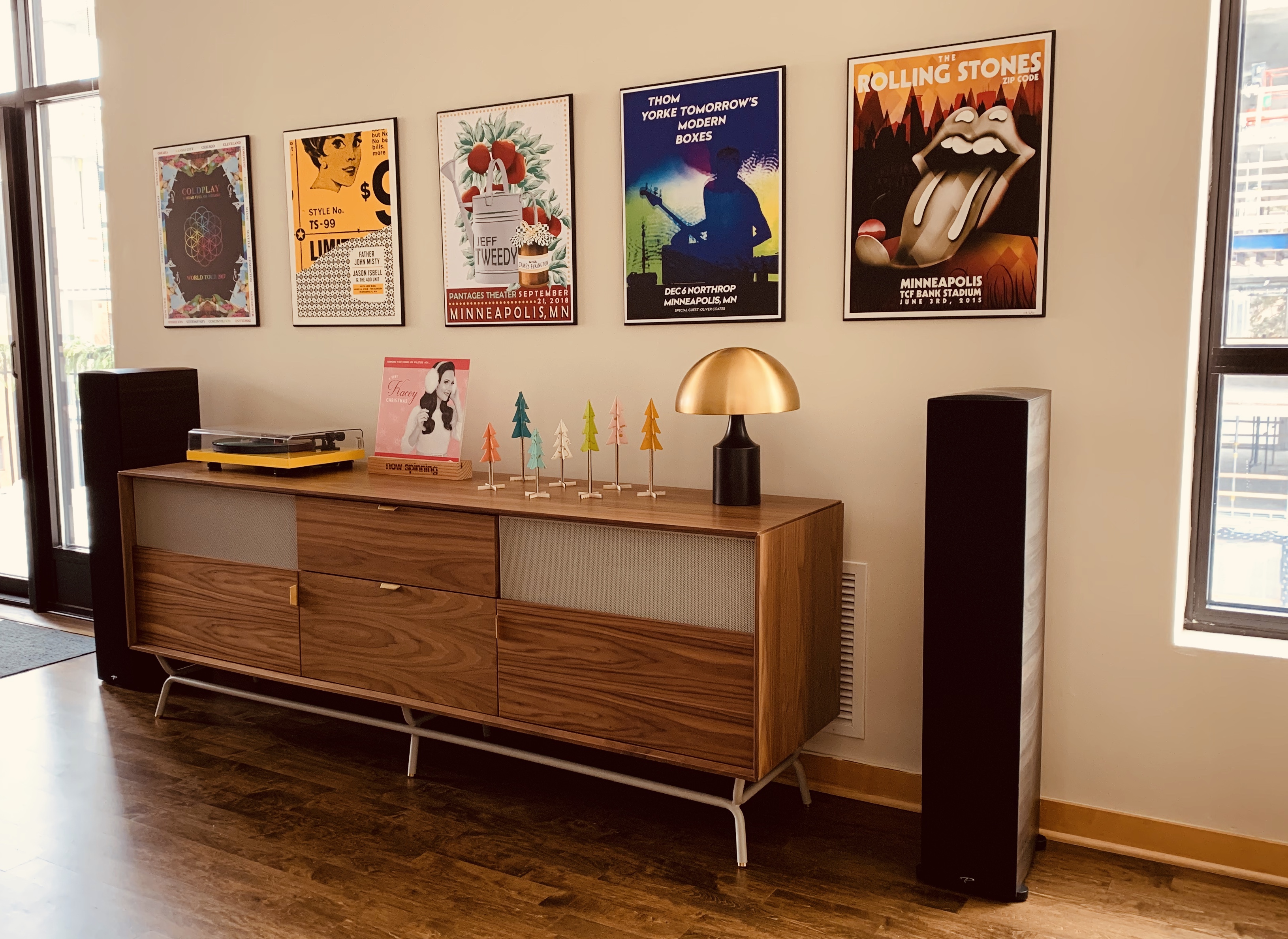
(Above) This gives you a sense of how the Paradigms visually fit our home.

(Above) this gives you a sense of the sonic challenges of our listening space: long room, 10′ ceilings on the left channel and 20′ on the right.
Links to some more reviews:

 Axl's Catch Groove