
Modern RecordingsThis album culls tunes from two shows on 9.11.19 and 9.12.19 at Sony Music Hall in NYC. I had the good fortune of seeing a show on this tour earlier that month at a club in Minneapolis (The Dakota). The band on the album is a trio of Metheny, jazz/R&B/hip-hop virtuoso keyboardist James Francies and Marcus Gilmore on drums (grandson of legendary drummer Roy Haynes). I will be seeing this line up again later this fall at a small theater in Minneapolis. So this is both a souvenir of a show I have seen and a pregame for my next Metheny show.
Per things I have read and heard Metheny say, The Side-Eye concept is two things: challenging himself to play and compose in fresh contexts and give exposure to young(er) musicians (Francies was 24 at the time of this recording and Gilmore was 32 – Metheny was 65). Half the tunes are from Metheny’s back catalog and half are new (and an Ornette Coleman cover as a cherry on the top).
At times, this is a traditional 60s jazz organ trio, but at other times it sounds like Metheny in one of his grand ensembles. This is due mainly to Metheny’s use of orchestrionics. “Orchestrionics” is the term that Metheny uses to describe a method of developing ensemble-oriented music using acoustic and acoustoelectric musical instruments that are mechanically controlled by solenoids and pneumatics triggered by Metheny’s guitar. It is also due to the rich palate of James Francies. Francies somehow is able to evoke Jaco via his keyboard bass lines. At the club show in Minneapolis I was basically “social distance” from James Francies with a direct view of his hands on the keyboard and I have no idea how he did it. I recall being dumbfounded at the time. Last but not least, Gilmore holds it all together – no simple task when there is so much going on – Metheny’s controlled chaos.
I am still digesting this album, but my initial response is I absolutely love it. It is a great sampling of the many textures of Metheny. Despite many different styles that he plays, every note is unmistakably Pat Metheny.

Per Wikipedia: “Big Red Machine is an American indie folk band that began as a collaboration between musicians Aaron Dessner (The National) and Justin Vernon (Bon Iver). The band is named after the nickname for the dominant 1970s Cincinnati Reds baseball teams, which won the 1976 World Series in Dessner’s birth year.” I enjoyed the first album and so I was looking forward to this album.
The first album focused on Vernon as the vocalist. The new album is more of a collaborative effort, featuring guest vocals from: Anaïs Mitchell, Taylor Swift, Fleet Foxes, Ilsey, Naeem, Sharon Van Etten, Lisa Hannigan, Shara Nova, La Force, Ben Howard and This Is the Kit. Dessner provided lead vocals for the first time in his career, on three tracks: “Magnolia,” “Brycie” and “The Ghost of Cincinnati.” Not sure what the reluctance was – he has a nice voice. Despite all the collaborators, The National and Bon Iver vibe is still pretty strong.
I have been a Bon Iver fan since day one. I am late to The National. I have only gotten hooked on one album, 2019’s I Am Easy to Find. I loved Aaron Dessner’s production of Taylor Swift (2020s’ evermore and folklore). Maybe my issue is The National’ vocalist Matt Berninger as I seem to dig Aaron’s non-The National work (and the one The National album I like has lots of guest vocals).
The music is quiet dreamy pop – a nice combination of The National’s indie rock and Bon Iver’s electronica. Aaron and Justin are staying close to their home base for both Big Red Machine albums. I liked the first album, but I like this second album even more with all the guest vocalists. The guest vocals bring Aaron and Vernon to a new place. If you liked the last two Taylor Swift albums, or are a fan of The National and Bon Iver, you will like this album.
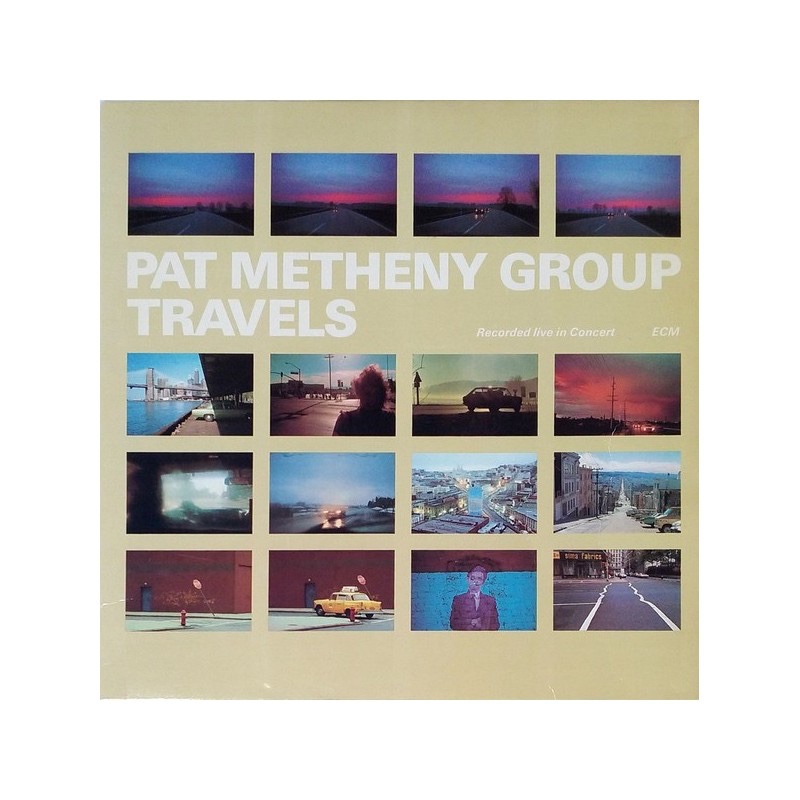
Pat Metheny Group (PMG):
Pat Metheny, Lyle Mays, Steve Rodby, Dan Gottlieb, and Nana Vasconcelos
This was the first Pat Metheny Group (PMG) live album. It captured the tour in support of Offramp. This is a great sample of the PMG life-to-date catalog circa 1983. It includes some of their best known material. However, over half the tracks were entirely new and have not been heard, before or since, on any studio album. So unlike typical live recordings that are merely a live greatest hits collection, this is a worthy stand alone collection and legit successor to Offramp.
I saw PMG around this time and they were fantastic. So this album is a sentimental sonic souvenir from that time.
The PMG for this album was: Pat Metheny (guitar), Lyle Mays (keyboards), Steve Rodby (bass), Dan Gottlieb (drums), and Nana Vasconcelos (percussion). Pat plays acoustic and electric guitars and like Offramp he features a lot of guitar synthesizer. The primary focus is on Pat and Lyle Mays. As usual their interplay is fantastic. Nana’s percussion is not a mere embellishment, but an essential ingredient.
There are some special moments on the album. For example, Pat said in an interview, soon after this album’s release, that he preferred Travels’ version of ‘Are You Going With Me?’ to the Offramp original. I have to agree.
I bought this album when it first came out. Like most ECM releases, it is well recorded (it is studio quality, despite being live), mixed and pressed. The Master (MQA) stream on Tidal sounds great too.
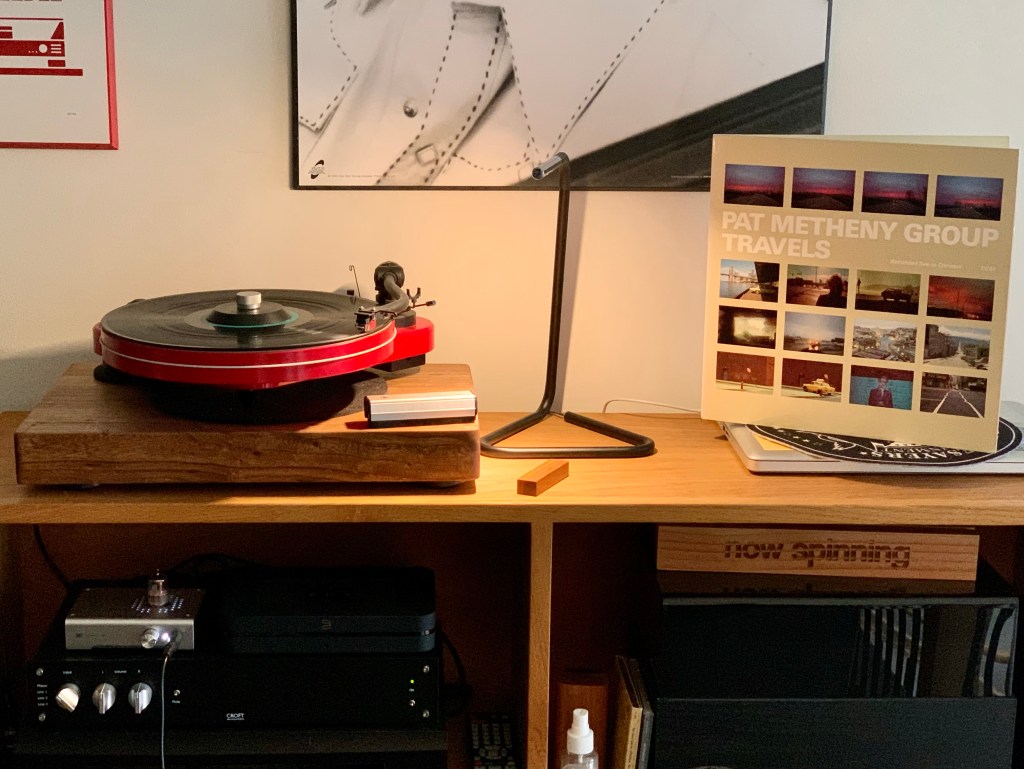
If you are new to PMG this is an excellent introduction. I recently listened to Pat being interviewed on Questlove’s podcast and Pat mentioned that when people ask him a good entry point to early PMG he recommends Travels. If you are a fan and have not checked this out previously, this is a must have. If you have it in your collection, pull it off the shelf and give it a fresh listen.
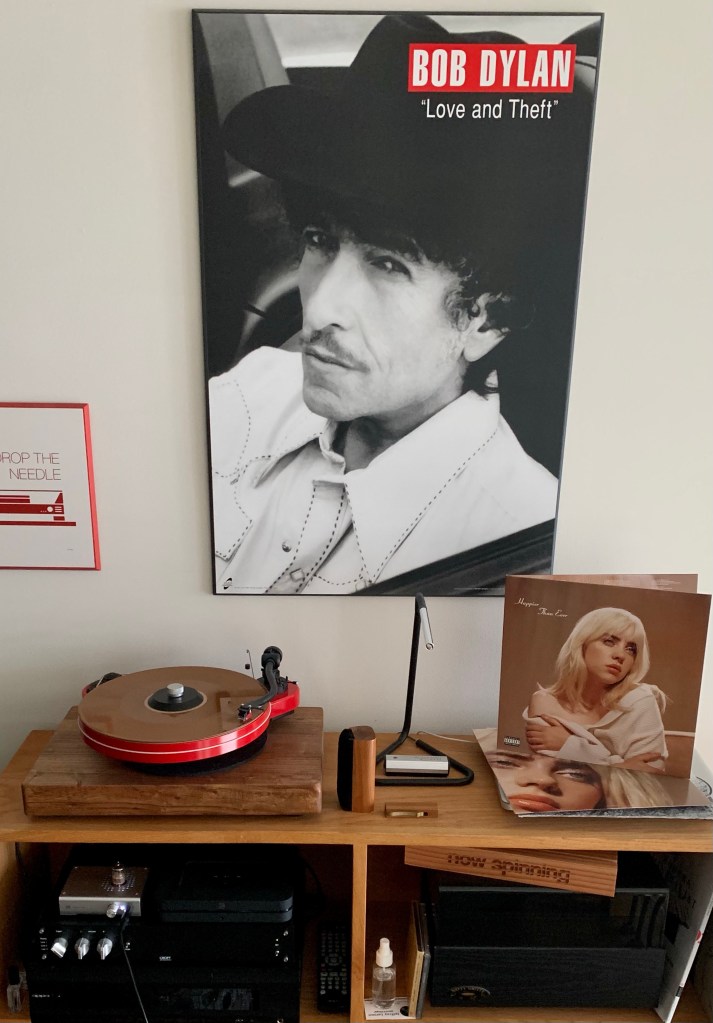
Billie Eilish’s When We All Fall Asleep, Where Do We Go was such a huge success that a sophomore slump is inevitable. My hot take is that Happier Than Ever is better. It does not have the killer singles of its predecessor, but it holds together better as an album. Granted I am more of an album guy then a singles guy, so this aesthetic choice appeals to my biases.
The sound has progressed. On their debut EP, dont smile at me, the band (I consider Billie Eilish a band given the significance of brother Finneas’s contribution) was innocent bedroom pop. On When We All Fall Asleep, Where Do We Go the sound and lyrics went dark – almost Nine Inch Nails lite. On Happier Than Ever the sound is more diverse from track to track: trip hop, folky, jazzy, industrial lite, etc. It it all sounds thicker and more crafted. I assume they are just getting more confident as a band and have access to better tools. Billie’s vocals are more confident and expressive – almost a croon. Listening to her older material that crooner has always been there, it is just more obvious now.
Lyrically the album focuses on the trials and tribulations of being a pop superstar. Normally I would find this annoying, but Billie is a fascinating pop superstar and so I am plenty interested to get in her head to witness how she is processing it all.
The album is quiet, which draws you in more. Like all her work it is weird, but as weird as it is, it is highly accessible.
I love the rebranding of her look from bratty goth hip hop teenager to old Hollywood glamour. It is a symbol of the maturity of the music.
In summary: no sophomore slump, no difficult second album, no When We All Fall Asleep, Where Do We Go Volume Two, but instead an appropriate step forward. Most of all an enjoyable listen that grows on you. As to whether it will maintain Billie’s trajectory as a pop star? Probably not – more likely a plateau. But being a mega pop star is not necessarily a noble goal. Making great music is a noble goal and Billie has achieved that.
Interesting fun fact: Per New York Times the album had great physical sales in week one:
Released in an array of boxed sets and retail-exclusive variants, “Happier Than Ever” made 54 percent of its total sales in the United States on physical formats, including 73,000 vinyl LPs, 46,000 CDs and nearly 10,000 on cassette. It had the second-highest weekly vinyl haul since at least 1991, when SoundScan, MRC Data’s predecessor, first began keeping accurate data on music sales. (Only Swift’s recent LP release of “Evermore,” which sold 102,000 copies after months of preorders, had more.)
I understand the vinyl sales. CDs? Do her fans really play music on CDs in a streaming age when the premium streaming services have better than CD quality streaming? I doubt it is audiophiles buying those CDs. Cassettes? That is even more of fetish object than vinyl – weird!
Don’t be deceived by these release week sales numbers that Billie has a follow up hit – they are inflated by preorders from hard core fans. The album is not a stiff, but it is unlikely to be the mega – hit that the last album was – that is OK. To repeat myself having repeated commercial success is not a goal – you can have a great career following your muse – just ask Norah Jones.
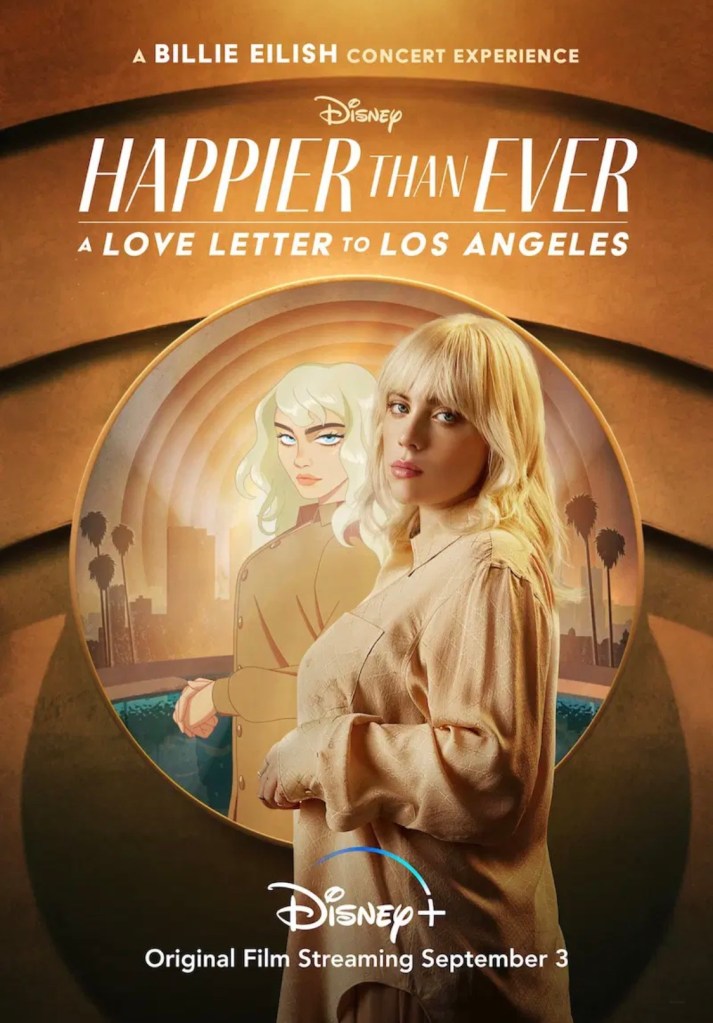
P.S. If you have access to Disney + check out Billie’s “concert.” More of a long form video than a concert film. For me it added a new textures and context to the album and made me appreciate it even more.

When I first heard about this album I assumed if Prince shelved it there was a good reason – like it did not pass his quality control. After listening to the teaser singles my conclusion was that it was not quality, but that he did not feel the time was right in 2010. Well the time is now.
Per a Prince press release: “Recorded in the spring of 2010 and then mysteriously abandoned by Prince before its release, the statement album Welcome 2 America documents Prince’s concerns, hopes, and visions for a shifting society, presciently foreshadowing an era of political division, disinformation, and a renewed fight for racial justice.”
Prince has always had social commentary, politics and black pride themes in his music, but this album is his most in your face political statement of his career. Why did he withhold it in 2010? I have a theory: He was not fooled by America electing a black president and that racism was suddenly behind us. Yet he did not want to stir the pot during the Obama administration. So he sat on it. He passed away before Trump was elected, otherwise we might have heard this sooner. According to people who worked with Prince, as relayed on the podcast series that his promoting the album, the reason is “because he didn’t want to.” Prince rarely explained himself. We will never know.
Ideally this album would have been released in the summer of 2020 in response to the murder of George Floyd and a racist president running for re-election. But bringing an album to market posthumously during a pandemic is complicated. Despite the delay, the content of this release is still relevant. Just because Joe Biden beat Trump and Derek Chauvin was convicted and in prison doesn’t let us off the hook. So the timing of the album is still perfect.
I religiously studied every Prince album from his debut in 1978 through the end of the 90s. I was a bit hit and miss after that. This is the most excited I have been about a Prince album since 1998’s Crystal Ball. The is not just a posthumous money grab by the Prince estate (not that there is anything wrong with that), this is an important entry in the Prince catalog. Hopefully, this is a foreshadowing of more gems in the infamous Prince vault.
Prince uses the titular track to give us his state of the union address via a Parliament-Funkadelic groove. Prince is funky, but he’s not happy.
“Running Game (Son of a Slave Master)” is a slinky groove. Prince and Shelby J trade verses mocking the music industry. Prince, an internet innovator in marketing his music, knew the game was up and the power was shifting back to the major labels. The song is in essence an editorial – an amazing musical editorial. This is a great song despite the heavy theme.
Prince was friends with polymath Dr Cornel West. “Born 2 Die” was recorded as a rebuke toward West, who said Prince was “no Curtis Mayfield.” On a recent podcast, regarding this album, West shared that he loved that he was proven wrong with this track.
“1000 Light Years from Here” is a song of hope imagining a better world. The one we live in is not so great for many:
“We can live underwater
It ain’t hard
When you never been a part
Of the country on dry land”
“Hot Summer” is a departure from the soul and funk: a garage rock song complete with cheesy organ and hot vocals from Liv Warfield. At the moment this is my favorite song on the album.
The one cover on the album is not an R&B standard but a song from Soul Asylum (written by Dave Pirner and released on 2006’s The Silver Lining) a Minneapolis band that has its origins in punk vs funk. Prince makes “Stand Up and B Strong” totally his own and has the hottest guitar solo on the album.
“Check the Record” is classic Prince funk-rock. It is a romantic kiss off. It has a great shout out Sheryl Crow:
If it makes her happy
Can it be that bad?
Like Sheryl said
It might be the most favorite mistake I’ve ever had
“Same Page, Different Book” is a cynical, but joyous admission our world is a mess.
“When She Comes” is classic silky Prince erotica with jazz flourishes. No one does it better.
“1010 (Rin Tin Tin)” was a bit mysterious to me. I googled “1010” and it means: to embrace positive thinking, as you don’t know what’s going to happen or change in your life. It’s a message to stay relaxed and open to new possibilities. Or as Prince sings in the song: “We need to let the funk unwind.”
“Yes” is an arena anthem of positivity with a bit of a Sly & The Family Stone vibe. Nice antidote to some of the heavier earlier material.
“One Day We Will All B Free” is an inspiring end to the album. It starts out like a hymn, but gets bouncy and is very up lifting. Prince name checks Franklin Benjamin Banneker. I googled him and he is a pretty fascinating historical figure – read about him here.
Welcome 2 America featuring Tal Wilkenfeld on bass, Chris Coleman on drums, Morris Hayes on keyboards, and vocals from New Power Generation singers Liv Warfield, Shelby J. and Elisa Fiorillo. Prince had never worked with Wilkenfeld and Coleman before and he never worked with them again. He was not disappointed with them and in fact he complemented them for helping him capture a sound that had eluded him.
Musically the album does not chart new ground, but the craftsmanship is superb. Lyrically this is one of Prince’s strongest performance. This is a super collaborative sound between the band and vocalists. What a great gift from the grave to up lift us in these trying times. I am now very curious to learn what other shelved masterpieces are in the vault.

I have been listening to an MQA Master stream since release day and it sounds fantastic, but the vinyl edition sounds even better.
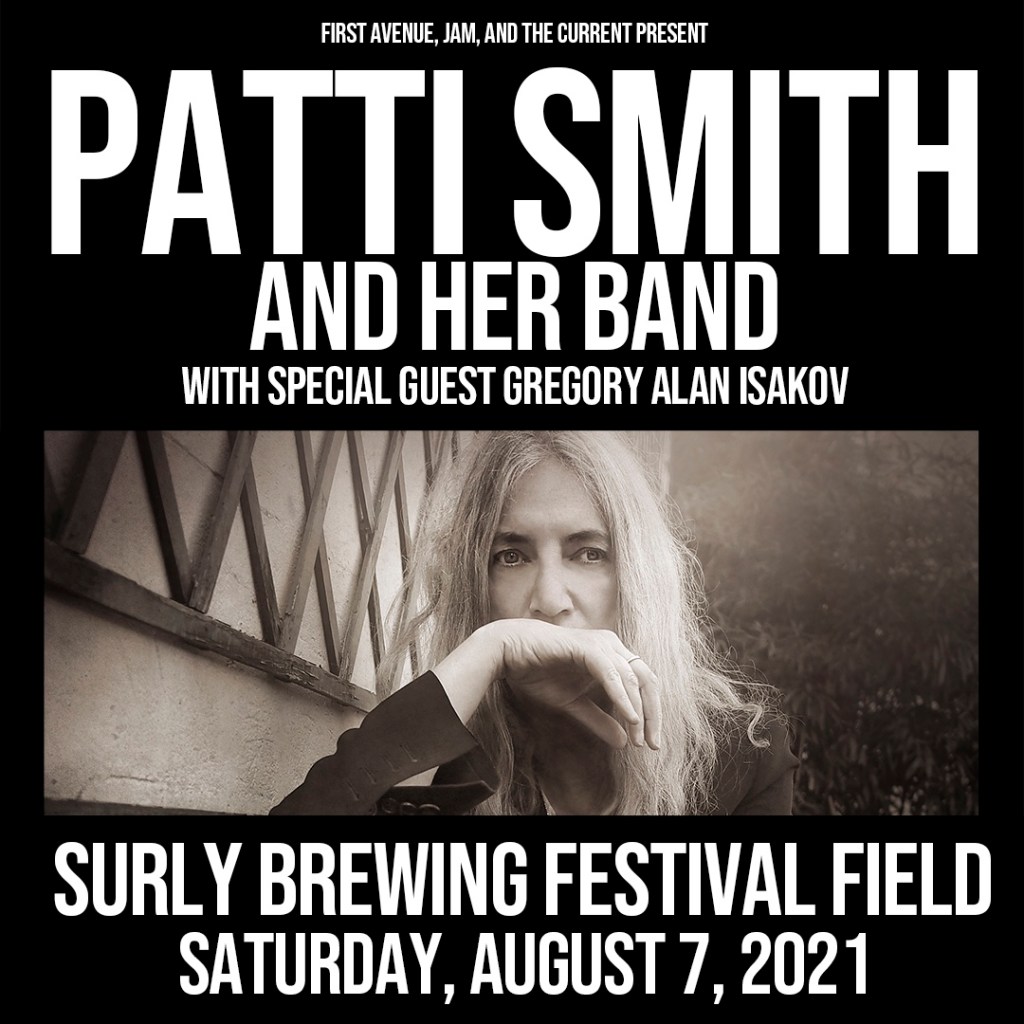
I am not sure how I got to be 62 as a Patti Smith fan and I have never seen her live. I saw her this past Saturday at an outdoor venue and it was transcendent – I literally had goosebumps most of the show. I am sure that part of it was circumstantial: my first real rock show in about 18 months, outside on a nice summer night, her mini tribute to Dylan, beer, pristine sound (except for the encore – more about that later), etc. Patti was the perfect welcome back to the concert scene – she was the right shaman for the right moment.
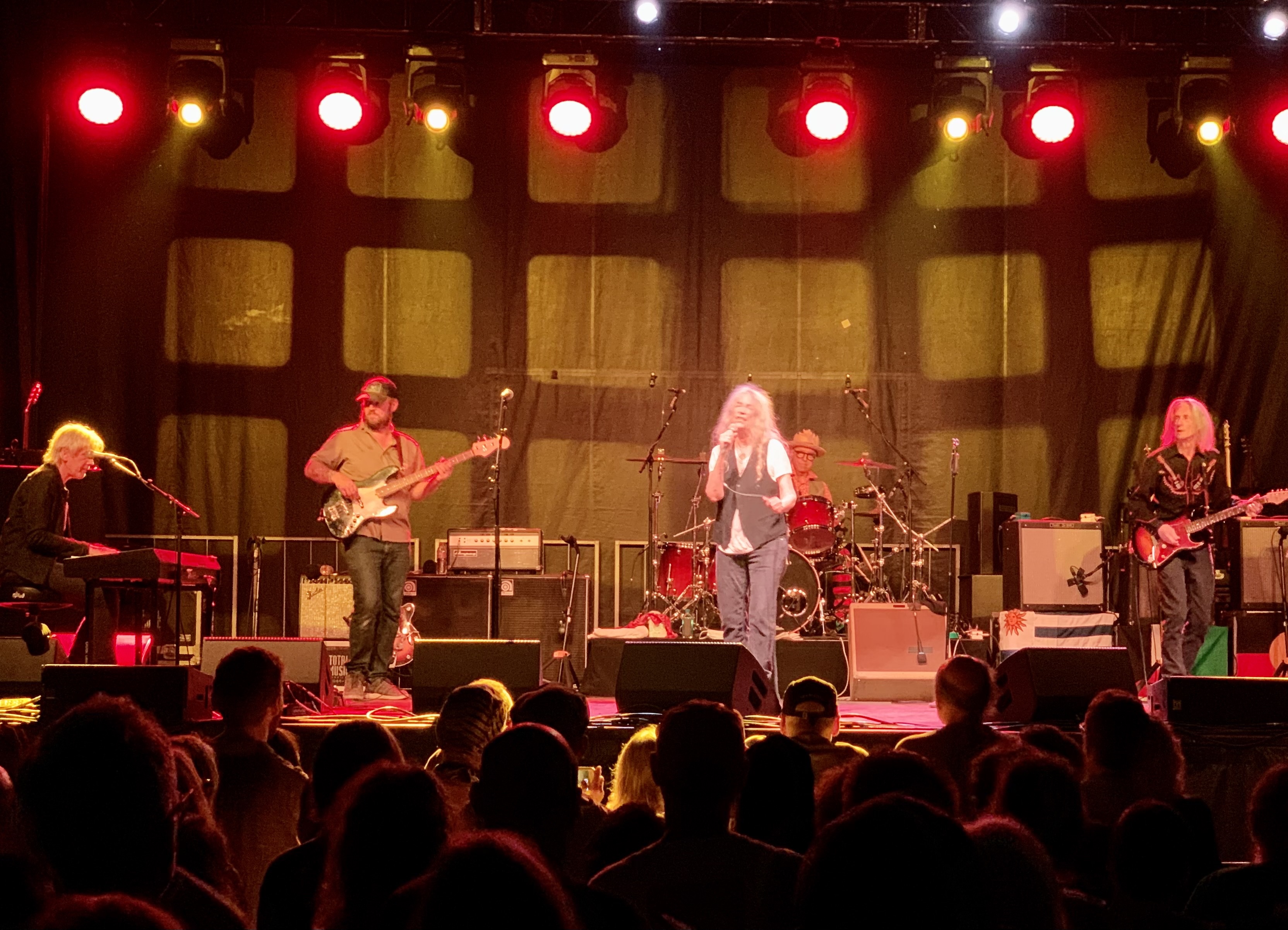
The band was fantastic: Lenny Kaye (guitar and bass) and Jay Dee Daugherty (drums) have been with Patti since day one, Tony Shanahan (keyboards, guitar and bass) has been with her a couple of decades and Jackson Smith (guitar) is her son. So, these are not hired hands – this is a band! I loved the PA mix: Jackson in left channel and Lenny in the right. It sounded great, except for one snafu: Patti’s mic was off for half the encore song. But it worked out and just made the show more intimate when Patti joked after her mic was hot again: “I was wondering, something great must of happened, you got rid of me.” Jackson is a solid guitarist and he displayed prowess in several styles. Lenny Kaye was otherworldly. Jay Dee was rock solid on the skins. Tony’s diversity of skills added awesome color.
Patti has an amazing presence on stage – she is contradictions:
- She seem like a real person and a rock star at the same time
- Pissed and compassionate
- Humorous and dead serious
- Ragged and beautiful
- Loud and soft
- Organic and transcendent
One interesting moment that kind of defined the experience. Patti is rocking – in full punk rock mode and she spits on the stage. After the song is finished she humorously apologizes for spitting (apparently she swore it off for Covid) and gets on her hands and knees and cleans it up with a towel. It was a weird magical moment.
I have seen a lot of shows in my life, I don’t think it is recency bias, but this was a top 25 show for me (note to self: blog post – list out those top 25). If you haven’t seen her live and you are a fan make a point to see her when you get a chance.
Below is the set list in the form of a Spotify playlist.
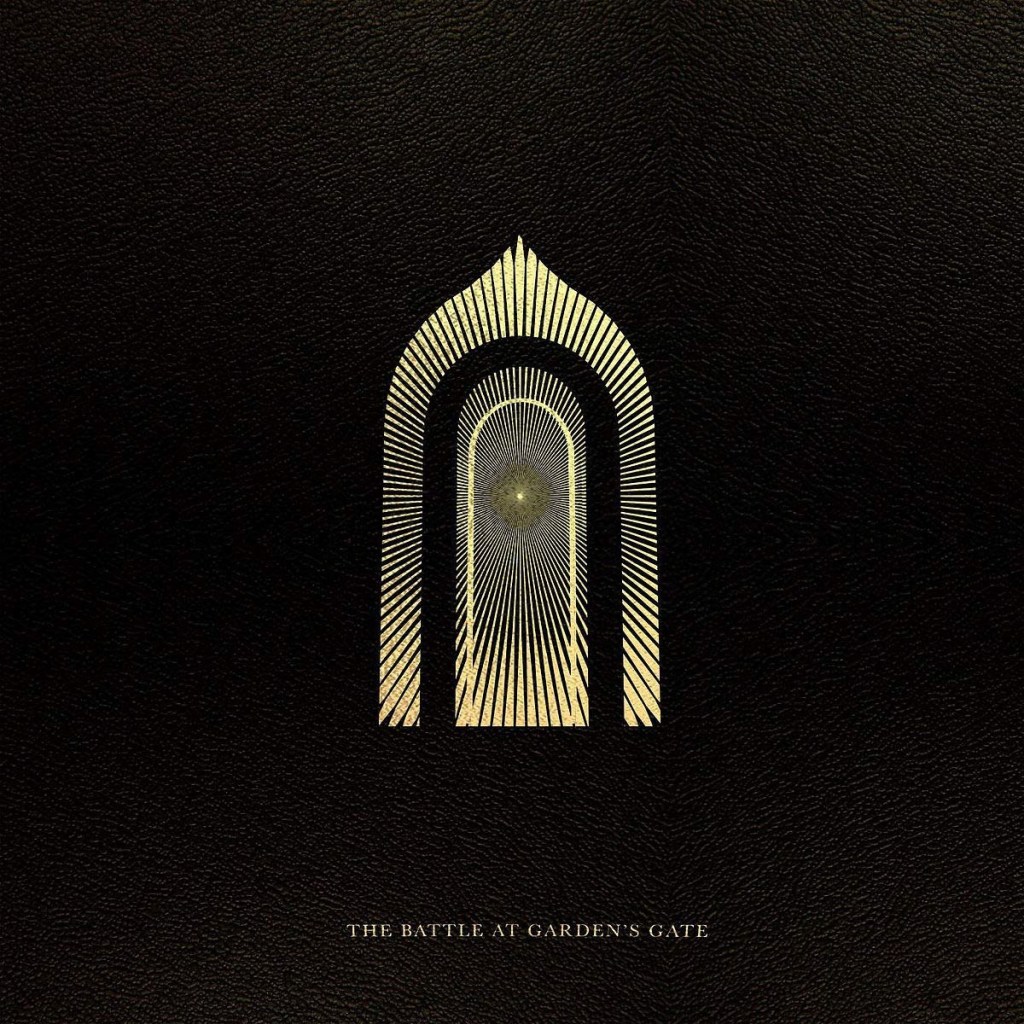
The razor’s edge between “awesome” and “sucks” in rock is a very personal thing. I can be a music snob, but I also accept guilty pleasures. You should own your guilty pleasures. Greta Van Fleet’s The Battle At Garden’s Gate is a guilty pleasure and it’s awesome.
I have no problem that these dudes channel Led Zeppelin and Rush. I love those bands, but have heard them so many times that I am ready for some fresh material – GVF delivers that new material. Is it as good as Zep and Rush? Hell no, but who is?
GVF sound has evolved and they now sound like GVF. It could be that I have picked up on the nuances of how they sound different from their influences, but I prefer to believe they have evolved. The band has worked the road hard over the last few years and it shows in how tight they are as a band and in the maturity of their material.
I love their bombastic take-me-seriously rock and roll. And let’s face it, I like that it is rock and roll and not hip hop (no disrespect to hip hop, it’s just my old classic rock ears are overwhelmed by its dominance in pop). I am all in on this band. In summary: yes, they are still doing derivative crotch rock, but somehow it is more mature.


I am a long time fan of Derek Trucks and the Tedeschi Trucks Band (TTB). Derek and the Dominos’ Layla and Other Assorted Love Songs is the perfect album for TTB to cover. Derek Trucks is the rightful heir to Duane Allman (the secret sauce on the original album). Derek was named after this album and Susan was born on the original album’s release date. Layla Revisited is a live show by the TTB with Phish’s guitarist/vocalist Trey Anastasio and longtime TTB collaborator guitarist Doyle Bramhall II. It was recorded August 24, 2019. The performance of Layla and Other Assorted Love Songs was kept secret until the moment the band took stage – I can’t imagine how amazing an experience that must of been for the unsuspecting audience. I have chatted with a few people on the internet who were there and it was a mind blowing experience.

Layla Revisited is fantastic – do I dare say better than the original? The vocals are better, the recording, mix and mastering are better, the guitar is at least on par and TTB is a tighter band. I am not dissing the original – it is a classic, but this cover is next level. This is not a novelty or a tacky tribute band. The TTB and friends are faithful to the original, but they make the material their own like a great singer whose interpretation of a song makes it theirs, TTB and friends own Layla and Other Assorted Love Songs.
Layla and Other Assorted Love Songs is the only studio album by Derek and the Dominos and was released in November 1970 as a double album. It is best known for its titular track, “Layla” that is often regarded as Eric Clapton’s greatest musical achievement. In addition to Clapton, Duane Allman played lead and slide guitar on 11 of the 14 songs.
Layla and Other Assorted Love Songs was a commercial failure and critical disappointment when it was released, but it has grown in stature over the years and is regarded by most classic rock fans as a hall of fame recording. Personally, beyond “Bell Bottom Blues” and the titular track the rest of the album has never really resonated with me. But on the first listen of this cover version I was hooked. I now appreciate the original more – what more can you ask from a tribute album? I have re-listened to the original and now I love every song and not just the hits ( “Bell Bottom Blues” and “Layla”). Layla Revisited benefits from the fact the TTB is a cohesive and road tested “big band” (the base TTB is an 11 piece with multiple vocalists, a horn section, etc.) and Derek, Trey, Doyle and Susan are simpatico guitarists with each other. The original Layla album was a jam and TTB and Trey are the ultimate players on the jam band scene – this is the perfect group of musicians to perform this classic album. TTB has never disappointed me and Layla Revisited exceeds even my high expectations of them.
PS – the vinyl edition sounds fantastic. It is pressed on 180g vinyl and was mastered and cut by Chris Bellman (a vinyl mastering rockstar) from analog tapes. It is a reasonable price for a 3 LP audiophile release.
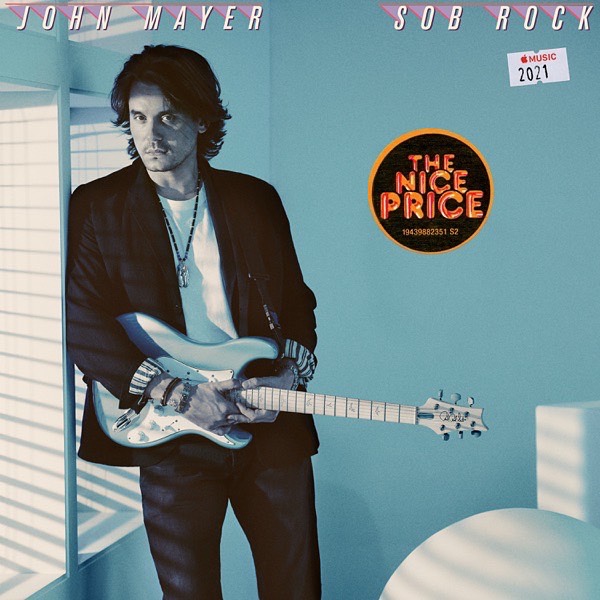
John Mayer has the skills to do anything in the rock genre and yet he chooses yacht rock. The “problem” is he does it brilliantly. This is well executed soft rock: hummable songs, great arrangements, impeccably recorded, tasty guitar licks and cover art that screams of the 80s (a wink to the listener that Mayer knows exactly what he is doing). “I’m somewhere between a pop artist and a jam band—maybe closer to pop artist,” Mayer recently stated.
There is not much to say here. If you like Mayer and you are not too cool to enjoy soft rock, give this a listen. It is like having a decent craft beer on a brewery patio on a nice day – pleasant. It is not 80s Dire Straits or Steve Windwood, but it is pretty damn good. Kickback and enjoy.
PS – I love The Nice Price sticker on the album cover. Back in the day, Columbia (now Sony) used this sticker to discount slow moving product (and albums past their sell date) in its catalog – another wink at musicheads like me.

I am a minor Beach Boys fan. I like the hits when I am hear them, but I wouldn’t deliberately play their music. I fully appreciate their genius and their influence on pop music. Despite my ambivalence about The Beach Boys, I am a fan of Dennis Wilson’s 1977 solo project Pacific Ocean Blue.
I became aware of Pacific Ocean Blue when it was reissued by Legacy Recordings as a special 30th anniversary 2-disc edition in 2008. It also included material from the Bambu sessions which was the intended follow up. Pacific Ocean Blue reissue got a lot of positive hype as a lost classic. Based on the reviews, I picked it up on CD and have enjoyed it ever since. I picked up a green vinyl version of Bambu on Record Store Day 2017.
I was recently crate digging and came across an attractively priced limited edition 180-gram blue vinyl version released on the Sundazed label (same tracks as CDs). I was not going to pass that up.
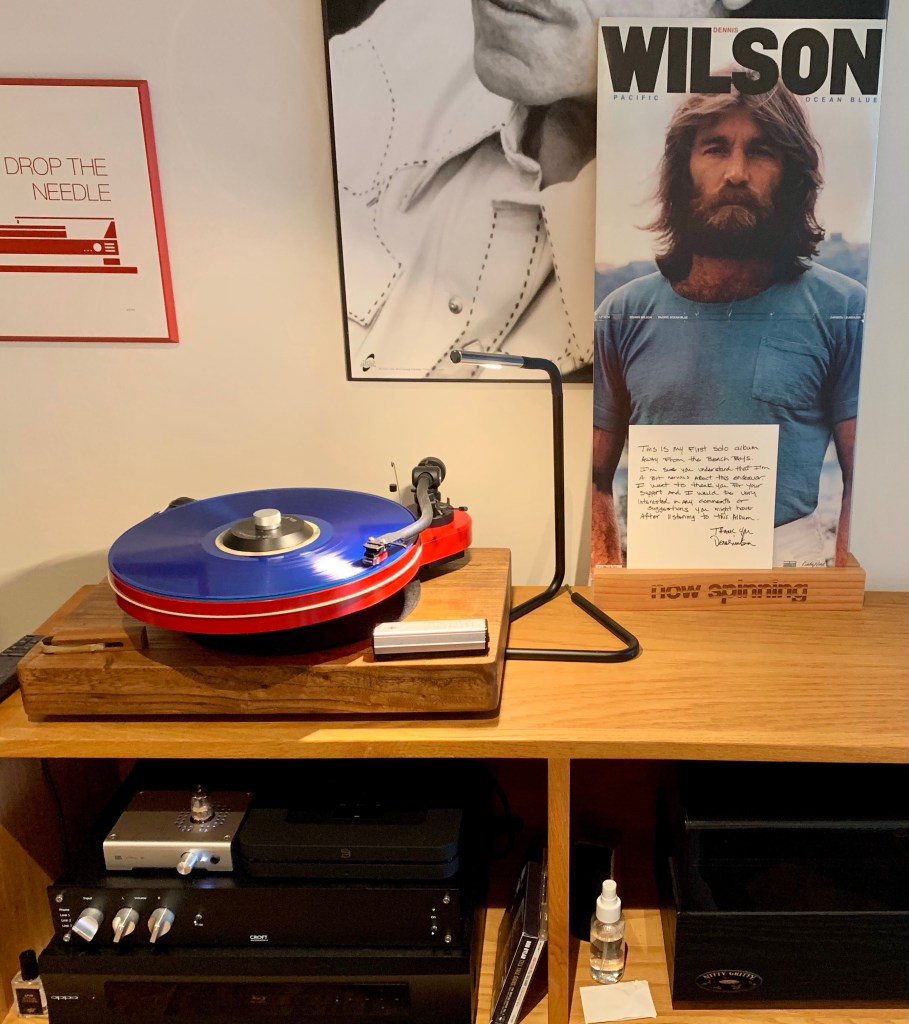
The album has a bit of a Beach Boys vibe, but it has its own vision. It has much more in common with the late 70s California singer songwriter movement than The Beach Boys. As Tom Jurek states, in his All Music review, “This album is a classic, blissed-out, coked-up slice of ’70s rock and pop that is as essential as Fleetwood Mac’s Rumours.” There is almost a Pink Floyd feel to the album. Also, there is a funkiness to Wilson’s music that doesn’t exist in The Beach Boys’ music. Wilson has a soulful gravelly voice that is more Dr. John than the Boys.
Unfortunately Dennis Wilson had many demons and died of drowning in 1983 so we are left with one great album and an unfinished album that is the Bambu sessions.
The bonus material from the Pacific Ocean Blue sessions is a nice addition and the Bambu sessions material shows Wilson still had some gas in the tank. But the original 12 songs from Pacific Ocean Blue are perfect and together they form an LP masterpiece.


