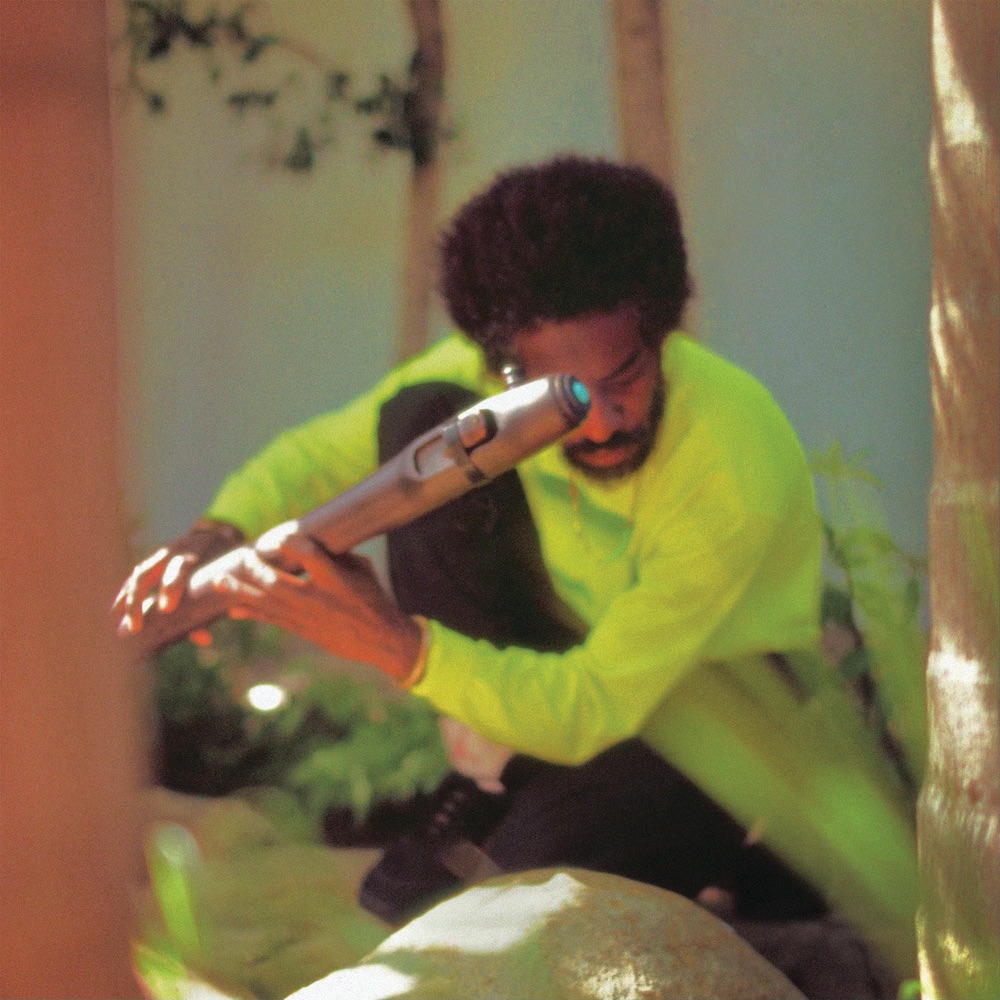
I was intrigued when I heard that rapper André 3000 would release a flute album. The Outcast was a hip-hop act I was actually into. They were artsy yet pop. When I first listened to New Blue Sun, my first reaction was that it was ambient jazz without hooks – a snoozefest. I have been listening to the new Kamasi Washington, and there is a track that André 3000 is on, and I dig it. Per Kamasi’s website:
André 3000, perhaps rap’s finest stylist, whose guest verses are coveted by all, offers up his very first flute feature on “Dream State.” A song about moving on from struggle is an apt contribution from an artist searching for freedom. “Andre is connected to music in a way that’s inexplicable, and he still has that same magic on the flutes,” says Washington.“That honesty, and that trueness to his spirit is there.” When he showed up to the studio with a bag of flutes, Washington and his bandmate and fellow Fearless Movement composer Brandon Coleman invited him to jam. Together, they found the song on the first pass. “We’re not easy musicians to swim around with. We moved kind of fast and free, and he was just with us,” says Washington.
So, that had me returning to New Blue Sun. Given the excellent performance of “Dream State” on the Kamasi album and Kamasi’s story of the making of that song, I felt I owed André 3000 flute album a second look – plus I am a flute player.
Listening to New Blue Sun with more open ears, my revised take is still ambient jazz without hooks. However, it is not a snoozefest. It is pretty cool music. It is engaging if you give it a chance. It is the kind of ambient music that can be enjoyed both passively (background music) and actively (full engagement with the music: no distractions with a quality playback rig – or at least good headphones).
So, what does it sound like? There is a lot of synth, percussion, and flute (both organic and with electronic manipulation). It is mostly quiet, but there are occasional swells. At times, it invokes the ambient side of Pink Floyd. But most of the time, it is narcotic jazz, that is, slow-motion jazz.
I can’t imagine being in a New Blue Sun mood often, but I appreciate André 3000’s experiment. It is just not my thing – I need my music a bit more caffeinated.
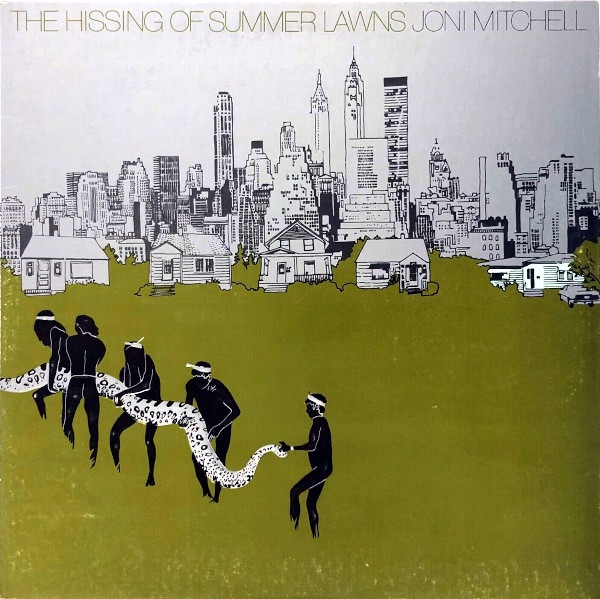
I recall Joni Mitchell’s The Hissing Of Summer Lawns (1975) as a weird and artsy album. Upon revisiting it, I had misremembered it. Most of the album is accessible and in the style of its predecessor, the jazz-pop masterpiece Court and Spark. However, it has two significant weird and artsy songs: the second track, “Jungle Line,” and the final track, “Shadows and Light.” These two tracks stuck out in my memory, not the “Court and Spark Volume 2” tracks. It is a fascinating follow-up to Joni’s most commercial album, foreshadowing how seriously Joni would soon abandon the mainstream. The album’s lyrical themes are a woman’s frustration with society’s patriarchal norms and the music industry (those two things are often the same issue). One of the fascinating things about Joni’s art is its focus on romantic relationships between men and women, yet she has a healthy skepticism and criticism of men.
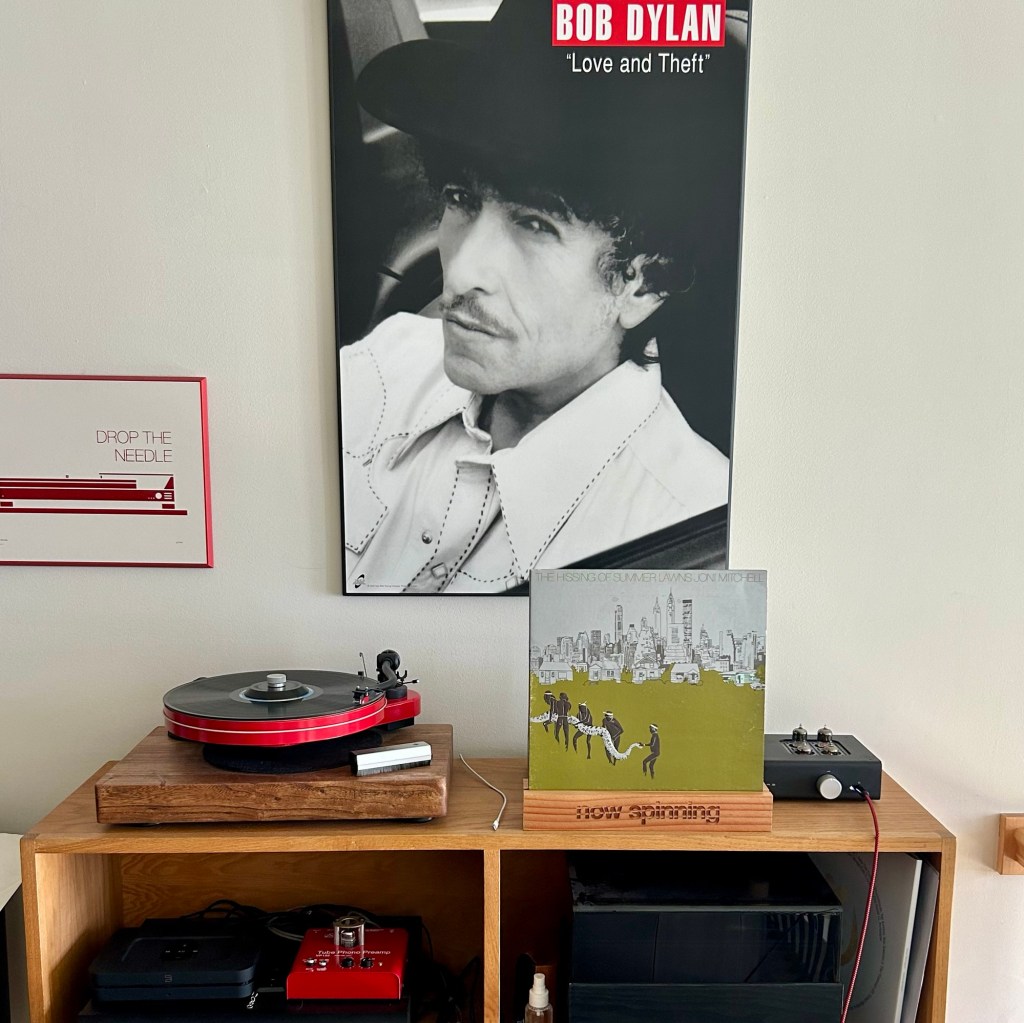
The album opens with “In France They Kiss On Mainstreet,” which would not have sounded out of place on the Court and Spark. Lyrically, the narrator recalls their 1950s teenage years—a time of innocence and playfulness—quite a contrast to the treacherousness of the 1970s that dominates the rest of the album.
On the second track, she takes a bizarre sonic turn with “Jungle Line,” which doesn’t sound like anything in her catalog. She samples The Drummers of Burundi (credited as “warrior drums” on the album) and mixes it with a Moog synth, guitar, and her voice. The drum sampling is one of the earliest uses of sampling in a commercial recording. This would become a convention in hip-hop a few years later. The sound is jarring after the sheen of the first track. Lyrically, Mitchell blends images of painter Henri Rousseau’s work with city life, the music industry, and drug culture. It foreshadows where she would go with her own career and where peers like Paul Simon would go (for example, Graceland). At first, this song feels out of place after the naivete of the first track, but it is an excellent transition to the darker themes of the rest of the album.
The next several songs are a sonic return to the jazz-pop of Court and Spark. “Edith and the Kingpin” tells the story of a gangster picking out a prostitute and then snorting coke with her. Things have turned dark indeed.
“Don’t Interrupt the Sorrow” is dominated by a classic Joni acoustic guitar riff. Lyrically, it is a stream-of-consciousness musing on patriarchy. Mitchell, one of her generation’s great songwriters, must have been frustrated at being dismissed as a mere “girl singer.” This song is a glimpse of that frustration. In the liner notes, Joni writes: “The poem, “Don’t Interrupt The Sorrow” was born around 4 a.m. in a New York loft. Larry Poons seeded it and Bobby Neuwirth was midwite here, but the child filtered thru Genesis at Jackfish Lake, Saskatchewan, is rebellious and mystical and insists that its conception was immaculate.”
“Shades of Scarlett Conquering” is piano-driven. This is another song of the narrator chaffing under the patriarchy. The images are based on a southern belle like Scarlett O’Hara in Gone With The Wind.
The titular song, “The Hissing of Summer Lawns,” tells the story of a Stepford Wives-like character who is owned by her husband. The song title refers to the sound of sprinklers on a perfect suburban lawn.
After several songs about the patriarchy, in “The Boho Dance,” the narrator turns to muse on an artist who betrays their artistry for commercial success. This must have been at the top of Joni’s mind after the commercial success of Court and Spark.
A common feature in Joni’s songwriting from Court and Spark and beyond is to create a collage of her songwriting with a cover song. “Harry’s House – Centerpiece” is a combination of her composition (Harry’s House) and a jazz cover (jazz standard “Centerpiece” by Harry “Sweets” Edison and Jon Hendricks). The song tells the story of a deteriorating marriage: the husband is obsessed with his job, and the wife struggles with her housewife/mother role. In the middle of the tale, she seamlessly integrates “Centerpiece.” Joni takes what is supposed to be the jazz song’s complement: “‘Cause nothing’s any good without you/Baby, you’re my centerpiece” and turns it into a backhanded compliment. This song shows the brilliance of Joni: seamlessly mixing her pop sheen with a straight jazz cover.
“Sweet Bird” updates her acoustic guitar/piano sound before Court and Spark. Lyrically, it returns to her early albums’ “confessional” singer-songwriter mode. The narrator is mourning the loss of youth—especially as a woman, where youthful beauty is so defining. In the liner notes, Joni writes: “”The Boho Dance” is a Tom Wolfe-ism from the book “The Painted Word.””
The album ends with sonic experimentation. “Shadows and Light” is a synth-based riff with Joni’s vocal overdubs. Lyrically, it is a litany of contradictions and opposites, like shadows and light. This song must be meaningful to Joni, as she named her 1980 live album after it and opened that tour’s concerts with the tune (accompanied by the acapella group The Persuasions adding gorgeous textures—I saw that tour).
Joni always has excellent album art and packaging. This cover art is created by Joni (a common feature of her albums). It uses the African theme of “The Jungle Line” by superimposing an image of dark-skinned people carrying a giant snake (both were embossed on the original vinyl album cover) on the Los Angeles skyline, with Mitchell’s house on the back cover. On the interior of the gatefold are the lyrics, liner notes, and a swimming Joni radiating her femininity.
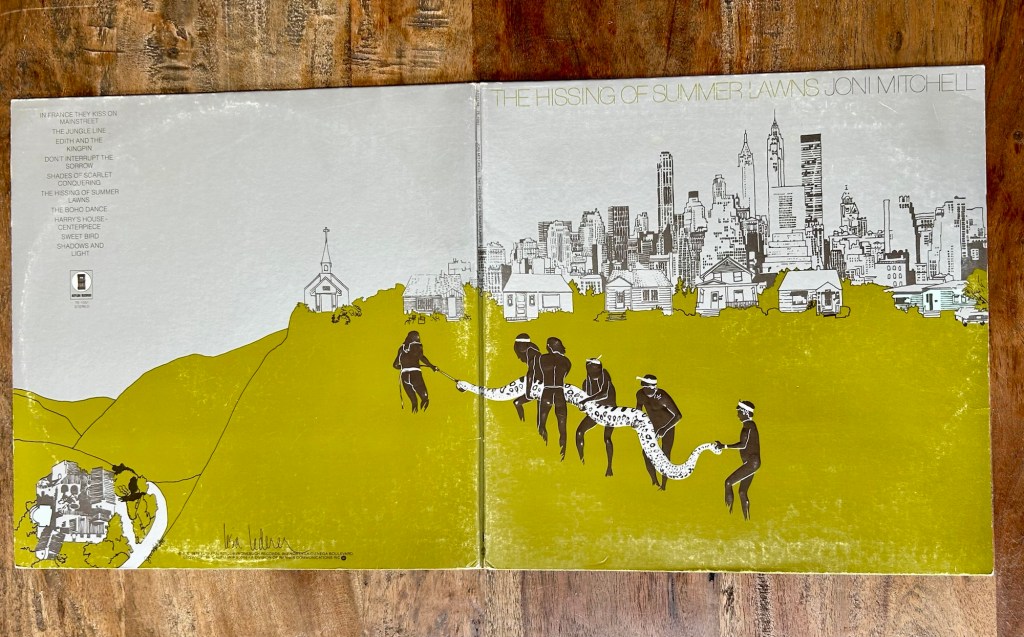

The album has aged well and is as solid as anything in her catalog. Prince was a huge Joni fan (Mitchell told New York Magazine in 2005: “Prince used to write me fan mail with all of the U’s and hearts that way that he writes”) and frequently gushed about Hissing in several interviews.
In the liner notes, Joni writes: “This record is a total work conceived graphically, musically, lyrically and accidentally – as a whole. The performances were guided by the given compositional structures and the audibly inspired beauty of every player. The whole unfolded like a mystery.”

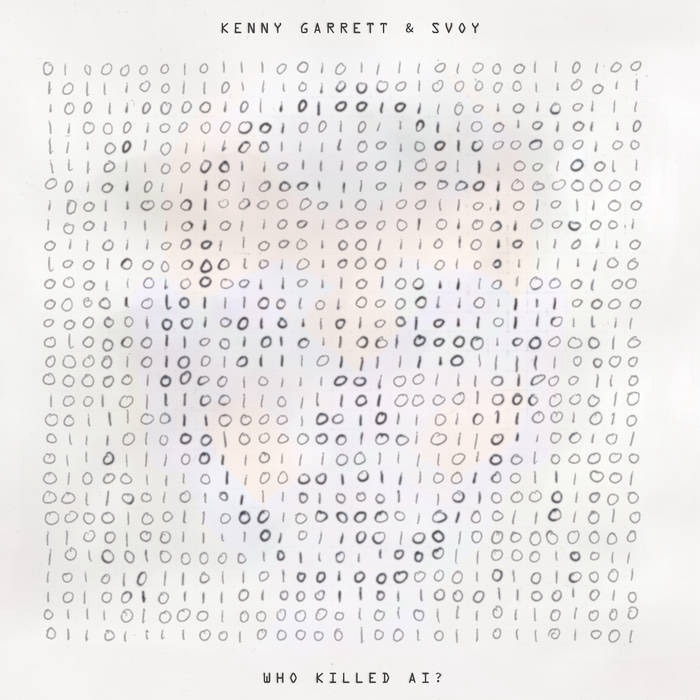
Who Killed AI?
Mack Avenue Records (2024)
I saw this album on the 2024 Record Store Day release list and have known of saxophonist Kenny Garrett via his time in the final Miles Davis band. He continued a solo career post-Miles, but did not followed it. This RSD 2024 blurb caught my attention”:
“For more than three decades, saxophonist Kenny Garrett has been on the forefront of the most adventurous and creative collaborations in jazz, having performed with generations of innovators such as Miles Davis, Art Blakey, Freddie Hubbard and more. The living legend charts yet another path in his illustrious career with the release of his first ever electronic album, an avenue to explore new sounds.”
“…his first ever electronic album” – I wondered what that would sound like, so I immediately went to my streaming service (Tidal) and listened. I fell for it immediately, and it shot to number one on the RSD 2024 vinyl record wish list.
The album’s back story is that Garrett and Mikhail Tarasov, AKA Svoy, are long-time collaborators who live close to each other in New Jersey. Per Garrett in a Stereogum article:
“Svoy was living, literally two minutes from me, and we just started collaborating,” Garrett said. “He would show up with his computer in my living room, and he would just have some music and didn’t have a melody, and so I would just listen to it. It was really relaxed. And I would just kind of create a melody and play off the top, just like that. Or he would come up with a melody and then I would hear something and say, well, I think we should do this. It was always like he was painting the canvas. But then I would say, ‘Why don’t you write me a song like what I did with Miles’… or I would say, ‘Write something like this, and then I’ll create a melody,’ or he’d send me something. I’d say, ‘Well, let’s change it a little bit here,’ you know, so it was just direction, but at the same time, just trying to be open.”
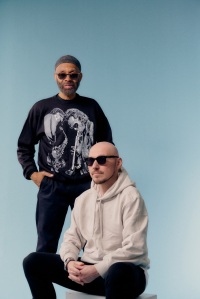
Svoy (programming, vocals, piano)
Garrett says in the Stereogum article that Pharoh Sanders’ final album with Floating Points (an album I love) was an inspiration.
“[Svoy] did a great job allowing that space for me to kind of create. And that’s what I’ve been trying to do for years. I’m still waiting to collaborate with other people [who were] writing some music with me in mind, you know, and let’s see what happens. Pharaoh did a record like that with Floating Points; I would love to have done something like that, but a lot of times people don’t know what you can do, so they never would call you for things like that. But I hope after this situation, people will be open to trying — ‘Oh, let me call Kenny Garrett. We could try something here or try something there.’ I mean, I’m just really trying to continue to grow as a musician and try things, you know?”
Side A opens with “Ascendence.” The song starts with a synth riff, then a backbeat, and Garrett’s imitation of Miles Davis’ raspy voice counting off. This is followed by a Garrett sax solo over a synth and electronic drum foundation. The song would not have sounded out of place on one of Miles’ final albums (which had hip-hop and what we call today EDM influences). An AllMusic review summarizes the track perfectly: “Garrett spirals to Svoy’s digital buzz and grind like John Coltrane plugging into the Matrix.”
The title of the next track, “Miles Running Down AI,” is a play on the Miles’ Bitches Brew classic “Miles Runs the Voodoo Down.” In Jazz Blues News, Garrett said the track answers the question: “What would Miles sound like if he played Coachella?” The Garrett track doesn’t sound like the Davis track – the Garrett track is hyperactive, whereas the Davis track is wonderfully lethargic. But the song indeed invokes the spirit of Miles Davis.
“Transcendence” opens like a trance—a simple electronic drum beat and melody on a synth that then transitions to Garrett’s sax. This song reminds me of the mid-70s Weather Report.
“Divergence Tu-dah” mixes a hip-hop groove, nonsense vocals (the “tu-dah” in the song title), and a highly processed sax.
Side B opens with “Ladies,” a percolating Garrett soprano sax solo over a bed of electronica.
“My Funny Valentine” turns a jazz standard (a regular song in Davis’ repertoire) into an electronic masterpiece.
On “Convergence,” Garrett crafts a playful melodic alto sax Svoy’s hyperkinetic beat. The song fades out with a Svoy scat vocal. This is the most accessible song on the album – start here if you are not willing to commit to the whole album.
The ghost of Miles Davis hangs over this album both in the sound (late period Miles) and in the experimentation (combining electronics and jazz). I experienced the late period Miles (which I define as 1981’s The Man With The Horn through 1992’s Doo-Bop) in real-time. I was grateful to have new Miles material then, but I didn’t appreciate it. Recently, I have gone back to that period and now love it. Garrett and Svoy’s concept of a Miles-inspired combination of jazz sax with electronica works is inspired – it sounds fresh but also honors the past. As for the album title, I guess Garrett and Svoy are daring artificial intelligence (AI) to create an album of this quality – they have set a high bar for AI to exceed.

Pop queens (Bey, TSwift, etc.) were releasing bloated pop albums this spring, but Billie Eilish overshadowed them by releasing a taut 10-song pop masterpiece. First, it is an ALBUM, and it demands to be listened to from start to finish (just like the old days). That is a tall task to ask in our short attention span age, but at least put it on while making dinner (it is an appropriate sub-45-minute length). Second, it is an evolution in sound, lyrics, and, most of all, Billie’s singing. The sound is lush: Billie and Finneas sound like they have escaped the bedroom and found a studio. Finneas is the new Daft Punk, but more talented – he does it all himself! The lyrics sound like the musings of a young adult vs. a teenager. Billie has not abandoned the whisper, but she has expanded the palette. Third, it has bangers. There are so many earworms here. I can imagine songs like “LUNCH” in a club, “BIRDS OF A FEATHER” in a prom scene in a coming-of-age film, and “THE GREATEST” rocking an arena show.
I will stake my measly music-head reputation on the line and say that the new Billie Eilish album is a pop masterpiece and one of the year’s best new albums. I am not saying that it will have any significant cultural impact or that anyone other than her hardcore fans will care about this album in a month, just that it is excellent, and I want everyone my age to hear it. I hate that people my age (65) think there is no significant new music. Granted, nothing significantly new has occurred in pop music since I graduated from high school in 1977, but that doesn’t mean great new music isn’t being made. This album should appeal to open-eared and musically adventurous boomers. Please listen!
When Billie Eilish came on the scene, she was hard to miss. She had big hits with an original sound that was catchy as hell (Nine Inch Nails Lite). She was a teenage pop star not manufactured by a corporation – she was a SoundCloud artist with a huge hit (”Ocean Eyes”). Visually, she was goth-lite androgynous. I didn’t take her seriously as I assumed she was just another teenybopper pop star (not my first time failing to grasp the significance of a young pop star – sorry, Taylor). But when Andrew Marshall became her touring drummer, I had to give her a second look. I knew Andrew through my son. Andrew was in a Chicago band (whysowhite) that my son managed. Andrew is a talented drummer and had played in several up-and-coming groups and solo acts, so I assumed he wouldn’t just take a gig for the payday – Andrew must think Billie had something. Giving “the kid” a second chance, with more open ears, I realized that she was a generational talent. By the second album, I realized she and Finneas were evolving talents. They have developed even more on HIT ME HARD AND SOFT – this is their best album.
HIT ME HARD AND SOFT is a fitting title for Billie Elish, as her music has hit hard (bangers) and soft (quiet vocals and bedroom arrangements) since the beginning. On this album, Billie and Finneas have distilled that combo to perfection.
Billie is no stranger to being the victim of fat shaming, and she has been brilliant in her retaliation to people who judge a girl/woman by how she looks and, more specifically, by how thin or fat she is. On her last album, she said: “Would you like me to be smaller, weaker, softer, taller?” In the new song “Skinny,” she says:
“People say I look happy
Just because I got skinny
But the old me is still me and maybe the real me”
This opening track sets the stage for the new sonic palette. It starts out with mellow instrumentation and the classic Billie breathy vocal. But in the song’s second half, Billie’s vocals increase in volume and intensity – she is really singing! The song ends with a string section outro and a drum machine transition to the next song. Overall, the music is very sophisticated.
“Lunch” sounds like a hit. It has a mature theme: comparing sex to the noon meal:
“I could eat that girl for lunch
Yeah, she dances on my tongue
Tastes like she might be the one”
Eilish told Rolling Stone magazine in a recent interview that writing “Lunch” was part of her exploring her sexuality: “That song was actually part of what helped me become who I am, to be real.” Billie has come out as queer in that article, and this is her anthem. The song is sexy, and I love Finneas’ Euro-disco bass.
According to genius.com, “Chihiro” is based on the 2001 Oscar-winning film Spirited Away. The film follows a girl who “learned to face her fears by developing a heightened understanding and appreciation of life.” The song has a relaxed trip-hop vibe.
“Birds of a Feather” is one of my favorite tracks on the album. It is a gorgeous slow dance – this could be a Sade song. The song presents a new Billie voice – a more conventional pop vocal, yet she retains her signature floatiness. Lyrically, it is a traditional love song: “Birds of a feather, we should stick together…But if it’s forever, it’s even better.”
“Wildflower” is another favorite. It is a beautiful-sounding ballad with an acoustic(ish) arrangement and an excellent vocal from Billie. It tells the story of the narrator comforting a woman who has just experienced a breakup only to have the narrator admit they are having a relationship with the woman’s ex.
“The Greatest” is a power ballad that starts with Billie’s breathy vocals but soars at other points in the song. Lyrically, the narrator juxtaposes bravado with unrequited love. I can’t wait to hear this in concert.
“L’Amour de ma vie” means “the love of my life” in French. This is the opposite of unrequited love: the narrator says:
“I was the love of your life, mm
But you were not mine (But you were not mine)”
The song has an almost jazzy vibe, and I could easily imagine someone like Amy Winehouse covering it.
“The Diner” takes the perspective of a stalker over a creepy beat. It is the one song on the album that is not autofiction.
“Bittersuite” is a clever homophone of bittersweet. The narrator is trapped in a hotel suite and can’t engage in the world – I assume because of their fame. The song is constructed like a little pop suite with two distinct music pieces woven into a single song. Even within the second section, there are multiple musical components. This is an example of the evolution in musical complexity that Billie and Finneas have accomplished on this album.
“Blue” is another multi-part suite. The song’s first half has an upbeat pop sound, but the second half has a sadder and more atmospheric sound. The second section has a unique bridge and string outro. Lyrically, it borrows lines and ideas from the rest of the songs on the album. It is a reverse overture—summarizing the album rather than setting it up. Clocking in at nearly six minutes, it is the most complex song on the album.
Billie and Finneas have accomplished a remarkable feat: introducing themselves to the world via the internet with their bedroom productions a decade ago and gaining traction with viral hits, releasing a successful and stunning debut, avoiding the sophomore slump with an even better second album, and now releasing their best album: HIT ME HARD AND SOFT. Each step has been a step forward. They have become a mainstream pop act without compromising their integrity. Billie speaks authentically in an inauthentic genre. Most importantly, they have released an ALBUM (demands to be listened to as a whole) filled with earworms that demand to be listened to.
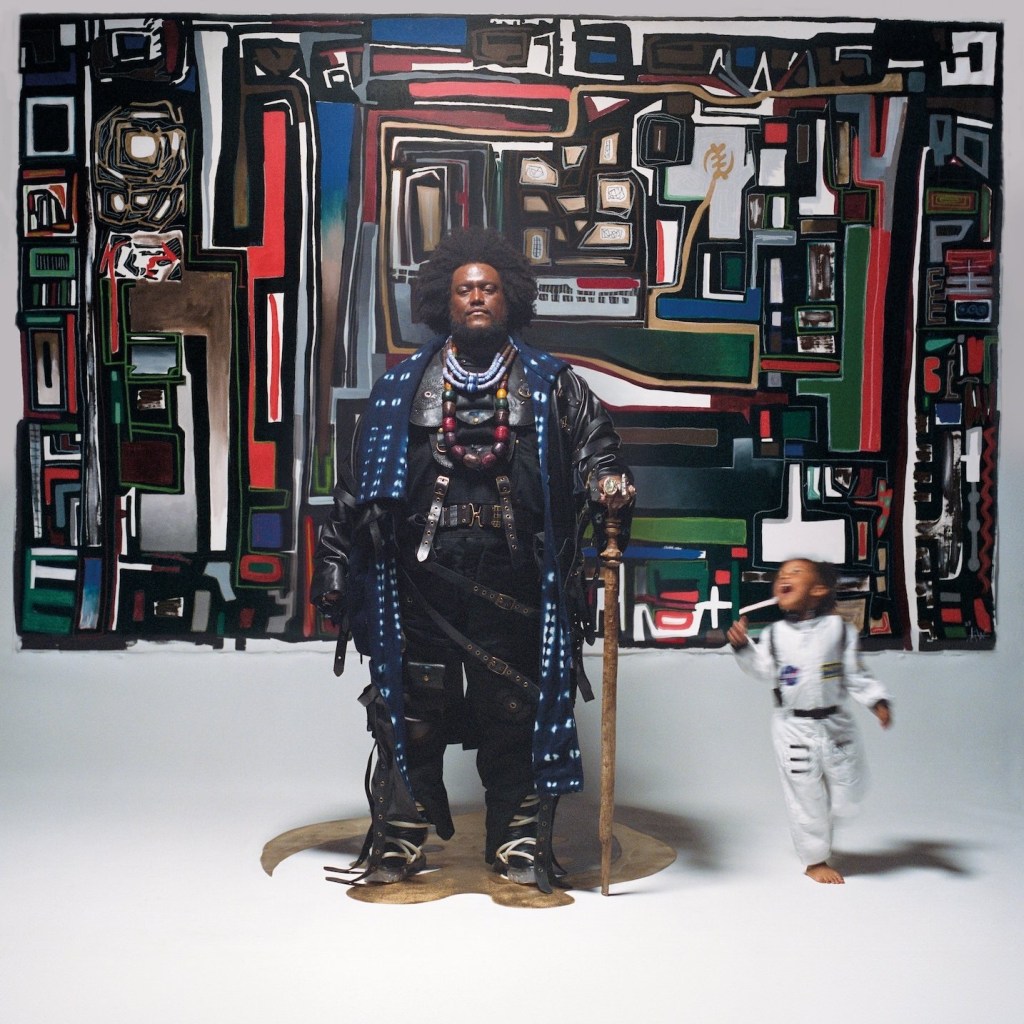
Fearless Movement
2014
Young (formally Young Turks)
I was blown away when I first heard Kamasi’s The Epic in 2014. I loved his big tenor sax shredding over bold arrangements (a 10-piece jazz band augmented by a 32-piece orchestra, 20-member choir, and various vocalists). It had a retro soul jazz vibe but was also uniquely Kamasi. His subsequent albums were more of the same. Live, Kamasi and his band were loud and aggressive – a stark difference from the recordings. I craved Kamasi to release an album that was not more of the same and that caught some of the live magic. Fearless Movement delivers something new and captures the live magic by being a “dance album.” But Kamasi is way too clever to be obvious; his version of a dance album, per his website, is:
“When people hear that I’m making a dance album, it’s not literal,” Washington says. “Dance is movement and expression, and in a way it’s the same thing as music — expressing your spirit through your body. That’s what this album is pushing.” Kamasi continues: “The kind of music I make is not necessarily associated with dance, even though I feel like the more expression in the music, the more it can inspire you to move.”
On my first listen, I moved: head bopping, foot tapping, body swaying, etc. I was not dancing but moving (dare I say fearlessly). This is my favorite Kamasi album since his debut. It is everything I have hoped for in a Kamasi album. I just saw the band live on the tour supporting Fearless Movement, and after seeing several of the tunes live, I liked the album even more.
If you are unfamiliar with Kamasi Washington, he comes from an L.A. jazz fusion collective called the West Coast Get Down (WCGD). For the WCGD, “jazz fusion” is not jazz-rock or jazz-funk of the late 1970s or jazz-lite of the 1980s but jazz hip-hop. One of Kamasi’s resume builders was that he appeared on Kendrick Lamar’s 2015 masterpiece To Pimp a Butterfly. The WCGD was/is a collective of young musicians (although they are not so young anymore as they are in their 40s) credited with reviving jazz fusion and making L.A. the focal point for what many consider a renaissance for the genre’s mass appeal. Some of the key players are Thundercat (bass), Terrace Martin (multi-instrumentalist and producer), Miles Mosley (bass), Tony Austin (drums), Ronald Bruner Jr (drums), Cameron Graves (piano), Brandon Coleman (keyboards), Ryan Porter (trombone), Patrice Quinn (vocals) and the guy with the most name recognition: Kamasi Washington (sax). All of these characters have been on Kamasi Washington’s albums and in his live bands. For example, on the Fearless Movement tour, the Kamasi band is Tony Austin on drums, Miles Mosley on bass, Brandon Coleman on keys, Ryan Porter on trombone, DJ Battlecat on everything, Patrice Quinn on vocals, Rickey Washington (Kamasi’s dad) on flute and soprano sax.
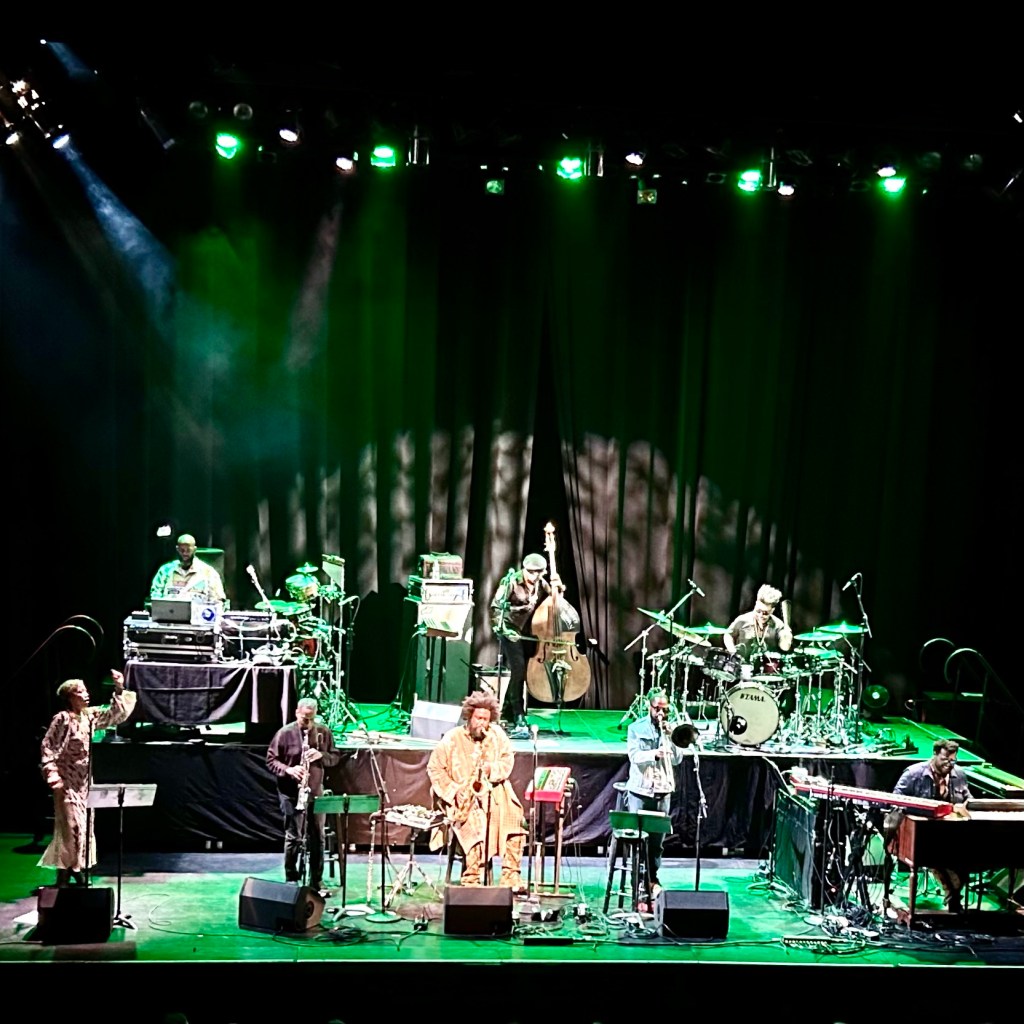
Fearless Movement (the album) has the usual Kamasi/WCGD collaborators and some new faces: DJ Battlecat, BJ The Chicago Kid, Andre 3000 (in flute mode vs. rapping), Coast Contra, George Clinton, and D Smoke.
Note: The song sequences of the vinyl LP and the digital stream are different—I will follow the vinyl sequence in this review.
Side A
“Lesanu” opens the album with a prayer in Ge’ez, the language of the Ethiopian Orthodox Bible, per Kamasi’s website:
“‘Lesanu’ is a dedication to a friend of mine who passed away, and a moment to give thanks for my path,” Kamasi says. “Being a father means the horizon of your life all of a sudden shows up. My mortality became more apparent to me, but also my immortality — realizing that my daughter is going to live on and see things that I’m never going to see. I had to become comfortable with this, and that affected the music that I was making.”
“Lesanu” is a powerful song that mixes 60s bop with some acid jazz elements. Cameron Graves (piano) and Kamasi (tenor sax) give impressive solos. The tune sets the stage for this to be a kick-ass album.
“Asha the First” (Ft. Ras Austin, Taj Austin & Thundercat) is a song credited to Kamasi and his young daughter. Again per Kamasi website:
With touring on pause, they spent her [Kamasi’s daughter] early years together listening to Washington’s favorite records by John Coltrane, Ornette Coleman, and Eric Dolphy. “I wanted to show her all of the best music,” he says. And one day, at just shy of two years old, she came up with a melody. “We were playing around on the piano, and she just kept playing it over and over again,” he says. That tune became the song “Asha The First.”
In concert, Kamasi tells the same story above but adds a demo of what he first heard from his daughter. The song’s recording has a beautiful Thundercat bass solo – which is more like a guitar solo in that it is super melodic. Kamasi follows with a righteous tenor sax solo. The song also features a rap from Coast Contra (Ras and Taj Austin, the twin sons of West Coast rapper Ras Kass).
“The Visionary” (Ft. Terrace Martin) is a short song that provides a transition from Asha to “Get Lit.”
“Get Lit” (Ft. George Clinton & D Smoke) amalgamates Clinton’s P-funk, hip-hop, and jazz. It is a beautiful jam and one of my favorite songs on the album. I hoped to hear this song live but assumed it could not be duplicated in concert without Clinton and D Smoke. However, Kamasi had a great idea for the live show: turn over the recording to DJ Battlecat and let him remix it live and show off his DJ prowess—it worked great.
Side B
“Computer Love” (Ft. Brandon Coleman, DJ Battlecat & Patrice Quinn) is a cover of a 1986 Zapp song. The original was a classic mid-80s quiet storm synth-pop-funk. On the recording, Kamasi turns it into a gorgeous ornate jazz ballad. Vocalist Patrice Quinn has been part of Kamasi’s Secret Sauce since day one, and she is the featured vocalist on this track. This is her best vocal on a Kamasi album. In addition to Quinn, some kind of wind synth solo transitions into a face-melting Kamasi tenor solo. Live DJ Battlecat was the more prominent “vocalist” in the love show via a voice box.
“Dream State” by Kamasi Washington & André 3000 is an instrumental musical conversation between André 3000 (on flute) and Kamasi. I have listened to André 3000’s flute album, and it doesn’t do much for me, but this collaboration with Kamasi really works.
“Interstellar Peace (The Last Stance)” sounds like the instrumental soundtrack of a science fiction movie. In concert, this became a showcase for Brandon Coleman (the tune’s composer).
Side C
“The Garden Path” sounds like classic Kamasi—it would not have been out of place on any of his previous albums. Dontae Winslow (trumpet) and Ryan Porter (trombone) provide great solos.
“Road to Self (KO)” is one of my favorite tracks on the album. It opens with a cool synth solo, then segues into piano before swelling into the full ensemble. Kamasi takes a solo (with some nice echo effects). The solo starts gently and then gets wild —a bit of jazz psychedelia. After Kamasi, Miles Mosley takes his turn on bass. Mosley’s solo also goes psychedelic with some wild bass bowing (almost an electric guitar sound). A drum solo is next (it is unclear if it is Tony Austin or Ronald Brunner Jr.). Finally, the full ensemble comes together to take it across the finish line.
Side D
“Together (ft. BJ the Chicago Kid)” is a gorgeous ballad featuring the intertwined vocals of BJ the Chicago Kid and Patrice Quinn. It also has a nice Ryan Porter trombone solo.
“Lines in the Sand” features vocalists Dwight Tribble (another long-time Kamasi contributor) and Patrice Quinn. It has a nice McCoy Tyner-like solo from Cameron Graves (I assume).
“Prologue” was the teaser single for the album. When it was released, I knew this would be a great album. In the spirit of Kamasi’s “dance record” concept, it is a cover of an Astor Piazzolla song. Astor PiazzollaIla is the legendary Argentinian tango composer. Washington and the band deconstruct the tango and remake it into Kamasi Washington music. It is a highlight of the album and was the finale of the live show.
Fearless Movement is my new favorite Kamasi Washington album. At 86 minutes, it is a relatively short Kamasi album, which helps – it is more digestible. I like how it more deliberately incorporates Kamasi and the WCGD’s hip-hop influences. As mentioned, witnessing this material live has only enhanced my appreciation of the album.
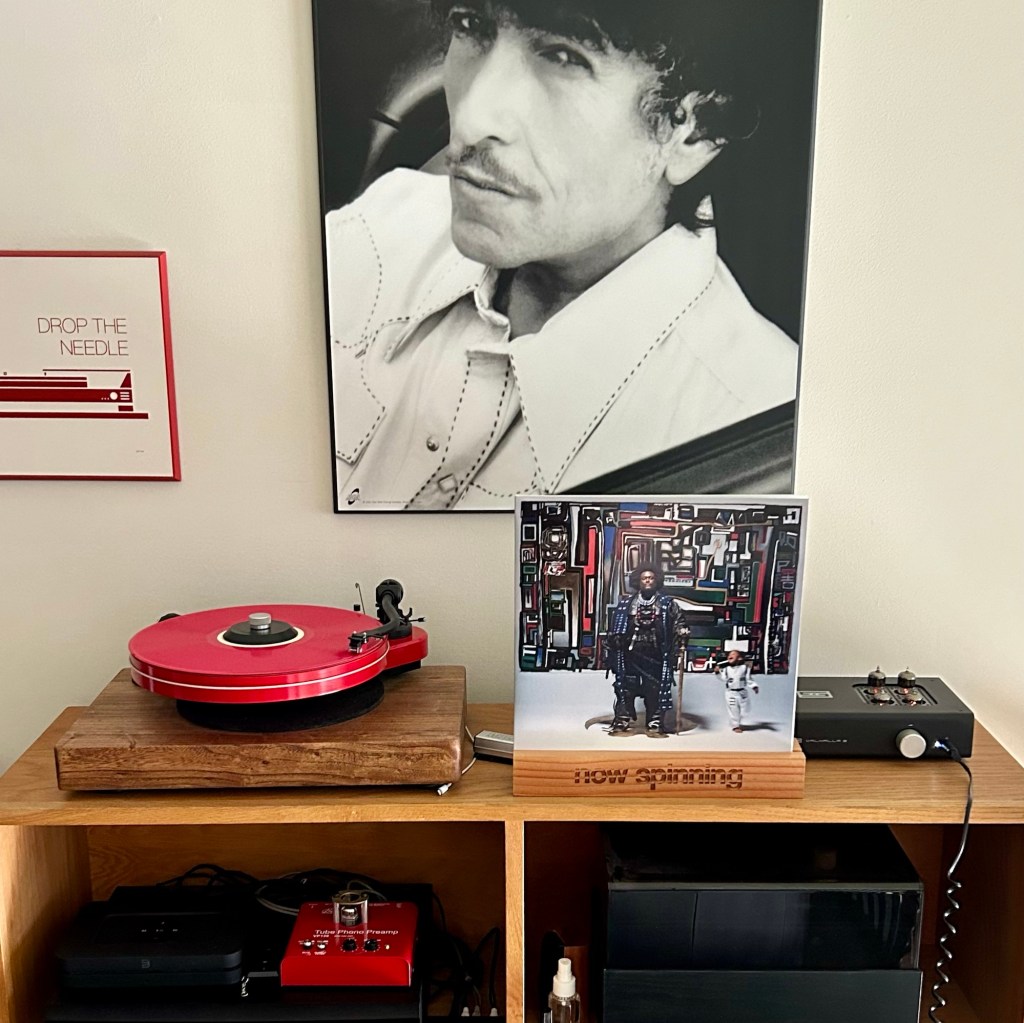
A note on the vinyl edition of the album, it sounds great and is a quality pressing. The cover art is well-executed and tasteful. The credits are well documented (unlike those on Tidal, which are impossible to follow). As noted, the album sequence is different for the vinyl version vs. streaming – I assume this was a practical issue of how to fit the songs on four LP sides vs. artistic choice. The album is pressed in red (sides A and B) and blue (sides C and D). The physical album is a reminder of the pleasure of physical media – holding an album cover, reading credits, and being forced to engage with the music by getting up and flipping a side every twenty minutes or so.
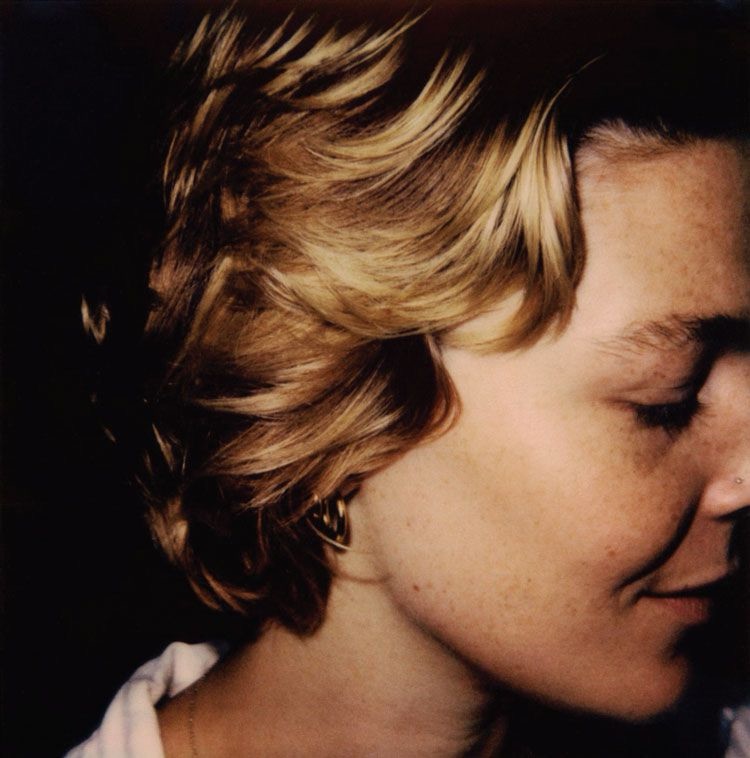
Don’t Forget Me is Maggie’s third proper album (she has had several EPs and demo compilations). Each album is a step forward, and this is her best. Her debut, 2019’s Heard It in a Past Life, had great singles but was not a cohesive album. It fused a folkie singer-songwriter groove with EDM in a natural way. Her second, Surrender (2022), felt like an album; it was a cohesive whole album. Surrender sounded more mature and self-assured, it had an 80s New Wave rock vibe. On Don’t Forget Me, Rogers has found the Maggie Rogers sound: a soft rock guitar-forward production and an updated version of a 70s singer-songwriter vibe. There is a quiet confidence in Rogers; she sounds comfortable as a pop star – or, as she says in a recent profile in Vogue regarding Don’t Forget Me:
“This is what I sound like when I’m just breathing.”
“There are so many different memories woven into the tapestry of this record, from across the span of my 20s. I’m turning 30 at the end of April. This record does feel in many ways like this really woven memory blanket of this long span of my life.”
Vogue 4/12/24
Per the pre-release hype, the songs poured out of her, with the help of co-writer Ian Fitchuk in a week. This kind of explosion of creativity was new to Rogers, as was the collaboration with Fitchuk.
“Rogers wrote most of the record with the producer Ian Fitchuk. They met in Los Angeles in 2019, when Fitchuk was there for the Grammy Awards. (He was a co-writer and co-producer on Kacey Musgraves’s “Golden Hour,” which won both Album of the Year and Best Country Album.)”
From The New Yorker published in the print edition of the April 15, 2024, issue, with the headline “The Modern Pulpit.”
The music on the album is generally upbeat, which is an intriguing contradiction to the mostly pensive lyrics. The lyrics of the bouncy opening track, “It Was Coming All Along,” are melancholy: Mom is getting ready to sell the family home, the narrator is approaching thirty, and feeling the weight of adulthood when the heady days of her early twenties don’t seem that far away. But it is not chronic: “…a honey shade of blue…But I know it won’t last for long.”
The confidence I hear in the album is highlighted in “Drunk,” where the narrator says:
“I’m drunk, not drinkin’
Lost in wishful thinkin’
‘Round and ’round and ’round and ’round and ’round it goes
I can hear them whisperin’
Call, but I’m not listenin'”
On her last tour, Rogers would introduce “So Sick of Dreaming” as “a story that my friend told me about someone being sorta shitty.” The narrator tells the story of a loser boyfriend and how the narrator is tired of dealing with this situation and dreaming they will somehow get better. She is ready to move on.
In the context of a rock song, “The Kill” tells the story of lovers who are not on the same page. Ultimately, the couple “were just wasting time.”
“If Now Was Then” is a beautiful song about regret and “what if?” The conclusion is that no matter what, you can’t fix the past.
“But if now was then, I would get out of my head
I would touch your chest, I would break the bed
I would say the things that I never said
Oh, the things I’d do, oh, if now was then
But you can’t take it back
But you can’t take it back“
“I Still Do” is a piano ballad in Carole King’s style. Rogers even has some King vocal mannerisms. Despite losing a failed relationship, it was worth it – no regrets.
“‘Cause love is not a debt you pay
It’s not something you can give away
Love is not the final straw
But it’s always a reason to risk it all”
“On & On & On” is the most impressive vocal performance on the album. Lyrically, the narrator warns their ex-lover to move on: “Yeah, you better run.”
The narrator of “Never Going Home” is conflicted; they have fond memories of early in the relationship, but know the spark can’t be reignited: “…you kept me waiting…now I’m never, ever going home.”
“All the Same” is a piano and acoustic guitar ballad with a heartbreaking sound and lyrics to match:
“And still you wish for one more kiss
A moment’s bliss from a lover you’ve always known
Ooh, so it goes”
Maggie sticks the landing with the final and titular track, “Don’t Forget Me.” When this teaser single came out in early February, I was stoked that Don’t Forget Me would be a good album, and now, hearing it, Maggie has delivered. The song has a great musical hook and is the best song on the album. Like many of the songs on the album, it has a lot of conflicted emotions: disappointment she has not found “the one” offset by an admission that she is not ready to settle down anyway. She accepts that the next lover likely won’t be the one and is ok with that.
“So close the door and change the channel
Give me something I can handle
A good lover or someone who’s nice to me
Take my money, wreck my Sundays
Love me ’til your next somebody
Oh, and promise me that when it’s time to leave
Don’t forget me
Don’t forget me”
With Don’t Forget Me (the album), Rogers states that she is a pop star who will be around for a while and can be considered with the great 70s singer-songwriter who paved the way for her. This is an excellent roll-your-car-windows-down and sing-along summer album.
Vinyl Note: After several days of streaming Don’t Forget Me on Tidal (24-bit/96 kHz), I picked up the vinyl LP. The high-resolution stream sounded great, but the vinyl (Dogwood Green Edition) enhances the album’s organic sonics. It’s an excellent, clean pressing.

The Tortured Poets Department: The Anthology
(2024)
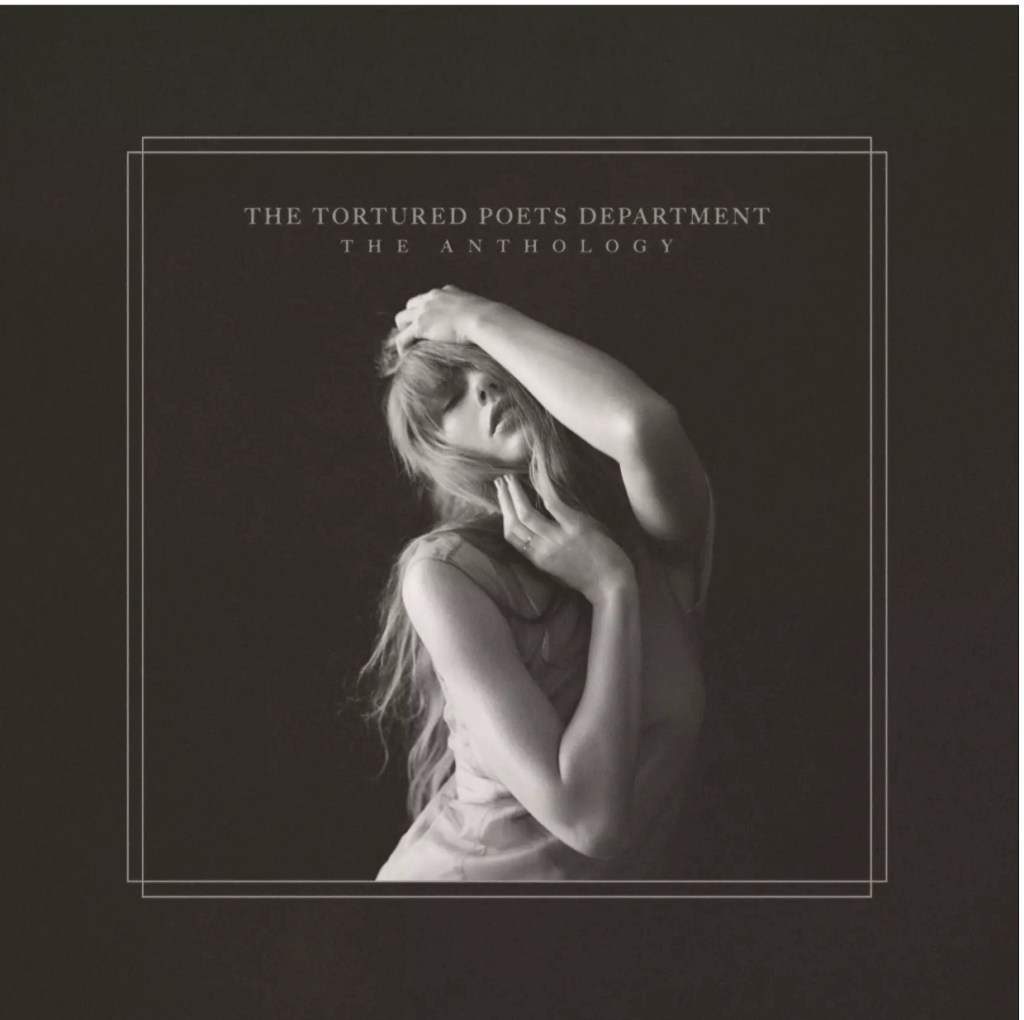
Like all things Taylor Swift, this new album has gotten a lot of press. Typically, the critical consensus is positive for a new Taylor Swift album. The reviews for The Tortured Poets Department: The Anthology (TTPD for short) are not overly negative but are not the usual fawning praise. So, for Taylor, this is a flop. The biggest complaints are the length of TTPD (31 songs and a little over 2 hours), the firehose of recordings that have been released over the last few years (new albums, re-recordings, bonus material, etc.), and overexposure (The Eras Tour, Travis, etc.). Some people are suffering from Taylor fatigue, but I am not. I was looking forward to this new album, following all things Taylor on social media, and was stoked when TTPD turned out to be double the length of what was initially marketed.
There is a difference between a Swifty and a Taylor Swift fan. A Swifty knows every word to her every song and is a collector of every nuance of her life (boyfriends, exes, slights, etc.); that is, they are obsessed with Taylor Swift. A fan likes her music and performances but falls short of obsession. Although I consider myself a musichead, there are no artists I am obsessed with in the same way as a typical Swifty. Bob Dylan comes the closest for me, but I have learned over the years that I am a mere piker compared to how obsessed one can become with Dylan (he has Swifty-like obsessives). I don’t look down on Swifties; I am jealous of that level of enthusiasm for an artist or band. I am merely a Taylor Swift fan.
As a mere fan, I am not in a position to fully excavate this album. I cannot speculate which songs are about Joe, Matty, or Travis, and I don’t care. My approach to a musician who writes in an autobiographical (autofiction) style like Taylor is to assume the narrator of the songs is a character and not concern myself whether the narrator is the artist or the subject of the song is a famous person. I am minimally interested in the gossip of decoding fact from fiction in a song. I am here to enjoy the story, the sonics, and the performance.
My first reaction to TTPD was that there is a sonic sameness that would get tedious over 31 songs and two hours. In addition, it was a sonic rehashing of the folklore, evermore, and Midnight’s eras: Antonoff’s atmospheric synth noodling and Aaron Dressner’s pop-folk and piano ballads. None of the songs stuck out as bangers. Lyrically, it is a breakup album. I don’t have an issue with the breakup songs/albums as the breakup trope is often effective (as in the best of an artist’s catalog – see Dylan’s Blood On The Tracks), and Swift is the master of the breakup trope. My first reaction was: “Don’t hate it; it is just meh.” Taylor Swift has enough goodwill with me that I felt obligated to give it more time to breathe.
I have had more time with the album, which is a grower (an album that gets better with each listen). The sameness of the sonics has faded, and I hear the uniqueness of each track. Granted, there are no new sounds here, but I have yet to tire of Jack Antsnoff and Aaron Dessner’s sonics. I find their collaboration with Swift to be the perfect cocktail. I now hear bangers. The main album (tracks 1 – 16 released first and are on the physical editions) sounds like finished tracks, whereas some of the second album (tracks 17-31) have a demo feel.
The songs have clever lyrics and exciting stories. Swift shares various moods and attitudes: resignation, sadness, anger, vengeance, wistfulness, etc. There are several targets: exes, fans, a new boyfriend, skeptics, and critics – most intriguingly, the artist herself. Unlike the third-person narratives of folklore and evermore, TTPS is first-person autofiction. I know enough Taylor gossip to guess which songs are about Joe vs. Matty, but I am trying to avoid the gossip and take the narratives at face value. I find the storytelling engaging.
I don’t have a problem with the length. It is a bit of a brain dump, and I am sure that if Taylor had constrained herself to ten songs and had more crisp editing within songs, this would be considered a more substantial album in the Taylor canon. I prefer to hear TTPD as a raw and meandering album. I would rather hear the “bonus material” now, in real-time, vs. how most artists do it via an anniversary edition a decade or two into the future.
I am enjoying TTPS even though I don’t find it a masterpiece. It’s an exciting and entertaining work by Swift, one of my lifetime’s most successful pop musicians. Like all greats, like my beloved Bob Dylan, even the flops are intriguing. TTPS is, at the very least, fascinating.
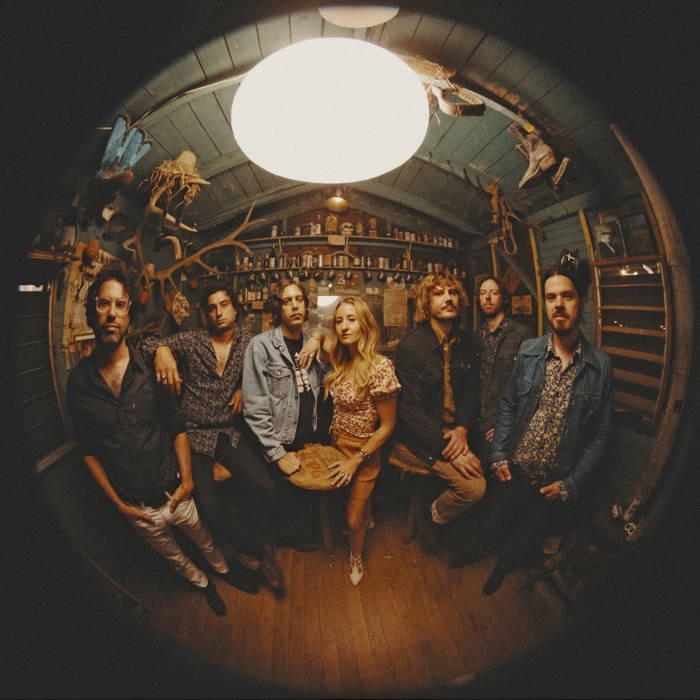
One of my favorite albums of 2023 was Margo Price’s Strays (released in January). I was delighted in October of 2023 when she released a sequel, Strays II. The sequel has the same vibe as Strays and comes from the same Jonathan Wilson-produced sessions. I am a huge fan of Wilson (both as a performer and as a producer). Most songs from both albums were written by Margo and her husband, Jeremy Ivy. Strays II has the same psychedelic late 70s classic rock feel as its predecessor. Although it is retro, it sounds fresh.
Strays II was marketed as an expanded re-release of Strays. It was promoted with three “acts” of songs. “Act I: Topanga Canyon” was released on August 22, 2023. “Act II: Mind Travel” was released on September 14, 2023. The complete Strays II and “Act III: Burn Whatever’s’ Left” was released on October 13, 2023. The vinyl edition of Strays II was released in January of 2024. Despite how it was marketed and promoted, Strays II is not bonus material or leftovers. Everything on II is as good as I – I slightly prefer II.

My elevator pitch for Margo Price is that she is a female Tom Petty, and both Stays albums have Mike Campbell as a guest musician to legitimize the Petty comparison. Campbell was Tom Petty’s guitarist and co-writer. He was part of Mudcrutch (a Petty side project), the most recent touring version of Fleetwood Mac, his current band, The Dirty Knobs, and he is a session ace extraordinaire.
The album opens with the titular song, per Price:
The title track is the story of how my husband, Jeremy [Ivey], and I met and fell in love in Nashville two decades ago. I wrote most of the words and Jeremy wrote the chords and melody. It also reflects how we have always tried to stay true to who we are as people: “Love and pain it comes in waves but it was quite enough in those early days, we were wild as wolves my darlin’, we were strays.”
Pitchfork
“Closer I Get” feature Ny Oh. Ny is a New Zealand folk singer, songwriter, and multi-instrumentalist. She is the lead singer of the band Neon Gru and has toured with Harry Styles as a multi-instrumentalist. She is the perfect backup vocalist for Margo. Per Margo, the song was:
…originally meant to open this double album with the line, “Being alive costs a lot of money but so does dying.” I’ve always thought it was unfair that the moment we are born, we immediately start racking up debt just for existing. This song was conjured from the ashes of our initial psychedelic trip—sometimes your perception and depth of field changes depending on where you’re at in life.
Pitchfork
“Malibu” is my favorite song from the whole project. This song has a solid Petty vibe. In addition to Campbell, the song also features Jonathan Wilson and Buck Meek (Big Thief). Per Margo:
“Malibu” was written with Mike Campbell in his Malibu home after Jeremy and I had driven through the canyon fleeing a forest fire to get my guitar from our Airbnb. I had the start of the song and brought it to him looking to finish it out. I wanted to write something with a country funk/Bobbie Gentry feel, a good long rambling story about the minutiae of the day, like “Ode to Billie Joe.” Mike added the long “California” yodel and the bridge and was exactly what the song needed. My favorite line is, “Love and grief are a package deal, the more you have, the more you feel.
Pitchfork
“Black Wolf Blues” – per Margo (from Holler)
“I love how these songs came together. ‘Black Wolf Blues’ in particular, Jeremy started writing the words from my exact point of view – he found myself reflecting on my ancestors, my grandparents (Paul & Mary Price) and their love and how it grew despite the drought and the loss of their farm. I wrote the chords and the melody and helped finish the verses and chorus. Even though it has a sweetness and a nostalgic way about it, there is a looming darkness – the wolf who’s been watching and weaving his way like a stray throughout the entire album. Look for him. It’s like an invisible plague hanging in the air, it’s the man in the suit and tie who’s lying to you through his straight, white teeth. He hides in shadows”.
“Mind Travel” is a psychedelic – per Margo (from Holler)
“…one of the more lyrically strange songs I’ve written. Jeremy and I wrote it in South Carolina. It’s pretty much beat poetry on drugs with a back beat – it was influenced by having an out of body experience on psilocybin. We both had some pretty incredible breakthroughs about accepting death and just reckoning with how fast it’s all going. It’s okay to be reflective and remember the past as long as you don’t get stuck back there. This part of the trip is where you learn to be satisfied with the present”.
“Unoriginal Sin” (feat. Mike Campbell) – per Margo (from Holler)
“The psychedelic journey continues down the blurry rabbit hole of time and space. We were lucky to have Mike Campbell co-write a dark rocker called ‘Unoriginal Sin.’ Working with him on some of these songs was like having a master class in songwriting. Sometimes there are dark corners you haven’t explored for some time, but it does some good to clean them out”.
“Homesick” (feat. Jonathan Wilson) has a Beatleseque vibe. Margo uses the term “homesick” for a feeling vs. place.
“Where Did We Go Wrong” sounds like a long-lost 1970s soft rock hit—a bit country but leaning more toward pop. It’s gorgeous.
“Burn Whatever’s’ Left” is a fantastic ending to the album. A psychedelic vision of death that declares:
“Strike a match and start again
Lock the road, from either end
Build me a house for memories I’ve kept
Then burn whatever’s left”


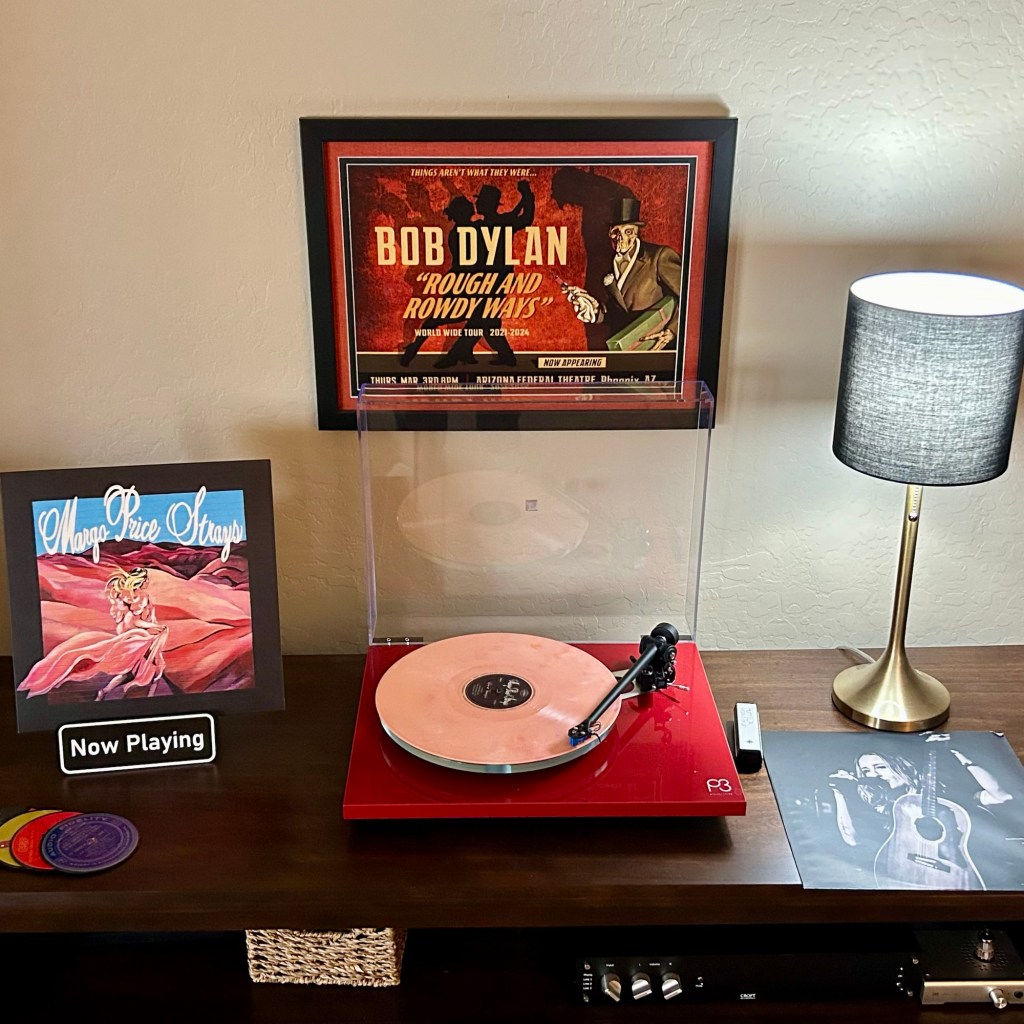
Margo released a six-song live Strays EP as part of Record Store Day Black Friday 2023. The performance was an in-store show at Grimey’s in Nashville on Strays I album release day (1/13/23). The vinyl is pressed on sangria marble vinyl. Grimey’s famously commissions murals on its outdoor wall to promote new albums. Although I am disappointed at how short this live album is, it is great to hear the road band playing the material. I saw Margo and the band in Phoenix in February 2023 at the Cresent Ballroom, and they were fantastic. This live EP is a beautiful souvenir of the live show. Unfortunately, this Record Store Day vinyl is the only way to listen to the EP.


Strays II is bundled with Strays I on streaming services:
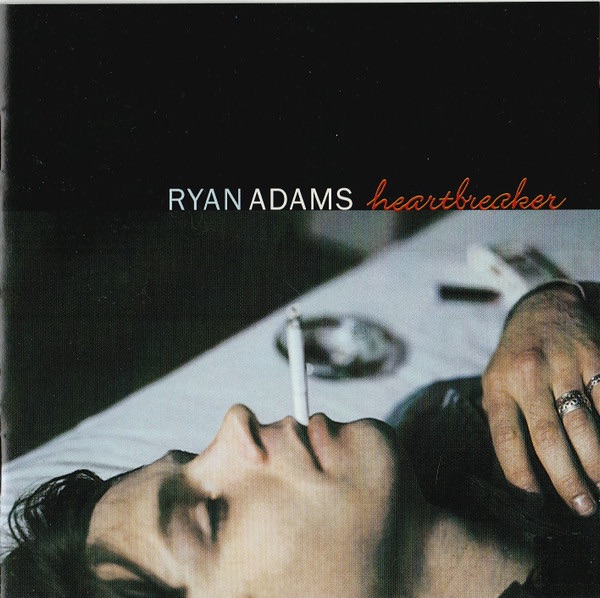
Heartbreaker
(2000)
Ryan Adams has been trying to live up to this, his debut masterpiece, for the last quarter of a century. While his band Whiskeytown was still burning to the ground, Adams ducked into a Nashville studio for two weeks of sessions with Gillian Welch and David Rawlings, supervised by Ethan Johns. The album is said to be inspired by Adams’ break-up with music industry publicist Amy Lombardi. This is Adams’ best LP, and it perfectly captures the Americana zeitgeist of the turn of the 21st century.
Pitchfork at the time gave it a glowing 9.0 review, stating that: “Heartbreaker is a drinker’s album, an ode to sadness that deals exclusively with all the dark and dirty corners of the human heart. It’s music written in the language of loneliness, depression, and, above all, heartbreak, in all its varied forms.”
I was reminded of this album while working on a review of a Laura Marling album also produced by Ethan Johns. Johns is the son of legendary producer Glyn Johns. Although Johns is primarily a record producer, mixer, and engineer, he is also a multi-instrumentalist who has toured as a backup musician. When I think of Johns, the first thing that comes to mind is the Ryan Adams classics he produced: Heartbreaker and Gold.
The album opens with an amusing argument between Adams and Rawlings regarding Morrisey and then leaps into the album’s first song, “To Be Young (Is to Be Sad, to Be High).” The song wonderfully captures a mood: savoring your misery – which is Ryan’s brand that has carried him for his career. This is not a unique mood in country music; there is even a term for it: “high lonesome.” It is performed as a raucous rock song with a soaring bridge that milks the high lonesome. The pairing of an argument about one of the mopiest of rock stars, Morrisey, and the album’s first song could not be more perfect.
“My Winding Wheel” slows down from the previous song to a fingerpicked acoustic guitar ballad that is a plea for a soulmate.
“Amy” is another acoustic guitar ballad, but this time augmented by sad-sounding strings. The soulmate has been lost.
“Oh My Sweet Carolina” (Ft. Emmylou Harris) is another love song. Instead of lamenting a lost lover, this lamenting a place: the Carolinas, where Adams grew up. Emmylou has made a career of these kinds of guest appearances – she is the most outstanding guest vocalist in country music.
“Bartering Lines” is a weary song about being a loser in a shithole town.
The heartbreak continues with “Call Me on Your Way Back Home.” The narrator’s lover has left, and all he can hope for is that she remembers him. The song ends with a beautiful, mournful harmonica solo.
“Damn, Sam (I Love a Woman That Rains)” – Adams opens the song with an admission that he is a world-class sad sack: “As a man, I ain’t never been much for sunny days” in this song praising a crying girlfriend.
“Come Pick Me Up” opens up with another Dylanesque harmonica solo and then explains his heartbreak with this brilliant chorus:
“Come pick me up, take me out
Fuck me up, steal my records
Screw all my friends, they’re all full of shit
With a smile on your face, and then do it again
I wish you would”
“To Be the One” is more sadness. For me, this is the weakest track on the album. The narrator is feeling so sorry for himself that I find it pathetic.
“Why Do They Leave?” describes the timing problem of love; just as the narrator falls in love, the lover leaves. Was he too late in showing his affection? Would it have never worked out anyway?
“Shakedown on 9th Street” finally brings up the pace with a full-on rocker. Sadness has escalated to anger: “I was just gonna hit him, but I’m gonna kill him now.”
After the anger, “Don’t Ask for the Water” moves to the bitterness of the loss: “Don’t ask her for the water, ’cause she’ll swallow you down (or “teach you to cry” or “you’ll sink like a ship”).
“In My Time of Need” introduces a new decent: the narrator is ready to give up.
On “Sweet Lil’ Gal (23rd / 1st),” Ryan switches to piano and ends the album on a particularly bleak point. I can’t figure out if he is remembering a lover or something else like a drug. Is 23rd and 1st referring to a NYC street address? It is spooky that Ryan foreshadows 9/11 one year early with this lyric: “Steals my shirt, makes me hurt / In the field where my plane went down.”
I don’t see myself as a sad or depressed person, but boy, do I like sad music and high lonesome in particular. Ryan Adams delivers a high-lonesome masterpiece. Adams has flirted with this formula for the last 25 years but has never struck the landing as effectively as Heartbreaker.
Personel:
Ryan Adams – vocals, acoustic guitar, electric guitar, harmonica, piano, banjo
Ethan Johns – drums, bass, Chamberlain, glockenspiel, B-3, vibes
David Rawlings – backing vocals, acoustic guitar, electric guitar, banjo, tambourine
Gillian Welch – backing vocals, banjo, acoustic guitar, electric bass, “voice of Lucy”
Pat Sansone – piano (“Oh My Sweet Carolina,” “Come Pick Me Up,” and “Why Do They Leave?”), Chamberlin and organ (“Bartering Lines”), backing vocals (“To Be Young (Is to Be Sad, to Be High)” )
Emmylou Harris – backing vocals (“Oh My Sweet Carolina”)
Kim Richey – backing vocals (“Come Pick Me Up”)
Allison Pierce – backing vocals (“Why Do They Leave?”)

An esteemed former colleague, who has become a friend in retirement (I will refer to him as Jim), reminded me that Joe Jackson is one of my essential musicians. Jim and I have been having email conversations over the last few months about music and specifically sharing our favorite bands and artists. He recently emailed me:
So, why is Joe Jackson so good, yet he was not on our favorite artists lists? I am just listening to his greatest hits (again), and I am always just enamored, but I never follow up and try to listen to, say, his first breakthrough album all the way through. Why? Ideas?
The email reminded me I was a massive fan of his debut, Look Sharp (1979), through Body And Soul (1984). Jackson has been out of my listening rotation for so long that I have forgotten about him in the many music discussions with my friend Jim – thanks for the reminder!
Beat Crazy (1980)
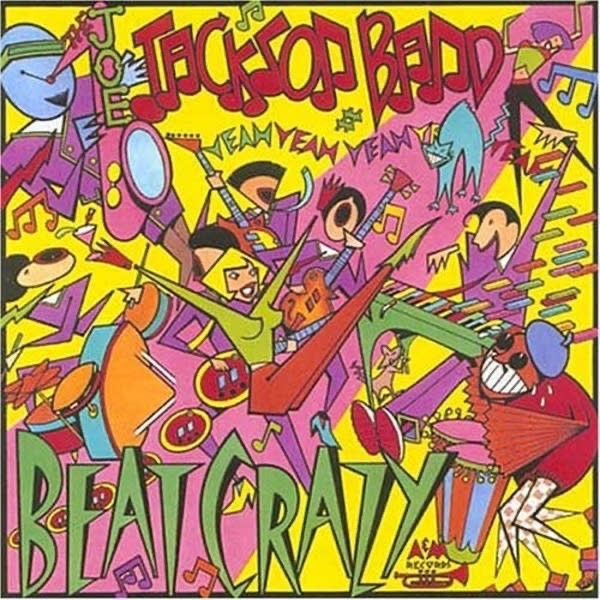
My introduction to Joe Jackson was his third album, Beat Crazy (1980). I knew his debut, Look Sharp! (1979) because it had hits, but I didn’t own it. I missed his second album, I’m the Man (1979). I bought Beat Crazy shortly after it was released because of Jackson’s reputation and, more importantly, the cover art. I had not heard any of the songs before buying it (it was a commercial flop with next to no airplay). Beat Crazy opened my ears and mind to Jackson’s immense talent, making me a Joe Jackson fan.
Beat Crazy was love at first needle drop! It was the epitome of the best of New Wave music: smart but punky and with pop hooks galore. I loved the cover art, the songs, the performance, and the attitude. It was hip but not popular. It was in constant rotation on my turntable the winter of 1980/81 (side one mostly), and it provided an essential soundtrack to an important year of my life: October 1980 – September 1981. A year earlier, I had dropped out of college, moved in with an old friend, got a bank teller job, and partied like a rock star for a year. By the fall of 1980, I was officially bored with the party, and it was time to get my shit together. A girl at work had caught my eye, and by January of 1981, we were dating – that girl eventually became my wife of the last 40 years. So Beat Crazy is an essential album, but I bet I haven’t listened to it in a decade. Jim’s email motivated me to revisit the Joe Jackson catalog, and Beat Crazy was the first album I returned to.
Listening to it now, it still sounds as great as I remember: fresh, adventurous, yet accessible. It foreshadows the fantastic music that would come from Jackson over the next few years.
Look Sharp! (1979)

After falling for Beat Crazy, I returned to Jackson’s debut, Look Sharp! It is an impressive debut with several hit songs, including: “Is She Really Going Out With Him?” which came out a few months before the album. Jackson and his band were influenced by reggae, and you can feel that influence in the songs and production. The album was both a critical and commercial success, putting Jackson in the same esteemed category as his contemporary Elvis Costello – although Jackson was, over time, unable to keep up with EC. Although there are songs I love on Look Sharp!, it doesn’t resonate with me, like Beat Crazy and some other albums in Jackson’s catalog. As mentioned earlier, Jackson’s second album, I’m the Man (also from 1979), never entered my consciousness (I do have a copy in my collection, but I couldn’t name you a song off the album), therefore it will not be included in this retrospective.
Joe Jackson’s Jumpin’ Jive (1981)
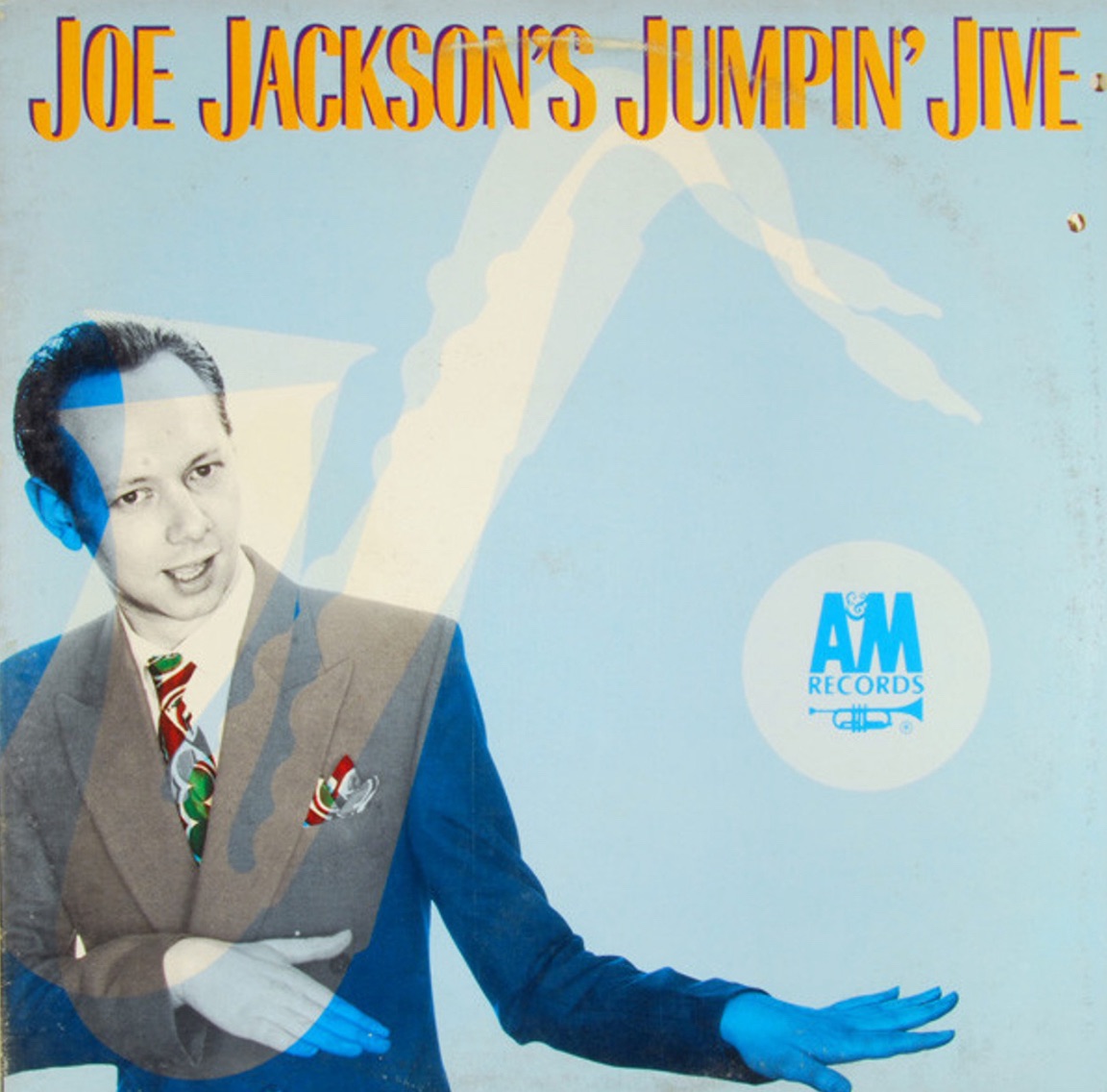
By the time Jumpin’ Jive came out, I was a fan willing to take whatever ride Joe would take me on. Jackson took a left turn with this album: it was a covers album of songs associated with 1940 swing and jump blues songs, specifically songs made famous by Louis Jordan and Cab Calloway. Despite my already-established interest in swing and jazz music, this music was unfamiliar to me. I had not even heard of Louis Jordan at the time. Despite this being a weird departure from Jackson’s New Wave trajectory, it worked and was even a minor hit. I loved the album as it struck a chord with my appreciation of Jackson and my love of jazz music in all its forms. Yet this is not an album I return to. If I was in the mood for jump blues, a rare mood, I would listen to the originals, Louis Jordan or Cab Calloway, versus this love letter to the style.
Night and Day (1982)
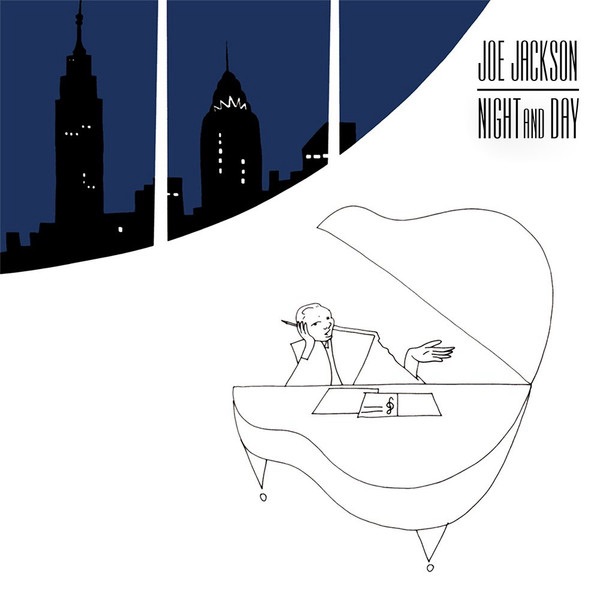
Jackson’s fifth album was a grand slam, as it was both a critical and commercial success. It is my favorite Joe Jackson album, and although it has not been in my recent listening rotation, it comes off the shelf every few years. It is a jazz-pop masterpiece.
The only time I have seen Joe Jackson live was on the tour supporting this album (9/23/82 at the Minneapolis Orpheum Theater). It is one of my top 25 live shows.
The album is Jackson’s successful attempt at a contemporary update of Cole Porter and his expression of his love affair with New York City at the time (he eventually fell out of love with NYC – he is quoted as saying, “It’s as if the city and I had a hot love affair and now we’re just friends”). The album has a jazz feel – it is a New Wave Steely Dan. Jumpin’ Jive seemed like a novelty record at the time, but I am convinced that without going through that step, he never would have accomplished a masterpiece like Night and Day.
Mikes Murder Soundtrack (1983)
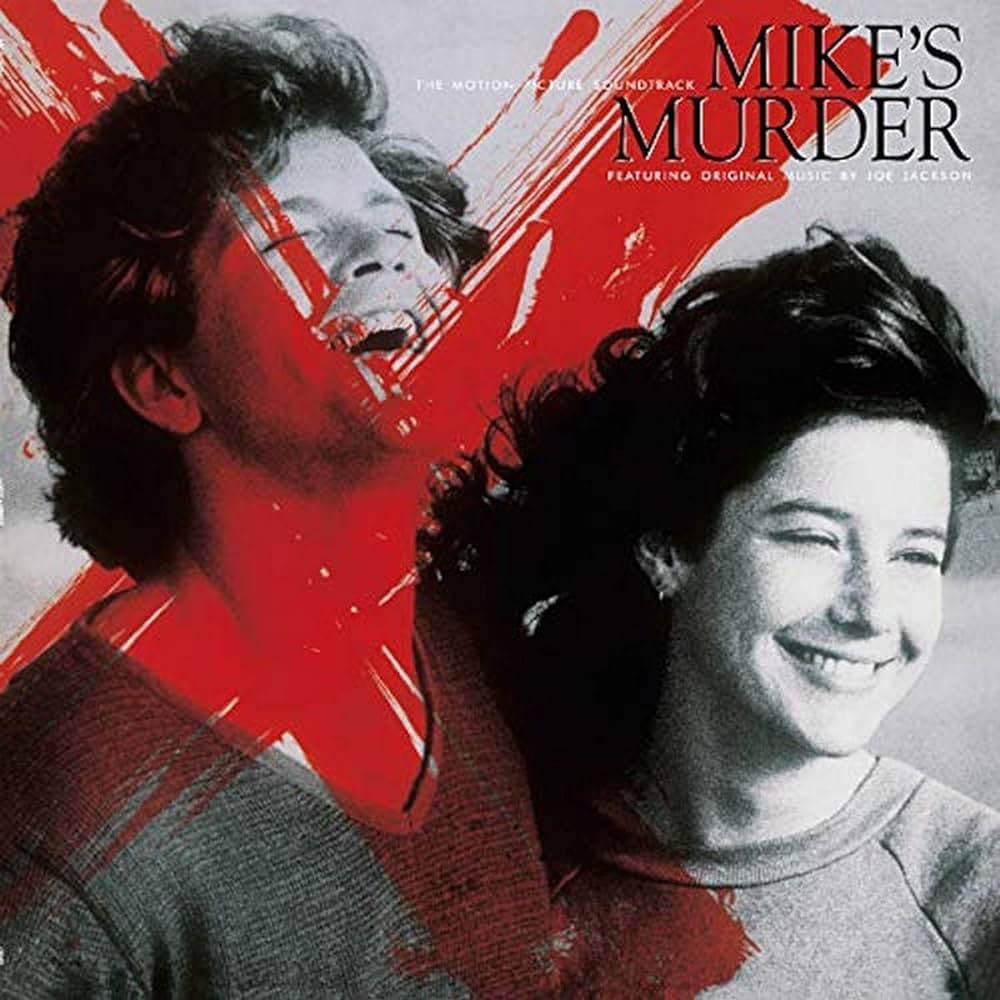
I bought this album at the height of my obsession with Joe Jackson. It was recorded about the same time as Night and Day, and the songs sound like Night and Day outtakes (in fact, Mike’s Murder tracks were included in the Night and Day deluxe reissue). The film stiffed, as did this soundtrack. It’s pleasant enough but not essential.
Body and Soul (1984)
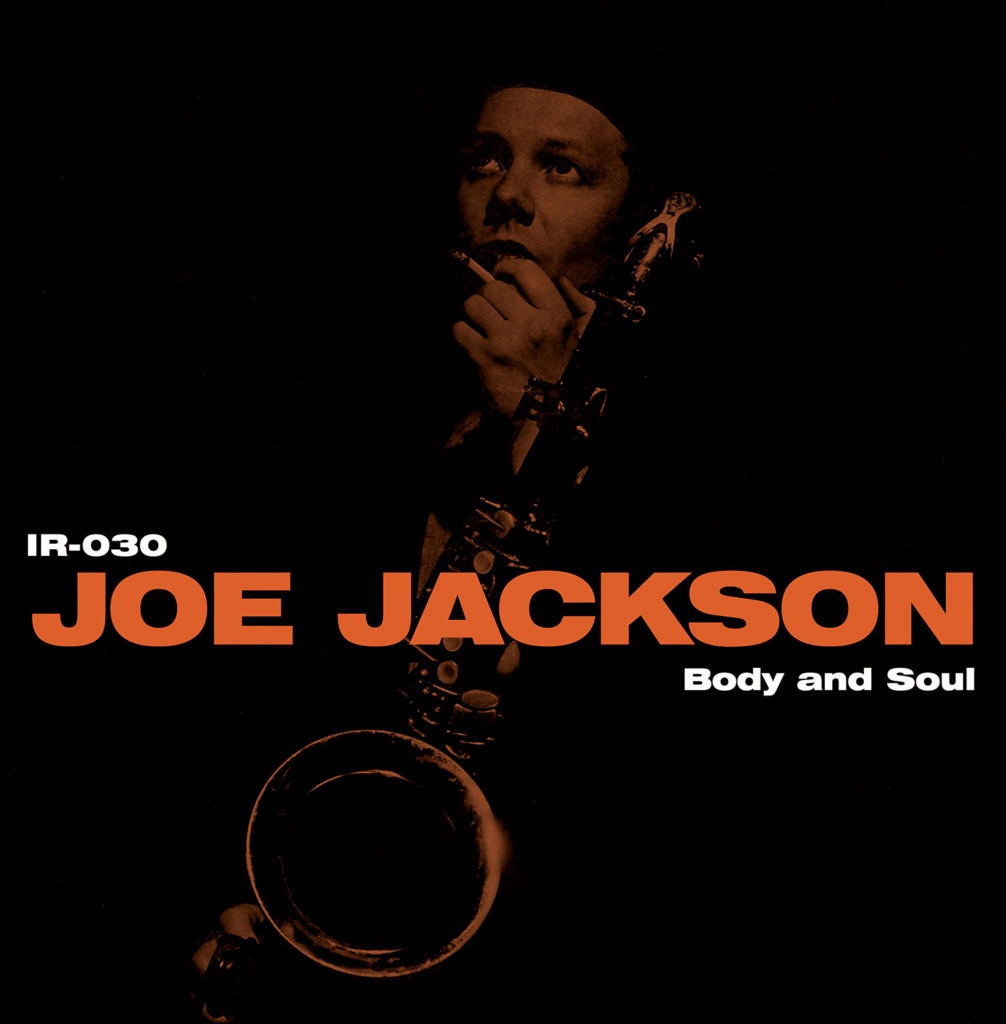
Although I would continue to buy Joe Jackson albums, this is the last Jackson album that resonated with me. This time, Joe goes with a Latin jazz sound and pulls it off masterfully. The album has one of Jackson’s best pop songs: “You Can’t Get What You Want (Till You Know What You Want).” The big band sound of this album is the perfect follow-up to Night and Day
I love the cover art based on Sonny Rollins Vol. 2 (Blue Note 1957). Sonically, this is a great-sounding recording and would be great for testing driving HiFi equipment (AKA a reference recording). It was Jackson’s first fully digital recording (an innovation at the time, but what would ultimately become an industry standard).
Summary
Joe Jackson had a brilliant pop career in the late 70s and early 80s. Then, his artistic ambition outpaced his audience as he veered off into jazz and classical music; that is, he got weird and lost me. I recently hopscotched through a few of his more pop-oriented albums from the ’00s, and he still has it, even if no one is listening.

 Axl's Catch Groove