The Desert 🌵 Sessions 5.0 (Winter 2025/2026)
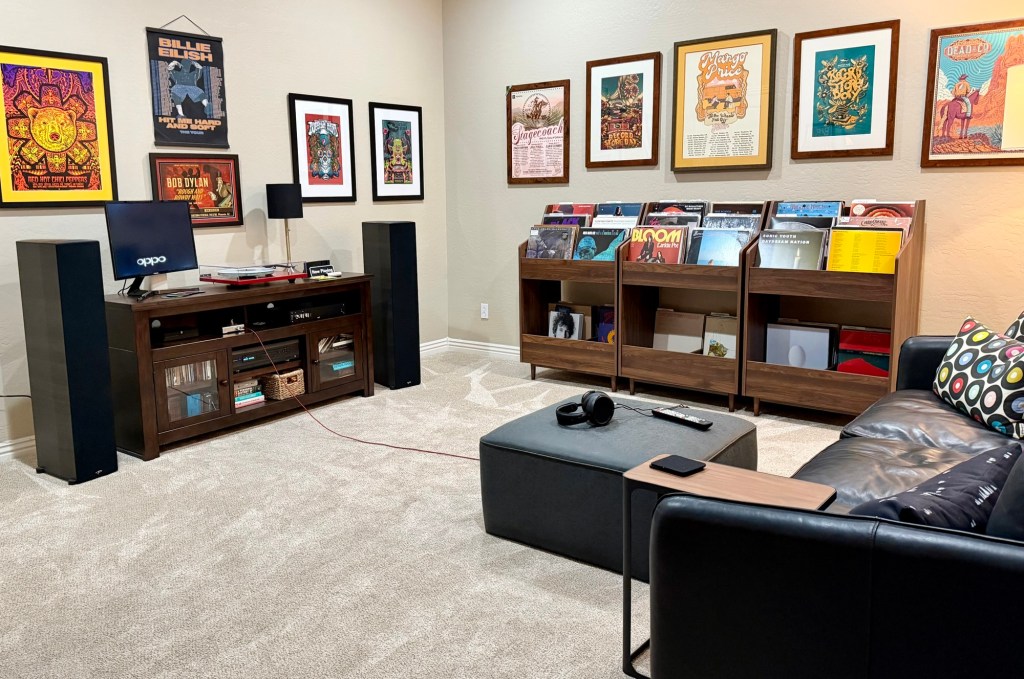
Paradigm Premium 800F speakers, Bluesound Node streamer (Tidal), Croft Acoustic Phono Integrated amplifier, Rega P3 turntable (stock cartridge), Schitt Vali 2 headphone amplifier, Oppo 105D Blu-ray (for digital media), and DROP.com + HiFiMan HE5XX Planar Magnetic Headphones
Last year, I upgradedthe Desert 🌵Sessions to play physical digital media (CDs, SACDs, HDCDs, and DVD-A). One of my goals was to play my small collection of high-resolution disks (mainly SACDs). However, I did not realize how challenging it would be to play the DSD layer of a SACD (more about that below). According to Google, Direct-Stream Digital (DSD) is a high-resolution audio format developed by Sony and Philips, primarily for Super Audio CDs (SACD) and high-quality digital downloads. Unlike PCM (used in WAV/FLAC), DSD uses 1-bit quantization and a very high sampling rate (2.8224 MHz or higher). That is technical stuff I don’t understand. What I do understand is that DSD is a warmer analog-like sound with less listening fatigue, which, to my ears, is the best-sounding digital format.
There is a lot of debate in the audiophile community over which sounds best: vinyl or digital. I can give you a definitive answer: it depends. More important than resolution and format is the recording, mixing, and mastering. The biggest problem with vinyl is its fragility – almost every LP eventually has surface noise. How an album was recorded, how it was mixed and mastered, and how it was transferred to the final state (a vinyl record, CD, or digital file) can make a vinyl record sound better than the digital file, and vice versa. Don’t forget your mood upon listening. I find I am a more attentive listener with vinyl because the format demands more engagement: pulling the album off the shelf, cleaning it, dropping the needle, flipping the record, etc. But in general, a well-recorded digital album (and most everything recorded in the last 20 years is a digital source anyway) that has been well-mastered to digital generally wins over its vinyl sibling. Ultimately, the last steps in production are an art form. Those final steps in the production to form the final product, whether vinyl or a digital file, are an artistic expression too. They are susceptible to the skills and taste of the recording, mixing, and mastering engineers.
Last season, I picked up an inexpensive Blu-ray player that could play pretty much any digital format, including SACDs (Sony UBP-X800M2). This season, I shipped all my SACDs and DVD-As to Phoenix to enjoy on the Sony. However, I did not realize that the only way Sony could output DSD was via an HDMI port, which required a DSD-compatible device to deliver it to my ears (e.g., a home theater amp or a dedicated DAC). I did a lot of research and talked to my audiophile buddies, and every solution was either complicated or expensive. Then I was at an Arizona Audio Visual Club meeting, and one member brought his Oppo Blu-ray to demo both physical media and streaming via a Bluesound Node. The light bulb went on that the simplest solution to playing DSD SACDs at the Desert 🌵Sessions was to swap my Oppo 105D from Minneapolis with my Sony UBP-X800M2 in Phoenix. The Oppo will get more use in Phoenix, and the Sony and an outboard DAC will be perfectly fine for my extensive Red Book CD collection in Minneapolis.
We were recently in Minneapolis to meet our first grandchild, and while I was there, I packed up the Oppo and shipped it to Phoenix. The Oppo has now been incorporated into the Desert 🌵 Sessions, and what follows is my experience with the “new” toy (I have had the Oppo since 2014). I am not a technical audiophile (I don’t consider myself an audiophile, but a musichead with a decent stereo), so this review will be subjective and based solely on my ears.
A note on Oppo: OPPO Electronics Corporation is a Chinese consumer electronics manufacturer and technology company. At this point, they are primarily a cell phone company. Oppo discontinued Blu-ray player production in 2018, but their universal disc players (like my 105D) were highly sought after by audiophiles for their exceptional build, sound quality, and reasonable price. Because these units are no longer in production, they are only available as used units on secondary markets. I received mine new as a 30th wedding anniversary gift from my lovely wife back in 2014.
Before getting into the Oppo review, a couple of inexpensive, but material upgrades for this season: a coax cable and a toe-in of the speakers. I had been using a standard RCA interconnect between my Bluesound Node and an external DAC. I replaced it with an inexpensive coax cable from Amazon. I am generally sceptical of cords making a difference, but in this case, it did, and I assume what helped is the shielding a legit coax cable provides (it is basically a video coax cable with male RCA jacks). Probably the best ROI I have ever experienced with an upgrade ($10 solution). The other “upgrade” was to toe-in the speakers and move them out from the wall by a few more inches – sounds better (duh) – literally priceless.
To prep for the Oppo upgrade, I gave the Sony UBP-X800M2 a final listen to a few SACDs using the Sony’s native PCM conversion connected to an external DAC (Orchard Audio Pecan-Pi revision 3.0, which has dual Burr-Brown (TI) PCM1794A DAC chips).
Bob Dylan – Slow Train Coming (1979) SACD
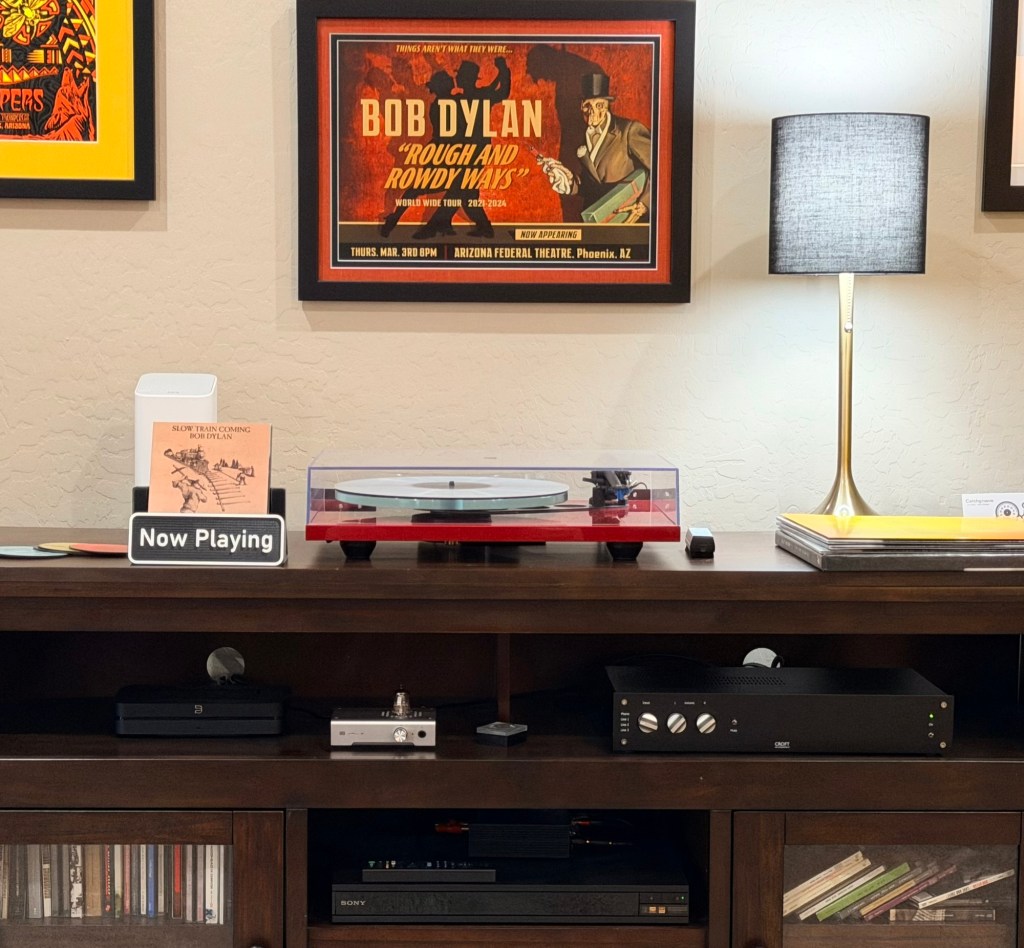
Slow Train Coming is one of my reference recordings because it is a wonderfully performed, recorded, mixed, and mastered release that I am intimately familiar with. Of all the changes in Bob’s career, the most outrageous was becoming a born-again Christian. But he did it with such panache that I forgave him. The album is the funkiest of Dylan’s albums, thanks to recording in Muscle Shoals with Jerry Wexler and Barry Beckett producing. Mark Knopfler’s guitar is a key component. The PCM version via the Sony sounds great (wide soundstage and precise stereo imaging); however, it has some digital harshness.
Roxy Music – Avalon (1982) SACD
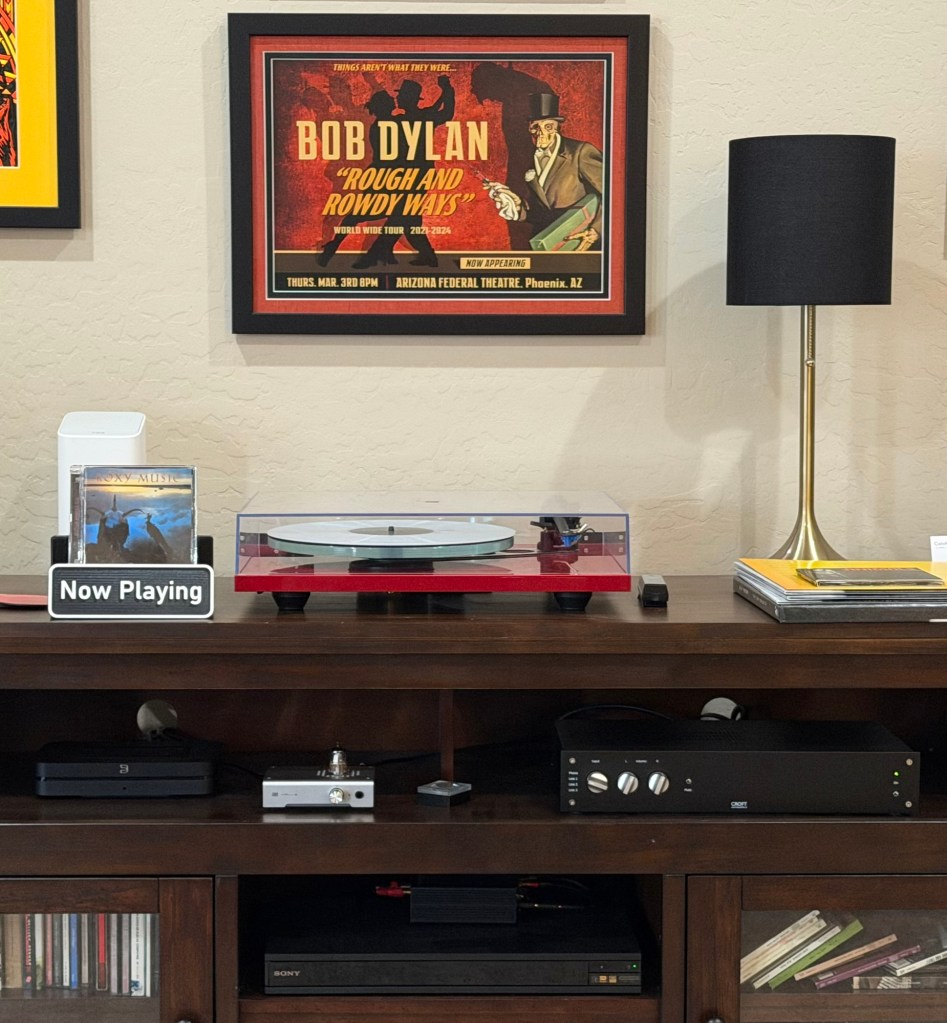
Avalon has been a reference recording for me and for many audiophiles. Per Google AI: “It is widely considered a quintessential audiophile masterpiece, renowned for its pristine production, immense soundstage, and sonic detail, making it a premier test record for high-end audio equipment. Mixed by Bob Clearmountain, the album features dense, lush layers, with top audiophile editions including the 2022 Half-Speed Mastered LP, original UK pressings, and the 2003 SACD (the version I am using here).” The SACD via PCM does not have the harshness of the Dylan recording – it sounds analog, like a pristine vinyl LP. Nice big soundstage and stereo imaging.
Merl Saunders, Jerry Garcia, John Kahn, Bill Vitt – Live At Keystone Volume 1 (1973)
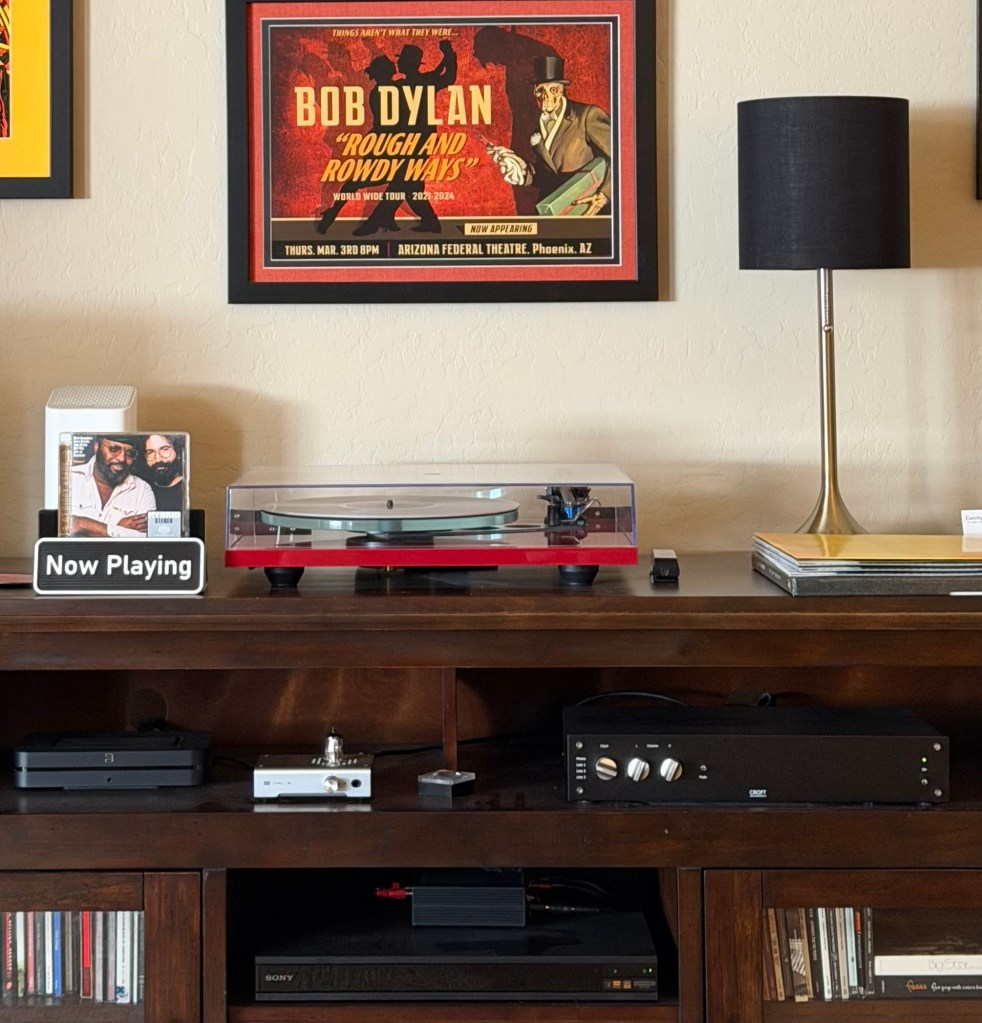
Live At Keystone Volume 1 is one of my favorite albums in my collection (along with the box set version). It displays the jazz side of Jerry Garcia. The recording is highly regarded for its sound. It was recorded at the Keystone in Berkeley, CA, and the album is known for its intimate, funky, 70s-style jam session vibe. Despite being recorded in a club, it is a studio-quality recording. The great Betty Cantor-Jackson is the engineer. The SACD via PCM has a nice analog vibe – it is mellow and smooth.
The Oppo arrived in Phoenix in good shape! It fits perfectly in one of the Desert 🌵 Sessions stereo cabinet’s cubbies. The Bluesound is coax connected to the Oppo, so I can leverage the Oppo’s DAC, which is two ESS Sabre32 Reference DACs (ES9018) optimized for audio, with one pair assigned for stereo (RCA/XLR – I am using RCA) and another for the headphone amplifier (which I don’t use, given I use a separate tube-based headphone amp).
I did notice that the Bluesound was not properly configured for an external DAC. The proper configuration looks like this:
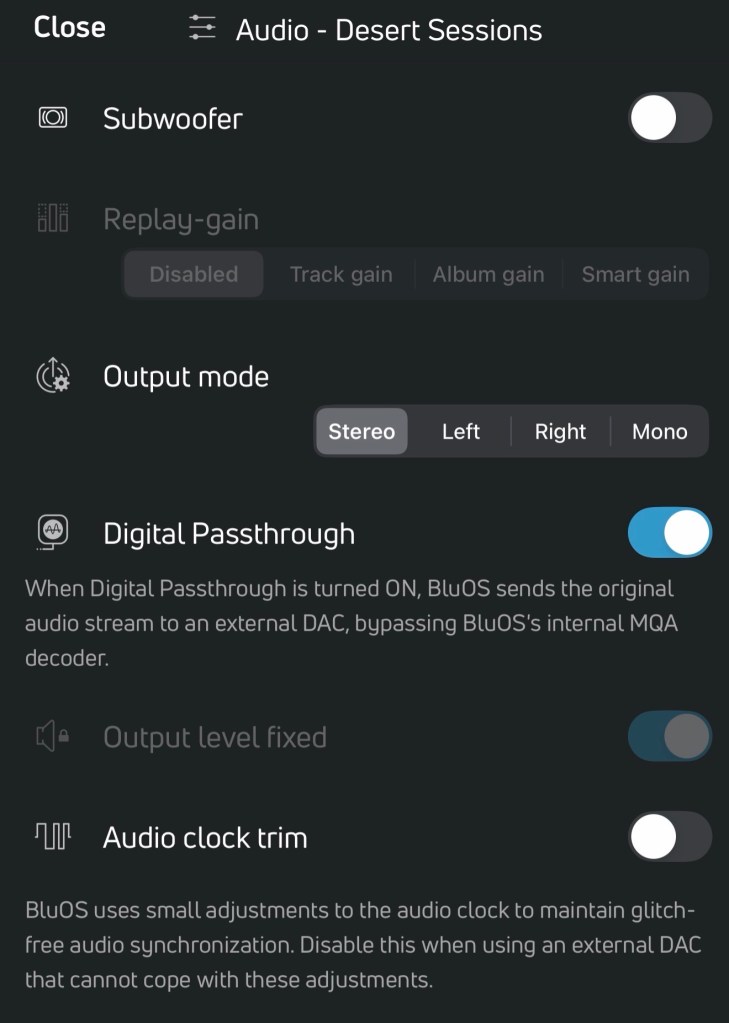
I had some initial challenges getting the Oppo configured to play the DSD layer – it was defaulting to PCM. But that allowed me to hear the improvement between the Orchard DAC and the Oppo’s DAC (PCM-to-PCM vs PCM-to-DSD).
I returned to Dylan’s Slow Train Coming to compare the Oppo with the Sony/Orchard DAC combo, in essence, DSD vs. PCM. Wow – the DSD version is much warmer – the harshness of PCM is gone! The soundstage is better, too.
Moving on to my second comparison – Roxy Music’s Avalon. Although the Orchard/PCM version I listened to earlier sounded great. The DSD version sounds even more analog – it is like being wrapped in a warm blanket.
My final comparison, Merl Saunders, Jerry Garcia, John Kahn, Bill Vitt – Live At Keystone Volume 1. Again, the PCM version was soft and mellow. Similar to the Roxy album, the DSD version of Live At Keystone has analog warmth. It also has a wider soundstage, making it a much more immersive experience.
One final reference point, a SACD of Elton John’s Captain Fantastic and the Brown Dirt Cowboy (1975). The album is widely revered in audiophile circles for its rich and detailed production. There are lots of dynamics here – from a whisper to a scream. The DSD layer sounds, dare I say, fantastic. I have used this SACD to test drive several systems – it is a good album to reveal a system’s strengths and weaknesses. Although I have a pretty humble rig compared to many of the audiophiles I know, it is fully satisfying to me (for now 😉).
Next up is R.E.M.’s 2005 DVD-A of Out Of Time (originally released in 1991). I don’t have a comparison point, as I haven’t played it recently on the Sony/Orchard. I don’t know what resolution the “Advanced Resolution Stereo” is – it isn’t documented, and I couldn’t find anything definitive online. Still, I assume it is at least 24-bit/48 kHz PCM (Wikipedia implies it is 24-bit/192 kHz). The DVD-A is bright and precise – maybe even too bright for jangly R.E.M. But listening to the CD (the DVD-A was bundled with a Redbook CD), it is pretty harsh and dull – the DVD-A is much warmer and has a better soundstage. The 2016 (which was a 25th anniversary remix) is 24-bit 88.2 kHz FLAC (PCM) on Tidal, sounds better to my ears – a more natural sound than the DVD-A. This probably has more to do with the remix than the resolution.
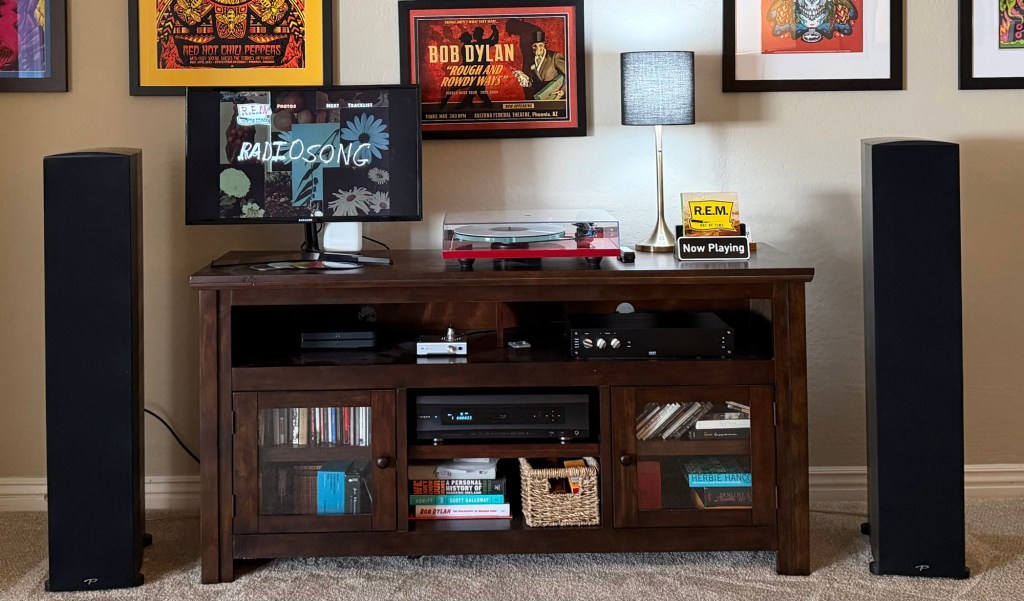
Next up, I focused on test-driving the Bluesound Node paired with the Oppo’s DAC. I start with a classic audiophile album: Talk Talk’s The Colour of Spring (1986). I am listening to Tidal’s 24-bit/96 kHz FLAC (PCM) version.
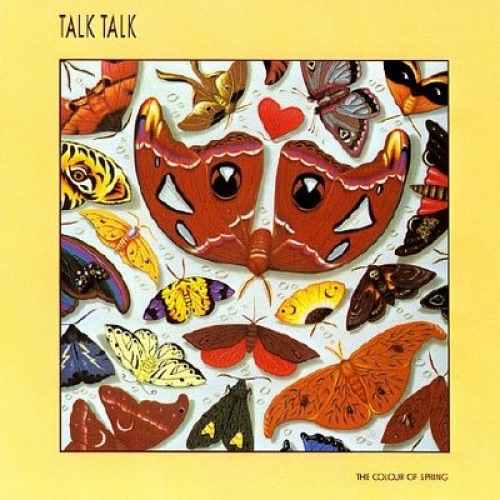
This is a new album to me – I saw it on several audiophile lists and have been listening on the Node\Orchard setup for a week before converting to Oppo, so I feel like I have a good reference point. Oppo’s DAC sounds way better than Orchard’s. This could be due to the Node not being properly configured for an outboard DAC. The Oppo has a much mellower analog-like warmth.
The difference between high-resolution PCM and DSD is subtle, but the biggest difference is that DSD has an analog warmth. The difference between CD quality (16 bit/44.1 kHz) and DSD is profound. This listening session validates the decision to move the Oppo to the Desert 🌵Sessions. The Sony with a DAC will be fine in Minneapolis, where my digital listening will be exclusively PCM via the Node and my extensive Redbook CD collection. All that being said, I will continue to spin lots of vinyl at the Desert 🌵 Sessions!
Additional note: I added a monitor temporarily to configure the Oppo, but I may just keep it on the stereo stand.
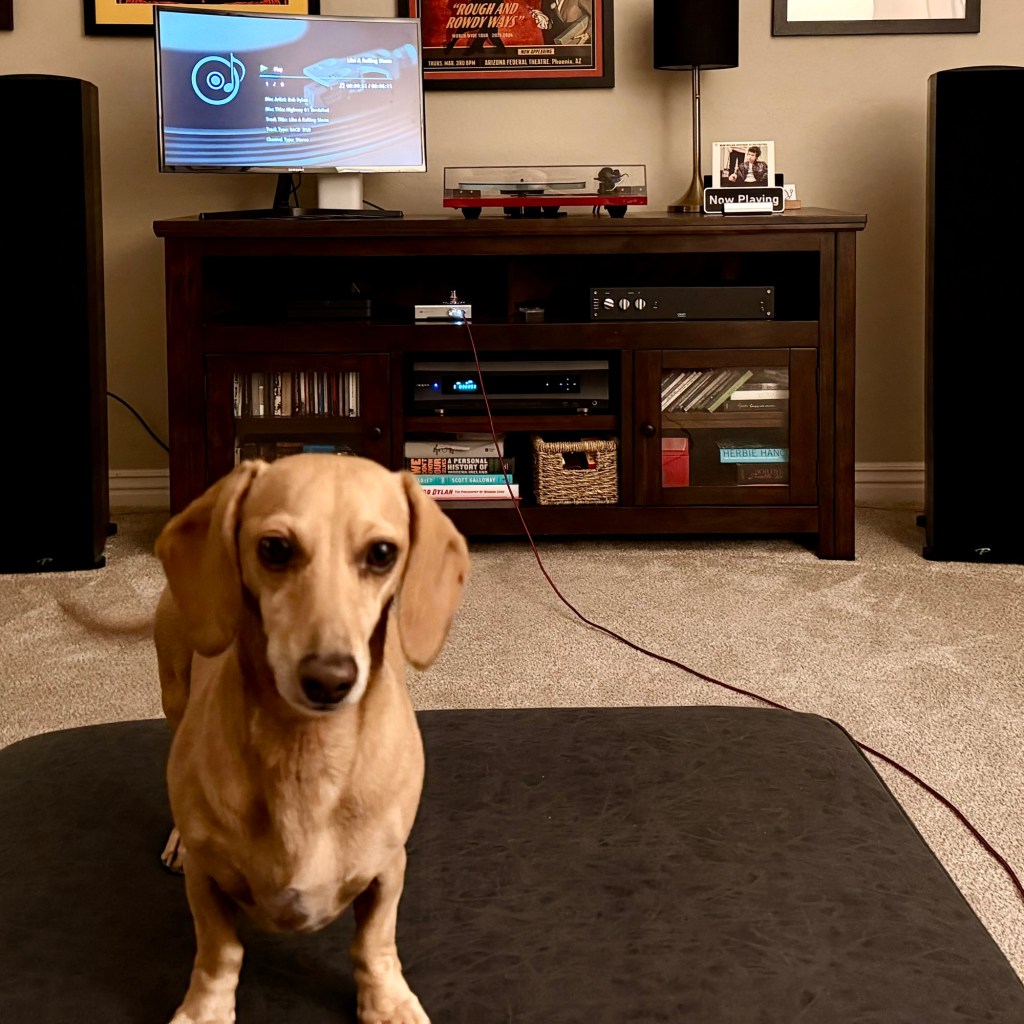

 Axl's Catch Groove
Trackbacks & Pingbacks