Don Was and The Pan-Detroit Ensemble – Groove in the Face of Adversity
Groove in the Face of Adversity
Mack Avenue Records
2025
I was aware of this album when it came out, but I never got around to listening to it. I was listening to a podcast interview with the world’s most interesting man, Don Was, and he talked about this project, which persuaded me to give it a listen. Wow, it’s good!
Don Was is a musician (bassist), band leader – most famously of Was (Was Not), producer (Rolling Stones, Dylan, and Willie Nelson, to name drop just a few of his credits), six-time Grammy winner, and head of the iconic Blue Note label. He is also a Detroit guy, and this album is a love letter to Detroit.
From Was’ website:
Groove in the Face of Adversity blends steamy jazz, juke joint blues and loose-limbed funk in a thoughtful, sonic cross-pollination that reflects both Was’ deep roots and sensibilities. The album’s title draws from a formative moment in his youth: stuck in the car and in a sour mood while his mother ran errands, he turned on the radio and stumbled upon Joe Henderson’s “Mode for Joe.” The music changed everything.
“There was a nonverbal message that came through the music,” Was recalls. “Don, you got to groove in the face of adversity,” meaning just relax and chill and just go with the flow with your mom, a musical philosophy Was has employed ever since.
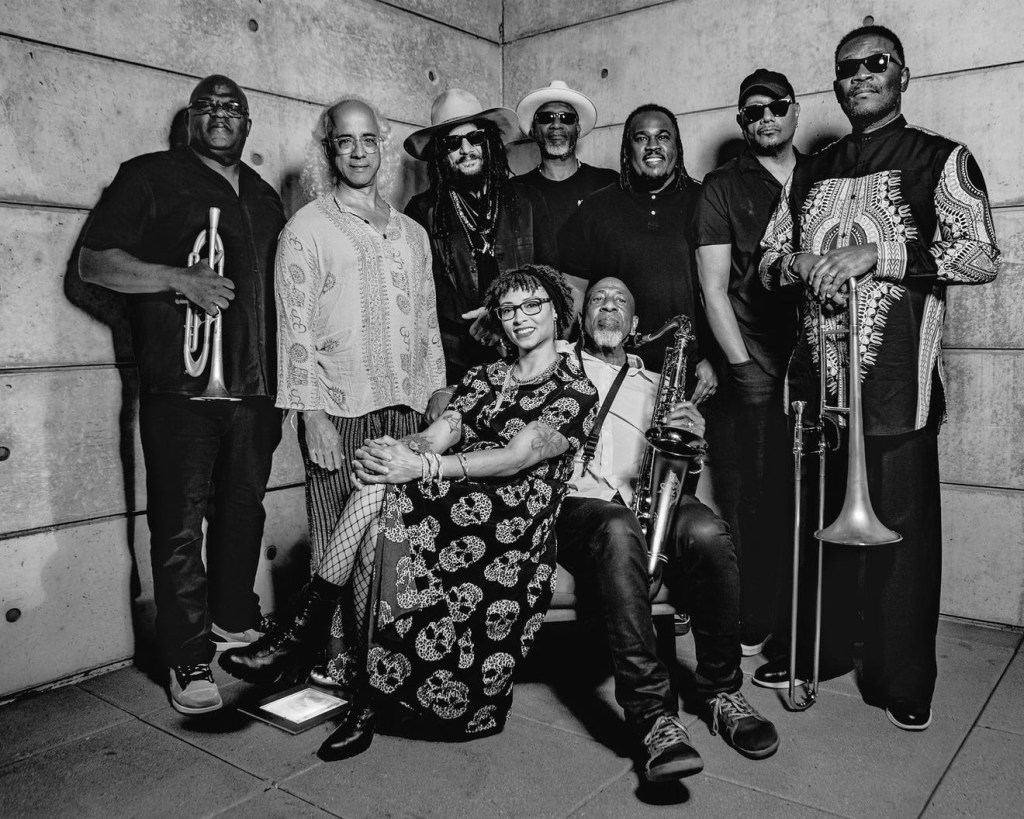
Don Was and The Pan-Detroit Ensemble
Rear: trumpeter John Douglas, keyboardist Luis Resto, bassist Don Was, percussionist Mahindi Masai, drummer Jeff Canaday, guitarist Wayne Gerard, and trombonist Vincent Chandler
Front: vocalist Steffanie Christi’an, saxophonist Dave McMurray
Don Was has assembled a fantastic cast of Detroit musicians for the album, and the group has also been touring. The album is a collection of covers performed in a jazz-funk style. Interestingly, most of the songs are not drawn from Detroit artists.
The album opens with New Zealand’s Joe Dukie & DJ Fitchie/Fat Freddy’s Drop “Midnight Marauders” (I assumed inspired by A Tribe Called Quest). It has a jazz-reggae vibe and Steffanie Christi’an’s vocals are retro and modern at the same time.
Next is Yusef Lateef’s “Nubian Lady,” which has an acid jazz vibe similar to the original. The band struts its jazz chops—amazing flute solo just like the original. Lateef does have a Detroit connection. This song is from a live show.
“I Ain’t Got Nothin’ But Time” is a Hank Williams cover that the band completely reinvents into a soul jazz powerhouse. Christi’an’s vocals are fantastic. No one would ever confuse Hank with a Detroit guy, but you might wonder after hearing this cover. This song is from a live show.
“This Is My Country” is a cover of the Curtis Mayfield/The Impressions civil rights anthem. This is a pretty straight cover. The song was initially recorded by The Impressions in 1968, and sadly, the song’s message is still relevant today. By the way, Mayfield was a Chicago guy.
“You Asked, I Came” is from a Don Was movie soundtrack, Backbeat (1994). The movie was a biopic of the Beatles’ early days. There were two soundtrack albums for Backbeat: the songs performed in the movie by a who’s who of indie/alt rockers (check out this Wikipedia page), and the score. “You Asked, I Came” comes from the score. The version on this album is a straight cover of the song from the movie score. The song is a jazz version of the Bo Diddley beat. This song is from a live show.
The album ends with a Cameo cover: “Insane.” What could be more Detroit than a cover of a 14-member group known initially as the New York City Players? The Was cover is another pretty straightforward cover, but with more horns, female lead vocals vs. the male lead of the original, and the length doubled for an amazing horn jam.
Overall, it is a delightful jazz album. The genius of the album lies in the group of musicians that Was has recruited and the brilliant song choices – and isn’t that the definition of a great producer?
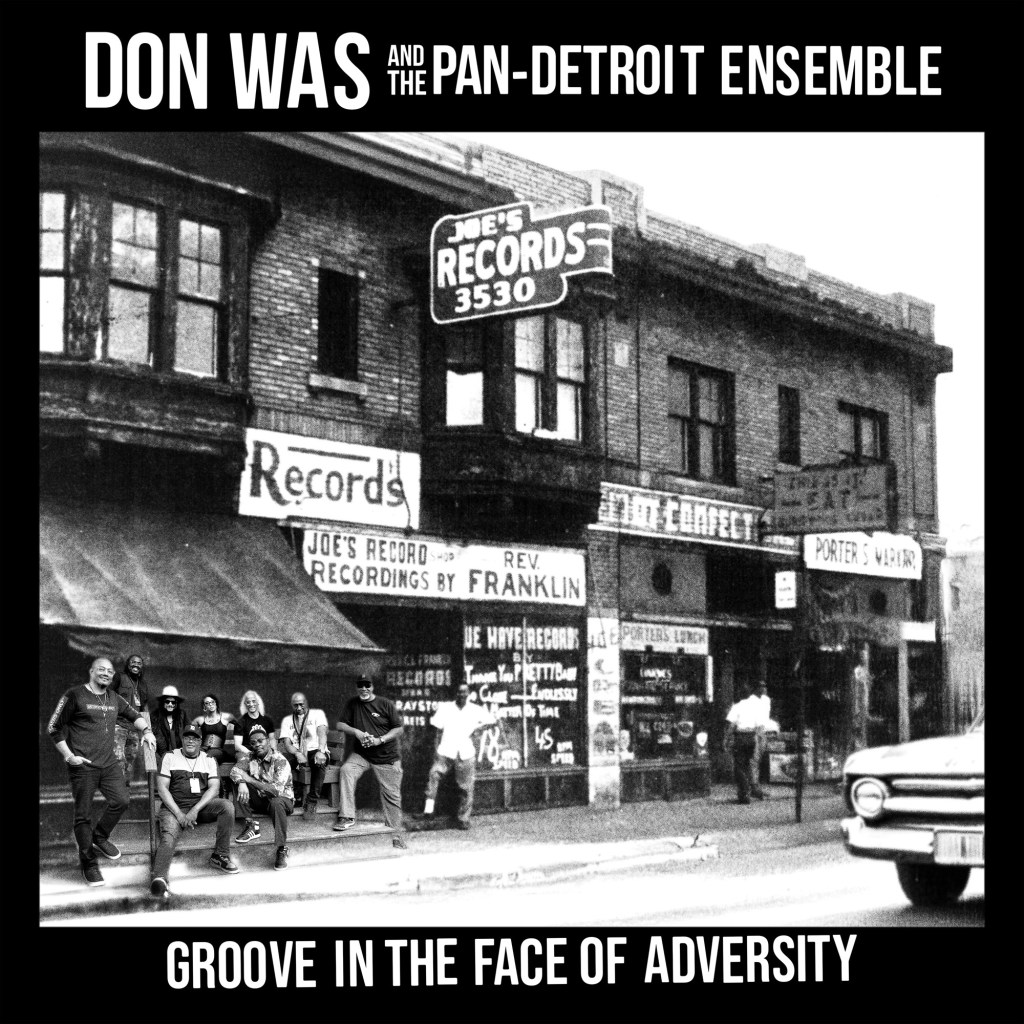
P.S. – a note on the album cover art. It is an old photo of Joe’s Records in Black Bottom, Detroit, which Don Was’ wife, photoshopped to include the Pan-Detroit Ensemble. In addition to being a record store, Joe’s was also a recording studio where Aretha Franklin’s earliest recordings were cut – now that is Detroit AF!
Below is the album and a playlist of the original songs featured on it.

 Axl's Catch Groove
Trackbacks & Pingbacks