Sonic Youth – Daydream Nation (1988)
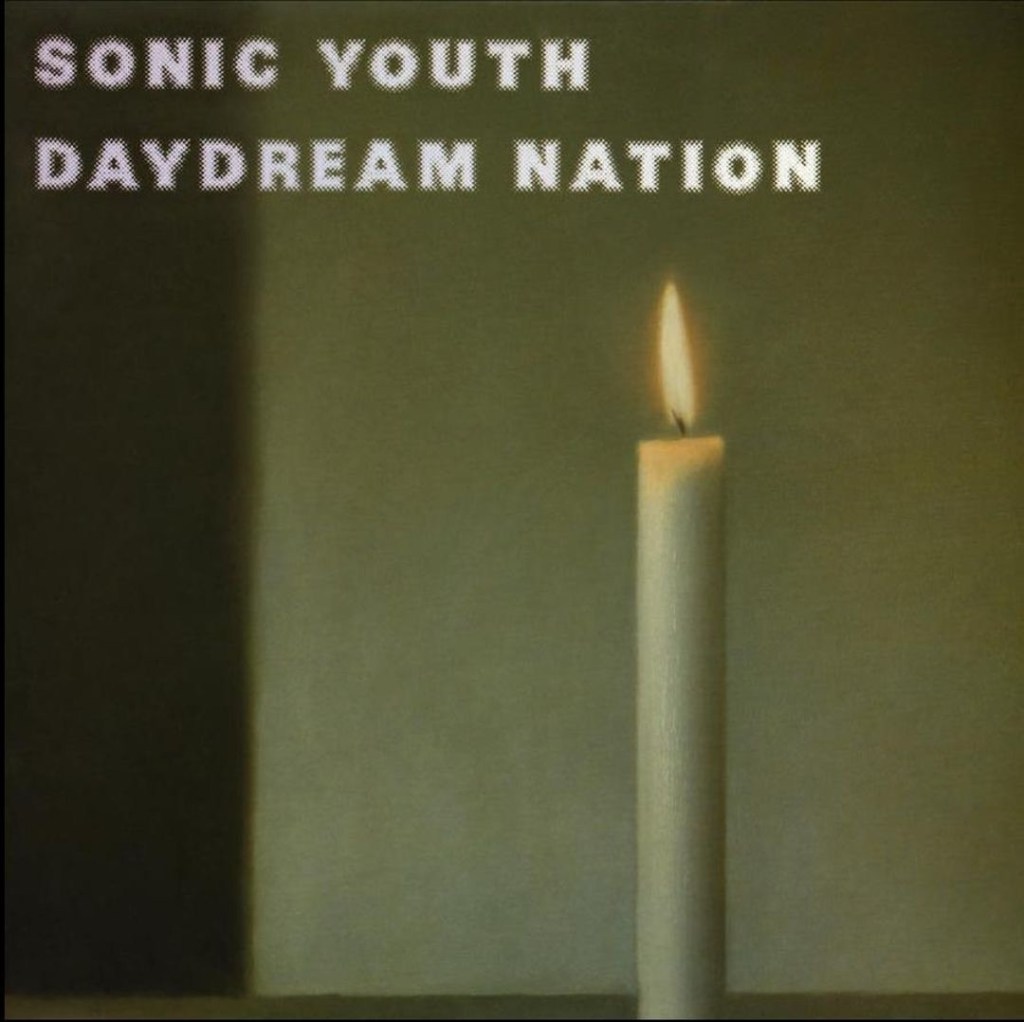
Daydream Nation
Enigma
1988
After immersing myself in The Replacements’ Let It Be deluxe reissue, I am in an ’80s indie rock state of mind, and so as I perused the “S” section of the Desert 🌵 Sessions, planning to listen to The Smile, Sonic Youth’s Daydream Nation shouted out: “No, listen to me!“
Sonic Youth were peers of The Replacements in the ’80s, only Sonic Youth was less self-destructive and thus lasted twice as long. Very different bands: The Replacements were the perfect balance of smarts and stupidity, whereas Sonic Youth was just smart.
I am not very deep into Sonic Youth. I have a handful of their albums, and none of them hooked me like I am hooked on bands like The Replacements or Wilco (who are influenced by both The Replacements and Sonic Youth). But I fully appreciate Sonic Youth.
Daydream Nation is the Sonic Youth album that I am most familiar with, and every time I listen to it, I like it more. I have had a CD of the album since it first came out, but a few years ago, I found a vinyl reissue* at Phoenix Flea vinyl pop-up. Because I have a small subset of my vinyl collection in Phoenix, I have listened to this album more in the last few years than when it first came out. Nearly four decades old, it sounds timeless, and you can hear its impact on many bands (Nirvana’s Kurt Cobain was a noted fan, as were shoegaze bands like Pavement and Radiohead, etc.).

The magic of Daydream Nation is that the band makes noisy guitars sound melodic. Despite this being harsh music at first listen, it becomes warmer and softer on repeated listens. It is the blueprint for all the shoegaze that followed it.
“Teen Age Riot” is one of Sonic Youth’s most famous songs (and the first single off the album). Not surprisingly, it is one of their most conventional songs with its traditional verse-chorus pop song structure. Lyrically, it’s about an alternate reality in which J Mascis (Dinosaur Jr.) is president of the United States.
“Silver Rocket” was the second single from the album (although the single version is live, not the studio version on the album). The song starts out as a conventional punk rock song, but midway through it veers off-road into pure noise, only to return to the pavement at the end. This is a classic example of Sonic Youth’s hard-on-the-outside, soft-in-the-middle modus operandi.
Per Wikipedia, “The Sprawl” was inspired by the works of science fiction writer William Gibson, who used the term to refer to a future mega-city stretching from Boston to Atlanta (specifically from the Sprawl Trilogy). The lyrics for the first verse were lifted from the novel The Stars at Noon by Denis Johnson. Another excellent example of Sonic Youth making hooks out of harsh.
“‘Cross the Breeze” starts out like this is going to be Sonic Youth’s version of a ballad, only to have the caffeine kick in. After a long intro, Kim Gordon’s vocals leap out of the grooves, sounding possessed – and maybe she is, as she sings: “Now you think I’m Satan’s daughter.”
“Eric’s Trip” is inspired by Warhol superstar Eric Emerson’s LSD-fueled monologue in the Andy Warhol movie Chelsea Girls. Meanwhile, The Replacements are singing about bonners. Further proof that Sonic Youth are the smart kids. Love the guitars on this song.
“Total Trash” appears to be about New York City’s crack epidemic. Although Thurston Moore has been quoted as saying that the line: “It’s a guilty man / That can grease the crack” is not about crack the drug, but record company staff trading butt-licks.
“Hey Joni” is a tribute to Jimi Hendrix and Joni Mitchell – what a juxtaposition. This song sounds like if U2 were a punk band.
“Providence” is a complete change in direction. A quiet piano solo with a fog of distortion over it. Lyrically, it’s a voicemail from seminal bass player Mike Watt.
“Candle,” given the album’s art, this is a key song, and per the lyric site Genius.com, the line “Tonight’s the day, candle,” is a reference to the working title for Daydream Nation, inspired by Neil Young’s 1975 album Tonight’s the Night.
“Rain King” lyrically is the most psychedelic song on the album. Musically, it is classic Sonic Youth noise rock.
“Kissability” is written from a dirty old man’s perspective, but sung by Kim Gordon. It is the classic story of the casting director trying to bed a young wannabe starlet.
The album ends with a three-part suite called “Trilogy” (running time roughly fourteen minutes).
- “A) The Wonder” (sung by Thurston) per Wikiepedia, the song is inspired by crime fiction writer James Ellroy’s phrase about the ineffable mystery at the heart of Los Angeles; in Moore’s words, “the wonder” is what, for better and worse, inspires [Ellroy] to keep going, to get out of bed every day.
- “B) Hyperstion” (sung by Thurston) invokes the album title with this line: “Daydreaming days in a daydream nation.” Amazing buzzsaw guitars on this one.
- “Z) Eliminator Jr.” (sung by Kim) per Wikipedia, “Eliminator Jr.” was inspired by the “Preppie Killer“, Robert Chambers. It was titled because the band felt it sounded like a cross between Dinosaur Jr. and Eliminator-era ZZ Top (1983). It was given part “z” in the “Trilogy” both as a reference to ZZ Top and because it is the closing piece on the disc. Without the prompt from Wikipedia, I would not have caught the ZZ Top reference.
Overall, the album is an impressive example of 1980s indie rock. Once you get past the noise, Sonic Youth is a melodic band with pop instincts similar to the instincts of thier contemporaries Hüsker Dü. When you listen to them in 2025, you can hear their influence on numerous bands that followed them, notably Nirvana and Radiohead.
*Worthless information part one: A 2014 Goofin’ Records (goo-017) double LP 2014 repress of the first two LPs of the 2007 deluxe edition box set. Goofin’ is Sonic Youth’s own label (which is supported by thier major label Geffen). Goofin’ reissues their regular albums, exclusive stuff, and exclusive recordings on vinyl and compact disc. The Goofin’ name comes from Goo+Geffen.
Worthless information part two: The vinyl version’s four sides and the compact disc inner tray each contain four symbols, each representing one of the band’s members, in homage to—and parody of—the four symbols from the fourth Led Zeppelin album. The symbols are infinity (∞) for Lee Ranaldo (rhythm guitar, vocals) referencing his 1987 album From Here to Infinity, female (♀) for Kim Gordon (bass, vocals, guitar), uppercase omega (Ω) for Thurson Moore (lead guitar, vocals), referencing Leo, his zodiac sign, and a drawing of a demonic–angelic baby holding drumsticks for Steve Shelley (drums).


 Axl's Catch Groove