Bruce Springsteen – Tracks II: The Lost Albums
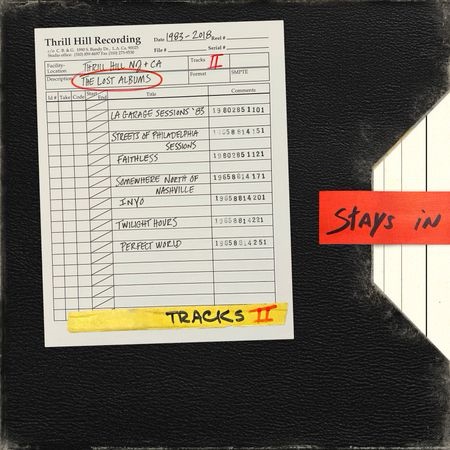
This collection is for serious Bruce Springsteen fans. It is 83 tracks (nearly five and a half hours) of mostly previously unreleased music. Unlike Tracks I (1998), which was a collection of unreleased songs, this is a collection of seven unreleased albums.
Catchgroove’s quick take: This collection does not revise Springsteen’s career arc, but it does fill in some blanks and satisfies my craving to hear music that has been rumored over the years. It is a satisfying listen that rivals other major archival projects by my favorite artists (e.g., Bob Dylan, Prince, Wilco, Neil Young, Joni Mitchell, etc.). What I really like about the project is its diversity and that it reveals Springsteen’s musical curiosity.
Let’s start with what Bruce’s PR machine is saying. Per Bruce’s website/store:
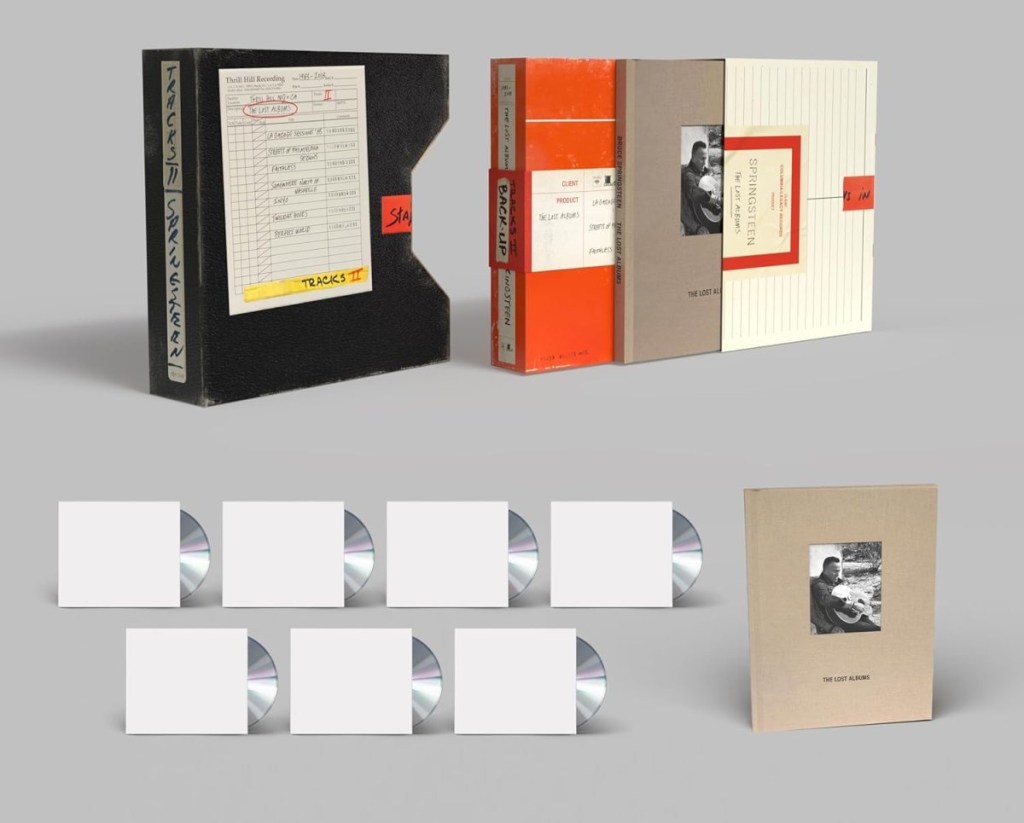
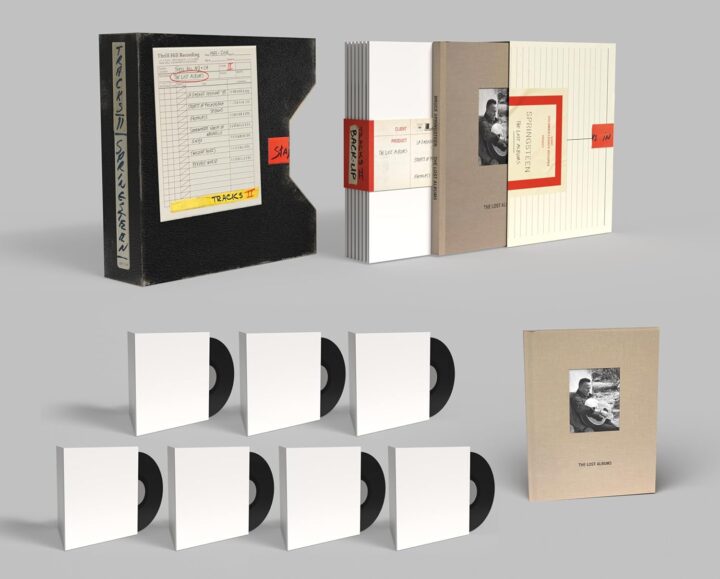
TRACKS II: THE LOST ALBUMS are seven unheard Bruce Springsteen records made between 1983–2018. Featuring 82 previously unreleased songs, Tracks II: The Lost Albums fill in chapters of Springsteen’s expansive career timeline, while offering invaluable insight into his life and work as an artist. “The Lost Albums were full records, some of them even to the point of being mixed and not released,” said Springsteen. “I’ve played this music to myself and often close friends for years now. I’m glad you’ll get a chance to finally hear them. I hope you enjoy them.” From the lo-fi exploration of LA Garage Sessions ’83, serving as a crucial link between Nebraska and Born in the U.S.A., to the drum loop and synthesizer sounds of Streets of Philadelphia Sessions. Tracks II: The Lost Albums offers unprecedented context to 35 prolific years of Springsteen’s songwriting and home recording. “The ability to record at home whenever I wanted allowed me to go into a wide variety of different musical directions,” Springsteen explained. Throughout the set, that sonic experimentation takes the form of film soundtrack work (for a movie that was never made) on Faithless, country combos with pedal steel on Somewhere North of Nashville, richly woven border tales on Inyo, orchestra-driven, mid-century noir on Twilight Hours and E Street favored rock on Perfect World. Tracks II: The Lost Albums is available in limited-edition nine-LP and seven-CD formats, including original packaging for each previously unreleased record, with a 100-page cloth-bound, hardcover book featuring rare archival photos, liner notes on each lost album from essayist Erik Flannigan and a personal introduction on the project from Springsteen himself.
Springsteen has a 17-minute video explaining the project:
One of my favorite music writers, Steven Hyden, has a great review and profile of the project at The Ringer.
I will comment on each of the “albums” in the collection.
ALBUM #1: L.A. Garage Sessions ’83 is the missing link between Nebraska and Born In The U.S.A. Springsteen fans are well aware of the gap and juxtaposition between Nebraska (released in September 1982) and Born In The U.S.A. (released in June 1984). After a decade of toiling and an upward trajectory that resulted in a number-one album, The River (1980), and an epic year-long tour in support of it, Bruce was trying to figure out his next artistic chapter. He recorded solo demos in his bedroom and decided to release them as is (rather than record them in a commercial studio with the E Street Band) under the name Nebraska. This was pretty mindblowing at the time – not the kind of thing a major rockstar would do on thier upward trajectory. It seemed like a side project, yet it opened up a new way of working for Springsteen. He learned that he could compose and record at home at his own whim. No need to book an expensive studio, manage the team (recording staff and band), and, most importantly, schedule his creativity. This would impact his record-making for the rest of his career.
As soon as he was done with Nebraska, he proceeded to record most of Born In The U.S.A. but had self-doubt about releasing what he could see was going to be a pop phenomenon. So he toiled in his L.A. home studio to create something more fleshed out than Nebraska, but not as over-the-top as Born In The U.S.A. L.A. Garage Sessions ’83 was the result. In the end, he shelved this and put out Born In The U.S.A., and as they say, the rest is history. This is a fascinating chapter in Bruce’s career – numerous books have been written about this period, and a biopic focused on this period is in the works (Springsteen: Deliver Me from Nowhere, with The Bear’s Jeremy Allen White playing Bruce). For true fans, L.A. Garage Sessions ’83 has been available on bootlegs, but for the rest of us, Tracks II is a chance to finally discover what Bruce was thinking in anticipation of the biggest album of his career.

L.A. Garage Sessions ’83 are low-fi and sound like demos, just like Nebraska, but with more fleshed-out instrumentation than Nebraska. I find this low-fi presentation distracting; I wish that these songs had been finished by the E Street Band in a proper studio. Whereas the austere instrumentation of Nebraska allowed you to focus on the songs. All the same, it is nice to have this batch of songs, and there are some gems here.
Unfortunately, there is no “Electric Nebraska” that is rumored to exist (the E Street Band versions I am pining for) – maybe we will get that on Tracks III (a follow-up collection that Bruce has teased). My guess is that the E Street Band only recorded a handful of the Nebraska and L.A. Garage Sessions songs, and thus, there was not a whole album of material to release in the spirit of the Tracks II project.
Sidebar: My introduction to Bruce Springsteen was KQ (a Twin Cities FM radio station) hyping his new album, Darkness on the Edge of Town, in the summer of 1978, as I drove to and from my window washing job in North Minneapolis. It hooked me enough that later that year, I hitchhiked from college (the College of St Thomas) to the St. Paul Civic Center Arena on November 29, 1978, to witness the Darkness on the Edge of Town tour. I was blown away by the show – a standout among the hundreds I have attended. It converted me to become a fan of the Boss. I was late to the Springsteen party (Darkness was his fourth album and his first after appearing on the covers of Time and Newsweek) – he was already a big deal at this point. But I have made up for it over the last four decades, keeping up with new releases and archival releases.
ALBUM #2: Streets of Philadelphia Sessions is the long-rumored drum loops album, a further exploration of the electronica sound of the Oscar-winning song “Streets of Philadelphia.” This album was recorded from 1993 to 1994.
One of the things I never realized about Bruce until this Tracks II project is how self-aware and deliberate he is about the narrative of his career. One of the things that has been bugging him for years is the perception that the 1990s was a lost decade for him. Some of his motivation for Tracks II was to correct the narrative. He wants everyone to know he was productive during the decade, and the Streets of Philadelphia Sessions is Exhibit Number One.
For me, this is the strongest lost album in the Tracks II collection. I loved the moody and dreamy atmosphere of “Streets of Philadelphia” when it came out. That Bruce sound has been hugely influential – The War On Drugs has made a career of it.
We will never know, but I think this would have been an artistically and commercially successful album if it had come out in 1995. However, Bruce decided to focus instead on his Greatest Hits album, which was a huge commercial success, and this album was set aside until now.
ALBUM #3: Faithless is the commissioned soundtrack to a movie that never got made, recorded between 2005 and 2006. This is the least satisfying of the seven albums. It is a combination of lyrical songs and instrumental music. This is not a bad album; it simply isn’t resonating with me.
ALBUM #4: Somewhere North of Nashville is Bruce’s stab at country and rockabilly music. It was recorded in 1995, concurrently with the sessions for The Ghost of Tom Joad. The fact that those two projects were happening simultaneously (Joad in the daytime and Nashville at night) is mind-blowing. Joad is stark and dark, whereas Nashville is rowdy and playful. Would Nashville have been a hit in the Grunge and Garth era? It’s hard to say, but the music is enjoyable, and the style suits Bruce well. I like that Bruce sings like Bruce. No country music affectations. He makes it his own. This is an excellent record, and I’m surprised he didn’t release it in the ’90s. Exhibit Number Two in the 90s was not a Springsteen wasteland argument.
ALBUM #5: Inyo is a companion to Joad, inspired by the culture of Mexican immigrants in the American Southwest, and appears to have been recorded during the Ghost of Tom Joad tour (1995–1997). It is a timely album in 2025. Although it features Mexican themes and music, this doesn’t sound like cultural appropriation; it’s simply Springsteen’s continued fascination with ordinary working men and women. Mexican influence on American culture is significant, and it seems only natural that Springsteen would be drawn to it. Despite the Mexican themes, this sounds remarkably like a Springsteen album. It is just as much a love letter to Southern California as it is about Mexican American culture. Inyo is Exhibit Number Three that the ’90s were not a Springsteen wasteland.
I went back to The Ghost of Tom Joad in light of how much I like Somewhere North of Nashville and Inyo. Joad never resonated with me, and my recollection was that it had starker arrangements. Returning to it in the context of Nashville and Inyo, Joad is a more energetic and enjoyable album than I recall. But I like Nashville and Inyo more than Joad.
ALBUM #6: Twilight Hours is a companion to 2019’s Western Stars, recorded between 2010 and 2011 and 2017 and 2018 during the Western Stars sessions. Western Stars was Bruce’s attempt at recreating the ’60s pop aesthetic of Burt Bacharach and Jimmy Webb. Bruce said Western Stars was his Jimmy Webb and Glen Campbell album, and Twilight Hours is his Burt Bacharach album. Western Stars was Bruce dipping his toe in the water, and Twilight Hours is the full body plunge. Only “There Goes Miracle” on Western Stars sounds like Twilight Hours.
I grew up on the sounds of Jimmy Webb and Burt Bacharach, so I can understand why a pop musician a decade older than me would be intrigued by this music. I fully appreciate Webb and Bacharach. In case you don’t know these songwriters, here are some huge songs in thier catalogs:
- Jimmy Webb is one of America’s most acclaimed songwriters – here are a few of his hits:
- “Up, Up and Away” The 5th Dimension
- “By the Time I Get to Phoenix” Johnny Rivers and Glen Campbell
- “MacArthur Park” Richard Harris
- “Wichita Lineman” Glen Campbell
- “Worst That Could Happen” 5th Dimension
- “Galveston” Glen Campbell
- “All I Know” Art Garfunkel
- “The Highwayman” The Highwaymen
- Burt Bacharach wrote fifty-two US Top 40 hits, including:
- “This Guy’s in Love with You” Herb Alpert, 1968
- “Raindrops Keep Fallin’ on My Head” BJ Thomas, 1969
- “(They Long to Be) Close to You” Carpenters
- “Arthur’s Theme (Best That You Can Do)” Christopher Cross
- “That’s What Friends Are For” (Dionne Warwick, 1986),
I re-listened to my vinyl copy of Western Stars, and it’s great, but Bruce is still Bruce. On Twilight Hours, he becomes a new character. Bruce takes this assignment seriously, evident in his songwriting, lush arrangements, and his crooning vocal performance. He leans over the precipice of Shmaltz but never falls off that cliff. Bruce, as a crooner, works better than I would have ever expected. This version of Bruce, despite my familiarity with Western Stars, is a pleasant surprise. This is not a typical rock star playing around with the American songbook. This is clearly an obsession. This album is the most pleasant surprise in the collection.
ALBUM #7: Perfect World is the one non-album track in the collection; it is a compilation of odds and ends from the E Street Band recordings from 1994 to 2011. I am not sure why Bruce didn’t save this for Tracks III, but after all the experimentation on the previous six albums of Tracks II, it’s nice to have some comfort food for dessert.
Conclusion: Typically, recording artist focus their archival releases on a specific era, but Bruce has taken a different approach: filling in the blanks from over three decades. Springsteen has stated that he did not release these albums at the time he recorded them because he did not feel they were essential. There must have been some dissatisfaction with them, causing him to leave them on the shelf. One of the benefits of the COVID pandemic was that several artists were motivated by thier boredom to create new work or excavate their archives. I am grateful for Bruce’s COVID boredom, as we have Tracks II to show for it. When Bruce came on the scene in the early 70s, he was touted as a new Dylan (many artists were struck with this curse, and Bruce is one of the few who was not smothered by it). I am a big Dylan fan and never recognized the comparison. But Tracks II is outright Dylanesque: the shape-shifting, the use of Dylan tropes (both acoustic and electric), the fascination with “old music” and the habit of leaving some of his best work in the can. Tracks II is my favorite release of 2025 so far.
Formats: The album was released in four formats: CD ($300), Vinyl ($360), lo-fi streaming (e.g., Spotify), and hi-fi streaming (most of the material is 24-bit/96 kHz FLAC, and the rest are 24-bit/44.1 kHz FLAC). The physical versions are nicely packaged (gatefold jackets, original art, etc.) with a 100-page coffee table book with liner notes and photos. I have been consuming it via hi-fi streaming (Tidal) and vinyl. There is also a single CD/double vinyl LP sampler (Lost And Found: Selections From The Lost Albums).
I tried my best to resist purchasing the vinyl, but I finally gave in, as this is my favorite release of 2025 so far, and so I couldn’t stop myself. The first LP I played was Twilight Hours, and it sounds fantastic – its retro sound is even better in analog. All the vinyl pressings sound great.
The price point on this package is steep. I judge a box set’s pricing by the number of discs it contains. In today’s market, a new single vinyl LP typically costs between $25 and $40, while a single CD is usually priced under $20. Tracks II is $40 per LP and $43 per CD, so it’s on the high end, particularly with the CD edition, which seems overpriced. That being said, I have no regrets procuring this collection on vinyl.

 Axl's Catch Groove
Trackbacks & Pingbacks