Vinyl Hygiene
There is no one way to practice vinyl hygiene; find what works for you. This is what works for me.
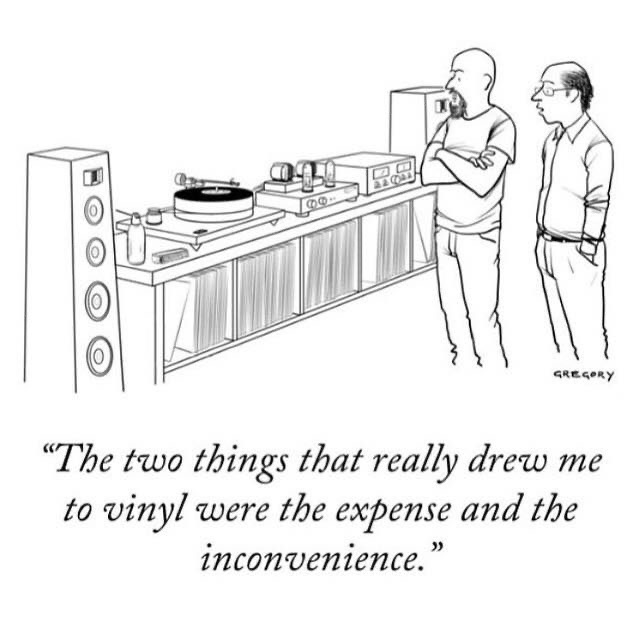
The classic audiophile joke is that we love vinyl for the expense and inconvenience. I would add that we also “love” the surface noise (crackles, pops, and skips).
If you are going to spin vinyl, you need to clean it. If your vinyl is really dirty (or a “new” used record), you will need a record-cleaning machine. This post is focused on what I call “maintenance cleaning,” cleaning a record that is already clean but needs the inevitable dust and static removed before you drop the needle.
I am 66 years old, and the go-to solution for all of my vinyl-spinning life has been a discwasher brush:

You can still buy a discwasher brush under the RCA brand, but I can’t speak to the quality – it looks slightly different than the original. I have a vintage discwasher that I have had since the late 1970s. It still works but is a bit threadbare, so I augment it with a Hunt E.D.A Mark 6 carbon fiber record brush.
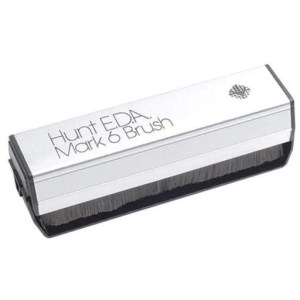
It appears that this brush is no longer available, but Music Hall has reissued what looks like a reasonable facsimile they call the Music Hall Carbon Fiber Brush.

According to Music Hall, the brush contains over 1,000,000 antistatic carbon fibers. The fibers are in two rows, with a static grounding pad centered between them.

The grounding pad supports the carbon fibers and keeps them erect so they can dig deep into the groove and extract trapped dust.

A record contains microscopic undulations inside the groove wall that are smaller than human hair and that the naked eye cannot see. This is how music is stored on an LP. A pad like the discwasher can’t get down into the groove. It mostly brushes over the top and removes the surface dust. The real culprit is the dust that’s trapped deep in the record groove. The Music Hall carbon fiber bush allegedly can get there.
I brush a record every time I play it. My technique is to manually spin the record on the turntable, hold the Music Hall brush stationary on the record surface for a few rotations, and then sweep it away. If a record is a little dirtier or static, I will moisten the discwasher with an atomizer containing distilled water. I will then use the discwasher similar to the Music Hall brush (manually spin the record on the turntable, hold the brush stationary on the record surface for a few rotations, and then sweep it away). I will then follow up the discwasher brushing with the Music Hall brush. With both brushes, be consistent in the direction you brush with each cleaning.
Some people online suggest that the carbon fibers of the Music Hall brush will scratch a vinyl record. I have never experienced that, so I am dismissive of that criticism.
In addition, I occasionally (every three to five LPs) clean the turntable’s stylus. I use an Onzow Zerodust stylus cleaner, which is constructed of ultra-soft gelatinous plastic and designed to gently remove dust and debris from the stylus tip.


Always handle your albums by the edges or label. Do not let your fingers touch the groove surface—oils on your fingers will leave a residue on the LP.


 Axl's Catch Groove