Vampire Weekend – Only God Was Above Us
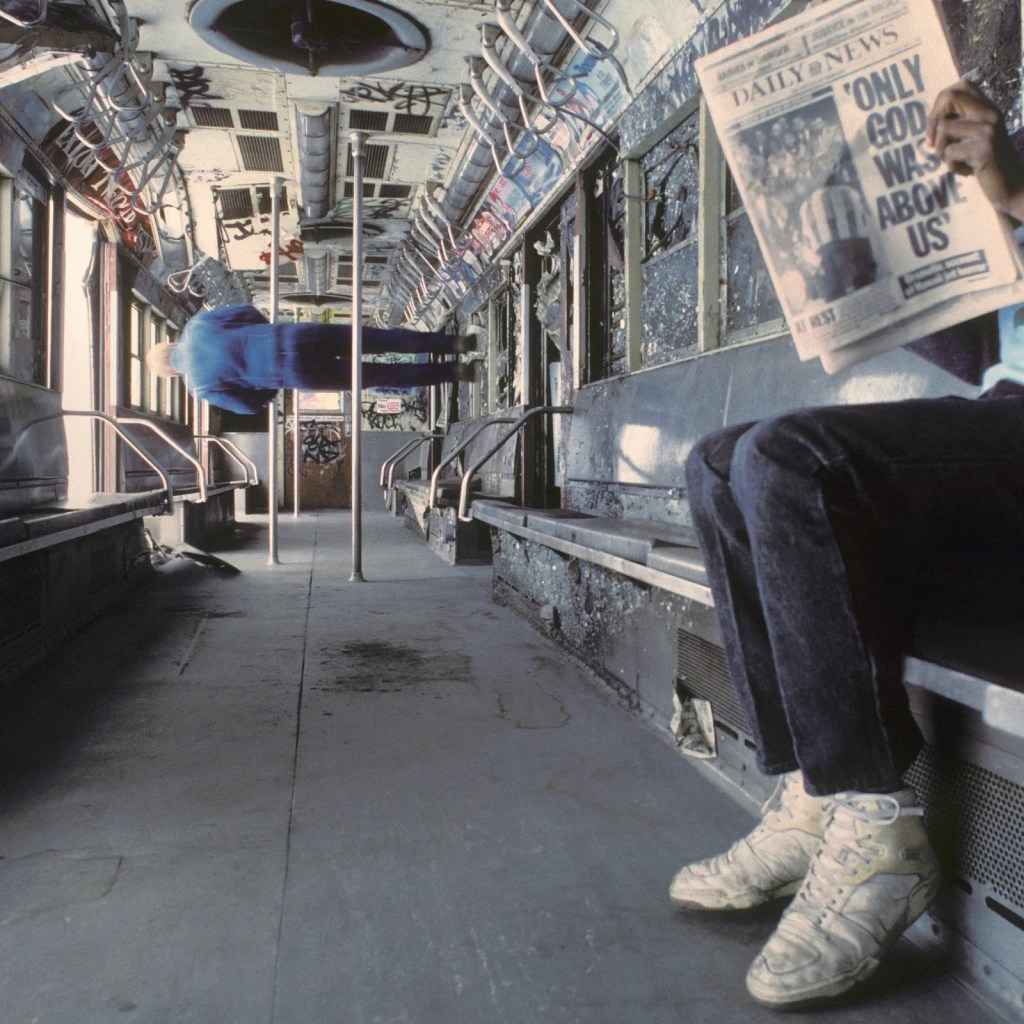
Only God Was Above Us
2024
It has been six years since Vampire Weekend’s last album, Father of the Bride – an eon in pop music. That album is my favorite; it brought a jam band aesthetic to their sound. Only God Was Above Us is a taut but adventurous indie-rock sound that harkens back to their first three albums with a twist: it is noisy (distorted guitars, squawking saxophones, busy arrangements, etc). It is unquestionably a Vampire Weekend album with Ezra Koenig’s distinctive vocals, clever lyrics, and baroque pop sound. It is a grower; the first few listens to the album did not impress, but it revealed itself around the fifth time through the album.
The music critic Steven Hyden has declared that with Only God Was Above Us, Vampire Weekend passes his five-album test: “…you look at their discography, and you judge whether they have put out five consecutive ‘great’ albums.” The five-album test is Hyden’s method of judging if an act is Hall of Fame worthy – although a Hall of Fame act can still get there without the five-album test. I agree that Vampire Weekend is a Hall of Fame act, and Only God Was Above Us cements that status by being both the epitome of the Vampire Weekend catalog and a step forward – it is the perfection of Vampire Weekend.
“Ice Cream Piano” sets the tone for the album’s sonics. The intro is quiet, yet a distorted guitar is boiling in the background, and at about the one-third mark, the song explodes. The lyrics speak to our crazy times. The song’s narrator declares: “You don’t want to win this war ’cause you don’t want the peace.” Our world today is filled with chaos mongers, where disruption is the goal, not a solution. The narrator’s response to this chaos reacts with a clever homophone (not their first use of this device – see “Diane Young” off of Modern Vampires of the City) of the song title:
“In dreams, I scream piano, I softly reach the high note
The world don’t recognize a singer who won’t sing”
I scream piano means “I scream softly” (“piano” being a musical term for playing quietly vs. the instrument). Quietly screaming seems like an appropriate response to our crazy times.
“Classical” is a “classic” example of Vampire Weekend’s ambition. Sonically, it is a combination of indie rock and jazz. Lyrically, it is a meditation on class conflicts and, specifically, how elites prosper at the expense of the lower classes. The narrator begrudgingly accepts that this has become the norm, that is classical. By “classical,” the narrator means “…regarded as representing an exemplary standard; traditional and long-established in form or style” (per New American Oxford Dictionary). It is “classic” Vampire Weekend that they would refer to class issues as classical.
“Capricorn” is a vignette on a “December Capricorn” (someone born in late December, but most of their first year is the following year). This appears to be an analogy for someone who is disconnected:
“Too old for dyin’ young
Too young to live alone
Sifting through centuries
For moments of your own”
Sonically, this is a guitar distortion-focused song.
Musically, “Connect” combines synth-pop, baroque, and jazz—chaos that doesn’t work on paper but works on the ears. Lyrically, the narrator complains they can’t connect with their love interest despite standing on top of a big city (assume NYC) infrastructure that is all about connection.
Vampire Weekend was famously formed at Columbia, and the assumption is that the band was made up of WASPy, wealthy, and privileged kids. Ezra Koenig, the driving force and songwriter of Vampire Weekend, is a New Jersey Jew from an intellectual white-collar family – not poor, but not Ivy League either. “Prep-School Gangsters” is a bad memory of having to come of age around rich WASPy kids. In the chorus, the narrator gets to the heart of the matter:
“Call me jealous, call me mad
Now I got the thing you had
Somewhere in your family tree
There was someone just like me”
“The Surfer” has both a David Axelrod acid jazz vibe and is Beatleesque – a fantastic soundscape. I am not sure what the song is about, but I guess the narrator observes a homeless person who once had a bright future but is now hopeless.
“Gen-X Cops” has an excellent New Wave rock sound. Vampire Weekend are Millenials, and Generation X is the generation before Millenials. The song appears to be about how each generation judges (mainly in a negative way) the other generations around them.
“Mary Boone” is a New York art dealer and collector born of working-class Egyptian immigrants. The song’s narrator connects with Boone’s life story: a critical and financial success in the big city from a humble background.
“Pravda” opens with a classic Vampire Weekend guitar riff—part Afro-Beat and part Bach. That riff reappears throughout the song, a pretty cool juxtaposition with the lyrics that tell the story of Russian immigrants.
“Hope” appears to be about US politics. The narrator acknowledges that there is a lot to be in conflict over but hopes the anger can be overcome by letting go of the conflict.
Overall, this is an excellent album. It is not significantly different from the rest of their catalog, but it distills what they do best. This would be a great introduction to the band. I am seeing Vampire Weekend this summer and trying to imagine how they will pull off the elaborate arrangements live. They did a couple of songs on SNL (see clips above) and pulled it off sonically, but visually, they fell flat.

 Axl's Catch Groove
Trackbacks & Pingbacks