Kamasi Washington – Fearless Movement & Fearless Movement Tour
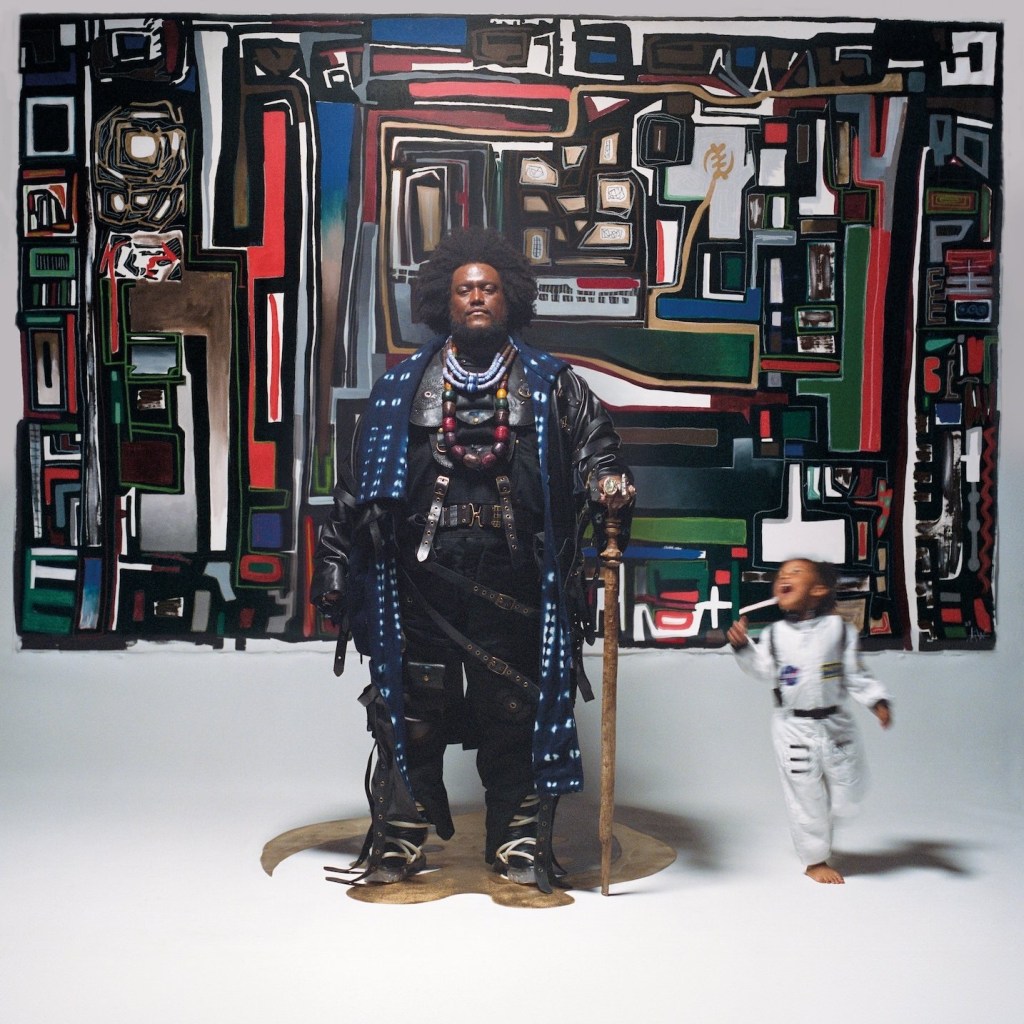
Fearless Movement
2014
Young (formally Young Turks)
I was blown away when I first heard Kamasi’s The Epic in 2014. I loved his big tenor sax shredding over bold arrangements (a 10-piece jazz band augmented by a 32-piece orchestra, 20-member choir, and various vocalists). It had a retro soul jazz vibe but was also uniquely Kamasi. His subsequent albums were more of the same. Live, Kamasi and his band were loud and aggressive – a stark difference from the recordings. I craved Kamasi to release an album that was not more of the same and that caught some of the live magic. Fearless Movement delivers something new and captures the live magic by being a “dance album.” But Kamasi is way too clever to be obvious; his version of a dance album, per his website, is:
“When people hear that I’m making a dance album, it’s not literal,” Washington says. “Dance is movement and expression, and in a way it’s the same thing as music — expressing your spirit through your body. That’s what this album is pushing.” Kamasi continues: “The kind of music I make is not necessarily associated with dance, even though I feel like the more expression in the music, the more it can inspire you to move.”
On my first listen, I moved: head bopping, foot tapping, body swaying, etc. I was not dancing but moving (dare I say fearlessly). This is my favorite Kamasi album since his debut. It is everything I have hoped for in a Kamasi album. I just saw the band live on the tour supporting Fearless Movement, and after seeing several of the tunes live, I liked the album even more.
If you are unfamiliar with Kamasi Washington, he comes from an L.A. jazz fusion collective called the West Coast Get Down (WCGD). For the WCGD, “jazz fusion” is not jazz-rock or jazz-funk of the late 1970s or jazz-lite of the 1980s but jazz hip-hop. One of Kamasi’s resume builders was that he appeared on Kendrick Lamar’s 2015 masterpiece To Pimp a Butterfly. The WCGD was/is a collective of young musicians (although they are not so young anymore as they are in their 40s) credited with reviving jazz fusion and making L.A. the focal point for what many consider a renaissance for the genre’s mass appeal. Some of the key players are Thundercat (bass), Terrace Martin (multi-instrumentalist and producer), Miles Mosley (bass), Tony Austin (drums), Ronald Bruner Jr (drums), Cameron Graves (piano), Brandon Coleman (keyboards), Ryan Porter (trombone), Patrice Quinn (vocals) and the guy with the most name recognition: Kamasi Washington (sax). All of these characters have been on Kamasi Washington’s albums and in his live bands. For example, on the Fearless Movement tour, the Kamasi band is Tony Austin on drums, Miles Mosley on bass, Brandon Coleman on keys, Ryan Porter on trombone, DJ Battlecat on everything, Patrice Quinn on vocals, Rickey Washington (Kamasi’s dad) on flute and soprano sax.
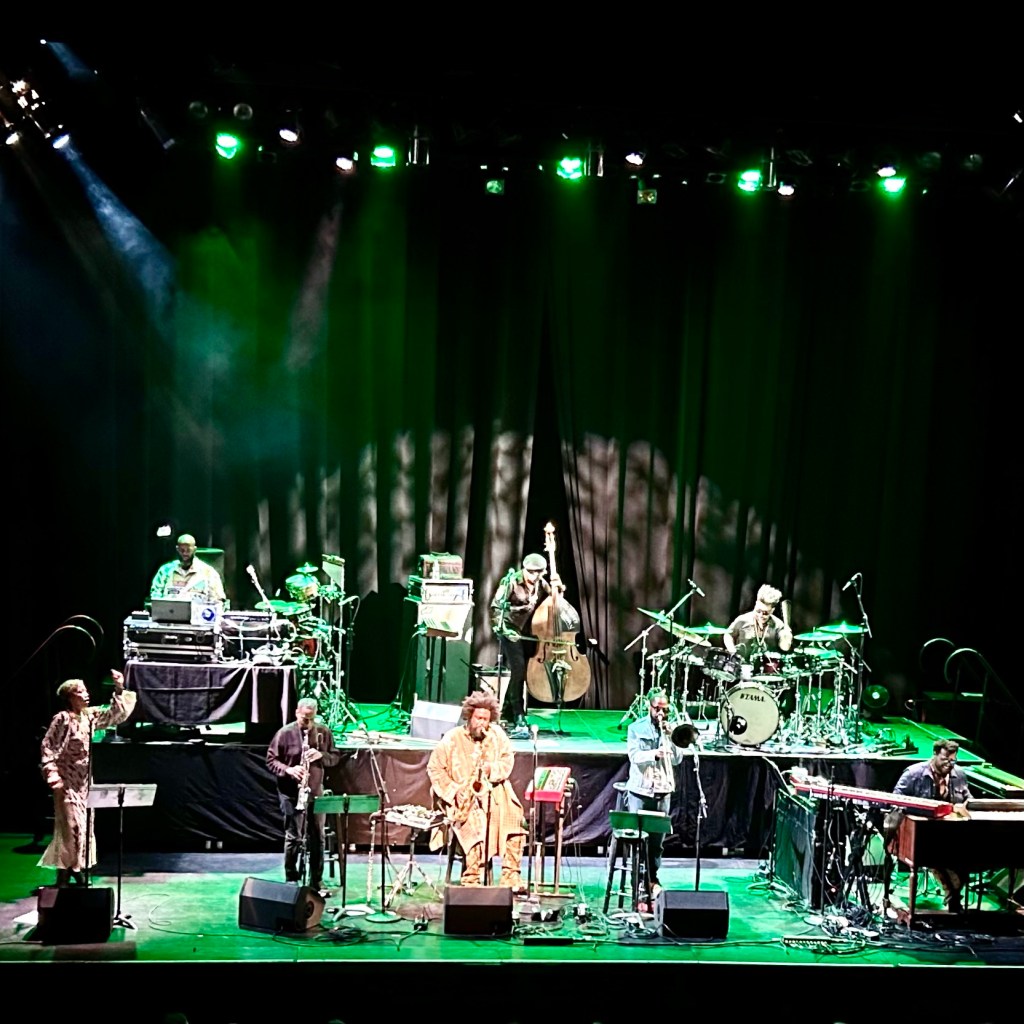
Fearless Movement (the album) has the usual Kamasi/WCGD collaborators and some new faces: DJ Battlecat, BJ The Chicago Kid, Andre 3000 (in flute mode vs. rapping), Coast Contra, George Clinton, and D Smoke.
Note: The song sequences of the vinyl LP and the digital stream are different—I will follow the vinyl sequence in this review.
Side A
“Lesanu” opens the album with a prayer in Ge’ez, the language of the Ethiopian Orthodox Bible, per Kamasi’s website:
“‘Lesanu’ is a dedication to a friend of mine who passed away, and a moment to give thanks for my path,” Kamasi says. “Being a father means the horizon of your life all of a sudden shows up. My mortality became more apparent to me, but also my immortality — realizing that my daughter is going to live on and see things that I’m never going to see. I had to become comfortable with this, and that affected the music that I was making.”
“Lesanu” is a powerful song that mixes 60s bop with some acid jazz elements. Cameron Graves (piano) and Kamasi (tenor sax) give impressive solos. The tune sets the stage for this to be a kick-ass album.
“Asha the First” (Ft. Ras Austin, Taj Austin & Thundercat) is a song credited to Kamasi and his young daughter. Again per Kamasi website:
With touring on pause, they spent her [Kamasi’s daughter] early years together listening to Washington’s favorite records by John Coltrane, Ornette Coleman, and Eric Dolphy. “I wanted to show her all of the best music,” he says. And one day, at just shy of two years old, she came up with a melody. “We were playing around on the piano, and she just kept playing it over and over again,” he says. That tune became the song “Asha The First.”
In concert, Kamasi tells the same story above but adds a demo of what he first heard from his daughter. The song’s recording has a beautiful Thundercat bass solo – which is more like a guitar solo in that it is super melodic. Kamasi follows with a righteous tenor sax solo. The song also features a rap from Coast Contra (Ras and Taj Austin, the twin sons of West Coast rapper Ras Kass).
“The Visionary” (Ft. Terrace Martin) is a short song that provides a transition from Asha to “Get Lit.”
“Get Lit” (Ft. George Clinton & D Smoke) amalgamates Clinton’s P-funk, hip-hop, and jazz. It is a beautiful jam and one of my favorite songs on the album. I hoped to hear this song live but assumed it could not be duplicated in concert without Clinton and D Smoke. However, Kamasi had a great idea for the live show: turn over the recording to DJ Battlecat and let him remix it live and show off his DJ prowess—it worked great.
Side B
“Computer Love” (Ft. Brandon Coleman, DJ Battlecat & Patrice Quinn) is a cover of a 1986 Zapp song. The original was a classic mid-80s quiet storm synth-pop-funk. On the recording, Kamasi turns it into a gorgeous ornate jazz ballad. Vocalist Patrice Quinn has been part of Kamasi’s Secret Sauce since day one, and she is the featured vocalist on this track. This is her best vocal on a Kamasi album. In addition to Quinn, some kind of wind synth solo transitions into a face-melting Kamasi tenor solo. Live DJ Battlecat was the more prominent “vocalist” in the love show via a voice box.
“Dream State” by Kamasi Washington & André 3000 is an instrumental musical conversation between André 3000 (on flute) and Kamasi. I have listened to André 3000’s flute album, and it doesn’t do much for me, but this collaboration with Kamasi really works.
“Interstellar Peace (The Last Stance)” sounds like the instrumental soundtrack of a science fiction movie. In concert, this became a showcase for Brandon Coleman (the tune’s composer).
Side C
“The Garden Path” sounds like classic Kamasi—it would not have been out of place on any of his previous albums. Dontae Winslow (trumpet) and Ryan Porter (trombone) provide great solos.
“Road to Self (KO)” is one of my favorite tracks on the album. It opens with a cool synth solo, then segues into piano before swelling into the full ensemble. Kamasi takes a solo (with some nice echo effects). The solo starts gently and then gets wild —a bit of jazz psychedelia. After Kamasi, Miles Mosley takes his turn on bass. Mosley’s solo also goes psychedelic with some wild bass bowing (almost an electric guitar sound). A drum solo is next (it is unclear if it is Tony Austin or Ronald Brunner Jr.). Finally, the full ensemble comes together to take it across the finish line.
Side D
“Together (ft. BJ the Chicago Kid)” is a gorgeous ballad featuring the intertwined vocals of BJ the Chicago Kid and Patrice Quinn. It also has a nice Ryan Porter trombone solo.
“Lines in the Sand” features vocalists Dwight Tribble (another long-time Kamasi contributor) and Patrice Quinn. It has a nice McCoy Tyner-like solo from Cameron Graves (I assume).
“Prologue” was the teaser single for the album. When it was released, I knew this would be a great album. In the spirit of Kamasi’s “dance record” concept, it is a cover of an Astor Piazzolla song. Astor PiazzollaIla is the legendary Argentinian tango composer. Washington and the band deconstruct the tango and remake it into Kamasi Washington music. It is a highlight of the album and was the finale of the live show.
Fearless Movement is my new favorite Kamasi Washington album. At 86 minutes, it is a relatively short Kamasi album, which helps – it is more digestible. I like how it more deliberately incorporates Kamasi and the WCGD’s hip-hop influences. As mentioned, witnessing this material live has only enhanced my appreciation of the album.
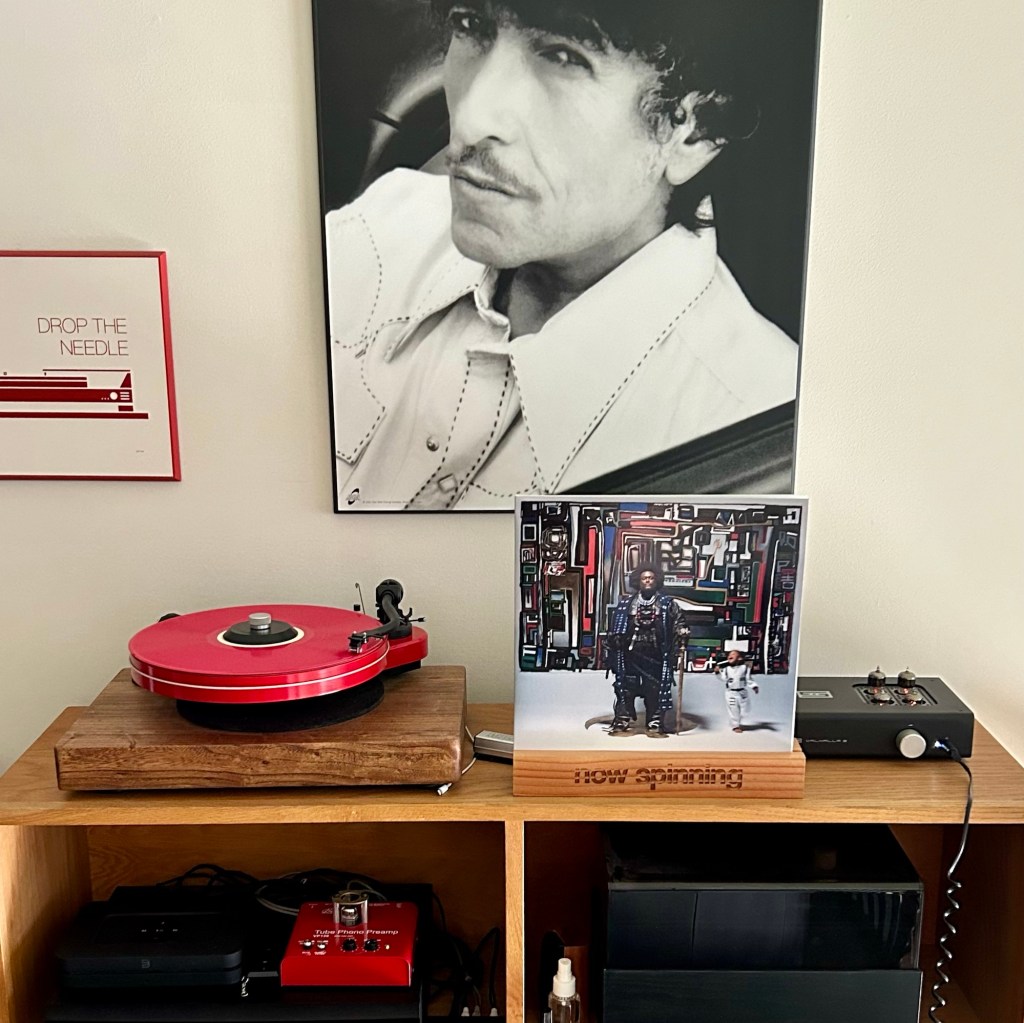
A note on the vinyl edition of the album, it sounds great and is a quality pressing. The cover art is well-executed and tasteful. The credits are well documented (unlike those on Tidal, which are impossible to follow). As noted, the album sequence is different for the vinyl version vs. streaming – I assume this was a practical issue of how to fit the songs on four LP sides vs. artistic choice. The album is pressed in red (sides A and B) and blue (sides C and D). The physical album is a reminder of the pleasure of physical media – holding an album cover, reading credits, and being forced to engage with the music by getting up and flipping a side every twenty minutes or so.

 Axl's Catch Groove
My son caught him a while ago. I asked him how it was he said “The best”
Wat een fijne recensie, ben net thuis van zijn concert in Paradiso en was op zoek naar de namen van zijn bandleden. Het concert was buitengewoon, wat je al schrijft niet echt om op te dansen maar je beweegt wel mee en voelt de muziek en de emotie.
Translation: What a nice review, just got home from his concert at Paradiso and was looking for the names of his band members. The concert was extraordinary, what you already write not really to dance to but you do move along and feel the music and the emotion.