Catchgroove’s Musical Memoir: Tube Amps

I am unsure when the notion of a tube (or valve as they call it across the pond) amp entered my audiophile lust zone. I had an old Ampeg guitar amp that was tube-based, so I was well aware of the warmth of that sound vs. solid state. In early 2011, I started researching tube amp options as a few years earlier I fell back in love with my vinyl record collection after flirting with MP3.
Here is some of the back story on my transition back to vinyl after a long affair with digital. I got my first CD player around 1985 and was absolutely blown away. What appealed to me about CDs is that they were quiet – no surface noise. For many years I felt that CDs sonically sounded better than vinyl records. Another huge benefit was that 70 minutes of music fit onto a CD – no getting up to flip a record. Many double LPs could fit on a single CD. I liked CDs so much that I began buying CDs of vinyl LPs I already owned. For the next 25 years, I bought and played CDs. But as time went on I began to be fatigued by the harshness of the CD format. I could listen to vinyl LPs for hours on end, but my CD limit was about 90 minutes and then my head began to hurt.
When MP3 came into my awareness in the early 00s I was initially smitten – the music was free, files were small enough to fit on a portable player (e.g., an iPod), files could be downloaded in a reasonable time, and not overwhelm your computer’s hard drive. I had a twinge of guilt that I was stealing the music, but that was not a new thing as I had been borrowing LPs from friends for years and copying them to cassette tape and more recently borrowing CDs to rip and burn. The MP3 “market” was just a more convenient way to borrow music, albeit from strangers. It did have the risk of viruses and malware, but I was fearless and fortunately never got burned. But it did not take long for me to realize that MP3s did not sound as good as CDs so I used MP3s to sample an album and if I liked it I bought the CD.
Around 2005, the combination of the terrible sound of MP3s and my ear fatigue from CDs got me playing my vinyl records again. Despite the surface noise, the extra effort to listen, and the lack of portability, I fell in love with vinyl LPs all over again. Fortunately, I had never considered liquidating my vinyl LPs (I probably had 1000 vinyl LPs at that point). As I was rediscovering vinyl there was a glut of used vinyl. Most people had liquidated their vinyl when they transitioned to CDs and now were even liquidating their CDs in favor of digital files on their computers. I began to acquire cheap used vinyl records and over the next few years – I doubled my vinyl collection. Simultaneously and coincidental with my personal vinyl revival, a small vinyl revival was appearing in the recording industry. By 2010 the revival was gaining full traction and artists were starting to release new music on vinyl. For the first time in my life I was organically part of a musical trend (I am a notorious late-to-the-party guy when it comes to musical trends).
I was in an analog state of mind. I wanted to try out tube audio as everything I heard about tubes was that they had a warmer sound – similar to what I was experiencing with my transition from digital (CDs and MP3s) to analog (vinyl).
Given that I am a budget audio, I aimed to find a quality tube amplifier at a reasonable price. In researching I determined that the best solution for me was a JoLida Glass FX 10 integrated amplifier. The amp was new to the market and it checked a lot of boxes for me:
- It was affordable – $450
- It looked adorable (I realize that is not a legitimate audiophile reason, but hey I am shallow)
- It was getting great reviews
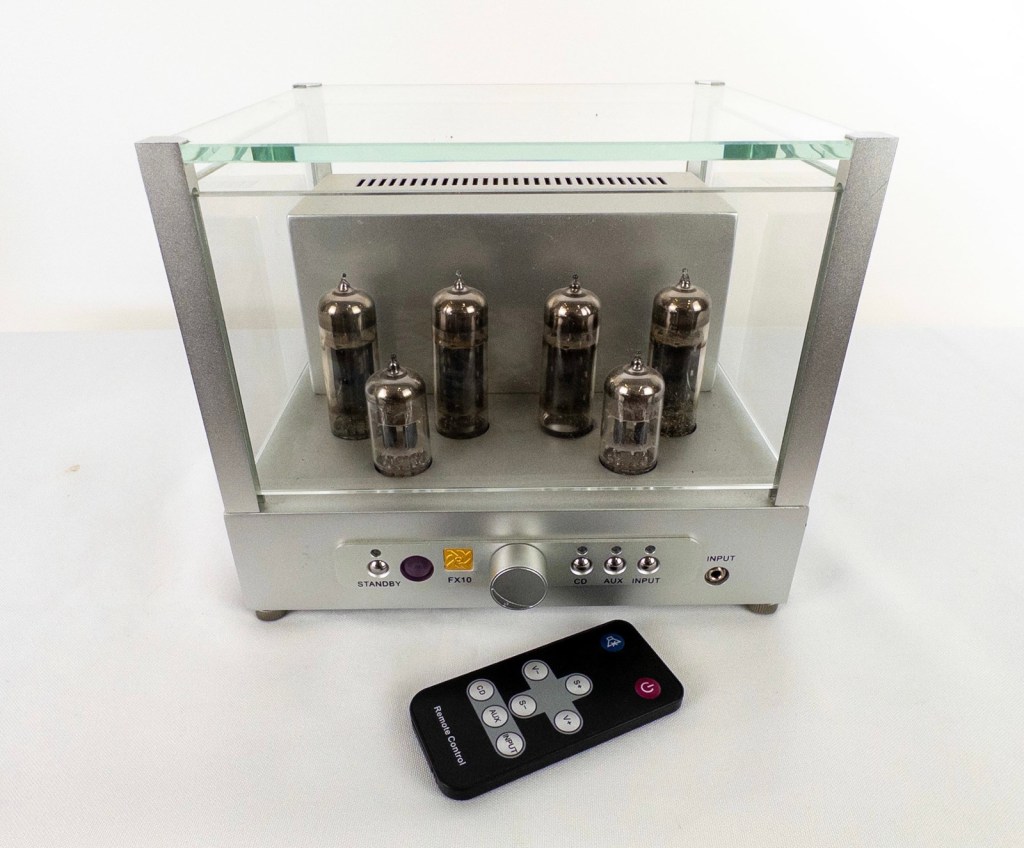
Although it was low-powered at 10 watts, I had learned early in my audiophile journey that power was overrated. Quality power was more important than the amount of power, I had efficient speakers, and I rarely listened to music loud.
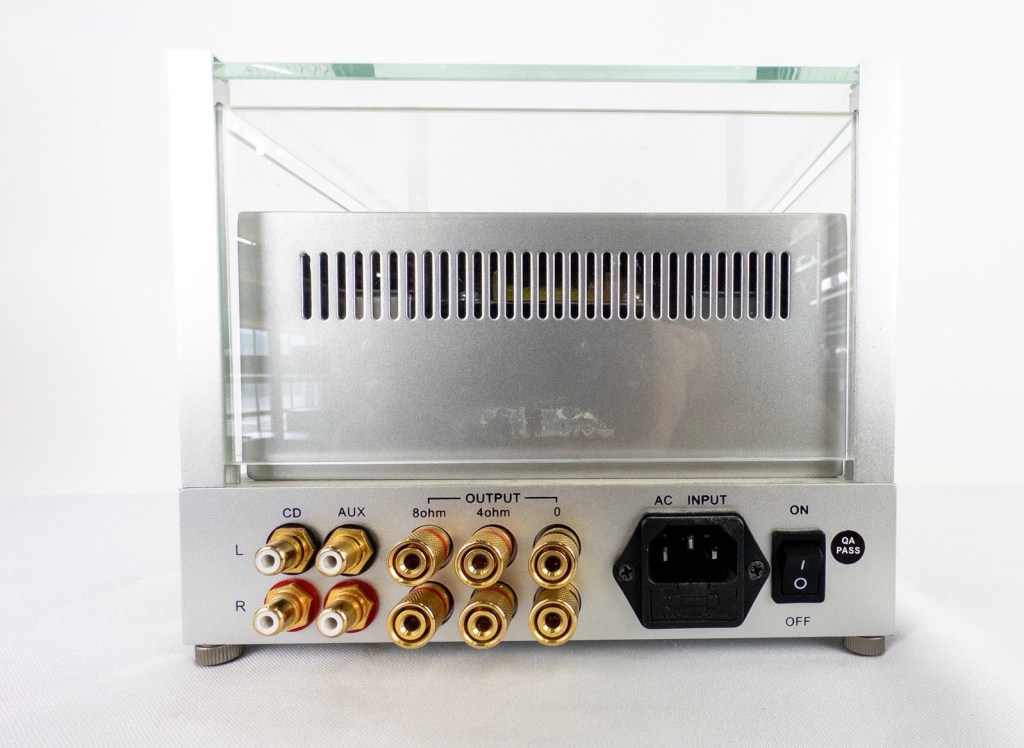
In early 2011, I ordered the FX10 from The Needle Doctor (an amazing, but now defunct, store that will get its own blog post in the music memoir series). When the amp arrived at the store I drove over to Dinkytown (Minneapolis) to pick it up. My first reaction was how small the box was. I also ordered an inexpensive phone preamp as I knew the FX10 did not have a built-in phono preamp. In 2011 (and over the preceding couple of decades) it had become rare that a new amp had a phono input given the general music economy was digital.
I unboxed the amp, set it up, placed Joni Mitchell’s For the Roses on the turntable, dropped the needle, and experienced rapture. Even my wife, who supports my music and audio passion despite little interest herself, was struck by the beauty of the sound coming out of the amp.
What did I hear? I will use the tube cliche: warmth. I had a decent solid-state amp (NAD 7240PE) that did a great job, but the FX10 was a different beast. It sounded like a warm blanket felt on a cold night. Going back to the NAD, it now sounded frigid vs. warm, jagged vs. smooth, and hard vs. soft. The FX10 paired with a vinyl record was magical.
The timing of the arrival of the FX10 in 2011 could not have been more perfect: The kids were off to college so I had more time on my hands. In the fall of 2011, I had major surgery and a 6-week recovery that even gave me more time to focus on listening to new music. I had a little extra money so I did a bunch of upgrades: a new turntable, a tube-based phono preamp, and new speakers. I was in audio heaven.
Since then I have done more upgrades and when it comes to amplification I have stayed in the tube lane. I don’t have a technical understanding of tubes vs. solid state, I just know that tubes are my preference. I realize that tubes are not for everyone, but if you are into great sound I recommend you dip your toe into the tube world. The least expensive way I know is via a Schitt Vali headphone amp ($150).

 Axl's Catch Groove